
Escaping Liberty Jail w/ Joseph Smith
Listen on Apple Podcasts Spotify YouTube Download MP3
About this episode
In this episode (Part 24), we dive into one of the most dramatic and painful chapters in early Letter-day Saint history: Liberty Jail.
Joseph Smith was arrested on December 1, 1838 and eventually taken to Liberty Jail. Today we will cover his imprisonment, the chaotic legal proceedings that followed, and the eventual “escape” that allowed him to reunite with his family as the Saints resettled in Quincy, Illinois.
We explore how internal conflicts, political pressures, treason charges, and widespread anti-Mormon hostility shaped Joseph’s experience –and how his letters from Liberty Jail become some of the most cherished passages in Latter-day Saint scripture. We discuss betrayal, leadership crises, the brutality of Missouri’s expulsion, and the Saints’ struggle to survive amidst violence, sickness, and dislocation.
This chapter also raises hard questions:
Was Joseph Smith’s trial fair?
What role did dissenting church leaders play?
How much of the Liberty Jail narrative has been “whitewashed”?
What does Joseph Smith’s behavior tell us about his character?
We conclude by following Joseph’s escape, his emotionally charged reunion with the Saints in Illinois, and the lasting trauma and financial strain the Missouri experience left behind. This is an episode you won’t want to miss!
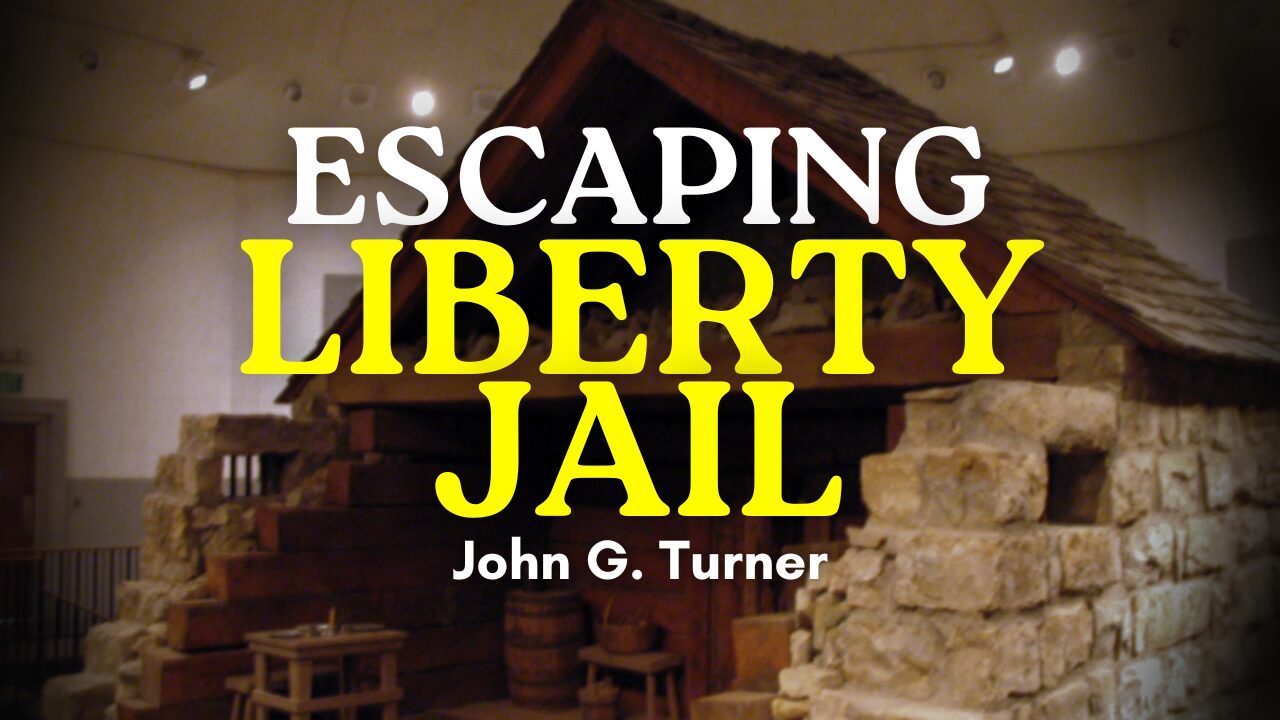
Thumbnail Credit: Image from Jeneme from wikipedia
Originally published on mormonstories.org.
Transcript
Machine-generated and lightly edited. Click any timestamp to jump the audio to that moment. The audio is authoritative; please check it before quoting.
Introduction and Episode Overview
John Dehlin Hello, everyone, and welcome to another episode of the Joseph Smith Podcast, brought to you by Mormon stories podcast. I'm Dr. John Dehlin. It is December 3rd, 2025, and today we are on part 24 of our series on the life of Joseph Smith, the founder of the Church of Jesus Christ of Latter Day Saints. That being the third official name of the church and the one that the church uses today. The book that we're using as the foundation for these first 30 plus episodes is Joseph the Rise and Fall of an American Prophet by Dr. John G. Turner. And you're with us here today. John Turner, thanks for joining us.
John Turner I am thrilled to be back.
John Dehlin How was Thanksgiving? Did you have turkey? Did you have stuffing? Did you have cranberry pie? What happened?
John Turner I am an arch traditionalist when it comes to Thanksgiving food, and so, yes, all of. All of that. In personal crushing news, I was half a minute slower in my hometown turkey trot than last year. So I intend to either redouble my efforts or get on some PEDs this coming year.
John Dehlin Sounds like the job of Ozempic that.
John Turner I don't know if that's my problem. I think it's just aging, and they haven't come up with a good, good pill to reverse that.
John Dehlin Do I have a really important question back east. Do you Thanksgiving traditionalists have, like, some sort of sweet potato casserole with, like, gobs of butter and brown sugar and. And nuts, or is that just a Mormon thing?
John Turner That is not just a Mormon thing. I think that. I think of that as an American heartland and American south thing as well.
John Dehlin Okay.
John Turner Not as typical in New England or New York State where I come from. So that is not part of. Not part of our traditions.
John Dehlin Got it. And then most important of all, do you feel like it's okay that Notre Dame has slipped ahead of BYU in the College Football Playoff, or do you think our Cougars have been robbed?
John Turner Why don't you just beat Texas Tech and then we can chat?
John Dehlin They're, like, fourth in the country.
John Turner Yeah, I. I will just see. I don't know if the Irish are gonna end up making it or not, because they're done. They don't. They don't have a conference, so they don't have another game. So fingers crossed. I think we could. I think my Irish could beat a lot of the people who will make the playoff, but not the top couple.
John Dehlin Well, I think BYU should always trump Notre Dame. That's just my personal opinion. I might be biased.
John Turner What do you mean by Trump Notre Dame just automatically be placed in Front of them. Yeah, I can kind of remember the last couple times Notre Dame and BYU played on the field and.
John Dehlin Okay, I got something else to talk about. All right, so thanks for. Sorry for our silliness. Really quickly, the Joseph Smith podcast again. We're 24 episodes in. We make it available through Spotify, through Apple Podcasts. There's also a YouTube playlist called the Joseph Smith Podcast. We think that the series is best consumed sequentially. So we recommend you go back to the very beginning, and today's episode will make a lot more sense and be a lot more impactful. We're getting great reviews from really smart, thoughtful people about it, so we really recommend it. We're also grateful to our donors who make it possible. That includes our base normal donors to Mormon Stories podcast. And we also had people and have people who have donated directly to this project. If you want to support this project ongoing, you just go to donorbox.org Joseph Smith. And we are paying Dr. John Turner for his appearances here. We're hoping that it pays for a happy, merry Christmas for the Turner family. And without any further ado, last week's episode was all about sort of the Missouri meltdown and Joseph. It ends with Joseph Smith and some of his closest associates getting arrested. Is that how we left last episode? John Turner?
The Missouri Mormon War and Joseph's Surrender
John Turner That is correct. Essentially the Missouri Mormon War and ultimately Joseph's decision to surrender to state militia leaders.
John Dehlin Okay, so he surrenders, and how does he end up in Liberty Jail? And is he. Does he experience a fair trial?
John Turner So, yeah, we've got a lot to talk about.
John Dehlin All right, let's go. Tell us where to go. Tell us where to go.
John Turner I would. I'm just going to say to. To kind of frame this. These six months or so, they are a pivotal. It's a pivotal stretch in Joseph Smith's life. The debacle of the war in Missouri, the expulsion of the Saints, the ravages and the persecutions that they suffered, and then Joseph's own experience of incarceration on capital charges in a cramped, dark, and unpleasant jail for a number of months. Those were searing experiences that Joseph was determined not to repeat. I would also lump in with that part of the defeat for Joseph was a deep sense of betrayal from within by a number of church members and former church members who testified against him at hearings afterwards. Joseph came away with a deep sense of injustice, injustice that he suffered personally, injustice that his people suffered. So this is really important for understanding the last five years of Joseph Smith's life. To answer your question, how does he end up in Liberty Jail. Curiously, after his arrest, that is not the first place he has sent. He and his fellow prisoners are actually first sent to Independence, of all places, back to Jackson County.
John Dehlin And your book almost gives the sense that he was celebrated as, like, an antihero or something there. Like he was holding court with the. With the townspeople.
John Turner This is a weird little, you know, little episode. Doesn't last very long. But when. When he and the other prisoners go back to Independence, hundreds of people turn out to see his arrival in a heavy rain. And the general, who's in charge of the prisoners at the time, he's pretty lax and easygoing, so he lets them walk around without an armed guard. They stay at an inn. They walk out to see the temple lot. They dine with its general, Moses Wilson. It's kind of genteel and chummy. But then another militia general, John Clark, he kind of takes command, and he sends the prisoners from Independence to Richmond in Ray county, and then ultimately they go on to Liberty in. In Clay. In Clay County. Always a lot of counties to keep track of.
John Dehlin Too many counties. Missouri needs just to keep it down to, like, three or four.
John Turner Yeah, it would be simpler. So there's a hearing before a judge named Austin King, who had had some previous interactions with Joseph and his people in Missouri. Joseph is remanded to jail to face charges of treason, of levying overt war against the state. You can't post bail on a charge of treason. So that's why he sits in jail for four or five months before a hearing on that charge.
John Dehlin And when we say against the state, do we mean the state of Missouri or the United States? Sometimes the United States, you can say is referred to as the state. Is that right?
John Turner Yeah. So that's a great question. I'm not exactly sure how that was parsed in the charge.
John Dehlin Okay.
John Turner But I think for the purpose of the charge, I think you're levying. Levying. Levying war, I would say against the state of Missouri in this context and its people.
John Dehlin So not federal? Federal charges?
John Turner No, these are. These are state charges.
John Dehlin Okay. All right, so what happens?
John Turner So, first of all, I think it's worth mentioning that this hearing in November of 1838 on treason and related charges, Joseph and other church leaders, they assert that it's grossly unfair. This is happening at a pretty chaotic time. There are a lot of witnesses who testify against Joseph and the other defendants. They include people like John Whitmer, a Book of Mormon witness, William W. Phelps, who had been a close associate of Joseph when They worked on the Egyptian papers, Samson Avard, the Danite general, George Hinkle, a lot of people who previously had been very loyal to Joseph Smith and a bunch of non Mormon witnesses as well. You know, church leaders are not in a position to organize a proper defense. A lot of Mormon witnesses are not in a position to come and testify. I think for, you know, it probably wouldn't have mattered a great deal anyway. The root of the treason charge is Joseph's direction of offensive military operations against non Mormons in Davies County. I think, you know, as far as the judge presiding over the trial, over the hearing was concerned, there was sufficient charge to remand Joseph to. To face the charge in court.
John Dehlin So a couple questions. These, these names like WWF Phelps and John Whitmer, these are beloved figures in Mormon history. Obviously, John Whitmer is a. Is a Book of Mormon witness, I'm pretty sure. Well, W.W. phelps was his scribe, right?
John Turner Yeah.
John Dehlin I. I almost want to say he may have authored the lyrics of a famous him or two. And then Abard. Oh, he did, right?
John Turner Yep.
John Dehlin And then Avard was like his Porter Rockwell equivalent, like he was one of the leaders of the Danites. Why would these really faithful Saints turn on Joseph and testify against him? Do you know what their motives would have been?
John Turner So that's a great question. So I think there's not a blanket answer. So for Joseph in the fall of 1838, it's a situation in which there has been substantial disaffection over the past year or two. So as of November 1838, a majority of the Quorum of the Twelve Apostles are either excommunicated, disaffected, or dead. David Padden was. Was killed in battle in October of that year. So that's a substantial amount of attrition of formerly loyal people. John Whitmer, along with Oliver Cowdery and several other significant associates, had been excommunicated the prior spring. You know, Hinkel and Avard are a little bit different. I wouldn't say those are individuals who had been close to Joseph in the way that Cowdery or Whitmer or Phelps had been. I think they, you know, in those two cases, they are primarily disaffected because of the debacle in Missouri. So, you know, they change a little bit more with the wind. The accusations that Avard levels against Joseph vis a vis the Danites, well, he's a prime mover in the organization. So whatever he says that's critical of Joseph could simply have been, you know, directed at himself as well,
John Dehlin so it's possible he was just trying to save his own bacon.
John Turner There's a bit of that for sure. There's also, you know, the. The. There's also an opportunity to be opportunistic. So Hinkle, George Hinkle, that's probably a name that's less familiar to listeners. He was a church member and militia leader in Caldwell County. Joseph had purchased a house from Hinkle in the spring of 1838. After Joseph's surrender. According to Emma Smith, Hinkle went to the home, drove Emma and her family out of it, and then stole clothing, furniture, and a horse. You know, it's hard to know what to make of accusations that go back and forth at this time, but that certainly sounds pretty opportunistic. So I think it's a mix of people who had rejected Joseph's leadership and people who, once it's clear which way the wind is blowing in western Missouri, want to get in a favorable position.
Disaffected Leaders and Their Testimonies Against Joseph
John Dehlin Remind us if Whitmer, Phelps, or Avard end up reconciling with Joseph later, just so that we can know how enduring their opposition was at this point in the story.
John Turner So Phelps is one of the disaffected figures in 1838 that does reconcile with Joseph. Orson Hyde is another one who does. The others, for the most part, do not. It's a clean break. Phelps, probably more than anyone else, really gets back in Joseph's good graces and works closely with him in Nauvoo with
John Dehlin the Book of Abraham stuff. Including the Book of Abraham stuff. Right.
John Turner And with. With that. But also more generally as a ghost writer, he, I think, writes Joseph's manifesto. When Joseph runs for President in 1844, they. They become very tight again.
John Dehlin I mean, I guess that does show a high capacity for forgiving people. If Joseph can take someone who literally testifies against him in trial, that leads to him spending, I don't know, five, six months in a horrible prison or jail. And then Joseph can turn around and forgive him and. And hold him as one of his closest allies or friends again. I guess that shows the capacity to forgive.
John Turner I think that's fair. I mean, I think there was. I think in Phelps's case, Joe. Joseph really was convinced of his renewed loyalty.
John Dehlin Yeah. John Whitmer as a Book of Mormon witness, he never denies the Book of Mormon. But this. He never. He never reconciles again with Joseph. That's what you're saying.
John Turner Exactly. Yeah.
John Dehlin Okay. And then what happens with Avard? Does he ever re. Enter the picture, or is this the last we really hear from or see him.
John Turner So he, he doesn't, he doesn't make any attempt to reconcile with Joseph. I'm trying to remember exactly what becomes of him after this. He lives for a few more decades and dies in Illinois. I don't think he becomes close to church members again.
John Dehlin And I guess if anyone had the goods on Joseph in terms of treason and violence, it would be Avard, because he was, he's the one basically saying all this Danite stuff. We did. Joseph was the leader of it.
John Turner Yeah.
John Dehlin Can we, can we believe Avard, that Joseph was the, the leader of the Danites and the, and the real head of it, or do we write him off as a disgruntled anti Mormon who turned on Joseph? And really Joseph had nothing to do with the counts with the Danites.
John Turner So it's a good question. So Avard, when he testifies at this hearing or you know, sometime during these weeks, he hands over a Danite constitution to state leaders. That document suggests that the first Presidency is clearly in control of the the Danites. The document itself refers to them not as the Danites, but as the Daughter Daughters of Zion. The Joseph Smith Papers Project believes that although there are some questions about this constitution that it's probably authentic. I actually don't see the Danites themselves as all of that instrumental to the charge of treason. You know, having a secret society to that might impress loyalty and drive out dissenters. I mean that might, that might be a little bit nefarious or unsavory. It's not treason. So it's really these offensive military operations in Davies county and perhaps the Battle of Crooked river in which David Padden, but also at least one non Mormon are killed. That's at the heart of the treason charge. I'll just take the, take a moment and opine that I think the treason charge is unfair and unjust in the context of what transpires in Missouri. I think of course technically the Mormons organized themselves militarily and did undertake some operations against their enemies. But this is in the context of a widespread effort by anti Mormons to form mobs to drive out the Saints. So I think at the end of the day, the Saints operations, the Mormons operations, they are ultimately defensive in, in nature, even though they do go on the offense. Briefly. In October of 1838, in one of his letters from Liberty Jail, Joseph writes, if the inhabitants of the state of Missouri had let the Saints alone and had been desirable of peace, there would have been nothing but peace and quietude. Now that might be A little bit of an overstatement, but it's also, you know, there's some truth to that. What, what Joseph does in response is unwise. And yes, it's illegal to levy war, but I would say the Saints didn't start it. And at the end of the day, I do think the charge of. Of treason is unjust. I actually think also at the time, the. That state authorities, they're not interested in executing Joseph on the charge of treason. He's incarcerated along with other top church leaders to ensure that the Mormons leave. And it's no accident that once the Mormon exodus is pretty much complete, Joseph and his associates are allowed to escape. So it's a serious legal charge, but I think it's more of a tool and a bargaining chip so that the Saints ultimately are driven out.
The Treason Charges and Their Context
John Dehlin Wow. So. So what I just hear you say is that you felt. You feel like the. The charges against Joseph and his colleagues that landed him in Liberty Jail were sort of unjust and trumped up and unfair overall.
John Turner That is correct. John Dehlin. So I'm. I am defending Joseph Smith today. I think the entire. The entire history of Mormonism in Missouri, it ultimately is disastrous. I think a lot of what Joseph sets in motion, they reflect both his ideals and his naivete. I think in the crucible of conflict in 1838, Joseph definitely makes some unwise decisions, because perhaps, no matter what, you shouldn't organize your people to drive out other people from a county. But it's in the midst of this widespread anti Mormon campaign against Joseph and his people. People, I think. Yeah. So I certainly don't think he deserved to be tried and executed for treason.
John Dehlin Okay, well, that's. I, We. I think one of the things people love about you, John Turner, is you call balls and strikes, and I. I'm hearing you say this is a ball.
John Turner That is. I think that would be a fair conclusion.
John Dehlin Okay, I did. I didn't expect that. That wasn't. That wasn't what I took away from reading this chapter last night. So I'm glad you clarified that. So this hearing happens, and then they're taken to liberty. Is that the next part of the story?
Life Inside Liberty Jail
John Turner Correct. So they're taken to liberty. They get there December 1st of 1838. They go into this unpleasant, tiny jail. If. If listeners have ever traveled to the reconstructed Liberty Jail, it's not big. I went there a couple. Couple years ago. Essentially, they go downstairs into, you know, sort of an underground dungeon. There's not a lot of light. There's a lot. Not A lot of room. There certainly aren't a lot of creature comforts. They sleep on straw. They eat scraps of food. They're still not keeping the word of wisdom. So they're drinking the dregs of coffee and tea. But I think we can forgive them for that, given the circumstances.
John Dehlin I mean, I'm. I'm just imagining. You're gonna. You're gonna. You mentioned the book, how they get sick and they're throwing up. I can only imagine what these guards are putting in their food and in their beverages. I don't want to think too much about that. But it can't be good.
John Turner No, I mean, there's a lot of, I think Hiram Smith and others afterwards. They, you know, they allege that their food is placed in a basket where chickens roost. And the guards joke about feeding them Mormon beef, you know, telling them it's human flesh. I don't think that was the case. They allege that the guards are mixing poison into their drinks. You know, who knows? But it's cold. I mean, this is December, you know, when. When they show up, they're cold, they're hungry. It's. It's a very, you know, it's a very bleak circumstance.
John Dehlin Yeah. And this is one of the most cinematic, let's just say, portrayed moments in LDS Church media history. And they've always got the guards going, make me a prophecy, Joe, you know, mocking him and defaming him and swearing and. And, you know, and Joseph's in chains, like Joseph of Egypt, you know, that. That sort of thing. It's heavily dramatized. But from your book, it sounds pretty awful and harrowing.
John Turner Yeah, I mean, that's fair. Yeah. I think at first, you know, the guards have more animosity at first. They probably can't keep it up for months. Yeah, they are, you know, before they are sent to Liberty Jail, this more hostile General, John Clark, he has these seven prisoners chained together by their legs. Joseph, if you look at the Liberty Jail letters, he very much compares himself to the Apostle Paul, who wrote many of his New Testament letters while a prisoner. There's a strong identification with Paul in Joseph's letters, and there's a strong sense of being a prisoner for Jesus Christ. I think that's the way, you know, that that's very much part of Joseph's self understanding that he's a. He's a prisoner for the truth. He's a prisoner for the church and he is suffering. But, you know, spiritually, he is unbowed.
John Dehlin I'll just say, like the Logic that you're of God or of Christ if you're persecuted doesn't quite hold water because I think Jim Jones and David Koresh and you know, Keith Ranieri and Warren, you know, Warren Jeffs, you pick your horrible cult leader. They could all claim to have been persecuted. Having said that, if I were to start a cult, I think I would start by claiming we were going to get persecuted. Because then when you do, it's a fulfillment of prophecy. It's actually a smart play in a playbook. Right. Well, to start by claiming persecution.
John Turner True. I think, yeah. For Christians in general, this flows right out of certain passages in the New Testament. You know, blessed are you when men persecute you for my sake. And then you have the example of early Christians in the New Testament and beyond being being persecuted. So yes, these are pretty deep rooted Christian themes. I agree. As a historian, the fact that one is persecuted does not mean that one is right about whatever cause one is trumpeting. But it's easy to understand why Joseph and other church members interpret things in that vein.
John Dehlin Yeah, and it sounds like the conditions were horrible. If they, if they were freezing, they would light a fire, but then there's nowhere for the smoke to go and they would get suffocated with the smoke. Like you know, the, I think I remember reading that the straw and the mattresses was moldy and deteriorating. Like it sounds really wretched. And again, Hyrum Smith saying that they were vomiting profusely. So how, how compliant of prisoners were they? Or non compliant?
John Turner I mean as, as one might suspect the goal of most prisoners is to stop being imprisoned. And so the, not everyone tries to
John Dehlin break out of jail though. Not everybody tries to break out.
John Turner Well, I will just say in general it was much easier to break out of early to mid 19th century jails than it is today. You know, it wasn't exactly like Shawshank Redemption level. But you know, their, their first goal is to use legal means to get out of jail. So to file writs of habeas corpus to challenge the, the legality of their arrest and imprisonment. Those efforts don't work. And so yeah, they, they take matters into their own hands. So their, their first attempt is pretty simple. They're going to make a run for it. Unfortunately, their jailer encourages the guards to shoot them when they start making a break for it. So they stop instead of getting shot, which is probably smart. Then this is now after two and a half months in jail or so they start trying to bore their way through the four foot walls of this dungeon. And you know that they write a lot about isolation in jail, but during those first months of imprisonment, they're actually getting a fair amount of visitors and friends pass augers, I guess that's the name of the tool, and other tools through the windows, these little tiny slots of windows. And so they start working on them, working on it. And I think it takes a couple of weeks, and they're almost ready to break out. But they've been coordinating with people on the outside. The plan is. Becomes known, and, you know, the jailer is really upset. They also have to do a lot of repairs to the jail, which is probably expensive. So ultimately they can't break out. They are there until they're basically waiting for a hearing. And so that hearing doesn't take place until early April. So it's, you know, four months and change in Liberty Jail.
John Dehlin So I've mentioned this before, that one of the articles of faith is that we believe in being subject to kings, presidents, rulers, magistrates, and obeying, honoring, and sustaining the law. Is that. Should we. Is it. Is it a failure to obey, honor and sustain the law to try and break out of jail when you're being held there under whatever charges would. Is it unfair to hold Joseph and his companions to that standard of abiding by the legal process, not trying to break out of jail and allowing the wheels of justice to do their thing? Is it dishonorable to try and break out of jail?
John Turner So that's a fair question, actually. One thing we see throughout Joseph's life, I would say, but it's particularly toward the end in Kirtland and then again in Nauvoo, there's actually quite a few attempts, quite a few attempts to evade the law. So to slip away when a constable or another lawman comes to serve a warrant to escape when one is detained. So this isn't actually the. The only instance of that. I think that. I think that's a fair question. I think it's easy to say that one should obey the law, be subject to the properly instituted authorities. It's another thing when one thinks that the law is going to come down on one unfairly, to say that individuals should simply submit. I think there are some instances in which Joseph evades what might have been the just application of the law. I think we definitely find some instances of that both in Kirtland and Nauvoo. In this instance, you have to remember, Joseph is being held on a capital charge. I'm not willing to say, you know, and I don't think he knew whether or not Missouri was super serious about pursuing it.
John Dehlin I'm not meaning he could be executed.
John Turner Be executed. Right. I'm not willing to say he should have just rolled over. Rolled over and stuck around and, you know, waited to see what happened.
John Dehlin It's always weird because. Because when you think about profits, you think about, like, you know, Book of Mormon prophets, Samuel, the Lamanite standing on the walls and the arrows don't hit him, or King Abinadi, you know, standing up against, I don't know, King Alma or Mosiah. I forget all the. All the prophets in the Book of Mormon. But, like, you have this idea of a prophet having God's power and being sort of protected by God and that. That runs a bit counter to this idea of constantly trying to escape, evade or escape prison when you're found or suspected to be guilty of something. But, you know, there's always, I guess, a chasm between the superstition and the lore and the legend and just the lived reality of.
John Turner Yeah.
John Dehlin Trying to survive in a very difficult time in a difficult place. Right. Frontier, 19th century, Midwest. Right.
John Turner Yeah. I mean, you know, when thinking about Joseph's life. So everything falls apart in Kirtland in 1837. Certainly by the spring of 1837, it's a pretty dire state. We've talked about weapons being drawn in the Kirtland temple, you know, people considering tossing other people out of windows, melees, brawls. Melees, brawls, arson. It's crazy. And, you know, Joseph, for almost two years now, has just been living in one crisis after another. There's a bit of a respite once he gets to Illinois for a couple of years. But he is living a lot of the last eight years of his life in crisis mode and often, I think, very unsure of what to do and what good solutions to his problems might be.
John Dehlin I mean, the. What we're always taught as Mormons is it's always the evil people under Satan's influence trying to persecute God's righteous. Yeah, but I mean, man, that's a lot of persecution. It's constant.
John Turner Yeah.
John Dehlin Yeah. Okay. What's going on with the Saints while Joseph and his colleagues are in jail? Are they sticking around in Missouri? Are they fleeing? What are the Saints doing?
John Turner No, great question.
John Dehlin And who's leading the church while Joseph's in prison?
John Turner So also a good question. So overall, it is. You know, I've talked about Joseph's suffering. It is everybody's suffering in, you know, from November 1838 on, there are vigilantes who have been waiting to meet out judgment against the Saints. They're angry after some of the things that the Mormons have done in response and they take it out on people. I give a couple of examples in the book. There's a man named William Carey. He's defenseless. A anti Mormon member of the militia. You know, cracks his, cracks his skull with the breach of his gun. There's at least one well documented account of a Mormon woman being raped by a soldier. After the Mormon surrender, she becomes pregnant with her attackers child. Both she and the child then die shortly after its delivery the following summer. I mean this is just harrowing and terrible, terrible stuff. There's also just a lot of deprivation due to the elements. People have been kicked off their properties. A lot of them sort of sleep in makeshift tents made with blankets. People don't, you know, a lot of people don't have good shoes. They're walking around on the frozen ground. Their feet get torn up, frozen and bloody. By February, a lot of families begin heading east toward Illinois. I refer to it as a Mormon Trail of Tears. You know, the Saints are expelled en masse. They have to leave. You also asked about leadership. There's a significant leadership vacuum. So Joseph and Hyrum Smith and Signe Rigdon, who really collectively constitute the first presidency. Joseph Smith Sr. I think technically is an assistant president as well, but those three are in jail. As I mentioned earlier, a majority of the Quorum of the twelve Apostles is either excommunicated, disaffected or dead. Bishop Edward Partridge, who had run a lot of day to day operations for the church in Missouri, he is just busy. He's a lot of people are just busy tending to their own family crises and needs. Joseph tells the remaining members of the quorum of the 12 the that the affairs of the church devolve upon you. Thomas Marsh, who had been president of the 12, he is among the disaffected. He had betrayed Joseph in late October of 1838. So Joseph tells the remaining Apostles that the oldest of the original members should now preside over the Quorum. It is that instruction that elevates Brigham Young on his future trajectory. He is precisely 13 days older than the second oldest original remaining member. Who is he by that much? Right. I know. And I have to say for effective church leadership I would take Brigham Young over he, Persie Kimball. So that's probably a good thing. I don't know, depending on how you want to want to parse that. So Young and he, Percy Kimball and a few other people they really oversee the exodus. I think I would say oversee fairly loosely. Of course there are efforts made to assist those in greatest need as they straggle east. But it's a fairly disorganized stretch of time for the church as people leave Missouri in families and groups head toward Quincy, Illinois which is a good distance, good distance on foot. It would took most, most groups a couple of weeks to make their exodus.
John Dehlin Did Joseph authorize the trip to Illinois or the resettlement in Illinois? Was that just natur. Natural inertia? Did someone else make that decision?
John Turner So that's a great question. Is certainly. It was certainly authorized by Joseph. I forget how the decision was made to, you know, for many Mormons to regroup in Quincy, there isn't a grand plan at this point. By March there, the Saints have made contacts that lead them to look to either side of the Mississippi river, including what eventually becomes Nauvoo. Essentially there are church members who go out and do scout out possible land acquisitions. Joseph himself can't get, can't oversee that from jail. He essentially sanctions what other people are able to do.
John Dehlin Okay, so you mentioned. Well, let's go ahead and wrap up. Well, tell us where you want to go next in the story. I, I've got a couple directions I want to go but let's follow your, your outline and then I can make sure we cover the other things.
John Turner Sure. I think the other thing that I would mention, it's probably something that many listeners are familiar with. Portions of some of Joseph's letters from Liberty Jail become canonized as part of the Doctrine and Covenants. He writes a number of letters and dictates a number of letters while in jail. The two that become part of what's canonized in three different sections of the DNC are from letters Joseph dictates March 20th and 22nd of 1839. Only small portions of the letters are actually canonized the entirety, which people could easily find on the Joseph Smith Papers website and probably elsewhere. I do find them pretty remarkable documents. They are rich and thoughtful and I'll just draw out a couple of themes, one of which I think will be interesting to listeners in context of our discussion of the Danites. So some of the letter is
Joseph Smith's Letters from Liberty Jail
John Dehlin I
John Turner would say pro thoughtful and profound, but at the same time not surprising theological reflection. There's the sense of why has God allowed this to happen? Oh God, where art thou? Where is the pavilion that covereth thy hiding place? That's how the canonized portion begins. You know, why is it that God has allowed this to take place. I would say unlike some of Joseph's earlier revelations, he doesn't blame the people themselves for this disaster. There's not a sense that they've brought this on themselves. It's primarily the fault of their enemies. There's also, I think, some really nice portions in which Joseph reflects on just how much he values his friends who have either wrote or visited him while he's been a prisoner. He writes, those who have not been enclosed in the walls of a prison without cause or provocation can have but a little idea how sweet the voice of a friend is. One token of friendship from any source whatever awakens and calls into action every sympathetic feeling. And Joseph also comments, he compares himself to the biblical Job who's famous for enduring afflictions and actually says his lot has not been as bad as that of Job. Because Joe, because Job's friends sort of turn on him and blame him for what's happened to him. Whereas Joseph's friends have upheld him. Though he does take one little jab at Sidney Rigdon for not writing after he gets out of jail early. Which, you know, there's. There's always a jab coming Rigden's way. He's kind of really unappreciated, I think. And the other thing I'd mentioned, which I do find interesting is there is a little bit of self reflection. I think Joseph in general is not one to dwell on his own mistakes and wring his hands over them. But toward the end of this letter, in a portion that's not canonized, he writes, I would suggest the impropriety of the organization of bands or companies by covenant or oaths, by penalties or secrecies. Let the time passed of our experience and sufferings by the wickedness of Dr. Avard suffice. And let our covenant be that of the everlasting covenant. Pure friendship always becomes weakened the very moment you undertake to make it stronger by penal oaths and secrecy. So I think there is some self reflection there that the Danite organization with its secret oaths and suggestion that one would face punishment for breaking bonds of friendship, that was a false step.
John Dehlin A false step? In. In what way do you mean?
John Turner Well, I think he's blaming Avard for it for having instituted this secret organization. But even granting that, for Joseph to come out and say that that was a wrong step and we should rely on pure friendship rather than penal oaths and secrecy, I think that is a bit of a flash of insight and remorse. Now, Joseph doesn't ness. He doesn't really uphold this Recognition consistently in Nauvoo because there, there certainly are renewed attempts to embrace oaths and secrecy and putting the screws on dissenters. But I still appreciate the fact that at least while he's in jail, he recognizes that there were some false steps made that we should avoid in the future.
John Dehlin I was going to say there are some secret oaths to come, right?
John Turner There are secret oaths to come. And maybe that's one reason that portion of the letter doesn't end up in the Doctrine and Covenants. But I like at least seeing Joseph, he's got time to think more than he would like. And I, I, I at least like seeing that recognition. It was sort of when he left Kirtland. There's a recognition of, well, maybe it wasn't a good idea to get so deep into debt, you know, let's not do that again. And then he does once, you know, one, once that immediate remorse has passed. But I, I, I like seeing Joseph be a little self reflective here.
John Dehlin I'm wondering, you know, going back to your comment, that is sort of a Mormon Trail of Tears which, which is an event in American history where we're what Native Americans were forced on these death marches, you know, became, you know, homeless and wandering and many died and starved. I'm not being eloquent in how I recount it, but I guess I think about the way Native Americans were just living here and then the colonizers come and displace them and kick them out and kill them. I wonder if you've gotten any grief for comparing this to the actual Trail of Tears. Because going back to this issue of accountability, on the one hand it's nice that Joseph appears to be reflecting or it's Jesus reflecting, depending on who you think is the author of these revelations or of the Doctrine and Covenants. On the other hand, if Jesus is saying, sorry, if Joseph Smith is saying Jesus, how long are you going to cause us to suffer here? Or God, how long are you going to cause us to suffer here? It almost gives the impression that believing that Jesus or God are at the helm allows Joseph to not take responsibility for the fact that you could say he got everyone into these messes, whether it's Ohio or Missouri. You could say this is a long 8 to 18 year mess that Joseph Smith has continually gotten his people into. So I wonder if you've gotten any grief for comparing this to the Trail of Tears. And I'm wondering if you can resonate with this idea that saying that God and Jesus are at the helm in some ways Keeps Joseph off the hot seat for the trouble he kind of got people in.
John Turner Very fair questions, John de Lynn. So, no, I haven't got any grief, but now that you frame the question, I probably will. But, no, it's fair. And analogies are dangerous and imperfect. And absolutely, there's a. There's a difference between indigenous people being forced to go west of the Mississippi, whether from Florida or Tennessee, onto lands where they cannot readily regroup.
John Dehlin They were death marches, right? They were death marches.
John Turner Well, death marches or. Or forced removal. And yes, longer and more hazardous and ultimately involving more people, I do think. Nevertheless, yeah, there's something to. You have to reckon with the fact that Mormon removal was certainly not insignificant. It also involved a lot of privation. And so it's. It's certainly not a perfect analogy. And I'm. I'm not making it to say, well, the Mormons had it as rough as. Sure, Native peoples. I'm making it to sort of get the reader's attention and recognize that these people were treated unjustly. They were subject to an exterminating order that brought about their expulsion and removal. I will say, yeah, to close that, it's much easier for the Mormons to regroup once they're in Illinois than it is for native peoples who were sometimes also, you know, repeatedly moved and removed and were not in as good of a position to flourish and prosper as the Saints were in Illinois.
Escape Attempts and the Road to Freedom
John Dehlin This is recovering something we've already covered about the attempted jailbreaks, but I do just want to note that just. Just like, you know, the Carthage story, where members weren't. Haven't historically been taught about the Nauvoo Expositor, nor the Joseph drank wine the night before he was martyred, nor that he had a gun and that he shot into the crowd and killed people. Sort of the whole lamb, innocent lamb to the slaughter narrative. Whenever Liberty Jail. The Liberty Jail story has been portrayed, the church never, never actually depicts Joseph and his comrades trying to break out of the jail multiple times. And I. I do think that's an important part of the story. I apologize for re mentioning it, but it. It does maybe take some of the victimization or. Heroicism of his. His time in jail, maybe a little bit away. Maybe for some.
John Turner I'm just. I'll just jump in on that and say, I get the point. I'd also say, I think the fuller history, whether it's the entirety of the letter or whether it's the jailbreaks, for me, that just helps to humanize Joseph Smith. Okay. You know, I, I like the fact that he tried to break out of the squalid jail and, you know, who wouldn't? And they almost made it and they kept trying. And, you know, I like that. I mean, so, yes, if you just, if you want a picture of just patient endurance, the jailbreaks don't go along with that. But Joseph Smith was not a patient man. And, you know, the humanizing elements of the story, I'm not suggesting those are a get out of jail free card for some of Joseph's bad decisions, but I think they're important to rounding out his personality on a human level.
John Dehlin And I, I appreciate that perspective. And, and I think I remember reading a biography of Martin Luther King Jr. And it talked about his infidelities right in the introduction. And it basically said, when we make heroes, when we, when we whitewash our heroes, we do them and ourselves and injustice, we do them an injustice. Because if they're flawed, how more heroic were their accomplishments? And if they are perfect and not flawed, then we feel ourselves less likely to achieve similar good things. So I think the church would do well to do less whitewashing and more honest, candid history. And maybe it makes Joseph come out looking even better. I think that's an interesting approach.
John Turner John Turner, maybe I will pick up on one thing that you said in your prior question, which was, you know, to recognize that even, even if you were going to agree with me that Joseph doesn't deserve to be incarcerated and charged with treason, he has contributed to this situation in Missouri. And one thing I would say is where there is not self reflection on Joseph's part, despite the fact that other people are asking him to do it, there's not self reflection on whether or not Joseph's general approach to Mormon settlement is feasible in the United States of this time. So repeatedly, wherever the Saints gathered in Missouri and whatever they did, I would say while there, while, you know, sort of living at their principles, people organized to drive them out. And General John B. Clark, the same guy who put Joseph and his companions in chains, was also kind enough to give them, you know, a word of advice. They should scatter abroad. They should not organize themselves with bishops like Edward Partridge and presidents like Joseph Smith, lest they excite the jealousies of the people. In short, they should act more like other Christians and give up this principle of gathering and self government. So Joseph does not, you know, he's not going to take that advice now. To do so would have been to abandon a lot of core principles of what made Mormonism, Mormonism But I do think it's unfortunate that Joseph and his associates don't stop to think, you know, can we really pull this off? You know, he does, on some level, think through, well, what could we do to prevent a reprise in Illinois of what took place in Missouri? There's no larger rethinking of whether or not what we're undertaking is at all feasible.
John Dehlin Well, I'll just make, you know, just to close out this line of thought and thinking. I, you know, you write, you know, you quote Joseph's revelation, oh, God, where art thou? How long would God permit the saints to suffer these wrongs and unlawful oppressions before his heart softened? I guess I'm uncomfortable with the God in Jesus attributions because even though there was some reflection that was happening, at the end of the day, it's God and Jesus doing this, not Joseph. And whether it's the priesthood ban on black people or polygamy nowadays, it's the common apologetic defense of the church. Yeah, leaders are flawed, but we don't know what. Or we don't know why God made those commandments. I'm uncomfortable with the reality that attributing decisions to God and Jesus too often gets prophets off the hook. Because if you think about it, if you kill one person, you can go to jail for life. But if you start a church where you tell a bunch of people to move from city to city and colonize and then wars happen and famines happen and dozens or hundreds of people die on both sides, you get out of jail free, somehow, hundreds of deaths, you can, if you're a prophet or a leader, somehow, you know, you're not held accountable. Whereas if you just cause one death directly, you can go to prison forever. So there's something problematic about that math, in my view.
John Turner So, great question. I don't think there's an easy answer to it. I mean, I think Christians and a lot of other religious folks, the idea that their decisions and the events that surround them, at least on some level, are being guided by the sovereignty of God and Jesus Christ, that's pretty common even within traditions that have a high regard for human agency. And I think if, you know, if we found someone who felt guided by Jesus to start a campaign to help the hungry in her area, we'd think that was fantastic. We're not going to quibble with roping Jesus into that one. Right. Because we like the plan and we like the intention. If it's roping God and Jesus into building a new Jerusalem in Jackson County, Missouri, well, that either Sounds zany or unwise, but, yeah, I don't think you can expect. I don't think you can expect religious leaders not to do that. I agree. A little bit of circum. Circumspection. I'm in favor of that. I wouldn't want my own pastor to sanction all of our congregation's decisions with God and Jesus every step of the way.
John Dehlin I've sometimes said on Mormon stories that it should be illegal to say that God and Jesus told you to tell everybody else to do X, Y and Z. It's just too much power. And I think whether it's Kirtland or Missouri or eventually Illinois, these are all perfect examples of what happens when you can tell a large group of people, God said, do X, Y and Z. Go do it. It's just so much power. It can lead to really deadly consequences for a large number of people.
John Turner Well, and I think there are a lot of consequences for Joseph's own leadership some of the time. So in Kirtland, Right. He says, an audible voice told me the Kirtland Safety Society is going to succeed or something along those lines. That's one reason why so many church members are irate and disaffected six months later because the Safety Society wasn't safe. And you definitely have. Well, Joseph himself faces consequences in. In Missouri, but you also have. You also have church members in the wake of what happened, very much questioning his leadership. You know, this guy has. Has led us into a real mess. There are definitely church members who conclude that. So, yeah, I agree with you. Maybe, maybe when it comes to claiming direction from God and Jesus, maybe it's a little bit more circumspect if it's at least confined to what you should do. Yeah.
John Dehlin And again, you have the problem of God told me to kill X, Y and Z person. But it's. It's a lot better than God told all of us to go kill X, Y and Z. City or town or Pueblo, you know, so what did the. Did the hearing eventually happened that they were waiting for in Liberty?
Transfer, Escape, and Flight to Illinois
John Turner Yes. So because the actions that underlay this charge of treason had taken place in Davies county the previous October, Joseph has and his other prisoners are transported there in April of 1839. And that is for a grand jury to choose whether or not to indict them on the charges of treason and other crimes. So they go there in April, and it's, you know, this whole. Is just pregnant with drama and irony. So a half year earlier, Mormon troops under the command of Lyman White had ransacked Gallatin, which is the county seat of Davies County. They had burned the courthouse. And this is, this is sort of a ravaged community as well. The prisoners are kept in a home a mile outside of town. They overnight in this home and it doubles as a courtroom during the day. And several members of the impaneled grand jury were among the perpetrators in the Haun's Mill massacre. Some of the jurors also guard the prisoners at night. I mean, this is all very loosey goosey and certainly not ideal in terms of a legal proceeding. Joseph, though, he's just thrilled to be out of Liberty Jail. So, you know, he gets his first
John Dehlin night's sleep in a bed in several months. Right?
John Turner He gets his first night's sleep in a bed. And so anger at the Mormons, it's abated. So since most of them have left the state. And so Joseph is sort of a celebrity when he goes up there for this hearing, everybody wants to come in and talk with them, with, with Joseph and the others. Joseph, he's always eminently sociable. So, you know, he'll chat with, he'll chat with these former anti Mormons or maybe still anti Mormon, still chat with everybody all day. Late into the night, the guards who are letting their guard down a bit, they let Joseph out to just talk with the crowds who, who want to hang out with him. Joseph also, you know, despite everything from the last five months, he's still physically strong. So the guards hear that Joseph is a skilled wrestler and so they dare Joseph Smith to wrestle the best man in the county. And you know, there's a little bit of back and forth. You know, Joseph at first says, well, maybe a prisoner or someone sort of akin to a minister, maybe, maybe he shouldn't wrestle. Well, the guards promise there won't be any gambling on the match, but never bet against the prophet John de Lin, because Joseph, Joseph prevailed and was able to throw off his opponent easily.
John Dehlin Did he like lift weights in jail? Like, how did he stay strong 4 months in jail eating Mormon meat?
John Turner Yeah, I mean, I hope this is not just legend. So I'm getting it from a non, non Mormon source, this particular story. But yeah, it's crazy. Joseph, the previous month when he's writing Emma, he's saying, my nerve trembles from long confinement. And you can even look at images of his letters. The handwriting is worse than usual. And then a few weeks later, he's winning wrestling matches. Who knows, maybe he got a few good meals in him.
John Dehlin A lot of push ups, A lot of push ups. And sit ups in jail, I guess.
John Turner So it's. It was all the trying to bore through the jail walls, you know, probably kept the muscles going.
John Dehlin It's good for your muscles. Maybe they wrestled in jail to pass the time. You mentioned that Peter Burnett, a defense attorney, described Joseph as much more than an ordinary man. He deemed himself Joseph, deemed himself as born to command. But also Peter Burnett described Joseph as possessing a keen native intellect and was intensely sociable. I guess this does counter the idea that he was a dumb, foolish country bumpkin. Clearly, Joseph had riz.
John Turner Yeah. And for Burnett, at first glance, this is a little bit of a puzzle because. So he's a tall, strong man, but he basically says, you know, the appearance isn't that great. Let's forgive that. He's just been in jail for a while. This guy also clearly has limited education. He's a little, you know, he's not refined in conversation. But at the same time, Burnett has to acknowledge there's something about this guy. You know, he. He adopts an air of authority. He clearly has some native smarts. And there's something a bit infectious about his personality. You know, it's not just that he's sociable. People like spending time with him. So, yeah, I think there is some. There's. There's charisma. Not just in the sense that people will follow him, but even a lot of people who won't follow him if they get in a room with him. He can disarm a good number of them through. Through his humor, through his. Through some verbal jousting.
John Dehlin Yeah. So it sounds like he was ultimately indicted on the charges of. Of treason, rioting and arson. He was denied bail, but then he was granted a change of venue to Boone County. Was that for a final trial? Indict? Indictment means.
John Turner Right.
John Dehlin There's enough evidence to have a trial. It doesn't mean you're found guilty. Correct?
John Turner That is a great legal explanation. Absolutely. And the change in venue is because. Well, to have a trial in Davies county where everybody who's not wrestling with him hates him, you know, that. That's just patently unfair. But the fact that he's indicted becomes very significant for future developments. Because once Joseph's in Illinois, when relations become frosty again with the Missourians because there's this outstanding indictment. There are later attempts to extradite Joseph to stand to face trial on these charges. Yeah.
John Dehlin And ultimate. Yeah, but I. I was thinking that this makes Joseph an escaped convict. But he's not a convict because he wasn't convicted.
John Turner Correct.
John Dehlin Okay. That's good to know. He was an escaped indicted person.
John Turner That. That's the right way to put it. And so it's a little bit ironic because he's indicted and then he's essentially allowed to escape. So when he is sent on his way to Boone county, the circumstances are a little bit uncertain. But it seems, as it seems that the judge tells the guards, you can let these guys go. And the reason for that is the Mormons have essentially all left the state. There are very few remaining Saints in Missouri, especially in western Missouri.
John Dehlin But why not still punish him for the. The pain and suffering that the state experienced? Why let him go?
John Turner Yeah, well, I think it's a good question. I think, as actually some people pointed out in the comments to our last episode, Boggs's exterminating order. That wasn't because Boggs wanted to slaughter the Saints. It wasn't an issue of, you know, go kill all the Mormons. It was, the Mormons need to be removed. They need to be expelled. And so that's the goal of state authorities in terms of why not go ahead and punish Joseph? I think there is a recognition that outside of western Missouri, and particularly outside of Missouri in general, there's a lot of sympathy for what the Mormons endure. And to have executed Joseph Smith under those circumstances, maybe there's a recognition that that would be counterproductive. I think, first and foremost, state authorities, they've gotten what they wanted with the expulsion of the Saints. Now that they've left, you can let Joseph and the other defendants go.
John Dehlin Interesting. And is that what happened in 1826, the. The Bainbridge trial? Joseph was basically just let. Let go.
John Turner Yeah.
John Dehlin The second time he's kind of let go.
John Turner That's fair. These are far more serious charges. Right. I think, you know, I think in 1826, although we don't exactly know what happens, it seems that the judge in the case says, look, this is a young ne' er do. Well, let's just get him to go on his way. We don't. We don't really need to find him. He doesn't have any money anyway. Not much point in throwing him in jail in this case. These are, you know, you couldn't have a more serious charge. But I do think it suggests that, you know, while there were some militia leaders in particular, who apparently did want to summarily try and execute Joseph and other church leaders In November of 1839, right in the wake of his surrender, cooler heads prevailed. And the state's political leaders, they want the Mormons gone. They want this problem removed. They want this to be the end of it.
John Dehlin There is a consequence, though, and that's that he learns that he can get away with stuff. You know, if he gets away with stuff in New York and he gets away with stuff in Ohio, yeah, he gets in trouble, but then he moves on and then people keep following him. He maintains enough support, enough money to rebuild. You give him enough chances to get away from any accountability, then the next problem just becomes bigger and worse. And I think it's fair to say that, you know, as terrible as, as Ohio was, I think Nauvoo becomes worse. And I think there's an argument that if you don't hold people accountable there, there becomes an even worse day of reckoning later. I don't know, maybe that's unfair.
John Turner I hear what you're saying. I do think, as I said before, I think Joseph doesn't reflect on Kirtland and Missouri in a way that are productive in avoiding future problems. I totally agree.
John Dehlin Yeah. I'm not gonna let this happen again. We're gonna have a bigger militia and I'm going to have more power and we're going to be more defiant and we're going to break more laws. I mean, it's.
John Turner No, and I also say this in the book, I do think there's a touch of megalomania, or maybe more than a touch.
John Dehlin Yeah.
John Turner Including the sense that you will always escape and prevail over your enemies. Joseph definitely has that confidence. I would say it's not that he doesn't suffer any consequences because there are huge consequences for him in both Kirtland and Missouri. You know, we've just talked about a treason charge and four months in jail. It's not nothing. But Joseph's response ultimately, in the end is let me accumulate and exercise the power, political power, military power, ecclesiastical power, that will prevent this from happening again. Now, unfortunately for Joseph, the more power he accumulates in those senses, the fiercer the opposition to him becomes. So it's very much a self defeating conclusion in the end.
John Dehlin Yeah, yeah. And ultimately the way he gets, gets out of Missouri is by bribing, bribing people. Is that right?
John Turner Correct. Now, I think the guards who are taking him to Columbia, Missouri, where he could have been held for, for trial. I think the guards have been, you know, the judge has told them, look, you can let this guy go. But of course the guards want to get something out of it. So Joseph, he, he doesn't have any money, so he, he bribes them with a promissory Note to later pay them $150 in exchange for two horses. And apparently the prisoners do have the wherewithal to acquire a jug of whiskey to give their guards. And so their guards can drink themselves to sleep. The prisoners can then escape the promissory note. The Joseph Smith Papers Project has tracked the fact that, you know, people did seek to make good on that in Nauvoo. So the guards did try to collect payments. So it does seem like, you know, that actually was part of the story.
John Dehlin So Mormons can't drink alcohol, but they can offer it as a bribe when it's expedient.
John Turner I believe there's a verse in the Bible that says a well placed bribe works wonders.
John Dehlin Also in the Book of Mormon, I don't know. Laban gets drunk, right? And Nephi escapes somehow. I don't know if Nephi is responsible for that, but it's a little bit, I don't know, I guess you would say it's charming that Joseph bribed the guards and got away. Again, it's not the image that we have, but I think the truth is more interesting and ultimately it's, it's factual. So it wasn't a pleasant trip from, from Missouri to Illinois for Joseph. Correct.
John Turner Right. So it's basically mud and blood. You know, they're walking through this is now sort of really quickly, Julia wants
John Dehlin to know if Joseph ever actually paid the guards back for, for, for the loans. Do we, do we know, was he good for his money?
John Turner I think he was. In this case I'd have to, I'd have to double check, but I, I'm pretty sure he was.
John Dehlin Okay. All right, well good for him. Okay, keep going.
John Turner So Missouri to Illinois, basically mud and blood. You know, they've got two horses, I think there are five, five men, five defendants who escape Joseph and four others. And you know, their feet, their feet get beat up. Joseph comments? By the time I got to the Missouri river, my boots were full of blood. Especially until they get farther east. They often are traveling at night. They're off the beaten track so that they don't get detected. On April 22, 1839, Joseph crosses the Mississippi by boat. Comes ashore in Quincy, Illinois. Dimick Huntington, two of whose sisters are later sealed to Joseph Smith story for another time. He spots this disheveled and strange looking new arrival, this guy who's unshaven, who's got on an old pair of boots full of holes, torn pants and not for fashion and kind of a hat with a sagging rim. And when this guy gets close To Huntington. He looks up and Huntington says, my God, is it you, brother Joseph? And then he goes and gets reunited with his family, with Emma and his four children.
John Dehlin Very cinematic ending. You can just see Joseph in bearded, with bloody, ragged boots and holes in his clothes. Dirty, smelly. People don't even recognize him, he looks so bad. And then Emma comes running out to meet him as Eve returns home. Very cinematic.
John Turner Yeah. So maybe. Maybe you could indulge me and let. Let me read just the last couple sentences of the chapter, please. So Joseph emerged from prison unbowed, ready to throw his opponents the way he had thrown the best wrestler in Davies County. Instead of abandoning the principle of gathering, he would build a bigger city. Scarred by the defeats in Kirtland and Missouri, he sought the power to protect himself and his church from future mobs.
John Dehlin So sort of his power superpower was every time he was down and out, he doubles and triples down and comes back harder, right?
John Turner Absolutely. The a response to a failed plan was a grander plan.
John Dehlin And I guess there's some level where no matter what you think about him or his beliefs or his approach or the outcome, you got to respect his pluckiness. You got to respect his resilience. I think.
John Turner I mean, I do in this chapter. And I think he also, you know, for Joseph, we've talked a little bit about accountability. Well, he does suffer for what happens in Missouri. You know, he spends four months in jail. He's facing a charge of treason. I think there are some, you know, psychological scars that stick with him from. From that experience. I do think he is very concerned, if not sometimes a bit paranoid, to, you know, avoid going through a similar experience, if not or worse for himself and his people and you.
Reflections on Joseph's Resilience and Legacy
John Dehlin So, you know, I often like to ask throughout this series whether Joseph's prophecies come true or not, tend to come true or not. Obviously, I think it's fair to say Zion was his biggest, most important revelation or prophecy. And all the. All the revelations, the many revelations that accompany it, including building the temple, including it being the gathering place for Jesus's return. This basically represents the end of Zion historically as we know it. Because it's not like the saints go back there, really. They end up going to Illinois and then ultimately Utah. So you mentioned in the book that even when they leave Missouri and go to Illinois, they haven't yet fully given up on the dream of Zion. Is that right?
John Turner Well, so you can find suggestions to that effect. I think practically and pragmatically, they have. And if you were going to point to, perhaps to two of the most significant themes in Joseph's early revelations. I agree that one of them is Zion, and I would say another of them is priesthood. And I think really after the failure of Zion's camp, the. The focus mostly shifts from Zion in terms of a physical place to priesthood, which can be, which can be developed anywhere.
John Dehlin But. But I mean, it is. It is another sign of resilience or of wonder that he can make so many big, bold prophecies and revelations about Zion and the temple and the return of Jesus. The. The church is named after the second coming of Jesus, basically by its third name, and yet Zion ends up ultimately abandoned and the believers still believe and the followers still follow. That's kind of remarkable in my mind.
John Turner It is. It is totally remarkable, I think. So There is a fundamental difference in the way that the Saints interpret the debacle in Kirtland with those in Missouri. And, you know, Joseph blames enemies in Kirtland, but large numbers of people blame him. Even Brigham Young, decades later, say, you know, this guy had terrible financial management skills. So. And he really likes Joseph Smith. In Missouri, it's fair and pretty straightforward for the Saints to blame their enemies. I mean, whether or not we want to talk about any provocations that the Mormons engage in, ultimately mobs drive them out, and they're pretty relentless about it. So there's a bitterness that the Saints carry away from Missouri for years. A prime objective is to obtain redress, financial redress, for the property they've lost and for what they've endured. That in many ways that becomes the sort of chief Missouri related goal during the last five years of, of Joseph's life. Yeah,
John Dehlin yeah, you mentioned that. You mentioned that in the end, Missouri cost several dozen men, women and children their lives. And the loss of property and a staggering financial burden on the church and its members. That's a heavy toll for a bunch of, you know, failed decisions and failed prophecies. And then he said Joseph's legal fees amount to $50,000. Is that adjusted or is that in his dollars?
John Turner That is in his dollars.
John Dehlin That's huge. $50,000 in 1839 dollars.
John Turner It's crazy. And, whoa. I think we talked about the debts from the Kirtland temple being around $40,000 or maybe the cost of construction at the Kirtland temple being around $40,000. So, yeah, lawyers are expensive back in the late 1830s as well as today. No offense to our lawyer listeners.
John Dehlin I don't know. This is possible. It doesn't Sound right. Says $50,000 in 1838 is worth 1.7 million today. Is that even possible?
John Turner Well, I suppose that's possible that Joseph
John Dehlin was that much in debt.
John Turner I mean, I think it's possible he needs a lot of legal counsel. Not just, I guess I'm saying just from that half year, but he's had a lot of legal trouble since September of 1838 with that encounter at Adam Black's house. So there's that. He needs a lot of help. Let's just say that it's a lot of debt.
John Dehlin Okay. Well, John Turner, that. That concludes chapter 20. How many total chapters are in your book?
John Turner I think 31, something like that. We have got. We've made a lot of Progress.
John Dehlin Got another 1112 episodes to go. If we're going to do at least a chapter per episode, maybe some of the chapters will demand more than that. Any final thoughts for today and any preview for next episode?
John Turner So next, next episode is, you know, Joseph really quickly regrouping after he gets to Quincy, restarting the principle of gathering. There's also a lot of theological reflection in the wake of Missouri that we'll talk about. I think the, the other thing I just like to say at the end is I really appreciate everyone who's listening to these episodes. I appreciate people who comment, people who donate, people who email me questions. So thanks for having me. I appreciate the good questions and the back and forth. There's a lot to make sense of in the life of this really complex, complex individual.
John Dehlin Amen, everyone. The book is Joseph the Rise and Fall of an American Prophet by Dr. John Turner. It's a great Christmas gift. Buy it for yourself and others. You can buy it in paper form. You can also buy it as an audiobook. I've been listening to it as an audiobook. In addition to reading the printed word, it's a great audio narration. Let's make it international bestseller for 2025 and beyond. Thanks again to everyone for your donations. I agree. We love the emails. We love the comments. People like Ganesh and Dan Vogel and others are tuning in. So many great thoughtful viewers and listeners are tuning in. We love your comments and questions and clarifications and corrections. Go to YouTube to make those again. You can find this podcast series on Apple Podcasts, Spotify, YouTube and again, we appreciate everyone who donates to Mormon Stories podcast to make it possible. Thank you for your donations. We thank everyone who's donated to this project. And if you value this Joseph Smith podcast and you want to see it continue, if you want to see John Turner get paid well for his efforts. Just go to donorbox.org Joseph Smith and become a monthly donor and we'll make sure you'll get a lot more. Joseph Smith. Again, John Turner, your promises that the the Nauvoo chapters and particularly the polygamy stuff is going to blow some people's socks off. So that's incentive for people to stay tuned, to share these episodes, to like and subscribe and to get the book and to to tune into future episodes.
John Turner You got it. Let's keep it rolling.
John Dehlin All right. Happy holidays. John Turner, BYU over Notre Dame. Go Cougars. A boo with the Irish. And let's get the Cougars into the college football playoffs. Correct.
John Turner I look, I'm happy for them to get in. I want my Irish in there, too.
John Dehlin We want a holy war. How about a holy war?
John Turner I'm down with that because I know we'd win.
John Dehlin Oh, rise and shout. Go Cougars. Go, Aggies. Go, Utes. Boo, Irish. Thanks, John Turner. We'll see you again next week.
John Turner Bye, John.
John Dehlin Take care, everybody.
Transcript © 2026 John P. Dehlin. All rights reserved. Brief quotations are welcome with attribution and a link to mormonstories.org; all other use requires written permission.