The Kirtland Temple Dedication Pentecost
Listen on Apple Podcasts Spotify YouTube Download MP3
About this episode
In part 19 of our deep-dive into Joseph Smith: The Rise and Fall of an American Prophet by Dr. John G. Turner, we explore the fascinating events surrounding the Kirtland Temple dedication (that took place in 1836) in Kirtland, Ohio.
This episode focuses on Chapter 17, examining key developments in early Latter-day Saint ritual practice –including solemn assemblies, washings and anointings, the washing of feet, and even ritual cleansings (in cinnamon whiskey!). We also discuss internal church conflicts, prophetic authority, spiritual manifestations, and the powerful endowment promises given to early Church leaders.
We also explore Joseph Smith’s institutional genius, visions and heavenly visitations, Hebrew studies and the Adamic language, early temple worship and spiritual ecstacy, and controversies and personal reflections from John Turner’s biography.
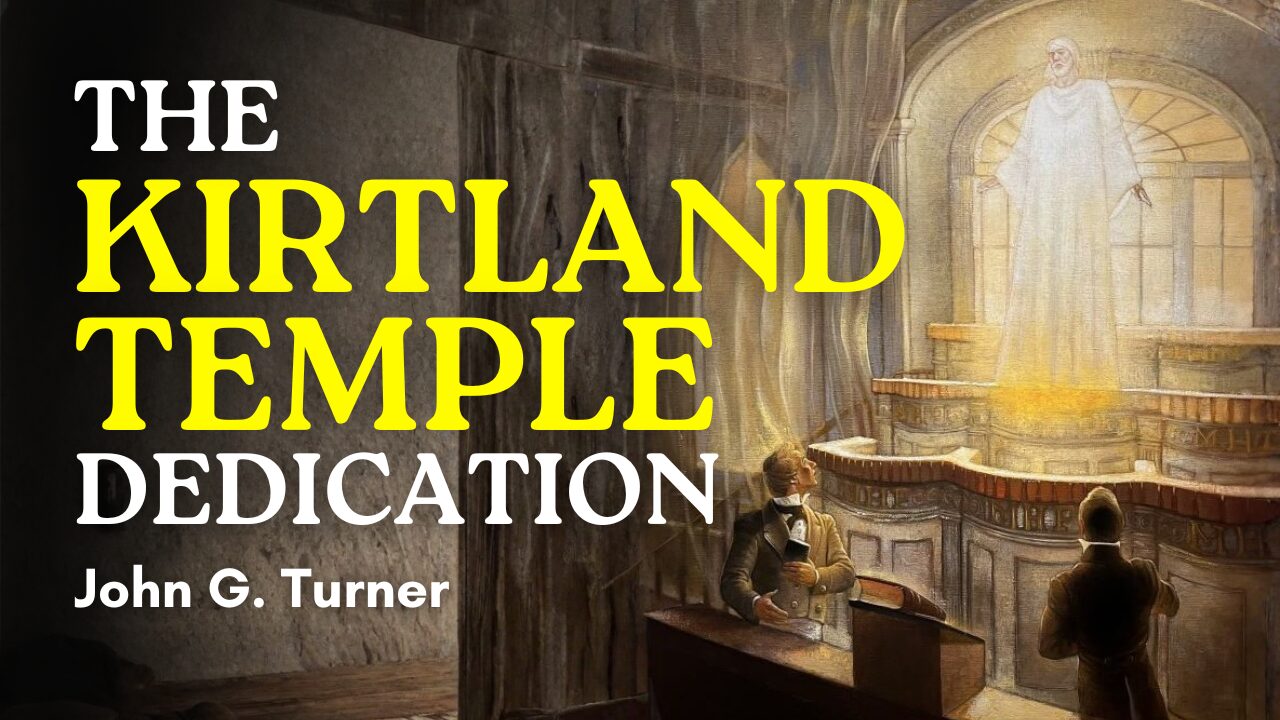
Thumbnail Credits: Image by Gary Earnest Smith
Originally published on mormonstories.org.
Transcript
Machine-generated and lightly edited. Click any timestamp to jump the audio to that moment. The audio is authoritative; please check it before quoting.
Introduction and Episode Overview
John Dehlin Hello everyone, and welcome back to another episode of the Joseph Smith Podcast produced by Mormon Stories Podcast. I am your host for today, John Dehlin. It is October 16, 2025 and we are knee deep, waist deep, in our multi episode review of this amazing book, Joseph the Rise and Fall of an American Prophet by Professor John G. Turner. We are on chapter 17, which is entitled Jubilee and Pentecost 1836. It's about a lot of stuff, but it's mostly about the Kirtland Temple dedication. And when I say Kirtland Temple dedication, I mean the Kirtland Temple in Kirtland, Ohio that was built by Joseph Smith and the Latter Day saints between the 1830 and 1836 timeframe. And as I like to say, it's a banger. This episode is really, really important. I've learned so much about my own lifelong multi generational pioneer faith by reading this book. So please buy this book. Please buy it. It's a great Christmas gift for friends and family. I honestly don't think there's a better book out there to understand the life of Joseph Smith objectively and thoughtfully and even compassionately than this book. I want to thank all the donors that have made Mormon Stories podcast possible, but also everyone who's donated to this particular project. If you value this project and you want to see it continue, please go to donorbox.org Joseph Smith and become a monthly donor. And we'll keep this up for as long as John wants to and for as long as you find value in it. I think that's all I've got. John Turner, it's a little bit earlier for you. Thanks for joining us early.
John Turner You got it. It's not as early as it is in Zion. John De Lin and I get very excited talking about the Joseph Smith and the Kirtland Temple. I do think it is one of the high points in his prophetic career, if you will. And it's really instructive in terms of thinking about his talent for religious leadership and institution building. So I think it's really important. I agree, it's a banger. I wish I'd been there. But at least we can read and talk about it.
John Dehlin Yeah. And I'll just say, you know, people that, you know, mostly ex Mormons who who feel like they weren't given an accurate view of Joseph Smith's history tend to tend to, number one, not know much about his life. And then number two, they tend to just assume all bad things about him once they learn, you know, some understandably troubling things like his polygamy stuff. But as angry as this might make some of my viewers and listeners, this book is helping me gain a real respect for Joseph Smith's leadership. Again, not. Not wanting or. Or wanting to excuse any abuse that also occurred. But this, this episode, this chapter on the Kirtland, as you said, this, this. This chapter on the Kirtland Temple dedication is just a shining example of some incredible leadership. So before we jump in, was there a clarification or some type of comment you wanted to make about a past episode?
Revisiting Lucina Elliott and Clergy Abuse
John Turner One comment on our prior episode in which we talked about the grim case of Lucina Elliot, who was beaten by her parents and endured thoughts of killing herself, hanging herself, in order to get rid of her affliction. We talked about this in the context of Joseph's ecclesiastical leadership. And I thought we did a good job of exploring the details of the case. And at one point in that conversation, you suggested, or you asked something along the lines of, what does this say about Joseph's character? That he wasn't as concerned with this instance of abuse as his brother William was. Which, you know, I think that's a fair question. And I said a couple of things in response to it, including that in both 1835 and 2025, many institutional leaders are too quick to lean on bonds of loyalty to avoid serious investigations of abuse. I think things across the board, they are better in 2025 than in 1835, but that's still too often the case. And I also said that, you know, for Joseph, this was not. This is not a top level issue. On. On the very same day, he's examining plans for the construction of the Stake of Zion in Kirtland, he's meeting with Bishop Partridge, showing him and maybe others his Egyptian artifacts. And Joseph gets more hung up on both his brother and maybe even his mother questioning his authority than he does about the abuse itself. Coincidentally, after we recorded our episode, I read a review of my book. Not that authors ever do that. Right. And the reviewer commented on the fact that he had found this, the Louis, the Lucina Elliot case, nauseating. And I think that's a good reminder of, you know, what. What matters on a human level might not be the same thing as what matters in terms of understanding Joseph Smith's leadership. I think the fact that Joseph mostly ignores this horrific case of abuse, it's unfortunately a fairly banal or ordinary thing. You know, it's not. It's not surprising, but what Luis Lucina Elliott endured at the hands of her parents, it's terrible and it's good that William Smith, I think unusually, really pressed the point. And at least because of that, David and Mary Elliott had to publicly acknowledge their guilt and demonstrate some contrition. So good for him. And yes, I do think it's an unfortunate blind spot that Joseph had. And the fact that a lot of people share it doesn't make it any less unfortunate.
John Dehlin Thank you. And I'll just add two things. Number one, my understanding about organizations is, and this is from my friends who are PhDs in organizational behavior, organizations are pretty much always going to prioritize the health and strength of the organization over the people. And that's not to excuse that behavior. That just tends to be the reality of how the world works. And so I don't think we're saying that Joseph Smith didn't care about the abuse of a member of his fold, but, but as a prophet, one of the things prophets and presidents do is they protect the fold. And sometimes protecting the fold in its reputation or it's, or it's order.
John Turner Right.
John Dehlin Or the relationships, the important strategic relationships inside. Sometimes what organizations do is, is they paper over abuse for the sake of the organization. So, you know, that's just the world we live in. And the organizations that don't do that as much deserve our respect. The other thing I think is that just came to my mind as you were talking. We've talked once or twice, I think, in this series about Martin Harris being credibly charged with beating his wife. And I believe there's even reports that we've either discussed or will be discussing about Joseph potentially physic, being physical with Emma. And I'm just guessing that number one of family abuse, physical abuse is all too common today. And I just have to also believe that it was even more common back in the 1830s, even amongst top church leaders.
John Turner Yeah, and. And sometimes in the case of individuals like Lucina Elliott, you know, they're not famous and we don't know that much about their stories. One of the strengths of the early Mormon commitment to record keeping is we do know a lot, a lot more about ordinary and obscure people in this church than we do for almost any other institution or group of people in the 19th century. And that's a real gift. And it leads us to many ordinary, inspiring stories. And it also means that we get a window into a lot of the sad, grisly and grim parts of human relationships. And that's true in this case.
John Dehlin Amen. Quick reminder to everyone, this series is best consumed in sequence. So this is episode 19 of a 19 part series that will be 30x episodes. So feel free to go back, pause this, go back to episode one if you haven't. You can consume this podcast on Spotify as the Joseph Smith Podcast or you can consume it within the podcast feed on the Mormon Stories podcast feed on Spotify, on Apple Podcasts or on the YouTube channel. And we have a special playlist on our Mormon Stories Podcast YouTube channel called the Joseph Smith Podcast and you can consume this series there as well. All right, John Turner, so we left off last episode with Joseph Smith having to navigate a lot of conflict, including significant conflict, as we've already mentioned today with his brother William, but also in the quorum, his first presidency, his quorum of the 12, a lot of conflict that he was navigating. And so where do we begin? Chapter 17. In terms of conflict, I think the
New Year 1836 and Quorum Conflicts Resolved
John Turner best thing to start with is the fact that at the beginning, right on New year's day of 1836, Joseph begins to resolve these conflicts to, you know, clear these log jams within his own relationships and therefore within the church. And the two most significant conflicts were between Joseph and his brother William, and then sort of uneasiness, sometimes conflict between Joseph and a number of the quorum of the 12. And Joseph had been at odds with his brother William for a couple of months to the point that they physically fought with each other. And, you know, not just okay, a shove, but really went at it to the point where Joseph limped home afterwards and had to spend some time convalescing. And Joseph was bitter enough, he did not want to let his brother off the hook easily. But what begins to overcome this is really a family intervention. William pays a visit to Joseph accompanied by Hyrum Smith. Joseph's the brother's uncle, John Smith. Joseph Smith Sr. Martin Harris is also there. And Joseph Sr. Essentially tells the brothers, look, you are breaking my heart by being at odds with each other. And that softens up their hearts. William then confesses that he has been abusive toward Joseph. He asks for Joseph's forgiveness. Joseph at this point is willing to reciprocate and they make a covenant with each other. And I, I use that language purposefully. They understand this as a, as a spiritual binding agreement that they're going to stop finding fault with each other. Emma Smith and Lucy Mack Smith then join the group. Everybody cries. William soon gets his standing within the church restored. And once that transpires, it sort of ushers in a couple of weeks in which Joseph gathers with different groups of church leaders and elders. People confess their sins and covenant to uphold each other going forward. And these scenes of repentance and forgiveness, they seem to very much bring forth, you know, a season of spiritual warmth, forgiveness, and outpouring of spiritual gifts.
John Dehlin Yeah. So. And how problematic is that if Joseph and William have a private dispute, that William, all of a sudden his standing in the church is jeopardized? As someone who's been on the. On the other end, the unpleasant end of church discipline, I am particularly interested in what leads to discipline and what doesn't. When we say his standing in the church, do we mean his membership or do we mean his position in the quorum, or do we mean both? And do you think that's sort of reverse nepotism in the sense that, like, instead of him getting favors for being Joseph's brother, is he getting unduly punished for being Joseph's brother in terms of being a member of what he believes, I assume is Christ's church? Does that make sense?
John Turner Oh, that makes sense. And yeah, being at odds with Joseph did necessarily jeopardize anybody's standing in this case. William was so fed up with Joseph after they clashed about the Elliot abuse case that Williams declared, I don't want anything to do with this church. I think he actually sent in his preaching license as a. As a sign. Sign of that. So I guess he'd sort of, you know, he sort of signaled separation. I don't know if any formal action had been taken against him. Or perhaps in light of this estrangement, it made sense for a council to restore his standing after reconciliation.
John Dehlin So you're saying he may have kind of resigned?
John Turner Yeah. I mean, okay. You know, and I, I again, I don't know how formal this was, but he, he at least had said, look, I don't want anything to do with you or your church, Joseph. I'm. I. I'm. I'm absolutely irate at you.
John Dehlin Okay. All right. Should we talk just a little bit about the Joshua? Is it satius and the Hebrew school? Because that.
Joseph Smith and the Hebrew School
John Turner That appears I mispronounce satius for years. So hats off to you for. For getting it correct. So Joseph had, along with others, decided that. That he wanted to study Hebrew at least by November of 1835. And so they needed to find a teacher. And I think at first, also, Oliver Cowdery had gone off to New York City. He came back with some Hebrew textbooks. And William McClellan, one of the 12, he hires a man named Joshua Sashas, who had been teaching at a nearby Ohio college. And Seychius arrives in Kirtland a bit later in January. Joseph and others have been self studying Hebrew for a couple of months. By that point, as best we can tell, Joseph is really into it. I mean, he, he spends a lot of his spare time working on Hebrew. There are reports in local Ohio newspapers, you know, these, these crazy Mormons now these guys are sitting around studying Hebrew all day. And you know, basically what, what Joseph gets into, sort of everybody else gets into. So you have a lot of, you have a lot of elders plunging into Hebrew study.
John Dehlin And Hebrew's important because what, the Old Testament's written in Hebrew. And so if you really want to understand, like, why can't you just read translations of, of the Old Testament? What, what do you think Joseph felt? Why do you think Joseph felt it would be important or valuable to actually learn Hebrew when there's translations?
John Turner That's a great question. So I think in a sense it was a bit of a mystical experience. And this is not only true of Joseph, but this has also been true of a good number of Christians over time to first of all simply read biblical texts in the original. It gets one closer, of course, to the original language. For Joseph in particular, he understood that Hebrew was the original language with which God conversed with the first humans. So it's getting him access to the pure heavenly language. And in Joseph's mind, that is also a way to access spiritual power. So there's sort of a mystical aspect to it and a spiritual power aspect to it. It's not just a pedantic exercise for Joseph Smith.
John Dehlin So I'm confused because I was taught growing up that Joseph believed that when God spoke to Adam, he spoke in what I was taught was called the Adamic language, which again, the Adam on diamond. Amen. You know, sort of language suggests. So you. But, but then I heard you say that Joseph believed that it was Hebrew that God spoke with the first humans. So help me understand the difference there.
John Turner Well, okay, that's a good, that's a good question. So Joseph writes when he's learning Hebrew that his soul delights in reading the word of the Lord in the original. I don't know that Joseph absolutely identifies biblical Hebrew with the heavenly or Adamic language. However, many Christians believed that Biblical Hebrew is, is the language by which God and the earliest humans conversed. I think Joseph also believes that to be the case. So if Biblical Hebrew doesn't exactly correlate with the Adamic or heavenly language, it's at least a significant step in that direction.
John Dehlin Got it.
John Turner And for Joseph, there is spiritual power in Both Hebrew and Egyptian, which we talked about in a prior episode. Joseph also believes there's more that he can recover by revelation, but in this case, he can at least take a step in that direction by ordinary scholarly means.
John Dehlin And there is just this general fascination with Israelis, with Jews, with the chosen people. So it does track. And when we talk about Egyptomania, there was Israeliomania, at least, you know, amongst many in this time period. So to want to learn the language of the Israelites makes sense to me.
John Turner Yeah. And you know, Joseph, even more so than most Christians, he's very, very much interested in restoring precedence that he identifies in the Old Testament. So we'll see that in the preparatory rituals for the Kirtland Temple. So for Joseph, it's not just, you know, interesting to learn Hebrew or read about ancient Israelite practices. For Joseph, when you read about those practices, you want to find ways of reinstituting them.
John Dehlin Yeah. Do we want to close out just. Just so that we can follow the thread Joseph's relationship with. With Joshua Satius and this study of Hebrew, at least in the 1836 time frame, and then we can jump to the other. Or did we pretty much do that? Is there anything else worth mentioning just while we're on that topic?
John Turner Yeah. So, I mean, I don't think we need to belabor it. Joseph, Joseph spends a good amount of time, despite everything else he has going on, he spends good amount of time between from late January 1836 through late March of 1836, studying Hebrew there. You know, Joseph does have a comment that he hopes that as Satius instructs them in Hebrew, so that might they instruct him in the things of salvation so that he might be baptized. There's no evidence that Satius takes any serious personal interest in Mormonism. He may have embraced other. Another form of Christianity, but he doesn't convert to Mormonism.
John Dehlin Okay, so no conversion, but that kind of closes the chapter with Joshua Satius. Correct?
John Turner Correct. You know, Joseph learns enough Hebrew to do, you know, to be able to get to the point where he can work on translating some biblical sentences. He finds certain biblical. Excuse me, he finds certain Hebrew words and passages very important. We'll see him return to them in things like the King Follett discourse. So, you know, there, there, you know, for him, some of this is. Is formative going forward.
Approaching the Kirtland Temple Dedication
John Dehlin All right, let's go ahead and move. There's a little more conflict in the quorum. We talked about that last time. Is there anything that we want to mention? Because this is certainly this doesn't end as a chapter on conflict. In fact, that's part of the beauty of this story, is the conflict that precedes the Pentecostal joyous rapture. Right.
John Turner Yep. I mean, unfortunately, if I may foreshadow, we'll be back to conflict next chapter. But, no, after reconciling with William, Joseph is just in a. In a really reconciliatory mood. So the 12 ask to meet with him and the other members of the First Presidency, and they come and they lay out their complaints, and this has been going on for months. They complain that Joseph has listened to uncorroborated allegations against them. They're also a bit petty. You know, they. They wonder about their place in the church hierarchy. There's been a recent meeting in which Joseph, as frequently happens, he asks different quorums to assent to something. And in this case, he called on the high councils of Kirtland and Zion
John Dehlin after.
John Turner Or, excuse me, before, he called on the 12. So the 12 felt slighted and disrespected. They're not being honored now. If you got Joseph back in the fall of 1835 and you started in telling him how he's doing all of these things wrong and he's disrespecting you, he would have been really prickly. But he's in this reconciliation mode, and so he grants, you know, maybe I've spoken. I have spoken too harshly at times. I've wounded your feelings. You do have authority next to the church's presidency, above those high councils. And, you know, everybody forgives each other. And, you know, and this is often visual, these men, you know, they hold each other's hands. They pronounce blessings on each other. You know, they promise not to give. Pay heed to gossip in the future. They're going to uphold each other. And now that Joseph has reconciled with the 12, he's reconciled with his brother, he's ready to move forward, to get his male associates ready for the long promised endowment of power that is going to accompany the solemn assembly in the Kirtland Temple.
John Dehlin Yeah, and I'll just say, like, I always. I always kind of look at what makes religion so valuable to people. And I've mentioned it on this podcast before, it's things like identity, meaning, purpose, morality, spirituality, resolutions about the afterlife, those sorts of things, Opportunities to serve, and, you know, the other. The other thing I just add before I make a final point as an introduction to the Kirtland Temple dedication, is idleness. You know, you could say it as idleness is the Devil's workshop. You, you could also say that, that people really benefit when they're part of a cause. Right. And what I'm noticing about Joseph Smith is the best way to build a movement, the best way to resolve conflict, the best way to succeed is by giving people a vision, by being a visionary, by being a prophet and almost having self fulfilling prophecies come true. And this idea of a promise of an endowment from on high, a promise of special power, a promise of a temple being built that's the Lord's house, a promise that there will be more ordinances, more blessings that await, a promise that people will be involved in ushering in the second coming of Jesus. This is all stuff that gets people focused on the future, focused on building. And really it's the difference between just say naysayers and critics that just tear down and like the types of leaders that really deserve respect, which are the ones that can build something that doesn't just lead to something built, but builds a movement that can endure. And that's why I'm taking a second approach to my sometimes, often critical eye of Joseph, because he was a builder that built stuff and it's really hard to build stuff. And this chapter is an example of him giving a bunch of people a bunch of promises and getting them organized to build something that they all participate in the building of and benefit from the building of that ends up lasting hundreds of years. Because the Kirtland Temple still exists, right to this day, Right?
John Turner Yeah. And it snows. Yeah, it's no small feat. And one thing that, honestly talking through these chapters with you, John, that I've realized is one of the things that Joseph repeatedly did in response to conflict, long intractable conflict, was to introduce rituals that bound these fractious people to him and to each other. And you know, I don't think that was conscious in a sense, okay, there's conflict, let's do some rituals. And. But he does that again and again. We'll see it again, by the way, when we get into the story of plural marriage and Joseph's conflicts with Emma. Again, ritual provides a path toward reconciliation and the easing of conflict. And I don't know, it's hard to, it's a little bit hard to explain. You can't just say, okay, there's conflict, here's some ritual, right? It has to be something that's really going to speak to the people involved. Joseph somehow has a penchant for introducing rituals and ordinances that do deeply speak to his people, in part because they're rooted in biblical symbols and texts that his people accept. What I think is remarkable, and it probably speaks to the charismatic relationship that he has with church members despite all of these conflicts, is Joseph is often introducing things that were not familiar on the landscape of American Christianity. They are rooted in the Bible in maybe idiosyncratic ways, but they very much accept Joseph's priestly leadership in these, in these sorts of episodes. And I find that I, I, I do find that that is something that is at the core of the church in the 1830s and the early 1840s going forward, even with Joseph's successors. And it's definitely. I agree with you. It's very much a part of the story that we need to reckon with.
The Endowment of Power and Temple Architecture
John Dehlin We've talked about this before, but when Joseph promises an endowment of power, does he mean the typical Pentecostal stuff, Speaking in tongues, healing, you know, what, what types of power do you think people are anticipating they will receive? And what types of things will, will they be able to do as humans, in their minds that they can't do before receiving that special endowment of power that in their minds they will be able to do after they receive this endowment of power? Or is it that mechanical and, or transactional in their minds, do you think?
John Turner Well, I do think, you know, it's an allusion to the instructions of Jesus that his, his apostles should wait in Jerusalem until they are endowed with power. They would then have expected an outpouring akin to that at Pentecost, which would sure be replete with speaking in tongues, probably with visions. But I think it's also important to remember the purpose. So in the early Christian church, so the New Testament account, that Pentecostal outpouring of power, it leads to the mass conversion of thousands. And so when Joseph is telling his elders, you're going to receive an endowment of power in the house of the Lord in Kirtland, and then you're going to go out into the mission field again. The expectation is not just you might speak in tongues or have a vision, but you will be endowed with the power to go out and bring people into the church. So that, I think, is the ultimate mass convert.
John Dehlin Mass conversions, right?
John Turner Mass conversions.
John Dehlin Yeah. Well, I resonate with that as someone who served a mission, a desire to, you know, to convert thousands, even in one. In one, standing on a box in the middle of a Times Square kind of thing, the ability to speak or, and convert thousands, or just in the example of Kirtland, being able to convert, you know, Sidney Rigdon's entire congregation to the Church. What an amazing power that would be if one could receive that, right?
John Turner Absolutely.
John Dehlin Yeah. Okay, so really quickly, how impressive was the Kirtland Temple in kind of the early 19th century context? Was it comparable to a Presbyterian or a Baptist chapel of the day? Was it something way more spectacular? Was it different than the buildings that would be in a. In a. In a typical city center? How. How spectacular was the Kirtland Temple for its day?
John Turner That's a great question. So on the outside, it looks like a big Protestant church. You know, if you just saw a picture of the Kirtland Temple, I think you wouldn't immediately understand how distinctive it was. Now, for a town the size of Kirtland, it's big. I can't really quantify that. I think It's. It's over 100ft tall. So for a small town, it was very large in the mid-1830s. That doesn't necessarily mean it was huge compared to some big urban churches that you could find at the time. What is a couple of things that are distinctive about it, and if people have visited the Kirtland Temple today, the first of these one, it would be a little bit hard to grasp. The exterior was striking in a couple of respects. So the exterior walls were originally painted light blue. They're white today.
John Dehlin The.
John Turner I don't think this is the case today. The. The massive double doors on the temple were green. The bell tower was originally multicolored. So this was up on a bit of a bluff in Kirtland. You could see it from a distance. And I think, yeah, it did really stand out as a large, colorful building. The interior of the interior of the Kirtland Temple is what is truly distinctive, though. So one thing that is very much not like a typical Protestant church is there are two main levels. There's not just one big open space with seating. So there's two floors that are essentially identical with tiers of pulpits on each end of the building, which is also a bit odd. So you could, in theory, you could sit and look either way. If listeners are not familiar with the Kirtland Temple, I would definitely, you know, Google you know, Kirtland Temple pulpits. There's some great photographs that are on the Library of Congress website, so they're easily attainable. You can, you know, and you'll get a sense this is. This is a. This is a. A building that. And this is true of so many aspects of Mormonism. You know, at first glance, it's recognizably Christian. It sort of looks like a Protestant Christian Church. But then when you go in, you see. No, this is, this is something different and distinctive.
John Dehlin Yeah, I've been there, and it was a remarkable experience, especially if you've been to an LDS temple today. It's very different in many ways. It's not what you would expect an LDS temple to be built like. And it just, it's a really important testament to the evolving nature of the rituals and the temple rituals and the temple ordinances and just the temple buildings themselves.
John Turner No, absolutely. And, you know, we were talking about an endowment of power, which might sound like the endowment ceremony, which the church. An ordinance that the church practices today. And the endowment of power at the Kirtland Temple and the rituals that accompany it. They. Those are not the same things. Joseph builds on them in New Directions in Nauvoo, which we'll talk about in future episodes.
Jubilee, Pentecost, and Ritual Context
John Dehlin Okay, so you titled this chapter Jubilee and Pentecost. And I have to admit that growing up, I didn't have a great. Growing up in Texas, I didn't have a great impression of the Pentecostal people. I kind of viewed them probably as low on the rung of, I don't know, respect or coolness. I think I associated them with snake handlers and in speaking of tongues, which I would have unkindly characterized as gibberish. So I didn't have a. Just like the Pentecostals didn't think much of the Mormons, I didn't think much of the Pentecostals. And so the word Pentecostal I don't like. You know, my Mormon brain doesn't like it being associated with anything Mormon. Having said that, like, you know, our mutual dear friend is Christopher Thomas, who wrote this book called A Pentecostal Reads the Book of Mormon A Literary and Theological Introduction. And it's taken me a couple years to realize why someone as brilliant as Chris Thomas would care so much about the Book of Mormon and Joseph Smith, to the point where he, he, as a Pentecostal scholar, like, led the Book of Mormon association or whatever. I know it has a more formal name, but he led an association of Book of Mormon studies because he cares so much about the Book of Mormon. But the reason why he does is because the Book of Mormon is so dang Pentecostal, in my opinion, and I think in your opinion, but also the Kirtland time period is so Pentecostal. And this, this, this chapter may be the Pentecostal highlight in the Mormon Church, I don't know. But. So I just want to give that as a precursor to what we're about to talk about. We're about to go, we're about to go full Pentecostal, everybody. I'll pause. Do you have a response to that before I dig in?
John Turner No, I think that's quite right. I mean, at the, the, you know, the final chapters of Moroni in the Book of Mormon, they talk about the persistence of spiritual gifts, speaking in tongues, the interpretation of tongues that was very, very common and significant within the church in the mid-1830s. And so, yes, we'll, we'll talk about that, but that's a good way of framing the chapter.
Washing and Anointing Ceremonies
John Dehlin Okay, so the Top of page 176 begins with the discussion of something that I would sort of associate with the washing and anointing part of the current LDS endowment. So in the, you know, without being disrespectful to the sacredness of the LDS endowment, I think it's fair to, it's okay to say that an LDS adult is endowed in the LDS temple. And before they do their endowment ceremony, there's a washing and anointing ceremony where they're not literally washed like a bath, but they're symbolically washed and they're anointed with oil in an ever changing way. Because the way that I was washed and anointed in 1988 is very different from the way they're washed and anointed in 2025. But the way I was washed and anointed in 1988 is very different than the way washings and anointings happened in Kirtland in 1836. So, like whiskey is involved and actual baths. So talk to us about that. The emergence of this, of this ritual.
John Turner So, yeah, so Joseph introduces both washing and then anointing in January 1836 in Kirtland. And he does later build on those. He later understands those, as you know, they become the preparatory part of the Nauvoo endowment. So in this case, and I do find this rich detail just fascinating and it gives us a clue into how Joseph and his associates create ritual. So what Joseph does is he invites this is right after his reconciliation with the 12, he invites Oliver Cowdery and John Corll to his house. Those two men had overseen the last phases of the temple's construction. And Joseph Cowdery coral. And they're joined by Martin Harris. They undress and they wash each other's bodies with pure water. And then they bathe each other with whiskey perfumed with cinnamon. It's quite something kind of expensive.
John Dehlin What's pure water is that Boiled water? I don't think they have Ozarka.
John Turner That's a great question. I don't know if it means boiled or simply out of a stream, so I'm not sure. So I'll check. And if listeners are familiar with the word of wisdom, they might remember that strong drinks are not to be consumed, but they are for the washing of your bodies. And you can find other contemporaries who recommend whiskey baths for medicinal purposes that, you know, bathing in spirits that could be good for your health. I've never tried it, so I can't, I can't say whether that's the case. But what's fascinating to me is Cowdery has a comment that the purpose of the ritual is to make them clean before the Lord for the Sabbath. And he also notes that the priests of ancient Israel used to wash always before ministering before the Lord in the temple. So in a way, Joseph is tapping into contemporary fads and medical advice. But at the same time, you know, he and his associates, they're reading the Bible, they want to act like the priests of ancient Israel and they wash themselves. And so church members, these Latter Day Saints, they should also cleanse themselves through ritual. Washington
John Dehlin Now I'm going to share with you a response that may seem a tiny bit jarring or scandalous, but I think it's interesting. So I shared with a friend of mine is reading this book with me and we were talking about this passage about the cinnamon whiskey washing, bathing naked. And the friend said to me, wow, is it possible that Joseph Smith was somehow bisexual, that he was attracted to men, not just women, but also men, and that there was some sort of erotic undertone to this ritual. And my immediate reaction was that, no, that like what came to my mind is the mikvah, because I interviewed an ex Orthodox woman named Tova Mirvas on Mormon stories and she told me that today in Orthodox Jewish temples, women do a monthly naked washing after their menstrual cycle. But it's part of a religious ritual. And I don't know if the bathing that you referred to with the ancient Jewish priests would also be called a mikvah, but to me, there's no erotic undertones to this. To me, it's literally trying. We talked about Israelomania, right? We talked about Egyptomania and Israeli mania. To me, this is nothing less than Joseph and his colleagues trying to be as Israeli or as Jewish as possible. What would you say?
John Turner And I think your instincts are correct. Now, that doesn't mean that individuals who engaged in these practices would never have had feelings along the lines that your friends brought up. Who knows? But, yeah, I think the other thing I'd say is this is really unusual for American Christians. I mean, a lot of Americans at the time don't bathe at all, especially in, you know, outside perhaps of some urban or upper class, you know, folks. A lot of people bathing is unusual. Men getting together and washing and bathing each other in under, you know, undressed and really intimate ways. This is really unusual. Now, I think that is probably one reason it was so powerful for the individuals involved. They're doing something totally different from their prior ordinary experience.
John Dehlin Yeah. When I went through the temple, I had a poncho where my sides were completely exposed, and I was completely naked under the poncho. And the. The person took oil and touched various parts, including my inner thigh and my abdomen. And it was really shocking to me at the time. And since then, the church has sewn up that garment. And I don't think they do any of that anointing with the finger on the naked body anymore, which I think is a good thing in 2025. But what. But I guess the reason I'm bringing that up is like, I thought mine was exposing me, but I hadn't seen anything, I guess, is what I'm saying. And I'm guessing that this bathing version of the washing and anointing continued after and that this wasn't the only time where the washing and anointing in a temple ritual included actually getting naked and washing in a bath. Is that right?
John Turner Correct. No, Correct that that persists in Nauvoo, the anointing Joseph introduces a few days after the washing and bathing. And again, this is biblical precedent. There's a lot of biblical material about anointing with oil. But in this case, Moses anointed his brother Aaron and his sons. And so that's. That's the precedent. And I think it's interesting the way Joseph, I would say, organizes the ritual action. He has his father, Joseph Sr. The church's patriarch, take a seat. Joseph and his counselors in the presidency and a couple of other men. They form a circle around Joseph Sr. Joseph Jr. Takes a vial of oil. The other men raise a right hand in the air, and they bless it. And then he anoints. Joseph anoints his father's head with the consecrated oil and blesses him. Then, in order of their age, Joseph senior anointed the members of the church presidency, including his son, Joseph Jr. So you see here, and this will continue throughout this entire story of the Kirtland Temple, you see a lot of concern for decorum and procedure, doing things in order that everybody has a particular place. Now, Joseph, anything you want to say about that? John? Before I.
John Dehlin The only. The only thing that occurred to me was in 20. In 20, 25, you, like, you turn 18 or 19, and if you're going on a mission, you go through the temple, you take out your endowments, which includes a washing, which includes a washing, anointing. I don't. I was never taught, if I recall, that that ritual had its origins in what Joseph Smith did with his early apostles and family in Kirtland. And I just. It felt almost like this thing you do, but it feels kind of weird. And you hear that it might be Masonic and you go through it and it's kind of like, I hope I don't have to do that too much anymore. Like, I just. I just. As a reflecting. I think it would have been much more powerful for me to go through it and a lot less troubling or traumatic if the church had found some way to teach me this history so that I could have felt like I was going through something that was a type and shadow of what the earliest church leaders did. And I guess I can speculate as to why they wouldn't have wanted to have me read this chapter before I did my own endowment, took out my own endowments and experienced the washings and anointings. But this is some really beautiful and powerful context that I think would have made it more meaningful to me. And there's a part of me that wishes that going forward, Latter Day Saints will read this chapter before they take out their own endowments so they can feel that tie to the earliest years of the church. And I don't know if that's a weird thing for me to share on this particular series, but that was a thought I had because it's kind of beautiful. It could be viewed as beautiful instead of awkward and weird.
John Turner Yeah, maybe.
John Dehlin I don't know.
John Turner Well, you know, it's interesting to me that Joseph, you know, he. And I said this previously in a way. So Joseph introduces these practices which. Particularly in terms of the undressing, the washing and the bathing, that's new. And it's really unusual. You would think the men would have thought, well, this is weird. But somehow Joseph is able to introduce new rituals that he connects them to biblical. Biblical precedent. These men have. They seem to. They eat it up, I think, because they. They accept Joseph's priestly leadership. And I think. I think this is unusual. I mean, if my pastor, you know, was going to roll out something like this this coming Sunday, my response would be, yeah, I, you know, maybe I won't. Maybe I won't do that. But that's not the way it seems to work with Joseph and ritual and his followers.
John Dehlin Yeah. Okay. Well, that's a powerful and a beautiful moment, and I'm grateful that I learned about goes on at the bottom of 176 to share this really powerful moment when the first presidency, according to your book, confess their sins. Can you talk about that episode? It's a little bit timely because the new president of the prophet of the church has just been chosen. Dallin H. Oaks. Dallin H. Oaks. Lots of good things about him. One quote that he's known for is having said, we neither seek nor offer apologies. So in a day where the church maintains a really. Church leaders maintain a really formal relationship with the membership and with the outside world, the idea of the church First Presidency confessing their sins in an emotional way is kind of unthinkable. So can you share this story? Because for me, I was moved by it.
Confession of Sin and Prophetic Visions
John Turner Sure. So this is in between the washing and the anointing. So it's the day after Joseph has had this powerful ritual experience with a small number of men. Then he gathers with a large congregation the next day, which is Sunday. And Joseph. And he does this repeatedly over the coming months, he organizes the church. So there's a recognition of the presidency, first presidency, the 12, the 70, the high councils. And then, as you said, the members of the First Presidency, Joseph, Sidney Rigdon, Frederick Williams, they confess their sins. And then other church leaders do so as well. Now, this is one reminder. We have a lot of information, a lot of documents about the history of the church in early 1836. But we don't have, you know, we don't have a television recording. We don't have a recording of this meeting. We don't have a transcript. So we don't know the substance of what they were confessing. Are they. Can they making general confessions? Are they being specific about things we don't know? But again, and in a way, this is. This is a ritual procedure as well, this recognition of quorums and then group by group, you know, confession of sin. It's powerful. And so a lot of people who are present, they are overcome with emotion. They sob, they weep. And as happens again and again during these months, there's then a spiritual release and rejoicing. And so there is spinning, speaking in tongues. They're singing in tongues. People are Prophesying, William Phelps says it's like the Day of Pentecost. So in a sense, in. For these several months surrounding the Kirtland Temple, instead of being sort of a single Mormon Day of Pentecost, it's Pentecost almost every other day. There's that much spiritual power in Kirtland.
John Dehlin Yeah, it's beautiful. And, yeah, it's interesting to learn about this kind of for the first time. And it's also interesting to kind of contrast it with the church that many people experience today. And it almost feels like the church should consider doing more of this type of stuff, and it would just be consistent with its own origins. So for whatever that's worth. So. And I guess there's no way to know what sins were confessed by the First Presidency. Right.
John Turner I don't think there's any specificity in the journals that Joseph scribes kept or that Oliver Cowdery kept that month or. Or elsewhere. So we don't know. I think we're getting some of this. Getting some of this from a letter of William Phelps as well, but I don't think he specifies.
John Dehlin Okay. I would love to be. Have been a fly on the wall to know what sins they're publicly confessing.
John Turner Yeah.
John Dehlin All right. So you talk about after the anointings, which I assume we've kind of already discussed, unless it's different anointings.
John Turner No, those are the ones best. Yep.
John Dehlin Then it says your book says the heavens were opened. Let's talk about visions now, because I think that's pretty relevant.
John Turner Yeah. So the heavens open a lot during these months, but in this case, after that ritual anointing in which Joseph anoints his father and then his father anoints everyone else, Joseph has a series of visions. So he sees the celestial kingdom, and within it, he sees ancient figures like Adam and Abraham. He also sees his parents sort of being there in the future. And he also sees his brother Alvin, who died at a very young age in 1823. And that, of course, raises the question, how has Alvin attained celestial glory? Because Joseph and his church teach that baptism into the true church of Christ is required for the remission of sins and therefore for celestial glory. And Joseph, in this vision, receives an answer from the Lord that those who died without a knowledge of the gospel, who would have received it had they tarried on the earth, they will have a place in the celestial kingdom.
John Dehlin And this, to me, feels like the precursor to the. The baptism for the dead and the proxy work for the dead. Doctrines that I associate more with nauvoo it sounds like they have their origins in 1836, Kirtland. Does that seem right?
John Turner Yeah. Well, and it's. It's a reflection of the fact that Joseph has probably already been thinking about this issue. He is thinking about this issue. His answer in 1836 is that people like Alvin will have a place in the celestial kingdom by the time we get to Nauvoo. Joseph reaffirms that. But now there's a ritual mechanism to ensure it in baptism for the dead.
John Dehlin And how much of a hot take was that in the Protestant Christian, or even the Catholic Christian context of the 1830s to say that an unbaptized, you know, brother, in this case, Alvin, is gonna be in heaven?
John Turner Yeah, well, there's always, you know, it's always difficult for Protestants to feel assured about anybody's salvation. And so when Alvin dies in 1823, there's anxiety for some members of the family and some outside the family that he's died without having had a conversion experience. And so he doesn't have any evidence of what Protestants would refer to as saving faith. So that's. That's sort of the. The pre Mormon issue, the Protestant issue. And then for after 1830, the issue is that. Is that he's died without baptism. Now, for most Protestants, baptism is significant, but it's not theologically connected to salvation. It symbolizes it rather than contributes to it. But for Joseph, baptism is a strict requirement. No baptism, no remission of sins. And so that's a big issue, not just for the Smith family, but for all church members. And that's a source of anxiety because people are not only worried about their own salvation, they're worried about the salvation of their loved ones. And so this is the beginning of Joseph actively providing an answer to that very common spiritual anxiety.
John Dehlin And do these new teachings in any way conflict with or contradict what had been written in the Doctrine and Covenants, Book of Commandments, Book of Mormon, prior to 1836? Or is this consistent with what Joseph had been writing or teaching prior, as far as you know?
John Turner It's a great question. So I'm blanking on the specifics, but I presume that prior to 1836, you could find things in Joseph's Revelations statements, maybe in the Book of Mormon, about the necessity of baptism for the remission of sins. I think what is really what you see going forward is Joseph is trying to find a way of being consistent. You know, on the one hand, baptism is a requirement. On the other hand, you don't want to Damn everybody who died before 1830 or who died without having heard the gospel. So baptism for the dead is Joseph's ultimate sort of solution for how to be consistent while insisting on the strict necessity of baptism.
John Dehlin Excellent. And then also, you know, it's hard. We probably shouldn't just pass over visitations of Christ and of Abraham and Adam and Michael. In your mind, like, you know, Mormons talk a lot about the first vision. They also talk about later the visions, I guess, of like, Elias and Elijah visiting Joseph and Oliver. But like, I don't know, is this a pretty big deal that Jesus and Adam and Abraham and others are visiting Joseph and other members of the church? This seems kind of significant that angels are literally visiting humans in 1836.
John Turner Sure, absolutely.
John Dehlin Jesus and angels.
John Turner So I think Jesus. I. I'm not sure Jesus is part of this scene, but Jesus very much is part of the vision that Joseph and Oliver Cowdery have shortly after the temple's dedication.
John Dehlin In the paragraph below, it says some saw Jesus Christ.
John Turner Right.
John Dehlin Angels appeared to others. Sorry, that's what I meant is in the following paragraph.
John Turner No, quite right, John. You're right. So Joseph himself, I don't think in that vision of celestial kingdom, I don't. I don't think that includes Jesus Christ. I could be wrong. But, yeah, other people, other people are also having these just powerful spiritual experiences. And so other people have visions in which they see the Savior or they see angels. And this, this happens on a large number of occasions between January and April of 1836. A lot of people are tapping into this Pentecostal power.
John Dehlin Yeah, and we, we've. We've talked about this, I think, in previous episodes, and we talked about this before today's episode. What this obviously reminds me of is, is the teachings of Denver Snuffer, who again, was a Sandy, Utah lawyer that started publishing books, basically saying that Joseph Smith taught that we should all strive to have a personal witness of Jesus Christ. And I think a lot of us just thought Deborah Stuffer was kooky and missing the mark. But I don't think people are just seeing Jesus spontaneously. I think Joseph was telling promising people that if they were righteous, they could have a witness from Jesus and even that they should. And if we remember last episode, Joseph and William's fight partly emerged from a debate over whether or not it was essential or important, if I'm remembering right, to have some sort of heavenly witness, maybe from Jesus. So I guess I don't want to brush over this topic as it continues to emerge because, you know, Obviously, Deborah Schnaufer was excommunicated in 2013 for at least in part teaching people that they should seek a witness from Jesus. And I guess I want to try and understand whether Denver Snuffer, to what extent Deborah Snuffer came by these types of teachings honestly. And I remember, by the way, reading In Bruce R. McConkie's Mormon doctrine, this teaching of a second anointing, or you're calling an election, made sure these other types of. These other types of teachings that made it through into the 20th century that Mormon missionaries, when they're 19 or 20, would all kind of whisper about, hey, have you, you know, have you seen Jesus? Have you seen Jesus? Should we try and see Jesus? Like, that's what this is. This. This page is pulling to mind for me again.
John Turner Now, those are, those are good comments. And no, Joseph has created this expectation. I don't know that he's telling all church members that they should expect to see the Savior, but he does. He does tell the members of the quorum of the 12 back in 1835, all who are prepared and are sufficiently pure to abide the presence of the Savior will see him in the solemn assembly. Now, some people don't have to wait that long. They're already seeing. They're already seeing the Savior. And Joseph does talk during the late. In the late 1830s. So just at the very beginning of the Nauvoo years of this opportunity that men, maybe men and women will have to make their calling and election. Sure. Which will include seeing Jesus Christ.
John Dehlin Yeah. Okay. Well, I don't want to belabor that point, but I. I think it's worth noting because it seems to be an important part of our heritage. Okay, so what happens next in the. The lead up to the curtain Kirtland Temple dedication?
Preparatory Gatherings and the Temple's Cost
John Turner Sure. Well, there are. There are just a number of these powerful gatherings. So Joseph, you know, he couldn't anoint everybody at once. So there are other meeting with groups of people for anointings, other just late nights of spiritual euphoria. I think it's also. This is also. And I think it's hard to. It's hard for us to get to the marrow of it. But it does seem that for Joseph himself, these days are powerful and also just deeply satisfying. So there's one night at which Joseph says that when he got home, he just lay in his bed and he couldn't sleep. My soul cried hosanna to God and the Lamb through the silent watches of the night while. And then while my eyes were closed in Sleep. The visions of the Lord were sweet unto me and his glory was around me. Now, this is Joseph telling. Joseph doesn't keep his journal himself most of the time. So this is Joseph telling a scribe, in this case Sylvester Smith, whom he had just quarreled with relentlessly in 1834. And Sylvester Smith is now writing down these words. I think we see a Joseph who's deeply, deeply moved spiritually, also deeply moved by the fact that members of the church are coming together for these experiences. They're no longer at odds. And it's good timing and purposeful timing because the temple, which the saints have been building for years at great cost of money and labor, is now complete. And by late March 1836, it's time for the temple's dedication. So that's really the next key episode in our story.
John Dehlin So I flagged that. That candid moment on the top of 178 about what Joseph. What thoughts and visions and feelings occurred to Joseph when he was laying in his bed. And, you know, it made me again, like my nephew reached out to me. He's following this series and, you know, he had. He was intrigued by my question about Joseph's sincerity as it related to the book of Abraham. But when I read something like this, Joseph lay in his bed but couldn't sleep. And he's saying, my soul cried hosanna to God and the Lamb. And I know I'm repeating what you just read through the silent watches of the night. And while my eyes were closed in sleep, the visions of the Lord were sweet unto me and his glory was round about me. Like, again, this doesn't necessarily seem to be the writings or the musings of just this charlatan fraud guy who just wanted to bilk people and obtain sex, money and power. Like, what this passage suggests to me is that he was feeling spiritually moved himself and that he desired other people to be spiritually uplifted. Now, I don't know if that, you know, I remember from John Adams this idea of a legacy letter or a legacy journal entry where you're really writing for other people. But, like, when I read this, it looks like his genuine reflections. Do you have any comments on that? As a suggestion of Joseph's sincerity of belief about angelic visitors and spiritual uplift for himself and others.
John Turner It's a great question. And as I've said before, I'm. I'm always a little hesitant to try to make a real judgment about Joseph's sincerity at any given moment. And I think, you know, historians, we have to be careful with our sources. You know, I think sometimes you say, ah, this is in somebody's journal. So this is a raw, unfiltered window into his mind. Well, that's not quite the case because just number one, people sometimes write things in their journal that are not just the raw, unfiltered musings of their minds. In this case, Joseph works with a scribe. So we do have to be a little bit cautious. However, my instincts align with yours, John. And I do, I do, in the end, believe that either simply depicting Joseph as a divinely led prophet or a fraud and charlatan, I do. I do think both of those are too simple for Joseph Smith. And even if we might question some of Joseph's individual visions or spiritual experiences, I think there's enough of that material to suggest a genuine engagement on his part. And I agree with you that, you know, for Joseph, it's not just about having personal spiritual experiences. He does very much want to create circumstances in which other people have them. And I don't see any reason to presume that that, that can't have, you know, both institutional purposes and represent a genuine desire on his part.
John Dehlin Love it. Total side note, you mentioned Joseph Koh in the middle of 178. My. My diehard viewers and listeners will know that I interviewed a Michael Kohler, a Yale archaeologist anthropologist who passed away recently. I'm dying to know if Michael Coe is a descendant of Joseph Ko, and I wish I don't remember if I ever knew this or asked him, but maybe if one of my industrious viewers or listeners wants to try and figure that out, wouldn't it be fun if the Joseph Ko you mention in your book is an ancestor to Michael Coe?
John Turner You never know. All right, maybe somebody does know. I mean, that's. That would be. That would be neat.
John Dehlin Okay. You talk about the potential price tag for the Kirtland Temple being $40,000. I'm. I'm always hesitant to do the calculation of what that would be in current dollars because there's different ways to calculate that number. But I'm just going to guess that's a large dollar amount for the time. Correct.
John Turner It's a large dollar amount at the time. And the completion of the temple involves a lot of debt. We'll talk about that next chapter. So it's not as if this is a movement that readily had $40,000 on hand. So it's a huge investment.
John Dehlin And Signe seems to think. Sidney Rigdon seems to think it's the best church ever made. Is that right?
John Turner Correct. Like this is an actual house of the Lord, a house of Jesus Christ built by divine revelation, which makes it different from all of the thousands of other churches in the country.
John Dehlin Yeah, it's meant to be Jesus's literal house, right?
John Turner Yeah. I mean, Sidney Rigdon preaches a two and a half hour sermon on the subject.
John Dehlin Yeah, let's get into it. So let's talk about the actual temple dedication because in modern times, especially with the presidency of Russell M. Nelson, there's a temple dedication very frequently happening somewhere around the world as the church now has over, what, 100 temples in operation. So like this, this Kirtland Temple dedication, as I was reading, it informs a lot of the, of the temple dedications of today. So let's talk about it.
The Kirtland Temple Dedication Service
John Turner Sure. So this is March 27, 1836. A massive crowd gathers. You could squeeze about a thousand people into the space. There are hundreds of others who can't get in. And I think one thing that would. Well, I don't know that much about contemporary temple dedications. I only go to the open houses, John. But there's, you know, there's a lot of decorum. So they're the, these tiered pulpits with seats for high ranking church leaders on one end. Joseph gives his father the place of highest honor, the center of the west end top tier pulpit. So there's a lot of, there's a lot of what I would say, ecclesiastical pageantry isn't quite the right term, but ecclesiastical decorum and order. And Rigdon preaches this long sermon, then he asks everyone in turn to stand and acknowledge Joseph as a prophet and seer. So there's this acclamation of Joseph's authority. Joseph then has the congregation go through and acknowledge other layers of ecclesiastical authority. And I think in a way this would also be familiar to contemporary Latter Day Saints. You know, this, you know, ritual sustaining of church leaders. And I think for Joseph this is deeply gratifying. Again, after all of those conflicts from the previous year, now there's this real sense of unity and decorum.
John Dehlin Yeah, it's inspiring in a way to just see him pivot the community from so much content and the leadership to pivot the community and the leadership from contention, from the failure of Zion's camp, from the failure of Zion to materialize. I almost, I hope I didn't even think to ask this. Did any of the Zion saints get to come up and enjoy the dedication or were they just all bummed out and left out as refugees in some Missouri county? While the kirtland Saints enjoy the Rapture.
John Turner That's a great question. I do. I do think. I do think. Actually, I'd have to go back and check. I do think some elders in particular travel from Missouri to Kirtland. Bishop Partridge is there. So I think the Zion Presidency or High Council comes to Kirtland. So some people are there.
John Dehlin And you mentioned one of the most beloved but also weirdest songs sung in Mormonism today is the song Adamandaimen. And you mentioned that that's one of those songs, one of the hymns that was sung, and part of the reason why it was chosen was because of its references to the pure language, which ties into not just the Hebrew project, but the Book of Abraham project we just covered in the past few episodes. So it's all. It's all coming together, making more sense. Because of your book, John Turner.
John Turner Yeah, I mean, William Phelps is. You know, his hymns. I mean, he. He did have a way with words. And in a way, I think it's an underappreciated influence on the early church. I think he was a really capacious and creative thinker who was close to Joseph, probably inspired him in some ways that we don't fully recognize. And, you know that that second hymn of Phelps, which is sung during the dedication, the Spirit of God, like a fire, is burning. I think that really, that really spoke to people who were there, that the visions and blessings of old are returning. The angels are coming to visit the earth. And after the choir sings that hymn, they partake of the bread and the wine. Joseph stands up, he testifies, yeah, those words are true. Angels have visited me. And Frederick Williams stands up and says, yeah, not only did they visit Joseph, in years past, I. I've saw an angel this very morning between my. Between where I was sitting and Joseph Senior, he's right next to us. And it's, it's, it just crescendos. You know, the meeting closes with these shouts of hosanna and Amen And Brigham Young and David Padden, they stand up, they sing a song of Zion in tongues. They sing in tongues, which I would pay money to, to hear Brigham Young sing in tongues. And then the meeting, it concludes, and it's an eight hour dedication.
John Dehlin I mean, that's wild. That's like one Mormon Stories podcast episode, basically. No, I'm kidding. That's like four General Conference sessions, eight hours. And, you know, obviously, when we do General Conference now and even temple dedications, we sing hymns and we. When we do the. We do the Hosanna shout, which I Think you hold the tissue and you say, hosanna. Hosanna. Hosanna to God and the Lamb. I'm guessing that originates here, is that right?
John Turner Absolutely. Yeah. It's done for the first time here.
John Dehlin But then I don't think we speak in tongues and sing in tongues in modern temple ceremony, temple dedications. And that's again why you began this chapter. You titled this chapter, and I began this episode saying this was a Pentecostal thing. Which does beg the question, number one, why don't we talk about that? And number two, why don't we do that in the modern church? Why did we leave behind what clearly for Joseph and those saints, was such a spiritually unifying manifestation of the Spirit? Speaking of tongues, why did the LDS Church abandon that practice, especially when it's in the Articles of Faith? We believe in the gift of tongues, prophecy, revelation, visions, healing, and in the interpretations of tongues, etc. It's in our Articles of Faith. It's in some of our most sacred founding moments. I mean, we don't have to give it away, but I'm just dying to know, especially knowing that Brigham Young loved it and he was Joseph's successor. There's got to be some dialogue article somewhere about how the gift of tongues gets stamped out in the LDS Church, because clearly it was alive and well for the first 10 years.
Speaking in Tongues, Wine, and Solemn Assembly
John Turner So. Great question. Yeah, you can. You can find scholarship on the point. It remains common throughout the 19th century in Utah, at least in certain circles. I think what I would say is that over time, the. The spiritual ecstasy that you see in the early church and the spiritual gifts that accompany them, they begin to fade out as spirituality gets refocused on temple ordinances. And I think also, I think the second thing is spiritual ecstasy almost by its very nature can be a little bit unruly. And you saw Joseph's concern for that earlier in the Kirtland time period. Now, this is sort of a combination of intense decorum and order with spiritual ecstasy. But speaking in tongues in the early church, it's accompanied by the interpretation of tongues and prophesying. And that is inherently a little bit unruly and potentially disruptive. So it's not surprising that over time, the practice becomes less common and even discouraged.
John Dehlin And that's not just in the LDS Church. I'm guessing the reason why the Assemblies of God and Pentecostals are identified separately from, let's just say, Baptists, Fundamentalist Baptists, and others suggest that other Protestant religious traditions at some point shed the speaking of tongues as well, is that I don't know enough about Protestant Christian history.
John Turner Yeah. One thing that's, I think, useful to know is that it's. As far as other American Protestants are concerned, speaking in tongues makes Mormons, makes early Mormons really weird. It's really. It's an unusual practice. Other churches are not practicing speaking in tongues. You can find a few isolated examples and other movements. No, not so. The Pentecostal movement that you're familiar with, that begins in the early 1900s. That is why Chris Thomas and I find it mind blowing that the Mormons are doing this in the 1830s.
John Dehlin Oh, I just assumed that Pentecostalism had some big, rich tradition that spanned into the 16, 1700s.
John Turner Nope, not at all.
John Dehlin Whoa.
John Turner So the Mormons are totally unusual, distinctive, and weird. As far as other Protestants, as far as Protestants are concerned for engaging in these sorts of practices.
John Dehlin Is there a dialogue article on that? On the sparseness of speaking in tongues prior to the 1830s? Like, that's fascinating.
John Turner I could probably find you something, John.
John Dehlin Dang, I had no idea. That's a big one. Thank you for sharing that, John Turner. That's valuable, huh? Let me ask you really quickly. If you talk to kind of skeptical, you know, formerly believing Mormon historians or people who follow Mormon history today, they'll say they'll dismiss some of these Kirtland visions and miracles as being under the influence of. Of wine or alcohol. And as we've discussed, sometimes they want to also put like, psychedelic mushrooms in there. We've already addressed that in previous episodes, so I don't need you to address that again. But in terms of wine, I know later in this page on 182, you explicitly mention wine. But for the miracles and the visions that we've already discussed today up through the beginning of page 182, is it fair to always associate vision? And by the way, school of the prophets, we talked about wine and visions as well, if I remember correctly. But for the visions and the temple dedication that we've talked about so far today, was wine involved? And does that question even matter?
John Turner You know, I always find that so ironic because in the New Testament book of Acts, the when the cloven, to use the King James term, tongues of fire come down on the apostles and other people are able to hear them in their languages. One of the complaints that is raised is, these men are drunk. And I think it's Peter says, well, that's ridiculous. It's only nine o'clock in the morning. We can't be drunk yet. And so, of course you have some commentary maybe from William McClellan later, you know, comment on the fact that, you know, we were drinking a lot of wine. And in the solemn assembly that's a few days after the temple's dedication, there's a specific point that they're going to have bread and wine sufficient to make their hearts glad. You know, we're not just going to have a little cupful, little. Little tiny cup that you would get at a sacrament meeting. Sacrament meeting. Well, you guys only get water. You get.
John Dehlin You know, we used to have wine.
John Turner We used to get. Right, right. You know, my sort of Protestants, you get a little tiny bit of grape juice. You know, I've been to churches. You get a little sip of actual wine. I always think that makes me think more of the blood of Jesus and the grape juice. But anyway, I think it's true that if you're at a spiritual gathering and you drink a bunch of wine, you're almost certainly more open to all sorts of spiritual experiences, including speaking in tongues and visions. At the same time, if you read through the account of what's happening in Kirtland between January and April of 1836, people are having powerful spiritual experiences all the time and can't reduce all of that to wine and drink. I just don't think that would be a fair reading of the evidence,
John Dehlin let alone psilocybin. Yeah, I heard somebody describe. Somebody trying to describe Jesus himself in some type of summative way, and they basically made the statement that Jesus liked to party. And I like that. I never thought of Jesus as a party guy, and I don't mean to be disrespectful, but apparently that person's review of the Bible showed Jesus attending a lot of parties or weddings or feasts. And I don't know if that rings true to you, but it was a weird. It was a weird thought to have that Jesus really liked parties and Jesus drank a lot of wine. But that just struck me as something that was interesting. Well, I'm not sure if the evidence bears that out.
John Turner Yeah, I mean, in the Gospel of John, Jesus's first miracle or sign is turning water into wine at a wedding. I mean, other than that, you know, there's some dinner parties. I wouldn't want to turn Jesus into, like, a wild party guy. You know, he's not. He's not taking a spring break trip or anything like that.
John Dehlin As far as he's not a lush, you're saying?
John Turner Yeah.
John Dehlin Okay. All right. So that's good. That's good to know. Let's talk about the foot washings that happen. I think we've. We've talked about foot washings at the. In the school, the prophets. Right. Earlier. So this isn't the first emergence of the foot washings, but as modern LDS followers will know, there's a second anointing now that happens where there's a washing of the feet. And again, its origins aren't just in the Bible. They also are in, I'm guessing, some of this activity at the Kirtland Temple dedication. So let's talk about foot washings.
Foot Washings, Blessings, and Cursings
John Turner So, I mean, this is modeled on Jesus washing the. The feet of his disciples, which, again, this is something that's unusual for an American church to be doing. It's not as if all sorts of Protestant churches are getting together and, you know, people are not washing each other's feet. You know, this is not common. But Joseph, like you said, he'd previously introduced this ritual, and he has said in advance, this is going to be an important part of the solemn assembly at the Kirtland Temple. This is now a few days after the dedication. And so they. They fill tubs with water. They've got towels. The members of the First Presidency wash the feet of the 12. There's several. Several hundred elders present. And so takes them until noon to get everybody's feet clean and dry. And while this is happening, people are prophesying, people are speaking in tongues, singing in tongues, shouting hosanna. People are blessing each other. They're also calling down curses on their enemies. In Jackson county, this kind of goes on all day. And then there's a feast of bread and wine after sunset. And Joseph now tells the elders, you have. You have had the endowment that's been promised to you. You're ready. You've been instructed, you've been prepared. You can go out and. And build up the kingdom of God. And we can look forward to the redemption of Zion. Zion in the near future. And there's a big, you know, this sort of closes for Joseph with the men shouting hosanna and amen. And then Joseph is so worn out by all of this, he actually retires for the night. And the spiritual outpouring continues until it was nearly dawn. And people, people see the Savior, some people see angels. And Joseph in his journal concludes it was a Pentecost and endowment. Indeed.
John Dehlin And again, the P word Pentecost is used explicitly.
John Turner Yeah, yeah,
John Dehlin yeah. This idea of a temple dedication lasting days, like, how many total hours was this temple dedication? Like double digits, maybe triple digits?
John Turner Yeah. I mean, this. It is it is really intense. So there's the dedication, then there's the solemn assembly. I think they do, they do actually a repeat dedication because not everybody could get into the building.
John Dehlin And what's the difference between a solemn assembly and a dedication?
John Turner So the. Well, that's a great question. Where, you know, where does this phrase, solemn assembly come from? So there's the, there's the formal dedication of the temple, but the main event that Joseph has been telling his telling church members to anticipate is the solemn assembly that's subsequent to it. In terms of some of the difference. The dedication is for any church member. So men and women. I think there's some children. They're children there too. The solemn assembly is just for the elders. And Joseph's, what he's been orienting them to is that that is where they will receive the endowment of power.
John Dehlin So the solemn assembly is men only? Men only and priesthood holders only.
John Turner Correct.
John Dehlin And they're the ones receiving the foot washings.
John Turner Correct.
John Dehlin And the anointings and all that.
John Turner Correct.
John Dehlin So originally it was men only. Okay, that's interesting. Right, because eventually the temple evolves to be both men and women. Sounds like in the earliest of these temple rituals it was men only.
John Turner It's men only.
John Dehlin Wow, I didn't realize that. That's interesting to know. Okay, so that's what a solemn assembly is. Nowadays they do solemn assemblies. I don't think I've ever attended a solemn assembly for a temple dedication. But I'm pretty sure men, women and children are all allowed nowadays. And I'm pretty sure they don't do feet Washington or have wine or speak in tongues. But they still do solemn assemblies today. And that's where they do the hosanna shout.
John Turner I think, as I said, I've never gotten beyond the open house. John de Lynn,
John Dehlin this idea of actual doing cursings, again, that's shocking because I don't think mild mannered, happy Mormons imagine as part of a temple dedication, the cursing of other people. I don't know if I've ever told you the story, but the Doctrine and Covenants has an actual cursing ritual included in it called the dusting of the, of the feet. And I actually had the dubious dishonor of being told by my mission president to perform a cursing ritual upon somebody once. So I'm, I'm familiar with the teaching of Mormon cursings and I've actually practiced it once when I was around 20 years old, which was not a happy or fun thing to do. And I'm a little bit ashamed I was involved with that. But I do want to just not jump over the fact that cursings was a part of this temple ceremony. And as I understand it, the cursing of people in Missouri and maybe even Illinois continues as an integrated part of Mormon temple practice, I think, into the 20th century. Are you aware of that at all?
John Turner Well, there's a swearing of oaths to avenge the blood of the prophets. Yeah, that. That persists. That. I mean, that becomes part of the ordinance after Joseph and Hyrum are murdered.
John Dehlin Yeah, okay. Yeah. But the idea of these cursings, it's got its origins again in 1836, along with the feet washing. So basically, if we think about all the most sacred rituals in modern Mormonism today, washings, anointings, the feet washing second, even the second anointing, almost all of that originates as early as 1836. The parts that don't are the sort of the. The signs and tokens given in the temple, the handshakes, the oaths. And it probably makes sense that that didn't appear in 1836, probably because Joseph hadn't become a Mason yet, along with like the. The Adam and Eve Satan narrative. And it sounds like we've got a lot of the origins of the temple practice for modern day minus that which I think has its Masonic influences. Am I making an okay association there?
John Turner No, I think you are making a correct distinction. I think. I would also say that the purpose of the ordinances in Kirtland is different. So this is. This is connected to the endowment of power at the solemn assembly. You know, you are engaging in these preparations so that you're pure to be at the temple and to receive this endowment of power. It's not as much, I would say, connected to your eternal exaltation or. Or anything like that, because Joseph hasn't quite, you know, he hasn't quite fleshed out that theology yet.
John Dehlin Okay. And I just looked it up. Apparently, in modern times, every temple dedication in modern times is formally classified as a solemn assembly.
John Turner Gotcha.
John Dehlin And that's according to the Handbook of Instructions. So this idea of the dedication being separate from a solemn assembly, I don't think that persists.
John Turner Gotcha.
John Dehlin Into modern day, according to what I just looked up. Okay. And so again, as a part of this ceremony, not only does Joseph I get. Let's talk about Joseph and Oliver having some really special spiritual witnesses. That's the culmination of these events.
Joseph and Oliver's Vision of Christ and Ancient Figures
John Turner So this is a few days after the solemn assembly, I think. Well, this is early April 1836. So after the afternoon service concludes that Sunday, Joseph and Oliver linger in the temple.
John Dehlin And as if they hadn't been there enough.
John Turner Right, I know, I know. They're almost living there. And one of the other distinctive things about the temple is there are veils that you can lower to create smaller compartments. So they seclude themselves behind the veils in the pulpit at the west end of the building, and they're praying. And then they have a series of visions together. It's another instance of Joseph having a vision in partnership with someone else, sort of the way he has that vision in 1832 with Sidney Rigdon. In this case, it begins with Martin Harris.
John Dehlin Or with Martin Harris.
John Turner Right, or with. Or with Harris. So in this case, it begins with a vision of Jesus Christ standing atop the pulpit in front of them. They describe Christ in language from the first chapter of the Book of Revelation. His hair is white. His eyes are like flames. His face is above the brightness of the sun. And Jesus Christ essentially tells Joseph and Oliver that he's pleased with them, that they've built a house that's acceptable to him. They should rejoice. He will continue to appear to his people in the temple. And then Joseph and Oliver see Moses, Elias and Elijah, and Elijah tells them that he is fulfilling an ancient prophecy, that Elijah would be sent before the great and dreadful day of the Lord to turn the hearts of the fathers to the children and the children to the fathers, and that the keys of this dispensation are committed into your hands.
John Dehlin Okay, I've got several questions. Is that okay?
John Turner Absolutely.
John Dehlin So, first of all, having a veil that hides stuff reminds me of Book of Mormon translation and Joseph wanting people not to see what he was doing with allegedly the plates and, or the seer stone and. Or the hat and. Or the Urim and Thummim, that's obviously what comes to my mind. Do you have any indication of why Joseph and Oliver felt the need to curtain off their visitation with Jesus, Moses, Elias and Elijah? Why wouldn't they want everyone to see it? Why would they need to? Do you have any understanding as to why they would want to curtain that off?
John Turner I. I can only speculate, John. I. I think sometimes being in a small, intimate space, I think that would feel comfortable and perhaps even make them more receptive to a visionary experience. But I don't know.
John Dehlin Okay, so, like, the idea that, like, no, I guess there's some Mormon and maybe biblical scripture that you can't see God and live kind of thing, and if they're seeing Jesus, I mean, this idea of, like, just like with the plates, wanting to protect people from harm, that maybe Joseph and Oliver are spiritually strong enough to see Jesus, but other people aren't. And then there's the other possibility of they're not really seeing Jesus and Moses and Eliza, Elias and Elijah, but they want people to think that they are. Like, those are all possibilities that come to my mind.
John Turner Sure. I mean, I think those are all possibilities. This is, you know, this is an account that is in. Recorded in Joseph's journal. And so it's Joseph and Oliver, Oliver telling it to Joseph's scribe afterwards. I think Oliver also writes something about it in his journal as well. But yes, we're in a situation where we simply, you know, we. We have what, what they shared, you know, without outside corroboration.
John Dehlin And I mean, would this be considered if there's a first vision, Would this be considered the second or the third vision? In other words, the second or the third recorded time where Joseph claims to talk to Jesus, basically?
John Turner So that's a great question. I mean, I don't think it would technically be the second because Joseph and Sidney, you know, they have that conversation and that visionary conversation with Jesus Christ in 1832. But yeah, this is, this is clearly understood as a significant visionary experience. And this is at a time when Joseph, he has spoken on occasion about his early vision, but church members wouldn't really have a clear sense of it. So I think it's also understood as sort of a, I don't know, a crowning experience of this season of Pentecost in the temple.
John Dehlin Later, as we've discussed, there's going to be this question of whether the Book of Mormon witnesses the three and the eight saw Moroni and. Or the plates with their physical eyes or their spiritual eyes. Would that idea be pervasive in 1836 where members of the church would in their minds want to know, wait, was this just a vision in your mind's eye or did they physically appear to you? Would that. Would that sort of distinction between physical visitation with your physical eyes versus a spiritual visitation in your mind's eyes have been meaningful and on the minds of general membership and. Or Joseph and Oliver? And would that have in any way potentially played into the placing of a curtain?
John Turner It's a great question. I don't know. In with regard to the placing of the curtain. I do think that at least the way that Joseph and Oliver shared the story, I think their understanding, or at least the understanding they put into circulation, is that the Savior appeared to us, not simply we saw the Savior through spiritual eyes. And I think I'm saying that because you can see that sort of language used in other descriptions of these Pentecostal Kirtland temple experiences. So when Joseph writes about the experiences of others, his language is the Savior made his appearance, not simply some individuals had a spiritual vision of Jesus. I think the belief is this is the house of the Lord and the Lord appears in it to his people.
John Dehlin Yeah, because, you know, a constant theme I see with Joseph and with other founders of early religious movements is a claim to have special power or special visitations. So my guess is if word got around that as late as 1836, Joseph was talking to Jesus incarnate, that would be very impressive for the members to know that their leader was talking to Jesus actually in physical operation. And so if you wanted to make that claim, and you wanted to make the claim that it happened in the temple, but people were also around, I guess you would want to put the curtain up so that you could it potentially so that you could make the claim that Jesus physically appeared without needing to worry about pesky bystanders saying, hey, I never saw that.
John Turner Well, so I'm going to now give you the. On the other hand, so at the Kirtland temple, people are seeing angels, people are seeing the Savior, but everybody's not seeing them. So that does suggest you need spiritual eyes. You need to have your spiritual eyes open in order to be able to see angels or Jesus, because you have these powerful Pentecostal meetings and people make individual reports of seeing things. And sometimes you have some people who probably see the same thing, but you don't have 300 people all seeing the same thing. So I think that would be my. On the other hand.
John Dehlin Yeah. And my, my, my guess, potentially, and I'm just speculating, is that there would be a lot of power in Joseph claiming to have had a physical visit of Jesus to the temple and that he would want curtains there so that pesky bystanders wouldn't be able to say, I never saw that happen. Yeah, no, I mean, but again, I'm just guessing.
John Turner Yeah, I mean, sure. I mean, I, I guess I, I, I would also say that if I was anticipating a private conference, if I was anticipating a conference with Jesus, which I also have not had, I probably wouldn't get yet. I probably wouldn't do it in the student union at my university. You know, I'd probably find, you know, a little podcast studio or something like that.
John Dehlin Okay, really quickly, some critics of the church like to note that Elias and Elijah, historically biblically, are actually the same person.
John Turner Right.
John Dehlin And they like to point this out as a possible challenge to the veracity of the story because the account is that Elias and Elijah separately appear. But a good Bible scholar will claim that those are actually the same person. So it challenges the credibility of the account. Do you have any. I think I may have even asked you this question before, but since it's. We're in this point in the Revelation, do you have any remarks or comments on that?
John Turner So my recollection is that Elias or Elias is a Greek transliteration of Elijah. So that term then gets sort of absorbed from the King James text. So yes, I think my understanding is that Elias Elijah would be the same person in the Bible and so that that's an issue here. I am sure Latter Day Saints have offered some explanations for that, but I can't remember what, what those explanations are.
John Dehlin Okay, yeah. As I'm looking it up, Elijah is Hebrew, meaning my God is Yahweh, Elias is Greek. So for you, is this, for somebody who's trying to figure out whether this is a true real story or an imagined or a fraudulent one, Is that a meaningful question or kind of a silly, unimportant question?
John Turner Well, I mean, the, I mean the driving question for me is not did Jesus and these three figures appear to Joseph and Oliver in April of 1836? For me, particularly as a non Latter Day Saint, I don't, I don't think that they did. That doesn't necessarily mean they didn't think they saw him, saw them, or saw them or anything like that. I mean, so I guess it's not really a problem for me because it's not the question that I'm interested in. I am, and I, I'm just, I'm happy to, to think about the question more. For me, the, these four months, they are in a way the spiritual height of Joseph's prophetic career. They do show him as a talented religious innovator and builder. And they, they appear these four months. They sort of, it's an interlude of peace and harmony on the heels of some bitter conflicts the prior year and as we'll see before, some even more bitter conflict and personal difficulties right afterwards. So somehow Joseph is able to break through and have these, you know, four months or so of almost uninterrupted, I would say, spiritual bliss and in leadership. And so I wouldn't say it's, it's not like the only season like that during his prophetic career, but it's certainly very noteworthy and left a lasting mark even when considering that Mormon Kirtland collapses over the next two years.
John Dehlin So it might be possible to say this is a top three spiritual highlight in the total career of Joseph Smith.
John Turner I think that's totally fair.
John Dehlin Yeah. Yeah. And for someone, if I'm in the mind of cheering on Joseph Smith and the Mormon people, I'm so happy at this point in your book that he's able to pivot from Zion's camp and the failure of Zion and of independence and of, you know, all of that and all the contention with his brother and with the quorum of the 12 and the first presidency that he's able to pivot that to such a euphoric spiritual experience, that doesn't just make him happy, it doesn't just make the members happy. It's probably fair to say that this, like Zion's camp, fuels core church leadership and missionary work and LDS dedication. Probably not just for years, but probably for generations.
John Turner Yeah.
John Dehlin Is that, is that. Am I taking it too far?
John Turner No, I don't think so. And I think the other thing that I'd say is this is another point in Joseph's life where he needed a win. And I talked about that before. Back in 1827, he'd had this failed treasure digging expedition. The family was. Had really fallen on hard times. Joseph had been arrested for glass looking and he needed to produce something tangible, which he ultimately does through the publication of the Book of Mormon. In this instance, you had the disaster in Missouri, then the frustration, I think, with the Book of Abraham, these conflicts with people he was close to, and he needed to win. He needed some tangible accomplishment. And so not only do you get this impressive edifice, the temple itself, but you get this united people, more than a thousand of them, hundreds of elders coming together. So there's real tangible accomplishment in terms of building and people. At a time when I think Joseph did need a win.
John Dehlin Yeah. And I do think for generations members will remember this day or this week or this month, because to this day we sing the Spirit of God like a fire is burning. Talk about the Kirtland miracles and, you know, mention it as one of the most important moments in our. In our history. So. I loved. I love this chapter. I loved how you ended. I know you got to run. I loved how you ended it by noting that it represents 10 years from the Josiah Stowell Silver Mine Expedition in 1826 to the. To the Kirtland Temple Pentecostal euphoria. Really quickly. The keys that Joseph received, are these the same sealing keys that later the new and everlasting covenant. And even temple marriages, temple ceilings and even polygamous marriages become built upon. Is it these keys? And were they understood to be sealing keys in 1836 as the they were given to Joseph reportedly.
John Turner Great question. So.
John Dehlin And we can punt that to next time if you've got a run.
John Turner So that does become the understanding. I would just say I don't think that's the understanding in 1836. I do think they are understood as keys of authority, keys of priesthood authority, keys to preside over the church to perform the ordinances then known within the church. And then of course, in later years this becomes, this vision becomes very important as the authority to perform the sealing ordinances that are introduced in Nauvoo.
John Dehlin And I guess that makes me wonder why the reported appearances of John the Baptist and Peter, James and John prior to 1830 weren't keys enough. Why they felt like they needed more keys. But maybe I'm asking you that out of the blue, maybe that's something you aren't prepared to answer. But I'm just wondering, why do they need more keys?
John Turner I don't know if at the time Joseph and Oliver. Oliver understand this as receiving authority we didn't have before or as a confirmation of that authority. I'd have to think more about that.
Reflections on the Chapter and Closing Remarks
John Dehlin Okay, well, John Turner, what a fantastic chapter. I didn't think I would love it as much as I did because you know, I'm always like, whoa, polygamy. Or oh, you know, Scandal. And we have a chapter coming up, chapter 18 called follies. Anything you want to say before we sign out?
John Turner If you like Scandal. John de La no, you like chapter 17? You're really gonna like chapter 18?
John Dehlin No, I love chapter 17. I'm not just looking for scandal because I'm just kidding.
John Turner But unfortunately this spiritual peak, I mean, so quickly everything goes south in Kirtland. And next episode we'll talk about the reasons why no rest for the weary.
John Dehlin I don't know what the right term is, but like Joseph doesn't get a very long break.
John Turner The fact that it's titled Follies suggests that it is largely self inflicted.
John Dehlin And I will say that I learned stuff about Fanny Alger. Is it Alger or Alger? How do you pronounce it?
John Turner I am never certain about that. Satius. I now have down. I usually say Fanny Alger, but I hear both and I don't know, I better get it straight before next time.
John Dehlin Well, all I can say is stay tuned everyone, because next episode's a doozy. John Turner, you're always a delight. Thank you so much for joining us today. People love this series and I do, too. And we're just all grateful for it.
John Turner Thanks, John Delenn, and thanks to everyone for listening and looking forward to next time.
John Dehlin All right. And thanks, all of you again for joining us today on Mormon Stories. We couldn't do this without you as donors. Please subscribe to this channel. Please like it, please share it, please comment on it. We love your feedback@mormonstoriesmail.com or in the comments. Thanks. If you donate to Mormon Stories or to this project, if you don't donate to Mormon Stories or this project and you want to see continue the way you see it continue is to go to donorbox.org Joseph Smith and become a monthly donor to this John Turner Joseph Smith podcast project. We love paying John Turner and our staff, so support us if you can. Yeah. Thanks for joining us today. We have at least another 15 or 16 episodes in this series, so there's a lot good stuff ahead. I would say the best stuff is yet to come, so we look forward to seeing you again on another episode of the Joseph Smith Podcast Day Mormon Stories Podcast. Be good to each other, be kind to each other, and we'll see you all again very soon. Take care, everybody.
Transcript © 2026 John P. Dehlin. All rights reserved. Brief quotations are welcome with attribution and a link to mormonstories.org; all other use requires written permission.