Polygamy or Adultery? Fanny Alger and Joseph Smith

Listen on Apple Podcasts Spotify YouTube Download MP3
About this episode
Welcome to part 20 of our epic series on Dr. John G. Turner’s landmark biography, “Joseph Smith: The Rise and Fall of an American Prophet.” Things are really heating up as we enter the mid-1830s in the life of Joseph Smith, founder of the Latter-day Saint movement. This episode dives into one of the most controversial and debated episodes in early Mormon history –Joseph’s relationship with Fanny Alger, a young woman employed in the Smith household in Kirtland, Ohio in 1836.
Was it adultery? Was it an early form of plural marriage? Or was it something else entirely –a “scrape”?
Join us for Part 1 of Chapter 18, where we unpack Turner’s detailed treatment of this scandal, explore how it fractured relationships within the early church (especially between Joseph Smith and Oliver Cowdery), and trace how it shaped the theology of polygamy that would later emerge in Nauvoo.
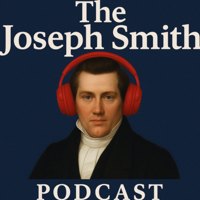
Thumbnail Credits: Main image of Joseph Smith by Del Parson; Background image from stock images
Originally published on mormonstories.org.
Transcript
Machine-generated and lightly edited. Click any timestamp to jump the audio to that moment. The audio is authoritative; please check it before quoting.
Welcome and Series Introduction
John Dehlin Hello, everyone, and welcome to another edition of Mormon Stories podcast, Joseph Smith podcast edition. I'm your host, John Dehlin. Today is part 20 in our epic series on the biography Joseph the Rise and Fall of an American Prophet by John G. Turner. Last episode we covered the Kirtland Temple Pentecostal dedication. It was a spiritual and a communal high for Joseph Smith. And unfortunately, the epiphanies did not necessarily continue because this episode we're going to be talking about the Fanny Alger adultery sl scrape, slash, possible polygamous marriage affair. And then next episode, we're going to be talking about the Kirtland bank scandal and the two. The Fanny Alger scrape, slash affair, slash polygamous marriage combined with the Kirtland bank scandal basically ends. Ends. Kirtland, Ohio. It's the last time Joseph Smith's ever in Kirtland, Ohio is by the end of Chapter 18 called Follies in this book. Really quickly, please subscribe and like to this channel wherever you consume the podcast. If you're on YouTube, click the bell. We thank our donors for making all this possible. And if you value this series and you want to see it continue, you can go to donorbox.org Joseph Smith and become a monthly donor to this series. And again, we couldn't do this without our regular Mormon stories donors of support. So without any further ado, that's the shortest intro I've ever done. It's less than two minutes. John Turner. Welcome back, John, to your podcast.
John Turner Thank you, John Dehlin. I'm glad to be back. I can't believe this is episode 20 and things are really heating up in terms of Joseph Smith's biography. Once you get into the mid-1830s, it doesn't slow down. It only accelerates as we moved toward the last several years of his life.
John Dehlin I love it. Oh, one last thing. As you all know, I attended BYU for four and a half years, and I also attended Utah State University for nine years. In grad school, my friend Tom Grover got sick of me wearing a BYU hat. Especially not only because he hates byu, which I don't, but also because he knows I went to Utah State. So my friend Tom Grover sent me a Utah State hat. And so, Tom Grover, thanks for the hat. If you want me to wear your hat, send me a hat like Tom. Anyway, Tom, love you. Okay, John Turner, where should we begin talking about Fanny Alger?
Who Was Fanny Alger? Background and Context
John Turner Well, I think we have to begin with pronunciation, because all of my Mormon history career, I've been uncertain as to whether it's Alger or Alger Most, most sources that I can find suggest that it's Alger. So I don't know. I kind of. I don't. We don't have to unite on that, but we'll, we'll start there. I think the thing, the other thing I'd say by way of introduction to this subject is it's a good lesson about the need for a certain amount of historians modesty when we have insufficient and contradictory evidence. So we're going to do our best to sort through that. And at the same time, I think it's good to acknowledge that especially in terms of at least nearly contemporary evidence, we don't have a lot. And it's understandable how different people ended up interpreting and maybe even remembering this episode or this, this rumor in really different ways a few decades later.
John Dehlin I love it. I love epistemic and historical humility. Speaking of that, it's. It's October 27, 2025, and just this last week, the LDS Church announced new headings to at least a couple parts of their canon, including the Doctrine and Covenants. And I haven't really spent time understanding the changes, but what I did catch was that the heading of Section 132 of the Doctrine and Covenants was. Was edited. Did you know this, John Turner?
John Turner I know that they have made some edits because a couple people have told me about it. I was traveling the last few days actually talking about Joseph Smith in Southern California. So I haven't really dug into the news yet, but tell me the takeaway.
John Dehlin You must have visited the Claremont Group. That's awesome. All right. Or the Miller's Echo, probably book group two. That's. They're on the circuit there in SoCal.
John Turner Both of them. It was a lot of fun.
John Dehlin Okay, so. So we've talked about this before, John Turner, but I think it's important if we're going to do a full episode on Fanny Alger. Are we saying Alger? Is that what you said?
John Turner Alger.
John Dehlin Alger. Okay. Alger. So Fanny. Alger. Alger. Alger. You know, so what's the term? Spoiler alert. The church is going to end up calling Fanny Alger Joseph Smith's first polygamous marriage. And recently section 132 of the Doctrine and Covenants, which is known as to many, the Polygamy revelation. It has been changed to read the following. This is the second part of the new heading that I think is a change. It says, although the revelation, meaning the Section 132, July 12, 1843, polygamy revelation Although the revelation was recorded in 1843, evidence indicates that some of the principles involved in this revelation were known by the prophet earlier. And then it says, see Official Declaration 1. So, you know, I think we've already talked extensively about the fact that by 1836, 1837, the Doctrine and Covenants condemned polygamy. The Book of Mormon tends to condemn polygamy. Do you have any idea what the LDS Church might be referring to when it claims that some of the principles involved in DNC132 were known by the prophet earlier? And I'm guessing the Church would hope that some of these principles appeared before he got into a dirty, nasty, filthy scrape, slash, affair, which with Danny Alger.
John Turner I think that's true. I'm. So my memory is that in other church publications and possibly in the prior heading to DNC132, that though I would have to go back and check, I think the language was actually a little bit more specific, rooting Joseph's initial receipt of this revelation and its principles to the early 1830s, possibly as far back as 1831, an issue that we've talked about previously. So they might actually be claiming a little bit less in the update. However, I agree. I think the Church has wanted to make space for Fanny Alger in particular to be an early plural wife.
John Dehlin Yeah. So, okay. And do you, do you, do you want to remind anyone what. What they might be referring to when they say polygamy? Ish. Revelations appearing as early as 1831?
John Turner Sure. And we've talked about this on a couple of our prior episodes. So William W. Phelps, who was a close associate of Joseph smith in the 1830s into. Into the Nauvoo period as well. He reported that Joseph taught polygamy in 1831 during his first trip to Jackson County. And Phelps wrote, wrote this recollection, wrote this recollection of a revelation, I think in the early 1860s. Now, I think one other reason for suggesting that Smith had this revelation much earlier than the 1840s is it also emerges in the context of the LDS Church's conflict with the RLDS Church about whether or not Joseph Smith practiced polgamy. Because, of course, there were people in the late 19th century who insisted that Joseph Smith hadn't practiced or taught polygamy, and the Church wanted evidence that he did.
John Dehlin Okay. And so how does it make sense that Joseph was that the Book of Mormon? I guess the Book of Mormon prohibition on polygamy has a caveat built in. Some say I had someone email me and say I wonder if Joseph Smith put that Book of Mormon polygamy caveat in sort of intentionally to provide him with, with an opening for polygamy later. I felt like that's giving Joseph Smith a lot of credit. Do you have an opinion about that?
John Turner I don't think there's evidence to that effect. I agree it is. It's sort of a weird loophole, if you will, to put in. The other reason why it could be there, which would also make sense is the Bible doesn't suggest that God has any problem with public polygamy. The only suggestion to that effect is, I think, a single New Testament verse that suggests that a bishop should be a one woman man. Otherwise, if you read the Bible, Old and New Testaments, you would never get a suggestion that God condemns polygamy. So the Book of Mormon includes this pointed condemnation of polygamy and men having concubines. You could say perhaps Joseph feels the need to put in a caveat in order to explain why so many Old Testament patriarchs had multiple wives. That would be another possibility.
John Dehlin Okay, got it, got it. Oh, interesting. So when Joseph, if Joseph's the author of the Book of Mormon or if God is the author of the Book of Mormon, when they added that one passage in Jacob, I believe it's basically trying to, to excuse the Old Testament prophets practice.
John Turner It's possible. I mean, that occurs to me because, you know, if you look at the, if you look at section 132, which, and I think this, this makes sense. If you think about the context of Joseph Smith, you know, it begins with wanting to know why figures such as Abraham could be justified in having multiple wives and concubines and, you know, God. Could you answer that question? I could. You know, I could certainly. I mean, a lot of Christians have wondered about that. So putting in that blanket, putting in only a blanket condemnation in the Book of Mormon, it could have raised that question. And so maybe that's a reason for the loophole.
John Dehlin Yeah. Because I'm rusty on the Bible always. But Abraham and what was it, Sarah. Abraham and Sarah couldn't have a baby.
John Turner Correct.
John Dehlin And so they took on a concubine, in theory, to have a baby. Is that right?
John Turner Yeah, I think actually in that case, the word that's used for Hagar, who is the woman, is actually wife rather than concubine.
John Dehlin Oh, okay.
John Turner But, but yes, that, you know, you can find lots of, you can find instances of lots of Old Testament figures having multiple wives, sometimes concubines.
John Dehlin So we could just as easily refer to The Book of Mormon's Jacob polygamy exception as kind of the Hagar rule. You know, Hagar law or something. A reference to Hagar and other.
John Turner I've never heard it put that way. I'm sort of just thinking off the top of my head why you might not want to just have a blanket condemnation. I think there are other reasons than Joseph making space for his own polygamy later on.
John Dehlin Interesting. Okay, well, that's fascinating. I'd never thought of that. So, as usual, you're shedding lots of important light. John Turner. Buy this book, everyone. By the way, you won't regret it. There's an audio version as well. Okay, so there's some question about how early Joseph Smith met Fannie and took her in. And as I understand it, there's even some question historically about how early the alleged affair or scrape began. But what we do know for sure is that what became Section 101 of DNC, the 1835 version of the DNC, which I believe was the. A denunciation of polygamy formally, also would have appeared likely in the Book of Commandments, which would have been around 1832, 1833. Is that right?
John Turner So I don't think it would have appeared in there. I think it was specifically drafted in 1835 for that edition of the Doctrine and Covenants.
John Dehlin Okay. But that does make it ironic because that if by your date, 1836 is the date of the Fane Augur affair, it's ironic that the revelation comes out prohibiting polygamy a year before the alleged plural marriage happens.
John Turner Well, this is a bit of a spoiler alert. I understand it not as an early plural marriage, but is most likely a brief affair. And certainly there were plenty of Christian teachings against that, both in the early Church of Christ and more generally.
John Dehlin Okay, all right, so I think we've given enough context. What do we know about Fanny Augur Alger?
John Turner Sure. So she was born. I think there are sometimes questions about the year of her birth, but probably 1816. Her parents, Samuel and Clarissa, I believe they are baptized into the Church of Christ in northeastern Ohio in 1831. They live as a family about 10 miles from Kirtland. At the time, Samuel was a carpenter by trade. I think the family had eight children. So they've got a lot of mouths to feed. And by the mid-1830s, some of those mouths, you know, they kind of need to earn their own way. And the details are sketchy, but Fannie, by the mid-1830s, finds some sort of employment in the Smith household. Historians Disagree or just really don't know exactly what that might have been. It's not clear that she necessarily lived in the household, but that's a possibility. I've also had one historian suggest to me that she worked in the Smith family's dairy business, which was actually located at Hiram Smith's Kirtland property. But what you know, we. It seems that we can be confident that she was employed by the Smith family in some capacity in the. In Nauvoo, Joseph was sealed in marriage to a number of female household servants. And so I think it's easy to presume that Fanny was a household servant whom Joseph took an interest in. That might be the case, but it might not be the case, but he would have gotten to know her through her employment with the family.
John Dehlin Okay. My historical understanding has been that the Alger family arrives in the Kirtland area between 1833 and 1834. And some want to put Fannie potentially in Joseph and Emma's house that early. And what I hear you saying is you really like 1836 as a year. Am I getting that right or are other people wrong?
John Turner So people have always been a bit uncertain about the date because some of the sources that people make use of do suggest a somewhat earlier date. But let me just, if we can get in, get right into the weeds, I'll explain to you why. Okay. Okay. I accept the summer 1836 date and I will say on this point I was persuaded by the historian Don Bradley, who authored or co authored a couple of articles on Fanny Alger in the last couple of years. So the reason why I find this credible is in the diary and. Or really the autobiography of Levi Hancock, who was pretty close to Joseph in the mid-1830s and who was brother to Fanny's mother. So in good position to be a source for, for us. Levi Hancock reports that at the end of the summer of 1836, Joseph asked him to, this is a quote, take Fanny Alger and go. And he helps her prepare to leave Kirtland, which she does with her family that falls. We know specifically that Joseph himself left Kirtland and was away for a number of weeks starting in late July of 1836. So the relationship or affair would have ended by that time. I also think it's really unlikely that this was a multi year relationship affair situation situationship, to use contemporary slang. I think it's. That is unlikely that Joseph and Fanny would have maintained this over a long period of time. So I think it makes the most sense to date this to the summer of 1836, which would make Fanny Alger most likely around 19 years of age.
John Dehlin Okay, so she's 19, Joseph's 30.
John Turner Correct.
John Dehlin Is that right?
John Turner Yep.
John Dehlin On the money now, would this have happened? There's a lot of talk about one of the problems for this being a polygamous marriage, also being that Joseph hadn't received the keys for sealing. Yet at your date of 1836, does that put the Fanny Alger affair before or after Joseph receives the keys for sealing?
John Turner So that's a great question. And, you know, that is significant to the way that some people have interpreted this. So Joseph and Oliver Cowder, in April of 1836, and I would say, therefore, most likely before this affair, have a vision of Elijah in the Kirtland Temple and report that they have received the keys of the dispensation, this dispensation into their hands. However, at the time, Joseph, Oliver and others, I don't think are interpreting that as the ceiling power. That, that interpretation, that meaning is applied to that vision at a somewhat later date. So I don't actually think that that's. I don't think that's a super significant data point for understanding the Fanny Alger episode.
John Dehlin Got it. Okay, thanks for clarifying that. So, all right, so what do we know about her Fanny coming to work in the Smith home?
John Turner Well, you know, we just don't know that much. You know, it seems she could have been some sort of domestic servant. She could have been living in the home. I think there's a later statement from Eliza Snow to that effect. As I said, you know, I've also talked to a researcher at the church history department who thinks she may have been working for the. The family's dairy business. We just don't know. I think all we can say is she was working for the family in some capacity.
John Dehlin Okay. And you describe her or she's described by Benjamin Johnson, I guess, as a very nice and comely girl. That's a term we don't use today much, I don't think. So. What does that mean, nice and comely in an 1800s context?
John Turner I hope I'm correct. Is this on this? I think that means that she's both pleasant and attractive.
John Dehlin Okay. Pleasant, attractive. Okay. All right. So how does this scandal erupt?
Oliver Cowdery's Letter and Early Evidence
John Turner Okay, so I'm going to say at the outset, before we talk about some other pieces of evidence, the first, in my opinion, reliable piece of evidence that we have about this is an early 1838 letter from Oliver Cowdery to Joseph Smith. It's Written at a time when Joseph and Oliver's friendship relationship had been fraying for quite some time. And this is what Oliver Cowdery writes In January of 1838, I did not fail to affirm that what I had said was strictly true. A dirty, nasty, filthy affair of his and Fanny Alger's was talked over, in which I strictly declared that I had never deviated from the truth on the matter. For a little bit of context, Joseph had accused Oliver of having made a false accusation of adultery against him. And Joseph had suggested that Cowdery had acknowledged lying about him. And here you have Cowdery saying, nope, I don't agree with that. I didn't falsely accuse Joseph, and I accused him. Sounds like I accused him of having had an affair with Fanny Alger. And this is a big deal because through Oliver Cowdery, a number of other church leaders had grown concerned about Joseph's behavior and integrity, namely apostles Thomas Marsh and David Patton. And so this is very much a live issue. In early 1838, a few months after Oliver writes that letter, when a council tried Cowdery's church membership, Joseph gave an account, according to the minutes, of what he referred to as the girl business. Unfortunately, we don't know what he said. The. The scribe didn't record that. So we know that by early 1838, people have been accusing Joseph of sexual misbehavior, been accusing him of adultery, and Cowdery contributes to those accusations and rumors. So I think that that is significant. Oliver Cowdery believed that Joseph had committed adultery.
John Dehlin And when we're talking 1838, Joseph has fled. I mean, we're kind of bouncing back and forth on the timeline because that's how we get our sources. So it's appropriate that we do it. My understanding is 1838, we're at far west at this point. Joseph's already fled Kirtland with his family. So why two years before this really gets fully adjudicated and. Or Oliver gets the boot?
John Turner Yeah, it's a slow burn. And that's sort of one way of putting it. It's about. By my dating about 18 months after the alleged affair, it's clear that by the late summer of 1837, this is being discussed between Joseph and some of his associates, such as David Padden, Thomas Marsh, Brigham Young's involved, at least in some of those discussions. It's not coincidental that Joseph's authority at the time is fraying for other reasons, namely the Kirtland Safety Society Bank. So he's generally under duress and this seems to be a second issue alongside the bank that calls Joseph's leadership and integrity into question.
Levi Hancock's Role and the Ceremony Question
John Dehlin Okay, so going back to the actual event, let's. I think it's interesting to talk about Levi Hancock's involvement. And I think a lot of people want to claim that Levi Hancock was asked by Joseph to seal Joseph to Fannie in a polygamous union. So give us the. If you want to give us that Hancock background and how you weigh in on whether an actual ceiling did or did not take place.
John Turner Yeah, so I write about this source in the book because it is something that people have drawn on when talking about this as an early plural marriage. So this is really from Mosiah Hancock rather than Levi Hancock. Mosiah is son of Levi Hancock. He was born in 1834. So any information he had, he would have gotten from his father or from others. He wrote an account or.
John Dehlin He was a super astute baby. Just a superstitute toddler.
John Turner Yeah, he. He picked up. Picked up on things right away. That's probably not likely.
John Dehlin Okay. Okay.
John Turner So according to an account he wrote purportedly on information from his father, his father wanted to marry Clarissa Reed, who apparently was another servant in the Smith household. Levi Hancock, by the way, did end up marrying Clarissa Reed. And according to the story, Joseph offered to make a bargain, which was, if you will get Fanny Alger for me for a wife, you may have Clarissa Reed. In other words, it seems Joseph would forego a possible plural marriage to Clarissa if Levi Hancock would help him secure Fanny. And part of this story tracks with elements of Joseph's later polygamy in the sense of often using a family member as an intermediary with a potential wife. And remember, Excuse me, Fanny's mother is the sister of Levi Hancock. So Levi Hancock could have been an intermediary. And according to the story, then Levi Hancock goes to Fanny's parents, tell him this idea. They tell him that he could ask that Joseph could ask his niece himself, and he then asks Fanny, and she agrees. Now, I think there are elements of the story that just don't line up. Mosiah Hancock added that Clarissa Reed had expected to become one of Joseph's wives because she and Emma Smith were on the best of terms. I think there's no way Clarissa Reed would have been aware of this possibility at the time. Emma certainly would not have, you know, that she would not have been in any way supportive. Also, I think the timing is just off at the latest. Levi Hancock marries Clarissa Reed in March of 1833. I date the Fanny Alger affair to several years later. So I think it all just doesn't really line up. It's one of those great stories that's a fun story but just not true.
John Dehlin You know, there might be some listeners or readers that find this sentence distasteful. I want to make, you know, I want to make a bargain with you. Joseph Smith offered, if you will get Fanny Alger for me for a wife, you may have Clarissa Reed. It's a little bit reminiscent of DNC132. That sort of implies that women can be acquired and traded like cattle or chattel. I never know which word to use there. And we know that Warren Jeffs would take wives away from one man and give wives to others. But this idea of, like, you get me her and I'll get you her. I think some might find that distasteful. So I don't know that this story maybe does what apologists might in might hope it does for Joseph.
John Turner Right.
John Dehlin What do you think?
John Turner No, I agree. If this. So if the story is true, it bolsters the idea that Fanny Alger was a plural wife instead of an affair or a moral lapse. And that is more palatable to many faithful church members. But no, I agree. If the details of the story are true, I certainly think that would be a distasteful way to approach. Approach marriages. Right. You know, for Levi Hancock to want to marry Clarissa Reed and only be able to do so if he serves as an intermediary for Joseph obtaining a polygamous wife. Yeah, that, that, that's distasteful. But of course, I don't think the whole story is true. So on some level we can, we can set that aside. We'll certainly get into other distasteful elements of Joseph's plural marriage when we get to the Nauvoo years.
Community Reactions and the Scandal Spreads
John Dehlin All right. Well, I guess I'll say Hancock's withstanding. There are. Apparently you write that there are other Latter Day Saints in this time period that, that conceptualize Joseph's relationship with Fanny as a plural marriage. Do you want to talk about that?
John Turner Absolutely. And some of, some of those are, you know, have some credibility. John, do you mind if I. If we first talk about the nature of the relationship?
John Dehlin Yeah.
John Turner Before we.
John Dehlin Yeah, let's do it.
John Turner Before we hash out affair versus.
John Dehlin Do you mean talk about the transaction?
John Turner Yes.
John Dehlin Or the scrape? You want to talk about the actual scrape, slash, transaction.
John Turner Right, let's do that. And I mean, on some level, this is going to be disappointing for those who really like the scandalous details, because we can't, you know, we can't be that sure of them. So I think there are several sources that point to or document a sexual relationship between just Joseph Smith and Fanny Alger. None of them are, you know, they're not perfect sources that we can totally rely on, but they give us something to go on. So, first of all, William McClellan, who was an apostle at the time, later excommunicated from the church in 1838, stated that a number of years after the event in question, Emma Smith had confided in him that she looked through a crack in a barn and saw the transaction, saw Joseph, saw her husband with Fanny Alger. So that's one. Also, there's a 1903 letter by Benjamin Johnson, who was a faithful member of the church. I mean, in general, this is a pretty late source. And Johnson's memory about 1830s Kirtland wasn't perfect, but he states that Joseph and Fanny were spied upon and found together. Now found together doing exactly what we can probably surmise. And then finally, Eliza Jane Webb, that's the mother of Ann Eliza Young, who's probably known to some listeners as one of Brigham Young's wives. Analyze, Excuse me, Eliza. Jane Webb reported that Fannie stayed at her home for several weeks after leaving the Smith household. And she comments that this is in a letter in the mid-1870s. She comments that Emma Smith turned Fanny out of her house because of Joseph's intimacy with her. So, you know, we have several later comments that corroborate that Joseph has an intimate, apparently sexual relationship with Fanny Algeria.
John Dehlin And I guess Latter Day Saints are stuck with Oliver Cowdery, really, because if they want to maintain him as a credible witness to the Book of Mormon, it's hard to do that and then selectively believe something that he also claimed to be knowledgeable about, especially an accusation so grave.
John Turner Yeah, no, I think that's fair. And according to some of these sources, Oliver somehow or other learns of this pretty much at the time that it becomes a point of contention between Joseph and Emma. So I do think, you know, I do think Cowdery's comment in early 1838 is significant. Now, he doesn't. What he doesn't do is state in a letter or any other way, here's what I know about Joseph and Fanny. Let me tell you what I know. But he refers to a dirty, nasty, filthy affair.
John Dehlin And some want to say that he actually wrote scrape, maybe crossed a word out and wrote replaced affair with scrape. I've seen something to that effect as an apologetic that maybe it wasn't an affair, but it was something short of a sexual affair because scrape gets scribbled in at some point. Am I remembering that right?
John Turner So in Cowdery's January 1838 letter, if you go with the letter as written, it reads, it refers to a dirty, nasty, filthy affair. Some historians have argued that Cowdery's brother Warren wrote affair over the original word scrape. I think that's possible, but I think it's not conclusive in regardless whether it's affair of his and Fanny Algers or dirty, nasty, filthy scrape of his and Fanny Algers. I think the language in any event points to a sexual relationship between Joseph and Fanny. So I think the particulars of a pharaoh or scrape don't really matter all that much. A dirty, nasty, filthy scrape would be tantamount to an affair.
John Dehlin Yeah. I'm finding one definition of scrape in a 19th century American English context. Scandal entanglement or troublesome situation, especially of a romantic or sexual nature. Does that Right. Seem consistent with your understanding?
John Turner No, it does. An affair in the 18, mid-1830s wouldn't necessarily mean an affair that a married man has. I think scrape, affair, they could mean sort of scandalous incident. I think the adjectives are also important here. Dirty, nasty, filthy. So, yeah, right. I mean, this is pointing to, like, really bad behavior.
John Dehlin Yeah. Okay.
John Turner And not that, you know, Joseph failed, you know, to pay her the wages she was due or something like that.
John Dehlin You mentioned in the book that Fanny Alger's mother said Fanny was sealed to Joseph because some of Fanny's. Fanny's family, I believe, remained faithful even after the scandal, affair, scrape. What do we make of Fanny's mother saying it was a. A ceiling?
John Turner Correct. So we're not. We don't have that directly from Clarissa Alger. We have it again from Eliza Jane Webb, who did know Fannie and the family in Kirtland. So in 1876, she wrote this. Fanny Alger's mother says Fanny was sealed to Joseph by Oliver Cowdery. And then I do not know that the ceiling commenced in Kirtland, but I'm perfectly satisfied that something similar commenced. In my opinion, it's hard to know what to make of that. I mean, Oliver Cowdery, certainly. I don't think there's good reason to think that he sealed Fanny to Joseph. Had he done so, he wouldn't be so upset about this scrape or affair. It's true that Fanny's parents remain faithful church members. I think one of her siblings did as well. They go to Utah, she stays in Indiana and drifts away from the church. I don't know. It may have. It may have been that the family knew there, that they would have known that there was some sort of relationship between their daughter and the prophet Joseph Smith in the early Utah time period. If you are the Algers, would you rather identify your daughter as Joseph's first plural wife or as someone who had an affair with the prophet? You know, so I think if they're incorrect, they could be. There could be good reasons for them either wanting to misstate it or for wanting to believe that she was Joseph's plural wife.
John Dehlin Another person whose name will be familiar to many Latter Day Saints who had an opinion about this was Eliza R. Snow, who ultimately becomes one of Joseph's 30 plus plural wives. She's also a beloved poet and wrote, I believe, the lyrics to the hymn oh My Father. Your book also mentions that Eliza R. Snow considered Fanny to be Joseph's first plural wife. What do we make of that? Because she was there, you know, she was in the neighborhood, you know, and she ultimately becomes a plural wife.
John Turner Right. Well, and honestly, she's more than in the neighborhood, according to Eliza Snow, who certainly becomes very close to the Smith family. In the early 1840s, she lived in the Smith home in Nauvoo. She was close to both Emma and Joseph. She's then sealed to Joseph as a plural wife. According to later church historian Andrew Jensen, from notes of His in the 1880s, Eliza Snow was well acquainted with Fanny Alger as she lived with the prophet at the time. And I'm not 100% if the lived with the prophet at the time is referring to Fanny or to Eliza herself, but I think it's there referring to Fanny. And you're right. Eliza Snoke told Andrew Jensen, who is compiling lists of Joseph's plural wives, that Fanny Alger was among them and would have been the first.
John Dehlin Okay, and this is an impossible question. So I'm more. I'm going to ask you more probabilities than any firm yes or no or assertion. What do you think the chances that in Joseph's mind he actually was justifying his love for Fanny as a plural marriage, like just probability? And also, what's the probability that he may have told Fannie this and say, hey, don't worry, I'm still a prophet? You know, God told me this is okay. If you had to give probabilities estimates for those two things.
John Turner Yeah.
John Dehlin Where would you put the over under.
John Turner Okay, that's a Fun. That's a fun thought exercise. So, yeah, I'm going to go back to one of my first points is that we've got to be. Got a little, be a little bit humble as historians and anybody else who's just interested in the subject, you know, there's, there are serious limits to what we can reconstruct about this. And, you know, I've suggested that there's enough sources that convince me that there was an intimate relationship between Joseph and Fanny. Do I 100% think we can prove that? No. Could be wrong about that. But let's say that there was. Then I would say yes, there's a good chance that Joseph to Fanny and to himself found some way to justify that as not sinful. I mean, I think that's fairly common in, in relationships that, you know, between a married individual or just any kind of relationship in which people know they are transgressing norms. Right. There's. It's common to have a justification. Now what's the, you know, so could it have been, you know, God sanctions, sanctions this for X, Y and z reason? I think that's entirely possible. Maybe that's even probable. For me, it's not likely that this was. That this occurred in the context of a ceiling because I just don't think Joseph has developed that theology of sealing wives to husbands in 1836. I don't think he develops it until the early 1840s. He's starting to think about the possibility of marriage being eternal rather than till death do us part. But I don't see any evidence for a theology of sealing in Kirtland.
Was This Polygamy or Adultery? Analyzing Joseph's Motives
John Dehlin Yeah, My, my two cents on that is that it would have been a lot of cognitive dissonance for Joseph to bear to consider himself to be a prophet of God and to be stepping out on Emma. So if there was an affair, to me, it's almost certain that he had some. Had to figure out some way to justify it in his mind so he wouldn't have to bear that cognitive dissonance. And that's the psychologist in me coming out. I'll also say this is a. Just a really bizarre, weird story. And I don't know if I'm ashamed or not ashamed of this story, but I remember on my mission as a missionary in Guatemala developing feelings for a young woman in Guatemala. And I never did anything. But I remember my mind thinking, why there's no way that she's going to be my first wife because I'm going to go home and marry someone from the States. But then I thought Whoa. But she could become a second wife. And then in my mind, I literally had the thought, why am I feeling these things? And the way my brain reconciled, it was to believe that I'd received some sort of inspiration that polygamy would be brought back in the last days. And I'm just being honest. I hope people forgive me for that honesty. But that really happened, and I think I wrote about that in my journal, actually, on my mission.
John Turner So, yeah, the. Yeah. Minds can. We're really good at justifying what we want to do. Right. I mean, that's just. That is human nature. Let me also throw out one other, you know, possible interpretation. So what if instead of a really theologically laden relationship between Joseph and Fanny, what if it is something we might understand more of as a moral lapse, a brief, maybe weeks long, maybe once or twice relationship between a married man and a younger woman? Now, we, in 2025, because we're interested in the biography of Joseph Smith, we want to layer all sorts of meaning on this. Either this is evidence for Joseph Smith just being a bad dude, maybe, or this is early evidence for Joseph developing a theology of plural marriage. What if it's not, you know, it's not something that in its original context is super significant other than as a lapse in Joseph's morals that some of his church associates want to call him to account for in the coming months and years?
John Dehlin Yeah. I remember as I was studying American history, feeling really disappointed to learn that Martin Luther King, Jr. Had affairs on his wife. John F. Kennedy had affairs on his wife. Franklin Delano Roosevelt had affairs on his wife. Obviously Bill Clinton, I think George H.W. bush, like, that's not to justify. I just remember feeling disappointed after disappointed after disappointed for how common affairs appear to be for men in power, you know, at least in the United States. I'm sure that's not exclusively in the United States.
John Turner Yeah. And so sometimes when I think about Joseph Smith and, you know, one of the. One of the things that I think makes biography an attractive genre, one reason we're drawn to it is because we can see a lot of common humanity, usually in any other person. Because all of us, we deal with being young and helpless. We deal with coming of age. Almost all of us, you know, we. We have significant romantic relationships in our lives. Most of us get married. We all get old and die. And looking at. Well, not in Joseph's case, that getting old part, but, you know, we can find a lot of common humanity, which causes us, I think, to empathize with any biographical Figure. And when I think about a historical figure like Joseph Smith, sometimes I want to distinguish between, well, what sort of ordinary humanity and what's really unusual about this individual. Now, for me, Joseph's practice of polygamy in Nauvoo, it's very much out of the ordinary. And I think there are. There are some patterns of, I would say, you know, abuse, Dishonesty, fomenting a lot of strife among different individuals. That's something really unusual that, you know, very few, you know, not a lot of figures in the history of American religion instituted a system of plural marriage. Joseph having an affair, if we want to call it that, a scrape, a lapse, a sexual relationship with a young woman. It's. I mean, I would say, yes, it's definitely morally wrong. It's bad. It's not all that extraordinary, unfortunately. You know, I made a similar comment about Joseph's unwillingness to hold the Elliot family to account for the abuse of Lucina Elliot and maybe other children. Bad. Unfortunately not. Not unusual. So I think in a way, this is sort of not this episode. It's not as important as in its original context, as I think we've made it retrospectively.
Emma's Response and Fanny's Departure from Kirtland
John Dehlin How bothered was Emma about it and what happens to Fanny?
John Turner So, as best as we know, she. She leaves the Smith family household or leaves its employee, employee Fanny. When this comes to light, Joseph, from Levi Hancock's account, he wants Fanny gone. You know, take Fanny Alger and go. It's going to be. It's clearly going to be better if she's out of the way in terms of Joseph and Emma. So I do find it interesting that Joseph leaves on a trip on July 25th of 1836. You know, I think right after this comes to light and he's gone for seven weeks, he. Right at the same time, he leaves. And I. I take this as some evidence of Joseph's distraction. He gets a letter from Missouri with some troubling news about developments for Mormon settlers there. Joseph doesn't really engage with that. Instead, he leaves on this trip to New England. I think, as far as we know, Emma forgives Joseph rather quickly. There doesn't seem to be a rupture in their relationship of. Of any significance that we can document. We know from 1843 that Emma does not hesitate to contend against Joseph if she's unhappy with his behavior. So I'm sure, I mean, obviously Emma wasn't happy about it. I think we can presume that Joseph, when he talked about this from Emma with Emma, he certainly must have described this as A lapse or a misunderstanding. He certainly didn't describe it as a marriage because we know that he doesn't broach that subject with Emma until the spring of 1843.
John Dehlin Okay, is it. Is it. Is it unjust to you that. That Fanny kind of gets booted from the town and has to, you know, has to be shuffled away?
John Turner I don't know. You know, it. It seems like it. It also coincided with her parents choosing to head to Missouri. So what happens is the Alger family stops in Indiana for they plan to stop there for the winter of 1836. She marries a man named Solomon Custer, someone who was about her age but who was not a member of the church. Her parents then continue on to Missouri. She stays now as Fanny Custer in Indiana. She over time drips away from the church some, you know, her parents and at least one of her siblings. They remain faithful Latter Day Saints. Later, late in life, she took an interest in spiritualism. So she basically goes off in really different religious directions. So it might have been unjust, I would say, you know, for Fanny. She seems to have been eager for, you know, a new life once she reaches Indiana, you know, she gets married, she goes in different directions. We don't really know what she made of this relationship or episode with Joseph Smith in later years. We just don't. We don't have anything firsthand from her.
John Dehlin Yeah, yeah. A couple things I marked at this point on page 188 of your book is Joseph telling Levi Hancock, quote, well, Hancock reporting that Joseph told him, quote, take Fanny Alger and go.
John Turner Right.
John Dehlin That's just interesting. It's like, take her away.
John Turner Right. It makes it sound super urgent.
John Dehlin Now off with Fanny.
John Turner Right? Yeah, yeah. It seems like she may have. She may at first have lived with the Webb family. I mentioned Eliza Jane Webb. She may have lived with them for a few weeks, but she's gone, as far as we know, before Joseph gets back from his trip. So he clears out, she clears out. When he comes back, she's gone. And, you know, it seems. It seems as if everyone involved moves beyond this pretty quickly, except for the fact that it rankles Oliver Cowdery and through him, it rankles some other church members.
John Dehlin Julia mentions that Fanny gives a final. Some sort of final testimony. Saying something like that is all a matter of my own and I have nothing to communicate,
John Turner so.
John Dehlin So she never really. Does she take responsibility? Does she, you know, make any statements or is. Is she pretty. Just quiet, from what, you know, I
John Turner actually think pretty quiet now. I think partly this is because, you know, she doesn't stay active in the church. She doesn't go to Utah. So had she gone with her family to Utah, you can bet a lot of people would have talked to her about this as the decades passed. But because she stays in the east, you know, fewer people are in a position to question her.
Joseph Flees Kirtland and the Banking Crisis
John Dehlin I also thought it was interesting that Joseph flees Kirtland. And I'm not sure if this is the first time Joseph flees Kirtland because of scandal, but it certainly becomes the beginning of what I read as a two year pattern of Joseph constantly fleeing Kirtland every time there's a scandal. Is that fair? Not fair.
John Turner Well, I mean, some of the circumstances are a bit different. So, you know, looking ahead, I mean, he. He flees almost, you know, to avoid either getting killed or thrown in jail. In early 1838, when he leaves Kirtland for good. There are other instances in which he leaves because he's being harassed by creditors. I think sometimes he also just wants to clear out and sort of regroup as his leadership becomes tenuous in Kirtland. It's actually a really counterproductive strategy because once things start to unravel, they unravel more quickly whenever Joseph's out of town and unable to sort of keep a lid on things. I will say, you know, I'm partly speculating that Joseph wants to get out of town in late July 1836 because of the Fanny Alger scandal. But, you know, he leaves hastily. He does go in the company of Cowdery, Sidney Rigdon and Hiram Smith. So, you know, maybe. Maybe he's not really at odds with Cowdery at that point. I also think it's an instance in which, you know, I. I also think the fact that Joseph doesn't really want to engage on troubling developments in Missouri, to me, that suggests that he's distracted. But, I mean, there could be. There could have been other reasons. So that's, that's my interpretation. It's a bit of reading between the lines.
John Dehlin So how does Joseph keep this in a bottle or discreet? Or does he keep the scandal under wraps? If so, how and at what points does this scandal start seeping out into the Kirtland or the Missouri church consciousness?
John Turner Yeah, so great question. It seems that it really starts to seep out in the summer of 1837. I know we're.
John Dehlin That's a year later, right?
John Turner Year later.
John Dehlin So Oliver kind of lets it go for a year.
John Turner Well, and again, we can't really be sure when he learns about it. According to Some sources he's brought, almost brought to the scene to talk to Joseph and Emma at the time, but that might not have been the case. It could have been other people talking to him. Could have been him talking to Joseph. You know, we. We can't know for sure, but he is ill at ease about this by the summer of 1837. And there are a lot of people at that time who are questioning Joseph's leadership and integrity because of the bank. And I think because of that, they're a bit more open to hearing other troubling things about the prophet. So, for instance, we can document that in the summer of 1837, Apostles Thomas Marsh and David Padden. Here rumors that Joseph has committed adultery. Patton discusses this with Oliver Cowdery and Warren Parish. Parish is Joseph sometimes scribe Parrish apparently reports or says in that conversation that Joseph was guilty of adultery. Cowdery according to. And I think this is according to Thomas Marsh's later report. Cowdery was coy. He sort of cocked up his eye knowingly. Didn't really answer, but conveyed the idea that it was true. And then Padden marches off to confront Joseph about this. Joseph, according to Brigham Young, slaps David Padden in the face and kicks him out of the yard. So essentially these rumors are circulating about Joseph Cowdery.
John Dehlin Can I just say that's kind of a violent reaction, especially if the accusation's true. Yeah, it's kind of a violent thing to do to. To smack somebody when they're just confronting you with something that you teach is wrong, that you, I guess, hypocritically do, and then you're confronted with it. Why. Why would Joseph slap him versus say, hey, yeah, I'm so sorry. That was bad. I shouldn't have done that. My bad.
John Turner Well, yeah, I mean, there are a number of possibilities. I mean, I guess one possibility is these are false rumors or this has all been misunderstood and Joseph esteemed. When David Padden confronts him about it. I mean, if that. But let's just say that Joseph was guilty and David Patton marches up and they get into a heated conversation about this. They start yelling at each other and, you know, Joseph eventually hits him. But yeah, I mean, this is. This is not good. And you know, what seems to be the real sticking point between Joseph and Oliver is Joseph expects Oliver to shoot down these rumors, and Oliver refuses to do so. And that that leads to this breach between Joseph and Oliver that never is mended.
John Dehlin Is it fair to say that Joseph expects loyalty to the point of lying or deceiving to Cover up Joseph's own misdeeds. Is that fair to say?
John Turner That's a great question. Joseph absolutely places a very high value on loyalty. I, you know, I don't know that we have, you know, enough evidence in this case to say Joseph is expecting people to lie for him. I mean that, I mean, I don't know that. I wouldn't say that's an unfair interpretation. But I, I think what we can, what we can say for sure is Joseph expected Oliver Cowdery to vouch for him. Either because Oliver had knowledge of this affair or simply believed that it was true. Oliver refuses to do so.
John Dehlin So when you write the prophet also learned from David Patton that Cowdery had offered less than a full throated defense of his conduct, that doesn't necessarily mean that Joseph wanted him to lie, but it suggests that at a minimum, Joseph wanted him. Oliver to defend Joseph.
John Turner Absolutely.
John Dehlin Okay, like, and then you write.
John Turner Yeah. I mean, again, some of the sources suggest that Cowdery learns about Joseph committing adultery at the time of the alleged affair with Fanny Alger. I'm saying we can't be 100% certain that that's true. What we do know for sure is that Cowdery entertained the rumors, didn't shoot them down, didn't vouch for Joseph and Joseph. As I, as I write, Joseph concludes that Cowdery is in transgression. That's what church minutes from late 1837 say.
John Dehlin And that's such a weird. I had that mark. That's such a weird. I think of transgression as what? Committing adultery? I don't think of transgression as not hiding or lying about a prophet's adultery or not being willing to give a prophet of either a full throated defense to give Joseph the benefit of the doubt or to cover up and lie about what you know is true. How can that be viewed as a transgression of Oliver's to not call bad good.
John Turner Yeah.
John Dehlin Like the Book of Mormon condemns calling good that which is evil. Right.
John Turner Yeah. I mean, I think most simply Cowdery's in transgression because he's not being loyal to Joseph. And by entertaining these rumors of adultery or suggesting that he thinks they're true. You know, Cowdery, that's, that's a significant undermining of Joseph's leadership. I mean, this is a big deal. I think I would go so far as to say that we're used to thinking of Kirtland collapsing because of the bank. And that's not wrong. I think in terms of what undermined Joseph's leadership, the bank was number one. But this second scandal, that won't die, these rumors of adultery, that's also significant. And it makes it harder for Joseph to shore up his leadership in the wake of the bank's collapse.
John Dehlin It might even be fair to say that it was a one, two punch. Is that fair to possibly say that the Danny Auger affair plus the Kirtland bank scandal was a one, two punch that knocked Joseph out?
John Turner Yeah, absolutely.
John Dehlin Okay.
John Turner And if. If you're Joseph Smith and your authorities being called into question, you need important people to stick by you. And Cowdery is, you know, he's a significant figure. And if Cowdery. When these rumors of adultery emerge, and maybe Cowdery is the source of them, so maybe they're emerging from him. But when these rumors of adultery emerge, if Cowdery had vouched for Joseph and, you know, sort of batted down the rumors, that definitely would have helped Joseph's position in late 1837.
John Dehlin Okay. You mentioned that in one of Joseph's. I don't know, leavings of Kirtland fleeings, I don't know what we want to call it, that he just coincidentally passes through Dublin, Ohio, which is where Fannie was now living, and it just. And he stayed there for two or three days. Like, in my mind, it's almost impossible that Joseph didn't. The number one word didn't get to Fannie. I'm sure Dublin, Ohio, wasn't a huge, thriving metropolis at this point. And if he stayed for three days and maybe even held a meeting, it's almost impossible to think that Fannie didn't get word that Joseph was in town. Which makes me wonder if it's impossible that maybe they didn't even possibly at least try to get together. But regardless, like, if I had had an affair, I'm sure my wife wouldn't love the idea of me intentionally traveling through this. The town of the woman that I had had an affair with. Anything you want to say about that?
John Turner I mean, I would definitely. If I were making a Netflix series on Joseph and Fanny Alger, I would definitely have at least a denouement, if not a final episode on this stop in Dublin, Indiana, in 1837. But, yeah, I included it because I thought it was a curious detail that Joseph definitely stops in this place where now Fanny Custer lives with her husband, and Joseph and his companions held three meetings in the place. So all I can say that I felt comfortable saying is the prophet's thoughts must have turned to her during his stay. And, you know, I can't document that, so people could probably criticize me for. For saying it, but. Seems reasonable. Even if Even. Let's just speculate. Even. Even if Fanny Alger is away from home at the time, just being there with people who knew her, I think that would have been significant for Joseph, but we just don't know anything else.
John Dehlin Okay, but your bet is they. They. It's this high probability that they at least saw each other.
John Turner Well, I mean, we just don't know. She could have been out of town. She may well have on some level still been active in the church. So certainly she could have. Should. She could have come to those meetings, or she could have stayed away.
John Dehlin We don't know.
John Turner We just. We just have no idea. I just think it's. It's. It's an interesting detail that their paths could have crossed a little bit more than a year after she leaves Kirtland.
John Dehlin Okay. All right, that. That's fair. All right, so what else is worth mentioning about Fanny Augur as it. As Kirtland unravels and then as we. As Joseph flees into far west, what are the essential parts of. Of Fanny Alger's influence at the end. At the demise of Kirtland and beyond?
The Irreparable Break with Oliver Cowdery
John Turner Yeah. So the next thing I'd say, and I've. I've alluded to this, this is why the breach between Oliver Cowdery and Joseph Smith becomes irreparable. So they had tried to settle their differences. I think, you know, they, as Joseph later says, they had been bosom friends. They. Their friendship had had some ups and downs, but I don't think Oliver Cowdery wanted to break with Joseph. And Joseph, on some level, you know, values his loyalty and friendship. It seems that in late 1837, Joseph and Oliver Cowdery, they agree to drop the conflict. And maybe that could have been the end of it. But then when Joseph goes back to Kirtland, he publicly states that Cowdery had confessed to having made a false accusation of adultery against him.
John Dehlin So is that lying? Is that just lying? Is that fair to say? I know we tend to not want to use that word, but is that dishonesty?
John Turner Well, Oliver Cowdery certainly thought it was.
John Dehlin Yeah.
John Turner In his mind, now Joseph's lying about him.
John Dehlin Yeah.
John Turner And that's when, you know, Cowdery writes that letter that we examined earlier with the dirty, nasty, filthy scrape affair. And, you know, so Cowdery is now incensed, and he basically says to Joseph, you know, we are not going to be reconciled unless you Correct yourself and, you know, Joseph's not willing to do so. They. And then when a council tries Cowdery's church membership, I think In April of 1838 in far west, one of the charges is falsely insinuating that Joseph Smith was guilty of adultery by then. This is not the only issue on the table, but I do think Joseph's failure to settle the matter with Oliver Cowdery, you know, it. It leads to this, you know, final rupture.
John Dehlin And, and if you had to. If you had to describe how Joseph got away with, like this not taking him down between 36 and 38, and also how he got away with punishing Oliver for something that was actually. That Oliver actually said was true. How did Joseph pull this off? Like, it's kind of a feat. It's almost darkly impressive that he could actually be so guilty with so many people that believed that the accusations were credible. And yet Oliver gets the boot, and somehow people around him allow Oliver to get the boot.
John Turner Yeah, so that's a good question. So a couple of comments. First of all, Joseph Smith loses a lot of followers in 1837. So when things collapse in Kirtland, a lot of people reject his leadership and conclude that he's a false or fallen prophet. So Joseph does not emerge out of Kirtland unscathed at all. It's a serious blow. Secondly, by the time we're looking at that church council meeting In April of 1838, it's essentially a he said, he said between Oliver and Joseph. Now, as far as we know, there aren't witnesses present giving their testimony on either side. Well, I mean, there weren't, but there. There aren't people who are coming to this council meeting saying, you know, I saw interactions. I saw the interactions between Joseph and Fanny that summer. There. There's nothing. There wasn't anything to see. Nothing was going on. Oliver Cowdery's lying. And nor do we have the record of other people coming out of the woodwork anytime during this time period saying, you know, yeah, I was there. I know he was guilty, you know, either in letters or any other kind of evidence. So at this church council, it's just Oliver's word. And he's. He doesn't even, you know, he doesn't show up to defend himself. And it's. It's his word versus Joseph's word. And those people who have stuck with Joseph, despite everything that transpires in Kirtland, Oliver Cowdery's accusation of adultery or entertainment of those rumors, if they've Stuck with Joseph through everything else that has transpired the last year or so. I think that he said, he said is not enough to lead them to reject Joseph.
John Dehlin Is there a good chance that there's other people that believe that Joseph had a relationship with Fanny, but just felt like it wasn't an affair, it wasn't adultery, or it wasn't bad, or that they should just give Brother Joseph a break? And so they were. They were mad at Oliver for. For making it sound like this was a problem when really the prophet either can do no wrong or the prophet should be forgiven, or that maybe the prophet was told by God to do it. And so again, were there. Were there. I guess we've already established this, but were there people that would have seen Oliver get the boot, but who knew that Joseph did in fact have that relationship with Fanny?
Other Dissenters and the Broader Fallout
John Turner Great question. So, you know, William McClellan, for instance, he gets excommunicated. He leaves the church basically not long after Oliver Cowdery, I think it's also the spring of 1838. So he later says that he has a conversation with Emma Smith about this in 1847. So, like 10 years later, and Emma tells him, you know, about discovering her husband with Fanny. Now what? One thing that just doesn't seem to have happened in 1836, 1837, 1838 is nobody. And I think it's just because these sorts of things, they. They, especially if there's mostly rumor, they get handled a little bit delicately to some extent. So nobody seems to be inclined to go ask Emma Smith if these rumors are true or anything like that. It's probably helpful to Joseph that Emma, you know, his relationship with Emma seems to be okay. Emma's public support for Joseph was incredibly important to his leadership in Nauvoo. Even when they were privately at odds, she publicly supported him in ways that were significant.
John Dehlin I mean, I guess you could say if it wasn't a problem for Emma, it shouldn't have been a problem for Oliver. Now, there were going to be people that say, that's not a way to look at this. But, I mean, that's. That's one way to look at it, right?
John Turner Yeah, I mean, I. I guess. I mean, it's. It's their business. Now, on the other hand, if. If there's a credible accusation of adultery within the church, the customary course would be, I think, in the 1830s, for that person to be cut off. Now, not cut off for good, but cut off with the expectation that that person will be contrite, make a confession, and then be restored. And maybe because there's not much to go on it, you know, it just doesn't proceed to. Doesn't seem to proceed to that level. The. And, you know, Joseph, you'd have to say he on some level invites scrutiny by publicly bringing this up at the end of the year in 1837 in Kirtland. You know, the fact that he tells a public meeting there, I think it's a public meeting that Oliver Cowdery has confessed to lying about him. Well, you know, if you're sitting in that meeting and you hear that one thing that you might think is wonder if there's any truth to the rumor of adultery, I want to find out. So to some extent, you know, Joseph has. Has sort of invited scrutiny and that this issue ultimately doesn't bring him down.
John Dehlin Yeah. And I, you know, one of the notes, one of the many notes I made in the book is that clearly Joseph learns that he can get away. I mean, between Zion's camp and the Fanny Alger affair, clearly Joseph learns that he can get away with a lot and still remain and still maintain a loyal, devout following.
John Turner Yes. And I will. I will add a caveat, which is, and I mentioned this once before in this episode, Joseph's leadership with respect to the Kirtland Safety Society, it is extremely damaging to his leadership and in a way that Zion's camp wasn't. We'll get into this when we talk more about the bank. But in the instance of the bank, Joseph is certainly, you know, he certainly criticizes the people who help bring it down and some of those involved in its leadership. But as far as many people are in. In Kirtland are concerned, this is on Joseph Smith. You know, he staked his prophetic leadership on the bank's success and prosperity. It doesn't work out. It costs him a lot in terms of followers and leadership. So you're right. On some level, he's, you know, he certainly can survive failures and setbacks. That one is really. That one is tough. That's a tougher pill for a lot of people to swallow.
John Dehlin But I mean, so many, so many of these, let's just say emerging or new religions, some. Some say cults, and in sort of catastrophic, you know, catastrophe, you know, I guess that's repetitive. And catastrophically, whether it's Heaven's Gate or David Koresh or Warren Jeffs, you know, so many of these early religions end so catastrophically. And it has to be at least in part because leaders feel like they. They could take more and more risk because previous Big things have. Have been dispatched with. Right.
John Turner Yeah. Well, I do say somewhere in my book that I see Joseph as having, you know, a dose at least of megalomania in the sense of not just being focused on himself and his power, but feeling immune from danger. And so, yes, and I'm sure this is characteristic of a lot of founders of things, whether religious or not, Joseph is really comfortable with risk. He engages in a lot of risky behavior. I think. It's not that. It's not that he never suffers consequences for it, because sometimes he does. But regardless, that doesn't push him in more prudent, less risky directions. So, you know, he can. You can have a failure like in Kirtland and a community collapse, and Joseph is not necessary. He's not more cautious going forward in terms of his decisions.
John Dehlin Okay. And so at the bottom of page 101. No, 201, and again, this is going to be merged with the Kirtland bank scandal. You write that so many of the apostles and top church leadership see Joseph as either a fallen prophet or a liar from the beginning. And then you put whom God had nevertheless used to bring forth the Book of Mormon and the earlier revelation. So that shows that people could have a testimony of the Book of Mormon even if they saw Joseph Smith as either a fallen prophet or a fraud from the beginning. But you go on to write that up to 30 people are excommunicated, as I'm guessing is a combination of people mad about the Kirtland bank, and I'm assuming people mad about the Fanny Alger affair. And this includes another. The other. I shouldn't say another. The other main Book of Mormon witness, Martin Harris.
John Turner Yeah.
John Dehlin So like this. This, like 30 people excommunicated. Wait, wasn't it Joseph the goofed?
John Turner Well, yeah, I mean, it's. It is such a tumultuous stretch of Joseph's life. It's really the only other good parallel to it is the first half of 1844 in Nauvoo when Joseph again has a cadre of dissenters who, many of whom have concluded that he's a fallen prophet. And I think. I think some of the that reasoning, I can understand the way that individuals reach that conclusion because they didn't want to reject everything. You know, they'd often had powerful experiences that brought them into the church. Perhaps they'd read the Book of Mormon and had been convinced of its truth. They followed Joseph's early revelations, and then they see Joseph go off the rails. And so instead of, you know, sort of Rejecting the experiences that they've had. They say, you know, they conclude that Joseph has fallen.
John Dehlin So if somebody is disappointed in Joseph for this, and so they, they conclude that, you know, Joseph should be disqualified as, as someone, whoever could be viewed as a prophet. This sort of just means, ergo, assumed that, that he was a fraud from the beginning, that he could never be considered a prophet, that this disqualifies him. What, what would, what would your weighing in be to someone who drew that conclusion?
John Turner That he was a fraud from the beginning?
John Dehlin Yeah, that he can't. The prophets don't act like this. What would be your response as a, you know, as a historian, but also as someone who is a Christian on some level, who studied the Bible quite intently, what would you say to someone who says, yep, can't be a prophet. He did some really bad things like, you know, had an affair and lied about it and punished people who, who accurately accused him of having an affair. But that's behavior unbecoming of a prophet.
John Turner Well, I think it is behavior unbecoming of anybody. I'd be, I'll also be just glib and say, never start an anti bank, you know, that, that never ends well. No, I mean, so that's such a great question because what's the connection between personal morality and religious leadership? Now I tend to think I don't want somebody leading my own congregation who doesn't remain faithful to his spouse. I mean, I do think that's a, that's a serious lapse if that's what happened. And you know, it's a little, again, it's hard not to talk about this in tandem with the Kirtland bank because it's terrible. It's terrible spiritual and financial leadership on Joseph's part. So just terrible outcomes. Now I do think Joseph's affair scrape lapse with adultery with Fanny Alger. I do think, you know, in the scope of human history and culture, this is not that unusual. And ideally, if there indeed was an affair, Joseph should have confessed it repented. And I actually think in the end a lot of church members at the time actually might have been able to process that. I don't know for sure. Maybe not. I think also had Joseph done that, I don't think Emma Smith would really have wanted it to be a public matter. I'm giving a rambling answer to your question. I'm now going to give you the theological one. I don't think this necessarily, I'm not saying this in defense of Joseph Smith, but it certainly occurs to me that biblical prophets They're a pretty mixed bag in terms of their behavior. You know, I mean, Abraham, he'll repeatedly lie about Sarah not being his wife. Jacob steals his brother's blessing and prerogatives. Joseph, on some level, this is the biblical Joseph reduces a lot of people to slavery, as does Solomon. David's a man after God's own heart and commits adultery. So one could just say that impeccable morals don't seem to be a biblical qualification for being a prophet and patriarch. Now, I think we should hold people to high standards of behavior who occupy ecclesiastical positions of leadership. Absolutely. But I don't. I don't. I don't. I don't know if the biblical precedents are quite that straightforward.
John Dehlin Yeah, I think I. I think I. I have heard that a lot, that we need to lower our expectation based on the Bible, it would be reasonable to lower one's expectations of what behavior you might expect from a prophet.
John Turner Yeah. And like I said before, I find. And we'll talk about this. You know, there. There aren't. I think you've probably. If you've been listening to this podcast, you've probably gotten a sense. I don't really like to stand in moral judgment over Joseph Smith. I will say I'm pretty blunt, at least in terms of how I present it. I'm pretty blunt about his practice of polygamy in Nauvoo. I find. I find that troubling on many levels. I certainly think it's fair to criticize Joseph for having an affair with Fanny Alger. It's just not, you know, the historical significance is just not the same as Nauvoo polygamy.
John Dehlin So you're saying it gets way worse if you don't like Fanny? Hold on to your hat. It gets way worse. Is that what you're saying?
John Turner That is 100% true. And I will also say, you know, in. In. In my book, God doesn't order people to take plural wives. So if Joseph thought that God wanted to take him to take Fanny Alger as a wife or have a relationship with her, if Joseph Smith sincerely believed that, I don't think it makes the behavior better. I mean, Emma had no problem criticizing her husband's practice of plural marriage in Nauvoo, because once she understood that it wasn't strictly ceremonial, I'm sure she thought Joseph sincerely believed that what he was doing was right. It didn't make it any better in her mind, and I think that's. I think that's fair. So Joseph, having had an early revelation on the subject, you're having a sense of these principles that doesn't, you know, in my opinion, that doesn't get around the question of him betraying Emma.
John Dehlin Yeah. All right, well, I think we covered Fanny Augur. What do you think?
John Turner I think we did it, John.
John Dehlin Okay. And if that weren't enough, that's just part one of chapter 18. Because the other folly that we have next time is a doozy. Is that fair to call it a doozy?
Reflecting on the Scandal's Historical Significance
John Turner That is. I think it is a real doozy, and I think it's a little bit ironic because, you know, there does seem to be general interest in the sexually scandalous parts of Joseph Smith's life. You know, for obvious reasons, I think that's a subject that just tends to fascinate people. But in terms of impact on the church and on Joseph and his family, the folly of the bank was enormous. And I think some of the details will be new and surprising to listeners.
John Dehlin All right, well, perfect. Well, that will be a teaser for part 21 of our series with Dr. John Turner on his book, Joseph Smith, the Rise and Fall of an American Prophet. Please buy it in hardback form. Right. Paperback form. What is it? And audiobook.
John Turner You can't get the paperback until next summer.
John Dehlin That seems weird. It seems like I'm holding one now. No, it's an advanced printer.
John Turner You got an advanced copy, but, yeah, this is readily available. Hard hardcover, audiobook, ebook. Doesn't matter to me how you buy it or, you know, I think you should buy it. But you're getting a really thorough preview with us, John.
John Dehlin And we always. We always say benchmark Books in Salt Lake is a great place to buy these books. Sometimes they even have signed copies from you, right, John Turner?
John Turner They did. I think they're out of signed copies. I apologize for that. I need another excuse to come to. To Utah so I can sign another batch.
John Dehlin That's fair. All right. Well, John. Well, also thanks to our viewers and our donors to Mormon stories that make the series possible and to the donors to this specific series, if you want to donate to the series to see us get all the way through and who knows, maybe do more, we'll see. You can go to donorbox.org Joseph Smith and become a donor to the series. And that money, half that money goes to John Turner, and the other half goes to our production costs. And we're just really grateful for everyone who has signed up to support us. So thanks again, John Turner. You're a delight. We really appreciate your time, and we look Forward to Part 21 the Kirtland bank scandal. And also, is it fair to say that the Safety Society didn't end up being that safe?
John Turner That is a fair preview. As I've said, never found an anti bank. At least don't give an anti bank your money.
Closing Remarks and Listener Engagement
John Dehlin All right. Thanks John Turner. Thanks everyone. Please subscribe to this series. Please like it on YouTube and Spotify and Apple podcasts give us positive reviews. Like us Share the We want your comments. You can email us@mormonstoriesmail.com you can leave comments on these episodes. We try to read everyone and we really value the comments. Take care everyone. Thanks to Julia and Brooklyn as well. Be peacemakers, be bridge builders, and we'll see you all again soon on another episode of Mormon Stories and on the Joseph Smith podcast. Take care.
Transcript © 2026 John P. Dehlin. All rights reserved. Brief quotations are welcome with attribution and a link to mormonstories.org; all other use requires written permission.