
Family Feud & Scandal in Early Mormonism
Listen on Apple Podcasts Spotify YouTube Download MP3
About this episode
Welcome back to Part 18 of our Joseph Smith Podcast series, where we continue our in-depth exploration of Dr. John Turner’s groundbreaking biography, Joseph Smith: The Rise and Fall of an American Prophet.
In this episode, we dive into parts of Chapter 16 and 17 –two of the most dramatic and revealing sections yet. We cover the explosive sibling feud between Joseph Smith and his brother William, explore the first child abuse scandal in 1835, and trace Joseph’s evolving leadership and spiritual promises as the Restoration movement matures.
From the aftermath of Zion’s Camp and early church discipline to visions of divine power and the early roots of temple ritual, these chapters reveal a prophet under pressure –and a family and faith community in turmoil. This is an episode you won’t want to miss!
Please purchase the book here: https://yalebooks.yale.edu/book/9780300255164/joseph-smith/
To support this series please donate here: https://donorbox.org/josephsmith. One half of all donations will go to Dr. Turner for as long as he is participating in the series.
You can find the Joseph Smith Podcast dedicated feed on Spotify here: https://open.spotify.com/show/3vxj75pNK3IkaApMy3fiOM?si=d4012f8a37004a0a&nd=1&dlsi=21600eb781b543a8
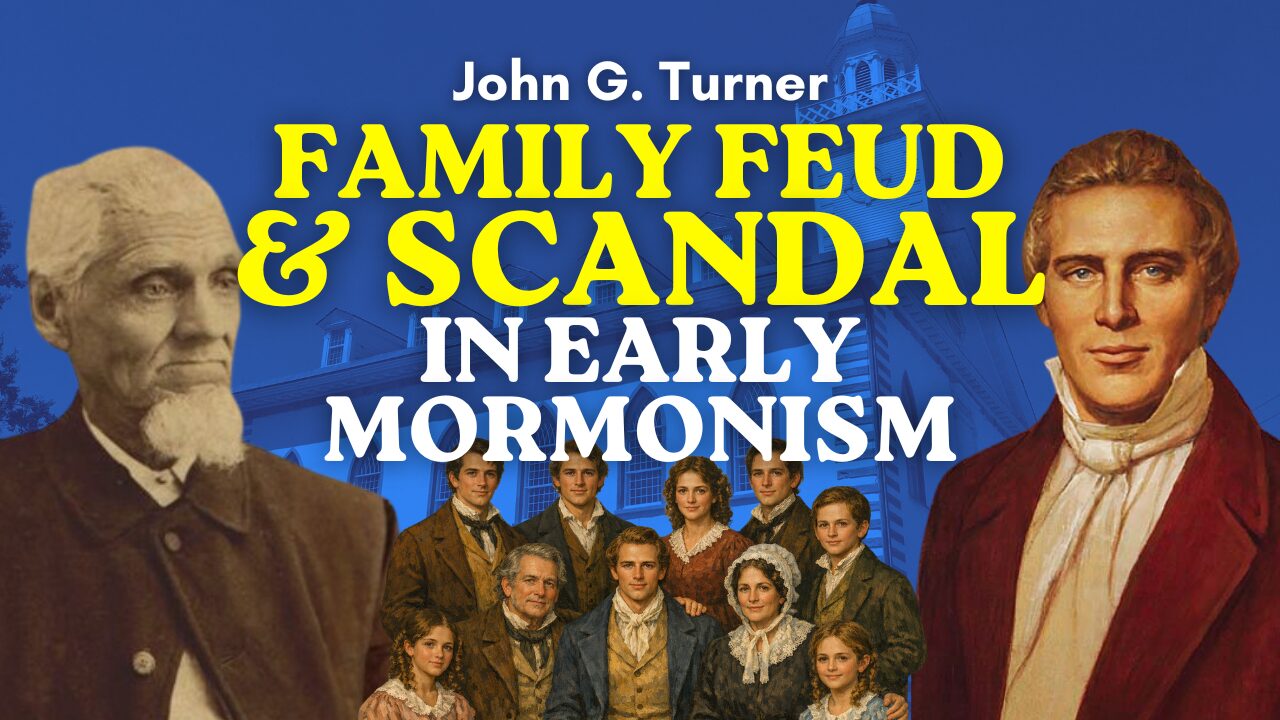
Thumbnail Credits: Image of Joseph Smith by Del Parson; Image of William Smith in the public domain; Image of Smith family was created by AI; Background image of the Kirtland Temple
Originally published on mormonstories.org.
Transcript
Machine-generated and lightly edited. Click any timestamp to jump the audio to that moment. The audio is authoritative; please check it before quoting.
Introduction and Episode Overview
John Dehlin Hello everyone and welcome to another edition of Mormon Stories podcast, Joseph Smith Edition. I am your host, John Dehlin. It's October 14, 2025 and today we are in part 18 of our series with the professor John Turner. We are covering his amazing book Joseph the Rise and Fall of an American Prophet. I told John last episode. I am now officially converted to to this being the single best biography on Joseph Smith that I know of that I would recommend. I would recommend this book over Fawn Brody's no Man Knows My History, which is something that I never thought I would ever say, but I am now officially there. John Turner, welcome back to our podcast. Please forgive my effusive praise.
John Turner You are totally forgiven. May you go out and convert others.
John Dehlin Amen. Okay, so we covered last week the Book of Abraham. I do want to remind everybody this is a multi part series which is inferred when I say part 18. But we do recommend that y' all go back and watch the first 17 episodes. We think you'll get a lot more out of it. You can see it in There's a Mormon Stories podcast feed on YouTube called the Joseph Smith Podcast on the Mormon Stories YouTube channel where you can watch it. You can get it integrated into the Mormon stories feed on YouTube and on Spotify and we've even made a dedicated Spotify or Apple podcast channel if you want to consume it there. We want to thank everyone who has donated to make Mormon Stories possible and this series possible. I will ask everybody to if you value this series, if you value having John Turner on the podcast and you want to see it continue, you are all welcome to become donors to the series. You go to donorbox.org Joseph Smith and you can become a monthly donor to the series because we are paying him for his time and we're paying staff to make all this happen. So last episode was on the Book of Abraham. I thought it was really valuable and interesting. Today we are going to be covering two chunks of chapter 16 that we didn't get to. We're going to be covering an epic fight of sibling rivalry between Joseph Smith and his brother William. And we are going to be covering some other conflicts within the church leadership during the time. And if that weren't enough, we're going to be covering what I'm calling the first known to me child abuse scandal in the early LDS Church. We all know that in recent times the LDS Church has been in the news at various times about child abuse and child abuse cover ups. Well, guess what? In 1835 there was a child abuse scandal that really affected Joseph Smith and his family relationships and I'm guessing the, the church in Kirtland at the time. So how's that for its easier? John Turner should be.
John Turner Well, it's going to be pretty, it's pretty wild. Yeah.
LDS Leadership Announcements and Upcoming Topics
John Dehlin All right, well, we're going to do a shorter episode today, both because we're going to save the Kirtland Temple dedication for next time, but also they're announcing a new prophet and First Presidency today. John Turner, do you have any predictions and or prophecies that you would like to make in anticipation for the announcement?
John Turner Well, Joseph Smith, he once had a quip about the election of 1844, which was basically that, you know, some things are possible and some things are probable and John Tyler's victory is neither or something like that. So I'm going to stay on safe territory. I am pretty confident that Elder Dallin Oaks will be the next president and prophet of the Church of Jesus Christ of Latter Day Saints. I'd give anybody good odds if they wanted to bet against that with me.
John Dehlin I think that's a safe bet. Do you have any bets about the, the first and second counselor?
John Turner I don't know. I, I've heard people, smart people on various podcasts making predictions. Is there a futures betting market for LDS counselors and apostles? I'm not sure, you know, the one. The one suggestion that I heard that I thought made a lot of sense was that it makes sense to have one somewhat younger person in the First Presidency as an opportunity for sort of learning and training on the job. So that, that appeals to me as, as a rationale. But I guess we'll find out soon.
John Dehlin Yeah. Yeah. So I think my, my prediction is Oaks retain eye ring just because he's been there so long and he's kind of a finance guy and then bringing in Bednar to prepare him for eventual long term profit. First presidency inhabiting because also, you know, Holland is just not doing well. Uchtdorf has already been in the first presidency. It'd be weird to kick him out and then bring him back again. So it does seem like Bednar is the likely choice for second counselor.
John Turner I've heard that. I've heard that prediction from a few folks. We'll see if it comes to pass.
Joseph and William Smith's Fierce Sibling Conflict
John Dehlin All right, well, without any further ado, let's jump back if it's all right. Well, I mean we can start with anything you want to in terms of like thoughts you've been having or past episodes and then we can jump right to the bottom of page 165 where we talk about the conflict that emerges. Anything you want to start with?
John Turner I mean, I think I would plunge right in.
John Dehlin Okay, let's do it.
John Turner You know, the most significant conflict that we're going to talk about in the second half of 1835 is Joseph's months long feud with his brother William, his younger brother William. But he's also, I would say, just uneasy about the still very new Quorum of the twelve Apostles. And to recap, these are trusted men that had been ordained into this newly created quorum earlier in 1835. They, Joseph sends them out on sort of a preaching and fundraising mission. In the summer they come back to Kirtland and there are immediately conflicts and disputes. Joseph reprimands a couple of the apostles for having, and this seems kind of petty, for having criticized Sidney Rigdon's leadership of the Kirtland School for the elders. There's also a complaint that the apostles haven't done enough fundraising for the Kirtland Temple. Joseph, Joseph seems fairly upset. He says that they've sort of made themselves into a kind of outlaws, which seems a little bit over the top. The apostles, once they're back in Kirtland, they meet with Joseph face to face meetings with Joseph, when there are conflicts, they usually, they usually serve to resolve them. And the apostles apparently are able to convince Joseph that they have fulfilled their mission faithfully. Joseph shows them his Egyptian materials, which, you know, seem to seem to have impressed them. But as we'll see, the, you know, the uneasy relationship between Joseph and this new set of leaders, it ends up simmering for four or five months. I think at the heart of it is Joseph really had busied himself with creating new quorums, new groups of leaders. But it wasn't always exactly clear how various quorums within the church would interact, intersect. And I think Joseph on some level was a little bit uneasy about what the status of this new group of apostles would be.
John Dehlin Yeah, even the most devout Mormon, as they read Joseph Smith's history, feels like he was figuring out, or I guess, I guess faithful Mormons call it continuing revelation. You know, more critical or secular people would say he's figuring it out as he goes along and there's nothing even wrong with that. But you know, it's probably fair to say, tell me if I'm wrong, that he didn't envision maybe even having a seven, a quorum of the 70 or even a quorum of the 12 in the first couple years the church existed. Is that fair to say, based on your Reading John.
John Turner Well, no, the quorum of the 12 had been long predicted, and I believe that I forget the year. But it had been a long standing promise in Joseph's revelations that the three witnesses to the Book of Mormon would select 12 apostles.
John Dehlin That's right.
John Turner Joseph simply doesn't put that into practice until after the March to Zion in 1834. So then these decisions are made in 1835. And I'll just, I'll draw a bit of a parallel to the present day. You know, there's, there's always, if there's a, an announcement or if there are vacancies in the quorum of the 12 or the first presidency, you know, church members and sometimes interested outsiders like to discuss possibilities and perhaps have preferred selections. There was one point of controversy with the original selections. Apparently the three witnesses wanted to make Phineas Young one of the original 12. And Joseph insisted that instead his younger brother William be chosen. And so he overruled the preferences of others.
John Dehlin Remind us who Phineas is again.
John Turner A brother of Brigham Young.
John Dehlin A brother.
John Turner Okay, brother. Okay. And a quite stalwart member of the church in its early years. So he gets, he gets there. Therefore he, he is passed over. William Smith is selected instead. And some within the Quorum, they didn't like William. They didn't like the way he had been chosen. Joseph later allowed that his younger brother had, as he put it, an inflammatory disposition.
John Dehlin And obviously a secular or critical mind will just cry nepotism. But you know, then again, if you're a believing person, God can call whoever he wants. And why wouldn't God call a family member to, as a trusted leader position? So I'm guessing you can't really come down on one side or the other there.
John Turner I don't know. I mean, it's perhaps not as, not as much nepotism as Brigham Young getting several of his sons into the quorum
John Dehlin of the 12, which does happen later, you're saying, yeah, okay. And yeah. So even though Joseph did envision a Quorum of the twelve Apostles for quite some time, and obviously he operated with the First Presidency for quite some time, what he probably didn't envision is trying to balance the power structures of him being the top dog, but then, but then him having two counselors that sometimes even carry the title of co president, as if they're almost feeling like they have as much power as Joseph. So that's balancing his authority with members of the First Presidency. But then a quorum of the 12 adds another layer of complexity and trying to make everybody feel Special and trying to make everybody feel like they have their place and most importantly, I guess trying to balance contention between those groups. And I'm sure, you know, I don't know if you've studied 20th century dynamics in the church like Matt Harris and others do, but absolutely there's this long standing history of first presidency versus quorum of the 12th power dynamics. Is that true?
John Turner So, yeah, I mean, I think those dynamics can be quite complex and pointed at time. They're often obscured from contemporary view. In the 1830s, I think we could say Joseph did want to empower other leaders within the church and. But then sometimes those men would feel empowered and then Joseph wouldn't feel quite comfortable with them acting like it. So for instance, in the early 1830s, there's the creation of a, of a group of leaders in Missouri. Well, Joseph's very uneasy with the, with the fact that you have leaders in Missouri doing things perhaps not the way he would want them done, and with the quorum of the 12. Their mission is to be a traveling high council, but he doesn't want them certainly to be presuming that they can be critical of Signe Rigdon back in Kirtland. Essentially they're not really empowered to do things on their own. And like you said, the church is still in its infancy. There's no manual, there's no guidebook for how these various layers of leadership are going to work together. And so there's inevitable, I think, confusion and tension
John Dehlin when it says in the top of 166 that Joseph says that it's the will of God that the quorum of the 12 will take their families to Missouri in the spring. I'm reminded of the story of Ezra Tap Benson, the Mormon apostle, LDS Apostle Ezra Taf Benson becoming too much of a John Bircher and then mysteriously getting sent to Europe, presumably allegedly to help clean up post war Europe. But really the brethren were sick of his John Bircher speeches and they just wanted him out of the country for a while. So is it reading too much into this to think that Joseph didn't want conflict with the 12, maybe felt his power encroached upon by having them in Kirtland and so sending them to Missouri or saying he's going to send them to Missouri is just a way to keep them busy and out of his hair?
John Turner Possible? I'm not sure. So there is this time in 1830 when Joseph has a couple of conflicts with Oliver Cowdery and then chooses him to be one of the missionaries to the Lamanites and That essentially removes him from Joseph's inner orbit for a while. It's possible that Joseph had that in mind in this case, although I don't think the conflict is all that intense in September, early October of 1835. It may simply be the plan. We're going to have the Kirtland Temple completion, the endowment of power. Then you can be sent out. I do think I have in my head that some of the 12 probably gulped when they heard they were going to be off to Missouri with their families in the spring. I mean, that has been a difficult road for church members in the early 1830s. You know, the. There are Mormons there that are regrouping after the expulsion from Jackson County. So that's not an easy assignment, to be sure.
John Dehlin And I guess we, yeah, especially we shouldn't forget that the, the Saints in Missouri are basically refugees at this point. Is that over stretching it to say?
John Turner Correct. So they have, they've been regrouping in Clay county, but we're starting to get to the point where they're being made to feel unwelcome there. And so they're going to, they're going to move on again in 1836. So essentially things are very unsettled in Missouri. Would not be an easy place to take your family if you're a church member in 1835. There are still church members who are moving there, though, because they are still anticipating the redemption of Zion, which Joseph is predicting will take place by September of 1836.
John Dehlin And also Joseph, your book says that Joseph's telling the quorum of the 12. In the meantime, they should feel free to attend the School of the Prophets and that they need to prepare themselves for the endowment with power in the Temple. Remind our listeners what Joseph is thinking when he talks about an endowment of power that was promised in Zion's camp after Zion's camp kind of failed. Am I remembering right?
John Turner Correct. And Joseph has used that phrase at other times in the early 1830s as well. It comes from the New Testament Acts of the Apostles, in which Jesus instructs his followers after his death and resurrection that they should wait in Jerusalem until they are endowed with power from on high. And that endowment then takes place on the day of Pentecost, when the fire of the Holy Spirit descends on the apostles. So the phrase suggests that there will be a. An outpouring of spiritual power, the power of the Holy Spirit that will equip the apostles and other elders for missionary service.
John Dehlin Yeah, and I, I, you know, I mentioned to you beforehand that I just finished chapter 17. It's the third time I think I've read it, but I just finished it again this morning. And hold onto your hats, dear listeners and viewers, because Joseph makes good on that promise, in my opinion. And, yeah, it's a really powerful part of the book. So. All right, so really quickly, it looks like Joseph Smith Sr. Gets sick. Do you want to talk about that really quick?
John Turner Sure. And I'll do so as a bit of a segue to. To our next subject, John De Lynn, because we're going to talk about the really fierce conflict that Joseph has with his brother William. And if you don't know anything else, you might presume, well, William's sort of a hothead. Joseph can be a little prickly. These two just don't get along. But the reality is Joseph selected him for the quorum of the 12 in part because he did have at times a very affectionate, close relationship with his brother. And the two of them together had tended to their father, Joseph Smith Sr. When he fell severely ill in early October of 1835. Joseph and I think these are very tender scenes. He came to his father's bedside day after day, brought him. Brought him herbs, spent time praying for him, sometimes off on his own, praying for him, sometimes there. Joseph felt that he received an answer from God that his father would live. And one evening, when Joseph is at his side, he and David Whitmer pray together. They lay their hands on Joseph Sr. And Joseph Sr. He gets up, he gets dressed, he shouts, he praises the Lord. And Joseph calls William into the room. And the four of them, the two brothers, their father and David Whitmer, they join together in songs of praise that they're. That Joseph Sr. Lives and has overcome this illness.
John Dehlin Yeah, I guess the, the priesthood. The priesthood, healing power kind of works.
John Turner It worked in this case.
John Dehlin Yeah. Yeah. Well, I guess that's good. And I mean, I know Joseph loved his dad. I mean, there's just no question about that. Right.
John Turner There's no question. They seem to have had a very tender relationship.
John Dehlin Yeah.
John Turner And I will say, in this particular illness, you know, I think they very much presumed that Joseph Smith Senior might die. So that was a. It was a real possibility. So it's, it's a fraught and sort of scary, scary time for the family. Yeah.
The Lucinda Elliott Child Abuse Scandal
John Dehlin All right, well, let's go ahead and move to the, to the Elliot scandal, the Lucina Elliot scandal. And again, I tease this as being the first known to me child abuse scandal in Mormon Church history. Maybe give us some background on. On the Elliots And I'm curious to know why William is so invested in what's going on with the Elliots, if we know anything about that.
John Turner Yeah. So I'll tell you what I know, and then I'm sure we're going to wish that we knew more. But in late October of 1835, so just shortly after those scenes at, you know, as Joseph Smith senior is sick and then recovers, there's a meeting of the Kirtland High Council. And William Smith accuses, you know, brings an accusation against a man named David Elliott, accusing him of whipping and beating his daughter Lucina, who was around 15 years of age at the time. And apparently the. I don't know to what extent William Smith himself knew about the details, but apparently Lucina had gone to a neighbor's house and showed another couple the bodily marks of her whipping. You know, essentially my parents. It was both of them, apparently, David Elliot and his wife Mary, you know, they were whipping their daughter. She could show the marks. And she also shared with the neighbors that she considered hanging herself to get rid of her trouble and affliction. And this wasn't new, either the abuse or the thoughts of suicide. Apparently, this had been an issue for several years. So it's a grim case. And Joseph takes an issue in the case as well. He comes and speaks to the Kirtland High Council, and he testifies that the girl was in the fault and that the neighbors were trying to create a difficulty. The High Council then gives sort of a mixed judgment in the case. It concludes that the charge against David Elliott had some merit, but was not fully sustained. And also added that if Elliot had trained his daughter properly, he shouldn't have had to beat her at the age of 15. So my reading of this is, yes, everybody involved acknowledges that David Elliot had abused his daughter, had used corporal punishment on his daughter. But there's a question, I think, essentially about the extent of it and whether or not Lucina Elliott, the daughter, was also partly to blame.
John Dehlin So one of the. Tell me if I'm wrong. One of the perils of doing history is the tendency towards presentism, which is to take modern sensibilities and apply them retroactively to the past. Is that an okay summary of what presentism is or.
John Turner Yeah, absolutely.
John Dehlin So obviously my. My modern understanding of child abuse is that a child never is responsible for being beaten or whipped or abused. And so obviously my modern ears just. Just recoil at this quote that the girl was in the fault. That's basically saying you deserve to be beaten and beaten to the point of leaving marks and beaten with enough frequency that she reportedly wanted to die by suicide for several years. So tell me if that's actually not inappropriate presentism, in other words, a reasonable sensibility in the 1830s time period or if that is presentism and I should not apply that standard.
John Turner So it's a good question. I don't think that we have to entirely avoid presentism like so I would say in, in an instance like this in the 1830s as opposed to today, there was broad consensus that parents had the right and perhaps also the obligation to physically discipline their children. Now people would have had certainly the opinion that there were limits to what parents should, should do or father. You know, fathers typically, but parents generally. I think you can also see in this case, you know, there's, you know, there's some doubt about the propriety of physically beating a 15 year old daughter as in, you know, that this, this, this is pushing beyond typical bounds. So I'm, I mean I'm struggling to answer your question John, a little bit because I don't think we totally have to suspend moral judgments, our present moral judgments when we, the past. I think it's good to familiarize ourselves with what were the customary moral standards of the time and how, how does this case relate to them. But let me mention a couple of other things that I think are perhaps useful to recognize. And these, I would say the first of these connects the past and the present. So Joseph had a pre existing trust in David Elliot. David Elliot had marched with Joseph to Missouri in 1834 as part of the Zion's camp march. He'd received a blessing when he was chosen as one of the 70 after afterwards, earlier in 1835, so just six months earlier, that blessing states the Lord has upheld you, the Lord has chosen you. You shall be an instrument in hands, in the hands of God. God's power shall be manifested through you. So when this accusation is brought against David Elliot, it's brought against somebody that Joseph inherently trusts. This is someone who's shown himself loyal to Joseph. And so Joseph wants to honor that. And I think we, we see, we can see that in the 1830s, we can see that in the 2000s when, when there's an accusation of abuse against someone, there are often people who are quick to defend him because, because of that pre existing relationship. Yeah, go ahead.
John Dehlin Yeah. No, that's, I mean and in modern times that I think that would be called like the man, the boys club.
John Turner Right.
John Dehlin Like the men protect the men. The men have alliances, the men have Friendships. The men have understandings. And sometimes, at least in. In the kind of patriarchy language that I have been persuaded to kind of be sensitive to, the boys Club stuff is where a lot of the problems happen.
John Turner Well, and then I would also say. And again, I think this applies in the 1830s and. Or the 2000s. So we're talking about Joseph's role in this case as if it should have been really important to Joseph, because this is terrible. There's a young woman who's being whipped. She's suicidal. She needs help. Well, Joseph, he has a lot on his plate. I'm not saying this to defend him, but he has a lot on his plate. If you look at his journal for the date of this meeting. So he goes to the Kirtland High Council. He says something in support of David Elliot. Then he goes back. He's talking with Frederick G. Williams about the plan of the city that is to be built on the stake of Zion in Kirtland. And then Bishop Partridge comes in. I think he hasn't seen him for a while. He shows them the mummies. He's working on a history of his life. So he has this welter of activities. And I don't think Joseph takes the time to pay attention to the case. And then he's very taken off guard when William Smith is not satisfied with the council's decision, because normally that be the end of the matter. But William Smith doesn't accept this judgment, which is sort of tepid. And, you know, he tells the council, well, not only have the Elliots abused Lucina, but both parents have also beaten the rest of her children. And that causes a stir because William doesn't let it go. And so Joseph is called back to the High Council. He's asked to preside over it. And Lucy Mack Smith, Joseph's Joseph and William's mother, she gives some testimony against Mary Elliot. And Joseph objects to that. You know, he says, you know, wait, this case has already been settled. Why are we still discussing it? And he doesn't want his mother to proceed with his testimony. And at that point, I mean, I think what really matters here is, you know, what's going on within the Elliot family. But by this point, there's just tumult within the Smith family because William's upset that Joseph's not letting his mother speak. Joseph interprets all of this as a challenge to his authority. And Joseph, I mean, he's. He's livid. He tells William he's out of place and should sit down. William says, you know, I'm not sitting down unless you knock me down. And Joseph gets ready to just stomp off and leave. And Joseph Smith Sr. Is able to get his two sons to simmer down temporarily. At that point, David and Mary Elliot both make confessions. They acknowledge that they have been guilty of abusing their children. They say they're sorry and the council forgives them. So it's a, you know, it's kind of a striking series of, you know, striking series of deliberations.
John Dehlin Yeah. And there's so many things that come to my mind. You'll have to forgive me for slowing down here again like I often do. The first is, I think, you know, as Mormons, where I was taught God is the same yesterday, today and forever. Which is weird because obviously the Old Testament God appears to be very different than the New Testament God, which also appears to be very different than the Mormon God of today, if you're really thinking about it. But on the one hand you would think you could. There's a, there's a view of any Mormon prophet, past, present or future, that's like, well, God's talking to that prophet, so it doesn't matter what the sensibilities are of the time. God is not going to be okay with the child being beaten. And so what Joseph Smith should do is talk to God. God tell Joseph that abuse is unacceptable on any situation. And, you know, the child should have never been blamed and the parents should have carried all the blame. Like that's one expectation that I think we all agree is unreasonable. But it's a very natural, you know, way to feel when you're, when your leader claims to speak directly with God. Now let me pause because I've got something else, a couple other things I want to say. Is there anything you want to say in reaction to that?
John Turner No, I think you're right that that's a natural response and that it, on some level it, it is unreasonable because any institution, any culture, it changes over time. And the standards of what's acceptable, you know, that those change over time as well.
John Dehlin Yeah. Okay. That leads me to the second point, which is, I think I've mentioned this in past episodes, but just a few, a month or two ago, we interviewed a woman who used to work for, for Bob Jones University. And in that interview she talked about Fundamentalist Baptists. And apparently fundamentalist Baptists take the Old Testament really seriously. And apparently in the Old Testament, which I don't think modern Latter Day Saints read very carefully, there are probably eight to ten verses in the Old Testament that not only condone the physical disciplining of children. But they almost make it sound like a parent is an unrighteous parent if they don't physically discipline their children, meaning some sort of corporal punishment. And the woman that we interviewed called these the clobber verses. And when I actually read them, there's even one that talks about bruising of children somehow being sanctified to their good. And so, I mean, again, on the one hand, they're holding a trial to see if the parents should be in trouble, which shows that they knew that you can go too far even in 1835. On the other hand, they probably were all reading the Old Testament, where the Old Testament God basically says, spare the rod, spoil the child. Any responses to that, John Turner?
John Turner So, yes. So the, you know, Proverbs 13:24 in the King James, whoever spares the rod hates their children, hates their children. The one who loves their children is careful to discipline them. So I think spare the rod, spoil the child. It's sort of derived from that verse.
John Dehlin And there's other worse ones, right? There's other worse verses, more violent verses.
John Turner I don't know. I don't know if there are absolutely worse ones. But sure, I think what I would say again, in the mid-1830s, there would be general Christian consensus in the United States that parents have the right and obligation to discipline their children along those lines. But that I do think at the same time, you would also find broad agreement, parents can go too far. You know, they should not be whipping their children to the point of leaving marks and driving them to thoughts of suicide. So I don't think most Christians would have interpreted this as a blank check to just beat and abuse your children no matter what. And you can find similar arguments about the right of husbands sometimes to discipline their wives physically. I think, you know, to many sensibilities from the mid-2020s, you know, this, this is abhorrent. I'll give you. At the risk of digression, I'll give you another example. Take Christian debates about divorce. So the New Testament in the Gospel of Matthew is pretty clear that the only grounds for divorce are adultery. But that is a. That is a grounds for divorce. The Gospel of Mark simply says, no divorce whatsoever. Well, not very long ago, I visited a Protestant church at which the minister, and this wasn't, you know, took it upon himself to say that he sticks to the biblical standard for divorce, and abuse is not one of them. And I was, you know, my wife and I were both, you know, a little bit apoplectic. That, you know, that sounds like you're giving license to, for husbands to abuse their wives, which wasn't what he meant, but I think it's a dangerous thing to say. So there are present day reverberations on all of these issues.
John Dehlin Yeah, well, the, the episode I'm talking about on Mormon stories is episode 2057. It's with Camille Lewis. And just to give an example of how bad it was for her at Bob Jones University, she was taught what I think is called blanket training, which is where you put a blanket down, you put an infant on the blanket, and then at any, you keep a, like a glue stick in your hand, and anytime the infant starts to crawl off the blanket, you whack the infant on the hand with the glue stick to make the infant learn that they need to stay on the blanket. They call it blanket training. And that's just what they do with infants. And so I don't mean to belabor the point, but, like, it's, it's more than just, you know, hand swatting a 12 year old gently. You know, that it's, it's. And this is in the past several decades. This is not 100, 150 years ago. So I don't mean to belabor that point, but I do, I do want to tell people, go check out that episode. Because it's really, it's stunning. So the last question I had is, why was William so invested? Like, because there's. Because eventually Nauvoo, things become so crazy in terms of people acting inappropriately. Maybe it's wrong for me to wonder this, but immediately I'm wondering whether William had developed some sort of affection for this, for Lucena, and if that in any way was why he's literally willing to come to blows with not just his brother, but with the prophet, seer and revelator that leads the church. And I'm. I'm guessing you don't have any information.
John Turner I'm. I'm afraid not. I will.
John Dehlin Did you wonder that? Did you wonder that too, or.
John Turner Well, I did. I, I did. I didn't wonder about a possible relationship with Lucina. What I did. What. I did wonder, though, why the level of investment from William. Does he just think this is a moral outrage? Does he have a, you know, closer connection to any of the individuals involved? You know, I think if any, if we want to in any way feel good about this, and I don't know that we do, it's that in the end, because William takes such an interest in the case and doesn't let it go. At the very least, David and Mary Elliot do confess wrongdoing and show some contrition. Just to add a little bit more complexity to this story. I don't know that much about the Elliot's. This was David Elliot's third marriage. I believe his first two wives were deceased. And so this is a child from. I think this is a child from his first wife. So Marriott Elliott is Lucina's stepmother. Interestingly, the she, Lucina Elliott appears in church records the following spring. There's complaint against her and another young woman for both unchristian. For unchristian conduct. And apparently the two young women confess to telling falsehoods. I don't think, I don't know that it's directly connected to this case. And I don't know why William takes such an interest, but I'll try to find out. You know, in the narrative of Joseph's life, you know, it's side matters that become really important. It's questions of prerogative and order and decorum and this conflict within the family. And there may have been other things that fall that were stirring the pot between the two brothers. This, this may not have been the first straw. It may have been, you know, it may have been a last straw. But it's a severe breach between William and Joseph. They're not quick to forgive each other. They make some attempt to talk to each other A couple of days later during that meeting, if that doesn't go well, William is so upset that he says he doesn't want anything else to do with the church. He sends his preaching license to Joseph. He's talking to everybody in Kirtland about how Joseph has mistreated him. And so this is not just a problem within the family, but you know, this is a public problem for Joseph. You know, Joseph's, you know, Joseph's has his own brother criticizing him in the streets of Kirtland. Um, it's, it's, it's a, it's a big deal.
John Dehlin Yeah. And modern sensibilities would wonder why it was William and not Joseph who had the most outrage about child abuse. You. I guess one would hope that it would be Joseph who had the most moral outrage about child abuse. Where it seems like his brother William was and that Joseph was wanting to be more lenient about child abuse. I don't know if that's fair, but that's the impression you get here. Tell me if I'm right, that they didn't actually come to blows over this. Is that correct?
John Turner No, they come to Blows later in the fall over. Over something much less important.
John Dehlin Yeah. Okay. All right. Okay. So, but, but, but they don't easily reconcile. Let's. And I guess William starts to become almost an anti Joseph influence in Kirtland. How does the contention continue as we talk about page 168?
Joseph Smith's Troubled Fall of 1835
John Turner Yeah. So this is an unusual stretch of time in Joseph's life. He is in a sour mood with almost everybody in the late fall of 1835 in a way that I think is uncharacteristic. And I'll, I'll be very straightforward. I struggle to explain it in the biography. You know, Joseph could definitely be prickly and sometimes sharp tempered. Usually just, you know, for a short stretch of time. And then there's a resolution or he might be upset with one person or group of people. Joseph is just upset with everybody that fall. He's still upset with the quorum of the twelve apostles. It seemed like they had worked things out earlier, but apparently not. He's upset they're not humble enough. They're not dividing resources. Joseph also announces that the Lord has condemned William Phelps and John Whitmer for unspecified iniquities. Joseph also, you know, upbraids Sidney Rigdon for his rebuke of Joseph's uncle. And even Emma Smith doesn't, doesn't escape criticism. Apparently one Sunday she left a Sunday meeting before the Lord's supper and Joseph sent some withering criticism her way to the point that she manifested contrition by weeping. So hardly anybody is doing right in Joseph's eyes in the fall of 1835. And I, I, like I said, I struggled to explain why. You know, I thought, well, maybe Joseph is super frustrated with the Egyptian project. But that doesn't really explain this sort of behavior. There's also been a lot of discussion about how to date Joseph's relationship with Fanny Alger. But I'm persuaded that that is properly dated to the summer of 1836. So I don't think that has any role to play. What seems most likely to me in the end is after Joseph has this painful and public rupture with William, you know, the fact that that is unresolved is a thorn in his side and he's sort of lashing out at everybody else.
John Dehlin Okay. And you know, I can't let slide this, this word iniquities associated with William Phelps and John Whitmer, like what in the world might iniquities mean in a, in an 1835 context? Because to me that, that, that denotes some sort of sexual transgression Yeah, I
John Turner don't think it necessarily does. It could have. I think it could mean any sort of wrongdoing. But when I say they're unspecified iniquities, they're just unspecified. You know, it suggests really bad behavior. But I think if they had done something, you know, engaged in some sort of sexual misconduct, we'd probably know about it from. From some source. So I'm hesitant to go there.
John Dehlin So iniquity can literally mean anything. It's not most commonly associated with sexual impropriety.
John Turner I don't know whether it would have been most commonly associated with. With sexual impropriety. But I think in general, it could just. It just means grossly bad behavior. And in this case, Joseph is finding fault with behavior that's not that bad from many people. So I. I don't know. I. I feel like I don't know, so I can't really speculate.
John Dehlin Okay, that's fair. All right, so. So then Joseph spends some time with the 12 at their request, and he talks about the washing of the feet. I know we've talked about that maybe a little bit in past episodes, but what do you want to say about that? And it really comes out again in the next chapter, and it becomes something that becomes one of the Mormonism's most sacred and least known and discussed ordinances, called the second anointing. But what do you want to tell us about the washing of the feet ritual?
Escalating Conflict and Family Intervention
John Turner So if, you know, if you've been with us for all of these episodes, you might recall that in early 1833, in the original school of the prophets, Joseph instituted this practice of foot washing, imitating Jesus washing the feet of his disciples. What I would say, and we will get into this more in the next episode, is Joseph seems to have an instinct for overcoming conflict through ritual and particularly intimate ritual. That's not something that Joseph articulates, you know, that's my interpretation. But at several key points of the church's early history, in response to a long period of conflict, Joseph overcomes it through the introduction of ritual. So in a way, he tells. He's able to tell the apostles, look, we haven't been getting along, but there are good things. There are good things coming. Before we dedicate the temple, before we have the psalm assembly, we're going to. You're going to wash each other's feet. And when you go through these coming rituals, if you're pure, if you repent of your transgressions, you're going to see the Lord and for the apostles, just that looking Ahead to blessings that are to come. I think that helps them. I would say forgive Joseph's own sore and poor behavior in the fall of 1835. Like we're going to hang in there with this guy even though he's been super testy and grouchy and unreasonable with us because we know that good things are coming. Yeah.
John Dehlin And for me, again, I don't mean to keep talking about chapter 17, but chapter 17 just gave me so much epiphanies as to Joseph's leadership. But he uses ritual, he uses spiritual experiences, he uses missionary work, he uses the promise of power and the promises of spiritual experiences and the promises of witnesses, of kind of divine witnesses, along with missionary work and church organization. It's almost like a masterclass in leadership, in kind of religious leadership. The way he's able to balance all those to keep people motivated so that just everyone take that as a foreshadowing for what's to come in chapter 17. All right, so. So what happens next? He's talking about a coming solemn assembly. He's promising that possibly they'll be able to see Jesus. And what else do we want to say about sort of Joseph's promises, but also about how the conflict continues, as in the bottom of page 171.
John Turner So this conflict with William in particular isn't resolved from that late October 1835 blow up. And then it gets worse in December of 1835. And in this case, and this is just seems very prosaic and petty, Joseph goes to a meeting of a debate society which is held at William's house. And Joseph just doesn't like it. There's a discussion about whether they should continue the. The debate society. Joseph has some misgivings. He thinks it encourages contention, which is a little bit ironic considering the events of the past couple of months. And so Joseph is basically suggesting maybe you shouldn't have this debating society anymore. And William is just incensed. He basically says, you know, this is my house, Joseph, and if I want to have the debate society meet in it, you shouldn't interfere. And once again, Joseph Smith Sr. Tries to calm the two brothers down. Joseph's not having it. He snaps back that he had helped them finish the house, so he was entitled to say he'd been supporting William's family. And William, he charges his brother. You know, Joseph takes off his coat and they fight. And you know, at a few points in the book, I comment that Joseph, Joseph's a physical specimen. You know, he often beats people in a wrestling match or other feats. Of strength. But in this case, Joseph loses his weak side, gives way and other people have to rescue him and he limps home. I mean, he is, he is just beat up and, and sore afterwards. And this persists through the end of November. William at one point apologizes in writing. And Joseph is still not satisfied. He sends, he sends William a long written response, basically saying that you don't have any reason to be angry or disaffected with me. He's not satisfied. He doesn't accept his apology. And at the end of 1836, things are not good. You know, he's estranged from William. There's conflicts within the family. There's this ongoing just uneasiness with the quorum of the twelve apostles. And Joseph, at the end of December, he is afraid that Satan is doing his utmost to keep the saints from being endowed. And Joseph prays that God will burst Satan's cloud and usher in heaven's blessings. And it's not clear at the time whether those prayers are going to be answered and if Joseph is going to be able to set some grievances aside and move forward.
John Dehlin Let me, you know, the, the idea of Joseph and William literally in a fist fight where they're probably on top of each other, punching each other in the face, like being violent with each other, that's a story I don't ever remember hearing growing up in the church. It's kind of shocking. The most you hear is that Joseph would always beat people in kind of those leg wrestling matches, but it's always like he's this strong but loving, jovial guy that would sometimes, you know, display his physical prowess, you know, but, but in a way that was also kind and gentle and more like a game, that it is aggression, but that he would never lose. The, the idea of Joseph getting in a fistfight with his brother, that's violent. And then he gets that he ends up getting beat by his brother. Yeah, I, I, as, as someone reading this in 2025, who was raised LDs, that that's a shocking, it is a shocking story to me. I just have to say that. And the only thing I did want to ask though is, is once I get to 17, there's two. This, this may make you laugh. There's two names that come up for me over and over again in chapter 17, and the two names are Christopher Thomas and Denver Snuffer. Can you make a guess for why those two names come up with me? Come up for me in chapter 17?
John Turner I think you must be thinking about Pentecostal blessings. John Dehlin yeah, you're thinking of your favorite Pentecostal scholar of Mormonism, and you're thinking of a man who thinks that the church has left behind some of the blessings that Joseph Smith introduced.
John Dehlin Yeah. So part of it is. Part of it is all just how stunned I am by how Pentecostal the LDS Church was in Kirtland. I'm just continually stunned by that. But. But Snuffer comes up because there's this constant discussion of whether or not and when people can see Jesus face to face. And of course, that Deborah Snuffer is a modern former high councilman of a stake in Utah, Sandy, who started his own schism teaching people that they should seek to see Jesus, to have a personal visit from Jesus. And the reason why I mentioned that is because that was the main reason Joseph and William were fighting. They were fighting over this idea that in the debate society of whether or not it's necessary for God to reveal himself to man to render them happy. Do you know which side Joseph took and which side William took? And if that was actually an important source of contention between them?
John Turner That's a good point. So Joseph spoke on the affirmative. I'd have to go back and look at what's in Joseph's journal, which was kept by one of his scribes at this time, to know exactly the substance of the argument. I don't know that, you know, Joseph doesn't seem to have been outraged at that first session. He goes to where they debate that resolution. He comes back a few days later when they finish the debate. And I don't know why he then takes this stance against the society other than his stated point position that it encourages contention. I'll see if I can dig into that a little bit more. I don't know what he means, what is meant there by God revealing himself, because that could mean a wide variety of things besides a personal visit.
John Dehlin Okay. Well, I just wanted to note that because then in the next chapter, Jesus is doing a lot of appearing to people. And I can see why Deborah Snuffer and people that are resident with Deborah Snuffer's teachings would feel like that was something they should aspire to. Because certainly in the Kirtland time period, it was such a topic that Joseph and William are fighting over the topic and having a debating society over the topic. And then later, again during the Kirtland Temple dedication, everybody's trying to see Jesus and I'm exaggerating. But anyway, I love to be gaining new insight. John Turner in your book is helping me do that in every chapter. So let's go ahead and tell us how things end up in terms of Joseph and William and other tensions in the quorum.
John Turner Yeah. So I will just point a little bit ahead in terms of how things end up. The family is essentially able to come together to resolve this fierce conflict. On New Year's Day, 1836, William Smith, a contrite William Smith, comes to his brother. He's already tried to apologize by letter. I think Joseph didn't like that, you know, that that wasn't going to cut it. And the two brothers, their brother Hyrum, their uncle John Smith, Joseph Smith Sr. Martin Harris is also there. They all come into a room to settle this. I think everybody realized this just couldn't go on. And Joseph Smith Sr. He tells the brothers that this rift has deeply wounded him personally. And I think that, you know, that softens the hearts of both Joseph and Williams. William then confesses that he's abused his brother. He asked Joseph's forgiveness, and at that point, Joseph is willing to also be contrite. And they, you know, the language they use is they covenant to be reconciled and to build each other up. Emma Smith, Lucy Mack Smith, they come into the room. At that point, the brothers repeat those covenants. Everybody cries. Joseph understands this as a jubilee, which is a biblical reference to forgiveness and freedom. That prompts the Kirtland High Council to restore William's standing in the church. And for the most part, the. The brother's relationship very much is repaired going forward. That seems to solve the problem. It fits in with my theory that this conflict with William was at the heart of Joseph being truculent toward everybody else, because once that's resolved, Joseph's then able to meet with the 12 and with other individuals. And early 1836, it's sort of a happy time of forgiveness and reconciliation in Kirtland.
John Dehlin And I'm happy for that to be a preview of what comes up in chapter 17. I do want to just note two things. One is that Orson Hyde, as you probably mentioned, but in case you didn't, he does complain about nepotism towards William, basically saying that William was getting favors, that, you know, that he was getting support from the public crib, that maybe other members of the 12 weren't. So I thought that was worth mentioning, that Orson Hyde accuses Joseph of nepotism with William. And then the other thing is chapter, you know, chapter 16 doesn't end with Joseph forgiving William. If I read it right, it ends with Joseph being slow to forgive William and holding on to a grudge into 1836. In other words, he's stubborn even when William apologizes. In this case, Joseph was slow to accept William's apology. And I don't mean to impose that narrative on you. That's just how I concluded chapter 16 in my mind.
John Turner Yeah, I was. I was jumping ahead a little bit, John Dehlin. But you can forgive me. But. Yeah, no, it's actually similar with both Orson Hyde and William Smith in that in each case, the person estranged from Joseph sends a letter trying to patch things up. Joseph is not satisfied with that. And so Hyde shows up in person, basically, while Joseph is convalescing from this fight. And, you know, then Joseph kind of patches things up with Hyde. William sends this letter expressing some contrition for Joseph. That's not good enough. I think he wants William, you know, he's. He wants William to base himself a little bit more. And it finally really takes, you know, a full family intervention on New Year's Day to overcome the conflict.
John Dehlin Yeah. Yeah. So that surprised me. I just always assumed Joseph was quick to forgive, and I'm sure he was in many instances. In this case, he wasn't as quick to forgive as I thought he naturally would have been. Not to pick on him or anything, I just. I just thought that was worth it. Surprised me that. I'll just say that.
John Turner Yeah, fair point.
Preview of the Kirtland Temple and Closing Thoughts
John Dehlin Okay, well, I think that really sets us up well for Chapter 17 next week where we're going to be talking about. It's called Jubilee and Pentecost, but we're going to be talking about the Kirtland Temple dedication and all sorts of Pentecostal moments, and I'm really excited for that. And, John, I just want to thank you. I want to tell everybody, buy this book. You won't regret it. Joseph Smith, the Rise and Fall of an American Prophet. And if you haven't tuned into other episodes of John Turner, they're amazing. If you've donated to this series, thank you. If you haven't, you can go to donorbox.org Joseph Smith and financially support this series if you value it. But, John, thank you again for another amazing chapter, but even more for your amazing commentary.
John Turner Thanks, John. Thanks, everyone, for listening. See you next time.
John Dehlin All right, take care, John. Take care, everybody. Thanks for joining us today. And we'll see you all again soon on another episode of Mormon Stories Podcast and the Joseph Smith Podcast. Take care.
Transcript © 2026 John P. Dehlin. All rights reserved. Brief quotations are welcome with attribution and a link to mormonstories.org; all other use requires written permission.