Origins of the Book of Abraham
Listen on Apple Podcasts Spotify YouTube Download MP3
About this episode
Welcome back to Part 17 of our Joseph Smith Podcast series covering Dr. John Turner’s new biography on Joseph Smith titled: Joseph Smith: The Rise and Fall of an American Prophet.
In this episode, we begin part one of our deep dive into the Book of Abraham –a controversial and fascinating text within Latter-day Saint history. We’ll trace its origins in 1835 Kirtland, explore Joseph Smith’s acquisition of Egyptian papyri and mummies, and discuss the Egyptomania of the time that fueled public curiosity.
With guest scholar Dr. John Turner, we set the stage for how the Book of Abraham fits into the broader story of Mormonism, how Joseph Smith interpreted the papyri, and why questions of translation, sincerity, and inspiration still matter today. This is just the beginning of our discussion –the Nauvoo period will follow in later chapters!
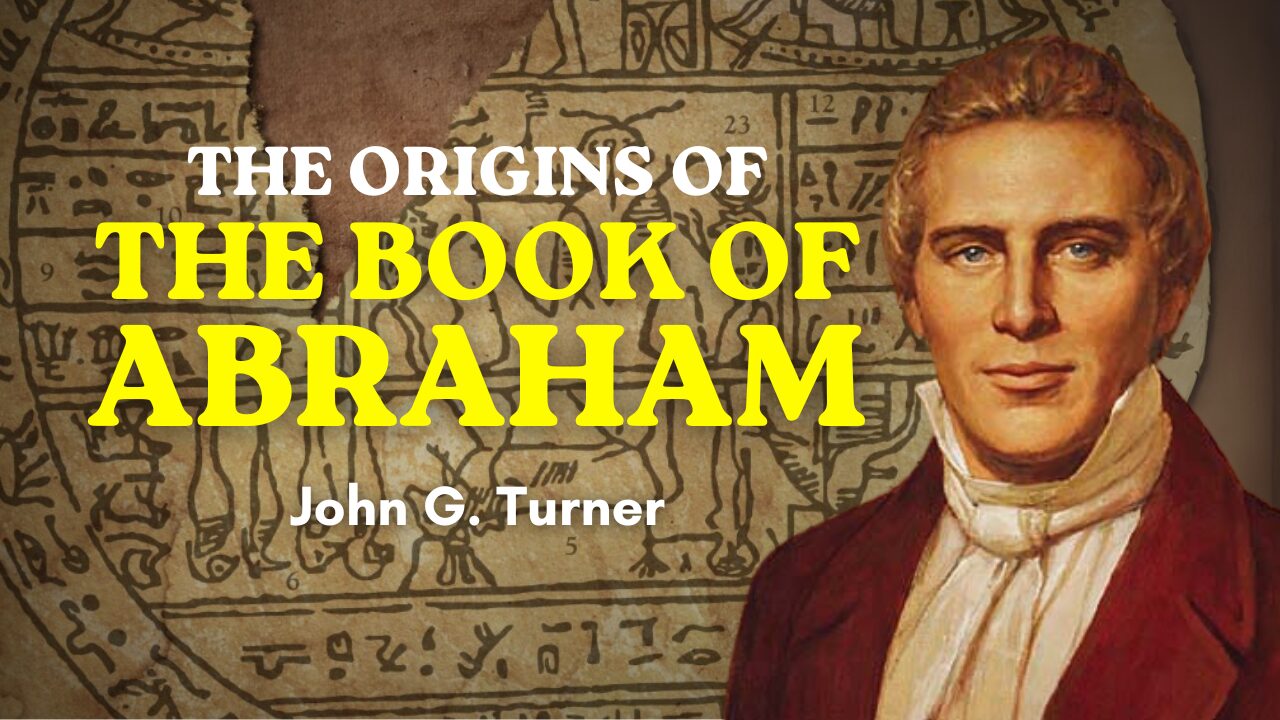
Thumbnail credits: Image of Joseph Smith by Del Parson; Background image based on Joseph Smith’s hypocephalus
Originally published on mormonstories.org.
Transcript
Machine-generated and lightly edited. Click any timestamp to jump the audio to that moment. The audio is authoritative; please check it before quoting.
Welcome and Episode Introduction
John Dehlin Hello everyone and welcome to another edition of Mormon Stories podcast, Joseph Smith Edition. I am your host, John Dehlin. It is October 2, 2025 and today is episode 17 in our series of the Joseph Smith Podcast where for starters, we are reviewing the life of Joseph Smith in detail, following along in the what I'll say the Mormon Stories bestselling book, Joseph Smith the Rise and Fall of an American Prophet by Professor John G. Turner of George Mason University. Again, if you're joining us, for the first time, we are going pretty much chronologically, having never LDs, super reputable, credible, good natured and thoughtful and enjoyable historian call balls and strikes and basically just help us learn the story of the founder of the Mormon faith, my faith of origin and of my family and friends chronologically from the beginning. We're about halfway done with the book. I do recommend you start from the beginning. You can consume these episodes in The Mormon Stories YouTube feedback. We have a playlist of the Joseph Smith Podcast available on our YouTube channel on the Mormon Stories YouTube channel. You can also find us on Spotify under the Mormon Stories Podcast channel or we've even created a Joseph Smith Podcast channel on Spotify and Apple Podcasts if you want to consume them without the clutter of the other Mormon Stories episodes. But we're loving this series. We're grateful to all the Mormon Stories donors that make the series, the Mormon Stories Podcast possible, and specifically to the donors to the Joseph Smith Podcast Project with John Turner that have helped to fund this series. So thank you to everyone who's made this possible. And today we're going to be covering chapter 16, or at least most of chapter 16. Chapter 16 is entitled Abraham 18:35. So we're going to be covering part of the year 1835 in the Kirtland era, specifically talking about the origins and some of the early writings of Joseph Smith that lead to what Mormons know as the Book of Abraham, which is canonized scripture. So for those who don't know, the Church of Jesus Christ of Latter Day Saints considers the Old and New Testament of the Holy Bible as scripture. Mormons, we consider ourselves to be Christian, but also we have the Book of Mormon, which you're probably aware of, and the Doctrine and Covenants. And then there's additional scripture called what we call inside the church, the Pearl of Great Price, which includes two books that come to my mind, the Book of Moses and the Book of Abraham, both of which are reported to be translations from Joseph Smith the Prophet. So today we're going to be talking about the background and some of her early history of the Book of Abraham. And we're going to be talking about mummies and scrolls and Egyptomania. And we've covered this quite extensively before on Mormon Stories podcast. I do want to refer everyone to the very lengthy, probably 13 hour series we did with Robert Rittner, famous, the late, famous Chicago Egyptologist that talked to us a lot about the Book of Abraham. It's definitely one of the top five things I've ever done on Mormon Stories. Check out the Robert Ritter series. It's very technical but very good. We've also had others like Dan Vogel and Brett Metcalf and LDS discussions and John Hamer and others all talk about the Book of Abraham previously as well. So lots of Mormon Stories coverage on the Book of Abraham, but we've never had the John Turner on to discuss the Book of Abraham. So without any further ado, I bring back to the podcast Professor John G. Turner. Hey, John G. Turner.
Introducing Guest John Turner
John Turner Hi. John Dehlin. What's your middle name?
John Dehlin Parkinson.
John Turner John P. John P. Delin. I mean, you need to sound more like a general authority. You know, you got to use the middle initial.
John Dehlin I'll work on that. Okay. Okay. Before we jump into today's episode, we both agreed that it was, it would be worth addressing some of the recent current events in September and October of 2025. We haven't really talked about it on Mormon Stories, but I think it makes sense to address it. The second episode of a two part series we did on Scientology. Well, last week we released the two part series. John G. Turner, you, you may not know this, but last, last week we released a two part series with some ex Scientologists talking about their escape from Scientology. And during the first recording of that two part series, the Charlie Kirk murder happened while we were recording. And then so for the second episode of that series, which we recorded the next day, I basically just made the statement that, you know, condolences to the families and friends and supporters of Charlie Kirk. How, how horrific we all feel about that terrible tragedy, how much we condemn violence of any kind. And so that's the extent to which Charlie Kirk has been discussed on Mormon Stories podcast. We've intentionally chosen not to get political, not to delve into that. And if that weren't horrific enough, then last Sunday, just a few days ago, the terrible Michigan called the murders, you know, happened in a Mormon Chapel in, in Michigan. That just adds to this violent, horrific sort of month that is, that involves Mormonism. And of course, given that we, you and I have been discussing anti Mormonism and violence. We recently talked about Zion's camp and all the Missouri adversity against Latter Day Saints and Joseph Smith. It's not just horrific and sobering, but it's quite timely given all that we've been reviewing. So maybe, maybe I would give you would love to hear any thoughts you want to share as it relates to violence, these tragedies, Mormonism, or just your sense of history or whatever.
Reflecting on Recent Anti-Mormon Violence
John Turner Sure. No, I thought. I was very sad to read and watch some of the coverage of the murders this past Sunday. I think, you know, there's. There's always sort of a tension between wanting to draw larger lessons from a horrific act and also recognizing that, you know, a unwell, deranged, hateful. However, whatever combination of that individual did something terrible that, you know, that's the, that's the main thing and caused a tremendous amount of suffering. I do think I, you know, I do think a little bit about the history of anti Mormon violence. There's, there are all sorts of anti x violence topics in U. S. History. I think anti. Anti Mormon violence in terms of the 19th century, it's not something, something that is deeply resonant with Latter Day Saints. It's not something that resonates with non Mormons. You know, for instance, just today I was telling my students about the 1838 executive order demanding that the Mormons leave the state of Missouri or face extermination. You know, their jaws just drop that a governor of an American state could issue an order like that. You know, something like the Hans Mill massacre. I will just say they don't make Netflix series about that. You know, Mormons doing violent things and Mormons sometimes did. That's always made for good, good tv, good novels. Anti Mormon violence that is harder for other Americans to wrap their heads around. I think that's just a reality. I don't think that necessarily pertains to what happened this past weekend in any close way. But when the subject of anti Mormon violence comes up, that's what I tend to think. I've got one other thought, but I'll pause and invite you to tell me what's on your mind.
John Dehlin No, I mean, go ahead and share your other thought and then, yeah, I'll. I'll maybe ask a question or two.
John Turner Sure. The other, my other, the other thought I've had the last couple of weeks is, you know, religion tends to make the news when religious people do something bad or when something bad happens to a group of religious people. And you know, it's never heartwarming. Right. It's all. It's often, you know, these terrible, terrible acts. I will say in the. The last couple of weeks, two things that have really stuck with me are, number one, Erica Kirk's public forgiveness of her husband's murder, murderer at his memorial, and, you know, her quoting scripture from the New Testament. You know, father, forgive them, for they know not what they do. And then also just the. The fundraising effort that a member of the Church of Jesus Christ of Latter Day Saints established for the family of the Michigan shooter. I, I probably most, most listeners have heard about this. There's a Latter Day Saint in Provo, Utah, named David Butler. He's a. He's an author, fictional fiction writer. And, you know, he noted that this man has now left behind a widow and children who have a lot of financial need and who are traumatized. And that effort at this point has raised nearly $300,000. And it's just so touching to read the comments, mostly from Latter Day Saints, about why. Why they feel motivated to give money to help the family of someone who just traumatized their. Their community. I find that just deeply moving. And I love it when people, you know, draw on just the really good parts of their religious tradition to support. To support communities in times of need and sometimes just to do extraordinary acts of charity. I love that.
John Dehlin Yeah, it's beautiful. It's beautiful. Well, you know, here's a. Here's something that I, I would really love to get your take on. Not to have you switch from the role of historian to therapist, but I would be lying if I didn't. Well, well, first of all, like, one of the worst impulses we all have, I think, that you kind of addressed, touched on, you know, is everyone's attempt to say what was behind, you know, what was the cause of the murder of Charlie Kirk. You know, what, who could we blame? In the words of John Steinbeck, who do we shoot? Right? Like, who do we blame for inspiring and motivating Charlie Kirk's killer? And then who do we blame for inspiring the Michigan murder? And of course, it's been really troubling for me to have some people, especially in our community, say, well, it's clearly, you know, Mormon podcasters and. Or ex Mormon podcasters or influencers who criticize or even give voice to criticisms of the church or scrutinize Joseph Smith or express concerns about social justice or safety within an LDS context. It's those people that are inciting the violence. And then, of course, others want to put it on evangelical Christians and, you know, on the one hand, I just want to say it's caused me to really pause and want to do deep introspection. I always want to believe my, My work comes from a love for the Mormon people. My work comes from a love of my Mormon heritage, from a love of the Church of Jesus Christ of Latter Day Saints, for a desire for my people to heal and grow, for the church to become better and to help more people. Like, I always hope that people see the work that I do with that spirit, even when it gets emotional or critical. And at the same time, I always also want to ask, am I part of the problem? Am I contributing to the.
John Turner To
John Dehlin an unproductive climate of contention? And so even to the point where I ask you, should we even continue this series? Because in a time when Mormons are being attacked or Mormons are scrutinized, is it even just inappropriate to be looking at the life of the church's founder and, or even discussing both good things and bad things about the church's founder, you know, given that the temperature is so hot right now. So, I mean, I know that's a lot to put at even your feet. And I'm not asking you to solve any big problems or even give any big answers, but I would, as an outsider, as someone who probably can see this a little more objectively, I would love to hear any thoughts or counsel you have, even big picture, you know.
John Turner Yeah, I don't know that I have many. I don't really have any words of wisdom or unusual insight. John, those are just tough questions. I think. I do think there's a tendency when there are heinous crimes. Right. We want to blame someone other than the perpetrator. You know, we want to blame a, you know, one political half of the country or the rhetoric that certain groups of people use. And I'm. There's a time there's certainly reasonable examination of rhetoric and the cultural backdrop of things. I do think, for the most part, that tendency in response to heinous crimes is a little bit off the mark usually in that the, you know, in these instances, the people who are responsible for them are the people who did them. I definitely, I have strong feelings about what the way that many of my evangelical brethren have talked about Mormons, you know, especially the, the time that I've been cognizant about it, which is maybe the last several decades. I definitely think, you know, my own opinion is that Latter Day Saints are Christians and that evangelicals should approach them as fellow brothers and sisters in Christ, regardless, honestly, of what The LDS Church might teach about other churches. And I will say that that rhetoric has improved, I think, quite a lot in, in recent decades. So, you know, I think, yeah, all of us should be bridge builders and peace builders. I think it's great. There's a growing tradition within the church. People like Patrick Mason and Chad Ford speaking about peace building as a Latter Day Saint tradition and theological doctrine. And I see that bubbling up a little bit too within the church. I think that's a great thing. It's hard to do. But, you know, the examples I mentioned a few minutes ago, I think those are people doing that, whether or not they're articulating it that way. There are plenty of people who at this particular time are looking for ways to build bridges, turn the temperature down, and those are good things. So I don't have a way of resolving the dilemmas you introduced. I guess one other thing I would say is, and I try to sell my students on this in the classroom, that to critically examine a tradition or a movement or a thinker is not hateful. It can be done in a hateful way, but in a way it's also a mark of respect. And you know, I teach classes in which we, we analyze Judaism, Christianity and Islam alongside each other. And it would be disrespectful, for instance, not to take the same approach to the Quran as one might take to the Bible. I think the critical examination of, of traditions, it can be done respectfully and in a way it is a measure of respect to say, look, I take this seriously enough to take a scholarly look at it.
The Joseph Smith Series in Context
John Dehlin Yeah, yeah, I love that. And I guess I just want to say this, this series, I hope that those who have been paying attention to the series on Joseph Smith will find our, I think I would say John Turner, our mutual love and respect for the tradition of Mormonism and the history of Mormonism and even for the prophet Joseph Smith in this work. And I hope that people have found it to be fair and respectful. And I also just want to say I want to really do as much soul searching as I can to make sure that anything I or we do going forward just only takes more seriously the importance of being respectful and thoughtful and fair in our coverage of the Church of Jesus Christ of Latter Day Saints founder Joseph Smith.
John Turner I'm good with that. Which doesn't mean, at least for me, that when Joseph Smith does something kind of zany, not going to be able to. It's not that I, I wouldn't point that out or even chuckle at that, but I do take him seriously, and I think he was a serious thinker and innovator. And we will continue to point to Joseph at his best and Joseph at his worst and I think help, help listeners to make sense of both of those things together.
John Dehlin He called himself a rough stone rolling after all.
John Turner Absolutely.
John Dehlin Yeah. Okay. Well, thanks for that, John Turner. I know so many of my listeners and viewers just really value your insight and wisdom and perspective, so thank you.
John Turner You got it.
Setting the Stage: Egyptomania in Early America
John Dehlin All right. Well, today is all about the Book of Abraham. And I should give also the disclaimer that it's actually about part one of your treatment of the Book of Abraham in this book, because as those of us who have tried to understand this issue and topic before, there's a good deal of Book of Abraham activity in Kirtland in the 1835 space. And then it just kind of like pauses and then it picks up in the Nauvoo time period. So this is not the end of our discussion of the Book of Abraham. It's only the beginning. But what I thought might be an okay place to start would be, John Turner, for you to kind of set the stage for what I think I learned to call Egyptomania, but it may have other terms. Can you give us some of the historical context for Egyptomania that exists prior to Michael Chandler's appearance in Kirtland in 1835?
John Turner Absolutely. I'm also, before I plunge into that, I'm going to say there is, there is so much really good, thoughtful scholarship on the Book of Abraham in recent years. And I, I also listened to and appreciated the four part series. I think it was four parts that you did with Robert Rittner. And you know, I will also, I brought some show and tell today. You know, the Joseph Smith Papers volume on the Book of Abraham. I lugged that in to the office today.
John Dehlin Light reading, little light reading.
John Turner It's not the heaviest Joseph Smith Papers volume, but it's pretty heavy. And you know, they, they cite, you know, they cite everybody from John Gee to Robert Rittner. And I also, because I find it a very useful, concise guide, I brought in Dan Vogel's recent Book of Abraham apologetics, which is really useful on the chronology. I also am a big admirer of Sam Brown's work on the Book of Abraham. And there's a subset of scholars who are so dedicated that they, they really get into the minutia of the glyphs in the Book of Abraham and putting, putting all of the documents together and understanding the relationship among them. I'm going to just preface this by saying I'm not quite that granular in the Book of Abraham. I'm also obviously not an Egyptologist. My main interest is trying to figure out what does this tell us about Joseph Smith. So for me the driving question isn't is, is the Book of Abraham a translation of an ancient record? But it's, you know, what prompts Joseph's interest in this material? How does he engage with it? How does, how does he understand what he's doing? And I think there's some questions that are actually hard to answer or that we can't fully answer. So Egyptian. So a lot of this is, is prompted by the, you know, I would say European escapades in Egypt. So Napoleon invaded Egypt in 1798 and in subsequent the subsequently blew the nose off the Sphinx.
John Dehlin Is that.
John Turner I think I've heard that. And in subsequent years, both the French and the British essentially looted a large number of ancient Egyptian tombs and brought many artifacts back to places like London. And also individuals would acquire mummies and papyri and you know, cart them around even around the United States of Joseph Smith's day. So there's simply a much, you know, there's just a volume of exploration, exploitation, commercialization and there are also some advances in terms of understanding Egyptian hieroglyphics. The Napoleon's troops discovered what became known as the Rosetta Stone. A French Egyptologist was able to use that I think beginning around 1820 was be able to begin decoding hieroglyphics. But that was a very, that was just at the starting point. And so pretty much nobody could read Ancient Egyptian as of 1835. So there's not only you have this proliferation of Egyptian artifacts and writings, but they're super mysterious and that people can't read them. And so it creates a situation of cultural fascination without cultural understanding.
John Dehlin So that you hear about this guy, is it champion? How do you pronounce Champollion? That's who you're referring to, right?
John Turner Correct.
John Dehlin And yeah. So like for a long time I thought when Joseph produced the Book of Abraham that maybe the Rosetta Stone hadn't been deciphered yet. But then I learned that Champillon, or however you pronounce it. He did, at least partially. So, yeah. Clear. If you can't clear that up for me. He did or did not decode the Rosetta stone.
John Turner He did 10 years prior. I think it was sometime in the early 1820s.
John Dehlin Okay.
John Turner But that doesn't mean that suddenly there were plenty of Egyptologists who could read Hieroglyphics. In fact, I think it's safe to say nobody in the Western Hemisphere could have made any headway with the writings that Joseph smith acquired in 1835.
John Dehlin And, and again, it's champion.
John Turner I say Champollion. You know, I do German. I can't do French. So, you know, so is it fair
John Dehlin to say also that maybe people in North America didn't know that Champollion had deciphered to some extent the Rosetta Stone or even discovered it?
John Turner So I believe that had been publicized by this point. But it's the discovery of the Rosetta
John Dehlin Stone or the possible deciphering of the Rosetta Stone.
John Turner I think both the discovery and the initial decoding.
John Dehlin Okay.
John Turner But what I would say is this was just, it was still at the early stages. So I'm, I, I, and I, I don't know enough about it to talk about it in more detail, John. But I don't think, I don't, I don't think anyone could have made quick work of any Egyptian writing at this time, but Champollion and, and perhaps, perhaps some others were beginning to make some headway during these years.
John Dehlin Okay. And, you know, part of that is thinking about, I mean, again, we're going to be talking about the extent to which Joseph Smith really felt like he was actually doing real translation, either spiritual or mechanical. But for those who would want to be suspicious about Joseph's motives, they would want to understand if he felt like there was an imminent threat that his translation could be disproven at the time he might be producing it. And that's why, for some, that question might come into play. Like, if Joseph's thinking, I certainly don't want to pretend to translate something that someone else could disprove, at least while I'm living or even with my legacy now, what he did afterwards, I think questions, that whole type of question. But still, do you know kind of what I'm asking about?
John Turner Yeah, I don't think it was an act of concern for Joseph as of 1835, being disproven or wrong? I don't think so.
John Dehlin Okay.
John Turner Yeah.
John Dehlin That says something, right?
John Turner Yeah, yeah.
John Dehlin What does that, I mean, does that, what does that say? What would that say to you? I know I'm being weird and how I'm asking the question. Not intentionally.
John Turner Yeah, no, I mean, I, so I would say if Joseph had acquired the Piri in 1900, it would have been a different situation. But I think in 1835, he doesn't feel that somebody's going to fact check Him,
John Dehlin Right. Yeah. Okay. All right. You know, I always, I drove through, like, Tennessee and Memphis, wondering why there's a pyramid there. Like, talk about how Egyptomania kind of. You mentioned Thomas Jefferson. Like, give it, if you don't mind, share some of the examples you share in the book of manifestations of how Egyptomania kind of sweeps the country.
John Turner Yeah. So even before this, this goes way back. I mean, this goes back to ancient Judaism, early Christianity. There's this just a strong sense that Egypt represents knowledge, maybe secret knowledge, wisdom, beauty. And, you know, Europeans have gone to Egypt in search of that long before Napoleon blasted his way in in the late 1700s. But I, I think it's just, it's, it's a accelerated interest in the early 1800s. And so like you said, you have, as Americans move west across North America, you know, they'll name places Memphis, Alexandria. And it was actually, I, I had never thought about it, but the adoption of, of the obelisk as a popular
John Dehlin monument, like the Washington monuments in obelisk.
John Turner Right, right. You know, Joseph Smith birthplace in South Royalton, Vermont. And then also there's just a, there's popular interest in mummies in particular. And, you know, that, that had, it hadn't quite occurred, you know, that hadn't quite clicked with me. You know, if you go to, say, the British Museum in London, I think you can see mummies. You can see mummies various places. And they're kind of cool, but. Or creepy, depending on your perspective. You know, it's, it's October, but you know that, that you have people displaying mummies in communities across the country in 1835, and people turn out in droves to see them. And they're, you know, they'll, they'll pay 25 cents a pop. And so there's, there's some money to be made in acquiring Egyptian artifacts and displaying them and attracting paying crowds.
John Dehlin Okay. And I'm gonna, I'm gonna come back to that and ask whether Joseph saw dollar signs, possibly when Chandler rolls into Kirtland. So, yeah. All right. So, yeah, let's talk about Chandler rolling into Kirtland then. Who is, who is Michael Chandler and how does he end up in Kirtland?
Michael Chandler Brings Mummies to Kirtland
John Turner So Chandler, you know, a few people have poked around into his background. He's not a well known individual. He was born in Ireland, immigrated to the United States in the late 1820s. He at some point became either in charge or acquired a set of 11 mummies. And he carted them around the United States to different cities, took them to Philadelphia, Pittsburgh, Baltimore, New Orleans, and would sold some of them along the way. And then by the time he got to Cleveland, he had four remaining mummies, two papyrus scrolls, and some additional sort of smaller pieces of papyrus. And so he's kind of getting near the end of his tour. He's made his circuit and he wanted to sell his. He wanted to sell his remaining wares. And so he got wind that Joseph Smith possessed the power to translate characters, ancient characters. And I think Chandler sensed, you know, he might have a potential buyer for what he had left. And so he rolled into Kirtland, set up his. Set up his collection at a hotel, and sort of waited for Joseph to come round. I think
John Dehlin I'll ask you a question you might not be able to possibly answer. But. Yeah, when I, when, when you mentioned that Chandler's awareness of Joseph Smith's claim to be able to translate Egyptian might have been a possible motive for him showing up in Kirtland, or maybe certainly was. Does that imply, A, that he believed that it might be possible Joseph actually could translate Egyptian, or B, that he saw him as a mark of, like, someone who just would be a potential buyer because he alleged to have that power, someone he could fool or, you know, some other. Some other possible speculation or derivation of that?
John Turner Yeah, this is, this is speculative because we don't have much information on Chandler, but I would speculate strongly that he, he thought Joseph Smith would be a mark. I mean, he probably wouldn't. He wouldn't have gone to Kirtland otherwise. And I would suspect that he wouldn't have thought that Joseph actually could translate his papyrus documents that. But that Joseph might have wanted to buy them and then he would offer
John Dehlin a good price for them.
John Turner Yeah, no, because the price was steep. He sold them for $2,400. My sense is there wasn't really a negotiation. Joseph found two individuals to split the price with him. Joseph Koh was one. I forget who the third person was, but Joseph left at the opportunity. And it's actually kind of outrageous because that's a lot of money in 1835, and Joseph and the church are accruing a lot of debt with the construction of the Kirtland temple. And I don't know. I don't know how Joseph fronted the $800 that he was responsible for, but it's a lot of money. And I think at the same time, Joseph just leapt at it.
John Dehlin We don't have any way of adjusting for inflation, estimating how much that would be in today's dollars, do we?
John Turner I Mean, we could find a calculator online. Yeah, I'm not going to guess, but it's a really handsome. It's a handsome price.
John Dehlin Okay. Yeah. So really quickly you talked about all the different ways Egypt meant things to people in the day. Talk spiritually. Did Egypt have any sort of spiritual significance to people in the day?
John Turner So Egypt did have long standing spiritual significance to Jews and Christians. So the Old Testament narratives of Abraham and Joseph intersect with Egypt. According to the Bible, both Abraham and Joseph spent time in Egypt. There is, you know, stretching way back Jewish and then Christian speculation of the, you know, the intersection between ancient Judaism and Egypt. The first century Jewish historian Josephus believed that Abraham had brought the sciences of mathematics and astronomy to the Egyptians, who then passed them along to the Greeks. So people for many centuries had seen Egypt as sort of a conduit for ancient learning. There are all sorts of, sort of more esoteric traditions about Egypt as a source for knowledge and spiritual power as well.
John Dehlin Yeah, you mentioned that some people when, when, I don't know, viewing or contemplating Egyptian artifacts would, would become absorbed in meditation and awe.
John Turner Yeah, I think, I think that was simply more like, it's amazing to gaze on something that in some way still looks human from 2000 or 2500 or 1800 years ago. So I think for a lot of Americans who gazed upon mummies for the first time, it was in some way a spiritual, mystical experience that filled them with awe and wonder.
John Dehlin Yeah. Yeah, that's interesting. So really quickly, one of the questions that I asked Robert Rittner a long time ago was, you know, it wasn't until relatively recently, past 10 years or so, that I realized that it's probably an open question as to whether or not a historical figure named Abraham actually ever existed. And I think a superficial reading of the Bible would just go, well, clearly Abraham existed because the Old Testament writes about him. You know, it's Adam and then Cain and Abel and Noah and then Abraham. So Abraham must have existed. Right. But that's not an open and shut case. Correct.
The Historical Abraham and Biblical Scholarship
John Turner So, no, not as far as biblical scholars are concerned. So this might. There's a couple ways to frame this. So I would say scholars of the Hebrew Bible or Old Testament tend to divide. This is really rudimentary. I'm not a biblical scholar, sort of tend to divide into two, two camps on these sorts of questions. So there are minimalists who will sort of presume that biblical narratives are ahistorical without corroborating evidence from outside the Bible, say archaeology, and then maximalists who are going to presume that biblical narratives are historical unless there's outside evidence that contradicts them. So for really ancient figures like Abraham and Moses, there's no outside corroboration. I'd say this, it's a different sort of discussion than one gets about the historical Jesus, for whom at least we have some first century extra biblical sources that can lead us to conclude that, yeah, a man named Jesus existed. Might not be able to get too much farther than that. But for figures like Abraham and Moses, we just don't have anything other than the biblical accounts. And so I think whether or not people presume in the existence of a historical Abraham or, or Jacob or Joseph or Moses, I think that simply hinges on whether or not they are reading the Bible as history or myth.
John Dehlin Yeah. And they're even practicing Jews who don't believe that Moses, the founder, the technical founder of their religious tradition even existed. Correct.
John Turner That is, that is true. It sort of depends on the branch of Judaism. For orthodox Jews, it's absolutely historical. For reformed Jews, Yeah. You know, just maybe it doesn't matter too much even.
John Dehlin Yeah. So when Josephus claims that, that maybe Abraham brought certain versions of science or mathematics to the Egyptians, he's just speculating or faith based scholarship.
John Turner I mean those are probably rooted in legends that go farther back, extra biblical legends. I mean, the book of Genesis certainly places Abraham as having sojourned in Egypt, but we don't really have anything else to go on.
John Dehlin Okay. All right, so there's a little bit of interesting, I don't know, authentication that happens between Chandler and Joseph Smith. A little bit of maybe ego stroking. Do you want to talk about that?
John Turner Yeah. So when Joseph and Oliver Cowdery get word that Chandler has brought his Egyptian mummies and papyrus documents into town, they visit him, I think, you know, at least within a day, maybe the same day. And the prophet engaged in some translation on the spot and which is very
John Dehlin self like, you know what I'm saying? Just like association translation.
John Turner Right. And Chandler, I think just, he signs a certificate that pronounces that Joseph's interpretation is in accord with the opinions of. These are the words on the certificate, the most learned. Now this is just, this is all just fanciful because Chandler had no way of knowing what was, you know, what the hieroglyphics meant. And in fact, nobody in the whole hemisphere really could have, you know, could have said anything of, you know, much use. But you know, Chandler, I think he's flattering Joseph by saying, yeah, you're, you're really on the right track here. And you know, maybe that helps facilitate the sale, the transaction I loved.
Joseph Smith Acquires the Papyri and Mummies
John Dehlin In the middle of page 60, 161 of your book, you talk about how Chandler and the mummies intersect in the scrolls intersected with Joseph's interests. Can you tell us about, again, this is kind of obvious, but tell us why Joseph was immediately willing to drop several thousand dollars, you know, based on his interests and passions.
John Turner So Joseph, you know, I write that he loved graves and their relics. That's not, that's actually not super unusual. A lot of, a lot of Americans did. But I see that running through the treasure hunts that preceded the Book of Mormon. See that as you know, inherent to the Book of Mormon plates, also the excavation of Zelf, you know, Joseph and his associates on science camp, they dig into grave, they find some bones. Joseph has also has a pre existing interest, if you will, in Egypt because the Book of Mormon asserts, and I think this is congruent with these ancient ideas about the intersection of Jewish and Egyptian knowledge and language. Book of Mormon asserts that Lehi's record consists of the learning of the Jews in the language of the Egyptians. Moroni identifies the characters with which he writes as reformed Egyptian. So Joseph, you know, Joseph, there are reasons why this, you know, this tracks with his, his interests and passions.
John Dehlin Yeah. And, and it would make just total sense. Dang. As I'm thinking about it, it's almost a sign of Joseph Smith's sincerity that when he sees papyri and mummies and he's asked to translate papyri immediately he says well it's got to be related to Abraham and, and Moses somehow because Old Testament, you know what I mean? Like he knew the Old Testament so well, that's going to be what comes to his mind and that's immediately the association he's going to make with anything Egyptian.
John Turner Yeah. So very quickly he, he identifies the scrolls which, you know, they're, as far as I know, they're sort of, they were laid in the arms of the mummies in various states of preservation and decay. He identifies them as the sacred record kept of Joseph in Pharaoh's court and the teachings of Father Abraham. So the two sort of ancient patriarchs who spend time in Egypt.
John Dehlin Yeah, yeah. And that's, that's a bold leap, especially if you, if you don't know how to read Egyptian. It's a bold leap to assert that that's what the texts are about. Is that fair to say?
John Turner That is a, that is a very bold leap indeed. But if you were going to. If you were going to think about what would be. What would be the greatest ancient texts you could find. If you are interested in this intersection of Old Testament, you know, ancient Judaism and Egypt, it would be Joseph and Abraham.
John Dehlin Yeah, yeah. And clearly Joseph just loved. He kind of loved the Old Testament, right?
John Turner He did. He loved the book of Genesis. Spends a lot of. A lot of time ruminating on it and. Yeah, well, of course, the way that what he ultimately unfolds in the book of Abraham intersects with the book of Genesis.
John Dehlin Yeah. Okay, so he, he buys the scrolls and the papyrus. Remind us. We talked about this in previous episodes, but remind us why Joseph and some of his colleagues cared so much about languages and what it. What it had to do with their spirituality and their cosmology and their theology.
John Turner So huge subject. So Joseph, he cares about. He does take an interest in ancient languages, as we'll see later in this chapter. He takes a pretty avid interest in learning Hebrew, takes dabbles a little bit with Greek, you know, the, you know, New Testament Greek. Joseph, you know, Joseph is also interested in what I would say is a more mystical quest to recover what he understands is the pure or heavenly language that the earliest humans, according to the biblical account, that they would have used in their conversations with God. And, and this is not original to Joseph Smith. Quite a number, a number of other Christians believe that Hebrew was that original, pure, heavenly language. Joseph's thought goes in a little bit of a. Of a different direction. He believes that he can recover the pure language spoken by Adam, at least in part by Revelation. So I don't think we talked about this on a previous episode, but back in 1832, Joseph had dictated what his scribe labeled a sample of pure language. It's. It's short. It's just a. It's just a sample. So words for God. Words for Jesus Christ.
John Dehlin Amen.
John Turner Right, Amen. Amen.
John Dehlin Yeah.
John Turner Words for human being. And this is clearly still an active concern for Joseph in 1835, because one of Joseph's close associates during this time is William Phelps. He sends his wife a specimen of some of the pure language. That's the way he describes it. And he includes some hieroglyphic characters. So he. By this point, some characters have been added to the sample that Joseph had produced several years earlier.
John Dehlin For Martin Harris. Right, for Martin Harris.
John Turner And I forget. I forget who served as his scribe in March of 1832. I would say for Joseph and for Phelps and for other people who took an interest, this was not just an arcane scholarly matter, but Possessing these pure language words, there's a belief in their spiritual potency, that knowing them, having access to them, could unlock spiritual power.
John Dehlin Weirdly, it speaks again, possibly for me, to Joseph's sincerity. Like I mentioned this, the Scientologist that I interviewed last week or the week before, they believe that by the time L. Ron Hubbard dies, he believes that in what he's teaching Scientologists about all the theology and, and quote, doctrine and, and you know, that I've heard some apologists say if Joseph Smith wanted to have sex, there were a lot of easier ways for him to do it than, than become a polygamist and try and institutionalize it religiously. And if Joseph were just wanting to be a fraud, there would be a lot of other ways he could make money or deceive people than spend a ton of time translating languages or faking the attempt to translate languages. Like there's a lot of other ways he could have made a lot of money quickly, potentially. In other words, this, this just this very act, beginning before the scrolls ever arrive in Kirtland, of trying to determine the pure language to you, does that speak to Joseph's sincerity? A little bit.
John Turner So it's a great question and in a way for us, this is a central question this week because again, I'm going to put some words into your mouth, John. You don't think that Joseph's Book of Abraham, you don't think it's a translation of the ancient.
John Dehlin That's where you're going, where you're going here.
John Turner I don't think you think that's the translation of the ancient writings of Abraham, and neither do I.
John Dehlin Let's just say I've never found a non BYU scholar who thought they were right.
John Turner I don't think that's not a live scholarly question outside the confines of the Church. But then we're left with these other questions like, well, what is, is Joseph sincere? Does he actually think he can translate these ancient documents? Does he think he can recover by revelation the pure language of all sorts of things? So what I, I write later in the chapter is the Egyptian project wasn't a straightforward act of deception, right? Joseph, you know, he's, he's engaged, right? He's creates these alphabets, this grammar. He's, you know, he could have just dictated in the Book of Abraham the, the 1835 and 1842 portions collectively. That's five chapters. That's, that's nothing for the translator of the Book of Mormon, right? But he doesn't do that. And so to what Extent. Was he sincere? So here's. Here's some initial thoughts. I think he wanted to be able to translate ancient Egyptian writings. He wanted to be able to master Hebrew and Greek. And I think he wasn't quite sure whether to try to proceed in a scholarly or revelatory sense. And I think that's why he.
Translation Methods and Joseph's Approach
John Dehlin Two things. Scholarly option A or B. Revelatory. I just want to make sure those weren't together, that phrase. You were outlining two options, Correct?
John Turner Right. I mean, so I. I think he is, you know, he's a little. He gets a little tired of everybody doubting him. Right. And criticizing the Book of Mormon. I think he wants to demonstrate his, you know, his. His bona fides. His bona fides as a translator. And he's gonna.
John Dehlin His chops. His translator chops.
John Turner And at the same time, I think this is really frustrating. So. So, you know, he. He dictates a few sentences, then he takes a break. He works on the Alphabet and the grammar. He dictates some more, takes another break, dictates some more. This is just several months in 1835. And then he stops after what's now the 18th verse of the second chapter of the Book of Abraham. So I think he's. I think he's frustrated. And then he stops there and he launches into the study of Hebrew, which he actually can study. He's not a savant when it comes to Hebrew, but he can make some headway. I think he believes that learning Hebrew will help him with the Egyptian because like a lot of people, he believes the two languages are connected. And there are some, you know, there are some loose connections between Egypt and Semitic languages, but it's not really going to help them with the hybrid hieroglyphics. And so I think I. I see a Joseph who is, on some level, knows he can't translate these texts.
John Dehlin Tries academically.
John Turner Academically, Academically, or even on the, you know, I think he was also frustrated with his revelatory efforts, which is why he makes a relatively Little Headway in 1835 and works in such fits and starts and then sets the project aside for seven years.
John Dehlin Is that what. And I don't expect you to have command of what informed that position. But what makes you think he was possibly doubt. Oh, other than the pause, what makes you think he was doubting his ability to channel the meaning of the Book of Abraham from a revelatory perspective? Because that's the church's position today, that it wasn't a translation. It's that the papyrus Catalyzed. This is the catalyst theory. Catalyzed his revealing through revelation, not translation, the text. What makes you think he was doubting even his revelatory powers other than the pause?
John Turner Well, I think it's the. For me, it's the fits and starts nature of it. So, you know, he starts by translating what we have as the first three verses of. Of Abraham 1. Then there's this effort with the Alphabet, I think in October of 1835. So several months later, he resumes translation, eventually gets to what's now the 18th verse of Abraham 2. So I think, yeah, the fits and starts. I think that's not to say that Joseph doesn't in some way believe in what he's dictating. I mean, I think to some extent, John, that's an unanswerable question. Now, I think the ideas that are included in the Book of Abraham and the other Egyptian materials, things like an expanding universe, other inhabitable worlds, solar systems rotating around the throne of God, I don't see any reason to doubt that Joseph wasn't attracted to those ideas. I think that that makes sense, that some people by lineage cannot hold the priesthood. That's another idea that's expressed, I think, in chapter one of the Book of Abraham. I think, you know, I presume Joseph believed that, but he doesn't really flesh that out in terms of its ramifications. So I see a Joseph who for five months. Five months or so, he's playing around with all of these ideas. I think at times it's fun. You know, it's fun to buy four mummies and some scrolls and it's fun to look at the pictures in the vignettes and on some of the scrolls. And yeah, it's fun to play around with the glyphs and think about their possible meaning. But it's also frustrating.
What Happened to the Original Papyri
John Dehlin Yeah, really, really quickly, before we talk about some of the text that he actually produces, let's just cut to the chase. What were. What do we know now? The mummies and you know, who were the mummies and what were on the scrolls as far as. As we know now, based on Egyptian scholars, whatever summary you want to make of that, just so we establish what it was before, we then talk about how Joseph interpreted what he was seeing.
John Turner So, yeah, I'll give just a really brief overview, people wanting to know more. They can look in the Joseph Smith Papers volume. They could look in the edition that Robert Rittner published. Those are great sources of more detail. And keep in mind these scrolls as we have them, these are now in fragments. So we don't have them as scrolls, but several of the fragments that we do have, they come from what Egyptologists refer to as a book of bridges breathing for a priest in Thebes named Hoare, who probably lived in the early second century before the Christian era.
John Dehlin Which doesn't match up with the date of when Abraham would have, would have existed.
John Turner Correct, correct. Off by, I don't know, couple millennia. Many, many centuries.
John Dehlin Yeah.
John Turner So what, what's a book of breathing? That would be a good follow up question. So it's essentially a text that contains spells, if you will, that would enable a deceased individual to secure res, resurrection and eternal life. So this is something you'd want to be buried with to ensure that your spirit will have a smooth passage into a good afterlife. So that's, that's one main document that we can see in the remain in the surviving fragments. There are other fragments that are pieces of what I would call another spell book for a woman referred to as Ta Sheret Min. And these incantations are meant to keep her safe from demonic enemies, allow her to, to be safe in the underworld, in the afterlife, would allow her to consume food and drink rather than nasty stuff like excrement and urine. So I think scholars have identified a couple of other texts as well. And as a non Egyptologist, that's, that's about as much as I know, certainly like you said with regard to the date, that there, there aren't any reasons to presume that these texts contained anything about Abraham and Joseph.
John Dehlin Okay, so to summarize what, what you write and what other Egyptologists have said, these are probably dead Egyptians of some import who are buried, you know, a couple hundred years before Jesus is born, thousands, possibly thousands of years after Joseph or Abraham would have lived. And the scrolls buried with them are either just common funeral or burial writings that according to Rittermer, are buried with all sorts of different influential Egyptians who were buried within, within that time period. Very common funeral scrolls and, or some scrolls referring to the history of the people being buried. But certainly the word, the name Abraham or the name Joseph or any of the history that would corroborate with the Old Testament is not a word anywhere in any of the scrolls or fragments, correct?
John Turner That is correct.
John Dehlin Okay, But then Joseph declares them as being what, what does he say the scrolls are and who wrote them and when were they written according to Joseph?
John Turner So you know, I think this is from a letter of Oliver Cowdery from later in 1835 that I have to check the note he identified Them as the sacred record kept of Joseph in Pharaoh's court in Egypt and the teachings of Father Abraham. Now, I suppose if you wanted to talk about the dating, it wouldn't necessarily have to be the text written by their hands. It could have been rewritten like texts are. But essentially, these are not documents about biblical characters. They're not documents about Joseph or Abraham. They. They are pretty typical, as far as I know, Egyptian funerary mortuary texts.
John Dehlin I mean, it's kind of. It's almost. I don't want to say endearing, but it's like what the way I'm envisioning it is in Joseph's mind when he thinks Egypt, he thinks Josephine, the amazing Tentacolor dream coat. And he thinks, well, he would have thought Moses, he would have thought Joseph, and he would have thought Abraham. He sees two scrolls and he's like, one of the scrolls must be Abraham and one of the scrolls must be Joseph.
John Turner Yeah. No, I agree.
John Dehlin What an amazing coincidence. In Joseph's mind that must have been that of all the possible mummies and of all the possible scrolls that could arrive in Kirtland, Ohio, it just happens to be the ones that were handwritten by. By Abraham and Joseph four or five millennia previously, they just happen to show up in Kirtland. Yeah, I mean, that's.
John Turner I mean, this is fun, right?
John Dehlin Endearing.
John Turner Yeah. No, I mean, I. No, I agree. Yeah. I mean, and the thing is, there would be no reason. There would be. It would be much less compelling in a way to have additional writings of Moses because Joseph, like most Christians at the time, believe that, you know, Moses wrote the first five books of the Old Testament. So we've got writings from him.
John Dehlin Yeah, it's like he can't do Moses. Moses has already been done, Right.
John Turner I mean, there'd always be room for more. More Moses. You can't do. You can't do better than Abraham and. And Joseph. So, yeah, I mean, it's. It's fanciful, but, you know, there's. There's an element here that. Yeah, this is. This is crazy fun in the sense of we've got, you know, these. These mummies and squirrels roll into town, and I can. I can identify them, I can translate them, I can recover these ancient texts which represent, you know, knowledge and spiritual power. I can get started right away. And, yeah, like I've been saying, then. Then Joseph takes all sorts of detours, really, you know, seven years worth before he publishes the book of Abraham really quickly.
John Dehlin Talk about the providence, I guess the Chicago Museum and the New York, Metropolitan Museum of Art. And a lot of apologists will want to say now, well, we only have fragments like the actual writings of Abraham and Joseph got lost or burned in Chicago. Do you want to just address, you know, that really quickly your thoughts on that?
John Turner Yeah, I mean, I'll just say all I know and, you know, which is not. Not extensive. So at the time of Joseph's death, the mummies and papyri were in the possession of his widow, Emma. She sold them, I think, 10 years later. Then there's a series of transactions. Some of the materials ended up in the Chicago Museum and were destroyed in the Great Chicago Fire of 1871. Other bits eventually ended up in the Metropolitan Museum of Art in New York City and were acquired by the LDS Church in 1967. Now, in terms of whether the now lost portions of these scrolls could have contained other texts that were the writings of Abraham and Joseph, there's simply no reason on a scholarly basis to presume that that is the case. I think what we have gives us a pretty representative sense of what these texts were. And essentially they're. They're nothing at all like Joseph Smith identified.
John Dehlin What do you mean by that?
John Turner Well, we look, we can look at what exists and, and there are mortuary texts. We have a lot of fragments. And there's just no reason to think that these mummies from maybe the 2nd or 3rd century BC there's no reason to think they would have been holding the writings of Abraham and Joseph. I think we have to. The best scholarly practice is to go on the basis of what we have, which.
John Dehlin Yeah, let me say it makes no sense that these random prominent Egyptians buried somewhere around 200 BC would have just coincidentally had the writings of. Of Abraham and Joseph buried with them.
John Turner Right. It's not as if the texts that we do have, the fragments that we do have in any way, which are fairly extensive. Right. It's not as. It's, it's, it's not as if they relate in any way to Book of Genesis material. The other. And I am not deeply enmeshed in the apologetics or the responses to the apologetics to the Book of Abraham. For me, the part that's interesting really is what does this tell us about Joseph Smith? But I know that scholars have traced the characters that we do have to Joseph's explication of them. So some of the early manuscripts of the Book of Abraham from 1835, as well as Joseph's Egyptian Alphabet and grammar, those include characters from the fragments that we have and Joseph's explanation of them or his translations of them. They don't match their meaning according to Egyptologists.
John Dehlin Yeah, yeah.
John Turner So I was going to say we basically know that Joseph was working with the fragments that we have.
John Dehlin Yeah. Didn't he publish some versions of the. I mean, of the hieroglyphics or of the facsimiles in newspapers at the time that also correspond with the fragments that remain?
John Turner So one thing that he does publish is he publishes a facsimile of what's called a hypocephalus, which just means under the head. So it's a, it's a circular piece of papyrus that would be laid under the mummy's head. And so Joseph in The church in 1842 published a facsimile of that hypocephalus with Joseph's interpretation of it. And Egyptologists can tell you Joseph's interpretation is not accurate.
John Dehlin And that match. That also matches the fragments that we have today. Correct.
John Turner So on that one, I think we don't have. I think we don't have the fragment, but I'm going to check while we're, while we're chatting about it.
John Dehlin I mean, there's the, there's, there's the images I've seen of, like, where there are missing parts of the facsimile, them being drawn in by hand and even drawn in wrong.
John Turner Right. So we, what, we don't, we don't have that hypocephalus, I think, but we do have a, you know, we do have a vignette that is in the Book of Breathing for Horrors. So, and then we have, I think we have Joseph's interpretation of that.
John Dehlin So the, whatever remnants we have of Joseph's workings with and. Or publication of these scrolls seem to correspond heavily with the fragments that we have in our possession today. Correct.
John Turner That's a great summary. Absolutely.
John Dehlin Okay, cool. So, okay, so in terms now of, like, what Joseph produces, like, it's fascinating that he's, he's, it seems like, and you could talk to us about what he ends up producing. It seems like he's trying to synthesize the pictures and the images and even the hieroglyphics that he's reading and that he's seeing with these concepts of, you know, Ham and Egypt and the stars. He's trying to do some sort of synthesis or we've talked about the word bricolage, talk about his production of text from these papyri in the Kirtland time period, at least.
Contents and Themes of the Book of Abraham
John Turner Okay, so the first thing is Joseph begins dictating a text. And it starts, by the way, William Phelps. A few people take dictation from Joseph in between July and November of 1835, including William Phelps. Also, I think Oliver Cowdery and Warren Parrish is the third. So Phelps. I think this is interesting. Phelps labels this the Book of Abraham, written by his own hand upon papyrus and found in the catacombs of Egypt. So it sort of sounds like, you know, we have something. We have the exact writing of Abraham, which is quite fascinating.
John Dehlin Like he used ink.
John Turner Right, right, right.
John Dehlin And the scroll and Abraham's writing stuff.
John Turner Exactly, yeah. I don't. Do we know for sure that Joseph believed that? Not necessarily, but it sounds like that. So the text starts with Abraham's desire to become a high priest, holding the right belonging to the fathers from the beginning of time stretching back to Adam. And when Phelps takes this dictation, he copies some characters from one of the papyri, you know, to the left of this text. If listeners are super interested in looking at these themselves, they can pull up these manuscripts on the Joseph Smith Papers website. You can look them in rich detail. They have great high quality images. What's interesting to me is Joseph, he dictates a few sentences and then he stops. And then Joseph. And I think at the time, it's just Phelps and Cowdery. They start working on an Alphabet that would help them understand what they're calling the Book of Abraham. And they're working on a grammar of the Egyptian language. And so they. They spend a lot of time looking at these hieroglyphs and pictures. They make some copies of them. They sketch out a possible Alphabet. They start working on a grammar and Alphabet of the Egyptian language. And yeah, this is pretty. On the one hand, this is just pretty rough work, or fanciful work even. They take characters from the papyri, but they also take characters from elsewhere. They may have taken some from the pure language samples. Some of them they may have just kind of filled in, maybe on the basis of revelation, because these are decaying scrolls, some bits are missing. So it's a kind of a mishmash of characters, mishmash of language and ideas. And then Joseph starts unfolding what you could call, I would call, mini stories out of these glyphs. And he has this idea, which is not original to him, that a single Egyptian character can contain a pretty expansive meaning.
John Dehlin So that, in other words, multiple sentences from one character.
John Turner Correct, Exactly.
John Dehlin That was a misunderstanding of Egyptian hieroglyphics.
John Turner Exactly. As far as I know. And that each character also has degrees of meaning, you know, from starting with a pretty short first degree to, you know, almost sometimes a. A long sentence, fifth degree. So, for instance, he identified one character, this is maybe not surprising, as Abraham. And in the fifth degree, he renders that as a father of many nations, a prince of peace, one who keeps the commandments of God, a patriarch, a rightful heir, a high priest.
John Dehlin And I, I mean, I think it's fair to say that's not how Egyptian hieroglyphics work, that they have multiple levels of meaning, superficial meanings, and then more in depth meanings that can even mean full sentences. I mean, Egyptologists would say that's not Egyptian works.
John Turner Correct? Yeah. Yeah, but that was how Joseph's mind was working. Yeah, and, yeah, and some, some of these are fascinating. He's got a. There's this striking image of, I think a striking image of a woman paddling a boat. Little, little character. And Joseph transliterates it as IOTA 2, as Zip Z. And then its first degree meaning is the land of Egypt first seen underwater. But then there's really a mini story in its fifth degree meaning, which he renders as the land of Egypt, which was first discovered by a woman while underwater and afterwards settled by her sons, she being a daughter of Ham. And we learned that she has brought the record of the fathers and the art of embalming with her to Egypt.
John Dehlin Like, I just, I wrote to ask you, what is he doing? Why is he creating a grammar and Alphabet? And then why is he going off script from his understanding of the Bible and simply doing either sincere. Well, let's just say sincere Bible fan fiction and just talking about Abraham and his journey and his children, Isaac and Sarah or whoever. He's like going off script and also trying to almost write Egyptian history tied to the mummies and characters. Like, which is it. Is it Old Testament biblical stuff or is it Egyptian history of real life characters like what. What's he doing with the gale, you know?
John Turner Yeah, no, he's, he's. This is. I mean, Joseph's mind is always going in a lot of directions, John. It's just hard for us to keep up. So I do think for Joseph, he does, he does have this standing interest in the stories of Cain and Canaan and in the book of Genesis. So this at least intersects with that in a way. It's still Bible fan fiction, if you will, you know, so this daughter of Ham going to Egypt, I mean, it is, in a way, it's a totally digressive point, but it intersects with this idea of priesthood and lineage and curses that we know that Joseph was interested in during his translation of the Bible. In a way, it connects to some of the material in the Book of Mormon as well.
John Dehlin I may have mentioned this on a podcast with you before, but I've certainly said it in other Mormon Stories episodes. It's occurred to me that Joseph Smith could not produce scripture without including some sort of cursings of dark skin based on wickedness. And so whether that's the Lamanite's dark skin based on their wickedness or the curse of Cain, which I think appears in Doctrine and Covenants, Book of Moses and Book of Abraham, this is the example of Joseph needing to insert some sort of dark skinned based wickedness curse into his canonized scripture. And I'll just, I don't know if you'll find this interesting or even novel. I was taught growing up that Egyptians were black. And I was taught this in Mormon seminary class. And I guess the line of thinking is, well, if Cain was cursed with dark skin for killing Abel and then he becomes the father of the African race, we know that, you know, during the time of Noah, everyone died on earth. So how did Cain's curse survive Noah's flood? Well, it must have been that somehow one of the children of Noah or the in laws of Noah were cursed with dark skin or carried the curse with them. And then I was taught that I guess Noah's son Ham married a woman named Aegyptus who was Egyptian and she must have been black. And that's how the curse of Cain made it through the flood and then made it through society is all that. That's probably stuff you know very well, but this is all stuff I was taught in high school as a Mormon seminary student. And it probably isn't even uniquely Mormon, these teachings.
Racial Theology and the Curse of Ham
John Turner No, but I mean, in the broad strokes. No, I mean, for centuries Jews, Christians and Muslims identified the descendants of Canaan, the son of Ham, with dark skinned African peoples. So that was common. Joseph is unusual in, I would say, forging some direct connections between Cain and Canaan through this, you know, daughter,
John Dehlin you
John Turner know, through this figure. So I lay this out in the chapter. It's a little bit arcane, but you can make connections through Joseph's early 1830s translation of the Scriptures, specifically the book of Genesis. And then he's sort of returning to this idea with the Egyptian materials and the Book of Abraham. And you know, I'll just, I'll just take the opportunity to say, you know, it's tragic that these ideas then just filter down through the church because in a way, Joseph had this passing. Well, not passing interest. He did have this recurrent interest in curses and dark skin. But I would say that for Joseph, race and slavery and curses, in a way, I would say they were episodic interests rather than central concerns. And I think his views on race were actually a bit unsettled. But he left behind these texts about cursed people that I think in a way were a curse for the tradition of Mormonism.
John Dehlin And are you referring to like the, the, the legacy of correct doctrinal racism.
John Turner Right.
John Dehlin And even procedural or administrative racism in the church?
John Turner Absolutely, because. And I, and I'm saying in a way it's a little bit tragic because Joseph himself, in 1836, you know, a year after dictating some of what we've just talked about, Joseph didn't object to the ordination of a black church member, Elijah Abel. Right, Elijah Abel, into the priesthood. So Joseph, you know, on the one hand, he left behind these texts about divine curses and skin color in the Book of Mormon, in his translation of the Scriptures. The Book of Abraham, I think, doesn't directly discuss skin color, but it does discuss, it does refer to this cursed lineage. And so on the one hand, you have Joseph's practices in his own life and leadership of the church, which I do think on race, they're a bit of a mixed bag. But then you have these texts, and so then he leaves behind this scriptural legacy which is very difficult for his successors to detangle.
John Dehlin And didn't you write that in 1836, Joseph opposed the abolition of slavery in part based on these writings of his interpretation of the Book of Abraham? Did I get that right?
John Turner So he makes a comment in 1836 in which he cites the curse of Canaan as a reason why he's opposed to abolition. And he says the curse is not yet taken off the sons of Canaan. That's pretty standard fare for white American Christians in the 1830s, most of whom are staunchly opposed to abolitionism. I think what's interesting for Joseph, what is more distinctive in terms of Joseph's work is his creation of these texts.
John Dehlin He canonizes the racism.
John Turner Correct, Correct.
John Dehlin Which the Bible, which I had to, my non LDS Christian friends had to remind me, the Bible doesn't actually say Cain was given black skin for murdering Abel. It just says a mark was put upon him.
John Turner Right, right.
John Dehlin It's Joseph Smith that actually makes it about skin color and wickedness.
John Turner Well, and I think the way you put it a minute ago is correct. He, in a way, he canonizes those ideas because a lot of people, a lot of white Christians believe them. But Joseph specifies in his translation of the book of Genesis that the seed of Cain were black. And this isn't maybe quite as crystal clear that a veil of darkness shall cover Canaan. And then I think you see Joseph connecting those sort of joint Cain and Canaan curses. And then you have this woman who discovers Egypt, who comes from the loins of Ham. I think it's suggested she's a descendant of Cain through her mother. So, you know, in a way, Joseph's bringing together these kind of commonplace ideas about race and curses, but he writes them in to what become the scriptures of the tradition. And I think that's, you know, that's. That's a bit of a curse.
John Dehlin Yeah, it's. I mean, if y' all check out Matt Harris's book Second Class Saints, along with our, I don't know, 17 part series, it certainly has been a curse to the church in many ways. But it wasn't Joseph Smith that implemented the priesthood ban on black people and the temple ban on black people. It was Brigham Young. But clearly Brigham Young based much of his eventual priesthood and temple ban on what he learned from Joseph Smith and from the scriptures that Joseph Smith produced. So really quickly we talked about whether or not Moses or Abraham existed. Just to sanity check, there's even less evidence to suggest that one, Adam and Eve existed, two, that Noah existed, and certainly three, that African people come from a woman named Egyptus and a man named Ham who emerged from a global flood around 4,000 years before the birth of Jesus. Is that fair to say?
John Turner Well, I mean, I have to say, John, I'm a US historian. You know, my. My PhD is basically US history.
John Dehlin Okay, but, you know, maybe.
John Turner But actually, I'm just going to say, as a Christian, I don't know if this will strike you or others as a little bit weird or not. You know, I'm well aware of the scholarly consensus on things like the flood or Adam and Eve or Abraham or Moses, you know, and so if pressed, I'm always happy to say the, you know, the scholarly consensus is there's. There's at least no extra biblical corroboration for them. For me, as a Christian, they're still very much real characters or real people, whether or not they're historical figures or. I guess when I think about biblical narratives, I'm a little bit more of a maximalist, only in the sense of I sort of, at least mentally or spiritually, sort of presuppose their historicity. In, in a way that just sort of works for me personally, even if the scholarship isn't there to, to back it up.
John Dehlin Right. But I mean it, you would agree that people have been living on the African continent as black people.
John Turner Yes.
John Dehlin Existed on the African continent tens or even hundreds of thousands of years prior to the dating of a potential Adam and Eve 6000.
John Turner Absolutely, absolutely.
John Dehlin Which then means, you know, you have to just become flexible, non literal, you know, with. If you're going to say there is some historical basis to Noah and Adam and Eve, then you just have to become a little more flexible about the timeline and. Or what is meant by these figures. Correct?
John Turner Yeah, no, I think so. And I mean, yeah, I mean just to. This is slightly off topic but if you're going to think about the historicity of Moses and the Exodus, I mean the book of Exodus describes a really big exodus, I don't know, hundreds of thousands of people. And you know, that seems, that seems unlikely. Could. But at the same time we do have some extra biblical corroboration for the Egyptians taking people's captive and enslaving them. And could a, an ancient Israelite have led a captive people out of slavery? I mean that's not, you know, that is less far fetched. Right. That could have happened.
John Dehlin Okay, all right. So oh, and then the other thing is, is there a difference between Cain C a I n the son of Adam and Eve and Canaan, the land C a n what aan and are those synonymous? I've never really understood whether we should think of Canaan meaning the land of Cain, the son of Adam and Eve.
John Turner Okay, great question. So it is confusing because there's Cain and then there's a person Cane and excuse me, a person Canaan and a land, Canaan.
John Dehlin Right.
John Turner So for starters there's Cain, the curse of Cain, which is relating to Cain's murder of Abel. And then there's the curse we, it's usually called the curse of Ham, but it's actually a curse that's placed on Canaan, who is a son of Ham. So there's Cain and Canaan, two different biblical characters, and then the land of Canaan. And I don't know, I'm now, I'm now exceeding my, my knowledge. I assume it's connected, you know, since it's the same name. Those two must be connected. But I'm going to struggle to tell you how.
John Dehlin Last question, outside your expertise. Do we know whether Egyptians four to five thousand years ago would be what we would commonly refer to as Africans in today's? Parlance. Would they be more Semitic looking, European looking? Do we know the ethnic. I don't know if racial is even a thing, but the skin color of alleged Egyptians 4 to 6,000 years ago,
John Turner that's a great question. Well, again, that's just not my field of expertise at all. I'm just. I will presume that they looked more like contemporary people in North Africa.
John Dehlin Right.
John Turner Which probably have slightly darker skin than you and I, but not as dark as Sub Saharan Africans.
John Dehlin They would be the ancestors of what we would think of as Middle Easterners or Arabs today.
John Turner Correct.
John Dehlin With. With kind of brown skin versus the ancestors of Sub Saharan Africans, which would be those with more black skin.
John Turner And there's some great scholarship on the history of these curses as Jews, Christians and Muslims understood them.
John Dehlin Yeah.
John Turner And it's really when traitors begin bringing dark skinned Africans to the Mediterranean world that Jews, Christians and Muslims connect these curses to dark skin. Which, as you said, that is not in the biblical texts themselves.
John Dehlin Perfect. Okay, back to your book. So what's this astronomy cosmology thing Joseph's doing? He's talking about planets. He's going like Neil DeGrasse Tyson on us here in the book of Abraham, he even comes up with this. A thousand years of human time as a day in God. He comes up with Kolob. Why in the world would Joseph Go Neil DeGrasse Tyson in the Book of Abraham? And are there any potential contemporary sources that could possibly be inspiring Joseph's Neil DeGrasse Tyson riff of his potential Bible fan fiction?
Astronomy, Cosmology, and Midrash in the Text
John Turner So that's great. So I mentioned that Joseph took, you know, after some initial efforts on translation and grammar and Alphabet, he takes a break for I think a couple of months. And then in October, as you said, he unfolds this system of astrology. That's the way Oliver Cowdery describes it, not astronomy.
John Dehlin Astrology. Huh?
John Turner Oh, sorry, Astronomy, Sorry, astronomy.
John Dehlin I wasn't sure.
John Turner No, no, astronomy.
John Dehlin Okay.
John Turner And what Joseph does is, is with Cowdery and Phelps, he identifies characters from the papyri as representing stars and planets. And then he sketches out sort of this vision of the cosmos. It consists of what he calls 15 moving planets, 15 fixed stars, and then millions of other planets all revolving around God. This, which he describes as the source of all light. And one of those fixed stars like you said, he names Kolob, which he says signifies the first creation nearer to the celestial or the residence of the Lord.
John Dehlin So he's putting God Almighty on a planet. Correct?
John Turner That is correct. He says it's the Residence. Residence of the Lord.
John Dehlin So that's interesting because, I mean, we've talked about Joseph's conceptions of the Trinity and how that affects, how that shows up in the Book of Mormon texts. But then also in the 1832 version of the first vision, which we haven't gotten to the 1838 version yet, does this potentially represent an evolution of his sense of a corporeal temporal deity? If he's. Now, instead of having God be a spirit who's in the heavens, is he giving God a body when he puts him on a physical planet called Kolob? I don't mean to be making too much of this, but.
John Turner No, no, no. Well, it's fascinating. I don't know if we can quite say corporeal. I mean, having a residence might imply that.
John Dehlin Yeah, because the spirit wouldn't need a
John Turner home, you know, But I think he doesn't really. He doesn't, if you will, pun intended. He doesn't flesh out what that means at this point.
John Dehlin Nice.
John Turner I mean, I do think already in 1833, he's thinking about, you know, some fundamental similarity among God, Jesus Christ and men. But this, you know, this is a pretty wild idea to have a specific planetary residence of the Lord. You would ask, can you find. Can you find sort of cultural antecedents or influences for this? You know, one could be. There's a Scottish philosopher, Thomas Dick, I think Ben park wrote an essay exploring the connections between Joseph's thought and that of Thomas Dick. You can find ideas about fixed stars, innumerable worlds, systems around an ultimate center. I think you can find precedence for that in Dick and some other contemporary thinkers.
John Dehlin You also mentioned Josephus. Right.
John Turner Well, that is the further, more general idea that Abraham had brought the sciences of mathematics and astronomy to the Egyptians. So in a way, what Joseph is doing here is recovering some of that ancient lost knowledge. I will say that as I've said before, you can find precedents, you can find influences, you can find things in the culture. Joseph's a pretty creative thinker, though, in the sense of he doesn't just latch on to somebody else's ideas and run with them. So in Thomas Dick, you might find some of these things like fixed stars and this almost infinite number of planets. Right. Which I think when you number them in the millions, you're basically, you know, it's almost to infinity. But these other thinkers are not postulating a residence of the Lord. So, you know, Joseph, Joseph always gives anything else he grabs hold of. He gives it his own twist.
John Dehlin Yeah. Okay. So when People want to say that like the Book of Abraham borrows from the mound builder myth or view of the Hebrews.
John Turner You mean the Book of Mormon?
John Dehlin What's that?
John Turner You mean the Book of Mormon?
John Dehlin What did I say?
John Turner Abraham?
John Dehlin Yeah. People want to say the Book of Mormon borrows from the mound builder mythology or the view of the Hebrews as inspiration. Is it fair to say that it's reasonable to look to the writings of Thomas Dick and or Josephus as potential inspiration for what Joseph ends up writing in the Book of Abraham? At least partially.
John Turner So this is the way I would think about it. You know, there are some excerpts from Thomas Dick in the church's own messenger and advocate. I forget which years. So whether or not it predates or postdates this, I'm not sure. Can't remember Joseph as, you know, just a semi educated person may have had some familiarity with Josephus. Probably not intimate. But what I would say again is I think Joseph's detractors and critics, and I would say even contemporary detractors and critics, if you find possible influences or precedents, it takes away from the idea that Joseph's texts are just bolts out of the blue in terms of revelation. And I think that's fair at the same time to lean. If we lean too much into the idea that this source or that source or this thinker or that thinker explains what Joseph is doing, we run the risk of missing his creative engagement with these ideas. Because Joseph doesn't, he never just doesn't just take ideas out of view of the Hebrews. He doesn't just take ideas from Thomas Dick. I think he encounters these ideas in his culture, to put it in really colloquial terms. They bounce around in his brain and he produces, I think, what are original and creative efforts that go off in new directions.
John Dehlin Is the word midrash appropriate here?
John Turner I mean, I think that could be, I think that could be appropriate for the more general way especially that Joseph works with biblical material and adds his own stories and traditions. I think especially sort of that that narrative expansion of biblical material does, does strike me as mid rashic. But mid rash is great. Like it's not an insult to describe something as, as midrash. Right.
John Dehlin Well, that's like the foundations of Judaism.
John Turner Right?
John Dehlin Many of the foundations of Judaism.
John Turner So yeah, so it sound, it actually sounds a little bit more respectful than to call it fan fiction, though. I, I've, I sometimes use that term as well.
John Dehlin And, and then what do you, how do you think? Like again, let's just assume he sincerely Believed he was channeling revelation or translating ancient records. Like, there's a lot of things that his mind could have determined were being written by the hand of Abraham. He. He goes, you know, astronomical. He goes into planets and solar systems and God. You, God on. On his throne in a planet called Kolob. How would that have been? Why would he have prioritized that even subconsciously? And how would that have been received by his readers or his believers? It's like, well, we've got some new scripture here. What did Joseph write? You know, what did. What did Abraham write about? And it's like, oh, billions of planets in the solar system and God on a throne called Kolob. Do you think people would have been captivated by this at the time? Inspired?
John Turner That's a great question. Well, I mean, I do think some church members, they are inspired when Joseph finally publishes this in 1842. So I would say yes. I mean, I think that was possible, you know, in terms of these millions of planets and infinite worlds. Joseph has that idea at the beginning of the. What becomes the Book of Moses. So that. That idea he's already put into circulation. I do think there is pretty widespread Christian interest in lineages and curses. So that material, which is in the first chapter of the Book of Abraham as well, you know, I. I could see interest in that. And to be fair, you know, I don't think it's historical and I certainly don't think it's biblical. But, you know, Joseph's expansion of or sort of interjection into the Book of Genesis, in which you have an Abraham who's upset about his father's abandonment of the one true God and of priesthood, and this story about him being the next sacrificial victim of a priest of Pharaoh, and he cries out to the Lord, who appears to him in a vision and then smites the wicked priests. It's not a bad opening as far as that goes. You know, the. The Book of Mormon opens with a bit of violence, too, really, in First Nephi. So it's not.
John Dehlin It's a roll, Charles. It's a role Charles Destin could play in a, you know, in a Hollywood epic. Right?
John Turner Yeah. I don't know, maybe. Maybe get Chris Hemsworth or something to play Abraham now. I don't know. I'm not sure. So, you know, I see, you know, Joseph, Joseph, you know, he's got the beginning of a story, but at the same time, it is curious to me and I can't fully explain it, why he doesn't just push on in 1835. And in a way, you know, you think of what Joseph accomplished with the Book of Mormon, right, in 1829. He dictates the entirety of what we have in. In a couple months. And now he's been. He's been working on this Egyptian material for five months. And, you know, it's. It's something that, you know, in theory, you could write it in a day. And in a sense, that's more typical of Joseph. After the Book of Mormon, he works on the translation of the Scriptures but never really finishes it. And now he's working on this and fits and starts. I have this line in the book. I like John, if I can praise my own writing, please. Where I write. The Mormon prophet remained an author whose first novel proved a niche hit, but who could never finish the second book. There's no sequel. And I do think on some level, Joseph has wanted to prove his critics wrong. He's wanted to show he's really a translator, whether that's on the basis of revelation, whether that's on the basis of something more scholarly. And I think he's frustrated with the fact that he just, you know, he can't. He can play around with these ideas, but he can't. Certainly can't master the hieroglyphics. And so he switches gears by November from Egyptian to Hebrew. And I think he believes that learning Hebrew is going to help him in his attempt to decipher the papyri, and that both Hebrew and Egypt, they will get him closer to that language of God that he's been interested in.
John Dehlin Okay, I have a couple questions I want to follow up on, and I don't want to forget either, but the first one is, like, just for the part of the Book of Abraham that we're covering from the Kirtland time period, do you have a sense for how Christians, Protestants, then or now, would look at. Would they look at it as blasphemous, as silly, as interesting, as inspirational, like the stuff he does produce? How do you think Joseph Campbell would have or did interpret these claimed additions to the sacred story of Abraham? You know what I'm saying? Or do we even know?
John Turner Yeah, so that's a great question. I've never looked into it because Joseph published it in the church's Nauvoo newspaper. I'm sure there were some contemporary responses to the Book of Abraham, and plenty of people came to both Kirtland and Nauvoo and looked at the mummies and the papyri. I find it actually rather charming. That even in 1844, I think Joseph. It's either Joseph or Lucy Mack Smith. There's. There's. They're charging visitors, you know, 25 for 50 cents to. To see these artifacts, which is. I don't know. I kind of find that a little bit. A little bit charming.
John Dehlin You think they made their money back on their investment? It's hard to imagine.
John Turner Definitely not.
John Dehlin Yeah.
John Turner No visit. No, they don't. They don't get there. But, yeah, if. If they responded to it, I would think most Protestant Christians would find this either just nonsensical or blasphemous in the sense of Christ. Christianity, at least especially in its Protestant forms, just hasn't really liked the idea of fan fiction. I mean, not in any. Any way that suggests that it's scriptural.
John Dehlin No, I think when certain Protestant. When certain evangelical Christians call Mormons demonic or satanic, part of what gets them mad is any change to the Bible whatsoever.
John Turner Right, Absolutely.
John Dehlin And that's evil, to add a word or a letter to the Bible.
John Turner Right. And this is starting to touch on some things that really rankle evangelicals. The idea that God is corporeal or would have a residence or would be confined in a way to a physical location that. That bumps up against theological beliefs that many other Christians hold very fervently. So there's some real, you know, there's some real theological clash on these points, too.
John Dehlin Okay. And then, yeah, you're reminding us that whatever he did in 1835 or 1836 doesn't show up until five or six or seven years later. So this is all work being done behind the scenes, but never really published about in the Kirtland time period.
John Turner Right. What?
John Dehlin Or Missouri time period.
John Turner Right. Joseph is sort of. I would say he's sort of teasing it, and I don't mean that pejoratively He's. But he's teasing it during these months. So when missionaries return to Kirtland, he'll show them the mummies and the papyri and, you know, tell them that he's translating it. He'll show it to other visitors, and he tells some people that it's the same language as the Book of Mormon and that he can read it, but at the end of the day, there's not a lot to show for his efforts as of 1835, and he ends up shelving the project and, like I said, transferring his attention to Hebrew instead.
John Dehlin Okay, and then this is just a thought that I had, as we've talked about, like possibly Joseph's first vision account, which changes between 1832 and 1838, seems to change according to his evolving theology about God and Jesus and the Trinity. I wonder if we could say that what he ends up writing about the Book of Abraham in 1835 or what he produces from his, quote, translation of the papyri in 1835 versus what he ends up producing in the Nauvoo time period. Does what he produce in the later versions also correspond with his evolving theology like it did with his verse, vision story and. Or his edits to the Book of Mormon?
John Turner Right, yeah. So that's a great question. I think the first thing comes to mind is not so much an evolving theology, but an evolving. Well, it probably is a developing theology, but also evolving interests. So the later portions of the Book of Abraham that relate to this story of creation and Jesus and Satan volunteering to go and create a world and people choosing to follow one or the other. None of that, as far as I know, is in the 1835 material.
John Dehlin That's Nauvoo stuff.
John Turner That's all. As far as I know, that's all.
John Dehlin Nauvoo Mormons call that the war in heaven, where Jesus and Satan produce conflicting plans. And. And there are all these intelligences or spirits, which is us who have to choose all that comes through Nauvoo time period.
John Turner Right. Okay. Yeah.
John Dehlin And that. Do those things reflect what he's thinking about in Naboo at the time?
John Turner I think that's. I think. I think that's fair. I'm trying to think in my own mind. I am sure Joseph had given the idea of a war in heaven some thought beforehand, because that's also not an idea that's completely original to Joseph. We can get more into that when we get ourselves to 1842. But, yeah, I mean, Joseph dictates the remaining text, I think, in a relatively short period of time in 1842. And it. Yeah, it reflects what he's interested in and thinking about at that moment.
John Dehlin Yeah. Which is interesting. If the text had been written three or six thousand years prior to it being received in Kirtland. Why. Why is what he's producing reflecting what his interests are between 1835 and 1842? But also, I'm just thinking about it, if. If what he ends up writing is that Jesus is presenting a plan to God, that really does indicate God and Jesus are very separate beings at that point, because why would God be presenting a plan to himself through Jesus? It must suggest that Jesus is a totally separate being than God. If he's trying to persuade God to make a certain choice relative to Satan. And this again touches on the evangelical claims that Mormons are Satanic or Luciferian or whatever, because they're really mad that Joseph would suggest that Jesus and Satan are brothers, which would imply that Jesus is a literal son of God along with Lucifer or Satan and the rest of us. So, again, this is all blowing my mind, actually. Try and think of about it more deeply, which is what your book helps us do, which I really appreciate.
John Turner Yeah, I mean, what I see. What I see in 1835, I see a Joseph who you would think maybe he doesn't care what his critics say. Right. I mean, he knows people regard him as this ignorant, uneducated fraud. I think he does want to in some way respond to that criticism with the Abraham Project, and he wants also to get more education and learning. Like I say at one point in the book, he knows he's a rough stone, but he'd like to be a little smoother, and that's good, you know, so he's, he's working on this project. He doesn't, for whatever reason, he doesn't bring it to fruition in 1835. And he takes this detour into Hebrew. And I think, I sense, you know, he, he was frustrated with his inability to decipher the Egyptian characters. I think at the start it was fun. It was fun to buy mummies. It was fun to look at these papyri. It was fun to make this grammar and Alphabet. I think we forget that Joseph, you know, he is a mirthful guy. I think his, he and his associates, he. They loved this project at the start. Phelps and Cowdery, I think, are really bummed when he shelves it for a couple months at one stretch. But I think in the end, you know, this is, this is a frustrating effort for Joseph. He's unable to accomplish what he wants with the project in 1835, and that's why he sets it aside and he, he, he finds somebody who can teach him an ancient language that he actually can learn to some extent.
Why Joseph Never Finished the Book of Abraham
John Dehlin So I'll just conclude with. I'll call it in just the $2,400 question. Why do you suppose Joseph wasn't. Didn't feel confident producing another 300 plus pages of, of a sequel? What was holding Joseph back? Like, again, the catalyst theory, which is what modern Mormon apologists use to explain away the inaccurate translation that Egyptologists would claim Joseph produced. They say it was just channeling revelation, with the scrolls being just inspiration, not a translation. If Joseph were Unbridled by actually having to do an actual translation. And he was free to just use the scrolls as a catalyst to channel pure revelation. Then why would you guess Joseph didn't just do that in 1835, produced the sequel to the Book of Mormon, a 350 page tome that he could sell for $30 a copy and provide a bunch of more light and wisdom to the world. What was holding Joseph back from writing that sequel?
John Turner That's a great question. Well, we don't ultimately know, so here's some possibilities. You had to guess the Book of Mormon. It serves a clear purpose. It would have been very difficult for Joseph to organize a church and have it grow as successfully as it did without the Book of Mormon. It was sort of the special sauce for his movement at first that distinguished it from other new churches and movements. So the Book of. If Joseph had dictated a much longer Book of Abraham, there wasn't necessarily a clear purpose for it. I think Joseph, in a way, he has these ideas. He's not really sure what to do with them. He's more sure in 1842 because he integrates them with the ordinance that becomes known as the endowment. So in a way, he shelves it until he's got something to do with it. I think secondly, when I was sort of joking about him never finishing the second book, Joseph is going in different directions. Right. In 1835, we're looking ahead, but we're getting close to the completion of the Kirtland Temple and its dedication by the end of 1835. Joseph has this foray into Hebrew, but his main attention is getting the church and its elders ready for the temple's dedication in the solemn assembly that he's been pointing forward to for quite some time. So he's at first transfixed by the scrolls and the papyri, loves playing around with them. I think is a bit frustrated with his attempts, isn't really sure what to do with them, and shelves them until he is.
John Dehlin So here's my theory. Now that you've helped me think about this more. The difference was, number one, he, he, he was way more busy in 1835 and 1836 than he was in 1829, right?
John Turner Yeah.
John Dehlin He's literally like living on the hail farm, not wanting to farm versus like running multiple cities and trying to lead the emerging church. So he had a lot less time to actually write the book, right?
John Turner Yeah.
John Dehlin But then also he didn't have. If we could just assume that he was percolating on the Book of Mormon for the 10 years prior to his writing it. Because we know, based on his mother's account, Lucy, that he was telling stories about Native Americans for the 10 years leading up to the Book of Mormon. Plus, we knew that he had plans to write the book for, what, at least seven years prior to its actual publication. He didn't have the lead time to think about, you know, what he might want to write and to develop the stories along with time to think about what questions and problems he wanted to solve. It's more like a dude shows up with scrolls and mummies and he's like, well, I'm running all these cities and trying to build this church and I've got a little bit of time. What can I make of this? That's a very different scenario than. I've got 10 years, at least seven, to think about what am I going to put into this book and what are all the problems that I want to solve. It's just a very different setting to be able to produce a sequel.
John Turner I think so. And he doesn't seem to have wanted to do that, right? I mean, he could have simply started dictating. He could have dictated a much longer text to just in the first month, but he does all of these detours with the characters. I do think in, in. In some way he wanted to prove himself as more than just a revelatory translator. I think it's a frustrating effort. And I agree. In addition to him being really busy, he doesn't, he doesn't know what he wants to do with these ideas yet.
John Dehlin I mean, if he didn't have plates in the Book of Mormon translation or actual gold plates with reformed Egyptian, but he still believed he was producing something through revelation, it could be more imaginative and fluid. But if he's looking at actual real hieroglyphics and he wants to be a genuine translator, he's got to find a way to make sense of that versus whatever he can do through imagination, right? And so that's going to be harder. And it's almost again, a potential witness to his sincerity. The fact that he, number one, tries to create the grammar and Alphabet and that he ultimately stops, it shows some potential sincerity that he wants to actually. If he's going to translate, he wants to actually translate. And the fact that he stops suggests that maybe he was not feeling like he was able to produce a genuine translation at the time.
John Turner I speculate along those lines in the book. I mean, I think the thing what Joseph doesn't leave us is he doesn't leave us with a diary that explains the choices he's making during these months. He has scribes who keep journals for him during these years. But it's not as if we get an entry from, you know, late November 1835, where Joseph's writing in his journal saying, I just don't think I can do it. You know, I'm gonna, you know, God,
John Dehlin why won't you help me here?
John Turner Where are you, God? So, you know, we don't really. We don't, we don't know how he's experiencing this. I read the fits and starts as, you know, element of frustration and uncertainty, but we just don't know for sure. We can document with pretty good detail what Joseph is doing in terms of this collection of texts during these months. But in terms of the why and what he's making of it, we just don't know as much as we would like to.
John Dehlin And the only other final thing I'll add what's covered in your book and what we've talked about in previous episodes is he does. He is experiencing a lot of pesky fact checkers, Whether it's Ed Howe or, you know, Hurlbut and others who are like criticizing him for automatic revelations, who are condemning him for his revelations not coming true. All those pesky fact checkers and accountability police and even anti Mormons certainly would affect his confidence in like just producing a bunch of stuff that could then be fact checked and possibly disproven or contradictions could be shown, not to mention whatever scrutiny would have been applied to the Book of Mormon. And you've already talked about the fact that his volume of revelations by this point has precipitously declined by 1835. And so all of those factors would have likely dented his confidence in just automatically producing a bunch of stuff. Right?
John Turner I think that's possible. I think also. But the other thing I would say, and we will get into this perhaps in the next chapter, is Joseph, you know, if. If he's looking around him self in Kirtland, he's seeing this under construction temple, which he's got. He's got scores of people working on. It's also super expensive. Costs a lot more than the mummies in the end. And it is something tangible. It becomes an accomplishment in a way that can't. His critics can't gain, say it's real.
John Dehlin And also, not to mention all the refugees in Missouri that still are expecting some sort of resolution to the Zion problem. I guess just again, he's got a lot on his plate.
John Turner He has a lot on his plate. And at the same time with all of Joseph's kinetic energy and initiatives, he does have this genuine thirst for learning and self improvement.
John Dehlin Yeah.
John Turner And it's always fits and starts. But there's this detail that when Joseph turns 30 years old in, in December of 1835, he spends his birthday studying Greek, you know.
John Dehlin Yeah.
John Turner On some level that seems kind of. My goodness, you haven't even. You're just getting started with Hebrew. But he did, he was always rough. He wasn't scholarly like Alexander Campbell or Jonathan Edwards, but he did want to learn and he did want to improve himself.
John Dehlin I think he was genuinely trying to learn how to translate stuff better and better. I'll just say one conclusion I have from this chapter and previous ones. I think it could be argued that the Book of Abraham project is a testament to Joseph Smith's sincerity versus. It's weird because I always thought of a Book of Abraham as the clearest evidence of Joseph's fraud. But if you really study the mechanics of it and his fits and starts in pausing and his attempt to create the Gael and to study other languages, maybe it could be argued that the Book of Abraham project could be one of the greatest evidences of Joseph Smith's sincerity.
John Turner Well, I don't mind you arguing that. I guess what I would say is I say at the outset that only rarely do I want to try to measure Joseph Smith's sincerity because that's not an empirical thing that we can easily study. So I do do that. In terms of the Book of Mormon, the farthest I'm willing to go on the Book of Abraham is, is that it's not a straightforward act of deception. You know, we don't, I don't know if at the start Joseph knew. Look, I'm just gonna, I'm gonna say these are Joseph and Abraham and run with it. But I agree, you know, he's, he's engaged in these materials on a granular basis. Granular, if fanciful.
John Dehlin I mean, I want to hear. Yeah, keep going now.
John Turner I was going to say. And so whether that's sincerity or just complexity, I think, I think we don't know. I do think he wanted. I do, I guess I would go so far as to say he wanted to figure, he wanted to figure these Egyptian materials out and it proved really hard.
John Dehlin Yeah. And I'll just repeat what I said at the beginning, which is if you're going to, if all you're trying to do is get money, power and sex, I'm sure Joseph was smart enough to figure out a lot of other Ways he could spend his time to get money, power, and sex than to try and decipher Egyptian and create a grammar and an Alphabet and study Hebrew and all the things that he did in this Book of Abraham project. He could have just produced a bunch of stuff that was manipulative and, you know, coercive, which he didn't do. He's writing about planets and astrology and the universe and Kolob and Cain and. And ham and. Yeah, it's not even manipulative stuff. It's theological.
John Turner Yeah, it's theological.
John Dehlin Give me your house, give me your money, give me your daughters. Right.
John Turner It's not that it's quixotic. Yeah, yeah, absolutely.
Closing Thoughts and Recommendations
John Dehlin All right, well, John, you've been. You've been very patient. We've gone over the time you gave me. I'm just gonna quickly tell everyone in the world to buy this book. Joseph the Rise and Fall of an American Prophet. I turned a corner. John Turner. I used to, just by default, say that the best biography of Joseph Smith will always be Fawn Brody's no Man Knows My History. This is starting for me to overtake Fawn Brody's no Man Knows My History as the best biography of Joseph Smith. For me personally, Paul, Because I am learning so much, and it's going into so much more detail than Fon Brody had the luxury of doing, but it's not doing it as a slog. The chapters are very concise and readable and interesting. So that's not me trying to blow sunshine in your direction. I'm really loving this book, and I'm loving the time you're willing to spend with us, and I'm just so very grateful.
John Turner Sincerely, I'm having a blast. Thanks for the sunshine. I want all the sunshine. I want to convert everybody to that point of view. John Dehlink.
John Dehlin Well, you heard it first here on Mormon Stories October 2, 2025. Thanks, John Turner. So next week, next episode is what, Kirtland Temple?
John Turner Yeah.
John Dehlin Okay. Kirtland Temple. All right. John Turner, you're a gentleman and a scholar. Thanks so much for your time today.
John Turner Thanks, everybody for listening.
John Dehlin All right, and thanks everyone again for joining us today on Mormon Stories podcast. Again, I'll just thank all the donors that make Mormon Stories possible. Please subscribe to this channel, on YouTube, on Spotify, wherever you consume this content, please like this episode. Please comment on it, please share it if you don't like my takes, if you've got evidence or disagreements with my takes or John's takes or with what we've talked about today. We want to hear it. We want to bring it up in future episodes. So please comment on on YouTube. Please email us@mormonstoriesmail.com with your comments or questions, with your disagreements, with your effusive praise, with your condemnatory disagreements. We want to hear it all. Please email us please comment. We'd love to hear your feedback. Thank you. If you donate to Mormon Stories or to the Joseph Smith Podcast Project, you could do that@donorbox.org Joseph Smith if you want to become a donor to this series with John Turner, we really appreciate everyone who's donated. You have made this series possible. I want to thank Julia for all her good work along with Brooklyn behind the scenes to make all this stuff a reality. Thanks to the board of directors that runs the OPA Stories foundation and that governs the fiduciary responsibilities of this nonprofit. Thanks to all the supporters, viewers and listeners. We still have another 15 or 16 chapters to go, but we promise it's going to be interesting and it's going to just get better because we're not even yet to Independence Jail. We're not even yet to Nauvoo. We're not to John C. Bennett, to the polygamy, to Carthage. There's so much to Joseph being crowned a king and the Danites or the council of 50. Like, there's so much more to come. So we hope you're enjoying this series. We hope you stay tuned for future episodes. We're thankful for all the support. Be good to each other, be kind to each other. Buy this book and we'll see you all again soon on another episode of the Joe Smith Podcast and of Mormon Stories Podcast. Take care, everybody.
Transcript © 2026 John P. Dehlin. All rights reserved. Brief quotations are welcome with attribution and a link to mormonstories.org; all other use requires written permission.