Book of Mormon: Historical or 19th Century Text?
Listen on Apple Podcasts Spotify YouTube Download MP3
About this episode
Welcome back to part six of the Joseph Smith Podcast where we are covering Dr. John Turner’s new book “Joseph Smith: The Rise and Fall of an American Prophet.” Today we are diving into Chapter Six titled “A Choice Seer” which continues to discuss the 1829 period in Palmyra, New York. This episode explores the controversies surrounding the Book of Mormon—its origins, witnesses, and textual issues. We examine the arguments for and against its authenticity, its biblical parallels, and Joseph Smith’s role as translator vs. author.
Topics include:
-Were the witnesses in on a scam?
-Historicity of the Book of Mormon
-Anachronisms and biblical borrowings
-Criticism from early figures like Alexander Campbell
-Literary structures like chiasmus
-Theology, archeology, and universalism
-Is the Book of Mormon scripture?
A thoughtful, critical, and respectful look at how scholars and believers wrestle with faith, history, and evidence.
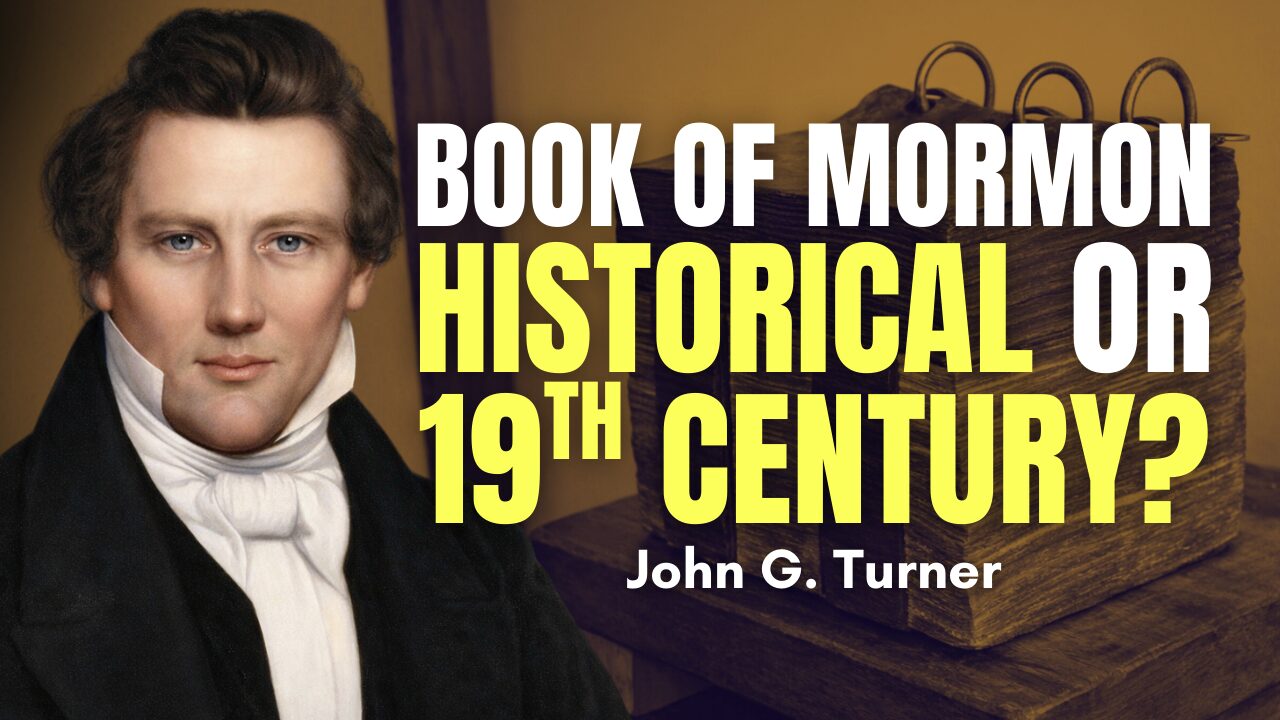
Thumbnail Credits: Main image of Joseph Smith by Unknown painter, from Community of Christ Archives (public domain); Background image from the Utah Lighthouse Ministry
Originally published on mormonstories.org.
Transcript
Machine-generated and lightly edited. Click any timestamp to jump the audio to that moment. The audio is authoritative; please check it before quoting.
Introduction and Episode Overview
John Dehlin Hello, everyone, and welcome to another edition of Mormon Stories podcast, Joseph Smith Edition. I am your host, John Dehlin. It's June 25, 2025, and today you are joining us for part six of our opening series in this Joseph Smith podcast. And we are covering this new book published by Yale University Press called Joseph Smith the Rise and Fall of an American Prophet. And we have back on our show for the sixth time, Dr. John Turner from. Is it George. I keep forgetting George Mason University. Is that right?
John Turner You got it. George Mason University in Fairfax, Virginia.
John Dehlin Yeah. All right. And for those who might be joining us without having had the benefit of the previous five episodes, this series is best consumed in sequence. We've already talked about Joseph Smith's family of origin, Joseph Smith's first vision, Joseph Smith and the golden plates, Joseph Smith in the translation of the Book of Mormon. And then we've talked about the three witnesses. We've talked about Martin Harris and the last 116 pages in Lucy Harris, and we've talked about the eight witnesses and general Book of Mormon witness credibility. And that's kind of one through five of this book. And, and today we're going to be covering chapter six, which is the 1829 period. And in the book, the chapter's called A Choice Seer. And it's just talking about, I would say part of it's talking about Book of Mormon historicity, but it also talks about Book of Mormon theology, Book of Mormon narrative, Book of Mormon doctrine, and just the project of kind of nascent, budding Mormonism. And before we jump in, I just want to thank everyone who has donated to support this project. As many of you know, we, we committed to, to John Turner that we would do this podcast as long as we could pay him at least a decent amount for what he, we think he's worth. And I'm very happy to announce that as of Today, we've raised 3, $900 from 71 donations. So, you know, that's almost 4 grand, which is almost, you know, eight episodes. So we're at least paid up for a couple more episodes based on the minimum that I feel comfortable paying John, we're paying him 50% of the proceeds. The other 50% goes to just support Open Stories foundation operations. So thank you for all of you who have reached out to support. You're going to get at least, you know, a couple more episodes. And if people keep contributing, if they value this project, maybe we'll go all the way through to the end of the book. So again, if you want to contribute to this project. It's donorbox.org Joseph Smith and Julia will include a link to that in the show notes. So without any further ado. Hey John Turner, welcome back to Mormon Stories.
John Turner Thanks John, Great to be with you. I'll just take a minute and say that this is a really unique opportunity to talk through Joseph's life in such detail. So I'm grateful to your audience and to you for the chance to do this. I hope it's fun for them. It's been a lot of fun for me.
John Dehlin Well, thank you and likewise. I've been doing this 20 years and you would think I've had enough of all things Mormon, especially Mormon history and especially Joseph Smith. But I'm learning new stuff from this book and and what I love about this series with you and this will be a repeat for those who have been listening. I just love to hear a neutral third party, top notch scholar giving his perspective on Joseph Smith can't be accused of, can't be credibly accused of being an apologist and can't be accused of being an anti Mormon or an ex Mormon. And while we value Fawn Brody and Richard Bushman and all the others, Dan Vogel, et cetera, it's just so great to hear your perspective. John Turner Any news on the sales? The book is officially now for sale. We of course encourage people to buy it at Benchmark Books and if they can't get it at Benchmark Books to then get it on Amazon or from Yale University Press. Any news on sales or reception so far?
John Turner My editor told me it was that sales were off to a strong start. I didn't press her for details, but I'm excited that people are reading and talking about it. I've had a great time doing a number of interviews about the book. I did Ask Me anything on a Faithful on a Faithful Latter Day Saint channel earlier this week. That was a lot of fun, actually. I should have known, but I didn't. I didn't fully realize how many people would want to press me in detail and persistently about the Statement of the Eight Witnesses and the Golden Plates. So it's been fun to be able to field questions from all sorts of perspectives on subjects like that.
John Dehlin Yeah, we'll have Julia include a link to that. Ask me anything. It is absolutely worth your time to read the exchanges, everybody. So we'll have Julie include that in the show notes. I have to admit my favorite question was I'll paraphrase, but it's something like if you want to be taken seriously, why in the world. Would you do any episodes with John Dehlin? That was my favorite of all the questions.
John Turner Well, I hope you liked my answer, John.
John Dehlin I'll talk to anybody. That was your answer?
John Turner Even John Dehlin? No.
John Dehlin Welcome back to the Dregs. The dregs of society.
John Turner That wasn't my answer. I said it was a lot of fun mixing it up with you.
John Dehlin Yeah, well, that's super fun. All right, so I have a, I have a question as a trailer to last week's episode before we jump into chapter six, is that okay?
Applying Occam's Razor to Book of Mormon Origins
John Turner Sure.
John Dehlin Okay. When we were talking about the three witnesses and the eight Witnesses, I don't. To the Book of Mormon, I don't think I just, just all went out and directly asked this question. We talked about different scenarios of, of whether they saw the plates with their physical eyes or their spiritual eyes. Whether it was in a vision, you know, whether Joseph manipulated them, whether, you know, whether they were dreaming. What I didn't just flat out ask you is what about kind of the Occam's razor most probable explanation, which is, you know, we talked about how it was. It was, it was basically a bunch of Whitmers and some Smiths. And I think if you, I think at least one of the guys. Was it Hyde? If Hyde married a Whitmer, you could even, he could even be counted as a Whitmer. And in that case it's pretty much all either Whitmers or Smiths. What about the option that just they were in on a, in on a scam. And I know that they never denied, you know, their witness. But also there'd be a reason not to deny it because even if you stop believing or stop, stop following it, you would be admitting to the world that you lied to them and thus were part of deception. So I could easily see as the Occam's razor simplest answer. We probably agree there really wasn't an angel. We probably agree, you and me, John Turner, that there weren't gold plates. So what about just the flat out possibility that they were just in on a scam? Maybe there's a. Or on a deception or on. We could pick a nicer word for it if we don't want to use a harsh word. Maybe they were in on a money making opportunity. And Joseph said, hey listen, if you guys will say you saw the plates and saw an angel, then I'll give you all a little bit of the proceeds if the book sells well. So you know something to that effect. What do you think about just that? That is Being Occam's razor. Simplest most likely explanation.
John Turner I don't know, we might need a three or four blade razor to do, to do this one. I would, I would say this if you, if I went down a list of possibilities and I'm starting with the, with the point that we don't know that much about the experience of the eight witnesses. A number of them made later statements. We don't have a lot of information from the spring of 1829 itself. So let's throw out a few theories. Number one, they experienced exactly what they attested to. And then that would be either Joseph really does have these gold plates containing an ancient record, or it would be Joseph had fashioned something that convinced them that was convincing to them, that had engravings on it. Secondly, they could have had. This is what I lean, I nod this way in the book. You know, it really could have been more of a mystical or visionary experience. I think if I had to, if I was going to go back and rewrite the chapter, I would hedge a little bit more toward Joseph had some sort of material object that he presented to them. So we have those two possibilities. And then third, I would say what you just outlined, I actually think that is less likely than option number two, and here's why. Certainly they could have been in on a scam. But would you want to orient your life on the basis of a scam for eight years and then when you fall apart from Joseph Smith, would none of those individuals have taken the opportunity, opportunity to sort of twist the knife in him with what they knew? So that's my hesitancy with, with what you outlined. You know, we, we don't know for certain. I would also say in terms of providing them with financial incentive, Joseph didn't have, he didn't have access to any convincing sum of money in the spring of 1829.
John Dehlin Okay, and, and yeah, okay, so, so you think, you still think the most plausible answer is that they saw the angel plates and what they believed to be a vision? You feel like that's the most plausible answer?
John Turner I think that's plausible. I also think that Joseph did have, you know, he had an object in the fall of 1827 into the spring of 1828. You know, he had something in his box, he had something under the linen cloth that people talk about. So I think it's certainly possible that he could have presented them with an object in the spring of 1829. I've always been a little hesitant about that because it would have to be pretty convincing in order for these Men to conclude that these were plates of gold and that those were ancient engravings. I think that. But I do think that's possible. I think the experience being more mystical or visionary is also a strong possibility.
John Dehlin Okay. And, yeah, I remembered now something I was hoping to mention last time, which was while the three witnesses had their vision in Fayette, New York. Is that right?
John Turner Correct.
John Dehlin The eight witnesses had their vision in the Palmyra area, so back up near the Smith family home. Is that correct?
John Turner That's correct.
John Dehlin And. And since they claimed. Since. Since the three witnesses didn't get to touch any plates or feel them, but the eight witnesses claimed to have touched and felt plates, then it's possible that Joseph had something made up to show them. And then that whole sealed portion of the Book of Mormon, if he just claimed that there were parts that were sealed when he's presenting these plates, maybe that could have kept them from opening it up and inspecting the pages and inspecting the alleged hieroglyphics inscribed on the sheets. Is that within the realm of feasibility in your mind?
John Turner I think it's within the realm of feasibility.
John Dehlin Okay.
John Turner I think I'd also return to something that I said last time, or I think I said last time, which is there's a reason why those who believe in the materiality of the plates point to the statement of the eight witnesses as a piece of evidence. It is an attestation that these eight individuals both saw and handled and inspected the plates. I think I'm willing to grant that as a piece of evidence. From that perspective, I would simply say, look, that's one piece of evidence, and we have a lot of other things that we need to consider, some of which we're going to talk today about the Book of Mormon. I think we have to be fair to the evidence, and I think we also have to be willing to say there's not that much we know about exactly what transpires in the spring of 1829. You know, for instance, last time we talked about the restoration of priesthood, for which, you know, in terms of contemporary sources, we have very little information.
John Dehlin Yeah, absolutely. Okay, well, let's go ahead now and jump to chapter six. Thanks for taking those questions. And chapter six is a bit of a different chapter than the previous five. It's called a choice. Seer, do you want to tell us what you were hoping to do in chapter six? It's kind of a shorter chapter, too.
Chapter Six: The Book of Mormon in Context
John Turner It's a short chapter, and in a way, it does interrupt the narrative of Joseph's life, which is something I try really hard not to do in, in my biography. I want readers to some extent to be swept up in a fast paced narrative. But I thought it was necessary to stop and write a chapter about the Book of Mormon, you know, for readers who might be totally unfamiliar with its contents, to give them a brief overview, to return to some basic questions about the historicity of, of the Book of Mormon and how we might understand Joseph in light of those questions. So I try not to detour from the biographical narrative for too long, but felt it was necessary to make at least a brief detour in this case.
John Dehlin And so in your mind, the purpose of this chapter is to what?
John Turner Well, summarize the contents of the Book of Mormon.
John Dehlin Yeah.
John Turner You know, handle some basic questions about its historicity and then think about what that means in terms of my understanding at least, of Joseph Smith.
John Dehlin Okay, perfect. And let me just. There's one thing I need to clean up from just 10 minutes ago I said Orson Hyde. I met Hiram Page as one of the a witnesses and I think he married a Whitmer. And if that's the case, then it was five Whitmers and three Smiths. And that's just me trying to correct a misstatement that I made in the past. So, okay, so yeah, you, you start out chapter six by saying that as soon as the Book of Mormon is published in 1830, it was immediately viewed broadly by non believers as a fraud. Do you want to start there and talk about that?
Early Critics and Claims of Fraud
John Turner Sure. There's a newspaper article from my hometown of Rochester, New York, which is published just a few days after the Book of Mormon is published, and it denounces it as a vile imposition, announces that this is evidence of fraud, blasphemy, credulity. It's hard for me to imagine that an editor of that Rochester newspaper had necessarily read the whole thing, but the first response wasn't positive.
John Dehlin And how out of the ordinary was this book? A lot of us who have read critically LDS Church history are aware of View of the Hebrews, a book that at least in some ways tried to attempt to explain the origins of the Native Americans. A lot of us have heard about a book called the Late War. We've heard about the mound builder myth going around. So how much of this was, let's just say, a sort of boring snoozer, not real news, like, oh, these books come across all the time, or this is so dumb it's not even worth considering versus like this idea that it's a scandal and viewed as blasphemous versus like really exciting. It's hard to get a sense for, like, really knowing the context of the 1830s. And, you know, how much do you think this Rochester News reporter reflected the sentiments of the general population?
John Turner I think this response was actually fairly typical. I do think the Book of Mormon is an unusual publication because unlike the antecedents that you mentioned, this book presents itself as a text akin to the King James Bible. It's divided into books. It contains a narrative about Jesus Christ. It contains the story, stories of ancient prophets. So I think that's why it's denounced not just as, say, nonsense or imposition, but specifically as blasphemy. I mean, I do think it was something a bit different. It had also been anticipated. You know, newspapers in the Palmyra and Rochester area and farther afield had run stories on the fact that, you know, this individual was going to publish this gold Bible. Someone had published excerpts from it earlier in the year. So the Book of Mormon's publication was anticipated. And I think that also paved the way for these quick denunciations.
John Dehlin It's almost, as I'm trying to reflect upon that, it's almost like blasphemy is a sign of some sort of weird respect because it could just be dismissed as silly nonsense. But the fact that they would go to the lengths to say it's blasphemy, that it's kind of outrageous, speaks to the fact that they're feeling at best challenged and at worst even threatened by the idea of people taking it seriously and maybe being persuaded by it. Does that make sense?
John Turner Well, I think that comes to the fore much more strongly the next year when the minister, Alexander Campbell, publishes a lengthier denunciation of the Book and offers a serious, I would say, both theological and literary critique by that point. So Alexander Campbell is one of the leaders of a movement of primitivist Christians. His followers in northeastern Ohio, a percentage of them accept the Book of Mormon and are baptized into the Church of christ late in 1830, early 1831. By that point, people like Campbell understand this movement as a genuine religious threat. I don't think that's so much the case. In the spring of 1830, there is that denunciation of the Book of Mormon as blasphemous. I don't think there's necessarily an expectation that very many people are going to accept its claims. When people begin to do so in the coming year, then the denunciations, I think, grow much sharper, lengthier, and even more pointed.
John Dehlin Got it. Okay. Well, in. In chapter six, you then immediately go to an acknowledgment that the Book of Mormon invites people to pray, to get a witness. So it invites you, you actually note that it invites scrutiny, which is really interesting. And then you, you go to list all the other ways that the Book of Mormon could either be verified or I guess, invalidated. And you list archeology, DNA studies with the Native Americans. You know, does the text suggest a Semitic source? Is it a 19th century composition? Does Joseph borrow from the culture of milieu? Were there plates? So I asked you to kind of prepare whatever you wanted to prepare about whatever digging you did around Book of Mormon historicity or authenticity from a evidence or science based perspective. And that's right down the line of what Mormon Stories often focuses on, specifically with like the LDS discussions series we did. So let's just give you some time to tell us what you looked into and what you found.
Debating the Book of Mormon's Historical Claims
John Turner So let me, let me frame it in a way that I think it'll make sense to a lot of your listeners, but might also frustrate some people because I think the response of someone like me often can frustrate, I would say, faithful Latter Day Saints who are committed to the book's historicity, but sometimes also frustrates, you know, former members of the church or people more connected to the tradition who have rejected its historicity. So there are these heated, intricate debates about the historicity of the Book of Mormon and those can get very detailed on matters of archaeology, DNA, literary analysis and other elements. And we can delve into all of those. But I think it's important to note at the outset that to non Latter Day Saints, people who really don't have a connection to the tradition in any way other than as an object of research and fascination, there's really no ongoing debate about this subject. And I think the burden of proof as far as non Latter Day Saints are concerned has always been and remains squarely on those who claim that the Book of Mormon is an ancient text. And I think that can be frustrating to apologists, if you will, because sometimes there's a hesitancy to get into the weeds on questions of archaeology or literary analysis. And I'd be very quick to say that, you know, I'm not an archaeologist. I don't really understand DNA analogy. You know, I, I'm not, I'm not great on DNA and genetics. I did take a genetics class in, in college. It was with my future wife. I was more interested in her than in the subject matter, so. And I'm also not a, I'm not a literary scholar either. I'm a historian, so a lot of the things we're talking about, you know, they are stepping, they are step removed from the tools of my own discipline. So I think that's important to state at the outset that for non Latter Day Saints, this is not a subject of controversy. It's more or less an accepted uncontroversial opinion that the Book of Mormon is an early 19th century creation.
John Dehlin Well, I mean, honestly, that's actually saying a lot and it makes sense. But I've always, you know, for 20 years I've noted this difficulty. People trying to determine if the church is true or people that have concluded that the church isn't true are really desperate for scholars to help shed light. And that's why, like Michael Coe, I've mentioned before, Yale Mesoamerican expert Michael Coe was such an important Mormon Stories episode because he no one knew Book of Mormon Times Mesoamerican archeology better than him. And he was able and willing to weigh in and tell us what he felt about, you know, silk and horses and, and elephants and steel and wheels and chariots and helmets. And in almost every instance he's like, it's not only what is there that shouldn't be there, it's all the things that should be there, like chocolate and jaguars that aren't there that demonstrably show that the Book of Mormon isn't from an archeological standpoint, a valid text. And similarly, Robert Ridner, the Egyptologist who knows Egyptian and can translate the papyru that Joseph Smith produced, he was willing to enable to weigh in and say that the Book of Abraham is just not in any sense a translation. So that's on the one hand that's been a rare find and really precious, but generally it's been really frustrating because if secular non LDS scholars are like, this question of Book of Mormon historicity isn't even worth my time to look into. Pretty much everyone outside of the Mormon Church knows it's not a book that should be taken seriously as an actual historical text. But then all the Mormons believe it because they had warm feelings and they don't really feel the need to prove it, other than the apologists that claim to be scholars who are on the BYU payroll, who then respond to critics, but in a non credible, faithful, on the payroll sort of way. It leaves a lot of us that just want clarity, unable to get clarity from the experts.
John Turner It's frustrating, but I think what you said actually in a way is a bit of clarity. So for instance, also there's a great archaeologist who sometimes writes for popular audiences named Timothy Paquetot. He's at the University of Illinois. He wrote a book on Cahokia. He also edited the Oxford Handbook of North American Archaeology. Now I know that's a different subject than Mesoamerican archaeology, but. So Joseph Smith, in 1834, he writes a letter about wandering the plains of the Nephites. It's actually a lovely letter. He's encountered a skeleton that he's identified as Zelf, you know, an ancient warrior. And so you want to guess what the Oxford Handbook of North American Archaeology says about the Book of Mormon narrative? John,
John Dehlin please, I'm on the edge of my seat. Don't make me guess.
John Turner Yeah, nothing. I mean, the subject doesn't come up because it's not. It's not a subject for. Of inquiry among non Latter Day Saint archaeologists. Now, I understand that that can be frustrating. I think it's. I think one also can't presume that no non Latter Day Saint scholar would pursue that as a line of inquiry if the evidence led in that direction. And I will also just say, as a non Latter Day Saint who appreciates many things about the Book of Mormon, who loves the story of the early Latter Day Saint movement, who very much enjoys the narrative of Joseph Smith's life, I love a good story. So if the gold plates were material and they did contain an ancient record, and this was an ancient history of the Americas, I would love that story and I would want to pursue it. So I don't think one should presume that non Latter Day Saint experts, whether in archeology or DNA analysis or literary analysis, I don't think one should presume that out of some sort of bias, they're not pursuing the. The truth. I'm not saying by any means that any field of scholarship is perfect and doesn't have blind spots, but I don't think there's a willful disregard for evidence for the Book of Mormons historicity.
John Dehlin Okay, so if you or other scholars felt like there was enough there. There to look into it, you'd probably be all over it. Is that what you're saying?
John Turner I would be all over it? Yeah, I think that'd be great. I think it'd be great fun. Absolutely. So, you know, in terms of. And then I think the problem, and that can sometimes be a source of apprehension, is if you are a 19th century US historian like me, I mean, I'm not an expert on Mesoamerican archaeology, and there are, you know, you can get into the weeds and you can be way out of your comfort zone. I think the. The reality is though, if the civilizations of the Book of Mormon had existed in the way that the Book of Mormon describes them, I trust the comments that archaeologists like Michael Coe and others over the course of many decades have made. We would have the evidence. The evidence is currently lacking. If convincing evidence resurfaces in the future, I'm certainly happy to reconsider my opinion about the Book of Mormon's historicity. But that evidence currently doesn't exist.
John Dehlin The last thing I'll say just about this general discussion is what I found more believing Latter Day Saints often saying is something to the effect of, well, of course a non believer isn't going to want to take these things seriously. Or even, worst case, they're prideful. They've been seduced by the learning of men. And by the way, secularism, secular learning is almost diabolical in and of itself because, you know, it's the type of thing that leads to this evil belief of evolution or the global flood and Noah's ark couldn't have happened or that Adam and Eve didn't exist. You know, basically scholars are godless secular people who are more inclined to believe in and follow the teachings of Satan than, you know, pursue causes like, you know, giving a fair consideration to Latter Day Saint theology. And so of course, having their hearts led by the devil, they're not going to give a serious scholarly consideration to Book of Mormon evidence. And I know I'm kind of overstating that, but I think that's at least within a standard deviation of the types of arguments I used to hear when I was engaging with faithful, apologetic Mormon scholars.
John Turner Sure. And by the way, I would back up and say a couple of things I wouldn't tell a faithful Latter Day Saint who believes in the Book of Mormon's historicity and feels that he or she has a spiritual confirmation of its truth. I wouldn't tell that individual that they should trust archaeologists over their own spiritual experience. I mean, I wouldn't want to say that to anyone. I'd also say that, you know, the Book of Mormon does ask for it to be assessed on the basis of prayer and spiritual witness. And I don't know, this might blow your mind, John, but when I first got into this material, I prayed whether or not this was true. And that might sound ridiculous if you're thinking of me as a neutral arbiter and someone with no skin in the game, I prayed with a sincere heart and I didn't get that Spiritual confirmation, obviously a lot of people do. I mean, I think it's fair to ask people to give the material a fair shake in all sorts of ways. But I also think it is a bit unfair to ask non Latter Day Saints to feel as if they would have the burden of proof against the Book of Mormon. I really do feel like the burden for the book's historicity is on the other side.
John Dehlin Yeah. And. And just to remind people that may not have listened to the previous episodes, it's not like you're. So. I think it's great that you're willing to admit that you prayed about the Book of Mormon, and I think it's great that you did pray about it. And I actually had that on my list of questions to ask you. So. You. You're kidding. You. You were. No, you were a step ahead of me.
John Turner Okay.
John Dehlin I for sure was going to ask that. But also, I think it's also just fair. Important to establish that you're not beyond religious feeling because as you've been willing to mention in previous episodes, you do consider yourself a believing Presbyterian or Christian, correct?
John Turner No, I am a believing Christian. And I will say that maybe as a parallel, I don't read the early chapters of the Book of Genesis literally. I don't feel like that interrupts my ability to. And I don't mean this just in a super progressive way. It doesn't interrupt my ability to. For those chapters to be true to me in, in other ways. So, you know, I'm, I'm, I'm open to some complexity. Complexity here. Maybe I could, if you don't mind me leading a little bit, please. I'll just get into the weeds in one respect, and I feel a little bit firmer about it than I do about archaeology and DNA. So I love the early chapters of the Book of Mormon. I think I might say in my biography that the book starts with a bloody bang. You know, that's. It's a. It's kind of. It's kind of exciting stuff. And one of the narratives that I find, you know, interesting is the story of Nephi ultimately slaying Laban. And, you know, it's such an interesting narrative. You know, he finds he, you know, he draws Laban's sword and he feels constrained by the spirit to kill him, but he hesitates because he knows that it's wrong to murder someone. And so he, you know, he shrinks back and the spirit tells him to do it and to slay him. And then I was struck once when I was reading this Chapter by just this one sentence, it is better that one man should perish than that a nation should dwindle and perish in unbelief. You know, that's a justification for the murder. So there's a general sort of biblical resonance here that the Lord slays the wicked. It's a phrase that appears a couple of times in the Old Testament. But that fuller explanation of the Spirit echoes a passage in the Gospel of John in which the high priest urges those around him to consider that it is expedient that one man should die for the people and that the whole nation perish. Not better that one man dies than that everybody perishes. So there's a couple of takeaways here, and I hope those of you listening are willing to follow me into the weeds a little bit. You know, number one, this is supposedly taking place six or seven centuries before the Gospel of John was written. And this, I would say, anachronistic usage of the New Testament as an inspiration is to me strong evidence for the Book of Mormon as a later text, you know, as a 19th century text. Now, I know that smart Latter Day Saints have answers to this objection to the Book of Mormon's historicity, but I see that pervasive use of the New Testament as a source of inspiration, I see that as anachronistic. There is actually a second takeaway, the law.
John Dehlin Are you saying that 600 B.C. god was less likely to say that to his followers than 300 AD or whatever the term is like? Are you saying that it's too early for God to speak that way to his followers in terms of being anachronistic?
John Turner I mean, I'm not saying God couldn't jump the gun, but, you know, the, the, the precise nature of the illusion, I think is striking. Better that one man should die for the people and that the whole nation perish. Not so better one man should die. But then also that language about perishing, you know, it seems to be, you know, as far as I'm concerned, it's an allusion to the Gospel of John that wouldn't have appeared in a more ancient text.
John Dehlin I see, I see. Okay.
John Turner But I'd also want to make this a little bit more complex. For me, the only takeaway isn't, oh, well, this is a problem for the Book of Mormon's historicity. I mean, that's one possible conclusion, but I think we could be a little bit more complex than that. So the long excerpt from Isaiah is a partial exception. But Joseph Smith didn't usually just plunk passages from the Bible into the Book of Mormon. So in this case, it's actually a little bit more complex than that. In the Gospel of John, the high priest asserts that it'd be better for Jesus to die, really, than for the Jewish people to perish. And there's some irony there in that, you know, according to the biblical narrative actually is good that Jesus died. So in a sense, this is then a little bit different. In both instances, God will use the death for his righteous purposes, you could say. But in the Book of Mormon, it's God's prophet Nephi slaying the wicked. It's sort of an inversion. And then the other thing I think is interesting is that it employs a motif of people dwindling in unbelief or perishing and dwindling that one finds throughout the Book of Mormon. And in fact, if Joseph sort of dictated the second part first and then came back to the beginning, you know, Joseph's well aware of those themes and I think is maybe weaving them in, in complex ways. So I have two takeaways from encountering passages like this. The first of those is that the Book of Mormon isn't an ancient record. And I know that, you know, some listeners, some readers, they're going to want to stop there. But then I'd also say, secondly, a passage like this, it provides evidence of Joseph's really close familiarity with the Bible and his ability to rework biblical themes in creative ways.
John Dehlin I love it. I love it. I'll just quickly say I would prefer my God to just make Laban fall asleep. In fact, I think Laban was asleep when Joseph chopped his head off, or he was drunk and passed out. Like, I just don't like my God commanding murder. So maybe I'm making God in my own image. But the only. The only other problem I have with that is whether it's the Lafferties or Chad Dabel and Lori Vallow, like Mormons in modern times, appear to be a little bit too excited or able or willing to use that scripture that you read about Laban and the Lord killing people for righteous purposes. Modern Mormons seem a little bit to be too ready to just use that to justify acts of true crime. You know what I mean?
John Turner Fair point. You know, and I. I certainly wouldn't. Wouldn't proof text it that way. And I think if you look at some of Joseph's later revelations, you know, with his emphasis on proclaimed peace, I think. I think there's plenty of more pacific material in the Mormon corpus. Yeah, I'm with You, I mean, of course, you could just take the sword and get out of there. If you're thinking of the Book of Mormon as a 19th century creation of Joseph Smith. So therefore, on some level fiction, I can understand why it adds a little bit of drama to the story.
John Dehlin Yeah. Julia keeps me honest or corrects me. And she just said that. She just reminded me that I accidentally said Joseph chopped off Laban's head when it was actually Nephi. So thank you, Julia, for that correction. Sometimes my brain drops things. Okay. So is there anything you want to say about your review of archeology, DNA, you know, ancient Semitic text, 19th century composition? Because I do think that people, or even the evidence that it's a 19th century document. Do you want to share any. Just summaries of your findings in those regards? Knowing. Accepting your acknowledgment that you're not an expert in any of those fields?
Archaeology, Anachronisms, and Historicity
John Turner Sure. So I guess. I guess I'm invited to embarrass myself. I'm good with that. Yeah. And I'm just going to take these really quick, you know, so archaeology, I would return to the point that non Latter Day Saint archaeologists of Mesoamerica, North America, they haven't found anything confirming the history narrated by the Book of Mormon. For me, there's not. There's not a debate that I feel that I need to weigh into. As for DNA evidence, I would say that it has not been helpful for those who want to use it to bolster the Book's historicity. You know, the LDS Church has a gospel essay, excuse me, gospel topics essay on this subject, which insists that we can't draw firm conclusions from existing DNA evidence. I think that's a fine and even a fair point. I'm not a geneticist, but even if we grant that point, that's not evidence for the Book of Mormon in terms of, you know, literary analysis. And I know I'm zipping through these, John, but in terms of literary analysis, you know, I'm not a literary scholar. I've paid a little bit of attention to some of the arguments about chiasmus. I'll give a quick. Just a quick reaction, which is that I think literary analysis has become more attractive to, I would say, defenders of Book of Mormon historicity, in part because archaeology, for the most part, has been a letdown. I've never read anything on chiasmus in terms of the Book of Mormon that I found super convincing. Now, I know there are people who have gotten into the weeds on that and fervently feel that it affirms the Book of Mormon as an ancient Hebraic text. A lot of the examples seem to be along the lines of what individuals with literary talent and great familiarity with the Bible might be able to produce. I could be wrong about that, but I haven't found it convincing myself. I think debates about anachronisms or 19th century influences. I mean, right from the start, Alexander Campbell has this sharp critique of the Book of Mormon for wading into early 19th century theological debates, for sometimes using theological terminology that would have been familiar to early 19th century Americans, including material that seems to allude to Freemasonry in terms of secret societies or republican government. Yeah, for me I do see a lot of 19th century influences. I titled the chapter A Choice Seer. I even see biographical influences of Joseph Smith. And I also want to stop and say I'm not saying these things in any way to hate on the Book of Mormon, let alone on the church or the faith of its members. It's simply that as a non Latter Day Saint, it's non controversial to read the Book of Mormon as an early 19th century text that Joseph Smith dictated.
John Dehlin Yeah. And of course there's the, you know, the deutero Isaiah, the parts of Isaiah that would have been written after Lehi left Jerusalem that are appearing. There's not just New Testament and Christian theology appearing in the Book of Mormon, but that's before Jesus was even born. Like I've always just been stumped by why did the Nephites get to learn the name of Jesus but the actual Jews who were Jesus literal blood ancestors, they never got to learn his name, let alone get baptized in his name or be confirmed with the Holy Ghost in his name. That just. But as a Mormon is a sort of a faithful, orthodox believing Mormon. That thought just never even crossed my mind that concerned.
John Turner Yeah, I mean honestly, one of the. When I first read the Book of Mormon and started reading things about it. Yeah. One of the things that really stands out is that there are pre Christian Christians in the Book of Mormon, which, I mean, yeah, it's anachronistic. It's also on some level it's either a cool or offensive idea, depending on how you feel about it.
John Dehlin Are you. Does the Book of Mormon offend you as a Christian?
John Turner It does not offend me as a Christian. I'm actually pretty hard to offend. So no, it doesn't offend me at all. And I will say as a Christian, there are parts of the Book of Mormon that even if they challenge my own tradition in some way, they don't offend me. I like the, you know, I like the passage in 3rd Nephi in which Jesus is. His bowels are full of compassion and he wants the sick to be brought to him. And that's a lovely, That's a lovely passage. I like the sharp attack against Calvinism in the second chapter of Second Nephi. For me, that's, that's actually my favorite passage in the Book of Mormon, that.
John Dehlin And when you say Calvinism, do you mean predestination stuff?
John Turner Predestination and the ability for humans to make meaningful eternal choices. And I simply like the idea of the purpose of human existence being joy. That's a rather refreshing thought. Even if it doesn't square with the catechism of my own denomination. I'm totally fine with that.
The Book of Mormon as Christian Scripture
John Dehlin Are there any parts of the Book of Mormon that you as a Christian would consider Scripture for you? Is that a bridge too far?
John Turner That's a bridge too far. I mean, for me, I can't read the Book of Mormon devotionally the way that I could read the Bible the way that many Latter Day Saints read the Book of Mormon. So I really approach it as, as a piece of, of literature, of, of Christian literature, if you will.
John Dehlin Let me just ask you this because this is so fun for me when I've interviewed Sandra Tanner in the past, and I'll just summarize her take, which is that the Book of Mormons. Hogwash. But the Bible is the bee's knees. A lot of ex Mormons will come back and say, look, the Bible's got just as many problems as the Book of Mormon. It's got just as much myth, just as much anachronisms, just as much pseudepigrapha. Like, it's just as problematic. It's borrowing from Babylonian stuff and pagan stuff all the way through it. Tell me where you weigh into the Bible. If the Book of Mormon is 0% credible as a historical document, what percentage would you give the Bible overall? 100%. 100%.
John Turner That's such a fun question. Yeah. Well, I guess the first thing I'd say is that the Bible is indisputably ancient. Right. So that's a fundamental difference between these two texts or in the Bible, it's a huge collection of texts. So nobody, as I, as I say in chapter six of the biography, you know that. Yeah. Like your question suggests, there are long. There are these debates about the precise combination of myth and history as far as the Bible or the Quran is concerned, but they're indisputably Ancient. So whether or not Joshua marched around the city of Jericho with people playing trumpets, we can't prove that. But we do know from archeology that there was an ancient city of Jericho. So the debate is different. So I'll just say really quickly because I'm not a biblical scholar, I'm a US Historian. You know, there are minimalists when it comes to biblical scholars, so who are only going to take as factual or historic things that can be definitively proven through extra biblical sources. And then there are maximalists who are going to take the Bible at face value. Unless there's something outside of the Bible that, you know, disproves something. I'm sort of just in a mushy middle. I recognize that the Bible has issues in terms of contradictions, uncertainty, all sorts of things. And I have essentially just chosen as a Christian, not to let that bother me overly much. I don't know if that makes any sense to you, but for instance, we have in the New Testament there are four gospels, you know, four different accounts of Jesus's life. The fourth, the Gospel of John, is rather strikingly different from the other three. But even those three synoptic gospels as they're called, they have differences. Now it occurred to me at one point when early Christians were, you know, sort of deciding and there wasn't a formal decision, but early Christians, say around the year 200, basically accepted these four, four gospels as scripture. Those were not, you know, just flat out stupid people. They were aware of those differences and even, you know, points of incongruence, they read far more things allegorically than Protestant Christians of later centuries would do. They could live with, they could live with having four different accounts of Jesus's life. So I figure it shouldn't be that hard for me to do it either.
John Dehlin Are there parts, this would be my last question about this. Are there parts of the Bible that you just don't believe happened at all? So, for example, Noah's Ark, or, you know, the literal Adam and Eve. And if so, if there are parts of the Bible that you take is 100% myth or allegory, I wonder if there are Christians that are willing to just say, look, if we can say Noah's Ark is allegory, if we can say Adam and Eve are allegory, how about we just take the whole Book of Mormon as allegory and purely mine it for its Christian spiritual value. So that's a two part question, I guess.
John Turner Sure. So for the first one, yeah. So I, I generally just don't read the, you know, the primordial history, sort of chapters 1 through 11 of the book of Genesis as history. I do read it as myth. I will say at the same time, I'm just. I'm not super consistent about that. So, yeah, I know that there's no. I know that there's no scientific evidence to support a worldwide flood, at least according to what I've read. And I. I know that it's probable that the story of the flood was adapted from Mesopotamian myths. At the same time, I feel better about the future of the world when I see a rainbow.
John Dehlin That's beautiful. Thank you for that. And I do love the role religion plays in just giving people hope, you know?
John Turner Yeah.
Narrative Arc and Theological Themes
John Dehlin Okay. So in your. In chapter six, you spend some time just sharing with the reader just the overall narrative arc of the Book of Mormon. Not only the Lehigh Nephi Laman Lemuel arc, but also you even get into, you know, ether and the brother of Jared and the Jaredites. I've literally got two pages, three pages worth of questions here, but why don't we start by you sharing things about the overall Book of Mormon narrative that you find compelling or interesting or problematic, Then we can go from there. Or if you'd rather me just kind of dive into some specific questions, I can, but I want to lead by letting you. I want to at least start by giving you a chance to lead that conversation.
John Turner Sure. Well, John, I mean, in that chapter, I probably mention. I mean, I mention a few of the passages in the Book of Mormon that I find, I don't know, either profound or illuminating for understanding Joseph Smith. I do find it quite fascinating that there is this prophecy or prediction in the Book of Mormon itself that there will be a future leader who will be a choice seer, who will bring forth long hidden words, and that that individual will be a descendant of Joseph who will also have the name Joseph, and his father will also have the name of Joseph. And I do think that's a window into either how Joseph just understood himself or as he presented himself to his followers. And one of the. It may or may not be a thought that's original to me. I can't remember, but as. As I was writing the chapter, it occurred to me that by publishing the Book of Mormon and by gathering followers who believed in him as a seer and translator, Joseph was able to fulfill that prophecy. You know, he sort of made himself into a choice seer through the publication of the. Of the Book of Mormon.
John Dehlin Yeah, you use the word chutzpah. That is Kind of bold to create an ancient book that prophesies of your, your eventual greatness.
John Turner Is it. I mean, it's quite something.
John Dehlin Yeah.
John Turner And I, I know that. I don't know. I think both some detractors of the Book of Mormon and proponent, proponents of the Book of Mormon are sometimes a little frustrated with me for, I don't know, reveling a little bit in Joseph's chutzpah instead of either supporting him or denouncing him as a fraud. I mean I, I do think it is pretty remarkable. It is chutzpah and audacity. Here's this 23, 3 year old man who writes that and fulfills it. That is, it's a really unusual way to announce yourself to the world.
John Dehlin Absolutely. Yeah. So, so, you know, the Book of Mormon musical makes light about, you know, ancient Jews built boats and sailed to America. You know, we've already talked about the mound builder myth and the racism in the cursing of the dark skin. I'm curious what you make of that narrative, both as a scholar and as a Christian. I remember being taught as a kid, well, Jesus said, other sheep I have who are not of this fold, meaning, hey, you people that I'm talking to right now, you're not the only people that I talk to. And I was taught what Jesus literally meant. There is, after I die, I'm going down to America because they're my children too and I'm going to go preach the gospel to them just like I'm preaching it here in the old world. What do you make of just Israelis coming to America? And I'm not asking you now a historicity question. I think we've put that to bed. But I'm just curious what you make of both of just Native Americans being descendants of Jews and Jesus visiting other peoples.
The Book of Mormon's Theological Complexity and Legacy
John Turner Well, I think for starters, I mean, one reason I tend to resist really reductionistic views of the Book of Mormon, which I would say are either Joseph gets this story from somebody else or Joseph is really, this is almost only an autobiographical, you know, literary project is Joseph wades into all sorts of, I think pretty fascinating theological terrain. So that particularity of the Christian message, you know, I think it, it was, it's a bit of a problem for Christianity that, you know, that God would send Jesus to this one particular time and place, that God would have revealed truths and stories to, you know, a tiny fraction of the world's population. And so the Book of Mormon's suggestion of just, I think maybe this is Richard Bushman's phrase that there'll be a brood of Bibles out there that all people will have revelation that God is not a respecter of persons, either in terms of geography or time. I think, you know, I think some of those answers from Joseph Smith, whether or not they are factually true, those are arresting ideas and it's a pretty good response to the particularity of Christian revelation.
John Dehlin Yeah, so let's talk about that for a second. So the basic premise, as I understand it, study growing up is, you know, God, Jesus set up his church, but it fell into apostasy. And then God needed a choice seer to, to restore his one true church. And chapter six talks about this and to. To clarify all the misunderstandings about Christianity. And so then Joseph just. You make a big old list that baptism should not be done to infants. The baptism should, should be done by immersion, that all infants and children are saved, but that salvation's not universal like Nehor wrote, like this is all not just from the Book of Mormon, but from your summary of the Book of Mormon that, you know, there's just too much confusion out there, but that there should only be one true church and that God needs to set the world straight and point all his children to the one true church and he'll use the Native Americans, the true Israelites, you know, true descendants of the Israelites, to help bring the white Western world to the truth about Christianity. Like, I kind of. Is there any part of you that likes the elegance or the simplicity or like the comprehensiveness of saying Christianity's a mess? There's a million denominations. Everybody's got their own interpretation. The Bible's got problems. So God sends somebody to just put it all straight in one church with the true doctrine. It's kind of. I don't know. I think that's a compelling message.
John Turner Well, I mean, I think it was a compelling message and I think it was especially compelling if you looked at the religious landscape of 1830 and you saw a lot of chaos and confusion. I mean, I think what I find more attractive is this idea that God sends revelation and perhaps sends prophets to all peoples, that God doesn't play favorites. I like that idea. And I'm less taken with the idea of this one particularly choice seer and this one true church. But I get, I get why it's a compelling statement. It's certainly, you know, the Book of Mormon does have a lot of complex ideas in it, but yeah, that, that basic statement is pretty blunt.
John Dehlin Well, what's wrong? I mean, if, if God in just different dispensations, whether It's Adam or, you know, Abraham or Isaac or Jacob or David or Solomon or, you know, Isaiah or Malachi or Jesus or Peter. Like, it seems like God. This is also part of what I was taught to teach people as a missionary that in every dispensation, God chooses his prophet to set everybody straight. That seems pretty biblical. And if you believe in the Bible, why doesn't it make sense that in this modern dispensation, God would need an anointed prophet to set his people straight in the 19th, 20th and 21st centuries? Like, why is it that oddly, biblically, very consistent?
John Turner Sure. I mean, I'm just talking to the apologist John de Lynn here. This is great. So I guess what I'd say is, for me, and I understand that Latter Day Saints have an answer for this, this just doesn't square with the biblical message. It's not so much that the Book of Mormon is not a compelling portrait of Jesus Christ, it's just that idea of pre Christian Christians. It sort of wipes out the complexity of the biblical record and of ancient peoples who didn't have access to that plan of salvation, if you will. And I think it just simply. I don't think God has simply revealed, you know, one plan of salvation for all peoples at one time. I don't see that in the biblical record. I certainly don't see it in the record of other cultures around the world.
John Dehlin But putting my believing brain on, I like the fact that I was taught that God is not the author of confusion. That might even be a biblical passage. You know, the Mormon Church would often call its gospel the plain and precious truths. And this simplicity of. Oh, no, no, it's not confusing. There's not a thousand denominations. There's not a billion interpretations of the Bible. God just wants his children to believe this very simple sense of faith. Repentance, baptism, gift of the Holy Ghost, obedience to the commandments, and endure to the end with God's chosen authority. Like, I don't know, that's kind of beautiful, kind of compelling. Why would you want diversity and complexity if the point is to believe what's true and. And to get back to heaven, don't you want the surest path to guaranteed salvation versus like, I hope the Presbyterians are right, but it could be the Methodists. You know what I mean? Yeah.
John Turner Well, I've always joked that one of Joseph's least controversial statements was when he came back from the Sacred grove and told his mother that he'd learned for himself that Presbyterianism is not true. I don't personally think you need Jesus to show up to, to tell you that you could, you could look around and see, see. Yeah, they don't have it all figured out. But I think the reality is, I think I like the capaciousness of Christianity. I like the fact that it is this broad, really diverse array of traditions. And I like, you know, I, I feel like it's, it's actually rather beautiful. It's a tapestry with, you know, Ethiopian Orthodox Christians, with Latter Day Saints, even with Presbyterians and all sorts of other traditions that I, I just don't think that any human religious institution has everything figured out about even, you know, precious matters of faith. So I, so I certainly take your point, John de Lynn, but it doesn't, you know, it doesn't square with my, my appreciation for that broad tapestry, which I think also keeps, should keep all Christians humble to acknowledge that they don't have a corner on all of Christian truth.
John Dehlin Yeah, I was going to say it sounds like you have adopted a posture or a stance of epistemic humility, which in my believing Christian brain, if it's there, when it's there, that's the only foundation I could stand on is one of epistemic humility. Right.
John Turner Yeah. And I will say in line with that, you know, the latter, the Latter Day Saint tradition is, for me is an important part of that. And I think some of Joseph's ideas are logical and sound. You know, that idea that God isn't a respecter of persons, that people living in the United States in 1830 or 2025 have just as much right to revelation as the ancient prophets, that we shouldn't just be satisfied with the idea that God spoke two or three millennia ago. You know, I think, I think, you know, there are a lot of, you know, there are a lot of ideas that other Christians are really quick to dismiss about the Latter Day Saint tradition. And I don't think that's, you know, I think, I think those of us on the other side need, you know, often need more of that humility as well.
John Dehlin I thought it was cool in your Reddit when, when you were asked whether you consider Mormons to be Christian, selfishly, I liked it that you said the short, simple answer is yes, I, I thought that was cool. So I just, I'll shout that out. But let me just ask you really quickly. You know, believing Mormons like to say that the Book of Mormon is necessary because the Bible leaves a lot of questions unanswered or has some errors or has some contradictions, and the Book of Mormon completes the Bible by giving what the Mormons call the fullness of the Gospel. I sometimes struggle to see what does the Book of Mormon add to Christian theology that isn't already in the Bible, that it's more like kind of just remix of the Bible, kind of almost like fan fiction. But are there any important doctrinal questions that. And you list these in chapter six. Are there any important doctrinal questions in Christianity that you find the Book of Mormon's answer to not only be maybe viable, but maybe even compelling or original? And then the flip side is, are there any answers or resolutions that the Book of Mormon tries to offer that you find problematic or even disturbing?
John Turner Sure. So I actually rather like the Book of Ether and that teaching that Jesus Christ, I might not be phrasing it in the Book of Mormon way, essentially has an eternal body, you know, prior to his incarnation on earth. I'm not going to say that I find that necessarily theologically compelling, but it's. It's a compelling idea. The scholar Stephen Webb, who died a few years ago, wrote a book on this and noted how that Book of Mormon belief, it intersects with some ancient Christian thinkers. Because that's sort of a confusing subject for Christians. You know, we can make sense of Jesus being on the earth, being a flesh and blood, and then, you know, there's this idea of Jesus being exalted, but what does that actually mean in terms of Jesus's earthly pre existence? And I found that, I think that's interesting that Joseph, you know, engages with that idea and that subject in the Book of Ether. Anything that really doesn't resonate with me, I don't know. I mean, that's a good question. So, you know, I'm part of a tradition that does baptize infants. And so I don't regard that as an abomination. I don't. I think actually those who believe in either believers, Baptists or the Age of Accountability, I can certainly understand the argument. I do find, you know, the Book of Mormon's critique of Calvinism, it's hardly the only one in early 19th century. But the idea that little children would merit damnation. I agree with the Book of Mormon, that's just an abhorrent idea. And so I don't even mind those spots where the Book of Mormon critiques my own tradition.
John Dehlin What about the idea that salvation's not universal? I'm curious if your particular brand of Christianity is more universalistic or not so
John Turner contemporary sort of mainline Presbyterianism is sort of quasi universal or at least not very interested in talking about sin and damnation. I would just say, I don't know. I mean, my simple response to that is my faith teaches me that those who have faith in Jesus Christ, and I don't just mean, oh, passing belief or, you know, but meaning meaningful faith in Jesus life, they have an assurance of their salvation. I don't try to pass judgment on anybody else. I think strict universalism does have some problems. I actually got a complaint from someone who is auditing a class in my religious studies department a few years ago because the instructor, for reasons I'm not entirely sure of, had articulated a belief in universal salvation. And the senior auditor is Jewish and found it extremely offensive that this guy thought Adolf Hitler was going to be saved. So I certainly understand objections to universalism. And in a way, maybe I don't agree with the particulars, but Joseph Smith threads some theological needles on that one.
John Dehlin I'll just. Because we've got about five more minutes, I'll just read out a couple things that I thought of when I was reading your book. You make the point that not only I believe, you make the point that the Book of Mormon is primarily written for the Lamanites to convert the Lamanites back to Christianity. I forget if you make that point, but you definitely make the point that then the job of the Lamanites will be to convert the rest of white Europeans to Christianity. What immediately came to my mind is that's a problem in 2025. If DNA now has made it so we have no idea who the Lamanites even are, then how do we know that the people that are supposed to be reading the Book of Mormon are reading it? And are they reading it in sufficient numbers to convert the rest of us to the true Christ? Did that occur to you?
John Turner Yeah, that does introduce some complexity, I guess, that, you know, it is interesting. So the title page of the book, Book of Mormon, says that its purpose is to convince Jew and Gentile that Jesus is the Christ, the eternal God. And Joseph does, I think, very much at first take seriously that mission to the Lamanites or the Native Americans, you know, and he doesn't totally lose track of that over the course of his lifetime. I think it becomes a very secondary idea after the early 1830s.
John Dehlin Yeah, yeah. And of course, I'm sure you know that in modern times, there's a really heavy push in the 1960s and 70s to focus on the laymanites. And then. And then something happened and Spencer B. Kimball died, and that that whole initiative seems to have completely Disappeared.
John Turner Yeah.
John Dehlin I also found it really interesting that you reiterated that the Book of Mormon condemns not just prideful people, prideful believers, but people who rob the poor. And then it condemns fine sanctuaries and high heads and people being puffed up and people that wear find costly apparel. But that immediately made me think of kind of the Denver Snuffer movement. The groups that I call neo fundamentalists that basically believe in the Book of Mormon so much, they turn around and say the modern Mormon Church is in apostasy because of their building of beautiful temples and fine sanctuaries and building consumer shopper malls and focusing on fine apparel. Some could argue that the Book of Mormon condemns the modern church. Did any of those thoughts occur to you? Not in a judgmental sense, but just in an irony sense.
John Turner I mean, first of all, I feel good that I'm a pretty cheap dresser. So. Yeah, I mean, I think so. The early Mormon movement, in a way, it's akin to the early Methodist movement. You could even go back farther to the early Quaker movement. You know, a lot of these sort of new movements that emerge out of Protestantism, they have a strong sense of that social protest. And then of course, movements grow, become more mainstream. Oftentimes their members grow wealthier and the institution grows wealthier over time. So it's a powerful critique. And I can, I can certainly understand why you could turn it against many established churches. I mean, I take the point you're raising. I have been, you know, members of Presbyterian congregations that I thought spent way too much on their beautiful buildings. So, you know, I think it's a fair point across, across the board that it's. It's easy to get. It's easy for all many institutions to get kind of puffed up and wealthy.
John Dehlin Yeah. Just to put a cap on the, on the Christ's appearance part of the Book of Mormon. You said, you mentioned it being beautiful that Christ wanted to heal the sick and bring the children around him. Is there anything else from the Book of Mormon that you feel helped enhance your beliefs or perspectives about Jesus? Or did you even not allow your brain to kind of go there? You know what I mean?
John Turner I mean, I let my brain go there. I think it's third Nephi 17, so I'm willing for my brain to go in that direction. So that's one that really stood out to me. I like the way it sort of recast some of that New Testament material.
John Dehlin Yeah. Okay. At the end of your book, you mentioned other visionaries like Nat Turner, Ellen White, Mary Baker, Eddie But I think you basically say that Joseph Smith was likely. Of all the visionaries, prophets that came out of the 18th, 19th, 20th centuries, is Joseph the undisputed world champion of sort of American religion founding visionaries? Is that the verdict?
John Turner Yeah. So I call him the most successful creator of scripture in American history by a wide margin. So, you know, whatever else we want to say about Joseph Smith, he publishes the most widely printed American text. It is a pretty remarkable accomplishment. Whatever you make of the Book of Mormon's historicity, or lack thereof, the idea that this man who's not yet 25 years old, who's not formally educated, that he would pull this off, it is a remarkable. It's a remarkable accomplishment.
John Dehlin Do you make anything of the fact that he was listed as author originally, I believe, and then that was changed later to translator? Do you make anything of that?
John Turner Not really. I mean, I think, you know, I think.
John Dehlin Or that he tried to sell the copyright?
John Turner Yeah.
John Dehlin Does that to you? Is that invalidating in any way?
John Turner So I don't. I don't think. I mean, for me, it's not invalidating. I've already sort of given my assessment of the Book of Mormon in terms of the contents. Right. I think I'd say the. The fact that he's listed as author and proprietor, I don't think that matters a great deal because he explains in the book that he. He didn't write it. So he. He says, regardless of that phrase, that he's translated by the gift and power of God in terms of selling the copyright. I definitely think that, crazy as it sounds, Joseph did anticipate making money from this project. And that, you know, that's actually a rather preposterous idea, but it's a preposterous part of a preposterous project. And he pulls off the publication. Doesn't turn out to be a lucrative endeavor, but I think that squares with the, you know, attempt to sell the copyright.
John Dehlin And if you had to guess, let's just say there's a pie chart of his motivations and the options are like to make money, to start a new religion, to build his reputation, whatever you think the. The pie pieces would be, do you even have a sense for how much of it was financially motivated versus to start a new church, versus to help resolve disputations, versus like, bring people to Christ. Do you even have a way to kind of assess that?
John Turner There's no great way to do it, John? So I'm mostly going to punt. So I've got a quote from a Herman Melville novel in the introduction about sincerity. It's from a novel called the Confidence Man. And the character in the book at one point says it's all mixed up together. And I think that was true of Joseph Smith. He did hope the project would make money. He does have this religious vision with striking theological ideas. He wants a new direction for himself and his family. I do think he's a Christian, and he crafts this compelling message about Jesus Christ. I'm just going to say, all mixed up together.
John Dehlin And if Mark Twain gave it a zero for Snooze Fest and John Steinbeck is a 10 in literature, what do you give it? This will be my last question.
John Turner Okay. I love it. I'm going to say about a six.
John Dehlin Oh, so better than five? Better than five?
John Turner Yeah. I'm going to say better than five. I don't know. It depends which part I'm reading. I once had this idea of there are 15 chapters, so I'll read the Book of Mormon in 15 days. And I hit a wall when I got to Alma.
John Dehlin Wait, what do you mean, 15 chapters? What do you mean?
John Turner Excuse me, 15 books. There's 15 books in the Book of Mormon. Sorry, 15 books in 15 days. But it's sort of like the Bible. Christians, we tend to enthuse about how wonderful the Bible is. Well, there are parts that are profound or even exciting to read, and then there are other parts that they'll put you to sleep. So Book of Mormon, I actually think is somewhat. Somewhat akin to other scriptures in that sense.
Closing Remarks and Listener Support
John Dehlin All right, well, John, you've gone a little bit over time, so I just want to thank you again for joining us. For now six episodes, I want to release you to whatever duties you have, but I will just say stay. Stay. Audience for me to give you the closeout, but John Turner, love chapter six. Love that you were willing to say that you feel like Joseph wrote the book, but also that you're willing to say there is value and there's problems, but that it's interesting, if not worthwhile to pay attention to this stuff. I appreciate it.
John Turner You got it. Always a pleasure, John.
John Dehlin Okay, so you'll come back for part seven, is that right?
John Turner Absolutely.
John Dehlin And what's next? Really quickly, it's chapter seven is Moses. What is that going to be about?
John Turner So really, you could say first six or seven months of the church, maybe I get all the way through 1830 or right to the move to Kirtland. So it's the beginning of the Bible translation, and then Joseph is moving around a lot during those months. And then soon prepares to lead his New York followers to northeastern Ohio.
John Dehlin All right, thank you, John Turner. You're the best. We look forward to seeing you next time.
John Turner Sounds good, John.
John Dehlin All right. And you could drop off. And I want to thank everyone for joining us today on Mormon Stories. Really quickly, several things to do. If you value this series, please go to donorbox.org Joseph Smith, become a monthly donor to this series. It looks like together the 30, the 72 of you have raised about $4,000, which is about eight episodes. So you're going to get at least two more. And if you keep donating, we'll do 10 or we'll do 20 episodes or as many as it takes to get John's perspective on the entire book. The truth is there's so much, there's Kirtland, there's Missouri, there's Nauvoo, there's polygamy, there's, you know, there's so much, there's, there's Joseph Smarterdom. So many things that we could, we would love to get John Turner's perspective on. He thinks that the most exciting stuff is yet to come. And I'm sure many of you are tired of us belaboring the truth claims point. If you know Mormon stories and if you know me, it's truth claims. That's the whole banana. But if you're sick of the truth claim stuff, we're going to be departing from that next episode, but Please donate@donorbox.org Joseph Smith, if you want to see us go past eight episodes, please buy this book. Buy it at Benchmark Book. The book is Joseph the Rise and Fall of an American Prophet. Please buy it at Benchmark Book and if you can't get it there, get it from Yale University Press or from Amazon. I believe if you buy it from Benchmark, you can even potentially get a signed copy by John Turner. And then, yeah, just know that we love your feedback. So please share comments in YouTube or on Spotify or wherever you consume this podcast. We love comments on the blog and of course, we really value your emails. So please email us@mormonstoriesmail.com I can forward those on to John Turner. And if you have questions or comments, we read every one. I'm going to try and incorporate some of your comments or questions into future episodes with John. Also, please subscribe to Mormon stories on YouTube or on Facebook. And I just also just want to say our ad revenue is declining sharply. And I don't know why, but our YouTube revenue is more than cut in half in the past six months and it seems to be on decline. So that's a problem. And of course, we lose donors every month. So the extent to which revenue declines too much is the extent to which we have to consider cutting services, cutting episodes, et cetera. So thank you to everyone who donates to Make Mormon Stories, the Open Stories foundation, possible. I'm grateful for what everyone has contributed. We couldn't do without you. And you know, if you're not an ongoing donor to Mormon Stories, the Oba Stories foundation, and you want to see us continue or even grow, then we could always use your support. So please do consider supporting us. Thanks to everyone who does support us. Thanks to all the friends and community out there and all the feedback and yeah, that's all we got for today. See you next episode on Mormon Stories Podcast and on the Joseph Smith Podcast as well. Be good to each other. Be kind to each other. We'll see you all again soon on another episode of Mormon Stories Podcast. Take care, everybody.
Transcript © 2026 John P. Dehlin. All rights reserved. Brief quotations are welcome with attribution and a link to mormonstories.org; all other use requires written permission.