Did the Book of Mormon Witnesses Really See Golden Plates?
Listen on Apple Podcasts Spotify YouTube Download MP3
About this episode
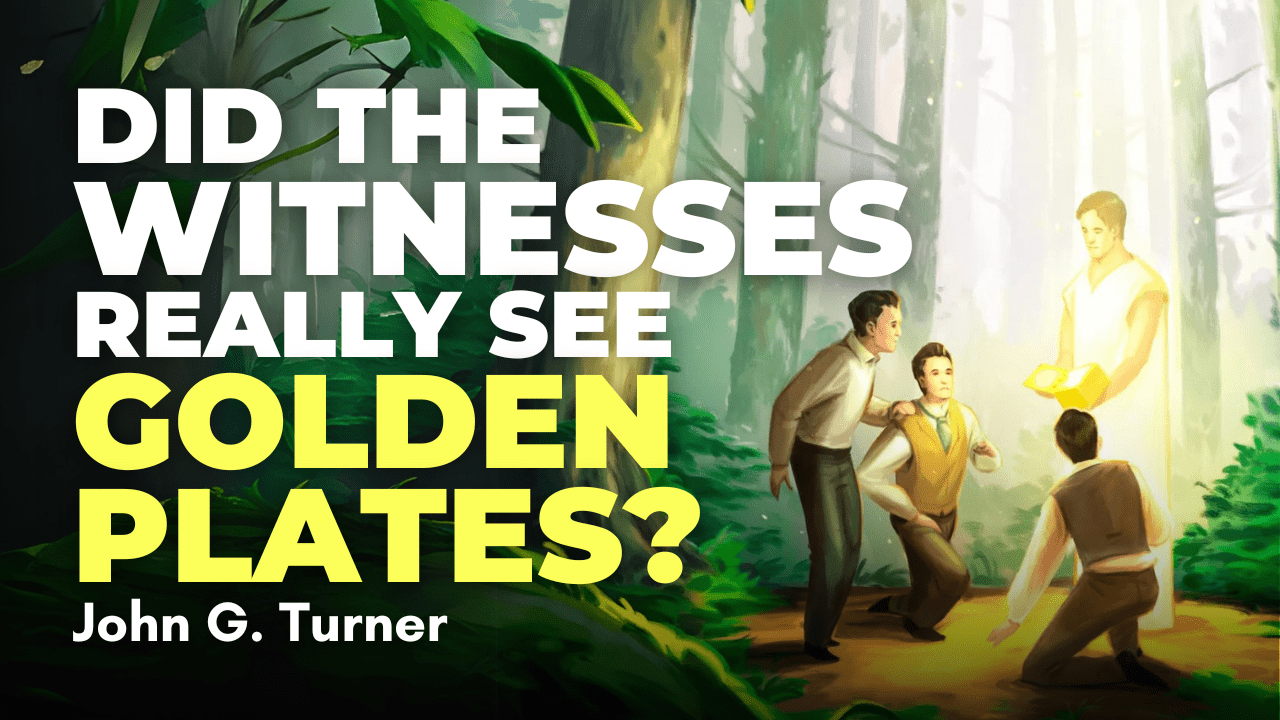
In this episode, we continue our in-depth series with historian John G. Turner, author of Joseph Smith: The Rise and Fall of an American Prophet. Continuing with chapter five of his book which takes place in 1829 in Palmyra, New York, we take a deep dive into the claims of the Three and Eight Witnesses to the golden plates. Did they actually see physical plates—or was it a visionary experience?
We explore the early translation period, the role of the Whitmer family, the revelations guiding Joseph Smith, and the complicated testimonies of Martin Harris, Oliver Cowdery, and David Whitmer. Were the golden plates material objects, or were they seen with “spiritual eyes”? We also discuss later accounts, contradictions, and the ongoing debate among scholars and believers.
Highlights:
– The experiences of the Three and Eight Witnesses
– Spiritual vs. physical claims of the plates
– Testimonies, contradictions, and controversies
– What happened to the plates—and the witnesses—afterward
Subscribe for more episodes exploring Joseph Smith’s life, early Mormonism, and the origins of the Book of Mormon.
Thumbnail credit: Illustration by Andrew Bosley
Originally published on mormonstories.org.
Transcript
Machine-generated and lightly edited. Click any timestamp to jump the audio to that moment. The audio is authoritative; please check it before quoting.
Introduction and Episode Overview
John Dehlin Hello, everyone, and welcome to another edition of Mormon Stories podcast. I'm your host, John Dehlin. It is June 18, 2025. This episode is part of our Joseph Smith the podcast series. It's part five of our series with the Dr. John G. Turner. We are covering the new book out by Yale University Press called Joseph Smith the Rise and Fall of an American Prophet. Please buy it at Benchmark Books and if you can't buy it there, then buy it either from Yale University Press or on Amazon. It should be widely available by the time this episode hits the airwaves. Again, this is part five in a series. Today we're going to be finishing chapter five. We're going to be talking about the three witnesses to the Book of Mormon and the eight witnesses to the Book of Mormon. In previous episodes, we've talked about Joseph Smith's family of origin. We've talked about his treasure digging. We have talked about the golden plates, the translation of the Book of Mormon with Martin Harris and the 116 pages lost with Lucy. And then we've talked about the translation of the Book of Mormon with Oliver Cowdery. And that gets us to sort of the. Midway through chapter five. Today, we're going to be talking about one of the most pointed to sets of evidences according to Mormon believers or the church or apologists to substantiate the truthfulness of the Book of Mormon. And that is that there allegedly were three witnesses, Oliver Cowdery, Martin Harris and David Whitmer, who claimed a special witness to the Book of Mormon's authenticity. And they were followed by eight more special witnesses. So today's episode is we are going to vet the credibility of the three witnesses and the eight witnesses to the Book of Mormon. And we're going to ask an independent Mormon scholar his thoughts on on the witnesses. Really quickly, I want to thank everyone who's donated to the series. This series exists because of the donations of people who donated specifically to this project. I think we've had like 20 or 25 donors so far. Maybe 30. I have to go back and check the number, but thank you. If you've donated to the series, if you haven't yet, this series is going to live or die based on your donations. If you value it, Please go to donorbox.org Joseph Smith Become a monthly donor and we'll keep doing this series for as long as John Turner is alive. How are you feeling? John Turner, are you alive?
John Turner That's really kind of an ominous statement, John. I mean, because that's inherently uncertain. But yeah, I'm alive. I'm traveling this week. I'm in Des Moines, Iowa, and happy to be connecting with you from there.
John Dehlin I mean, you did have a hospital stay during your time in Utah. So I mean, it's not. Well, that's a fair question.
John Turner That's overstating it. That was just a quick urgent care trip.
John Dehlin Okay, okay.
John Turner It was urgent. I was cared for. You know, healthcare in Salt Lake City is actually really good, so there's no better place to have to go to urgent care.
John Dehlin All right. Well, it's fun. I'm glad you're joining us. Your audio sounds great. Before we jump into the second half of chapter five of your book, I know you got a little bit of a chance to review some of the comments on YouTube. We're really grateful that for everyone who's taken the time to comment both on YouTube and on Spotify, anything you want to share in reflection about the comments so far, or people emailing you or calling you or reaching out to you, how are you feeling about the feedback?
John Turner Well, I looked at the comments for episode four that we recorded last week. Honestly, there was a lot of positive feedback and that is super gratifying. As a historian, I spend a lot of time by myself in my study, writing, editing, and you really hope for opportunities to have people read what you write or listen to what you've taken an interest in. So for me, this is just the best of circumstances. I love hearing from people. I get a few critical comments from people. That's totally fine. Some people, you know, just object on the basis of, you know, their own faith and belief. I understand that. I don't have have a problem with that. I like hearing from people positively and negatively. I also really, really welcome, you know, more particular specific questions about the content. And I'm happy to mix it up with people in the weeds. That's totally welcome.
John Dehlin Any quick responses to any substance wise to any of the criticisms or compliments or feedback or was it pretty generic feedback that you've been reading?
John Turner Well, honestly, this week it was a lot of nice, more generic feedback, if you will. I did get some questions specifically about the eight Witnesses. And, and I know that that's one of the things we're going to be talking about today. So I've put a little bit of more thought into that. It actually made me wish that I'd written a little bit more about that in the book itself. But there's always an opportunity to say more, especially in this format. So, you know, I'm excited to do that. Today.
John Dehlin All right, I'll say the piece of feedback I keep getting from a few people is that I'm trying to force you into a narrative. And I honestly, I. I try to be objective and open to feedback. I don't, I don't feel. I don't want anyone to be forced to say anything. And I. There's no one that I really respect would be willing to be forced to say something that I wanted them to say. And certainly a scholar of your caliber, I would never presume to be able to force you to say anything you don't want to say. So I'm going to try to, to dissipate with the appearance that I'm trying to force you into a narrative. I just don't think I am. But I'll still try to be careful about that.
John Turner I mean, I am not worried about that at all, John. I'm actually judging at a high school debate tournament this week that my daughter is participating in. And boy, those people are sharp. They ask a lot of really pointed questions. So I am totally comfortable with yours.
Translation Moves to Fayette, New York
John Dehlin All right, well, let's jump in. So last we left it, Oliver and Joseph were translating the Book of Mormon in Harmony, Pennsylvania, in, you know, at. In or at the Isaac Hale estate. They were making allegedly good progress. The apparently at some point they decide to baptize each other, allegedly. They received a visit from John the Baptist. And you would think that they would just stay in Harmony, Pennsylvania, at the Hale estate until they were done with everything. But for some reason, the Whitmer family becomes involved and they start entertaining the idea or receive instruction from God to move. And so my first question to you is, you know, we've talked a little bit about the Whitmers. Why are the Whitmers getting involved at this point? And if God told Joseph and Oliver to move, why would he tell Joseph and Oliver to move? And if it wasn't God telling Joseph and Oliver to move, why do you think Joseph and or Oliver would feel the need to move away from Harmony and Isaac Hales support?
John Turner So, great question. So the Whitmers live, I don't know, 20, 25 miles to the east of Palmyra. I don't. I'm not positive whether or not they were acquainted with Joseph Smith Jr. They were acquainted, apparently with both the Smith family and Oliver Cowdery. So they must have met Cowdery during his brief, brief time in Palmyra. And before Cowdery goes to Harmony, he's told David Whitmer Jr. Peter Whitmer Senior is the. Really the head of the Whitmer household. But David Whitmer has heard about the plates from Oliver Cowdery and apparently asked Cowdery to send word of whether or not this is true, that Joseph did actually possess this ancient record. And Cowdery sends confirmation. And he also adds that God has commanded David Whitmer to bring them to the Whitmer house in Fayette. I think the reason for this is at least as Joseph explains it is twofold. They need, they need additional support and provisions in order to complete the TR translation. And there is opposition to them in harmony, probably from Isaac Hale himself who is not interested in supporting Joseph with the translation. And Joseph loads, you know, what, what he needs to take with him to Fayette doesn't take. Emma doesn't take, apparently doesn't take the plates or the object that is a stand in for the plates and moves to Fayette early in June of 1829.
John Dehlin Okay, so you're thinking Emma's dad Isaac maybe was tired of this whole enterprise and. Or Joseph just felt like he'd get more, maybe financial support from the Whitmer household in Fayette than he was getting in Harmony.
John Turner And I think it's not stated. I think it's helpful for Joseph to bring additional people into the movement. So simply to hear that David Whitmer is enthusiastic about this project. That's probably an incentive. It also brings Joseph close to his own family. And soon after they reach Fayette, Hyrum Smith is baptized. David Whitmer is baptized. I think one of the other Whitmer brothers is baptized. So you know, there's this literary project underway, but something more akin to what becomes a church is able to advance with the move to Fayette. And I think that's part of the motivation as well.
John Dehlin Now we know that Emma had recently lost a child. Any, any way to know why Joseph would, why God would tell Joseph to kind of leave Emma? Do we know how Emma felt about being just left? Why didn't Joseph take Emma? Were there, Was Emma pregnant again? What can we say about sort of Joseph's decision and, or God's decision to have Joseph leave Emma?
John Turner Yeah, so I, I don't know that we. I don't think we can say too much about God's intentions. But you know, I think for Joseph, I mean I don't think he feels as if he's abandoning Emma because she still has her family in harmony. I don't think she's pregnant again yet. I'm not 100 sure. They had lost the child the previous summer. This is about a year after the death of that. Of that first infant. I think Joseph. Yeah, I mean, I think he's probably also calculating that he's now making rapid progress on what becomes the Book of Mormon. The end is within sight. This is going to help him finish it off. I can actually imagine that, given the twists and turns of the last couple of years. Emma. Emma might. Might be quite supportive of him doing what. What he needs to do to finish the project, but we don't really have insight into, you know, the. What she's thinking about these developments.
John Dehlin Did I read that Joseph received a revelation that was given to the Whitmers, commanding them to take Joseph in? And if that is, if my memory is correct, what authority. Where would Joseph have gotten the authority or the reputation to, number one, speak for Jesus or God, and number two, to have the Whitmers believe that he's speaking for God or Jesus at this point?
John Turner So, great question. I don't think I could be wrong. I don't think this is a commandment that's given by revelation. I think it's simply conveyed through a letter from Cowdery. But I could be misremembering.
John Dehlin Let me just tell you what I. Let me tell you what I read. God had commanded Whitmer to bring Joseph and Cowdery to the Whitner home in Fayette.
John Turner Yeah. So I think it's. Yeah, it's not conveyed by a written revelation. Yeah, there's definitely a suggestion of divine commandment. Yeah. I think when I think about those sorts of messages or commandments, I think for the most part, Joseph is delivering them to people who are inclined to accept them. So it makes it a little bit less fraught. I'm trying to, you know, he. He wouldn't send a revelation to somebody like Charles Anthon, you know, commanding him to attest to the validity of the Book of Mormon characters or something like that. But I think he, you know, he's. He's, you know, he's already heard that David Whitmer at least, is inclined to believe. We don't know that much about what initially motivates the rest of the Whitmer family to support this project, which I think is interesting. They seem to have actually had a more stable religious existence than certainly the Smiths, but they must have been. Been open to a new direction.
John Dehlin What do you make if. If, you know, Joseph felt the need to bury the plates in a barrel covered with beans to go from Palmyra to harmony, what do you make of Joseph just not even bothering to bring the plates, even to pretend that he had plates. When he makes the move from. From Harmony to Fayette, what do you. What do you make of that, that decision on Joseph's part?
John Turner I think it's. It's fascinating. There's. On the. On the one hand, it eliminates need for what I might consider pretense. It, I think, also confirms, you know, what we generally know about the nature of Joseph's translation. I think last time we talked about Cowdery's statement from just a couple of years later that Joseph's procedure was to put his face into a hat, presumably look at his seer stone, and then the interpretation flowed into his mind. So the plates, you know, Cowdery knew that the plates were not material to the translation process. It is. It is interesting that the Whitmers at the start, I mean, David Whitmer becomes one of the three witnesses, but for them, they don't seem to need confirmation. You know, there is. I forget the details. There's. There is a report about perhaps Peter Whitmer Sr's wife having a vision of the plates as well. There are all sorts of stories about, you know, angelic figures or the three Nephites bringing the plates to Fayette. But I think the. The simplest conclusion is that Joseph is giving every appearance that he has spiritual access to the plates and he doesn't need them for the translation process. He attests to their reality. So does Oliver Cowdery. But there's no need at this time for explicitly physical confirmation.
John Dehlin I know we've really belabored this point, but it's just it, you know, Richard Bushman himself will say the existence of the plates is the. The best witness to the. To the authenticity of the Book of Mormon, because Joseph makes a material claim in the material world. And so, of course, if we find out that by the time he moves from Harmony to Fayette, he's not even bothering to tell people the plates are being brought along. And anyone who is aware of and. Or involved in the translation aren't even asking questions about why the plates aren't even in the room when the translation's happening. I just can't. I'm trying to imagine the Whitmers going, hey, Joseph, where are the plates? You know, like, are you bringing the plates? And Joseph's saying, oh, you know, we're not even bringing them anymore. And then I'm trying to imagine them going, well, where are they? And he's like, oh, an angel took aback, or, oh, we left him in harmony. And that not Rousing suspicion, you know.
John Turner Yeah. So it's totally fascinating and we, you know, we don't, you know, I wish we had a transcription of some of those conversations and explanations. Yeah, I think what I would say is, I almost would, would say that I think for these individuals the fact that Joseph is able to produce the Book of Mormon, you know, this increasingly long manuscript, I think for them I can surmise that that is in and of itself evidence for the reality of the plates. You know, this record, it has to come from somewhere. I don't know if Joseph is saying that the plates are still in harmony or that they've been brought by supernatural means to Fayette. We don't know. But, but I think for the Whitmers and for Cowdery, this growing manuscript that was in and of itself the evidence that they apparently needed. We know that Martin Harris still wants, you know, still certainly wants more. He wants, you know, a more sure witness. We don't, but we don't really know how the others respond, responded when, when Joseph makes the move, apparently without the plates.
John Dehlin Yeah. And me just reflecting Richard Bushman's claim that the plates add to the credibility of the story, is very, very weakened by the fact that nobody who was a part of the translation seemed to testify that the plates were actually used and that by the time Joseph is traveling from Harmony to Fayette, he doesn't even bother to tell people that they're, they're being transported really quickly. Tell us about the Whitmer family. Are they like super respectable? Are they skeptical, science minded people? Are they magic, worldview, superstitious people? I know you mentioned in the book that they're respectable farmers, I believe, but what else do you know about their kind of magic worldview or lack thereof?
The Whitmer Family and Their Role
John Turner Yeah, honestly, I don't know as much about them as I, you know, as I learned about Martin Harris, Peter Whitmer Sr. He was sort of like Martin Harris. He was prosperous, he owned land, he owned some minor civic offices. You know, there's that basic information that the Whitmers belong to a German Protestant congregation. So on the face of it, they seem more religiously rooted than the Smiths or Martin Harris. But they must have been open to new spiritual and religious directions to have accepted Joseph and the Book of Mormon project. I don't know or I've forgotten.
John Dehlin Any idea if they participated in any of the treasure digging shenanigans that happened at any point?
John Turner I don't think so. It's possible they were open to them, but I don't, I don't think there's information to that.
John Dehlin Okay, really quickly, Julie is wanting to know if, you know, when Oliver Cowdery ends up marrying into the Whitmer family.
John Turner It's a number of years later.
John Dehlin Okay.
John Turner I think around 1833, 1834, Cowdery has an engagement to another young woman that he breaks off sometime in the early 1830s. So I know it's after that.
John Dehlin Okay. And then also Julia mentioned, I think she heard or read that Mary Whitmer is that David's wife was at some point claimed or reported to have been a witness to the plates.
John Turner I think she's reported to be a witness to the plates being brought to Fayette, or perhaps. I hope I'm not totally off on this. Seeing them being broad or being in a garden in Fayette, I could be misremembering. But she sometimes is someone who's represented as an additional witness to the reality of the plates. And I forget if it's. If the account is more of a visionary account or something more concrete, because I'm wondering how.
John Dehlin Obviously I'm wondering how she could be a witness if Joseph didn't bring him. It showed that didn't bother to bring him to begin with.
John Turner Correct. But. Well, we're going to talk about the other witnesses, so that might be a good, good segue into that material.
John Dehlin Okay. All right. Okay. So, yeah, what. What happens next when. When Joseph and Oliver move to Fayette, New York, what happens next?
John Turner So there's a. You know, they're continuing with the translation. They're nearing the end. There's also some sort of visionary experience in what, in I think Joseph's history is described as the chamber of old Father Whitmer, in which God promises them a higher priesthood which would include giving the gift of the Holy Ghost. And connected to that is the promised authority also for Joseph and Oliver to ordain each other as elders. But they're told to delay that until the now growing number of baptized individuals could gather together. So perhaps after the. Or around the time of the establishment of a church. And, yeah, so I think that at least retrospectively, that's a significant moment. But then also, as they get near the conclusion, Joseph dictates a passage. I forget exactly where it is in the Book of Mormon that prophesies that three witnesses will be able to see the plates, will be granted the privilege of seeing the plates and Joseph by revelation, he's already suggested that Martin Harris, if faithful, and then also Cowdery and David Whitmer will have this privilege. And for Harris this is still, this is a matter of ongoing importance. He is still thinking about whether to take the step of financing the Book of Mormon's publication or guaranteeing its financing. He still wants additional evidence or proof of the reality of the plates. He's still wavering about the money. And so this is now, I think this is now getting in, you know, toward mid, mid to late June of 1829.
Priesthood Restoration and Historical Context
John Dehlin Let me ask a quick question. So you, you mentioned the, the Melchizedek priesthood. You know, one of the most disturbing things to me when I was learning kind of authentic church history for the first time was that David Whitmer later publishes a pamphlet saying, I'll use my words, you know, that whole Melchizedek priesthood that Joseph and Oliver claimed to have received under, under the hands of what, Peter, James and John. That never happened. And this was years after the church was founded. How does that square with, with Joseph and, and Oliver claiming that God promised them the Melchizedek priesthood while living with the whip with the Whitmers?
John Turner I mean, I don't, I don't know if it totally squares. As far as I know the, the term Melchizedek priesthood, we find it in the records, or at least the connection of Melchizedek to the higher priesthood. We find that in the records by late 1831. So there's a church meeting or assembly in June of 1831 in which a large number of men are ordained to the higher priesthood later that year. You know, a lot of them aren't sure what that means. And there's discussion of it. And there is that use of either the term Melchizedek priesthood or Melchizedek as a figure connected with the higher priesthood. And I think the first, you can correct me if I'm wrong, perhaps John. I think the first clear account we have of Peter, James and John ordaining Oliver and Joseph to the Melchizedek priesthood perhaps comes from the mid-1830s. So we have, you know, we have some earlier reports about some sort of experience in the spring of 1829, we have the higher priesthood connected to Melchizedek by 1831. I think in terms of putting all of this together, that, that takes a few years. Whether or not that's, you know, something that invalidates that story or not, you know, I, I don't know. I, I think it is a story that does develop over time.
John Dehlin So that 1835 account of Joseph and Oliver being visited by Peter, James and John to receive the Melchizedek priesthood, that would have been during the time they were at the Whitmer's house, Is that right?
John Turner Yes, I think so. I'm not, actually, I'm not, I'm not, I'm not 100% certain, but I read, I read that experience in the chamber of old Father Whitmer. I, I read that as at least congruent with that. I may have to. I may have to connect the dots again in my mind afterwards.
John Dehlin Okay. All right. And then before we just jump into the actual visitation or witness experience, starting with the three, you've already said that Martin was, was probably still dubious or skeptical or at least he wasn't satisfied because he was still wanting a better witness. And his willingness to continue funding all this was tied to him receiving another witness. What about Oliver and David? Were they already believers at this point? Did they even want or need a witness? And did they need a. It sounds like they didn't even need a more material witness than what they had already received because they were completely fine with Joseph channeling the Book of Mormon without the plates even being around. So they must have already bought in and therefore didn't really want or need a witness. Am I wrong?
John Turner Well, I think you're right in terms of them not needing it. You know, Cowdery apparently has a vision of the plates reality before he goes to Harmony, so he very much believes Whitmer doesn't. I'm not aware of any reason to presume that he doesn't clearly believe. I think the experience, it serves maybe two primary functions in the story. Number one, it does help bring Harris further along in supporting the project. And then secondly, these experiences, they're not just for the benefit of the individuals involved. These are, these become testimonies that are published with the Book of Mormon. So they, you know, they serve a function to blame, bolster the faith of countless people. And so there does seem to be a desire to provide that testimony through these experiences.
John Dehlin Okay, but in terms of convincing Cowdery and Whitmer that there were plates, they were already bought in.
John Turner They are already bought in. Yeah.
John Dehlin Okay. Okay. All right, so why don't you recount now what happens during the the three, we'll call it the three witness experience. What happens?
The Three Witnesses Experience
John Turner So, and you know, this is a blend of accounts from Cowdery, from Joseph's sort of official history, and then also recollections of David Whitmer from a number of decades later. If we put all those together, the. The story really is as follows. The three men are with Joseph. So the four men, they go to a remote field somewhere near the Whitmer home. And they pray that God will reveal the plates to them. And nothing happens. And you know, they keep praying and again, nothing happens. And Harris and I like this part of this story. Harris, who's always seems, you know, mixture of faith and doubt, but also self doubt, he apparently concludes that he's the obstacle, that because he's there and he's not fully faithful, God is not answering these prayers, so he withdraws from the others and they keep praying. And I guess getting Harris out of the way is helpful because the other two see an angel who's holding the plates and he, the angel turns the, the pages essentially and they could look at them and see the engravings. And then Joseph goes to get Harris.
John Dehlin Okay, wait, can I ask about that?
John Turner Sure.
John Dehlin Okay, so it's so they don't touch, they don't ever touch the plates, Correct?
John Turner Correct.
John Dehlin And they already believed in it spiritually. And it wasn't just like Joseph produced the plates. Like if, if this is going to be some sort of witness that's really convincing, it seems to me like Joseph would just produce the plates and they would like see them, but instead as soon as we're talking angels that theoretically can't hold material plates because they're spirits, now all of a sudden their angels are holding plates and showing them. But Martin couldn't see it for some mysterious reason. But Oliver and Martin. I'm sorry, but Oliver and David could see it, but they already believed and Martin had to withdraw himself all of a sudden. That sort of takes it for me out of the material realm again because Oliver and David already believed in it. They had already seen some sort of vision. And then if it was material, Martin wouldn't have needed faith or anything to see it, he just would have saw it because they would have just been materially produced. So the fact that they weren't real really material produced, materially produced and they had to quote, see it after Martin leaves, I don't know. That doesn't really. Again, to Richard Bushman's claim that the materiality of the plates and the witnesses are important evidences, it sounds like at best this was some visionary experience that they could have seen with their spiritual eyes or with the mind's eye. And at worst it was sort of some sort of scam where maybe they thought psychologically, if they all claim to have seen it, that would put extra pressure on Martin to feel like he could manufacture seeing it in his own brain. But all of this shadiness of Martin having to Retrieve. And it being an angel that holds them but they don't touch them puts a lot of question marks on the materiality of this claim. What are your thoughts about that?
John Turner Well, I don't think it's presented as a material claim. Right. It is presented as a spiritual witness to, we could say either the physical or the spiritual reality of the plates. I, the first thing I wanted to say is, you know, I don't know, I kind of think religion is fun when it's kind of funky like this. But, yeah, I mean, it's, it's. I think it's explicitly a visionary experience for the individuals. That doesn't make it less real. There's some later debates about whether Harris sort of conceded that he saw this with his spiritual eyes rather than with his natural eyes. I don't know if that matters too much. It's clearly a visionary experience. And Harris, when he rejoins them, he sees the same vision. I think that's, I think that's language from Joseph's history, if I'm not mistaken. So there's, there's no suggestion that Joseph simply brings out and shows them the, the plates. It's an angel they're seeing. They're seeing the angel in a vision. It. And, you know, we, we don't, There's a lot we don't know, you know, so David Whitmer's recollection is rather fantastic. He likes talking about the experience in the 1860s, 1870s, maybe early 18 1880s, when he's now an elderly man. He has remarkable memories of this vision of not just seeing the plates, but the spectacles, other treasures described in the Book of Mormon. So, yeah, I don't think this is the sort of statement that's going to come convince skeptics. I think, if anything, you know, I think the reason why it was regarded as valuable is again twofold for Harris. He's thrilled, he's elated. He's got a more sure spiritual confirmation that the plates are real. You know, back in the fall of 1827, he apparently was reassured by the still small voice of the spirit. This time, he apparently sees an angel who shows him the plates. For him, that's a, that's a big step forward. And then you have three men who are at least willing to sign their names to a statement asserting that the work is true, that these plates are real. And, you know, that's, that's, that's something. It's like you said, it's not, it's not the sort of statement that's going to persuade skeptics or people who would be disinclined to believe in these sorts of supernatural visitations. But there are three men, it's not just Joseph's word, three other men who can say that this is true.
Did the Witnesses See Physical Gold Plates
John Dehlin So you. We discussed in previous episodes that you felt the need to go on record in your book and basically weigh in on whether you thought gold plates actually existed. And, you know, you were willing to write that you came down on the side that you didn't think gold plates did exist or that the evidence supports that. So in your mind as a historian, you know, if. If you sort of aren't buying that gold plates existed, how do you make sense of the claim that at least let's at first do the first instance that Oliver and David claimed to have seen golden plates that you feel like didn't exist.
John Turner Yeah. So. Well, first of all, I think it is a remarkable. It's not a unique, but it's a remarkable aspect of Joseph's religious, spiritual leadership that he's not simply someone who claims to have visions, but he's able to help other individuals have essentially the same vision. I. I do find that remarkable that he's able to kneel with these men and they essentially can see what. What he saw, or something akin to it. I think, to be. To be blunt, we don't really know. You know, we can't really penetrate into what each of these three men saw. Did they see exactly the same thing? Did they have exactly the same vision? You know, they sign their names to the statement that's presumably written by Cowdery. They may have had slightly different experiences. They may have. They may have had rather different experiences. I think we don't exactly know. David Whitmer's later recollections are a little bit different, but one way or another, one way or another, Joseph is able to at least create circumstances in which other individuals can share in his vision. And we could call that. We could call that a spiritual talent if we want. I think I probably would. I do think that's. That's really noteworthy. I think as evidence for the materiality or physicality of the plates. I don't. I don't think this really gives us anything to go on as historians.
John Dehlin Yeah. And yet that's. That's the point of a signed statement is to sort of give the impression that of a material, of an experience of materially witnessing the plates. Right. Isn't that the whole point of a signed statement is to say we saw these with our own eyes kind of Thing.
John Turner Yeah, well. And I don't remember the statement in its entirety. I did refresh my memory a bit on this before the episode, but I think the. The takeaway for these three men is we want to testify that the work is true. I think that's. That's their conclusion. That's what they want to convince people of. And yes, connected to that, we've seen the plates clearly. I think anybody reading the statement would conclude that they saw them spiritually.
John Dehlin Spiritually. And so we may cover this later, but my. If I'm. My memory is right, I'm a little bit rusty on this. Was that maybe during the Kirtland time, this question comes up again, specifically, I believe, to Martin, where people want to know, wait, Martin, did you see him with your physical eyes or did you see him with your spiritual eyes? And I remember feeling shocked to get the impression that what Martin was willing to candidly admit later that in Kirtland, and then potentially Martin and. Or David later in their lives, also claiming to some people was that indeed it was their spiritual eyes that they saw the plates with, not their materialized. Have you spent it? And I don't know if it's Grant Palmer that gave that impression or Fawn Brody, but there seems to be later in the history of the church people, people that want to know physical eyes versus spiritual eyes, and at least some statements from both Martin and David that. That indeed it was spiritual, not physical eyes.
John Turner No. And so it's a good question because I've been saying that that statement obviously reads like a visionary experience, but you're right, we could further parse that. Right. What is it? What does it mean to see an angel and have that angel show you the plates? It could mean an angel appeared to these three men and showed them actual plates that this angel is holding. It could be they're. They're seeing something in their minds or as you said, through their spiritual eyes, something that isn't physically there. Now, whether or not Harris conceded that point later, I think it's debatable. I believe the source comes from, I think, perhaps a disaffected former church member, I think, named Stephen burnett. I'm not 100% sure. I don't know that Harris really fully clarifies the point. I do think that Harris, David Whitmer do emphasize that. Other points. No, we really saw these things. Now, for me, and I would say this is a little analogous to did heavenly beings appear to Joseph Smith, say, back in 1820, or did he see them, you know, with his spiritual eyes? You know that it's a slightly different connotation. I think for me, it's some sort of visionary experience. I don't really care whether it's spiritualized or naturalized. This is not a physical examination of an object. This discussion is going to be different when we get to the eight witnesses. But I would say, I don't know that we need to worry too much about which eyes they saw. They saw the angel with. It's a visionary experience for them. It's enough to, for them to sign their names to a statement attesting that the work is true. I think that's. That's all we have to go on.
John Dehlin Yeah. And, and I, I know I've already made this point, but. But I'm surprised to hear you say you don't. Don't. Maybe wouldn't be as concerned to discover that they were physicalized versus spiritualized. Spiritualized just means some dream or vision that any of us can sort of have on the psychedelic or if fasting for a long time or under the influence of alcohol, you can see all sorts of things or if you're sleep deprived. But if indeed they saw it with their physical eyes, that would mean you, John Turner, ought to consider the, the restoration in the Latter Day Saint tradition. Because these men literally physically with their physical eyes, saw actual golden plates. Right. That. Wouldn't that make a difference to you if they were their physical eyes?
John Turner Well, I think the thing is we wouldn't really be able to. We really wouldn't be able to provide proof that this is, you know, that we wouldn't be able to provide proof that an angelic being in some actually material way was there in front of them. Whether or not they described it as spiritual or physical eyes, I'm reading it as a visionary experience. For me, when something is put in a visionary context, almost by definition, it's, I'm not going to say immaterial, but the physicality almost seems to be beside the point. That doesn't, that doesn't mean that people didn't have those sorts of arguments about visionary experiences back in the 1830s and the 19th century or beyond. But for me, it's a, it's a visionary experience. That's really as much as I feel I need to go into it.
John Dehlin Yeah, that makes sense. That makes sense. Well, I'll just refer people. We did this series called LDS Discussions where we, we dug in depth with this guy named Mike on LDS Church truth claims. And, you know, one of the episodes was on the three Witnesses and, and, you know, answering the Question of what did the three witnesses actually see? And I'm just browsing through those slides now, and it seems like there's several people who seem to report that Martin Harris claimed that he did not see the golden plates with his physical eyes, but instead it was more of a visionary experience. And I just want to. I don't know if this is pushing back or just going on the record. If you're going to claim there's golden plates, that you have them in your possession, then you're going to claim that people saw them, and then you're going to create a document that they saw them. You're. You're basically trying to create the impression that these plates existed in the physical world, not in people's mind's eye, and that they saw them in the physical world, not in a vision. Otherwise, why would you even need a document or witnesses or plates to begin with? So, you know, go, go watch. I'll. I'll just say my viewers and listeners go watch the LDS discussions three Witness episode and the series that we did. Julia is going to create. I'll provide links to that in our show notes. Because for me, there's. There's multiple accounts of Martin Harris telling people that he didn't see them with his physical eyes. It was more visionary. And to me, that really matters because it speaks to whether or not again, there really were physical plates and if this three witness statement actually means anything. Because if Joseph just said, martin, I'm seeing it. Can you see it? Martin, I'm seeing it. Can you see it, Martin? Can you see it now, Martin? Okay, withdraw. And now come back. And now we're seeing it. Can you see it too, Martin? And then Martin's like, maybe with his eyes closed. I can see it now, Joseph, I can see it. That's a figment of his imagination, not an actual viewing of golden plates in the material world. And that's the whole point of witnesses, in my view, the whole point of plates and the whole point of a witness statement, in my understanding. And I think that's what they were trying to do when they published a three witness and an eight witness statement in the Book of Mormon. They were trying to convince people of the materiality of the plates.
John Turner No, I mean, I don't think that's unfair. I just think there's. I don't know. I guess I think. I'd say if you look at what. Look at a couple of things. So I'm pretty sure it's from Joseph's history, says the same vision was open to our view. So it's described as a vision. Now, I agree. A vision could be something that sounds more material and physical, or it could be something that seems more. More simply spiritual. I think if you look at the statement of the three witnesses, it, you know, it says they've been shown to us that by the power of God, that an angel of God came down from heaven, brought and laid before our eyes, that we beheld and saw the plates and the engravings thereon. We know it's by the grace of God the Father and our Lord Jesus Christ that we beheld and bear record that these things are true and it's marvelous in our eyes. So, yes, I do think that statement is saying, we really saw them, they're really real at the same time they're being shown them by the power of God. Joseph says it's essentially the same vision that is being open to our view. For me, that very much reads like a visionary experience. And I'm, you know, I'm sort of saying that we're splitting hairs a bit over physical eyes, natural eyes. These men did continue to attest that they really saw the plates and that the plates were real at the same time. I think, yes, you're right. Harris acknowledges, at least to some individuals, if we can trust them, that this is a visionary experience. But to me, the whole description of the episodes sounds like Joseph's inviting them into his vision and they experience it alongside him.
John Dehlin Yeah, Yep. And just to close out this point, because I'm sure people are beleague. Beleaguered. Is that a word at this point by. By this whole conversation? But to me, it's. It's actually very, very important. I'm going to just share a summary. Not because I actually am trying to convince anyone of anything more, because I just want people to know that there are, you know, that there are statements worth looking into. So this is a summary slide from our LDS discussions about people who spoke to either Martin Harris or David Whitmer at some point in their lives about whether the, you know, the, the, the visions were angelic or physical, visionary or material. And I'll, you know, I'll let people go look, track down the sources. But there's a Stephen Burnett who, you know, basically says, says that the indication that he got from the witnesses was that it was visionary. There's Jesse Townsend who says that Martin said he saw the plates with the spiritual eyes. There's a John Clark that says Martin saw the plates with the eye of Faith, that Anthony Metcalfe says that Martin passed into a state of entrancement and saw the angels in the plates. John H. Gilbert has Martin saying that he saw the plates with a spiritual eye. Reuben Harmon saying that Martin saw them only in a spiritual vision. John Murphy saying that. Now, turning to David Whitmer, that David Whitmer claimed that the angel had no appearance or shape and that the experience was an impression. Anthony Metcalfe has David Whitmer saying, of course we were in the spirit when we had the view. Zenis Gurley has David saying that they did not handle the plates and it was only a holy vision. And Edward Stevenson basically claiming that the witnesses were favored with a vision. So again, and I'm not trying to spring that on you, but I do want to just say, hey, viewers and listeners, don't trust me. Don't even necessarily trust John Turner, even though you should trust him over me. But go check out these sources and just see whether you find the later descriptions of this experience to match the materiality, either that you were led to believe and. Or that you read in the three witness statement and be your own judge. What do you think, John Turner? Is that fair?
John Turner That's totally fair. I think. One thing I would add is this discussion reminds me a little bit of. I think it's the canonical account of the first vision. I could be confusing it with the 1832 Joseph Smith history, but at least in one of those accounts, after Joseph, I'm pretty sure it's a first vision account rather than his first encounter with Moroni or the angel is. There's an interesting detail in the account that after the visionary experience ends, he's lying on his back and he's kind of coming to. It's, you know, it's. It seems he's in an altered psychological state or a trance, we would say. And I think that's not uncommon with visionary experiences. Does that really get to the question of whether or not divine beings appeared to Joseph Smith actually appeared to him, or whether he saw them with his spiritual eyes? For me, at the end of the day, Joseph, at a number of points in his life, talks about visionary experiences. These three men also participate in a visionary experience. For me, no matter how you ultimately describe that visionary experience, it's not empirical proof of actual golden plates. So, I mean, I think. I think the argument about some of the details is a little bit beside the point. I think for me it's not. It's not a point in favor of physical golden plates, regardless.
John Dehlin Yeah. And just, you know, and maybe I'm out of sync with the rest of Mormondom. But for someone raised Mormon who at least was a literal believer for multiple decades and made a lot of really important decisions based on that belief, the materiality of this claim was actually everything.
John Turner Yeah, no, I understand that from the outside. I'm not always as clued into why particular things matter to so many church members or former church members. I do think, you know, there is just this really fascinating contrast between these two witness statements in that the statement of the three witnesses seems, I will just say, straightforwardly visionary, Although there's, I guess, nothing that straightforward about visionary experience. Whereas the physicality of the claims in the second statement, which I presume we're going to talk about next, those are striking.
John Dehlin Yeah, yeah. So let's go ahead. And again, I don't. Do you have any. Do you have any sense for why Martin could see it the second time, but he couldn't see it the first? Like, was the angel not powerful enough to penetrate Martin's skepticism? Like, why would a second attempt be needed by Martin?
John Turner It's a great question. I'm just going to speculate. So I don't, I don't know. But if I had to speculate the fact that Oliver and David have this experience and feel themselves presumably full of faith, perhaps that helps get Martin over the hump and so it's easier for him to have the expectation of this experience.
Psychology of Witness Testimony and Conformity
John Dehlin Have you heard of the Ash Line conformity study? Just one of those kind of basic psychology 101 studies.
John Turner Tell me about it.
John Dehlin I mean, I'll kind of mask her, but they basically, they have a participant come in along with a bunch of confederates who are all part of the study. And there's, you know, let's just say there's three. There's three lines of different heights on one side of this poster, and then on the other side there's. There's a line that is the same height as one of the three lines. And it's obvious to anyone within a 99.9% sort of reliability that it's that pretty much everyone knows which. Which of the three lines corresponds to the line on the other side. But what they do is they have multiple confederates give the incorrect answer in front of the. The participant such that, you know, you imagine you're sitting there and you know what the right answer is, but you're in a room with a bunch of people you think are also part of the study, and you have 10 or 20 people all get up before you and give the wrong answer. If I'm remembering the study correct something like 70% of the time that one participant in the study will give the wrong answer that they know is wrong or another way to say it is, they'll give the answer of the dozens of people who preceded that person. Just because of the social pressure to conform.
John Turner Yeah.
John Dehlin And so having. Having a couple people give the right answer before Martin, you know, is able to obtain the right answer, there is sort of psychological precedence for people's tendency to conform when. When there are other people, when there's social pressure and even social antecedents, you know, to conform.
John Turner No, and I think. To maybe put it in. I think that's. That. That's a great. That's great insight. I think I'd also say that religious experience more generally tends to follow cultural scripts. You know, if you live, you know, there tends to be, you know, expected patterns of religious experience, which is one reason why so many conversion experience experiences hit the same notes. I have a colleague, Lincoln Mullen, who's written a great book on that subject. But I think visionary experience can sort of work that way as well. There's a reason why a lot of individuals, you can find a lot of accounts of people seeing Jesus Christ at the right hand of God the Father, or they see their name written in the book of life as described in the book of Revelation. And I think in this case, if you hear other sort of. Then I guess along the lines of what you said, if you. If you hear other people describing a visionary experience and you believe in at least the possibility of visionary. Visionary experience, it's easier for you to participate in that same vision.
The Eight Witnesses and the Plates
John Dehlin All right, well, you've been a super good sport, so thanks for spending almost 45 minutes with me just on the three witnesses. Let's jump to the eight witnesses account. Maybe we'll spend less time on that one.
John Turner I don't know. By that math, we might need something like two and a quarter hours for this one. So, you know, this is just so interesting because you have this first group of witnesses who attest that an angel has shown them the plates. And I think they describe their experience as visionary, true, but visionary, the eight witnesses assert. And like, let me just back up and say that we're talking about a number of members of the Whitmer family, and then also Joseph Smith Sr. Hyrum Smith, and Joseph's younger brother, Samuel Smith. And this experience takes place near the Smith farm, or on the Smith farm in a grove of trees that the family had apparently used for secret private prayer.
John Dehlin So they've left Fayette at this Point of the eight witnesses, you can sort
John Turner of move back and forth, right? So you could, I think you could leave Fayette, especially if you're going by horseback. You could make that trip in a day. There's an interesting wrinkle from Lucy Mack Smith's history that Joseph had been instructed that the plates would be carried there by one of the ancient Nephites. So again, you have, you have a number of accounts about what you could call the, I don't know, the spiritual, angelic, or supernatural transportation of the plate plates.
John Dehlin It makes you wonder why, why they were buried in a bucket of beans from, from Palmyra down to Harmony in the first place. If an angel just could have carried them.
John Turner Yeah, well, yeah, I don't have. I don't have a great answer for that. There's sort of. There is a shift with this move to Fayette or maybe simply with the, the second Book of Mormon translation attempt, that the, the plates become just even less integral to the process. You don't, you know that they just don't. They don't need to be a primary consideration, I think. So there, there are some different accounts. Sometimes all of the men have an experience with Joseph at once. Other times there are two groups of four. I forget which account that is. I think one of the, one of the Whitmers. But at the end of this experience, these eight men, they sign a statement that asserts that Joseph Smith has shown us the plates and they have the appearance of gold and we've handled them with our hands. So, so it's a much more striking physical claim. They've hefted them, they've been able to hold them, not just see them. And I do think this, this, I do think this is remarkable. Now, I think I'm just presuming that you and others might ask, you know, does this count as evidence for the reality of the plates? Am I, am I, am I just presupposing the question, John?
John Dehlin Well, I'm just saying. Checkmate, John Turner. It's time to get baptized. Because eight, you know, four Whitmers, three Smiths and a Page all literally held these plates. That, that. And I don't want to mean to be sharp elbowed here, but that you are on record as saying you don't believe there's evidence that they ever existed. I guess I would ask why isn't this evidence for you, John Turner, that the gold plates existed? Because literally four Whitmers, three Smiths and a page all said they. I mean, you're calling them liars if you say there Weren't golden plates.
John Turner Yeah, yeah. So. So not. Not quite.
John Dehlin I'm joking, by the way. I'm totally joking.
John Turner No, no, no, no, no. You're channeling. You're channeling Mark Twain, right, with his statement that he couldn't be. He couldn't be more satisfied if the entire Whitmer family had testified to the reality of the plates. You know, this is. This is really good. So I actually want to be. I want to be fair as a historian, so I actually don't start with the presupposition that gold plates can't exist or that there aren't weird supernatural phenomena in the world. So I think, epistemologically, I'm not. I'm not coming to this from that starting point as someone who's not a member of the church. I'm not saying that I don't come with some native, you know, ingrown skepticism about the story. You know, I think I do. But I also think we have to be. Be fair, even when we're dealing with, you know, perhaps fundamentally supernatural phenomena, to treat evidence fairly. And I do think, yeah, this. This is actually a pretty good piece of evidence. Right? I mean, we have. We have eight people who are willing to say, Joseph Smith showed us the plates. We handled them. So I'm going to. I'm willing to say, yeah, that's. That's. That's a significant piece of evidence. I don't think. I don't think Richard Bushman's wrong to say that We. We have to consider evidence from those closest to Joseph, from those who believed in him. I don't think it's the only evidence that we should consider when it comes to the Book of Mormon and the golden plates. And I would hasten to add that there's actually a lot that we don't know about the experience or experiences of these eight men. But on the face of it, I'm willing to acknowledge it as a piece of evidence in favor of the plates, which, as you've said, in the end, I don't. I don't believe in. So.
John Dehlin So how. What would be a possible explanation other than that four Whitmers, three Smiths and a page literally saw and hefted the gold plates? What. Is there any other possible explanation that doesn't just strain credulity or, you know. Or again, is this checkmate to all, you know, all believers?
John Turner Yeah, I mean, I'm not great at chess, but I don't think it's quite checkmate. So, you know what? This is. This is what I conclude in the book. And I will say I probably should have written at greater length about it because I know it matters to a lot of readers, a lot of listeners and you know, I've done a few, you know, book events and it's, it's frequently a question that comes up. What about the statement of the eight witnesses? Isn't that, isn't that enough? So this is what I would say. The, the men, by the way, did continue to, as far as I know, even those who became disaffected from the church, they did continue to attest to the materiality of the plates. There may be some contrary statements, but I think there are a lot of statements that suggest that they did. I nevertheless, I do think in the end that it's still a visionary experience. Despite the physicality of their language. I think their experiences again point to the power of Joseph's spiritual leadership and his ability to help others share in his visions or his vision. I think, you know, I think for the men involved, perhaps this very much did seem physical and real, that Joseph could make the immaterial real for them. There's a scholar of religion named Ann Taves who draws an analogy between the golden plates and the Catholic Eucharist that, for it's not a. Maybe it's not a perfect analogy in this case, but that, you know, for Catholic Christians, for orthodox Christians, the bread and the wine can become the very body and blood of Jesus Christ. Be very real. I know that, you know, that's not the same thing as hefting plates. One of Joseph's revelations asserts that they, that the witnesses had seen the plates even as my servant Joseph Smith Jr. Has seen them. I think in a way that that could, that you could read it as a confirmation of the plate's physicality. You could read that as a tacit acknowledgment that Joseph himself, them through visions rather than in an ordinary physical sense. So then I think I'd also, I would also say we just don't know that. That much about what the men experienced at the time. They signed a statement that Oliver Cowdery wrote. I presume they, you know, they signed it in, in good faith.
John Dehlin Did they sign it or was it signed for them?
John Turner It might have been signed for them, but they backed it up later. You know, maybe there was an original statement they signed that we don't have. I think, I think we don't really know. I don't, I don't actually think that that matters greatly. You know, they, they attest, they continue to attest to the truth of the statement. But we can't go back and penetrate to their original religious experience. We can't go back and, and interview them and know that all eight experience the same thing or not.
John Dehlin But, but not to, not to be argumentative, but this one doesn't claim to be a religious experience. This just claims to be Joseph showing them the plates.
John Turner Correct. You know, and I mean, and I understand why, on the, at least a. I, I understand why the statement serves as a powerful piece of evidence for people who believe in the Book of Mormon as an ancient record contained in gold plates given to Joseph Smith. I mean, I, I don't think it's, I don't think that's unreasonable for people to take it that way. I'm just saying at the, at the end of the day, I don't, I don't, I don't take it that way. I think there's room for understanding this and in a bit of a more complex way. And I think also if you're trying to decide, you know, if you're, if you're sort of weighing evidence for the Book of Mormon and the existence of the plates, I would say, okay, I'll give you the eight. I'll give you this, the statement of the eight witnesses. There are other reasons why I ultimately conclude that Joseph Smith didn't have golden plates. An examination of the Book of Mormon itself. Also the way that Joseph behaves in the fall of 1827 with this mysterious object, the fact that that object is not integral to the translation. I think there's, there's a lot of other pieces of evidence that I want to look at. But I also want to be fair. I understand why this is a powerful testimony for believing Latter Day Saints.
John Dehlin I'll just say for me, something that really clicked once I started learning about the pattern of Joseph's treasure digging. There's treasure of a lot of worth gold in the ground. It's guarded by an angel. He's getting a bunch of people to see it. Even though he never produces the actual treasure, he's able to somehow convince people that they saw it or that they believed that they saw it. And then even to the point of Martin Harris not being able to see it, there would be times where, you know, in the treasure digging sort of scenarios, somebody wouldn't do something quite right or follow an instruction quite right, and then the object would be unavailable or be withdrawn. But yet, just like Josiah stole and others, they still were left with the ability to believe that that buried treasure guarded by an angel Was, was there. Somehow it just seems to me like that it's like Joseph figured out that a way to give people that experience. And after he stopped doing it for money, he said, you know what, maybe I could do that one more time. But around this book, you know, these golden plates for this book that I'm creating and have a bunch of people claim that they saw this thing like the treasure that I got people to claim they saw Division before and that that might give us some credibility or a jumpstart to our movement and maybe it can persuade this rich guy to mortgage his farm and give us a bunch of money. If I can leave him believing that he saw something, just like I left Josiah Stoll with the belief that he had saw something. It just feels like the same. I don't want to say grift, but the same scheme now applied to this book that he's producing. Are those parallels fair or am I drawing parallels that really don't belong together?
John Turner Yeah, I mean, I think, I think some of that's fair, but I think I would say this is a little bit different because. So Joseph has some treasure digging associates like Sam Lawrence and Willard Chase. I don't know if they always see what Joseph sees. They, they certainly believe in his ability to see Stowell. I think also I don't know that he asserts that he participates in Joseph's gift of seeing buried objects. He believes in Joseph's gift. This is, this is. I would, at the very least, I would say this is a significant development in terms of Joseph as a religious and spiritual leader and that he is able, one way or another, to induce almost a dozen individuals to have these visionary experiences. I do think that's, at the very least, there's some progression there. I think the other thing that I find remarkable, and this is really my takeaway conclusion from the Book of Mormon, which I found doesn't totally satisfy faithful Mormons or maybe sharp critics of Joseph Smith. What I find remarkable is he does, at the end of the day, have to produce something tangible. He can't, in my opinion, you know, if, if you'll read the Statement of the Eight Witnesses the way that I do as ultimately a visionary experience. He can't produce this precious metal. You know, he can't produce the gold plates, but he is producing something tangible along the way. This long manuscript. Nobody would have predicted that Joseph could do that as of 1826 or 1827. And even now he's still 23 years old. It's, you know, that that is the remarkable tangible thing here. I do think that ultimately is what also convinces a large number of individuals to believe in the truth of this work. I think that still, in addition to the spiritual confirmation that the Book of Mormon asks people to seek, I think just the heftiness of what Joseph produces in terms of the book, that is probably the single thing that convinces most people about the reality of the plates. Whereas I tend to argue backwards when I. When I read the book, I read it as a 19th century text, which causes me to be skeptical about the plates.
John Dehlin Right, right. Okay. Well, just because I know there's going to be people who, you know, come on to this just because they're interested in the topic. And I want. I want to give them at least enough taste of information about the credibility of the three NA witnesses so that they can leave here with what I think are important facts or pieces of evidence. I'm just going to share a couple more quick things. A couple things we know is that Christian Whitmer and Peter Whitmer die, are both dead by 1836. And then Jacob and John Whitmer are excommunicated, both by 1838. It's also fair mentioning that Hiram Page was one of the original Peepstone or treasure diggers, isn't that right? Like Joseph got his peep stone originally from goofing around with Hiram Page, is that right?
John Turner I think you're thinking of Willard Chase. Right. Rather than Hyrum Page as Joseph's. But Hyrum Page, I think you're making a connection because Hyrum Page, in the fall of 1830, he's using seer stone of his own to produce revelations of his own.
John Dehlin Okay, so he was at least kind of a seer stone, you know, maybe possibly a treasure digger sort of believer.
John Turner We could call him a seer Stone, bro.
John Dehlin Seer Stone, bro. Okay. And then that, that's good. And that, that leaves the other, the other witnesses, the only other things that I would just ask what you make of. I'm sure you've tell me if you've heard of James Strang or not.
John Turner I have heard of James Strang, of course.
John Dehlin So we've got John Whitmer joining James Strang's church after Joseph dies, Jacob Whitmer joining the Church of Christ, which was David Whitmer's church. We've got Hiram Page following James Strang, and then we've got all of the remaining eight witnesses. John Whitmer, Jacob Whitmer, Hiram Page joining James Strange's church, and David Whitmer and Martin Harris joining James Strange's church along with William Smith, Lucy Smith, and you know, if I'm remembering right, James Strang himself believed that to have produced, you know, some sort of golden plates and you know, to have done additional translations, which I know mainstream Latter Day Saints would, would tend to not believe were legitimate. And so if somebody were to ask you, John Turner, what do we make of the credibility of the three NA witnesses, if so many of them later were willing to also become witnesses of James Strang's church? And specifically is that particularly relevant to modern day members of the Church of Jesus Christ of Latter Day Saints, who on the one hand want to claim that the witnesses of the three and A witnesses are legitimate when they're testifying towards things that the modern LDS church is cool with, does it weaken their credibility to then find out that they're just as willing to sign up as testimonies to James Strang's plates and revelations that the modern LDS church maybe is less cool with? What should or could be made of that?
John Turner I don't know. Actually, that's interesting to have on the screen. What becomes of all, of all of these men, many of whom don't, unfortunately, they don't, they don't live super long lives. I think, you know, Hiram Page, I think he lives into the early 1850s if I'm not mistaken. You know, I don't know. I mean, I guess these, these are individuals who find it, you know, relatively easy to believe. You know, I described, and we've talked about Harris's wavering, but I've described him as of that, of that vein. And I think Oliver Cowdery and David Whitmer certainly were perhaps even more so. You know, it's easy for them to believe. I suppose if you've accepted the claims of one individual to have received an ancient record written on the metal plates, I would make it easier to believe in another. I don't have any insight beyond that, John.
John Dehlin Okay, so, so for, for me, what that led me to wonder is whether these were just, let's just say worst case, gullible people, best case, as you framed it, eager to believe, whatever, which is fine. But then call for me, it kind of started to call into question how credible their, you know, golden plate slash Book of Mormon testimonies were. If they could then turn around and, and testify for James Strang. Yeah, as well, that, that, that for me weakens the credibility of their position as, as witnesses. Three and A witnesses.
John Turner Yeah. And I mean, I certainly know that for faithful Latter Day Saints who've spent a lot of time with this history. It's significant that a number of these men do, you know, they're excommunicated from the church, like Oliver Cowdery. They're sort of back and forth maybe for a while, like Martin Harris, they go in a number of directions. They don't retract, you know, they don't retract their testimony of the Book of Mormon. Obviously that would. Wouldn't make sense for anyone who became a follower of James Strang to retract the original testimony. But, you know, these, these individuals, they. For the most part, you know, maybe there's some question about the way that Harris talks about the experience. For the most part, they do stick to their guns. They're. They're pretty stubborn in their belief. Gullible or not at the outset, they do seem to stick with it, even if they don't stick with Joseph Smith, which, I mean, that is interesting. On the other hand.
John Dehlin Absolutely, yeah. So what happens to the plates or the alleged plates at the end of the day? What becomes of the plates, according to what you've read?
What Happened to the Plates Afterward
John Turner Well, Joseph doesn't say much. He just says that he delivered them up again to the messenger from whom he had received them. So he's given them back to the angel. There are all sorts of later legends which I rather like, about Joseph perhaps in the company of Oliver Cowdery, going back to the hillside, and they go in and they lay the plates on a table. And I think there's. I think there's even some accounts by Brigham Young, who claims to have heard this story, that there are just wagon loads of plates as well as other Book of Mormon objects like a breastplate, a sword. It's sort of the. It's the ultimate treasure cave. And yeah, I'm sure there are people out there who would love to find it. You know, not too far from where I grew up in western New York, who would, who'd. Who'd love to love to penetrate the hillside and find all those immeasurable riches?
John Dehlin Yeah. Because that does lead one to ask if they were returned to the hillside, then, you know, have people tried to dig up those treasures and, you know, could some sort of lidar be used to figure out where they were buried by now? And why haven't, you know, these treasures been, you know, been found? And if they're slippery again, does that sort of call back to this sort of original set of beliefs, that treasure was buried in the ground, protected by an angel, and became slippery when anybody tried to find Them, you know.
John Turner Yeah. I don't know if anybody tried to dig up the hillside in the 19th century. I forget. I know there's some scholarship on all of these later accounts. I do think they, I mean, there's something kind of romantic and quaint about them, actually. And, you know, I, I, I, you know, I mean, I, I think they probably get embellished over time. So you get into the 1870s, 1880s, and I think there are just some just fantastic accounts of, you know, these, these treasure hoards in the hillside. They're pretty remarkable. I don't, I don't think it'd be a good idea to try to go do that now. So no listener should do that?
John Dehlin No.
John Turner Well, I think you're going to get in big trouble if you go to the hill, Cumorah, and start digging. Right.
John Dehlin Who owns it?
John Turner Yeah, I think they have pretty good security, John.
John Dehlin Oh, does the church own it? Just the whole Hill these days?
John Turner I think so. I could be wrong. I've been there a couple of times, but it's been a while.
John Dehlin Okay. All right, well, let's talk about how this. As a way to close this episode, let's talk a little bit about how the Book of Mormon gets printed and the revelations Joseph receives to convince Harris, Martin Harris, to fund it. And I'm curious why. I want to hear your characterization of the nature of these additional revelations for Harris and why the revelations were needed after Harris became one of the three witnesses, you know?
Publishing the Book of Mormon
John Turner Sure. Well, first of all, I think the publication plans, this is, I mean, he's only still only 23, but this is just classic Joseph Smith. He wants somebody to, he wants to find a publisher. He wants to publish 5,000 copies of this book. Now, it's not Easy to sell 5,000 copies of any book today, but that's a lot to ask. And so, you know, he, they, I think Martin Harris, probably with Joseph, visits E.B. grandin, who's the editor of a newspaper in Palmyra, and the request is for 5,000 copies. Grandin says, no, first of all, that's just ridiculous. You're not going to sell 5,000 copies of the book. He tells Harris. Don't finance the publication. At least I think that's from Grandin's later account. Basically, he turns the project down and seems to want to turn it down whether or not they pay him for it. But Joseph and his supporters, they approach other prospective publishers. They find someone in Rochester who's willing to do the job. And then Harris is able to go back to Grandin and Say, well, why should this guy in Rochester get the money for this and you not get the money? It'd be a lot more convenient to publish it locally. So Grandin agrees, but his price is $3,000. I don't know exactly how much that is in today's terms, but it's a lot of money. It's going to be backed by at least nearly all of, or would take nearly all of Harris's property to guarantee Grandin's payment. Grandin doesn't demand all of the money up front, but with Harris's guarantee, he'd be willing to take on the project.
John Dehlin Tell us about, you know, on page 61 of my copy of your book, you've got a revelation that Joseph produces for Martin. So first of all, why was Martin. He gives the impression that Martin Harris was reluctant to either sell his farm or mortgage his farm to pay for the Book of Mormon. If he is one of the three witnesses and was ecstatic and earnest in his belief, as you suggest, why wouldn't he be willing to give the shirt off his back without question to fund God's, you know, holy scripture?
John Turner Great question. Well, he's just still, he's still wobbly, I mean, I think. So on the one hand you have this spiritual experience, but on the other hand there's Grandin telling him, this is ridiculous. The book will never sell. Now the idea at first is not simply give me the money, but, you know, finance the publication. The book's going to sell. You know, this is a, I don't know, low risk proposition, but the book sales should, should ultimately cover the cost. So. But Grannon's telling him this is a terrible idea. Lucy Harris is still telling her husband, you know, don't use our resources for this project.
John Dehlin They're not divorced yet. They're not divorced yet.
John Turner They're not divorced yet. So there's, there's, you know, just, he's hearing it different things out of, you know, both ears, sort of. And it's Joseph on the one hand, these skeptics on the other, and he doesn't really know what to do. And so I think that's, that's the reason for the revelation, which is it's pretty stern stuff. It's Jesus Christ commanding Harris not to covet his property, but to impart it freely to the printing of the Book of Mormon and that Harris should give everything except what he needs to support his family. And I forget the precise language, but Jesus reminds Harris of his past transgressions and that he's going to Suffer punishment if he doesn't repent now. And it's pretty. It's really sharp language. You know, God is essentially going to smite him if he doesn't repent. How sore, you know, not Christ admonishes him. And on the other hand, if he's faithful, Christ is going to pour out his spirit upon him. So there's this combination of warning and promise, and it's enough to get Harris over the hump. He doesn't have to sell his farm, but he mortgages his property to Grandin in August of 1829, and he's essentially has three that has 18 months to pay Grandin the $3,000. Otherwise Grandin will assume ownership of the land.
John Dehlin So, you know, I'm. I've mentioned to you before in our pre show that I'm watching Breaking Bad right now and this statement from Jesus is reminding me of Gustavo Fringe, or for you Godfather fans out there, Don Corleone making an offer you can't refuse. Like, I don't mean to frame this in like a polarizing way, but I, you know, I do know that you. Well, I just wonder as someone who spent a lot of time reading, I assume, learning about Christianity and Christ in the Bible, this sort of a statement from Jesus, I command you, thou shalt not covet your own property. Imparted freely, you know, guilting him about his past transgressions and then basically threatening him that God's going to smite him. How sore, you know, not, as you said, like, is that consistent of your reading of the personality of Jesus?
John Turner I guess I'd say no. I mean, it does in a way. It's not an exact analogy, but it reminds me a little bit of the story of Ananias and Sapphira, or Sapphira in the Book of Acts, who sell a piece of property and give part of it to the church, but retain part of it for themselves. I think part of the issue in that is, you know, they're acting as if they're giving everything and they're struck down for it. So in a way, I think you could say there's this demand for Harris to be totally committed, to not hold back. He's holding back, he's wavering. But yeah, I mean, do I do. Do I like the fact that Joseph Smith gives this sort of revelation to Harris? Absolutely not. I think I do think there's, you know, there's an element of spiritual manipulation there or strong element of spiritual manipulation. I know that Harris, in the end doesn't feel like Joseph Smith took him for a ride. I don't think Harris holds this against Joseph, but this is tough. It's. It's. Joseph is asking a lot. And if anything, what irks me in the whole episode, and we might get to that, is I don't think that Joseph comes away grateful for Harris's support. I think in the end, he doesn't feel that Harris was willing to give freely and without an expectation of return. And that bothers Joseph, which I. I've often thought is just unfair to Harris. Harris really is central to this project getting off the ground, maybe from other people. Joseph could have cobbled together enough money to finance a much smaller first edition of the book, but Joseph has bold plans. And it's, you know, maybe because we're living in 2025, it's easy to miss how audacious it is to publish 5,000 copies of this. This book. It's a. It's a bold plan. And he really does need Harris's support in order to pull it off.
John Dehlin Yeah, I think just my. My reflections and impressions, you know, on the one hand, maybe there were golden plates and maybe Jesus really wanted this done. And maybe Jesus got upset and threatened and coerced Martin to give up his money and that that's what was necessary. And that Jesus plays hardball when he needs to in terms of threatening people with damnation. Like we referred to an episode or two ago, like happens in D&C132, where Jesus also tells Emma Smith that she'll be damned, you know, forever if she doesn't let Joseph practice polygamy. So either that's Jesus and that's God, and that's all true, and there were gold plates and there were angels, or another reading is that Joseph realized that if he claimed God or Jesus, if he claimed he was channeling God and Jesus's will and words, he realized he could really manipulate people. And the fact that, oh, my gosh, that Martin ends up financing the Book of Mormon and Joseph doesn't end up being anything other than supremely grateful, that's really bothersome to me. And it's the type of thing that I think gives ammo to the people that want to claim Joseph was either megalomaniacal, if that's a word, or even narcissistic, because how could he not be anything other than eternally, undyingly grateful that Martin Harris funded this thing. But instead, it seems like he keeps Martin on a short leash and always sort of on the periphery from heretofore after you really don't see Martin Harris becoming a stalwart, high level leader in the church. I don't even think he becomes an apostle, if I remember correctly. And that just seems like a really poor way to treat somebody that was so loyal and so generous.
John Turner Well, I don't disagree. I mean, I don't think, I don't think the way that Joseph treats Martin is. It's not Joseph at Joseph's best, for sure. And I think it would be nice if we could know a little bit more about the relationship between the two men. It doesn't really seem to recover from the Summer 1828 episode. For whatever reason, even when Harris does step up to the plate, he's already stepped up to the plates. I guess I only make bad jokes. John. Sorry.
John Dehlin I love it.
John Turner Joseph. Joseph is not. No, he's not overwhelmed with gratitude. And the relationship remains pretty frosty. Harris, for his part, he does remain. Maybe it wouldn't be fair to call him a stalwart supporter because he does waver again at times. But he continues to play a significant role in what transpires in the early 1830s, at least. Joseph doesn't fully trust him. And I don't know to what extent that actually irked Harris later on. It doesn't necessarily seem to have. He doesn't seem to have had bitterness toward, toward Joseph.
John Dehlin But is it true that Harris, Whitmer and Cowdery all end up leaving the church at some point?
John Turner Harris is on the outs in Kirtland by late 1837? It's not 100% clear to me. There's sort of contrary records about whether or not he's excommunicated. Might have been excommunicated, might have just been sort of on the outs and separated. So there's a split from Joseph Smith.
Martin Harris's Falling Out with Joseph Smith
John Dehlin Is it, is it fair to. Am I remembering right that Mar, you know, Joseph didn't want to ever talk about how he created the Book of Mormon again, other than to say it was by the gift of power of God? Have you come across any records or suggestions that Martin maybe would, would be open or willing to talk about it more and that that irked Joseph and that is it, is it your understanding that Martin showing some, you know, unwillingness to say that he was a physical witness, but instead as a spiritualized kind of witness, in part contributed to the Kirtland apostasy and, or could have contributed to Joseph being annoyed with, with Martin Harris because he, he wasn't as firm in his willingness to say that, that it was a material, physicalized, physical witness? Of the plates and of the angel.
John Turner So I don't think so. I think it's more that they break over the Kirtland Safety Society in the bank and then I think, you know, once Harris is on the outs, I think then some of those statements about, you know, natural spiritual eyes emerge. I think essentially they're on the outs. For a few years Harris sides with the sort of anti Smith faction in Kirtland. Then he's re baptized into the main church of Jesus Christ of Latter Day Saints. It's now called that in 1842. He doesn't, I don't know to what extent. I don't, I don't think he really has any sort of ongoing relationship with, with Joseph. In the last several years of Joseph's life then I think he meanders a bit. I don't remember the details. I think he meanders a bit spiritually or like in terms of which church, which faction to follow in the mid to late 1840s, early 1850s, I think he eventually reconciles with the Utah based church.
John Dehlin Yeah, okay.
John Turner He's, you know, I think he, he remains a bit of, you know, a little bit of a spiritual seeker who does sort of wobble around a bit. I think that might have been, you know, that, that I think that was hard for Joseph. Joseph, Joseph did want people who were unquestioning in their loyalty and Harris wasn't, wasn't quite that.
John Dehlin Yeah. Okay, well cool. Well any, you know, this kind of takes us to the end of chapter five, the next chapter. Do you want to tell us what if we end up doing a sixth episode depending on people's support and feedback, what's in store next.
Reflections on the Book of Mormon's Significance
John Turner So I next wrote, it's really a bit of a summative chapter on the Book of Mormon contents how I understand them, what role this played in Joseph's life. I will say to just step back and look at some broad strokes before presumably Moving forward the 1820s is just when it comes down to it, it's a really poorly documented period of Joseph Smith's life. I mean he's very young at the beginning of the decade. A lot happens in the late 1820s. We don't have the same detailed historical record for those events that we do for later periods of Joseph's life. Joseph's life gets better documented as we move along the early 1840s in particular, the best documented years of his life. We have a lot of records for his activities. There's so much about the 1820s we don't know. And so as a Historian. You know, oftentimes I've felt the need to be careful and say we don't know that much about that, or, you know, it would be great if we had some contemporary records about what these individuals experienced. The good news is that once we get the Book of Mormon published and the Church organized, our level of documentation increases. The more people that are involved, the more likely we are to have letters or journals from those people. So as we move forward, we'll be able to document the story at, you know, at a better, better level than we've been to. Been able to do to this point.
John Dehlin Excellent. Okay, well, I'll just say that it's kind of almost a miracle if I just opened up the donor box campaign and we've received funding for five episodes, which we're concluding today, our fifth. And we're halfway towards raising what we need for a sixth episode. And I just, I feel best, you know, paying John Turner for his participation. So we're halfway towards sixth episode being funded. So I'm just going to remind people again, if you value this series and you want to see it continue, please go to donorbox.org Joseph Smith and you can fund, help fund subsequent episodes. You know, if you feel like five is plenty and five or six is plenty and you've got enough, that's totally understandable and okay, too. I personally am really enjoying this series, so I would love to see its ongoing support, but I just really believe two things. We should support really, really good historians by buying their books. So please go to Benchmark Book and buy John Turner's book, Joseph Smith the Rise and Fall of an American Prophet. Or if Benchmark is completely out, then go to Amazon or Yale University Press. We receive no money from Benchmark. I just believe in supporting good actors in this space. So I believe we should do two things. Buy the book, support our scholars, and then when they come on shows like this, let's pay them for their time. So please support us if you can, again@donorbox.org Joseph Smith. And if you're tired of me fundraising, then some of you just step up and give a big old amount and we can fund it all the way through. And we could stop even asking for more funds. But I would love to make this book a New York Times bestseller and again, maybe even MHA's Book of the Year for 2026. So, John Turner, I can't thank you enough for being such a good sport and being willing to get down in the mud, so to speak, with my obsession with trying to ferret out Mormons church truth claims or the credibility thereof at the level that I feel so compelled to try and investigate them. You're a good sport.
John Turner I am having fun, John. I do things that they, if they give me joy. And so this has been a lot of fun. Let's keep it up.
John Dehlin All right, well, thanks, John Turner. Hope to see you again soon. Stay well and thanks again for this contribution.
John Turner You got it. See you soon.
John Dehlin And thanks everyone for joining us today on Mormon Stories Podcast. We really appreciate it. Email us@mormonstoriesmail.com if you want our feedback. If you want to give us feedback, also comment on the episode, subscribe to this channel, subscribe. Like this episode, thumbs up it, share it with others. All of that helps with the algorithms and it's a way if you can't financially support what we're doing, you can at least support it in terms of popularity in the algorithm. I also want to just thank anyone who's just a regular old donor or recurring donor to Mormon Stories in the Open Stories Foundation. That's what pays me, that's what pays the bills with Julia and just keeps the lights on, etc. So thanks for being a supporter of Mormon Stories, the Yoba Stories foundation as well. We couldn't do it without you. You guys take care, be good to each other, be kind to each other, and we'll see you all again soon on another episode of Mormon Stories Podcast and the Joseph Smith Podcast. Take care, everybody.
Transcript © 2026 John P. Dehlin. All rights reserved. Brief quotations are welcome with attribution and a link to mormonstories.org; all other use requires written permission.