Did Joseph Smith Use the Golden Plates to Translate The Book of Mormon?
Listen on Apple Podcasts Spotify YouTube Download MP3
About this episode
In Part 4 of our deep-dive podcast series with historian Dr. John G. Turner, we explore one of the most debated questions in Latter-day Saint history: Did Joseph Smith actually use the golden plates to translate the Book of Mormon?
This episode covers Chapter Five in John G. Turner’s new book titled Joseph Smith: The Rise and Fall of an American Prophet. Chapter Five deals with the three and eight witnesses to the golden plates that happened in 1829 in Palmyra, New York, and reveals new perspectives on how the Book of Mormon was produced and what was happening behind the scenes. We also cover the roles of Oliver Cowdery and Martin Harris, Cowdery’s relationship to the Smiths, the use of seer stones and divining rods, and the complex origins of LDS priesthood authority.
Topics include:
- Joseph’s poverty and early struggles
- Martin Harris’ doubts and dedication
- Translation methods and spiritual tools
- Priesthood revelations and baptisms
- Internal conflicts and legacy
Don’t forget to like, subscribe, and share if you enjoy thoughtful conversations on religious history.
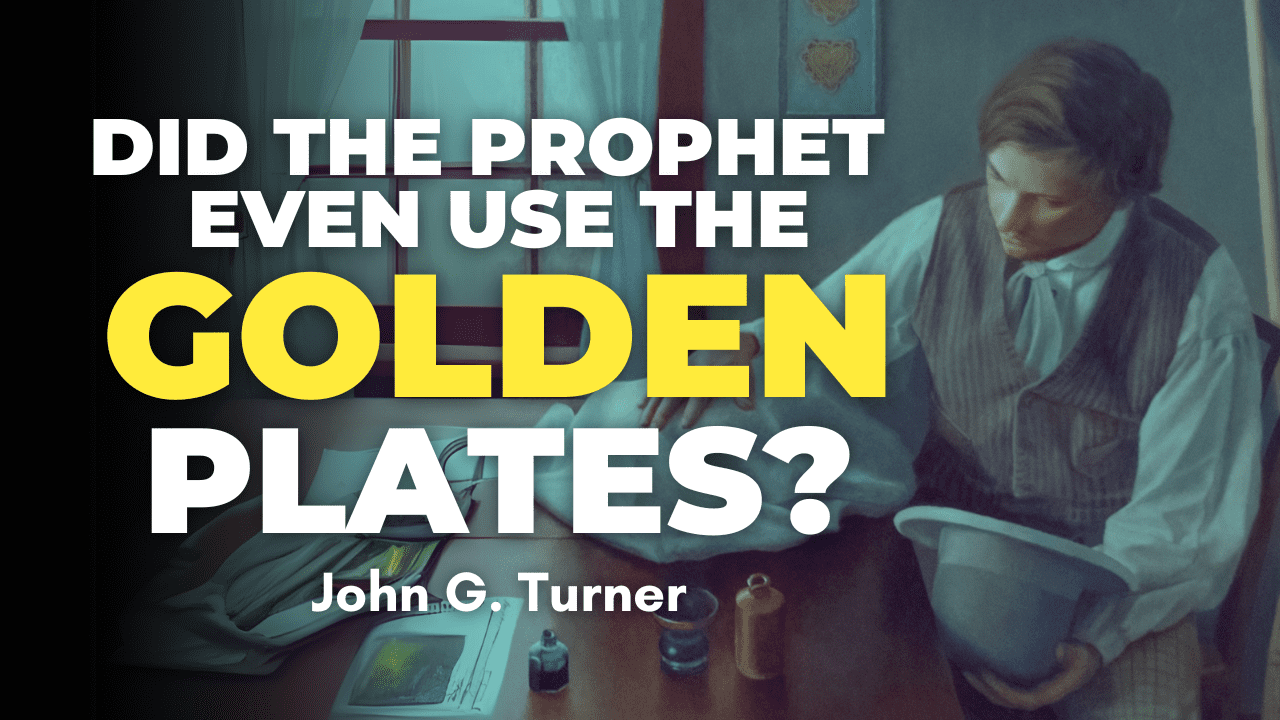
Thumbnail Credits: Image “Emma as Scribe” by Robert T. Pack
Originally published on mormonstories.org.
Transcript
Machine-generated and lightly edited. Click any timestamp to jump the audio to that moment. The audio is authoritative; please check it before quoting.
Welcome Back and Episode Introduction
John Dehlin Hello everyone and welcome back to Mormon Stories Podcast. I'm your host, John Dehlin. It's June 11, 2025 and this is the Joseph Smith edition of Mormon Stories podcast. We are in part four of a multi part series on Joseph Smith and specifically we're part four in our series covering this book that I want everyone to go buy right now if you haven't bought it. The book is called the Joseph the Rise and Fall of an American Prophet by John G. Turner. He is a professor, if my memory serves me right, at George Mason University in Virginia. We're having so much fun reviewing this book. I want to thank the 35 ish of you who have donated to this series. I think we've been able to pay for like four episodes and this is the fourth episode. So we're just hitting sustainability in terms of wanting to be able to, to do more episodes. But really quickly, if you, if you value today's episode or any of the past episodes and you want to see it continue, we are paying John Turner for his participation and we would just ask you to please donate to donorbox D O n o r box.org Joseph Smith become a monthly donor. And literally we'll do this series for as long as John will do it and as long as you're willing to financially support it. We've done three episodes so far. For those of you who haven't checked out our three previous episodes, I think these episodes are best enjoyed in succession. We've talked about Joseph Smith's early family. We've talked about the first vision. We've talked about Joseph Smith's treasure digging. We've talked about Book of Mormon translation, the lost 116 pages with Martin Harris. And that's kind of up through chapter four of this book. And then today we're going to be covering chapter five of this book which deals with the three witnesses of the Book of Mormon and the eight witnesses of the Book of Mormon in the 1829 period. So that's what we're going to be talking about today is the three and eight witnesses to the Book of Mormon and of course, Oliver Cowdery's entrance as a scribe for the Book of Mormon. So without any further ado, Dr. John Turner, welcome back to Mormon Stories podcast.
John Turner Hi, John Dillon, great to be back with you. I'm excited to keep going and get further along in Joseph Smith's life and get into some of the fascinating episodes and the sticky wickets. This has been a lot of fun so far.
John Dehlin I love it. And I have a second goal. So not only do I want to make great content and have you get compensated for it, not only do I want to make this book a New York Times bestseller, I want to make this book the book of the Year for the Mormon History association. In what, 2026. Would that be the next time they award best Mormon Book?
John Turner I think that's true, although I don't know. I don't know if I'm eligible. I have to explore that. I am on the leadership board of the mha, so I don't know if it got Best Book. It would sort of look like I was rewarding myself. So I'll take the New York Times Bestsel at least, though. That would be awesome.
John Dehlin From one PhD to another, I'm going to introduce a word to you. It's called recusal. Recuse yourself from the process. Get your book entered for best book of 2026. Am I scholar splaining you, John Turner?
John Turner Now that sounds pretty reasonable. We'll see. I will just be thrilled if lots of people read it. And you know, I love chatting with people about it. I love chatting with you about it. So this is great.
John Dehlin All right, well, I want to ask everyone to please subscribe to this channel. Comment on the episode We've gotten so many cool comments. John, have you had a chance to read any of the YouTube comments? Or is that just not something you have time to do?
John Turner So normally, yes, the last week was kind of crazy. I was in Utah with you and then I was at the Mormon History Association Conference. I even ended up in East Salt Lake Urgent Care because I gashed my leg on a trail run up above Bountiful. So I sort of had my hands full. And then I just got I've just gotten back to Virginia recently, so I will check out more comments in the future.
John Dehlin Well, thanks to everyone who's commented so far. We're reading every comment and we'll figure out a way to incorporate more of these comments. But we were grateful for it. We want them to keep coming. Generally, we've already addressed the majority of the comments, the ones from ex Mormons. It's either like, I love this content, can't get enough, and then there's an occasional why is John Turner such an apologist? Or how can he talk about mirth when Joseph Smith was such a bad guy? And I just want to say that's what I love about this series with you, is that we're not getting somebody who brings too much passion. Believe it or not, I think in scholarship, sometimes too much passion can work against good history and scholarship. And I'm not saying you're not passionate about the topic, but a certain type of passion would make this book to me, less valuable. So I'm just gonna say thanks for the feedback. And I. I think calling John Turner an apologist is not a thoughtful response. And I think today I'll be able to provide evidence of that as well. But generally, I think people just love this exchange. That's what I would say.
John Turner Yeah. I mean, I've been called worse things in my life, John, than an apologist for the LDS Church. Yeah, I mean, I think the is Joseph Smith. He is a polarizing figure. He's a historical figure who matters to millions of people. It matters in one way to faithful Latter Day Saints, matters in other ways to people who might be former members of the church or who are skeptics or what have you. And one of the things I've always believed about history is there should be room for lots of different perspectives. Perspectives like everybody, no matter, no matter the perspective, can look at the same evidence. They might not necessarily reach the same conclusions, but the best starting point is the best evidence that we have. And, you know, we go from there and it's fine if we don't have the exact same conclusions about everything. I. It's really unlikely everybody's going to start feeling the same way about Joseph Smith. That's part of the fun.
John Dehlin Yeah, I love it. Julie's reminding me that we are big fans of Benchmark Books, the Salt Lake bookstore. Chris Bench told me that he sold out of all your books. Did you hear that, John?
John Turner The last time I saw Chris, he only had a few copies left. That was a number of days ago. So I am glad to hear that. I know they're going to order more, so if you want a copy, you probably still can get it from Benchmark before it releases on Amazon on June 17th. Benchmark is. It's an institution. It's more than just a bookstore. They really support authors, they really support scholarship. They really support dialogue about Mormon history. So they are well worth supporting by purchasing this and many other books.
John Dehlin Amen. So, yeah, buy your book from Benchmark if you can. And if not, Yale University Press or Amazon are great places to buy it. All right, should we jump in?
John Turner Let's do it.
The 116 Lost Pages and Joseph Smith's Low Point
John Dehlin Okay. So where we last left off, Martin Harris had joined with Joseph Smith in Harmony, Pennsylvania. They were able to crank out 116 pages. Martin Harris twist Joseph and God's arm until God and Joseph allow Martin to take the 116 pages back to Lucy Harris. Somehow the 116 pages get lost. Martin beats Lucy, unfortunately, and Joseph goes into a deep, dark depression. According to Joseph, God tells Joseph he can't translate for a while. The plates are taken away. And as you mentioned, on a more serious note, Joseph experiences melancholy through the winter of 1828-1829. And you know, the whole enterprise is possibly in jeopardy. Joseph's baby dies. Joseph and Emma's baby dies. And if there were ever a cinematic moment of is this going to sink, you know, Mormonism, this winter of 1828 is one place where that could happen. But as you like to say, Joseph triples down and comes back with a vengeance in the spring of 1829. Did I get that recap? Okay. Is there anything you would add?
John Turner No, absolutely. I mean, and part of this is, again, in terms of uncertainty about moving ahead is Joseph doesn't have any money. He's still extremely poor. He sort of limps through that winter with a bit of financial support from friends like Joseph Knight Sr. He probably does some odd jobs and works a bit as a day laborer. But by the spring of 1829, he's. He's ready to make a new attempt at this quixotic literary project.
John Dehlin Yeah. Okay, so beginning with chapter five, again, Joseph's. As you mentioned, Joseph NY senior gives Joseph some money, uses it to buy paper. That suggests that he's. He's pretty destitute if he can't even afford paper at this point.
John Turner Yep. And I'm just going to share. I like my first two sentences from this chapter.
John Dehlin Yeah.
John Turner You know, as of early 1829, Joseph Smith was the decidedly unsuccessful glass looker and seer. He claimed to have found one treasure, which he refused to show anyone. His most fervent follower had lost his book manuscript and his earthly affairs were a mess. So, yeah, this is still. This is a low point and I totally agree. Fact that it's significant that he gets a little bit of money so you can buy paper that shows you how little he has.
John Dehlin Yep. Okay. Then you go on to say that for a small bit, Emma and even Samuel, Joseph's younger brother, is Samuel, Joseph's younger brother.
John Turner Correct.
John Dehlin They act as scribes, I'm guessing. Do we know which parts of the Book of Mormon they helped translate? And then the other question I had is how is Samuel able to be a scribe? Joseph's younger brother. But Joseph himself isn't literate in terms of pensmanship, well enough to be his own scribe.
John Turner So I don't actually Think Joseph. I mean, if Joseph had simply written the text himself, it would have been rougher. We don't actually know very much about what either Emma or Samuel scribed. I don't know if it were particular portions. I think the. The safest thing is it they. These may have just been some fitful attempts at a restart. And Joseph doesn't seriously begin again in earnest until Oliver Cowdery shows up.
John Dehlin Right, okay, that makes sense. All right, so this is. We touched about this a little bit last time, but this is where Joseph Smith makes this important turn in terms of my view, where he starts not just claiming to have powers to see in a rock to find treasure, and then not just to have been given, you know, plates by an angel to bring forth a mighty book, you know, but then he starts claiming that he's becoming the voice of Jesus to tell people what Jesus wants them to do. And Martin is one of the first people that gets such revelation from Jesus. Do you want to talk about that turn? I know we ended last episode talking about that a bit, but I'm seeing this as highly significant. What do you think?
Early Revelations and Turner's Personal Faith Perspective
John Turner Oh, absolutely. I mean, and I suggested last time that that very first revelation that we have from the summer of 1828, when Harris has lost the manuscript pages, it's still a little bit ambiguous or maybe a bit of a transition period. It's not exactly clear who the speaker in that revelation is. But the revelations that Joseph dictates in 1829, including a March 1829 revelation to Martin Harris, those are in the words of Jesus Christ. I've always thought a bit about this. As Joseph acting as Christ's oracle, he brings forth the words of Jesus Christ. And yeah, there's. Maybe there's some chutzpah there. You know, again, this is. It's really audacious. It's. It's a remarkable claim. I think it definitely invested Joseph with enhanced authority in the sense when Joseph gave someone a revelation, specifically in the words of Jesus Christ. Those were hard for individuals to ignore as long as they accepted Joseph's authority. Those were powerful, powerful messages. And often, not always, but. But at least sometimes they were pretty sharp. So the revelation to Harris, it includes a mixture of promise and warning. You know, it promises Harris that who's always wanted to see the plates, that if he humbles himself and confesses his past mistakes, he's going to become one of three witnesses to the plates. And if he doesn't, he's going to be condemned. There's also what seems to be some encouragement I think for Harris to devote more of his resources to the project. Joseph is told to wait and stand still until the Savior provides him with the means to accomplish the work. If he does, if Joseph doesn't do that, there's actually a warning for him as well. He's not going to have his gift to translate any longer. So these are, you know, I think these, these messages, they provoke a range of emotions in those who accept them. So there's encouragement for Harris, there's warning, there's promise. And Harris, as far as we know, accepted Joseph's authority, accepted this message as from ultimately Jesus Christ, took it seriously.
John Dehlin I don't know if I've asked you to do this before, but I'm curious. You've mentioned before you've been willing to disclose that you are in your private, non academic life, a person of faith Christian. And I'm wondering if you're comfortable switching from your personal Christian hat to your academic hat or if you just prefer to kind of keep things academic. Because I have a question I want to ask you as a Christian, not as an academic. But I also want you to feel free to say that's not kind of how you want.
John Turner Yeah, I'm not, you know, I'm wearing headphones rather than any hat at all. So you can ask anything you want, John.
John Dehlin Okay. Does, you know there's a lot of Christians that feel really passionately that, that Mormons are disqualified as Christians because of certain, you know, various reasons why they claim that. I was wanting to ask you as I was reading this book, does someone in the 1800s, sort of threatening someone else to, you know, do what they say or else Jesus is going to punish them. But if they do what this person wants, then Jesus is saying they're going to be saved or exalted. I'm curious if that in any way offends your Christian sensibilities, totally separate from the academic side, or if you kind of have a very broad level of tolerance for people claiming to speak in the name of Jesus.
John Turner That's a great question. So I think actually I don't get offended all that easily. As a Christian or just as a human being. I try not to easily take offense. You know, I think issuing a warning in God's name to people, a lot of Christians have done that. I don't particularly like it ever. If you can indulge me with a little bit of an anecdote, please. The first book I wrote was about an evangelical ministry named Campus Crusade for Christ founded by an individual named Bill Bright. Now People connected with that organization, they don't revere Bill Bright the way that Latter Day Saints revere Joseph Smith, but many of them did revere him. And he had died shortly before I wrote my book. One of the. One of his successors, one of Bill Bright's successors within Campus Crusade, read a manuscript of my book, which I had agreed to. To share, and told me that I should be careful about writing anything against the Lord's anointed. And, boy, I thought that was. That was a little sharp. I was a little bit nervous driving home afterwards. Yeah. So I don't like the idea of using God's name to warn people. But Mormons aren't the only ones who have done that. What I think is actually really unusual about Joseph Smith is the striking nature of his, I guess you could say, prophetic claim here. It's not just that he claims that he has seen Jesus Christ or he knows what Jesus or God would want someone to do. It's that he claims to more or less be able to speak for Christ in written form. That's very unusual. You know, he claimed that Jesus Christ spoke through. Through him. He could dictate Christ's words for me. Now, you asked if I take offense. No, because it's easy for me to just sort of ignore that because I don't feel like it's personally making a claim on me. But in terms of finding Joseph Smith just a fascinating figure within American history, it's an unusual claim. It's an unusual sort of authority to claim. So I just. I find it. I guess I find it a sort of startling, I guess would be the better way to put it.
John Dehlin That's fair. Thanks for being willing to share that perspective. Even from a personal perspective, I'll just say, like, it reminds me, this was sort of like foreshadowing the language in Doctrine and Covenants, Section 132, where Joseph basically tells Emma, if you don't let me practice polygamy, you will be destroyed. And it's in the words of Jesus. And I think what troubles me is if you combine that with kind of your acknowledgment, which I really appreciated that if you had to look at the data, the data seemed to suggest that there never really were golden plates. If there really never were golden plates, and if Joseph knows there really never were golden plates, then it's hard to interpret him claiming to speak to Jesus and even threatening Martin's salvation if he doesn't obey Joseph. It's hard to take that latter act. Set of acts you Know, in a way that's benign when you couple it with the fact that if there weren't golden plates, he probably knew it because, you know, the Dan Vogel perspective is, well, maybe he was willing to mislead people, but always as a sincere believer in Christ and always with the intent of wanting to bring people to Christ. I think when people are, you know, I touched on this at the beginning of the episode when people have sometimes like called you an apologist or said you're not hard enough on Joseph Smith or they don't like the discussion of mirth when some could interpret these acts as really malignant, not benign. Again, the coupling of him knowing there aren't plates with them, him threatening people's eternities in the name of Jesus as a perceived power play. That's when I think for some people, it's like, this is a funny. This is really potentially abusive and manipulative. Now, I'm going to just say, I think you've already addressed this topic a couple times. I'm just reflecting back to you reading chapter five, what comes to my mind. And then if you want to add anything to that, you can, or you can just say, see my previous comments when you've asked me that 12 times before.
John Turner John well, I think my idea in talking to anybody about this book or about Joseph Smith is answer, answer questions from all sides and I'm happy to do so. Now I will say you have just hit on one of my least favorite Joseph Smith moments, which is, you know, those last 10 verses of Doctrine and Covenants, 132. I think absolutely, Joseph, that was that, that was a cruel message to deliver to Emma Smith. You know, I think Joseph at the very least should have stopped after verse 19 of that. What's now verse 19 of that revelation. I think that would have been a good time to take a break and never, never come back to it. Could have saved a lot of trouble. And I think there are definitely, and I think I call them out for the most part in my biography. There are some moments in which Joseph is callous or cruel toward people he's close to. I don't go through the book and wava moral, good or bad, stick, you know, at everything that Joseph does. But certainly I think the treatment of Emma surrounding plural marriage, and particularly in 1843, is Joseph Smith at his worst. In terms of Martin Harris. I understand what you're saying about the manipulative nature of some of these messages. What actually bothers me a bit more or what I think I call out in the biography is that after Harris is persuaded by a series of interactions with Joseph and Revelations to bankroll or guarantee the Book of Mormon's publication. I don't think Joseph seems a bit touchy with him, you know, that he hasn't done so with fewer doubts or with more enthusiasm, and there's either some confusion or disagreement about how they're going to share profits from the Book of Mormon's anticipated sales. Joseph doesn't seem to me overly grateful, and he seems to disregard some of Harris's legitimate concerns and claims. So, if anything, that, you know, that. That I do call that out. I think it's. It's tricky, I think, to know the level of sincerity involved in the Revelations. I think, you know, and I say this in the intro to the biography, you know, it's really hard to go back in time and assess an individual's sincerity at any given moment. In fact, sincerity is not really an empirical thing. It's not really something that we can measure.
John Dehlin I couldn't even measure my own sincerity because it's tricky.
John Turner Right.
John Dehlin If I think I'm sincere, I could be blind to my own biases. Right.
John Turner Right. And so I'm unwilling to simply say, well, Joseph is, you know, he says like, I don't. I don't use formulations like pious fraud or sincere fraud, partly because I think, you know, I don't usually. I don't use the F word much, at least. Right. Because I think. I think a single label doesn't do justice to Joseph's leadership and life. I also don't use the word sincerity because we just really can't get, you know, we can't get inside his brain retrospectively in order to make that kind of judgment with confidence. I do think, you know, the Smith family, it was a Christian household. They do genuinely seem to have sought Jesus Christ. I mean, I think there's. There's a genuine longing there on the part of Joseph's parents and probably on his part. And I think that comes through in Joseph's 1832 history. I think it comes through in some of his letters to Emma. So, I mean, I feel pretty confident in saying there's some genuine, you know, spirituality and faith in Joseph Smith. But, yeah, I think there can be strong elements of Joseph's humanity in these revelations as well. And, you know, he's leading. You know, he starts to lead other people through these divine messages, and it's, you know, it's his mechanism that he uses really strongly for the next four or five years. The frequency then tails off. He's more comfortable just leading through, I would say his own voice once we get into the mid-1830s, DNC 132 being a little bit of an exception, but he doesn't even want to, you know, he doesn't want to give that to Emma himself at first anyway. But, yeah, for these four or five years, this is a key way that he leads what becomes the church. And it is a tricky thing to analyze.
John Dehlin Thanks. Just to close out this point for now, I think what critics of Joseph Smith would love to hear is some type of explanation for how Joseph can knowingly be deceiving people about either his treasure digging or his plates and then turn around and issue these alleged threats from Jesus. But to do so in a way to where he's not, I don't want to use such a harsh word as despicable, but like, not a bad guy. And that's not to have you answer the question again. It's like, and maybe this is for our viewers and listeners, if anyone can come up with a way to piece together the possibility that on the one hand, Joseph knows he doesn't have gold plates and that he's basically saying, martin, you know, support me with the Book of Mormon or you'll be damned by Jesus and. Or, Martin, give me three grand and mortgage your farm or Jesus will damn you. How somehow in his mind, he's actually trying to do good and not a bad actor. I would love to hear people's theories of how. Of how that might be workable. Right. I'm watching Breaking Bad right now with Walter White and Jesse Pinkman and. And it's just got me thinking a lot about bad actors and what it means to be bad, basically. So anyway, we can. I don't know if you've seen Breaking
Interpreting Joseph Smith's Character and Revelations
John Turner Bad, but I haven't. I've been so busy with Joseph Smith. But, you know, I think about it like this, the Revelations, I think we'd say that, you know, there's a lot of variety. So it's a bit of a mixed bag, Right. There are these directives for individuals like Martin Harris or Joseph's own father, or for other early followers. Then there are these long, you know, theological ruminations such as. I don't have them all memorized, John. But such as DNC93 that really engage the relationship between God the Father and Jesus Christ. There's these ruminations on pure language. There's long revelations on priesthood.
John Dehlin There's D&C. 76, I believe, about, like, the three degrees of glory in heaven.
John Turner And what heaven's like D and C. Exactly. So it's this welter, you know, it's always true of Joseph Smith. It's a welter of activities and ideas and approaches. You know, you asked how someone could even conceive of doing good while maybe doing some engaging in some deception and manipulation. I think a lot of human beings do that and it'd be easy. It'd be easy to, you know, Joseph doesn't provide any rationalization. He doesn't reflect on these things. So anything that, that I or you or anybody else would say, I think it's a little speculative, but it's not far fetched for me to imagine that Joseph's seeking, you know, he's seeking ways to start a movement. He has some, as we move forward, he has some genuine, genuinely striking ideas that he wants to realize. He wants to, he wants, he wants to form a community that's united in one heart and mind. He wants to prepare for the millennium. He wants to recover the pure language of God. He wants to recover the order that he understands as inherent in Christ's church. He wants to part the veil between heaven and earth for his followers. He's able to accomplish some of those things and he doesn't seem to have been consumed with significant self doubt along the way, especially after that melancholy of the second half of 1828.
John Dehlin Yeah, I hear you. So maybe there's a little bit of a Malcolm X, by any means necessary sort of a ethic behind some of his actions, possibly. You know what I mean? Good intentions, maybe. By any means necessary maybe.
John Turner And you know, maybe all the intentions aren't good. Maybe all the, all the means aren't bad. You know, it's complex. I will say back to the starting point. Joseph Smith has no resources. His. Yeah, you know, Martin Harris, he can't afford paper. He can't afford to afford paper. He's got to publish a book. Boy, he should have found a golden laptop.
John Dehlin Right?
John Turner But yeah, and it's remarkable. He has a series of individuals who really, in a way, they approach him wanting to help him realize this project. So Harris is the first. Oliver Cowdery is another significant individual. The Whitmer families, you know, a third. And these people, for the most part, they are primed. Harris is a little wobbly, right? He goes back and forth a lot. But these individuals, they are, they are primed to believe. They are eager for a new departure in their lives. They are pretty eager to devote their time and resources. Harris is insistent that even after he, you know, loses the farm, that he hasn't been played, that, you know, Joseph Smith hasn't swindled him.
John Dehlin Yeah.
John Turner So I think we have to. Even. Even if the approach. I agree, it seems a little manipulative. I think we have to at least give Harris a little bit of agency and take his own assessment of the situation. We still have to take that seriously, too.
John Dehlin Got it. Okay. I want to talk about how consumed Oliver was, but before I do, I want to. There's a couple other things about that Martin revelation I wanted to ask you about. What do you think the function is of telling Martin Harris that there's going to be three witnesses? And if he behaves, he might be able to be one of the three? Can you think of a function for that type of quote Revelation?
John Turner I mean, I think it's a way of maintaining his hope and faith. Right. Hang in there. You might get to see what you've wanted to see. It's actually, I find it. The unusual thing about it is that it's already three. Right. It would have been simpler just to dictate a text that Harris was going to be a witness, the one witness. Right. I mean, Harris, I would think he would have liked that even more.
John Dehlin Maybe this is Joseph literally tripling down.
John Turner Right. Literally.
John Dehlin That's fascinating. Okay, last question. I thought it was interesting that this revelation basically has Jesus telling Joseph he has the gift to translate, and he uses the word translate. Am I right?
The Nature of Translation in the Book of Mormon
John Turner Mm. Yeah.
John Dehlin Like I've already mentioned this previously, but in modern times, scholars like, you know, Fluman and Bushman and Givens are wanting to reframe Joseph's work not as a translation, but as a revelation, and want to distance themselves or the church from the idea that Joseph was literally translating in the way that everyone in the world basically thinks the term to mean. And I just wanted to note that this is Jesus using the T word, which in my mind makes it harder for modern scholars to want to creep away from the bind of the fact that the plates aren't anywhere involved. This is a 19th century document. There's probably no way this was actually a translation. So they want to either create new meanings for the word translation or just leave the word translation behind and use other words to describe what Joseph produced. I found it interesting that Jesus is basically saying, you can't run away from the T word. Do you have any thoughts about that?
John Turner Yeah, I mean, I guess I have a lot of thoughts. My first thought is, yeah, that's the word that Joseph and his followers use, so we should stick with it. I Do think that Joseph. He obviously doesn't. It's not a conventional translation as we would understand it. And everyone around him knew that that was the case because his associates, like Martin Harris and Oliver Cowdery, they essentially knew how he did it. And they knew that he wasn't looking at letters or hieroglyphics on the plates and puzzling over their meaning and working on sort of a word for word translation. I mean, without getting too far afield, you know, that word translate or translation, it actually has a fairly capacious meaning. So the character Enoch in the Bible is translated from earth to heaven according to the New Testament. I believe the writer Samuel Brown has a book called Joseph Smith's Translations, which talks about. He argues that Joseph himself understood translation in a pretty capacious way. So your question is a good one. I don't know that Joseph himself didn't have that broad, broader meaning of translation. You know, and when Joseph translates the Bible, when he works on his translation of the Scriptures, well, he's obviously. Everybody knows he's not looking at the Greek and the Hebrew. Really? I think so. I think they know he's proceeding on the basis of revelation.
John Dehlin I thought in the school of the prophets, he was learning Greek and Hebrew.
John Turner Well, he learns Hebrew in 1836, just in the run up to the Kirtland Temple dedication. But when he's working on his translation of the Scriptures in the early 1830s, he hasn't learned any yet.
John Dehlin Oh, okay. I didn't. That wasn't my understanding, but I. I'm not an expert.
John Turner Yeah. So, I mean, like the beginning of the Book of Mormon, of Moses, which is really the beginning of his Bible translation, you know, it's. It's actually identifies itself as a revelation in the manuscript. So I think, you know, at a certain point this became misleading because everyone hearing the word translation, and I think even in church publications, you know, it made it sound like we would understand the term in a commonsensical sense. You know, Joseph looking, you know, understanding one language, rendering a text from one language into another, which he obviously doesn't do.
John Dehlin Yeah. Okay. And just circling back to this revelation, I guess if Jesus wanted to use a word, that would have given us a more clear understanding of what power or what he was actually doing with. With the Book of Mormon, I guess Jesus could have used a different word. Right?
John Turner Sure. And I do think, you know, that your starting point was a fair question in the sense of Joseph is claiming to have golden plates containing. Containing an ancient record, and now he's going to translate Them. So, of course, you know, the commonsensical takeaway from that is, you know, he's rendering a text from an unknown ancient language into English.
John Dehlin Yeah. Okay, thanks. I know we're kind of touching on topics multiple times. I think soon we'll be able to leave some of these questions fully behind. But these themes reappear for me anyway. All right, so let's move on to Oliver. And Oliver shows up. One thing that I thought was interesting was, I guess Oliver's living with the Smiths in Palmyra. But then Lemuel Durfee ends up, in effect, kicking the Smith family out of their house, forcing them to move back into the log cabin where Hyram and Jerusha are living, which means Oliver doesn't have a place to live, which I guess is part of what makes Oliver motivated to go. Go to Harmony. Is that all sound right?
Oliver Cowdery Joins the Translation Effort
John Turner That all sounds right. Yeah, it is kind of. It's kind of a funny start to the story, right? Cowdery's been hired as a school teacher in Manchester. This is his first year on the job. He boards with the Smiths, and, you know, then they are forced to leave their frame house that they had built on the land that they'd already lost. The person who acquired title to the property allowed them to. To stay in their home for a few years. But now they've got to clear out. They got to move back to this really cramped log cabin. So it's a good time for Kadri to find somewhere else to live. I think Lucy Mac Smith encourages him to do so. And the most simple thing for Cowdery to do would have been to find somewhere else to live in Manchester, maybe get another teaching job somewhere else instead. He's heard the story of Joseph and the golden plates. He's really intrigued, sort of the way Martin Harris was really intrigued. And he heads off for Harmony, gets there in early April, immediately, as far as we know, dedicates his money to this project. He helps Joseph make a payment on the land and house that he and Emma have been living. And he pays Isaac Hale, Emma's father. And apparently he may have exaggerated, but he later says that he's basically gave all that he had to this. And I think right away they talk late into the night about the plates, the project, what's becoming the Book of Mormon. And they begin working on the translation right away, with Cowdery taking dictation from Joseph.
John Dehlin Okay, really quick question about that. Is it fair to say that Lemuel Durfee was kind of disfavorable in the eyes of the Smith family.
John Turner At this point, I think Lucy Mack Smith, you know, she looks back with some bitterness because she treasured this home that they had built on the land. Durfree is totally within his rights to kick them out, but I think it was hard. She certainly wanted the arrangement to continue, you know, which involved. I think it was one or two members of the family working for Durfee during the year. But Durfee has family who need the home, and so the Smiths have to leave. And to be fair, you know, Durfee's given them, you know, a couple of years to sort of recover from the loss of the land. So he's. He's done them a favor. She just wishes he had done them more of a favor.
John Dehlin And, of course, Alvin building that home made it a very special place for the Smiths as well, especially after he'd passed. Did you find it odd, I'm assuming, you know, that Lemuel is an early occurring bad guy in the Book of Mormon? Laman and Lemuel. Did you find it odd that Lemuel Durfee's first name magically, within a year, reappears in the opening chapter of the Book of Mormon as a bad guy, given that it's an ancient record?
John Turner That is a great question, John. I just got to be honest, I didn't think about that when I.
John Dehlin What?
John Turner No, I didn't. I mean that. I'm sure other people have pointed that out, but I should.
John Dehlin Is that a coincidence that bad guy Lemuel Durfee, who kicks them out of their home, had the same first name as the number two bad guy in the opening chapters of the Book of Mormon, you know, 2,000 years previous?
John Turner You know, that is quite something. I did not. I should have picked up on that, but I didn't pick up on that. And, yeah, it's probably not a coincidence.
John Dehlin All right, well, that's. I was curious what your take would be on that. Okay. All right, so Oliver shows up, and
John Turner I'm just going to interject. That's got to be in Dan Vogel's making of a Prophet.
John Dehlin Oh, I'm sure. I know I'm not the first person to notice that.
John Turner That is a fascinating tidbit, but I didn't. I didn't think about the connection. Yeah.
John Dehlin Yeah. I mean, it could be that. I mean, if I'm thinking of a way that that makes sense is that the Book of Mormon historical figures had weird names that wouldn't be recognizable. Just like a horse may not have been a horse, it was a tapir. And so Joseph just had to use names that were common to him because otherwise the names of people and animals would have been unrecognizable. So he just grabs Lemuel's name as a placeholder.
John Turner I think there's also a Lemuel in the Bible somewhere. I don't remember any details. So I mean, in theory you could say that that could also be the source. But I can't remember what that Lemuel is like. But yeah, that's a striking point of connection.
John Dehlin All right. Okay. So one thing that was new to me, I always thought of Martin Harris and maybe this Joseph Knight Sr. As being important financial backers. But one thing I did not know, or at least I don't remember learning before reading your book, is that Oliver Cowdery, upon arriving, allegedly gives his life savings to Joseph and Emma to help them get both Joseph's financial house in order, but also to help Joseph and Emma buy their house away from Isaac Hale. That makes Cowdery a financier to Joseph in the Book of Mormon. And I had not thought of him that way. I thought of him as putting in sweat equity, but not actual financial equity.
John Turner Now he did both and I forget the exact amount of the payment. Joseph had no other way of making it. I don't know. I don't know to what extent. I think, I think it's actually they. Cowdery is also able to sort of facilitate this real estate agreement with Isaac Hale. I don't know that Joseph necessarily. I don't even know. I don't, I don't recall or know why Joseph pursued that agreement at this time. But it is a significant investment from Cowdery. I think it shows that from the very get go he is persuaded of, you know, he's persuaded by Joseph's leadership, by what Joseph recounts about the plates and the translation. So he's all in from the get go.
John Dehlin Yeah. Yeah. So I'm glad I learned that. I love it when a book teaches me new things. And I'm learning several new things from your book, so it's fun. Okay. So you know, you make it a point that they commence the translation of the Book of Mormon and you make the point that the plates, if I'm remembering right, that the plates were golden plates were completely unused while Oliver was helping Joseph as the scribe. And I know we've talked about that in the previous episodes, but I, you know, I'm just wondering, like, I wonder. Well, there's two things I Wonder if there's this moment where Oliver's like, Joseph, where's the plates? If there was like that conversation of like, wait, you went to all this trouble to get the plates? Fine, if you don't want me to show the. If you don't want me to see the plates. But, like, you're using them, Right. And if you're not using them, what are you doing? Of course, we have no evidence of that conversation happening. But can you imagine that conversation happening?
Why the Physical Plates Were Covered During Translation
John Turner Well, it is remarkable, Right, because Harris understandably really wants to see the plates. Right. He, even after he has had experiences that lead him to believe, he wants additional proof because he, you know, his faith falters from time to time. And so he wants, you know, he still wants to see them. And Kattery doesn't seem to have had that need, which it is interesting. And I can't strictly say that absolutely Joseph never did something along the lines of what he'd done the previous year in terms of having a, a hidden object or something under a cloth. That could be the case. But Cowdery's description is. Just doesn't seem to indicate that that was the case. I think when Cowdery and Cowdery, I, I believe it's from a letter just a couple of years later. He. He describes Joseph's translation process as, you know, putting his face into a hat. And then the interpretation flows into his mind and he dictated words and Cowdery writes them down.
John Dehlin Yeah, and I'll just say from a LDS standpoint, you know, you can say it doesn't make logical sense that the plates weren't being used in the translation. If all the trouble is made to create them and write on them and preserve them and then give them to Joseph. And for him to hide them and not want people to find them and then to not have them be used. I mean, it's obvious that that's problematic. We've covered that in past episodes. But again, any religious claim strains credulity. So, you know, you can say what's crazier. You're a mum Thummim or a peepstone. They're both crazy. There's really no difference. So you are either a believer or you're not. The one thing I'll just say is pretty much no church members until the church was called out on the Internet in modern times for misleading its members about that translation process. Up until today, very, very few members have ever been told that the plates weren't used in the translation. And I'm just highlighting the Obvious for you, but for those who are new to this question or curious, the fact that the plates not being used, that fact has been, I think, intentionally withheld from church members almost from the beginning up until recent times. Obviously, I just need to highlight that as something that causes a lot of members to feel that they've been misled, because that's. There's been the paintings, infinite paintings depicting Joseph staring intently at the plates while he's translating with a sheet separating him from Martin or him from Oliver, or, you know, there, there's been a. A, by some accounts, a real clear intention to mislead the membership and even the world about this very important historical fact.
John Turner Yeah. So, I mean, I think one. One reason perhaps for that is not a lot of, you know, 21st century latter day saints or 20th century Mormons had the same sorts of ideas about revelation and sort of objects as conduits for revelation as people like Oliver Cowdery did. So Cowdery, according to one of Joseph's revelations, has the gift of working with the sprout or rod. So he has a rod. And it doesn't seem like. It doesn't seem like he primarily used it like a dousing stick the way that Joseph Smith Sr. Might have, but it was something that. Through which he exercised the spirit of revelation. So, you know, Cowdery believed that he could receive revelation from God through his rod. God through the rod. Sort of. I kind of, I kind of like that. And, you know, I think simply by, I don't know, by holding it, by praying. I don't know that we know the exact mechanics. So that's, you know, that's. For Cowdery, who already believes that it might not seem totally crazy that Joseph could receive revelation about an ancient record through a seer stone. Now, if they, you know, I just think once you move beyond this early time period, you know, later generations of church members, they would find that a pretty crazy idea. And although they, you know, they could, they could read a bit about it in the Doctrine and Covenants. So I think, you know, there's sort of, sort of a shift in conceptions of how these things should work. And, you know, I think, I think that made it more difficult perhaps for the church to give its members, you know, a full and accurate portrait of Joseph's translation activities.
John Dehlin Yeah, yeah, it's a tough, It's a tough story, especially in modern times. But, but again, so is a resurrection. So someone healing, you know, resurrecting after three days. So, you know, making the blind see in the Lame walk, as I learned growing up with. With Watergate. It was the. It wasn't the break in, it was the COVID up. Like, that's. I guess I. I guess I'll spin it positively. I'm glad to see the church finally being willing to acknowledge its. Its factual history better. And I guess I also wish that more members even today were clued in on these details, you know.
John Turner Yeah, well. And, you know, I think some of this information, at least the outlines of it, was always there in some of these revelations to Cowdery, with Joseph telling Cowdery, who makes an attempt to translate, you've got to study it out in your mind. For me, that's. That's Joseph at least acknowledging that he's playing an active role in the translation process. He's not just, you know, he's not. Not just an automaton who's passing along a message from God or words in a stone, that he's studying this out in his mind, which is, you know, that. That tracks with how I understand the Book of Mormon as Joseph's literary creation.
John Dehlin I noticed that. And that's a good segue to talking more about Oliver's desire to translate. Really quickly. Julia just passed me a comment. She theorized that maybe Oliver didn't feel the need to ask to see the plates as much because he had seen them in a vision before he left for Harmony. Is that plausible?
John Turner Totally plausible. You're actually quite right. But I will say, I guess seeing the plates in a vision, maybe that. Maybe that language is a little stronger than what we know about both Martin Harris and Lucy Harris. But Martin also at least felt like he had had divine confirmation and nevertheless still really hungered to see and wanted Joseph to show him. I think Kateri does seem pretty. He's just more rock solid from the start, you know, his big question is, you know, can I translate? As Joseph translates, I'd like to have a part in this. And that's all it.
John Dehlin Are you saying Oliver didn't see the Book of Mormon plates in a vision?
John Turner Before he goes, no, no, that's the quote. He saw the plates in a vision. So, you know, for him, him, that's enough. But I will say Harris did feel that God told him this was true. Maybe that's not the same thing as seeing them in a vision, but it is some sort of divine confirmation. But it just didn't settle the question for him the way it does for Cowdery.
John Dehlin Got it. Okay. I mean, I guess that makes all. In some ways, that makes Oliver a Witness without later even needing to actually have another witness. He saw the plates in a vision before he ever started helping with the translation.
John Turner I think you could say that, yeah.
John Dehlin Okay, cool. So there's this fun little. Some would call it a power struggle. Some would just call it, you know, ambition or curiosity on Oliver's part. But why don't you tell us the story of Oliver saying, hey, man, that translation stuff's cool. Can I try it?
Oliver's Desire to Translate and His Dynamic with Joseph
John Turner Sure. I mean, I think as they start working together, Oliver who I can imagine that this. This involves both some historical evidence and a little speculation on my part. John. I think Oliver, as they start working together, he does sort of wonder, you know, what's special about Joseph Smith. Why can't I do the same thing he can do? After all, I have. I have spiritual experiences or gifts in which I also receive revelation. Maybe I could translate. We could. We could be more equal partners rather than seer, inscribe. And it's interesting, I think, you know, Joseph. Joseph doesn't flat out say no, you know, what are you talking about? You newcomer, Right. This is my project. At first he says yes, you know, ask God.
John Dehlin And
John Turner there's a suggestion from Jesus Christ that Oliver will be able to do what Joseph's able to do. And in fact, there's a suggestion that there are a lot of other ancient records to be revealed and translated. And when Cowdery, as the. As the story goes, as Cowdery tries to do this, I don't know, probably with his rod, but I don't know that we know for sure he can't do it. And what I find fascinating is Joseph's revelatory response, which, you know, is I forget the entirety of the revelation. I don't think it's long, but it's sort of a mixture of chastisement and consolation. But essentially the message is Khadri doesn't use the right method. He expected God to simply tell him the words. And the right method is to study it out in your mind. But the upshot is that Jesus Christ tells Oliver to forget about translating for the time being. You know, there's maybe. Maybe some hope he could have a crack at it down the road. I think Cowdery is often a little, you know, in the years ahead, he's a bit insecure about his standing either vis a vis Joseph or whether or not he's Joseph's top associate. You know, Harris. Harris's big question is, you know, I want to see the plates and do I support the translation. Kadari's bigger Question seems to be what role am I going to play in this?
John Dehlin And. And you address a little bit maybe theorizing what Joseph might have been thinking if it's not actually Jesus communicating with Oliver, but instead it's Joseph doing Jesus pseudepigrapha, so to speak, with Oliver. Because it seems like there would be a problem if Joseph were to encourage his followers to do their own translating, to get their own revelations. It seems like that might ultimately present some problems with Joseph's power and authority. Is it fair to look at the words Joseph theoretically maybe puts in Jesus's mouth to Oliver as a form of power maintenance on Joseph's part, or is that too cynical?
John Turner I don't think that's too cynical because this is a recurring problem. It's still a recurring problem within the church. Right. So, you know, there's an episode a few years later where Hyrum, page one of the eight witnesses to the Book of Mormon, is using a stone of his own to dictate revelations of his own. And that's a problem. You can't have someone else operate with the same authority as Joseph. And there's a real balancing act here because I think Joseph, either for reasons of leadership or the development of the movement, or simply for spiritual reasons, he does seem to want other men to have visions of their own, revelations, even of their own, to exercise spiritual gifts, but he certainly doesn't want them to supersede them. Excuse me, to supersede his. And to be. To be fair, I think in trying to lead a movement, Joseph actually seems to have some common sense about the need for some. I forget the phrase you used authority maintenance or something like that. I mean, easily, this totally could have gone off the rails and become a chaotic movement of prophets and revelators. And Joseph, I think somewhat impressively, is able to do a bit of a balancing act between encouraging others to have visions and revelations, but not in a way that challenges his.
John Dehlin Yeah, it's a tough balancing act for sure. And somehow he's able to sort of like say, hey, you know, there's stuff to be translated in the future. Don't lose hope. Someday you'll probably be able to do it. Oliver. But Jesus says for now to hold off.
John Turner Exactly.
John Dehlin That's not like you're a bad guy. Stop asking. Never challenge my authority again. It's a softer, almost hopeful, let's do this, let's put a pin in it, Oliver sort of response that, that he has Jesus giving Oliver, which is smart.
John Turner Yeah. And you know, especially early on when things Akin to power struggles arise or disputes. Those are a little tricky for Joseph because this is a fledgling, small movement, so he can't simply dismiss all challenges or disputes or associates. You know, he's got a. He's. He often sort of negotiates his way through some of these issues that arise.
John Dehlin And as our friend Chris Thomas reminds me, there was a real evangelical, almost Pentecostal spirit to the early years of Mormonism. And central to that was what's found in the articles of faith. We believe in the gift of tongues, prophecy, revelation, visions, healing, you know, inter gift of tongues, interpretation of tongues. So you can't be promoting almost Pentecostal like spirituality if you're also stamping it out everywhere. You just have to sort of have a hierarchy of. Of. Of gifts such that no, you know, no revelation or, you know, no revelation ever challenges the ultimate authority, which is Joseph Smith, basically.
John Turner Yeah. Well, your observation via Chris Thomas is definitely one of the noteworthy characteristics of the early Mormon movement, which is a lot of ecstatic spirituality, charismatic Pentecostal gifts. Actually, I was really surprised when I started reading about the early history of the church because I associated these things with the Pentecostal movements that arose in the 1900s. And I was really surprised to read about early Mormons speaking in tongues. And, you know, that promise is right there at the end of the Book of Mormon too, that these spiritual gifts haven't ceased. And it was one of the things that people outside the church noticed about Mormonism at the outset, this sort of wild, unrestrained exercise of, or allegedly unrestrained exercise of spiritual gifts.
John Dehlin All right, really quickly you talk about Joseph and all Joseph having. When he's sitting down with Oliver to re. Begin translating the Book of Mormon, he's stuck with this dilemma. Do I start over? Do I try and rewrite the Book of Lehigh like we talked about? Do I just pick up where we left off? Or do I write a replacement text for the stuff that gets lost? But then if I try to retranslate what we've already written and then the 116 pages shows up, well, then, you know, if there's not enough of a match there, people will say I'm not really translating. And, you know, basically the way that Joseph seems to get out of it is by creating this narrative that there's like sets of plates within plates and multiple versions of the same story. And there's sealed plates and then there's, you know, secular versions of the history. And though now there's religious versions of the history. And okay, before I was doing the Secular Lehi book. But now I'm going to do the more spiritual. Like my question to you, was all this plates complexity, was that his narrative prior to the 116 pages getting lost or did the description of the golden plates get more complex? From a cynical view as he's trying to figure out a story with the plates that matches whatever solution he has to create for the 116 pages getting lost. Does that make sense? My question?
John Turner Yeah, no, it makes sense. I don't know that we totally have the answer to that question. So it seems that from the start he talked about a portion of the record being sealed that at least is part of the story of Martin Harris's trip to New York to consult with the experts about ancient languages. So there may have been some complexity from the get go. I definitely think that this revelation injects some additional complexity into the story and it is just remarkable. And honestly it always more or less makes my head spin to. I need some of those charts that people make about the large and the small plates and so on and so forth. And yeah, it's a wack. I also just think of it as a wacky part of the story really. I mean, first of all, Joseph doesn't know really that whether there's much chance that these lost manuscript pages will surface. What he could have done is he could have just, he could have just produced his translation and you know, published it or gotten ready to publish it and had those manuscripts, had that manuscript, lost manuscript surfaced, he could have then dictated a revelation explaining it. You know, this sort of preemptive explanation, if you will. It, it seems just incredibly complex. I think it, you know, if anything, it raises the eyebrows of investigators into the Book of Mormon at the get go. So, you know, I, I sort of grant, Grant the cynical perspective that in which you ask the question, it seems like a pretty clumsy way of, of going about it.
John Dehlin Yeah, so. So your understanding matches my question is that a lot of that complex descriptions of subplates and different versions of the same history that comes after the 116 pages were lost and therefore potentially could be described as a way to create a justification for whatever decisions Joseph has to make in response to the 116 pages gets lost. That's, that's a plausible interpretation of what's going on.
John Turner I mean, I think that's a plausible interpretation.
John Dehlin Okay, sure.
John Turner I mean it is. I don't know. It is. I said I think it's a wacky solution. It is certainly a creative solution. It does make the Book of Mormon more interesting to me, it doesn't make it more credible, but it makes the whole more fascinating. I mean, I, I don't think, you know, and all, I don't think all of the complexity comes from that. Right. There wasn't any particular reason for Joseph to create the story of the Jaredites and their plates. So he, he just does seem to be into that sort of thing as well.
John Dehlin I, I'm trying my, I'm foggy on this history, but I, I think I remember someone explaining, and maybe it was even Von Brody, that maybe this ended up being a big gift to Joseph because by whoever it was that theorized this originally, Joseph Smith may have more been setting out to write some sort of more secular, just fictional novel of the history of Native Americans. But once that got lost in the 116 pages and he had to come up with this claim that there was a, a separate more religious history that was written that set him on the track of needing to make the Book of Mormon more primarily a religious text, which then sets a solid foundation for him starting a church and becoming a religious leader where maybe that wasn't necessarily his intent when he started writing the Book of Mormon. Have you heard that theory or am I just making that up?
John Turner I'm sure you're not making it up. I have to say that doesn't actually sound that convincing to me because I think Joseph's, I mean everything he does is just shot through with biblical illusions and spiritual ideas.
John Dehlin Even his treasure digging.
John Turner Well, okay. I mean all of the texts he produces.
John Dehlin Okay.
John Turner You know, that we can, we can examine in his life and I don't know to what extent he, he, I don't know to what extent in the 1820s he understands the treasure digging as spiritual versus adventure versus, you know, potentially lucrative. But I have a hard time believing that there wouldn't have been, that it would have been a more secular text at first.
John Dehlin Yeah. Maybe our viewers and listeners can in the comments let us know if that's their recollection that whoever did read the 116 pages described it more as a secular text and, or the replacement plates were described as being a religious history.
John Turner Gotcha. No, I know what you mean.
John Dehlin As distinguishable from, you know, logically a less religious history, you know, for the original 116 pages. Does that sound right?
John Turner Yeah, no, I know what you mean now in terms of that description of the plates as having a somewhat different purpose, but I have a hard time believing that in its entirety. What Joseph was working on at first was, you Know, something like you said, more, more secular with less religious content. I don't think that, you know, I don't think Martin Harris would have been so excited about the project if, if that were the case, though, who knows? Well, we'll never know unless we find those 116 pages.
John Dehlin Yeah. The only other thing I'll say as we leave this part is the simplest thing for God to have done or Jesus to have done would have been to just not ever let Joseph give the 116 pages to Martin. And all of this complication, complexity, depression could have been avoided if God. I mean, the way that I think the story ends up being spun is that God knew Martin was going to lose the 116 pages. And so God had a plan, a backup plan. But it just seems like a lot of pain and trouble that God could have avoided or Jesus could have avoided by just not saying yes to Joseph in the first place. But again, the church tends to spin it as a faith inspiring outcome because then Joseph learns that he needs to be more careful. Right. And he needs to be careful what he asks of God and to stop challenging God, which then promotes more of a narrative of exact obedience for the members. Because of course, everything Joseph tells the members is coming from God. So don't question God becomes the moral of the story.
John Turner Yeah, well, and he also doesn't, he doesn't lose the second manuscript. So there's definite progress. Right. Just think how complex this would have been if he'd lost the second one.
John Dehlin Oh my gosh. One thing I can tell you for sure is he would have tripled down and he probably would have come out even stronger based on what keeps happening. All right, so they made good progress on the translation. Joseph Knight Sr. Keeps donating. Interestingly, Jesus tells Joseph that a church is next. Is that another revelation Joseph receives?
Baptism, Priesthood, and the Spring of 1829
John Turner Yeah. No, there's a, there's a revelation. I think it's in April of 1829, it's sometime in the spring of 29 where Jesus Christ promise promises to establish his church. And this is very much understood as a restoration of original uncorrupted Christianity. I think the revelation says it'll be as it was established with my disciples or something like that. So there's, you know, by the spring of 1829. This is more than a literary project, this is also a church restoration project.
John Dehlin And during that process, Joseph and Oliver, in translating the Book of Mormon, become inspired to baptize each other. Do you want to talk about that?
John Turner Yeah. So on the one hand, it seems like a Pretty simple thing as far as we know Joseph and presumably Oliver as well. Though I can't remember much as much about his background. Joseph wasn't baptized as an infant as his congregational ancestors would have been. So this actually on the one hand seems fairly straightforward, but it's not straightforward because there is this question of religious authority, you know, having the authority to baptize. And I think even, you know, fairly uninstitutional Protestants would have had the sense, well, if you want to get baptized, you need to find somebody who could do it. You know, find a minister or something like that who's received some authority from somewhere. What's really interesting is that Joseph and Oliver, excuse me later, talk about having received the authority to baptize from really angelic biblical figures and they connect it to priesthood, which is a concept that appears in the Book of Mormon, but that Joseph spends a lot of, uses a lot of words to flesh out in the early 1830s. Of course, this later becomes an enormously important subject to the Church of Jesus Christ of Latter Day Saints. Sources for understanding what Joseph and Oliver experience in the spring of 1829 are very fragmentary and nebulous. They may well have thought about it as a restoration of some sort of priesthood at the time. You know, later on there's a distinction between Aaronic and Melchizedek priesthood. Joseph doesn't really seem to use that language until late 1831 at the earliest. So it's not terribly easy to reconstruct.
John Dehlin So that's one question I had is are you saying that, you know, Mormons are familiar with this narrative that allegedly John the Baptist, you know, baptized Joseph and Oliver and gave them the Aaronic priesthood and they commemorate every year the anniversary of the Aaronic priesthood. When I was given the priesthood myself as a 12 year old boy, I was given a little card that had the succession of authority. And it's like my dad got the priesthood from his dad who got it from his grand, my grandpa who got it from early church pioneers, who got it from Joseph Smith, who got it from John the Baptist. You know, this line of authority thing is a big deal. And Mormons basically claim that their authority goes all the way back to Adam, basically through the laying on of hands. Are you suggesting here that this John the Baptist baptizing and ordaining Joseph and Oliver to the Aaronic priesthood is a narrative that develops later and that there's no real record of Joseph or Oliver claiming this until years after the fact or telling anyone until years after the fact?
John Turner I'm not exactly saying that. What I'm saying is we don't have good sources to document how they're thinking about this in the spring of 1829. And yeah, I mean, I think it's fair to say that based on the sources that we do have, you know, they flesh out the story over the next five or six years into something more like the shape that Latter Day Saints learn today. And I think, you know, part of that is, you know, there, there may or may not have been this strict distinction between lower and higher priesthood in 1829, but there could have been something along those lines. They, they do talk about, I forget in which, which source it is. They do talk about this experience in the house of Old Father Whitmer where they receive the authority to bestow the Holy Ghost on others. That that could have been, they could have understood that as a higher form of priesthood authority. We don't know. I, I don't think we know for sure whether they understand these angelic visitations in 1829 the way they describe them later on. So the thrust of your question is, is a fair one. And I think it's definitely possible that the story gets elaborated later on. But the sources for 1820, spring of 1829 itself, that, you know, they're so fragmentary that I think we, we just have to be a little bit cautious in saying we're, you know, we can't quite be sure.
John Dehlin Okay. Because. Because according to my modern understandings of Mormon Church history, it's pretty well established now that there's no evidence that the Melchizedek priesthood was ever really given to Joseph and Oliver via Peter, James and John, as the church claims. And in fact, David Whitmer ends up coming out and saying, hey, that thing Joseph's telling everybody now that Peter, James and John gave Oliver and Joseph the Melchizedek priesthood. That never happened. And that's one of the three witnesses negating that. What I didn't know is that there was some question around how early or late this John the Baptist Aaronic priesthood narrative shows up. But it sounds like both show up
John Turner late, a little, a little bit later. I think maybe in the 1832 history there's, you know, there's some reference to angelic visitation. This is the way I tend to think about it. First of all, I'm not a Latter Day Saint, so I don't think that John the Baptist or Peter, James and John appeared to Joseph and Ollery in 1829 and restored these two forms of priesthood. But if I'M trying to reconstruct how Joseph and Oliver thought about this. By 1831, Joseph is beginning to make a distinction between he introduces the concept of high priesthood and then I think that later gets labeled Melchizedek priesthood. Sorry, really long name. And I, what I, when I look at the, the sources, what I see is that priesthood authority from the start is really important to Joseph Smith in terms of the authority to baptize or to confirm baptisms and bestow the Holy Ghost. And in terms of sort of access to spiritual power to heal individuals of afflictions, to drive out demons, you could say to exercise other miracles. I think that's important to Joseph Smith from the get go. And that in and of itself is a pretty remarkable claim. I think the details get worked out as the 1830s proceed.
John Dehlin Okay, um, I, I, I, I know you have a, I think you have a hard stop in five minutes and I've got still another page of notes to go just on this chapter, so I think I'm going to call an audible and we're going to split this chapter into two episodes, if that's okay. But I do want to end with this final question, since we're talking about Oliver in the translation of the Book of Mormon. And then next week we'll talk about the three and the eight witnesses and that whole thing, because I think that deserves not a rush job. But let me just ask you a final question. Let's just say in terms of what Oliver and Joseph do together, you've already said the plates weren't in the room. You've already said that Joseph wasn't in any visible way using the plates in the translation, even with Oliver. Here's my final question. Let's just say there's three or maybe more possibilities of what was going on in the room. One is that Joseph was actually somehow translating golden plates of an ancient historical record to Oliver through magic and a stone and a hat. That's option one. Option two is Joseph is this brilliant mind that can weave a story in his mind through looking, you know, in a hat, but just like almost free, creating a very complex narrative through his imagination. Let's just say that's option B. And then option C is Joseph and Oliver are secretly conspiring in writing this book, but then lying to the world and saying Joseph magically translated it. I know you've addressed this in past episodes, but since this episode is specifically about Joseph and Oliver and Book of Mormon translation, and let's just say you've got options besides A, B and C, what's your best call as a neutral, outside observer as to how this book, by Mormon's accounts, how this complex book got created? And I know you went into lots of detail on this two episodes ago, but if you want to just state it plainly, how did this book get produced in three months? What do you guess the mechanics were for the production of the text between Oliver and Joseph?
John Turner I like the way you boil it down for me, John. So I'm going to go with option B.
John Dehlin Okay. I don't mean to force that on you.
John Turner No, I, like, I would have, I would have picked, I would have created my own option D if I was going to say none of the above. But. So we have Oliver's testimony that Joseph is, you know, looking into his hat and the interpretation flows into his mind. We have Joseph saying he studies it out in his mind. Right. So, but I'll tell you why don't choose option C, which is that I think. I forget how you phrased it, but essentially Oliver and Joseph work together to, you know, create this, this book. I've actually been surprised that more people haven't brought that up as a possibility to create a more active role for Oliver, as some want to do with Signe Rigdon, who's not on the scene yet. But I'll tell you why I don't choose that option. And that's because Joseph and Oliver have a bitter falling out in 1838. Oliver accuses Joseph of immoral behavior and, you know, various forms of immoral behavior. And Cowdery's excommunicated from the church. I think given the bitter relationship between the two men at that point would have been happy to stick the knife into Joseph Smith as far as the Book of Mormon was concerned, if he, you know, if, if, if he could have, or if, if he knew something that would totally have discredited Joseph Smith. He doesn't do that. I take that as a form of evidence that Joseph has more or less done what, what Cal Cowdery says. He, he looks into his hat, he's got this worked out in his mind. He dictates it. I don't think that means that the two of them never look at the manuscript pages that have been produced. And Joseph doesn't spend time thinking about where this is going or how to construct this narrative. Again, we don't know. And this is my best sense of what could have happened. We don't have a whole lot of direct evidence to go on in terms of the mechanics. And what I'm proposing is, you know, alternative to the, to the church's, you know, canonical account of this.
John Dehlin And I'll just add, you know, people who say the Book of Mormon is a pretty remarkable thing to have been produced by a relatively uneducated rural farm kid who, who produced it by sticking his face in a hat. I actually agree. I think that's a significant achievement given those circumstances. The one thing I'll say is when people call it a miraculous production, they're looking at the text that we have now. If you actually go back and look at the original manuscript, it's lack of punctuation, it's bad spelling, it's run ons, it's grammar problems, it's spelling problems, even the diction, the uncleaned up original manuscript, to the best that we have it, it's a much, much, much messier text that then bridges that gap a little bit between the miraculous and the very doable. Does that make sense at all?
John Turner What I just said makes total sense to me. And I also think the part of the original manuscript that we have, that lends itself to thinking about it as a dictation. Right. Rather than, you know, something that's taken from somewhere else in a more polished form. Yeah, I mean, I think there's middle ground between. Well, there's room between really impressive, kind of remarkable that Joseph Smith could have produced this and miraculous. And I do think it's a remarkable accomplishment. As I've said before, this is something that Joseph Smith was utterly unlikely to pull off. He does create this long manuscript and as I've said before, if there were no golden plates, then on some level, maybe for some individuals, they have a lower view of Joseph's character. But I think we do have to perhaps have a higher view of his intellectual or even literary capacities. Despite the rough edges that you mentioned, it's still impressive.
John Dehlin Yeah, well, I think that's useful to get your. You know, I like this idea of you're the umpire, you're the objective umpire calling balls and strikes. I think ex Mormons go too far if they say it's not an impressive book. But I also think apologists go too far when they say there's no way a human could have just created the book. Right.
John Turner I, I totally agree. I mean, I, you know, I don't think everybody would want me to be the umpire, but you can invest me with that authority, John.
John Dehlin I have. I clearly have, so. All right, well, John Turner, thanks again for another hour and a half. This has been great. And your, your book's so great that we can't even do a single chapter sometimes without dividing it into two full episodes on Mormon Stories. So next week, again, we're going to cover we may cover more than chapter five, but we're going to talk about Peter Whitmer, the Whitmer Brothers, the three Witnesses, the eight Witnesses, spiritualized versus Physical Eyes, Physical witness versus Spiritual Witness, and Mark Twain weighing in on how credible the witnesses were or weren't. And of course, the actual obtainment of a printer and the cost of printing and how Joseph finances the Book of Mormon. We're going to cover at least that much in our next episode. Anything else you want to say before we close?
Wrapping Up and Looking Ahead
John Turner Sounds like a lot of fun. That's all I can say.
John Dehlin All right, John Turner, thanks for giving us so much time about this important book. We really appreciate your expertise.
John Turner Thanks, John. See you next time.
John Dehlin And thanks everyone again for joining us on Mormon Stories today. Joseph Smith Edition. Again, please buy this book, Joseph Smith the Rise and Fall of an American Prophet by John G. Turner. Buy it through Benchmark Books. If you can't buy it through Amazon or through Yale University Press. Let's make it a New York Times bestseller. Let's make it MHA Book of the Year. Heck, let's make it a Pulitzer Prize winner anyway. Also, let's get John Turner paid for his efforts. If you value this series and you want to see it continue, 10 bucks a month, 100 bucks a month, whatever you can afford, Please go to donorbox.org Joseph Smith Become a monthly donor We've received two dates, approximately 37 donations to this project. We know that tens or hundreds of thousands of you have watched this episode, and yet, inexplicably, only 37 of you have donated to this project. If you are in a position to even give 10 bucks a month, please become a donor to this project. Help us finance it, buy the book, give us your feedback, comment on YouTube or on Spotify, subscribe to these episodes. Like these episodes. Thumbs up these episodes. Email us with your feedback@mormonstoriesgmail.com and tune in again for another episode of Mormon Stories podcast in the coming weeks, days, years and months. Thanks for joining us today, everybody. See you soon. We'll see you all again soon on another episode of Mormon Stories Podcast. Take care.
Transcript © 2026 John P. Dehlin. All rights reserved. Brief quotations are welcome with attribution and a link to mormonstories.org; all other use requires written permission.