How Joseph Smith Smeared Honest Critics
Listen on Apple Podcasts Spotify YouTube Download MP3
About this episode
Welcome to Part 33 of our series with historian John G. Turner, based on his landmark biography Joseph Smith: The Rise and Fall of an American Prophet.
In this episode, we dive into Chapter 26 (titled “David”) and explore one of the most controversial patterns in Joseph Smith’s leadership: how he responded when trusted insiders became vocal critics.
As pressure mounted from Missouri over the attempted assassination of Lilburn Boggs, Joseph faced internal dissent from figures like John C. Bennett and Orson Pratt. We examine the fallout surrounding Sarah Pratt, the publication of the so-called “Happiness Letter,” and the devastating public denunciation that followed.
Was Joseph defending himself from slander? Or was he fighting dirty in the press?
Today we discuss the allegations surrounding Nancy Rigdon and Sarah Pratt, Joseph’s public rebukes and “Judas” comparisons, the (embarrassing) re-baptism of the Pratts, the role of Brigham Young in publicly acknowledging plural marriage, the publication of John C. Bennett, Joseph’s legal maneuvers to avoid extradition, his complicated and evolving stance on slavery, and the larger pattern of character assassination within early Mormonism.
We also explore Joseph’s interaction with Illinois Governor Thomas Ford, the power of the Nauvoo Charter, and the increasingly emboldened posture of the church leadership as dissent intensified.
This is a complex and uncomfortable chapter –one that forces us to wrestle with competing testimonies, public smears, loyalty under pressure, and the high cost of dissent.
If you’d like to help keep this project going, please consider donating to support this series. Your support makes long-form, in-depth historical discussion like this possible! https://donorbox.org/josephsmith.
Purchase John Turner’s book here: https://yalebooks.yale.edu/book/9780300255164/joseph-smith/
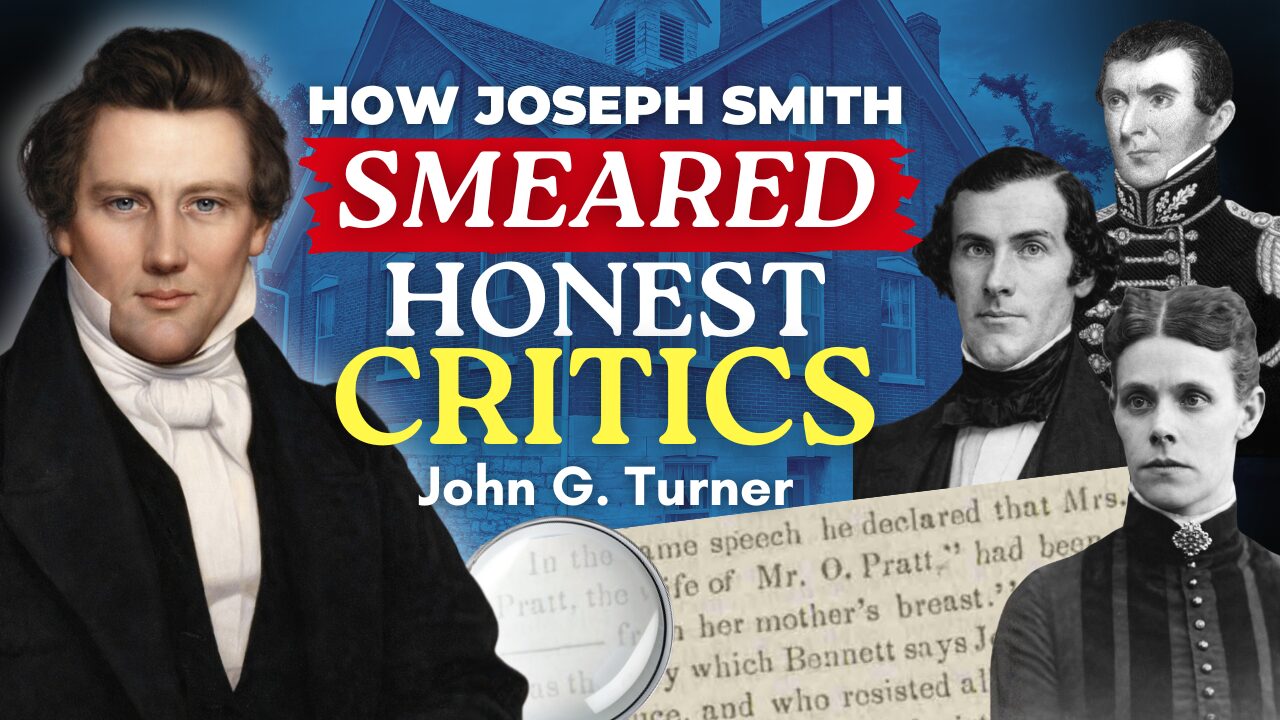
Thumbnail Credits: Main image of Joseph Smith by Unknown painter, from Community of Christ Archives (public domain); Other images in public domain including the Sangamo Journal; Background image of Nauvoo House taken by Julia Sanders
Originally published on mormonstories.org.
Transcript
Machine-generated and lightly edited. Click any timestamp to jump the audio to that moment. The audio is authoritative; please check it before quoting.
Introduction and Episode Overview
John Dehlin Hello everyone, and welcome to another edition of the Joseph Smith Podcast, brought to you by Mormon Stories. My name is John Dehlin. It is February 18, 2026 and today we are on part 33 of our epic series with Dr. John Turner from the George Mason University talking about his book Joseph the Rise and Fall of an American Prophet. Buy it, Buy it for friends and family. It's my favorite Joseph Smith biography officially. Now that I'm 33 episodes in, Fawn Brody is probably saying from her grave, John, you didn't give me 33 episodes. That's fair. So maybe next we'll do 33 episodes with Fawn Brody posthumously. I don't know how we'll pull that off.
John Turner John Turner, if you could do any series of episodes with Fawn Brody, that would be a landmark indeed.
John Dehlin Really quickly we tried to start chapter 26 called David 1842-1843, last episode. But we ended up dedicating the entire episode to, we'll say to some, the Whitney family scandal, the Whitney family tryst, but basically addressing Karen Hyatt and Michelle Stone and the Joseph Smith polygamy deniers case that Joseph Smith was not seeking a tryst with teenager. It's Sarah Whitney. Right. And you know her, her parents. We did a whole episode on whether or not it's reasonable to conclude that when Joseph Smith was in hiding in 1842 that he asked the Whitney parents to bring their daughter with them to provide him with succor or sucor. I'm not sure how we pronounce that word, but really we did an hour of John Turner digging into the source documents to show us how a professional historian deals with source documents and responds to a very popular theory or some say conspiracy theory. And for me, John Turner, it was a really special hour. Thanks for doing that. Now we are going to get back to your chapter 26. We are in Illinois. Joseph Smith is running from the law. And when I say the law, I mean specifically Missouri because it's alleged that Joseph Smith and Porter Rockwell attempted to assassinate Lilburn Boggs in Missouri. Now Missouri is sending anyone they can to capture Joseph Smith and Porter Rockwell to bring them back to Missouri to be tried. We've already talked a lot in last episode about the legal issues and now we've got the rest of your chapter to talk about. And tell me if the first place to start is with John C. Bennett and his ongoing attempts to smear and discredit and destroy the Mormon movement in Illinois.
Joseph Smith Consolidates Loyalty Against Bennett
John Turner Yeah, so it's Bennett now from the outside connected to that is, Joseph needs to ensure the loyalty of as many people on the inside to help shield himself from Bennett's attacks. And I think the two key characters here are Orson Pratt and Sidney Rigdon. So this, in many ways, these are such strained but also strange relationships in these months, because on the one hand, Joseph is irate at Orson Pratt and Sidney Rigdon for wavering in their loyalty or maybe believing what they are hearing from Bennett about Joseph's proposals, alleged proposals to their wife and daughter, respectively. So on the one hand, Joseph's mad at them. On the other hand, Joseph wants to keep them in the fold. And so it's a really delicate. There's a lot of delicate, sometimes indelicate maneuvering on Joseph's part during these weeks.
John Dehlin And just to kind of refresh people, because we talked about this now a couple episodes ago, we talked about Joseph propositioning teenager Nancy Rigdon while her father, Sidney Rigdon, was in another state, and her declining or denial of Joseph Smith's advances. So that we covered in a previous episode. Correct, Correct. And that's. That's a pretty well documented allegation on the part of Nancy Rigdon and I guess John C. Bennett and Sydney Rigdon. Correct.
John Turner So correct. So we know that shortly after that alleged proposal, Joseph's relationship with Sign Ridden becomes very strained. There's evidence for that in Joseph's journal. And then John C. Bennett gets his hands on a letter that Joseph wrote to Nancy Rigdon in which he tries to overcome her biblical and moral objections to polygamy.
John Dehlin And that's known as the Happiness Letter, which we've done several episodes on. And we even have an LDS discussions episode on the Happiness Letter, which I highly recommend. Make sure Julia shares that as well. But again, I like to remind people that the sentiment in the Happiness Letter that basically what's wrong in one circumstance can be right in another, or whatever God commands is right, was alluded to when Joseph Smith met with the Relief Society a few episodes ago in 1842 in the upper room of that red brick store. Am I right about that?
John Turner Well, you're correct. And you can find that that basic teaching that what matters most is what God's living oracle say. Now, you can find that basic sentiment in other 1842 sources. So it's not. It's not confined to that one sometimes disputed letter.
The Orson Pratt Crisis and Sarah Pratt Allegations
John Dehlin And then the second story, again, we've already talked about Orson Pratt in a previous episode. You know, the allegations that Joseph propositioned his wife, which sent Orson Pratt into sort of a suicidal wandering where they had to create a search party. And they find him sitting on a log somewhere, literally suicidal. Did he write. Did he pen a suicide note? Am I remembering that right?
John Turner He penned what amounted to a suicide note. He says, where I am, henceforth, it matters not. I'm a ruined man. My sorrows are greater than I can bear. And so when the note was found, people interpreted it as a suicide note. And Joseph, we'll see. He later alludes to the fact that Orson Pratt has attempted to destroy himself.
John Dehlin And Orson Pratt's in this pickle because he there. There's two devastating options. He either has to believe John C. Bennett's account that Joseph Smith propositioned his wife, or he has to believe Joseph Smith, the prophet's account that his wife, what, slept with John C. Bennett. Is that right?
John Turner Correct.
John Dehlin Has to be true.
John Turner Right. Well, and that's because. And this is a little bit hard to get at, but what seems to have been the case is that Sarah Pratt, Orson Pratt's wife, she seemed to have accepted and corroborated at least the substance of what Bennett was alleging. Because Joseph doesn't just say, no, this is completely ridiculous. I would never do such a thing. This is a fabrication. What he does is he also smears Sarah Pratt's reputation. You know, he basically calls her a whore, and he gets statements and publishes statements from others that allege that Sarah Pratt was sleeping with Bennett.
John Dehlin And so we have. These are two really important examples of women declining Joseph Smith's polygamous and or sexual advances. And when they do and are willing to speak publicly about it, Joseph and the church deciding that the right approach or response to people telling the truth about something problematic in the church is to devastatingly smear and annihilate their character in the press.
John Turner Correct, Correct.
John Dehlin So now what we have is two of Joseph's very closest allies, Sidney Rigdon, who was one of the founders of the early Mormon church and Joseph's staunchest defender of his character during the Missouri time period. He's on the outs with Joseph. And then we have Pratt. Was Orson Pratt, a pretty important central figure in Joseph's inner circle?
John Turner So he's an apostle and 12 apostles. Yeah, yeah, he's an apostle. And Pratt, he's also, along with his brother, Parley P. Pratt, they are, you know, they are. They're sort of Joseph's conversation partners and, you know, theological interlocutors. So, yeah, these are. These are men who had deep bonds of affection for Joseph and had been with him for a long time. And partly because of that, they are they very much feel themselves in a quandary. I think on one level they feel hurt and betrayed by Joseph at the same time. Neither man wants to definitively break with him. And I think in the end they're willing to awkwardly stick with him and perhaps hope that on some level the events were a misunderstanding.
John Dehlin If you add the fact that John C. Bennett was co president of the church, mayor of Nauvoo, at least at some point, one of Joseph's closest allies, this is three massive defections all happening in the same month, you know, right. In, in a critical time period. So I would think that this would be very, very alarming to Joseph as potentially fatal to his movement. So how, how, what, what playbook or what plays or what approaches does Joseph Marshall with his followers to respond to Bennett, Rigdon and Pratt?
John Turner Right. So basically Joseph and other church leaders, they recruit as many sort of high ranking church members, loyal church members as possible to sort of mount a counter attack in speeches and in the press. And Joseph's goal, he does want to bring Orson Pratt and Sidney Rigdon back into the fold, but he's also willing to fight hard and fight dirty. He's going to discredit them and their families to the extent that he has to. So how's it dirty? I think it's pretty dirty. So in the case of Pratt, you know, the other apostles attempt to, to get Pratt to repent of his opposition to Joseph, which has at least been semi public for a stretch of time. But Pratt, you know, Pratt is kind of wavering and he does not join this public defense of the prophet and Joseph at a public meeting. I think this is late August, early September of 1842, he just tears into Pratt, you know, he sort of mocks him. You know, Orson Pratt has attempted to destroy himself, caused all the city almost to go in search of him. Basically Joseph denounces him as a Judas like figure. And Pratt is at this meeting and he's, he's sort of sitting there and taking it. Church leaders also publish affidavits that include statements about Sarah Pratt's character. One woman asserts that she saw Bennett taking his hands out of Sarah Pratt's bosom and lying down over her. Another man testifies that Bennett told him that Sarah Pratt made a first rate go. So Joseph puts this kind of scurrilous stuff into print and question about that. Yeah.
John Dehlin So is it possible that both things are true? That Joseph did proposition her, Sarah Pratt, but that also Sarah Pratt was having an affair with John C. Bennett and that someone was caught Touching her boob. Like, is it, is it possible that she was a harlot or a woman of ill repute or, you know, had loose morals or whatever?
John Turner So sure, that's possible or plausible. So I think that's a great question.
John Dehlin Let me even, let me give you time to think about it, but ask it in a different way. I can imagine a scenario, you know, this hippie free love that like John C. Bennett and Joseph and Brigham and a few of these, they all just start getting excited about the idea of free love. This is going to become like a proto hippie colony where people just start getting excited about free love. And lots of people are experimenting with lots of other people, all on the down low. And you know, and maybe Sarah Pratt is, is one of the people who kind of gets into this. So. And Bennett and Joseph are kind of trying to pass her around.
John Turner I'm going to say it's possible, but I have two responses. Number one, I don't think it's necessarily probable. I think because we know that Joseph did propose marriage to a number of already married women. Even if the details of Bennett's allegations aren't correct, the substance seems to have been and Sarah herself seems to have confirmed them, so there's that. In terms of whether she was also sleeping with Bennett, I just don't find, you know, I, I just don't find a lot to corroborate that besides these statements that the church publishes against her. Secondly. So let's even presume, let's presume the worst about Sarah Pratt's character and that, you know, she's also having sex with Bennett. Even if that's the case, I think it's cruel to publish this testimony, especially in light of Pratt's, Orson Pratt's mental state.
John Dehlin Yeah. But also for the prophet of God to call her publicly a first rate go.
John Turner Sure.
John Dehlin And so let's just say that that's horrible no matter what. Let's pull it back one, and say that Joseph just made this up. You mentioned fighting dirty. That's a pretty horrendous allegation that this woman would deny Joseph's advances. So Joseph's already predatory, but then when she tells the truth, he makes up a vicious lie and then smears her. That's some really deplorable behavior on the part of God's chosen prophet on the earth. If it's true. Correct.
John Turner Correct. I definitely think this is a deplorable course of action. And I do think it's fair to say that this is happening under Joseph's direction, the church published basically a collection of affidavits refuting and sort of responding to Bennett, including these statements about Sarah Pratt. They certainly would not have been published had Joseph not wanted this pointed critique of her character. Now, given, given all of that, you would think that Orson Pratt would have just spoken with Joseph Smith and left Illinois, right. But that's not the case. He proclaimed in print in a letter that he wrote at the end of September, we intend to make Nauvoo our residence and Mormonism our motto. We, you know, Sarah, my wife and I, they did not, in the end, break with Joseph Smith. And we don't know, you know, we don't know exactly why, you know, they may. They. He may have been willing to accept that, you know, Joseph's need to fight back against Bennett, crazy as that seems. And I think. I mean, I just think it's a. It's a really sad. It's a really sad episode. And like I said, I think this is Joseph fighting dirty.
John Dehlin This is. This is one of the exact types of apologetics that are often used, whether it's the polygamous women who ultimately said they were really. That an angel told them they should be polygamous with Joseph, or they had positive things to say about polygamy with Joseph later, or the fact that the three witnesses of the Book of Mormon never ultimately abandoned their testimony of the Book of Mormon. How do you account for the Pratts, all of them, all three of them just not bailing? Like, the only thing I could think of is either Joseph was able to have them have spiritual experiences that made them stay or that they were, like, bought off. I know that sometimes Joseph bought land for people or. Or maybe a combination of buying them off and making them believe that spiritually, Joseph was still being led by God. Because it seems almost impossible to explain the. The Pratts sticking around Naboo.
John Turner Well, especially. Especially Sarah Pratt, perhaps, but Orson too. So, you know, it takes some months, but in early 1843, Joseph sort of gets to the point of almost entirely having made amends with. With Orson. Pratt. Still tells Orson, Sarah lied about me. I never made the offer, which she said I did. And he advises Orson to divorce Sarah and raise a new family. But he promised not to throw it in Orson's teeth if he stayed with Sarah. And this is when Joseph is restoring Orson Pratt to his position in the quorum of the 12. Orson does not take the prophet's advice about his marriage. This is in minutes of the quorum of the 12 from January of 1843. But they're both re baptized in really cold water in January of 1843, and they're back in the fold. So exactly why, we don't know. Their faith is clearly in the movement, in the church, in Joseph. It's incredibly strong. Strong enough to overlook great offenses.
John Dehlin Yeah. I mean, clearly Joseph continues denying that. That he ever propositioned Sarah Pratt. So that's got to be part of. Part of the explanation. And then Joseph is very. I mean, that's a pretty big deal to kick someone out of the quorum of the 12, but then bring them back into the quorum of the 12. Clearly, Pratt valued being one of the top leaders in the church. And then, yeah, we have. If Warren Jeffs can imbue loyalty with his followers or even Jeffrey Epstein with his. We just have to always remember how resilient religious belief can be. Having said that, it just seems beyond the pale that Joseph Smith would counsel Orson to divorce his wife. And. And then I almost see that rebaptism is humiliating. Right. Like, it's basically Joseph forcing them to make some sort of public repentant act for what had to have been framed as their disloyalty and lies. Quote, close quote. About the prophet.
John Turner Yeah. I think in a way, it's. The Rebaptism is a way for everyone to try to move on and make. Make a fresh start.
John Dehlin But Joseph wants it re. Baptized, right?
John Turner No, no, no. But. Well, fine. It's a way for them to sort of make a fresh start with him. I mean, there's some. You know, there's some other ironies in. In this story that Orson subsequently practices plural marriage. Brigham Young.
John Dehlin Does Joseph promise him that he'll get his own piece on the side, so to speak, because we know that both Warren Jeffs and Joseph Smith would often reward people that would buy on to the polygamy with their own wives.
John Turner Well, so I don't. I don't know when they first discuss it. That's a great question. But Pratt. Orson Pratt. Brigham Young chooses him, even though he and Brigham Young have some. Some fierce clashes. Brigham Young chooses Orson Pratt to make the first public acknowledgment and defense of Polygamy in 1852 in Salt Lake City, which is kind of remarkable. And then Sarah Pratt becomes very alienated from her husband, precisely over the issue of plural marriage, and feels neglected by him when he marries much younger women. And so they eventually separate several decades later. So there's a lot of twists and turns in this story. And, you know, this isn't this Isn't really the. The end.
John Dehlin So in a way, Joseph does successfully end up driving a wedge between Orson and Sarah Pratt.
John Turner Yes, you could. You could say that. I think his first plural marriage is in 1844. Can't remember if it's before or after Joseph's death.
John Dehlin I believe that Joseph promising women to other men is part of the way he's able to keep this practice alive, this quid pro quo. Give me your daughter, I'll give you a woman sort of arrangement.
John Turner Yeah, I think Orson Pratt's first. First plural marriage is after Joseph's death. So there's some mystery here as to why his faith is ultimately resolute.
Sidney Rigdon, Emma Smith, and the Postal Affair
John Dehlin Okay.
John Turner Perhaps we could also talk about Sydney enact Nancy Rigdon, because that resolution actually is a little bit different and a little bit murkier. Sidney Rigdon. It's a little. The situation's complicated because there's a man named George Robinson who is Rigdon's son in law and one of Joseph's former scribes. And he collaborated with Bennett in the spring and summer of 1842 and publicly broke with Joseph and the church. So Joseph is deeply suspicious of Rigdon's loyalty going forward. Rigdon tries to put the conflict to rest. He. Before a Sunday meeting in Nauvoo, he shares that one of his other daughters, Eliza Rigdon, who I think is younger, nearly died during a recent illness. And when she recovered, she urged her father to remain faithful in the cause and also warned that if her sister Nancy denied the faith, she would be damned. It's kind of a. It's quite a thing for your sister to say upon recovering from a serious illness. But Rigdon was publicly denying any rift with Joseph. He was denying that he had called Joseph a fallen prophet. But then Bennett published the happiness letter in a newspaper. And probably at Joseph's request, Rigdon wrote what I call a pretty mealy mouthed response. He observed in a published statement that the letter wasn't in Joseph's handwriting and that it was ungallant. I forget the exact word used, but that Bennett shouldn't have published it. Now, that wasn't much of a denial because the letter wasn't in Joseph's handwriting. It was in the handwriting of Willard Richards.
John Dehlin And so Joseph noticed a known scribe to Joseph.
John Turner Known scribe to Joseph.
John Dehlin Joseph rarely wrote his own letters.
John Turner Exactly. So Joseph noticed that Rigdon's response wasn't exactly a full throated. Yeah, full throated defense. And so he proclaims publicly as to all that Orson Pratt, Sidney Rigdon, or George W. Robinson can do to prevent me, I can kick them off my heels. And when they publish these affidavits that include those scurrilous statements about Sarah Pratt, they also include a statement from church member Stephen Markham who claims to have seen Nancy Rigdon and Bennett in a compromising position, basically saying that they were having sex. And so the church publishes this in a broadside. And Rigdon, to his credit, in my opinion, did not simply ignore this attack on his daughter's honor. He wrote or he signed an affidavit stating that Stephen Markham is not to be believed and had made a false statement. And going forward, Joseph, he is just, he. Rigdon doesn't break with him. But Joseph is just really uneasy about Rigdon's loyalty. And so there's just all sorts of back and forth between, between the two men for months on end.
John Dehlin And I'll ask the same question about Nancy that I asked about Sarah Pratt. Is it possible, is it plausible that. That Nancy Rigdon had sex with John C. Bennett? Because if not, that's a second deplorable lie to smear and cover up. To smear someone who's telling the truth while covering up your own really bad horrendous behavior.
John Turner So again, I mean, is that possible? I suppose it's possible. I just don't think it's probable. And I mean, I don't have, I don't have any deep knowledge of Nancy Rigdon's character. We certainly know that Bennett was trying to sleep with women because there are women in Nauvoo who confess that they have slept with him. Could he have approached Sidney Rigdon? It's possible. Would Bennett have been likely to have approached the daughter of a really high ranking church member as opposed to the, you know, somewhat less prominent women whom he seems to have approached? I'd say probably not.
John Dehlin So that never stopped Joseph.
John Turner Yeah, yeah, well, that's true. But Joseph I think was even, I think he's a bit more brazen even in a way which is, which is saying something. It's saying something. So no, I mean I, I think this is probably just a smear.
John Dehlin Okay.
John Turner Then attempt to discredit her.
John Dehlin And then, then that, that is truly deplorable. If it's, if they made up that smear on Nancy Rigdon because she told the truth and then Joseph was okay with his followers smearing her, in this case, Markham. That is a really awful thing that I think should take, we should take note of it also. Emma gets involved in not only Rigdon, but in the, in the post. Post Office affairs of Naboo. Do you want to talk about that really quick?
John Turner So Emma, during these. During these months, is a stalwart supporter of her husband. She does not believe the accusations against him. She in particular seems to have sided with him against Sidney Rigdon. In a way, this. This seems a bit petty. Rigdon, as of fall 1842, was Nauvoo's postmaster, which his son in law who had broken with Joseph had previously been. So Joseph accused both Rigdon and son in law of corruption, stealing mail, meddling, giving letters to John C. Bennett. And Emma sides with Joseph in this postal kerfuffle. Rigdon defends himself. Joseph tries to get Rigdon's job as postmaster, as if he doesn't have enough titles in Nauvoo. That doesn't pan out.
John Dehlin Okay, so, yeah, there's just a general concern that maybe Sidney Rigdon was reading Joseph's letters, right?
John Turner Yeah, There's a concern for security of the males.
John Dehlin Yeah. All right. So Bennett publishes his book History of the Saints. We've referred to that in past episodes. You write. I love what you write about Bennett being a critic without credibility. Do you want to read that part?
John Turner Sure. In the end, Bennett was a critic without credibility. It was easy for church leaders to expose him as an adulterer, womanizer, and fraud because he was all of those things. As I point out, Rigdon and Pratt would have been more dangerous, incredible antagonists, which made Joseph's vendettas against them risky.
John Dehlin And if you. I've asked you this in previous episodes, but if you had to give like a percentage of like corroboratable factual allegations or recountings of history versus just lies and made up fraud. What percentage of truth are you giving to History of the Saints and should people read it regardless?
John Turner Well, that's a great question. I should now be ready for your question, John. I should skim through. It's like 250 pages. I should skim through it again so I can give a satisfactory percentage answer. I'm going to have to resist that again because it's been a while since I've skimmed through it. I will say, should people read it, some of the writing's actually pretty punchy and good. Better than, you know, Bennett wasn't bad with the pen. I would say just people should take it as a historical source with a lot of care. And this is true of so many sources in early modern history, favorable or unfavorable toward Joseph Smith. The best thing to do with a source like that and with most sources is See what's in it and see what cooperation you can find for particular, particular bits. For instance, as I think I said before, Bennett is not a reliable source on the Nauvoo Endowment. But readers who are interested in the endowment as it develops in Nauvoo, particularly after Joseph's death, there are some other early sources that are very illuminating. So, basically, yeah, I think people should read it. If they dislike Joseph, they'll probably enjoy reading it. If they really admire Joseph, they probably won't enjoy reading it. If they want to cite it, they should find other sources to corroborate its claims.
John Dehlin Well, I'll be eternally salty at the church's tactic of discrediting all critics as anti Mormons to make people wanting to learn the facts not want to read certain contemporary sources. Early, early sources. I think there's a lot of valuable information to be gleaned there. Even if people, you know, early critics slash anti Mormons, you know, had bias, sometimes it's the people that were hurt the most who take the time to write stuff down and to share what really happened. And so, of course, because they were hurt, they're gonna make criticisms. But the fact that they're making criticisms doesn't mean that they're lying or that, you know, they're. What they write should be discredited and discarded without even review and careful consideration.
John Turner Well, the other thing I'd say about that is one thing that I think everybody in a way, should be grateful for is Bennett does get him get his hands on some relevant documents in 1842, including the Happiness letter that we've talked about. That's something that Bennett publishes first in a newspaper. Bennett also gets his hand on affidavit from Martha Brotherton. So in addition to what Bennett produces on his own, he's in a position to get some documents from some of Joseph's other other critics.
How Joseph Smith Handled Dissenters and Critics
John Dehlin Okay, all right. So you give the impression in your book that Joseph pretty much handles. I mean, on the one hand, we see that the way Joseph dealt with these dissenters is to smear them into oblivion, using an army of his followers by making up lies and smearing and discrediting them. And that's the stick. The carrot is to offer them things, to try and keep them in the fold, which, at least in the case of Pratt, he's able to do. He's able to get Pratt to come back into the fold. But you give the impression that he basically deals with this effectively and. And is kind of feeling good. You know, an Amazon board and the main core leadership in Nauvoo is still intact. And he weathers the Bennett Pratt Rigdon scandals as Teflon Joseph, basically.
John Turner Now that I think that's fair, I think I'd also say that Joseph, in the case of all of the people that you mentioned, even including Emma, ultimately there are these just also intense bonds of friendship. And when these men and Emma, they both feel this almost unshakable bond with Joseph Smith. And I can imagine there are a lot of heartfelt, long conversations that we don't have records of in which Joseph, as he had once done with people like Parley Pratt and Oliver Cowdery before that relationship became unsalvageable. A lot of long, heartfelt conversations in which people reaffirmed their bonds for each other.
John Dehlin All right, so the remainder of this chapter primarily talks about Joseph being on the run, but then some. Some final happenings in. In Springfield. Is that right? In correct?
John Turner So to refresh the memories of listeners, Joseph's on the run because he is wanted as an accessory in the attempted murder of former Missouri Governor Lil Burn Boggs. People have arrested him in Nauvoo. He was able to get off via a writ of habeas corpus before a Nauvoo court, but he's still facing possible extradition. And what Joseph doesn't want is to have this resolved in Missouri. And so church leaders essentially engage in some dialogue and negotiation with politicians and lawyers and justices in Springfield. And Joseph's able to get assurance
John Dehlin that
John Turner if he can get a hearing before an Illinois court, he's going to be set free and is going to be able to put this legal saga behind him. And the reasoning is Joseph is not a fugitive from justice in Missouri. Even if he had instructed Porter Rockwell to shoot Lilburn Boggs, it wasn't a crime committed in Missouri. He hasn't fled from Missouri for this alleged crime. And so Joseph gets assurances from incoming Illinois Governor Thomas Ford and others that he should come to Springfield and file a position to have a hearing before a US Court in Illinois. And so Joseph comes out of hiding and travels to Springfield in late December.
John Dehlin And it almost. I remember something similar in the Independence time period. It seems like Joseph kind of enjoys holding court. When he shows up into a town that you would think would be hostile towards him, he ends up dining with powerful people. Influential people, like in this case, Mary Todd Lincoln are showing up just to see the prophet and to see what the hubbub is about. And he. He almost seems to charm the powerful, influential people who you would think would be oppositional towards him.
John Turner Yeah, so that's absolutely right. So he's notorious on some level, but he's just also an object of curiosity and celebrity. And in those days, you know, if you're going to Springfield for a hearing, you don't go by private car that gets you there in a few hours and you don't go in a back entrance, you know, so he's, he's going and he's staying overnight and he's taking meals in taverns and he's visiting people's houses along the way. And everybody knows that this is, is transpiring. So news, you know, news circulates and people turn out to see him. And Joseph's also intensely sociable. He loves this sort of thing. He just likes talking to people. He'll talk about anything all night long. And so, yeah, people turn out, turn out to see him and he doesn't disappoint.
John Dehlin And he has some engagement with, with Ford. Is he governor or is he soon to be governor? Ford seems to sort of give him a little bit of an ominous warning or some friendly advice, but also expresses some concern about the future of the Nauvoo Charter. Is that worth mentioning?
John Turner So, yeah, so Ford, this was already like Mormonism was already a big political sort of hot potato in Illinois politics. And Ford is a Democrat. And generally the Democrats had been more supportive of the Mormons than the Whigs, But Ford had suggested that the powers granted by the Nauvoo charter, some of them at least, were objectionable. Ford wanted some amendments to the Nauvoo Charter, but then he receives Joseph in a very friendly way. He sort of jokes that he expected Joseph to have horns coming out of his head, but he's actually a pretty good looking guy. And then after this case is resolved in Joseph's favor, Ford warns Joseph to refrain from all electioneering. And Joseph not very straightforwardly says, oh, no problem. That's what I've always done. And he adds that the Mormons vote in with unanimity, not because he tells them to, but because they're going to vote against their enemies at the ballot box. So, you know, that was a little bit of an ominous warning for the future. But really Joseph gets quite a warm, bipartisan reception when he comes to Springfield. I think that's also a testimony to the fact that he really has been able to successfully fight back and discredit John C. Bennett.
John Dehlin Yeah, it's worth mentioning that Joseph gives some mixed messages about Africans and slavery. Is that worth mentioning really quick?
John Turner Sure. So you know, when Joseph is traveling and people come out to chat with him, they ask him questions on anything. And Joseph, you know, he's, he's willing to engage. So at one of these dinner parties, maybe at a couple of them, the subject of slavery and the future, what he envisions for the future of black Americans, that comes up. And Joseph, I mean, Joseph's views on race are pretty complex. I would say that by time you get toward the end of his life, he is pretty resolutely anti slavery. That is always a delicate matter in conversation because most white Northerners who are opponents of slavery are also not friendly to toward abolition. I think white Americans across the board, they have a fear of abolitionism as something radical and that something that's going to bring about both social unrest, violence and racial mixing. So Joseph is at some pains to be anti slavery and well disposed toward black Americans, but also to distance him from sort of the taint of abolitionism. So among the things that he says is that, you know, he would never vote for a slaveholder. So he's anti slavery, but at the same time he would confine black Americans by strict laws to their own species and put them on a national equalization. Now, that's a little bit, you know, that's a little bit hard to parse, but essentially he's opposed to slavery. He thinks that on balance, black Americans should have equal rights, but at the same time he wants separation. So along those lines, Joseph, as mayor of Nauvoo, enforced laws against interracial marriage. On one occasion, he fined two black men who apparently attempted to marry white women in Nauvoo. I don't even, I can't quite remember whether I got that into the book or not. I probably did somewhere. So that's a sense of the way that Joseph is approaching issues of race as he moves toward the end of his life.
A Contemporary Parallel and Joseph's Legal Victories
John Dehlin Well, let me bring you in on a contemporary. I don't want to say scandal, but I'm surprised I haven't already asked you about this. Recently, Morehouse College, which I think is a historically black university, unveiled a portrait of Joseph Smith. And I assume that the Mormon Church donated money to Morehouse College. I think they have some sort of museum where they have like, portraits of civil rights leaders. And if my memory is correct, a few years ago they included or released a portrait of former Mormon president Prophet Russell M. Nelson. But recently, to add, I don't know, for some insult to injury, they recently unveiled a portrait of Joseph Smith. And one of the, one of the speakers I guess Dean Lawrence, Edward Carter, who is dean of the Martin Luther King Jr. International Chapel, I assume at Morehouse College, he basically praised Smith as Lincoln before Lincoln. And so I was wondering, and I know Lincoln has said some controversial things for and against slaves and black people too. So maybe that's not the compliment everybody assumes that it is. But as a historian, as a 19th century historian, John Turner, what do you think about that description of Joseph Smith as Lincoln before Lincoln?
John Turner Well, I mean, that's, that's quite a nice compliment for Joseph Smith. So I think this stems from the fact that Joseph did adopt a pretty bold anti slavery platform when he ran for president in 1844. And a lot of people who were anti slavery at the time favored very gradual forms of emancipation. Joseph, you know, when he ran For President in 1844, I think his idea was that Congress would purchase the freedom of enslaved people with revenue gained from selling western lands and that would abolish slavery by the year 1850. And, you know, at times Joseph talked about sort of resettling free black Americans in Mexico or elsewhere. I think in his presidential platform, you know, he didn't talk about that. So I'm not going to go so far as to say Lincoln before Lincoln, but Joseph's 1844 platform when it came to slavery actually was pretty bold at the time. He also, in, I think this is an 1843 conversation, I think it's in private. He talks about the fact that he sees alleged black inferiority as sort of environmental rather than inherent. He says they come into the, this is a quote, they come into the world. Slaves mentally and physically change their situation with the white and they would be like them. That's a pretty egalitarian statement. So if you, if you sort of just pay attention to some of these things right at, you know, right toward the end of Joseph's life, there's the, you know, there's reason for admiration. Now, I don't, I don't, you know, I guess that's my, that's my first response. I mean, the subject of Joseph Smith and race is really complicated in terms of the way he interpreted biblical passages, his concern for curses, skin color, lineages. But I think it'd be fair to say that, you know, Joseph on some of these issues at least he's moving in a much better direction, at least from our vantage point by the end of his life.
John Dehlin Love it. Thanks. Thanks for giving such a brilliant off the cuff answer. I didn't warn you I'd be talking to that because about that, because I Didn't know I'd be talking about it. So your book, this chapter ends with the sense that the saints Joseph, etc return kind of jubilant from Springfield back to Nauvoo, that Joseph and Emma quickly celebrate their wedding anniversary. And Pratt even makes reconciliatory sign of support to Joseph. Do you want to talk about that?
John Turner Sure. So you're quite right. Joseph is in a bullion triumphant mood in early 1843. His he's had his liberty affirmed by a US court in Illinois, so he's brushed off this threat of extradition in the Boggs case. He hasn't totally put to rest his qualms about Sidney Rigdon, but he's basically survived John C. Bennett's defection slash expulsion. He's still, you know, he's still on good terms with Emma and he's out of hiding, he's back at Nauvoo. And Joseph, he's feeling emboldened to move forward. And one thing that we haven't talked about in this episode so much is Joseph's plural marriages. Because after Joseph went into hiding In August of 1842, he took a break from new plural marriages, as far as we know. But now with his court case resolved, with Bennett kind of receding into the past, Joseph is ready to move forward in this area as well. And he's also going to decide to broach the subject of plural marriage to both Emma Smith and also to Hyrum Smith. And I can just tell everyone to hold on to their hats, their George Mason hats, their other hats, because next couple episodes are pretty explosive.
John Dehlin Oh, my goodness. I've already Pre read chapter 27 called Deep Water, and it had me wanting to flip tables. But before we end, I want to end with a quote or sort of a statement that Brigham Young is said to have made to Pratt, calling him a David. And I felt like that's one of the most telling. And this goes along with, you know, the account of Joseph recommending to to Orson Pratt that he consider abandoning his wife. But it seems like Brigham was pretty salty at Orson Pratt. Can you tell us this story and where the term David comes from and what Brigham meant by invoking it?
Joseph Smith's Use of Smear Tactics Against Honest Critics
John Turner Yeah. So Joseph, in a couple of letters in the fall of 1842, he referred to himself as David in the sense of his. Some of his friends, his friendships were with them, were akin to that between the biblical David and Jonathan, in which Jonathan, for instance, would put his loyalty to David above his loyalty to his father, the king. And the implication was that the first loyalty of people should be to Joseph in this circumstance. I actually think the quote that you're referring to from Brigham Young is actually a little bit. A little bit compassionate. He says what he's trying to say is we can welcome Orson Pratt back because all he had against Orson was when he came home from his mission, he loved his wife better than David. And that was something that Brigham Young could sympathize with. Brigham Young himself had a dream once that he recorded in his diary of seeing his first civilly married wife ride away with Joseph in a carriage. And I think. I actually think Joseph. I actually think Brigham had some empathy for Orson Pratt and realized this was an incredibly challenging, almost impossible situation.
John Dehlin So I guess I misread it because I understood it to mean that you should love the prophet Joseph and be loyal to him above all else.
John Turner Well, I think you could read it that. Sure, maybe you should read it that way, too. But I think Brigham is acknowledging that's. That is a lot to ask. And therefore we're not going to cast Pratt out forever. We can welcome him back because while he transgressed, his transgression is understandable.
John Dehlin Well, I mean, for me, what I was. What I was wanting to try and understand was kind of the heart and mind and soul of Brigham Young. And if there's anything, it's almost like in some ways, Brigham Young carried on the mantle of Sidney Rigdon, ironically, because in the 1830s, Joseph could do no wrong and Sidney was his full throated supporter. And while Sidney's devotion to Joseph Smith wanes, at least in part because of Joseph's interactions with Nancy, it seems like Brigham Young takes up that mantle and lives the rest of his life basically with the belief that Joseph, above all else, Joseph, before all, including your own spouse and children, if necessary.
John Turner Well, one.
John Dehlin Is that overstating it?
John Turner Well, that's a. I mean, that's a good question, John. I think I'd say at this time period, Brigham. Brigham has some. I do think he has some sympathy and empathy for Orson Pratt's dilemma. He recognizes it as a dilemma. You know, he has some other letters from the summer of 1842 that also seem to have some compassion for Pratt. At the same time, he bitterly locks horn with Pratt a few years later when he tries, when he's ready to reconstitute the church's first presidency. And one thing that Brigham Young. This is a story for another podcast, but one thing that Brigham Young takes away from the entirety of the Nauvoo years is that dissent can prove deadly
John Dehlin loose Lips sink ships, right?
John Turner Yeah. Well, and dissent has the potential to destroy a church leader and destroy the church. And Brigham's conclusion, which he says publicly, is that Joseph was far too tolerant of dissent, and he allowed dissent to persist and to fester and to grow in ways that imperiled himself in the church, and that he, Brigham Young, was not going to repeat that mistake. And that's Brigham Young. After the murders of Joseph and Hyrum Smith and after the church has been expelled from Illinois, it's not the Brigham Young from 1842 who does have, I think, more human compassion for what Orson Pratt is going through.
John Dehlin All right, well, for me, I am always wanting to try and draw parallels to how the Church of Jesus Christ of Latter Day Saints operates today. And for me, the title of this episode would be How Joseph Smith Smeared His Honest Critics. And, you know, for me, one of the main lessons that I took from chapter 26 was that what I would say, the modern LDS Church's approach of smearing its honest critics, you know, the reality of that, the reality of the past 30, 40, 50 years of the excommunication of Juan Brody, the excommunication of the September 6, of me, you know, the pressure towards Juanita Brooks, and, you know, the shuttering of the Leonard Arrington, you know, history, you know, the. The Camelot era of church history, just shows this repeated pattern of the Church going after and smearing and character assassinating its critics, even in recent times. Former Bishop Bo Euler recently talked about being his. His belief that he was counseled by church lawyers to not report a sexual abuser to the police, and he received an army of attacks by church apologists on TikTok and YouTube and elsewhere. I guess what I'm taking away in terms of a modern application to this chapter, chapter 26, is it can be argued that the roots of the Church's playbook around smearing and assassinating the character of its honest critics can be found in the 1842, 1843 time period, or at least can be firmly rooted in that time period as an example that current leaders can draw from. And I do want to give you a chance to respond to that before we close.
John Turner Yeah. Well, for better or worse, I mostly live in the early 1840s, which I don't know if that's a feature or a bug of my life. I think when thinking about the way Joseph responds to these circumstances, I think there's two things going on. In the midst of a crisis, there's a tendency for individuals to pursue courses of Action that they wouldn't normally think of as correct. And with the justification being we've got to do this for the survival of the institution and that sort of, you know, those sorts of blinders. I'm not saying Joseph had blinders because he's more at the center of things, but that's always so dangerous and can excuse people use that to excuse so many things. And then the, the second thing I'd say is Joseph in during these years, he is trying to keep secret things that he may see as morally justifiable, his plural marriages, but certainly things that he knows that the vast majority of other Americans and many church members would reject. And that, you know, I think that that leads him to make, make a lot of morally questionably choices.
John Dehlin Yeah, I should, I will add as a, as a closing point, there's so many names I didn't mention, including Sam Young, Natasha Helfer, Jeremy Runnels, Grant Palmer, Brent Metcalfe, David Wright, Margaret Toscano. There have been so many honest, truth telling scholars and activists who the church has silenced and or excommunicated over the years. You did make the point before this episode that that's a human reaction. It's a very natural, normal human reaction for organizations to smear and silence their honest critics. So we can't say that's uniquely Mormon or uniquely Joseph Smith or LDS Church.
John Turner No, I think that's true. And when I say that, I'm not saying that to go easy on Joseph Smith or the LDS Church, but it is, it is all too common. And yeah, that's, I mean that's, that's basically what, what I have to say on that. John de Lynn. I think, as I'm suggesting, Joseph is getting himself in deeper and deeper water. And to this point he has been able to overcome opposition to him. And that just becomes more and more difficult the closer we get to the end of the story.
Preview of Coming Chapters and Closing Remarks
John Dehlin And that's a great Preview for Chapter 27, which is called Deep Waters. Deep Waters. Deep water. Singular, 1843. And I'll just say again, that chapter had me flipping tables. It's a banger, as they say. So again, the book is Joseph the Rise and Fall of an American Prophet by Dr. John G. Turner. Please buy it for yourself and for others. There's an audiobook that's fantastic. I listened to that. Thank you. For those of you who donate to Mormon Stories or this podcast, we couldn't do it without you. If you want to see this podcast, continue this series with John Turner. Your donations help pay for us paying for ourselves and for John Turner. So Please go to donorbox.org Joseph Smith to donate to the series. We love your comments, questions, criticisms. We want it all. You can email us@mormonstoriesmail.com as well. Please let other people know about this. And most importantly, John Turner. Go Patriots. Go Irish. Go Aggies. Go Cougars. Thank you for your generosity with my audience. John Turner.
John Turner Thanks, John. Thanks to everyone for listening. Thanks for supporting this podcast and looking forward to our last few chapters.
John Dehlin Yeah, we're kind of almost done. Is it five, six more episodes?
John Turner I think we maybe have, I don't know, four or five more chapters, so it's crazy.
John Dehlin All right. Well, we're winding down and that's still a month and a half.
John Turner All right, Hang in there, everyone.
John Dehlin Thanks. Sean Turner. Thanks, everyone for joining today on Mormon Stories. Be good to each other. Be kind to each other. We'll see you all again soon on another episode of Mormon Stories podcast. Take care, everybody.
Transcript © 2026 John P. Dehlin. All rights reserved. Brief quotations are welcome with attribution and a link to mormonstories.org; all other use requires written permission.