Responding to Joseph Smith Polygamy Deniers
Listen on Apple Podcasts Spotify YouTube Download MP3
About this episode
Welcome to Part 32 of our series with Dr. John G Turner, based on his new book Joseph Smith: The Rise and Fall of an American Prophet.
In this episode, Dr. Turner response directly to modern claims denying Joseph Smith’s plural marriage to Sarah Ann Whitney. We revisit Chapter 26 of his book, carefully examining the historical record surrounding the 1842 letter often associated with Sarah Ann Whitney, the language of sealing and “fulness of blessings,” the land deed, and the broader documentary context of Nauvoo-era plural marriage.
We also engage with alternative interpretations, including arguments that question whether the letter refers to polygamy at all. Drawing on Turner’s scholarship as well as Karen Hyatt’s analysis, this discussion models how historians weight evidence, examine primary sources, and wrestle with ambiguity. What constitutes strong documentation? How do historians interpret silence, denials, and later public statements? And how should we think about the broader context of Joseph Smith’s practice of plural marriage in Nauvoo?
Along the way, we explore the legal crisis surrounding the alleged assassination attempt on Lilburn Boggs, the Nauvoo writ of habeas corpus, the Sarah Ann Whitney Letter, Public denials and private sealings, sham marriages and the case of Joseph Kingsbury, documentation involving the Partridge sisters and why serious historical inquiry requires both skepticism and careful contextualization.
We invite you to read Chapter 26 alongside this discussion and let us know your thoughts in the comments.
To watch Karen Hyatt’s video: The Worst Love Letter… EVER! click here: https://www.youtube.com/watch?v=KSdx1OiYfKM
To visit Karen’s website click here: https://josephtoldthetruth.org/
Let us know in the comments how you interpret the evidence.
If you’d like to help keep this project going, please consider donating to support this series. Your support makes long-form, in-depth historical discussion like this possible!
https://donorbox.org/josephsmith.
Purchase John Turner’s book here: https://yalebooks.yale.edu/book/9780300255164/joseph-smith/
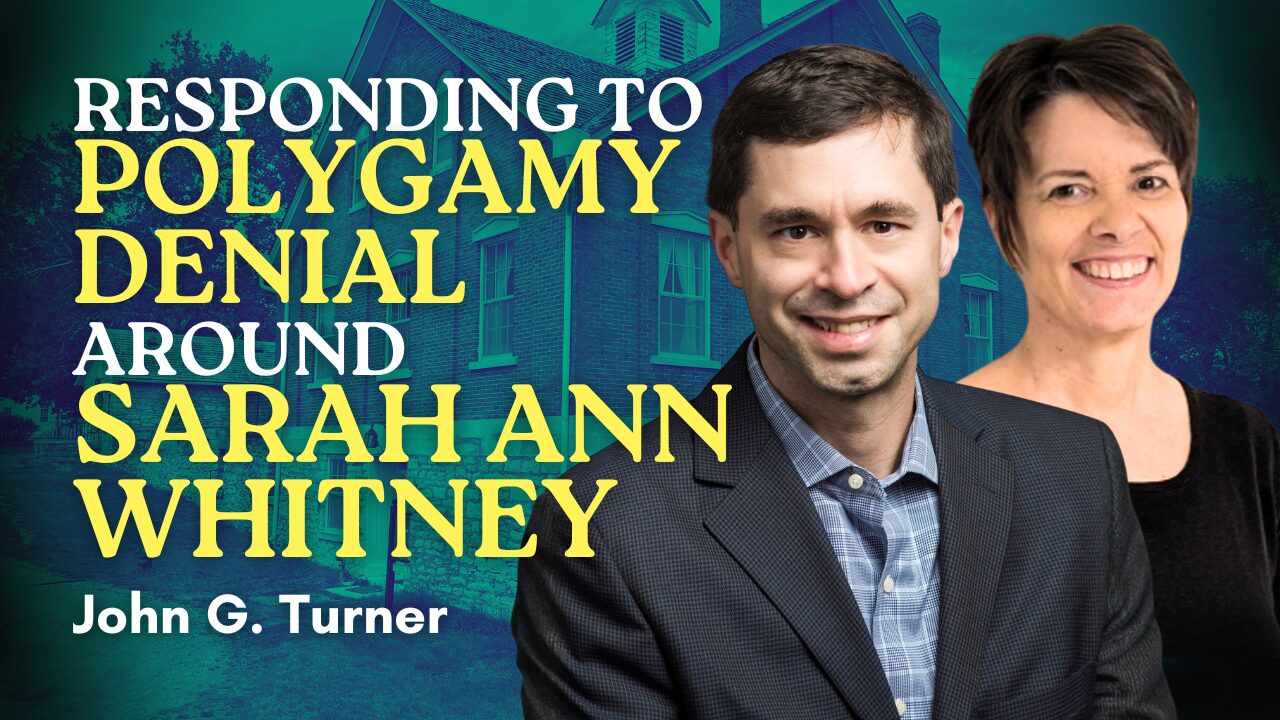
Thumbnail Credits: Main image courtesy of John G. Turner (author photo); Main image of Karen Hyatt courtesy of Karen Hyatt; Background image of Nauvoo House taken by Julia Sanders
Originally published on mormonstories.org.
Transcript
Machine-generated and lightly edited. Click any timestamp to jump the audio to that moment. The audio is authoritative; please check it before quoting.
Introduction and Setting the Stage
John Dehlin Hello, everyone, and welcome to another edition of the Joseph Smith Podcast, brought to you by Mormon Stories Podcast. I'm your host, John Dehlin. It is February 18, 2026, and today we are covering Chapter 26 of John Turner's book, Joseph the Rise and Fall of an American Prophet. We're going to be talking about more of Joseph Smith's polygamy. We're going to be talking about more of John C. Bennett's attempts to take down the church. We're going to be talking about Joseph Smith's views on race and on slavery a little bit. We're going to be talking about the state of Illinois having second thoughts about the Nauvoo charter. We're going to be talking about Joseph Smith as a vigilante hiding from the law and much, much more. I will just really quickly thank everyone who has donated to make this podcast possible. Please subscribe and like this channel on YouTube. Mormon Stories podcast. Please know that you can find this podcast in a series either on a playlist on the Mormon Stories Podcast YouTube channel or on Spotify. It's also integrated into the Spotify and YouTube feeds for Mormon Stories Podcast. This series is best consumed sequentially. And if you want to donate to keep this series alive, so you just go to donorbox.org Joseph Smith and you can become a donor to the series. And without any further ado, with my George Mason hat, bought by Mark. Right. Is Mark his name John Turner?
John Turner I think that's right.
John Dehlin A proud alumni of George Mason University, I bring to you back on the show, Dr. John Turner. Hey, Dr. John.
John Turner Once a patriot, always a patriot. We are the George Mason Patriots.
John Dehlin Have you ever made the NCAA tournament?
John Turner Basketball, I mean, John, that question shows a shocking lack of historical knowledge. It is the 20th anniversary of George Mason's run to the Final Four.
John Dehlin Final Four month in my lifetime.
John Turner In your lifetime, Granted, we haven't made the tournament for. For a number of years. We got off to a great start this year. We've been scuffling a little bit lately,
John Dehlin but what league are you in? I should know this, but I don't.
John Turner We are in the Atlantic 10.
John Dehlin Okay. Okay. All right. That's not. Is that the same thing as the acc?
John Turner That is not the same thing as the acc.
John Dehlin It's like a secondary. Atlanta Conference, basically.
John Turner Right, Right.
John Dehlin I give grief to Notre Dame and apparently George Mason, so that's okay. It's Go Patriots.
John Turner Yeah, we're. We are really, though, top of the line on Mormon history, apparently.
John Dehlin Clearly. All right, John Turner, how do you want to begin today, I think it
Joseph Smith as a Fugitive in 1842
John Turner might be good to begin by sort of resetting the stage. So this chapter starts in August of 1942. Joseph Smith is, at the time, what I think I would call a fugitive from injustice. So he's a man on the run. The state of Missouri wants to extradite Joseph as an accessory to the attempted murder of former governor Lilburn Boggs. And a couple of men went to arrest Joseph and the alleged shooter, Porter Rockwell, in early August of 1842. Joseph was able to challenge that arrest by seeking a writ of habeas corpus from Nauvoo's municipal court. I have to ask listeners just to bear with the legal minutia for a minute or two, because this is. This is significant for the rest of the Joseph Smith story. Essentially, if someone is arrested, they can petition a court for a writ of habeas corpus that essentially asks a court to determine whether or not their detention is lawful, not really whether they are guilty of an alleged crime. But have proper procedures been followed? That's most typically the issue that is at hand. When the city of Nauvoo received a series of charter privileges from the state of Illinois in the early 1840s, one of those was that the city's municipal court could issue writs of habeas corpus in matters pertaining to city statutes. That's a key point. That meant if someone was charged with violating a city law, that person could challenge whether or not he or she had been properly arrested. Now, in the wake of the bog shooting, Joseph knew the law would be coming for him at a certain point when suspicion started to swirl around him. And the Nauvoo city council prepared for this eventuality by passing legislation that expanded the city's municipal court's power to grant writs of habeas corpus, they now claimed the authority to issue such writs when individuals were arrested on alleged violations of state or federal law also. So essentially, what the court wanted to or what the city council wanted to do was to shield Joseph or other church members from being arrested and dragged off to other jurisdictions to face trial.
John Dehlin Now, like Missouri.
John Turner Like Missouri. Now, astute listeners may be asking, could his city council simply claim that power? And my answer. I'm not. I'm not a legal historian. My answer is probably not. You know, a city could not just shield people from alleged violations of other of state or federal law. However, that asserted power by the city of Nauvoo was never tested in court. It did function to get Joseph off the hook. When the lawmen initially came from him, for him in early August of 1842. And then he went into hiding for months to avoid subsequent arrest and extradition. And I kind of went into the legal weeds a little bit because this is going to come up repeatedly during the last two years of Joseph's life. Life. Joseph seeking a legal method to protect himself from arrest and punishment either in Missouri or in other parts of Illinois.
John Dehlin And we mentioned this last time, but just to reiterate your probability percentage, John Turner, that Joseph either directly or indirectly was supportive of, of or Porter Rockwell making an attempt on Boggs's life. Your, your, your guess as to the likelihood of that. In other words, the guilt, you know, was Joseph complicit in your opinion, or do we just not know?
John Turner I think Joseph was only really guilty of celebrating.
John Dehlin Okay.
John Turner So if pressed, I'd say, I would say no, because Missouri, you know, local authorities in Missouri did try to get Rockwell indicted for the crime and they could not rustle up sufficient evidence to do that. So I'm going to say innocent until proven guilty. Joseph definitely was happy along with others in Nauvoo when they heard that Boggs had probably been fatally shot. So that's why I'm calling Joseph a fugitive from injustice. And the reality is, Joseph, he had good reason, he and his supporters had good reason to be concerned that if he was taken back to Illinois, somebody might kill him. And Missouri, Missouri, sorry. If he was taken back to Missouri, somebody might, might execute frontier justice on him. And non Mormon politicians and judges in Illinois, they were sympathetic in this case to Joseph's concerns and fears. And that's one reason why this ultimately plays out in, in Joseph's favor.
John Dehlin And so do you have a similar answer about whether you think or reporter Rockwell actually shot bugs, you think insufficient evidence to draw a conclusion?
John Turner I do. I mean, I guess I would. I would say no if pressed. It is a remarkable coincidence that Rockwell was in Independence at the time. I do think had, had Joseph. Well, had Joseph ordered the assassination or even had Rockwell chosen to do it on his own, I think one way or another, we would have more evidence.
John Dehlin Okay.
John Turner Of course I'm speculating. I don't know. You know, I don't know for certain. That's why there's always been so much mystery about this case.
John Dehlin Well, I think in history and in the law, innocent until proven guilty is not a bad motto.
John Turner It's a good motto.
John Dehlin Yeah. Okay. So, yeah, so the fact that Joseph is hiding from the law isn't necessarily a condemnation of his character because he probably wouldn't have gotten a fair trial. And in your opinion, there's a good probability he was falsely accused. So the fact that he's a vigilante doesn't necessarily in this case, need to condemn his character.
John Turner Correct.
John Dehlin Okay. You mentioned that while he's in hiding, a couple things he considers going to Wisconsin and also that Emma visits him from time to time. Did I get that right?
John Turner Sure. No, that's right. So Joseph initially leaves Nauvoo. He first goes across the river to the settlement of Zarahemla in Iowa. He sometimes meets Emma or other trusted allies on the little rivers that were on the Mississippi between Nauvoo and the Iowa side. And, and he's trying to figure out what to do. You know, how serious, how serious is this threat? How persistent are the Missourians going to be in seeking his arrest and extradition? Joseph, you know, he does contemplate. Joseph's great at starting over. So if he, if he has to just leave Nauvoo and start over and found a new community, that's one thing Joseph Smith does really well.
John Dehlin That's some experience.
John Turner Yeah, he's got a lot of experience. He has sent some church members up to the pine country in what was then the Wisconsin territory. So that's one possibility. I don't think any of these plans advance too far. Joseph has allies who assure him that they can keep him safe if he comes back to Nauvoo and mostly stays underground in the weeks ahead. He actually feels safe enough to appear at some public meetings. But he's got, you know, he's got people looking out and he's sort of ready to slip away or go out the back door at a moment's notice if he needs to.
Examining the Whitney Letter and Scandal
John Dehlin All right, well, is it okay if we revisit the Whitney letter and the potential Whitney scandal?
John Turner Sure.
John Dehlin Do you want to remind our viewers and listeners, if they're just joining us without hearing last episode, a little bit about the context before I ask you a couple questions?
John Turner I mean, I can't imagine anyone would just join us without listening to the previous 31 episodes. But it's always so much happens in Joseph Smith's life that it's always good to give people a refresher. So In June of 1842, Newell K. Whitney sealed his 17 year old daughter, Sarah Ann Whitney, to Joseph Smith. This followed Joseph teaching Newell K. And Elizabeth Ann Whitney about the principle of plural marriage and the eternal blessings that the entire family would receive because of this sealing. So that's June of 1842. And then in August of 1842, while Joseph is in hiding at the home of church member and Nauvoo resident Carlos Granger, Joseph wrote the Whitney family and asked them to visit. And this is a cryptic letter that we mentioned in the last episode. The letter, the. It's addressed to brother and sister Whitney, and then and etc. And if you look at the Joseph Smith Papers Project website transcription, they put in brackets Sarah and Whitney. And it's clear the etc. Refers to one additional person. Because the letter asks if you three would come and see me in this, my lonely retreat. And listeners or anyone looking at that transcript might wonder, well, how can we be certain that the and etc. Refers to Sarah Ann and not to some other member of the Whitney family?
John Dehlin So I want to give a little context before you actually answer. So keep doing the setup and then let me jump in before you provide answers.
John Turner Okay. So, I mean, that basically was the setup. I can talk a little bit more about the content of the letter. Joseph tells the Whitneys that he's at Carlos Grangers. It's near brother Hiram's farm. It's only a mile outside of town. And if you could come and see me sort of in the early part of the night, he asks is, you know, it's all sort of. Sort of somewhere between cloak and dagger and, you know, sort of nighttime hijinks. He asks Brother Whitney to be the first to come and to go to a particular window and knock there. And Joseph's got a room by himself and he asks for succor and comfort. And then he also makes it clear that they need to be careful, but not specifically because of sheriffs or lawmen. He says the only thing to be careful of is to find out when Emma comes. Then you cannot be safe when she's not here. There is the most perfect safety. Certainly be careful to escape observation. But the main thing is to not overlap with Emma. He says that she doesn't think Emma. He says he doesn't think Emma will come on this particular night.
Responding to Polygamy Deniers
John Dehlin Okay. And so two interesting things happened in the past week. John Turner. One is my brilliant nephew Arthur, who is a psychologist in. In not Kentucky, but Tennessee. He's a. He's a psychologist in Tennessee. He is. Is loving this series and he's watching every episode. And amazingly, he reached out to me the other day and he said, has John Turner addressed the Joseph Smith polygamy deniers during this series? And I'm pretty sure you have at least a couple times, right? JOHN TURNER I.
John Turner Well, I've Certainly very much asserted that I think Joseph practiced polygamy. And I'm sure the subject has come up that, you know, not everybody believes that to be the case.
John Dehlin Yeah, well, he, he basically made a request that we, at some point that I asked you to at least, you know, give a, give a general response to that very prominent claim. I mean, for those who are totally not following the other Mormon stories episodes, Several people in 2025, 2026 have been. They're believing. Faithful members who believe in Joseph Smith believe in the Book of Mormon. Faithful, active, devout Latter Day Saints have been excommunicated from the church for believing and speaking openly about their belief that Joseph Smith never practiced polygamy. That instead it was the evil Brigham Young, the evil Heber C. Kimball, the evil, you know, who is the scribe, the late scribe William Clayton and others who secret and John C. Bennett who were secretly practicing polygamy. But we should believe Joseph and Emma when they publicly denied it. And then they, they have very strong opinions about how all the documents that, that are used to substantiate Joseph's polygamy oftentimes are questionable in their authenticity or they show up decades later and it's implied or asserted that it's Brigham Young trying to defend or Brigham Young or John Taylor or Wilford Woodruff trying to defend the church's beliefs that Joseph practiced polygamy that forced or manipulated all the affidavits that come later for, from Joseph Smith's wives, alleged wives, polygamous wives or their parents or whatever. So coincidentally, a woman named Karen Strong who is a close associate to Michelle Stone. Both of them are viewed as kind of leaders in the Joseph Smith never practiced polygamy movement. They made kind of a, a good humored parody or I don't want to say mocking because they're, they're very pleasant, kind, thoughtful, good hearted people. But they kind of made a Valentine's Day episode making fun of my recent interview with you where we discussed this entire, you know, situation. And I believe they called the YouTube video something like the worst Valentine's Day letter ever. And Julie's reminding me it's Karen Hyatt, not Karen Strong. So thank you, Julia. It's Karen Hyatt. Julia always keeps us honest here. Karen Hyatt. I confuse two Karen's apologies for that. Anyway, Karen Hyatt made a YouTube video kind of making fun of us, basically saying that if that Whitney letter was a love letter, it was the worst love letter ever written. So I thought it could be interesting. Some people are going to get mad and say the Joseph Smith polygamy deniers are not worthy of any thoughtful response just because the overwhelming academic consensus, secular non secular, is the Joseph Smith did practice polygamy. But I thought that since they took the time to make fun of, in a loving way, our discussion of this topic, that it would be interesting, at least as an exhibition of how historians think about and treat documents. It would be interesting for us to revisit their criticisms of your interpretation of the data and, and talk about why, when you tend to want to be very careful about not rushing to hasty conclusions, why, in this case, you've arrived at the conclusions you have based on the evidence. How does that sound?
John Turner That sounds just fine. So I'll just say that I haven't watched the video in question. I will also say that, you know, I, I have loosely followed this sort of contemporary debate and movement over the last few years. I'm not, I'm not intimately acquainted with all of the arguments or the, the people that are involved. I think it's a. I'm perfectly happy to address the subject. I don't, I don't have an animus against anybody taking an interest in Mormon history from whatever angle. I also think the, you know, the whole, the whole issue is so, in some ways thorny because during Joseph Smith's lifetime, you know, this was a secret practice. And so a lot of the evidence is either cryptic or in some cases it's later recollections. And then in the late 19th century, you had for a stretch of time, the Church of Jesus Christ of Latter Day Saints vigorously documenting Joseph's practice of polygamy because you had the reorganized church that was insisting that Joseph had been a monogamist. And then, you know, once the church abandoned polygamy, really, by the, you know, earlyish 20th century, the church, again, for many decades, you know, at least didn't want to get into the details of Joseph's polygamy. And so it didn't get as much of much attention. And now that you again have a movement of people who assert that Joseph didn't practice polygamy, you again have the institutional church more eager to document it. So there's so many twists and turns. I find, I find it all fascinating. So let me just explain how I, you know, have approached this particular instance. So the document that we talked about last time, which includes the revelation and sort of the words for the ceiling, you know, that's a typescript, a later typescript of a document for which we don't have the original it includes additionally material about blessings that Joseph bestowed on the Whitneys later in August. Then we do have this letter from Joseph to Three Whitneys in August of 1842. So, first of all, it's striking to me that this is. What is this? Six weeks or so after the ceiling that's described In June of 1842, there's an affidavit in which Elizabeth Ann Whitney and Sarah Ann Smith Kimball, the. The daughter in this case, they attest in 1869 that Joseph's letter is authentic and that it was addressed to her. She was the. The third there. So I feel pretty secure about that.
John Dehlin Can I, Can I, Can I read to you their argument about that document?
John Turner Sure.
John Dehlin Because I do think this is worth. If we don't get to the details of the documents, we really don't put a nail in the coffin, so to speak, of these types of contestations. So. So what they write is, yes, Sarah and her mother both signed the affidavit in 1969 affirming that Sarah was married polygamously to Joseph Smith on July 27, 1842, by her father, Noel K. Whitney. These claims are problematic for several reasons. Like Eliza R. Snow, Sarah's mother, Elizabeth Whitney, signed the October 1842 statement declaring that she knew of no system of marriage besides monogamy being practiced in the church, making either that declaration or her 1869 affidavit false and completely undermining your credibility. So how do you respond to that? That we either have to believe something that Elizabeth signed, you know, while polygamy was being practiced in Nauvoo, allegedly denying that she knew of any practice or something that she signs 20 plus years later. And I assume they're going to say under duress or pressure from bad actors later on, so.
John Turner Well, the first thing I'd say is that in general, I understand that she and many others denied participating in plural marriage in, you know, 1842-1844. So we have to reckon with those denials. And, you know, Joseph was sometimes a little cagey in his denials. You know, just leaving just a little bit of wiggle room. But this is what I would say more generally. Let me connect two more dots and then talk about this as a whole. So I've mentioned that the typescript of the revelation and sealing also includes an account of blessings. And Newell writes, there, I was blessed above others with long life, the keys of the priesthood, and a double portion of the spirit. Note that in Joseph's cryptic letter to the three Whitneys, he says, one Thing I want to see for you is to get the fullness of my blessing sealed upon our heads. You will pardon me for my earnestness on this subject. So, first of all, one might doubt, you know, a typescript of documents for which we don't have the originals, but note that the content very much lines up with this letter in Joseph's handwriting that we do have. And then the final sort of couple more sequences. Here are a couple of weeks after that letter, Joseph ceded a plot of land in Nauvoo, or deeded a plot of land in Nauvoo to Sarah and Whitney. The value is pegged at $1,000. However much it would have fetched on the market, who knows? But that's a gift from Joseph to Sarah Ann. We also know the implications.
John Dehlin Is that hush money? Why would he be buying a random teenage daughter property?
John Turner I don't even think we necessarily need to use the term hush money. We can just call it a gift.
John Dehlin Right.
John Turner We also know that in the spring of 1843, Joseph arranges essentially a sham marriage between Sarah Ann Whitney and Joseph Kingsbury. And we have Joseph Kingsbury's own account of those proceedings. So thinking about all of this in secret.
John Dehlin Did you say Joseph Kingsbury.
John Turner Kingsbury.
John Dehlin And when did he write that? Was that super late?
John Turner It is. Well, it's an autobiography that I think we don't know when he first drafted it. And I'll have to take another look at that particular document, maybe for our next episode. But what I would say, and I think this is a useful principle partly because the practice was secretive and because of these twists and turns of the way the institutional church approach the subject of Joseph's polygamy. It's not that hard to cast doubt on any particular piece of documentary evidence either. It's late, it's a typescript. It might be contradictory. People could have signed things under duress. I mean, some of those objections to certain things might be reasonable. But I think if you look at. Even just in this case, if you look at the sequence of evidence as a whole, I think it's pretty clear that Joseph was sealed to Sarah Ann Whitney in June of 1842 and then wanted to meet her and her parents while he was in hiding in August. Do we necessarily know that succor and comfort mean I want to have a tryst with Sarah Ann? Not necessarily. It's possible. He. He simply wanted to spend time with the family and he was anticipating bestowing these eternal blessings on them. I mean, that's. That's entirely possible. As well, and that then Joseph made this gift to Sarah Ann. I think we can also presume this was very difficult for her. You know, she is suddenly removed from her normal 17 year old life, sealed to Joseph Smith. She doesn't know what to do when other, when young men are attempting to court her. There are all sorts of complications that Joseph then deals with later on. So I think it's actually quite healthy for people to raise questions about documents and about historical claims. That sequence that I laid out, that's why I interpret Joseph's ceiling to Sarah and Whitney the way that I do.
John Dehlin Really quickly going back to the signed statement by Sarah's. Was it Sarah's mom?
John Turner Sarah and her mom?
John Dehlin No, but, but the, the statement, the Elizabeth Whitney signing the 1842 statement. Oh, she knew of no system of marriage. I guess that that would, I think that that assertion comes from this belief that there's just no way Joseph and, or you know, people like Elizabeth Whitney would sign a statement in 1842 saying they knew nothing about polygamy or the polygamy wasn't happening when in fact it actually was happening. There's just this hesitance to believe that there's, that many of these supposedly inspiring founders of the Mormon Church would just, you know, issue statements that were bald faced lies. I think that's, and that includes Joseph and Emma but also many members of the Relief Society that we discussed it a couple episodes ago. What do you say to people that would just say there's no way these people are lying in 1842? That's just, that's just beyond reason that people would lie so explicitly in public.
John Turner Well, that's a tough question, John. I mean, and I think, you know, some of these questions about Joseph are similarly tough. So I think I would simply respond like this. So Emma Smith, I have to take another look at the statement. I don't know if this is Joseph's idea, Emma's idea or somebody else's idea, but Emma I believe is the first signatory. And then Elizabeth Ann Whitney and Sarah M. Cleveland who are her counselors in the Relief Society presidency with Sarah Cleveland I believe, having been sealed to Joseph as a plural wife by this point, Eliza R. Snow, also sealed to Joseph the prior summer. I think they felt collectively a great desire to respond to John C. Bennett and to defend the church and Joseph Smith, I think some of them certainly knew that that statement was strictly speaking not true and were willing to sign it anyway.
John Dehlin This document, Karen does acknowledge that Brian Hales points out that in 1880 Kingsbury sought $8,000 worth of compensation from the church, equivalent to over 200,000 in today's dollars for costs he had incurred by keeping one of Joseph's wives. So that's evidence suggesting that Kingsbury is admitting that he kept a secret wife for Joseph Smith. Again, that's almost 40 years later.
John Turner I personally, I always chuckle at that, because $8,000 for the mid-1840s is just a massive amount of money. And so Kingsbury, and it's not an enormous stretch of time after Joseph's death, Sarah was sealed for time to Apostle Heber C. Kimball. And so Kingsbury's request for $8,000 is pretty brazen, as I mentioned. Yes, that is evidence, you know, corroborating the pretended marriage, which Kingsbury also attests to in his autobiography. We also know that Joseph. I believe this is from the journal of William Clayton, if not Joseph's own journal. He, you know, details Joseph essentially clandestinely leaving and then returning to Nauvoo in order to. Perform that marriage or arrange that marriage and bestow an additional blessing on Sarah Ann and also a blessing on Joseph Kingsbury.
John Dehlin They make the point about the typescript that you mentioned previously, that if that typescript was referring to an authentic document, it would be the only contemporaneous document explicitly linking Joseph Smith with a specific polygamous marriage. Is that true? There's no contemporary documents linking Joseph Smith to specific wives. I guess John C. Bennett's listing of wives by initials comes to my mind. But again, you write in your chapter that he was such a scoundrel that you could credibly question anything that comes out of his mouth. But are there no contemporaneous documents tying actual wives to Joseph Smith during the time period? And if, if not, why should or should that not be alarming to us?
John Turner So that's a great question. So I think Brigham Young's journal, I think that's evidence for Joseph sealing to Agnes Smith. I also do think that Bennett's History of the Saints is evidence for Joseph's ceiling to Louisa Beaman. He provides her initials and the initials of a number of other wives. So I do think that's contemporary evidence, which is corroborated by a lot of later evidence. I'm sure we'll get into the weeds on the William Clayton Journal at some point. That's almost a whole episode. I read that. As I understand that people raise questions about the Clayton journal and whether it's absolutely strictly contemporary. I do understand it as a contemporary document that very exhaustively documents Joseph's polygamy, particularly in the spring of 1843.
John Dehlin Okay, really quickly. And then I promise I'll be done with this, with this section. So Karen writes, after she shares the full text of the letter from Joseph Smith to the three Whitneys, she writes this historians, and I think she means people like you, John Turner. Historians typically present this letter with little or none of the pertinent background. So here, I think are her best arguments that if you know more context about the three Whitneys letter from Joseph Smith, you would interpret the letter very differently. And I want to give you a chance just to respond to those two bullet number one, that Joseph was in hiding for his life and that the letter disclosed his location. So it's basically saying a lot of that secret talk isn't about him trying to have a tryst, it's about him trying to hide his location. Now, do you want to respond to these one by one or do you want me to keep reading?
Reading and Analyzing Joseph Smith's Letters
John Turner Why don't you keep reading?
John Dehlin Okay. The second one is the subterfuge that Emma had to employ in order to safely visit him. So he's trying to protect Emma too, because she's also could, maybe Emma's being followed, maybe Emma could be at risk of being arrested. So Emma, all the conversation and text around Emma is as much about trying to protect Emma and risks that might be associated with Emma like someone following her as it is, you know, an alleged attempt to have a tryst while Emma's away. The third bullet is the sheriff's attempts to follow Emma to Joseph's secret location. So I just mentioned that the fourth is Joseph's recent experience on the island with his friends. I'm not exactly sure I would have had to read the following page to know what they mean by that. I think they're saying that the experience on the island with his friends provides some context that makes this letter more understandable. And then the final one is, and the heartfelt gratitude Joseph had expressed for Newell Whitney in particular just two days earlier.
John Turner Okay, well, first of all, I would just, I would say in, in the book, in, in my book, I do outline all of that context. And I totally agree that just if you looked in the, at the letter in isolation from, from Joseph being in hiding, it would make a lot less sense. But this is what I would say is, you know, take, let's take a close look at some of the language. When Joseph writes, the only thing to be careful of is to find out when Emma comes, then you cannot be safe. Now, if the only concern is to preserve his secrecy, you'd think there would be some being concerned about Emma would not be the only thing to be careful of. And he says then you cannot be safe. So he's not referring to his safety or to Emma's safety, he's referring to their safety. And I think he, you know, it does seem a reasonable conclusion to me that he wants to, he wants them to escape Emma's observation and is pretty, pretty explicit on that point. I, I do think, you know, historians have to be careful not to read between the lines in an unwarranted way. So I don't in my book assert that Joseph asked Newell K. And Ann Whitney to bring their daughter Sarah to Carlos Grangers so that he could have sex with her. I write it's, you know, when he talks about succor and comfort, it's unclear whether these words were meant for all three of the Whitneys or for Sarah in particular. Nor does any evidence reveal what sort of succor Joseph envisioned. At the very least, though, Joseph sensed Emma would be suspicious if she learned that Sarah Ann Whitney had visited the safe house even in the company of her parents. I don't think there would have been this concern about keeping things secret from Emma had Joseph only asked Newell K. Whitney or Newell K. And Elizabeth Ann Whitney to visit him. I think it's reasonable to conclude that Joseph's concern is because he's also invited Sarah and he wants to keep that secret from Emma. And I think there's just an abundance of evidence that he keeps his plural marriages secret from Emma until May of 1843.
John Dehlin Okay. And then the last thing they talk about is why, why couldn't the third person not have been Sarah but just as easily have been their 26 year old son? The Whitney's 26 year old son, what was his name?
John Turner Horace.
John Dehlin Horace, yeah. Like why are we filling in the third Whitney as being a teenage bride when it just as well could have been a 20 something year old son? That shows bias.
John Turner Well, you know, so I conclude that from for a couple of reasons. Number one, Sarah and Elizabeth Ann Whitney attested many years later that Sarah Ann was the third Whitney in referred to in the letter. So they're on record as to that being the case. And then secondly, I would go back to this sequence of events. So the ceiling of Sarah to Joseph, then this letter, then the blessings, then the gift of land later on the pretended marriage. I think certainly even without the later attestation of Sarah Ann that she was the third Whitney referred to in the letter. I think it would have been a reasonable inference, but because that's the reason for the concern, to keep this secret from Emma.
John Dehlin Well, you've been really patient, and I know there's going to be some viewers and listeners that are outraged that we spent this much precious time with you talking about what some call a conspiracy theory that isn't really worth any time. I do think it's worth the time, given the prominence that Joseph Smith polygamy deniers have right now. But also, I think this is just a great exercise in understanding how historians do history and how source documents should be considered and treated. The only final thing I'll say is, you know, I've read. I've read a couple chapters ahead. The biggest problem I have, I think, with the polygamy deniers is, is you have to start putting a list together of all the people who had to have been lied or who had to have lied or have been pressured or a list of the number of documents you have to dispatch with or discredit for your theory to hold up. And the classic criticism of conspiracy theories is they don't hold up under the weight of scrutiny because we know that Hyrum, Hiram Smith, Joseph's brother, ends up practicing polygamy and that his second wife ends up going to Utah, and, you know, Hiram's son and grandson end up becoming leaders in the church. And we've got John C. Bennett's own admissions, and we've got Brigham Young's journal, and we've got the Nauvoo Expositor and William Law and all of the people that contributed to the Nauvoo Expositor, like John Turner, how many firsthand witnesses and. Or source documents were. Would need to be explained away. To be able to have the theory that Joseph never practiced polygamy hold up, it would have to be dozens and dozens of firsthand witnesses and. Or source documents. Am I right or no, you're correct.
John Turner And I mean, I understand the choice is, were people lying and dodging the truth in 1842, 1843, 1844, or are people lying and dodging the truth for the rest of the century? And maybe that's an unattractive choice. I think it's also. I mean, I approach this as a historian, not as an ethicist. I think it's the history of Joseph's polygamy. It's tough, I think, and it would certainly be easier. And nobody, I think, has an expectation of prophetic prophecy. Perfection, perhaps. But Joseph's practice of polygamy, it's. It's Tough to digest. And I think the final thing I'd say is I actually think it's. It's salutary. You know, it's beneficial to be pressed to take a look at all of the evidence. And. And. I don't think people are crazier or ridiculous for asking for discussion and examination. I just think across the board, for me, there's an overwhelming amount of evidence that Joseph practiced plural marriage. In many respects, I'd find it easier to get along with Joseph Smith if that weren't my conclusion.
John Dehlin Yeah. I'm now going to betray myself as a liar because there's two more things I think I want to run by you before we close this out.
John Turner Okay.
John Dehlin I think I told you before we started that I didn't want to jump ahead in chapters. But talk about the sham marriage really quickly with this Kingsbury character. Tell that story. Because I think even though we may talk about it in a future chapter, I think it's important. And then answer the question, is Joseph above creating a sham marriage? And maybe we have to talk about the Partridge sisters and Emma as well. But I think that is an important bow to tie on this exhaustive exploration into one example of Joseph Smith's polygamy.
John Turner Sure. So great, great question. So In April of 1843, Joseph officiated at Sarah Ann's civil marriage to Joseph Kingsbury. Kingsbury was Sarah's uncle by marriage. He had been married to Caroline Whitney, Newell K. Whitney's sister. She died in childbirth in the fall of 1842. So just a little while after the events that we were previously talking about, she died during childbirth. The child didn't survive. Kingsbury was just crushed. He later wrote, I had lost some part of myself. And Joseph made him what I would call a sort of unusual offer. If Kingsbury would enter into a pretended marriage with Sarah, Sarah Ann Whitney. Pretended marriage is a quote from Kingsbury's autobiography. Joseph would then seal him to his late wife for eternity. And Kingsbury actually was, I would say, very much comforted, even thrilled by this teaching and offer from Joseph Smith. In his words, he and Caroline would be crowned and enthroned to dwell together in a celestial glory in the presence of God. And they would also be together with their deceased children. I think a previous child had also died, either in infancy or early childhood. So for Kingsbury, this was deeply reassuring. And I think he rather leapt at the opportunity to enter into this pretended marriage with Sarah also in March of 1843. So a month before the civil marriage, Joseph had a second Sort of clandestine visit with Sarah Whitney. He left town and then sort of clandestinely returned to Nauvoo. So he was, you know, he didn't want to be detected. And he wrote again in his own hand, which is pretty unusual. He wrote her a blessing in which he reminded Sarah that if she remained in the everlasting covenant to the end, she would come forth in the first resurrection as also all her father's house. And I think I'm reading between the lines a little bit here, but it seems that Sarah really struggled with the reality of life in the wake of her sealing to Joseph. You know, she's wavering, and I think that's the reason for that blessing. You know, Know, let me reassure you that if you stand fast, you and your father's household will be. Will be blessed. It's generally. And this is true for a number of other of Joseph's young plural wives, it was really awkward for young women to be sealed to Joseph, but still outwardly single, they had to rebuff their. The attentions and courtships of others. And so the pretended marriage gave Sarah a certain stability and path forward, which turned out only to last for a couple of years, because then in the wake of Joseph's murder, she becomes the earthly wife of Heber C. Kimball.
The Pretended Marriage to Sarah Ann Whitney
John Dehlin Okay, so Joseph's motive for performing that sham marriage was. Was in part concern for her. Was it in part to. To cover up and. Or allow for him to continue in the relationship, the illicit relationship?
John Turner You know, I don't know that that's so much the case, because one of the things that I think is hard to reckon with about Joseph's polygamy is that in most cases, he didn't have much of a relationship with his plural wives after their sealings. You know, he didn't have some harem with, you know, 15 or 30 women that he. That he saw on a regular basis. So oftentimes these plural wives are sort of living in a state of limbo. The single women, previously single women, you know, they're. They're no longer marriageable, but they are actually usually not getting very much attention from Joseph Smith, who's. Well, he's an incredibly busy guy in many ways. And there are some instances in which Joseph does pay particular attention to some of his plural wives. There's some who he. And you can document this in his journal, he goes to their households, he might take them on a carriage ride, has some contact with them. But in a lot of cases, and this was probably true in the case of Sarah Ann Whitney Joseph probably rarely saw her. And so she's living. She's really living in limbo. And perhaps because he knows she's really unhappy about it. That's a motivation. That's one motivation for this pretended marriage.
John Dehlin And I guess just really quickly, it's worth noting that it's alleged that Joseph Smith performed at least one other sham marriage, which was what, Resealing the Partridge Sisters to him after he had already been sealed to them. But before he. I'm getting my. My. I'm getting my potentially chronology a little bit out of order, but I know at some point he convinces Emma that polygamy is the way to go, and he lets Emma choose who he gets sealed to. As per Emma, his first plural marriages, he had already been sealed to the Partridge Sisters. But because Emma chooses the Partridge Sisters because they live with the Smiths and she trusts them, allegedly, he has the Partridge Sisters resealed to him in front of Emma as a sham marriage. Is there. What's the documentation for that sham marriage? John Turner. Did I get the details right?
John Turner You did get it right. It's. It's so complex. Right. And we might tell the full story next time. Essentially, I would say, instead of a sham marriage, it's sort of just a repetition of the ceiling and ceiling.
John Dehlin I mean, if it's already happened, it doesn't need to happen again. And if it's happening under. Deceptive.
John Turner Correct. It's deceptive. It's a deceptive, deceptive repetition. But. But I will say that, in general, a lot of these ceilings are then subsequently repeated in the Nauvoo Temple as well. So it's a little bit different. There is deception.
John Dehlin There's rebaptism as well.
John Turner Right.
John Dehlin Your ordinances in Mormonism, by this point, can be reperformed.
John Turner Right. But in this case, this is really a pretended or sham marriage, because now Sarah Ann Whitney openly becomes Mrs. Kingsbury, and in reality, she's Mrs. Smith.
John Dehlin Okay. But with the Parcher Sisters.
John Turner With the Parcher Sisters, well, they're still sealed to Joseph. It's just what he's hiding from Emma is that they had already been sealed to him. So when he finally broaches the subject of plural marriage to Emma, which is. That's another complicated subject, she recommends as his spiritual wives a few young women in the household, including the Partridge Sisters. And Joseph agrees. And so they do this sealing. And what she doesn't know is they'd already been sealed to. To him.
John Dehlin Okay. And I was wondering, the source for the Partridge Sisters original sealing and resealing and it looks like Eliza Partridge and Emily Partridge. And this is according to, you know, woe unto you scribes, compiled by Karen Hyatt. But also, I'm sure, with an assist from Michelle Stone, it's affidavit signed in 1869 by Eliza and Emily that they were sealed to the prophet at least once, if not twice. And then it goes on to mention that in Eliza's 1877 autobiography, she doesn't mention the second marriage or the second sealing to Joseph, and that somehow that casts a shadow of doubt on the credibility. But it's Eliza and Emily that later attest to these ceilings. And I'm guessing Michelle and Karen would say, oh, sorry, that's decades too late. They must have signed that under duress.
John Turner Well, and some of the details come from their testimony in the Temple lot case, which is in the 1890s. So it's even later. And yeah, we might take a more detailed look at that one next episode.
John Dehlin Okay. All right. Well, I mean, I do think. I do think I'll just. What I think I might do, John Turner, if this is okay with you, is, is make this episode kind of its own episode. We could decide if today we want to go ahead and just Finish out chapter 26. The reason why I think it might make sense to do that is because I think a lot of people will want to see this episode to see a more detailed, exhaustive treatment of this question. And then there's going to be a lot of people that don't want anything to do with it and just want to jump onto the good history that you're performing that you're providing. The one thing I'll just say in closing is I have sympathy for people that don't want to believe that Joseph lied and so many other early church leaders lied. And I also have sympathy for people who feel like there isn't enough documentation or that this documentation sketchy or comes really late. But again, my summary assessment is too many documents have to be dismissed and too many people's firsthand testimonies or later testimonies have to be dismissed for the Joseph Smith never practiced polygamy conspiracy theory to, you know, be able to carry water. And I. I just think it collapses under the weight of too many witnesses and too many documents. That's my summation.
Conclusions on Joseph Smith's Polygamy
John Turner I share the same summation.
John Dehlin All right, so, John Turner, thank you for being willing to dive so deeply into a question that many find interesting in 2026 and that some or many find frustratingly irrelevant or silly or worthless. I just want to say I think Michelle Stone and Karen are good hearted, intelligent, smart people who are doing something that I think you respect, John Turner, which is taking the history seriously, taking the source documents seriously, and striving for the most thoughtful, accurate interpretations as possible. And so even though you and I, and they may all disagree on some of the interpretations, isn't it fun and important to be engaged in this overall dialogue?
John Turner Well, I always say one of the things that I just love about Mormon history is that lots of people care about it and that's one reason I've taken such an interest. And I've always said as far as Joseph Smith or Brigham Young or anything else goes, I always welcome all questions. I can't always promise to provide satisfactory answers on everything to everybody, but I love kicking around all things pertaining to the prophet Joseph Smith.
John Dehlin Yeah, and maybe the last thing I'll say is don't believe me. Don't believe John Turner. Go ahead and download this free PDF, Woe unto you Scribes, the Hidden History of Polygamy, compiled by Karen Hyatt with an assist from Michelle Stone. Check out Karen Hyatt's YouTube video. You can we'll put that in the show notes for you to be able to access. And then most importantly, buy this book, Joseph Smith, the Rise and Fall of an American Prophet by John G. Turner. You can read from chapter 26, John's thoughtful treatment, and you can read Karen and Michelle's arguments. And we would love to hear in the comments of today's episode how you interpret the evidence and what you think we got right, what you think we got wrong, what you think Karen and Michelle get right and wrong. And let's have some fun. So please share with us in the comments what you think. Thank you for joining us. Please subscribe and like this channel and this episode and you feel free to email us@mormonstoriesgmail.com if you value this type of content and you want to see it continue. Thanks. If you've already donated, if you haven't donated, you can go to donorbox.org Joseph Smith and you can donate to see this series continue. I think that's it. John Turner, thanks for joining us today. Go Patriots. Go Irish. Go Cougars.
John Turner John I appreciate everybody's recent comments. I've been trying to engage with them on on YouTube. It's fun. I love the dialogue. Fun chatting with you as always, John de Lynn.
John Dehlin All right, we'll see y' all again soon on another episode of the Joseph Smith Podcast and on Mormon Stories podcast. Take care everybody.
Transcript © 2026 John P. Dehlin. All rights reserved. Brief quotations are welcome with attribution and a link to mormonstories.org; all other use requires written permission.