The Danites: Joseph Smith’s Paramilitary Group
Listen on Apple Podcasts Spotify YouTube Download MP3
About this episode
Welcome back for Part 22 of our Joseph Smith the Podcast series with Dr. John G. Turner as we continue to cover his new book “Joseph Smith: The Rise and Fall of an American Prophet.”
In this episode, we explore one of the most controversial and lesser-known chapters in early Latter-day Saint history –the rise of the Danites, a secretive paramilitary organization formed during the turbulent Missouri period of 1838.
We trace tensions between Mormons and non-Mormons escalated into organized violence, how Joseph Smith, Sidney Rigdon, and other church leaders responded, and what this meant for the future of the Latter-day Saint movement. Along the way, we discuss excommunications, failed settlements, political conflicts, and the enduring question: Did Joseph Smith authorize the Danites’ violent actions?
This is the first half of Chapter 19 of the book, covering the years 1838-1839 in Missouri –where “Zion” collided with the American frontier.
Please purchase the book here: https://yalebooks.yale.edu/book/9780300255164/joseph-smith/
To support this series please donate here: https://donorbox.org/josephsmith. One half of all donations will go to Dr. Turner for as long as he is participating in the series.
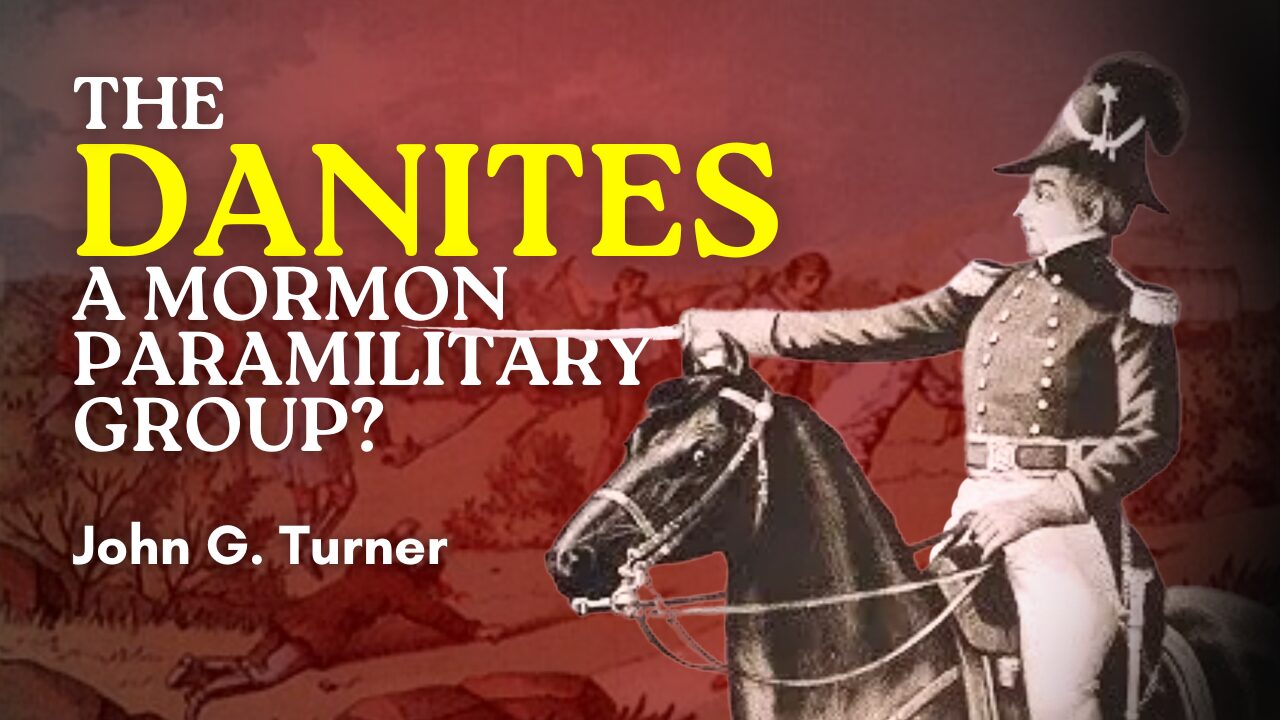
Thumbnail Credit: Main image of Joseph Smith in the Nauvoo Legion in the public domain; Background image “Charge of the Danites” in the public domain
Originally published on mormonstories.org.
Transcript
Machine-generated and lightly edited. Click any timestamp to jump the audio to that moment. The audio is authoritative; please check it before quoting.
Introduction and Episode Overview
John Dehlin Hello, everyone, and welcome to another edition of Mormon Stories podcast. I'm your host, John Dehlin. It's November 10, 2025. You are here for part 22 in the Joseph Smith Podcast. Today we have John Turner with us, Dr. John Turner. Hopefully y' all are used to this by now, and we're here to cover his amazing book, Joseph the Rise and Fall of an American Prophet. Please buy it. It's a great Christmas gift for yourself and others. We are covering Chapter 19, or at least as much of Chapter 19 as we can in our limited time today. East of Eden, as we last left, Joseph and Emma fled Kirtland, Ohio after both the ph algier what some would say adulterous affair, but also mostly after the Kirtland banking safety slash, anti banking slash, not so safe society scandal that basically caused Joseph Smith to leave Kirtland for good. I don't think he ever returned. And so now Joseph and Emma are arriving in Missouri. I think it's far west, but we'll find out in just a second. We're in 1838. And before we jump in, I'll just thank everyone who donates to Mormon Stories and the Oban Stories Foundation. We couldn't do this without you. We also want to thank our donors to this particular series. We're able to do this because people stepped up to support it. If you want to continue supporting this series and if you want to see even future collaborations with me and John, one way you can support that is to go to donorbox.org Joseph Smith and become a monthly or weekly donor to the series. Please like and subscribe wherever you consume this podcast. That's always helpful. And without any further ado, John Turner. Welcome back to the Joseph Smith Podcast.
John Turner Thanks, John. Happy to be back, excited for chapter 19, and appreciate everybody for listening, for commenting, for liking, for supporting. I've really enjoyed these conversations and I am looking forward to what is coming up.
John Dehlin Well, I'm going to be honest, when I got to this chapter and I started reading it, I'm thinking, okay, finally a chapter where I might be bored. Well, I might be like, let's hurry and get. Let's hurry and get to Nauvoo. I'm kind of not interested in sort of like Far West Missouri, 1838. I know Liberty Jail is coming up, but like, what interesting are we even going to be covering in this chapter? And man, was I wrong. If you look at the top of my notes, it literally says super important. And I wrote Joseph or the sword is what I wrote. That should be the subtitle of Chapter 19. Joseph or the sword. American Muhammad should be another potential subchapter. But without any further ado, John Turner, where do you want to start today? This is the Danites chapter as well, which is those who follow Mormon history will know what that means, but it's all about violence. Today's episode is literally all about violence. And it's not just mob, you know, Missouri mob, Governor Boggs violence, it's Latter Day Saint violence. So take us, take us, Take it away. John Turner.
John Turner Yeah, I mean, I have to say I'm a little disappointed that you didn't think chapter 19 was going to be as exciting as it is. But yeah, I mean, I think some of these are, you know, to people who are familiar with early Mormon history, people have certainly heard of things like Hans Mill and they know about the extermination order and the eventual expulsion of the Saints from Missouri. They surely know about Liberty Jail, which we'll be talking about in the, in the next chapter. I think one thing that's hard for us to wrap our heads around is that in the 1830s, majorities in communities often felt that they could expel unwanted residents in their midst. And that seems foreign, I think, to the way most of us think in 2025. We think anybody has the right to move to a place, to purchase land there if they can afford it, to make their lives, to build communities. And at the same time, I think we still often live with tension when large numbers of a people who have a shared identity move somewhere. That often creates flashpoints and tensions. I think what is a little bit different between 2025 and 1838 is that Americans in 1838, whether they were Mormons or anti Mormons, they had a bit of an instinctive sense that if they organize themselves and if they felt that other people threatened them, they could take action to expel unwanted folks. And that created dangerous and sometimes violent circumstances.
John Dehlin I'll say. And I, I, part of me wants to just like throw this entire chapter into one episode. But because we have a time limit today and because I don't think three hour episodes are the best, I want to leave open the possibility that we'll only cover half this chapter today. But I love it that we pay you for every episode because you, your time is so generous and you deserve it. So I hope that's okay. So we'll just see where we go. So tell us what little Zion is. Let's start there.
Mormon Settlement and Expulsion in Missouri
John Turner Sure. So Zion was the City of Independence in Jackson County. The Saints had been expelled from Jackson county in 1833. They had taken refuge at first in Clay County. Now the preponderance of Missouri Mormons are living in a newly created county, Caldwell County, a bit further to the north. And they are building a new city that they call far west. And that's where Joseph and Emma arrive in mid March 1838. So they call it Little Zion. It's not the Zion, but it's a fresh start. If you drive up there today, you would miss it if it weren't for the small amount of, I think, historical interpretation that the church has put there. There's no, you know, there's no big community there today, which is a good reminder that the many of the communities that Joseph Smith and early church members founded, they, they sprang up and then they disappeared almost overnight.
John Dehlin It's almost. A couple things are mind boggling. One is that it's been five years since the Saints were kicked out of Independence Jackson County. So like for five years they've been refugees, the. The Missouri Saints. That's mind boggling that we're in 1838. And then what's also mind boggling is so much violence around a territory going to get into it. So much violence around a territory that never really ends up amounting to anything. It's like they're fighting over what becomes Chicago or what becomes New York City or even freaking Kansas City. They're fighting over land that in 2025, you're saying is Nowheresville. That's mind boggling that it would have gotten to so much violence. Why did. I'm just dying to know why people even cared enough to get violent over land that never really amounts to anything.
John Turner John de Lynn, you are going to be insulting our listeners who live in Caldwell County, Missouri. Yeah, it's still valuable agricultural land, but no, you're, you're right. In theory, you would, you would look at this part of Missouri and you would think there would be room enough for Mormons and non Mormons. Actually non Mormon residents in Missouri. They often didn't mind the initial influx of Saints. It caused property values to rise. So if you already owned land somewhere, a certain amount of Mormon migration wasn't a bad thing. But as we'll also see in this chapter, migration and settlement, those were deeply political issues. And the events that we are talking about in this chapter, they take place in 1838, which is in an election year. And the fact that you have.
John Dehlin And you mean a federal election year, right?
John Turner Correct. For Congress. And so the Mormon. A lot of Additional Mormon settlers are showing up in an election year, Actually newcomers. They can't vote immediately, but in some. In some parts of Missouri, Mormons make up a large percentage of eligible voters. And that. That also stokes a lot of attention.
John Dehlin Well, let's talk about how Joseph arrives. He arrives with a motto of peace and good order, wholesome laws and virtue. And I, when I first read that, I'm like, of course, like, he doesn't want Kirtland, and. And I would say Zion's camp to happen again. Third time's a charm. But if you look at the way this chapter ends, it's kind of ironic that that's how Joseph and Emma's time in Far west begins, isn't it?
John Turner Well, it is, I think, and you're right to allude to past events. So on the heels of what happened in Kirtland, Joseph doesn't want a repeat. He wants order within the Church. He wants dissent to be stilled and at least not pose a threat the way it ends up occurring in Kirtland. So, yeah, on his way to Far West, Joseph drafts what he calls a motto for the Church, which, as you mentioned, it calls for peace and good order in a way. And you'll see this a couple of times in this chapter, it harkens back to the U.S. constitution and the American Revolution. Joseph has a particular vision. He calls it aristarchy, which is a really obscure word that basically means government by excellent men. And he specifically says, woe to tyrants, mobs, aristocracy, anarchy, and all those who invent or seek out unrighteous and vexatious lawsuits. And if you remember from our prior episode, Joseph is constantly hounded by lawsuits and legal actions during his last year in Kirtland. He very much wants to avoid a repeat of that.
John Dehlin Yeah. What's Tory ism?
John Turner That's a great question. That was the last term in his list. Tyrants, mobs, aristocracy, anarchy, and Toryism. I don't know. I don't know what he has.
John Dehlin I'll have Julie Google it, but no worries at all.
John Turner He doesn't mean. He doesn't mean the British Conservative political party. I'm sure it has a particular meaning in the 1830s.
John Dehlin Yeah. All right, so it kind of begins with a bit of a purge. And so, okay, so Julia says Toryism is a British political philosophy of traditionalist conservativism, which emphasizes upholding the established social order through a historical hierarchical approach to governance. Maybe British political aristocracy kind of thing.
John Turner Could have been.
John Dehlin That's what I wondered. Okay, thanks, Julie. All right, so it sounds like the first order of business on page 205 is to. Is to get Oliver. Obviously, we talked about Oliver's. Oliver and Joseph making peace over dropping the Fanny Alger affair or allegations in previous episodes. So why in the world is Oliver back on the hot seat again?
Joseph Smith's Conflict with Oliver Cowdery
John Turner So they basically have had an unresolved conflict since the late summer of 1837. Joseph and Oliver had made an attempt to mend fences in the fall of 1837. Then Joseph declares publicly in Kirtland in December of 1837 that Cowdery has confessed to lying about him to having made a false accusation of adultery. Cowdery is incensed at this. And let me also put this in the larger context of ecclesiastical affairs. By this point, Joseph also knows that John Whitmer, David Whitmer, and William Phelps, who constitute the church's Missouri presidency, are also disaffected from him. And there are all sorts of particular issues that one could point to. But the basic dynamic is that Oliver Cowdery, the Whitmer brothers, and Phelps no longer have confidence in Joseph's leadership. They don't accept his leadership. And so that's what Joseph has to deal with when he finally reaches Missouri.
John Dehlin And we mentioned this last episode, but Martin Harris was excommunicated as Joseph was on his way out of Kirtland, Ohio. So with the excommunication of Oliver and David Whitmer, we literally have all three Book of Mormon witnesses excommunicated by 1838, and then several of the, what, eight witnesses to the Book of Mormon too?
John Turner Yeah. So, no, this is. It is pretty wild, and I think it shows a shift in Joseph's approach. So the prior fall when these issues were festering, Joseph wanted to keep these people within the fold. So he would have long, you know, day long conversations with people like Oliver Cowdery and probably with the Whitmers as well. At this point in the spring of 1838, Joseph's mentality is different. You know, the time for talking is over. The time for tolerating dissent and discontent is over. He wants to cut ties with these men and move on unfettered by their complaints and discontents.
John Dehlin Yeah, but that seems just incredibly risky to me. Like, they could. They could just say if they wanted to, well, Joseph made up the Book of Mormon or we never saw plates or Joseph's a fraud. Like in my 2025 Mormon brain, Joseph allowing, not only allowing the disaffection of, but like overtly excommunicating the witnesses to the Book of Mormon just seems Incredibly risky and even foolhardy. And I'm even surprised Joseph in the Church withstands that. It would be like, I don't know, America excommunicating or like arresting for treason all the signers of the Declaration of Independence or the signers of the U.S. constitution. You know what I mean?
John Turner Yeah. No, it is crazy. And at Oliver Cowdery's trial, which he doesn't attend, you know, Joseph, I mean, he's certainly aware of this. He refers to Cowdery as his bosom friend whom he had entrusted with many things. You're right about the risks involved. It's interesting that they turn out this particular group of men. They don't really attempt to damage Joseph after their excommunications. In particular, the witnesses do not disavow their testimonies after they are cut off from the Church. I think the way to think about this, though, from Joseph's perspective, the risk of keeping dissenters, people who are openly disaffected from him, the risk of trying to placate them somehow or keep them within the fold for him at this point, that outweighs the risk of casting them out.
John Dehlin Yeah. And so. And I understand that the threat from within is often way more dangerous than the threat from without. Were they? So I noticed that Oliver, one of the things he was accused of was making false accusations of Joseph committing adultery. Was Joseph just mincing words there? Was he lying about Oliver? Was he misrepresenting Oliver? Because I think we all would agree that even Joseph would agree that he messed around with Fanny. Was this just basically Joseph saying adultery is not an accurate charge because I didn't move in with Fanny? Maybe fornication would be a more appropriate charge. That sort of wordsmithing.
John Turner It's possible. So I don't think we can conclude with any certainty that Joseph confesses to any sort of intimacy with Fanny Alger. He does. In the spring of 1838, when this is discussed at a church council, he gives an account of the girl business, but we have no idea what he says.
John Dehlin So why would they leave that out?
John Turner Well, why do you think? I mean, I don't think that's something where one wants to necessarily record the details. So we don't know how Joseph accounted for himself. I think we simply know that because there were minutes. There were minutes, but there, you know, they don't reveal on, you know, that particular subject.
John Dehlin And you mentioned Oliver didn't attend his own trial, right? Correct.
John Turner I think he, you know, he wasn't looking to defend himself. He. Both sides were looking to sever ties. I think that's the simplest way of understanding it. I think we know that Joseph asserted that Cowdery had confessed to having lied about him. Cowdery insists that's not the case and that instead he had discussed a dirty, nasty, filthy affair of his and Fanny Alger's. How did Joseph account for himself? Did he mince words by saying, well, it's not technically adultery because she wasn't married? That could be an early 19th century understanding of adultery. Did he simply say, nothing happened or, you know, nothing significant happened?
John Dehlin That.
John Turner I think that's also possible. We know that Joseph defended himself against an accusation of adultery. I think that's really all we know because the clerk who kept the minutes of the meeting omitted details, so.
John Dehlin And John Turner, I'm not asking you to opine on this or play therapist. This, this page caught my interest because I was obviously excommunicated from the church, and I felt like the church didn't want to be upfront about the reasons why it was excommunicating me. And, and so this. What I was dying to know in the margins of this page is were the grounds that Joseph and. And David and John Whitmer and William Phelps, were the charges against them accurate and fair in your estimation, or were they kind of false accusations? Was the church or was Joseph being upfront about the real reasons for why these men were being cut off, in your opinion?
John Turner That's a great question. So when it comes to Cowdery's trial, there's a list of nine charges. And, you know, one of those is this false insinuation that Joseph is guilty of adultery. I can't remember. And, you know, I don't have a memory of what the other eight were in the list. I do know that Joseph had asked his associates, his loyal associates in Missouri, to sort of lay the groundwork for charges against the Whitmers, Cowdery and Phelps. So there were a lot of accusations. You know, Joseph accused them, or really the Missouri High Council accused them of selling Jackson county land, ignoring and ignoring the word of Wisdom. And I do think they respond to those charges, and they basically refuse to be cowed. They basically say, you know, we're not going to let the church control our financial affairs. I think they. They might also say they're going to drink whatever they want. I can't remember certainly violating the word of wisdom in 1838, probably even selling Jackson county land. Neither of those would have really been grounds for excommunication. I think the didn't I mean, didn't
John Dehlin plenty of people drink coffee and tea and even wine? Didn't. Haven't we talked about wine being extensively drank in Kirtland at the School of the Prophets, at the Kirtland temple dedication, and selling your land? Like, I think that's what triggered me, that these are like trumped up balls. And even the Word of Wisdom itself was just a recommendation. It was. Wasn't the text something about on advisement or like, it wasn't even law?
John Turner You can find other instances in the 1830s where church councils do want to make it a stricter requirement, but you're right, during Joseph's lifetime, and then even beyond Brigham Young's lifetime, it doesn't become a strict rule. Joseph himself does not abide the Word of Wisdom consistently in Nauvoo. The basic issue is these men are no longer. They're no longer loyal to Joseph Smith. They have grave doubts about his leadership. And Cowdery at least has entertained this serious moral accusation against Joseph that makes the divide unbridgeable. Yes, they probably include some charges that at least are not particularly germane. But the main issue is a loss of faith in Joseph's leadership and therefore an unwillingness on the part of these men to strictly be obedient.
John Dehlin Yeah, like, and that really is resonant, I think. And again, I'm just trying to reflect on how much of the church's behavior in the 21st century has been shaped by Joseph Smith's behavior in the 19th century. But like, it does seem like the true crime was disloyalty and that they made up charges like selling your land or violating the Word of Wisdom or in the case of Oliver, a false charge of falsely accusing Joseph Smith of adultery. Those feel like false or trumped up charges to hide the real sin or, you know, problem, which was disloyalty. And I guess that seems, that seems pretty clear eyed of an assessment from what I'm reading from your book. And if that's true, that feels disingenuous and unfortunate because I think in a, in an ideal world you would just say disloyalty is grounds for excommunication instead of false charges or even deceitful charges. In the case of saying Oliver falsely accused Joseph.
John Turner Yeah, well, so, you know, we discussed Fanny Alger in depth two episodes ago, and as I said in that episode, we don't really have sources that allow us to stipulate the particulars of that relationship with certainty. I tend to look at all of the evidence and accept that Joseph and Fanny did have Some sort of intimate relationship. It may well be that Joseph sincerely thought that Cowdery was exaggerating or lying about it. I mean, that is a possibility. I think the biggest takeaway is that men who had once been deeply loyal to Joseph Smith and were among his most significant early supporters and associates after both Fanny, Algeria, and probably even more significantly, the Kirtland Safety Society, these men just cannot regain confidence in Joseph Smith in the fall of 1837. You know, Joseph has spent time with them, trying to bring them around. They simply have grave doubts about his leadership. They feel that he's gone astray. Joseph, I will say, does not repent of those missteps in any way, whether we're talking about Fanny Alger or the bank. I imagine that had Joseph been willing with some of these men to say, I messed up, we're gonna. We're gonna do things differently in Missouri. I think those divides, you know, probably could have been bridged. But when Joseph and these four men are unable to find grounds for reconciliation, I think the divide just gets. Gets wider and more unbridgeable over time.
John Dehlin Yeah, I guess. You know, with Michelle Stone and the resurgence of people claiming that Joseph never practiced polygamy, I guess it's fair to ask you one last time, even though I think we already covered this. Is it possible that Oliver falsely accused Joseph, that maybe he was in a barn, but they didn't do anything? Maybe that he was just counseling her because she was sad or depressed. Maybe there was no sexual interaction at all, and so. Or maybe Joseph gave her a hug and Oliver just flat out falsely accused Joseph, and Joseph didn't do anything sexually inappropriate.
John Turner So I have emphasized throughout all of our conversations about Fanny Alger that I think there is a lot of uncertainty. So we can't say anything with a very high degree of confidence. Let me just say, for people who are interested in Nauvoo polygamy, those chapters are coming up, and I think there's a lot more that we can say with confidence about Joseph's polygamous ceilings in Nauvoo. I do think, however, that Cowdery's reference to a dirty, nasty, filthy affair of Joseph and Fanny Algar's. I do take that as a significant statement. Now, could Cowdery have been wrong? Yes, but I don't think. I think it's unlikely that Cowdery would have repeated that accusation. I don't think he would have made that accusation with. If he didn't. Did not think there were solid grounds for it.
John Dehlin Yeah. All right. Well, I think It's. I'm just going to conclude that the Whitmer brothers and Oliver were treated unfairly here. But again, I guess it's Joseph's church and Joseph's rules. So at the end of the day, he gets to do what he wants.
John Turner That is actually a key takeaway.
Excommunications and Joseph's Vision for Far West
John Dehlin All right, so Oliver's excommunicated. Both David and John Whitmer excommunicated William Phelps. That's W.W. phelps, right?
John Turner Correct.
John Dehlin He's excommunicated Lyman Johnson.
John Turner Just going to mention lyman Johnson. William McClellan. Two apostles also excommunicated that spring. And so this is, you know, it's significant. It is, it is. Use the term purge. Joseph might use the term cleansing. Essentially he wants to expel people he regards as disloyal. He wants to expel them from the church and as we'll see, ultimately from Far West.
John Dehlin Yeah. All right. And again, Martin's already excommunicated, so that means all the three witnesses and many of the eight are excommunicated. So. So, all right, so now Joseph decides to change the name of the church yet again. If I'm right, in my count, this would be the third name change. Is that right?
John Turner So correct. So, you know, the way I would, I would think about it is this is something that actually, you know, this particular renaming comes by a revelation in April of 1838, but it's a bit of an organic development. So just to refresh listeners memories, when the church is organized In April of 1830, it's simply called the Church of Christ, which is what the church established by Jesus Christ in the Book of Mormon is called. So simply the Church of Christ. Joseph's people begin understanding and calling themselves Latter Day Saints in the early 1830s. And so I think for sort of clarification and distinction, they begin referring to the Church of the Latter Day Saints. And then now In April of 1838, Joseph clarifies the church should be called the Church of Jesus Christ of Latter Day Saints. No hyphen in lowercase d yet.
John Dehlin Yeah, I wonder if that was a typo in your book.
John Turner Not a typo. That distinction really begins to be made in the mid to late 1840s.
John Dehlin 1840s, okay. And I'm dying to hear why they made that change, but let's not get ahead of ourselves. Okay, so it almost like Joseph, whenever he settles in place, has a. Has a playbook. So tell us how Far west fits in the Joseph Smith civilization playbook.
John Turner So, yeah, I actually think this is a pretty useful schema. It seems that ever since the early 1830s, whether in independence or in Kirtland, Joseph has a basic approach for building a Mormon community. Building Zion, if you will. It's land purchases, you know, ecclesiastical organizations, you know, you need a local presidency or high council, merchandising operations, a printing press and a temple. Now, Joseph, when the Mormon refugees regrouped in Clay county, he didn't put all of this into operation. That was more of a way station. But now that he is joining Mormon settlers in Missouri at Far west, he wants to move ahead with. I sort of think of it as the Five Point Mormon community plan. And they'll soon be a sixth point, which is a militia, which remains an important sixth point into the Nauvoo years.
John Dehlin Yeah, yeah, the militia comes soon. Okay, so. And I guess we know that the Far West Temple doesn't get built at least during this century. And so again, I'm trying to resist the urge to call this another failed prophecy, because. But. But I guess it all depends on what you expect of prophets. So anyway, let's go on and talk about Adam on Diamond and the Garden of Eden. I mean, obviously any of you have seen the Book of Moron musical will know that one of the biggest laughs is always during the song. I believe when. When the missionary says, I believe that the Garden of Eden is in Jackson County, Missouri. Can you tell us how in the world that would have made sense to anyone in the 1830s?
John Turner Sure.
John Dehlin Like, did they believe in Pangea? Like, how did Adam and Eve get to the Middle East? Like, help me help this make sense.
John Turner Okay, I don't know if I can do that, but I'll try a little bit. First of all, one thing I would say is that anyone listening to this episode, you would do well to somewhere, either in my book or elsewhere online, find a map of Mormon Missouri so you can see where all the relevant counties are. Because it's really hard to understand everything going on without consulting a map. So in terms of Adam on Diamond and the Garden of Eden. So one of the things Joseph does soon after he shows up in Far west is he goes to the north to. To another newly created county, Davies County. And Joseph identifies one spot as the remains of an old Nephitish altar and tower. And he also identifies a tract of land as Adam on Die Amen, which Joseph has already previously said is where Adam blessed his posterity shortly before their death. Joseph also, therefore is teaching that Adam and Eve had come to Adam on Diamond after their expulsion from Eden. Logically, it follows that the Garden of Eden was somewhere nearby. And I don't think there's a contemporary source that directly captures Joseph teaching that the Garden of Eden was in Jackson County. But you have church members who report that Joseph said something along those lines. So I think if you put all of that together, Garden of Eden's in Jackson County. Forget the other side of the world, forget mega continents. All of that isn't too germane to Joseph's thinking.
John Dehlin Yeah. So nobody's. Well, okay. And I mean, the fact that I was taught this growing up, the fact that the church, I think they even have a monument for Adam on diamond, like, I don't think it's for any modern Latter Day Saint. There's no question that Joseph Smith taught this and that this is kind of church doctrine. You also mentioned that he named a spot Tower Hill after an old Nephiteish altar and Tower, which actually adds credibility to the Rod Meldrum heartland theory of the Book of Mormon, or at least really challenges the Mesoamerican geographical theory of the Book of Mormon. Because Joseph's put Nephites in Missouri as well.
John Turner Right. Well, and, you know, Joseph had, you know, basically an ancient warrior named Zelf, you know, on his 1834 march to Missouri as well. So. Yeah, no, that. That's true. I think, you know, again, Joseph, there's. You can still. You can drive to where Adam Ondai Amin was. I did that a few years ago. It's rather lovely, especially if you go there at the right time of year. I think if you went there in winter, you might think Garden of Eden maybe not so likely, but in the summer, you could think along those lines. I think, you know, Joseph, he. He. He sort of had a. He wanted to make the landscape that his people traversed sacred. You know, he does that. You know, he does that repeatedly. I think probably. Also, you know, he. He has this fairly close relationship with Lyman White, which is significant in this chapter. I imagine that when he goes to visit Lyman White and he announces that there was this Nephite Ish altar and tower on your land, I can imagine Lyman White thrilled to hear that.
John Dehlin All right. Yeah. Well, in your mind, it's pretty clear that Joseph Smith saw the Book of Mormon happening, at least in North America. Correct.
John Turner Correct.
John Dehlin Would you say he. Do you have any. Any memories of him thinking of it expanding all the way down to Central and South America from your perspective?
John Turner So, yes, in the 1840s in Nauvoo, when there's publicity in American newspapers about the discovery, archaeological discoveries in Central America, that's exciting. To Joseph Smith and his followers, they interpret it as evidence of the ancient civilizations of the Book of Mormon. So I think any sort of sense of ancient fortifications, earthworks, civilizations, anything like that stirred the excitement and imagination of 19th century Mormons. Yeah.
John Dehlin All right, well, how do you spell D I H? D I A H M A N. How do I.
John Turner How do I say it? Great question.
John Dehlin Yeah. How do you pronounce it? Sorry.
John Turner All right. I know I don't always get my pronunciations correct in our episodes. I'm trying to do better. I say diamond from Adam on Andy. Amen.
John Dehlin Okay, so that. That isn't an existing city or county. That's just what they called the general area.
John Turner No, that's what they called. That's what they called Adam Ondi. Amen.
John Dehlin I did not know that. I did not. I've never seen that word. Diamond. D I A H M A N.
John Turner It was a bit much to say Adam ondi Amen all of the time. So they just shortened it to, I don't know if they said it diamond or diam.
John Dehlin Okay.
John Turner But otherwise it's a real mouthful. And. But essentially, when Joseph visits Lyman White and makes that recommendation, then you start getting large numbers of Mormon settlers moving to this new place in Davies county and they form a new settlement. Diamond.
John Dehlin And what county is diamond in?
John Turner Davies.
John Dehlin Okay, I'm gonna have to tell you, this map on the top of 207 was super important because, like, I imagine that. That we would only be dealing with a couple Missouri counties at most in this whole. In this whole affair. Like, you know, maybe Jackson and then, you know, I don't know, maybe one or two others. But like this just in the. In the span of like two or three pages, I think you mentioned like six or seven counties in Missouri. It's wild. It's. It's impossible to keep them all straight in my mind. I'm just being honest.
John Turner No, there will be an exam in a couple of weeks. Now, you have to know your western Missouri counties in order to make sense of this. And I think one reason for this, actually, and this is important for people to know there's at least a tacit agreement when the Saints, under some duress, leave Clay county in 1836. So they're expelled from Jackson county, they take refuge in Clay county, but as their numbers there grow, the other locals say, you'd really better find somewhere else. And so it seems that church leaders in Missouri had a tassent agreement with the state legislature that a newly created county, Caldwell county, would sort of be a Mormon reservation in western Missouri. Like the Saints should go there and not go elsewhere. And if they just settle there, you know, maybe, maybe we can leave them alone. But after. But the other factor is ongoing Mormon migration to western Missouri. So despite all of the troubles, hundreds of Saints are moving to Missouri each year in the mid-1830s. And once Joseph goes there, that only accelerates. And after reaching Far west, which is in Caldwell County, Joseph then establishes Mormon settlements in both Davies county diamond, and then also in the settlement of DeWitt in Carroll county to the southeast. So what happens is you have these new rapidly growing Mormon settlements in Carroll county and Davies county, and non Mormons object to that as Mormon numbers swell
John Dehlin to John Hamer, do this map.
John Turner Oh, there it is.
John Dehlin John Hamer right there. Absolutely love John Hamer. All right, that's fun. How did I know? Yeah, that map is super helpful. It sounds like Joseph's trying to settle western northwestern Missouri, just like Utah and Idaho and Arizona ends up being settled like the. Under different circumstances, Missouri could have become what something of what Utah, Idaho and Arizona ended up becoming.
John Turner Totally correct. So now essentially Far west, as you said at the ad set, is little Zion. And, and then Joseph, what he really envisions is stakes of Zion in other parts of western Missouri. So diamond is explicitly established as a stake of Zion. DeWitt, that language, you know, it's not identified as a Stake of Zion, but that's the way Joseph's mind is thinking. You know, we can have a hub in Far west and then we can form settlements elsewhere.
John Dehlin This, that's another. I mean, it's probably seems basic to you, but as a lifelong person who studied church history, I just didn't know that this, the attempts at settlement or the intentions of settlement in Missouri were so extensive and that actually, now that I'm thinking about it, that adds context maybe to the opposition they're going to face, because I'm guessing from the standpoint of the Missourians. Well, you also mentioned in the book that like couple missionaries in England convert a thousand just themselves and that by the time, by the time this period arises, there's like 10,000 baptized latter day Saints in the world. Like I could see, I could see why the expansion of settlements in Missouri, plus the just large growing number could make people really nervous.
John Turner So by the fall of 1838, and estimates are a little bit uncertain, but there could be as many as 10,000 church members in western Missouri. And that's a, that's a huge number for a relatively sparsely populated part of the country.
The Origins and Purpose of the Danites
John Dehlin Yeah, all right, well, let's talk about the Danites because that's fun. That's one of like the top 10 fun things to talk about in Mormon history. I mean, fun in quotes.
John Turner Yeah, no, I'm, I'm kind of, I'm kind of wondering what the top 10 list is.
John Dehlin But yeah, no, and Castle of 50 Danites, you know.
John Turner Well, you know, the thing about the Danites which is, interests me or I find interesting is it's a pretty, in terms of the actual group, it's pretty short lived. It's a little bit nebulous. The idea that you could engage in vigilantism that persists and that you could harass and perhaps even expel dissenters, that persists. And then the idea of the Danites, that is a popular subject in, you know, late 19th century fiction. You know, stories of people passing through Utah and being pursued by the Danites. Other Americans, you know, they do eat that up. So it is a fun, fun subject in that sense as well.
John Dehlin Well, let's talk about it.
John Turner So the, the origins of this story is the fact that you have these excommunicated dis who are still in Far West. So Oliver Cowdery is still there, the Whitmer brothers are still there. Phelps, Lyman Johnson and church members who are loyal to Joseph and presumably Joseph himself. They want these people to clear out. And in mid June, people who want them to clear out, they draft a letter to Cowdery and the others that accuses them of things like theft, counterfeiting, legal harassment, slander. One of the ringleaders of this effort is a man named Samson Avard, who before he converted to Mormonism, he'd been a Campbellite preacher. He was a physician by training. And it's unclear whether Avart himself drafts this letter or whether somebody else does. I think it's pretty, pretty clear that the First Presidency sanctions this letter, which is very blunt. Depart or a more fateful calamity shall befall you. Basically it demands that they leave within three days and concludes, we will put you from the county of Caldwell, so help us God. And 83 loyal church members sign this letter, including Hyrum Smith.
John Dehlin Yeah, and, and that, that's where I think it's important to start, you know, because to a, to a Latter Day Saint, basically all the Missouri violence was against Latter Day Saints. And we were victims. We didn't deserve it. And so part of what I'm paying really close attention to in this chapter, as I did in Zion's Camp, is to what extent were we complicit in violence and. Or irresponsibly agitating violence. And so this is kind of where that, that starts to begin for me is aggression on the Latter Day Saint part. Is that fair?
John Turner I think that's fair. Now, in terms of the dynamics of the broader situation in Missouri, Mormon actions in August of 1838 forward in their interactions with non Mormons, that's what really, you know, fuels the conflict. But yes, there is this. Yeah, there's this clear threat of violence against dissenters should they refuse to leave Far West. It's very blunt. And it's not just that letter. Sidney Rigdon, he is, I mean, Rigdon is combative, violent in his rhetoric in June and July of 1838, so famously, he gives a sermon to a congregation on June 17th. This is still. This is right about the same time that letter is drafted. The sermon becomes known as the Salt sermon. He reads from a verse in the Gospel of Matthew. If the salt have lost his savor, it is thenceforth good for nothing but to be cast out and to be trodden under foot. More pointedly, though, Rigdon threatened to erect a gallows on the square of Far west and hang these men, as this is his illusion at the time, as had been done to a group of gamblers in Vicksburg, Mississippi.
John Dehlin Yeah, so that this is kind of my. I mean, on the one hand, I know that there's going to be trauma from. From both. Far from both Zion's camp and now being recently kicked out of Kirtland, but like to be threatening, you know, Oliver and his associates, the Whitmers and the Phelps and Phelps and Johnson, to be threatening them with murder. You know, that's not a great way to start because, number one, you're almost beginning with violence, but also words going to get around and you're going to be creating enemies that even if they do leave, they might just spend the rest of their days trying to sow pain and suffering back on your own head. When you literally threaten people that you're going to lynch them if they don't leave town.
John Turner Well, sure. So I totally agree. And it's, you know, it's grossly inappropriate by our ethical standards. You know that. That's certainly the case. And you're right, it could. It has the potential to create, you know, even more implacable enemies who could, you know, do them damage in terms of inflaming sentiment against them. I think it's still useful. It doesn't justify it at all, but it's. It's useful to Try to get ourselves into Joseph's mind as far as we can. And if, if I might just have us think ahead a little bit. In June of 1844, Joseph orders the destruction of the Nauvoo Expositor printing press in Nauvoo, an action that leads to his arrest and enables his murder. So Joseph's justification at the time is that the printing press is a public nuisance, threatens to bring down mobs upon them, and therefore it has to be removed. Pretty sketch, sketchy legal reasoning, but in Joseph's mind, here's a danger to us. We have to remove it. I think he's using, he and others like Rigdon Avard in this case, they're using the same reasoning with these dissenters. These men are a public danger. We have to drive them out. A lot of Americans use that logic to drive out unwanted people in their midst in all sorts of contexts. So the Smiths a couple of times are warned to leave town. Both in Vermont and in Kirtland, they receive a public warning to, to clear out. Now, it doesn't threaten them with death. I'm not equating the two. The Mormon settlers repeatedly are told, you know, you need to leave Jackson County, Clay county. And in Jackson county, it's like, you leave or we're going to make you leave, or we're going to, we're going to hurt you. Maybe we'll kill you. Americans in a number of communities, they drive out abolitionists who are extremely unpopular, even among people who don't like slavery. So the, the logic is not uncommon in the mid-1830s. I'm not saying that in any way to excuse Rigdon's rhetoric or this approach to dissent, but it's not surprising in Jacksonian America that Joseph and people loyal to him decide the best way to solve this problem is to get rid of it.
John Dehlin Yeah. Yeah. Well, I guess on the, the I, I recently watched Patrick Mason give a talk about peacemaking in Zion's camp, and he basically, I, I what I took from it. Have you ever seen him give this talk before?
The Danites: Leadership, Knowledge, and Joseph's Role
John Turner I haven't seen the talk. I've read his book on proclaim peace or something like that.
John Dehlin Yeah, Basically on the one hand, he includes all these scriptures from the Doctrine and Covenants where he quotes God saying, use peace, only have peace, don't be violent, basically. And he's able to pull together extensive quotes of God constantly telling the Saints to be peaceful. I don't know if there's a single scripture published in the DNC where God is saying, be violent. Against the Missouri people. On the other hand, I think he basically ends up with the conclusion that the Missouri experiment failed because the Latter Day Saints disobeyed God and became violent. And I think he's even willing to say Joseph Smith as a prophet was complicit in that. And I thought that was a really powerful take and a bold take for a faithful historian to make. But, yeah, as I read. As I read the way the Danites comes together and the way that they're threatening death and murder and lynching, it really counters the narrative that we were just pure victims. The Latter Day Saints were just pure victims in Missouri. And this is all. Where it starts for me is the way they're treating Oliver and. And the, you know, the Whitmers and others.
John Turner Yeah. So I would say in my mind, Joseph draws the wrong lessons from what happened in Kirtland. So I understand what happened in Kirtland is a complete collapse of authority. We have people fighting in the temple. Everything falls apart. So, you know, one lesson, one lesson from that is pretty simple. Don't accrue so much debt again. Which Joseph also ultimately fails to learn. You know, I think another lesson, you know, could have been, you certainly could have had concerns about dissent, but there could have been a little bit more soul searching. And, you know, perhaps it was unwise to sanction, Give divine sanction to a bank. Could have been. Could have been, perhaps room for soul searching vis a vis Fanny Alger. One of Joseph's big conclusions is that dissent can't be tolerated. And I do think this is a decided change from the way Joseph led the church during its first eight years. I'm not saying that Joseph was necessarily tolerant of dissent, but I think when faced with it, his inclination was to engage in a lot of discussion, to try to overcome it, to try to preserve his relationships with people. Now Joseph simply wants them out of the way because he. He understands dissent as an existential threat.
John Dehlin Yeah. And not only did some early members of the Danites threaten to kill, including Sidney Rigdon basically threatened to kill these dissenters. You write on the bottom of 208 that Joseph Smith seems to condone these death threats.
John Turner Right.
John Dehlin Which kind of shook me a little bit.
John Turner So, you know, Joseph stands up after Rigdon's sermon. In a sense, there's a little bit of double talk. I think he says he doesn't want the Brethren to act unlawfully, but then suggests that Judas was hung by Peter, which is not a good reading of the New Testament. But that's beside the point. I I think the simplest thing to say is Joseph supported the pressure and threats of violence against his former friends. And the men clear out. You know, they go, they go down to Clay county and hang out with William McClellan, who's living there, Phelps, actually, out of all the people we've mentioned, he moves to reconcile with Joseph and other church leaders. So he eventually is back in the fold, but everybody else clears out
John Dehlin and it's, you know, it's hard to know. Like I, I have mostly only thought of Joseph Smith's, let's say follies or peccadillos as having been around sexual stuff and maybe potential fraud around the scriptures and then, you know, the bank, obviously. But I've never thought of him as someone who had a violent streak. And this, this, this is maybe the first time it's kind of occurred to me that that was also a possible occasional part of his personality or even of his weaknesses, that he, he could turn violent.
John Turner Yeah. So that's a good, that's a good comment. So I think. I wouldn't say that Joseph particularly had a violent streak. You know, we've talked about that fight that he has against his own brother William. So he, you know, he could, I think, and we'll see later in this chapter, I mean, Joseph authorizes violence against non Mormon Missourians, so he could authorize violence. I do think his instinct, when faced with potential war, which is a possibility in 1838, his instinct in the end is to pull back, as he did on Science Camp, as he does a couple of times in Missouri. Now, one reason for that is he's wise enough to recognize that the Saints are badly outnumbered. And so any widespread eruption of violence is going to lead to his people's eradication and dispersal, I think. Yeah, but, but Joseph is certainly willing to tolerate violent rhetoric and sometimes to authorize violent reprisals.
John Dehlin So in that spirit, let's talk about what the Danites was, where it got its name, who created it, whether Joseph knew about it, whether Joseph was involved.
John Turner Yeah.
John Dehlin And what it was, you know, what its informal charter was.
John Turner Sure. So, you know, there are. There probably a number of prime movers. One of them is definitely Samson and Avard. Essentially about the same time that this letter is circulated. In this sermon is preached, several score men organize themselves into an, I would say an extralegal militia, a paramilitary secret society, if you will. I think they weren't really sure what to call themselves. The formal name seems to have been the Society of the Daughter of Zion.
John Dehlin And it's singular. I would have thought Daughters of Zion, but it's singular.
John Turner Singular. That name is in a constitution that Avard gives to Missouri authorities later in 1838. So I think that probably is the original name. Joseph himself seems to have come up with the nickname, alluding to a passage in the Old Testament about a group of warriors from the tribe of Dan. Joseph makes that comment. He claims to have been the inspiration for. Let's call it that nickname. That's a statement of his from early in 1844. And so essentially what the Danites are is they're a paramilitary secret society which exists alongside the Caldwell county militia. Now when I say that's the LDS
John Dehlin Church's Caldwell county militia, is that right or not?
John Turner Correct. I mean, technically it's the county militia, but the Saints essentially control affairs in Caldwell County.
John Dehlin Okay.
John Turner So now calling it a secret society is interesting. So the men who join both here and then later in diamond in Davies county, they make solemn covenants. They have, you know, they're not going to reveal the secrets of the society or who's in it. They have hand signals to identify each other. There's all sorts of things that sort of sound secret society, like right at the same time. This is a terribly kept secret, like almost everything that secret within the church during Joseph's lifetime. So the Danites sometimes publicly march and train. Their officers are publicly recognized. So it's a poorly kept secret.
John Dehlin Yeah, and I couldn't help. It's funny because the Book of Mormon. We all know the Book of Mormon condemns polygamy. There's something else the Book of Mormon condemns. Do you know where I'm going with this?
John Turner Secret combinations.
John Dehlin You read my mind, John Turner.
John Turner I read the book.
John Dehlin Yeah. Like why is Joseph creating or doing everything the Book of Mormon condemns? And I don't, I don't mean to be ungenerous here, but like it is super weird to have him authorizing the creation of what. What has to be, what has to qualify by Book of Mormon standards as a violent secret combination of a paramilitary group. It's bizarre. Has he not read the Book of Mormon? Well, we ask if Joseph Smith wrote the Book of Mormon. I guess we should ask if Joseph has read the Book of Mormon.
John Turner I think he needed to read it more frequently on this point for sure. Yeah. So it's also, it seems totally crazy, that inconsistency. I think the one thing I'd say is when Joseph dictates the Book of Mormon, it is at the peak of anti masonry as a cultural and political movement. And That I definitely think that colors that secret combination motif in the Book of Mormon in 1838, a lot of that has faded and the Church's circumstances have changed a great deal. So you know, Joseph's scribe writes this. We have a company of Danites in these times to put to rights physically that which is not right and to cleanse the Church of very great evils. Part of, the, part of their purpose is to ensure loyalty vis a vis the first presidency. So no one's going to be able to be to, no one is going to be permitted to speak against the Church's presidency. So you, you, you alluded to the fact that there's are long standing debates about how much Joseph knew about this. I think he certainly knew about the group. He claims to have been the inspiration for the nickname the Danites, his scribe in Joseph's journal that he keeps for Joseph, you know, he refers to the group and the Danites actually serve some other purposes. In the summer of 1838, there is a renewed. I don't think I really talk about this in the book, but there's a renewed emphasis on consecration and tithing. In the summer of 1838, Joseph dictates a revelation to that effect in July. The Danites are among those who oversee the receipt of consecrated property and tithing. So in broad terms, Joseph is certainly aware of the group and I think understands them as playing an important role in, I would say ensuring cohesion and loyalty within the Church.
John Dehlin Yeah, I really didn't like the description. Well, you said Joseph wanted to intimidate critics within the Church. Like, as you well know, John, eventually the Mormon temple ceremony is going to basically, you know, there's going to be death oaths there. It's going to be a covenant that it's evil. The Mormons end up covenanting. When I went to the temple, I covenanted to never speak ill of the Lord's anointed. This idea of absolute loyalty to the church and a complete prohibition of criticism. It is really informative and kind of important to see that the origin and even Downay jokes the current prophet is famously quoted as saying it is wrong to criticize church leaders even if the criticism is accurate. It has to be that a lot of these sorts of things, no criticism, excommunication for criticism, intimidating members, even falsely accusing them and excommunicating them for disloyalty, even when they might not necessarily have been accurately charged. All of that seems to grow out potentially of this sort of 1838 Missouri time period. I may be Oversimplifying it, but that's how things are kind of congealing in my mind.
Suppressing Dissent and Sidney Rigdon's Salt Sermon
John Turner Yeah. So again, the problem here is that Joseph, I think he's got the wrong takeaway from Kirtland. His takeaway from Kirtland is that dissent destroyed Mormon Kirtland. And in reality, he should have examined what had stoked that dissent. Right. And fix, you know, and fix those problems. Instead, he wants to put an end to dissent. And so, yes, I think, you know, I don't. I agree with your analysis. There's this deep sense going forward, and I think, if anything, it becomes more pronounced under Brigham Young when he analyzes what happens in 1844, that dissent is a grave danger and we need to take vigorous action against it.
John Dehlin And honestly, if I were them at that time period, I can't imagine I wouldn't arrive at similar conclusions. Although some of these apostles that end up defecting in 1838, is it fair to say some of them were conscientious objectors? In other words, saying, this is starting to get violent, this is starting to get dangerous, and I either want to protect myself from possible violence, or I just object as a matter of conscience at the violent rhetoric and even paramilitary organizations that seem to be forming.
John Turner Correct. Now, I think, you know, in the. In the spring and summer of 1838, among those who have remained loyal to Joseph, I don't think there is broad opposition to these actions against dissenters. That's probably because a lot of other loyalists agree with the analysis of Joseph Rigdon and Avard at this point that, yeah, these dissenters are a problem. We. We want them gone. I think if. If that had been the only issue, it's possible that this sort of cleansing the church of dissent, it could have created a more stable circumstance going forward. The problem is, is at the same time, there is renewed concern about anti Mormon opposition. And so all of these concerns about loyalty and obedience, they get accentuated as mobs and militias form to oppose Mormon settlements in Missouri. So the. The idea that we need strict loyalty and obedience, that becomes. That becomes more important to church leaders and more chilling to people who have qualms about it as the Mormon Missouri Mormon War in Missouri heats up.
John Dehlin Yeah. All right, so you mentioned that I remembered that Sidney Rigdon had given that salt speech. You mentioned at the bottom of 209 that he gives it even saltier speech.
John Turner Right. Yeah. No, Rigdon. Rigdon is incendiary in the summer of 1838. So they have an Independence Day celebration in Far West. The church dedicated the four cornerstones of a planned Far west temple. They recognize both county and Danite officers, both regular militia and the paramilitary group. They march and Rigdon gives this really salty speech. And I actually, I also find this interesting. When the Saints reflect on their political circumstances, they often go back to the founding of the American republic and to their ideals of liberty and self governance. And already by July, you know, there are rumblings in Carroll county against Mormon settlers at DeWitt. And so Rigdon wants to make it clear that the Mormons are not going to take it anymore. They are ready to fight back against any mobs. He says, from this hour we will bear it no more. Our rights no more shall be trampled on with impunity. That mob that comes on us to disturb us, it shall be between us and them, a war of extermination. And Joseph loves it. You know, he, he basically applauds Rigdon with the shout of Hosanna. Hosanna. Hosanna. He makes sure that Rigdon's address is published. He encourages church members to buy it. So he's, he is trying to send a signal to anti Mormons in Missouri essentially, don't mess with us. We are, we're going to fight back. We're not going to be driven as we were driven previously.
John Dehlin And I was super. You know, again, I think if the Mormons claim the pinnacle of their persecution, it's with the extermination order that Governor Lillern Lilburn Boggs will eventually make. So this was shocking to me on page 210 to see the Latter Day Saints in Missouri almost initiating extermination language. Is that fair to say or not fair to say?
John Turner I'm gonna say not quite fair to say. Okay, it's like, I mean, yes, the rhetoric is super incendiary and he's basically saying if we're attacked, then it's going to be a war of extermination. I would say that's, that's actually not quite, quite the same thing as all of you have to leave the state, you know, at pain of extermination. I mean, the, the Saints are not threatening non Mormons in Missouri who don't molest and disturb them. They're threatening mobs who do disturb them with a violent response.
John Dehlin Yeah.
John Turner Now I will say, given how things have gone in the past, I often in the course of Joseph's life think that it would have been wiser to be a little bit less provocative to keep, keep his head down a little bit more. I know this is Rigdon who's preaching, but it's endorsed by Joseph. I mean, when you're building these new settlements, you don't really want to inflame tensions. And so in that respect, I think it's unwise. I think at the end of the day, as I say later in the chapter, almost no matter what the Saints do, simply the growth in their numbers in Missouri, it fuels opposition, and there's never a good solution for it.
John Dehlin Yeah, you mentioned that. That Joseph Smith approved Rigdon's extermination talk, and he. And he responded with a hosanna. Hosanna. Hosanna.
John Turner Yeah.
John Dehlin In response to that talk. Is that right?
John Turner That is correct. Well, I mean, that's according to a later account by someone who at the time worked with Joseph Smith as a church clerk and editor. And they do publish the talk. And Joseph encourages church members to buy it, so he's definitely supportive.
John Dehlin Yeah. And then they erect a liberty pole that has an inauspicious end.
John Turner Yeah, I mean, in a way, auspicious.
John Dehlin An auspicious end, I should say.
John Turner No, I think. Well, I don't know. I think it's inauspicious. So for the July 4th celebration, church members had chopped down a big tree, tall tree. They erected it as a liberty pool, again, sort of draping themselves, you know, in the motifs of the American Revolution. And a few days later, the liberty pole is shattered by a lightning bolt during a thunderstorm. I think, in a way, the Saints, you know, they are using Independence Day to try to declare their independence from their enemies. You know, mobs are not going to molest us. We are going to be free to govern ourselves. Of course, I don't really read too much into weather, but it'd be easy to take that as an ominous sign that the Mormons are going to run into deep difficulty living that out in western Missouri.
John Dehlin Yeah. So we've already talked about the growth that there may be 8 to 10,000 church members just in western Missouri by this point. That's a lot. You go on to talk about how Joseph is in diamond. Again, I don't know how to pronounce that. Diamond.
John Turner I say either diamond or diamond.
John Dehlin So Joseph's in Diamond, Missouri, in July of 1836, and you say he organizes a branch of the Danites.
John Turner Correct.
John Dehlin And then you go on to describe a character, Lyman White, who wielded a cowhide strap with a pound of lead at the end, and that he recommended that weapon to all. Dan, it sounds like a billy club.
John Turner Yeah. I mean, this guy. Yeah, this guy. Is he is he's a rough character. So there's a description of him as a rough looking man who. Now this is a little bit ungentlemanly for 1838. He goes around with his sleeves rolled up and without a hat. And yeah, he. Apparently when 50 men come to be initiated as Danites. This is near Lyman White's house. White is basically the leader on the ground in Diamond. Diamond, and therefore really the. The leader of this new branch of the Danites. He's wielding a cowhide strap with a pound of lead at the end. Joseph is also on the scene at these Danite meetings in Davies county in Diamond. He is teaching. I don't know exactly what he says, but he teaches them how to be a man of God and a son of thunder, which is.
John Dehlin Yeah. What's the son of? Th. Sounds like Thor.
John Turner Well, it does. I mean, it's, it's. It's sort of a New Testament phrase. There are, There are two of Jesus's apostles are sons of thunder in the New Testament. And so the men who become Danites, they swear oaths to not betray the secrets of the organization at pain of death. And they learn a distress signal. So. Yeah.
John Dehlin What's the distress signal?
John Turner Well, it's a clap of the right hand to the right thigh and then that hand raised to the right temple, man, you can try it the next time you're under duress.
John Dehlin I mean, that you hear later about Joseph in the Masonic sign or call of distress. Yeah, I didn't realize there was a Danite sign of distress as well, or signal.
John Turner I mean, I think it's probably. I. Okay, I don't. I don't have a deep expertise in paramilitary groups and secret societies, but I imagine if you're forming one and you think you might be under duress or engaged in, you know, the victims or perpetrators of violence, maybe it's useful to have a secret signal.
John Dehlin Yeah, well, with what. What's about to go down. Yeah, they need all sorts of things. Well, you know, as I anticipated, I think we. We were destined to need to cut this chapter up into two. So I guess we could just kind of think about this chapter as the lead up to very severe Missouri mob violence that's about to happen. Not just with the Latter Day Saints as victims, but also in some instances with them as aggressors. We're going to be talking next chapter about political machinations, about threats to judges. You know, we're going to be talking about. Does Joseph chick it out? You know, we've heard about Taco There is a place in the, in the, in the, in the margins where I wrote jocko. Joseph always chickens out. We'll see if it's fair to use that acronym with Joseph. And basically we're gonna. Next episode we're gonna see everything that leads to Joseph Smith and many of his accomplices ending up in Liberty Jail and with the Saints for real, being eventually eradicated from the entire state. Is that right?
John Turner That is correct.
John Dehlin All right, well, we're gonna. Oh, go ahead.
John Turner I was just gonna say we've got a lot of significant things to talk about next time. Some really sad and poignant things. It definitely is a pivotal, pivotal six months in Joseph Smith's life.
John Dehlin Yeah, well, I always hate to end and at the same time I don't think that three or four hour episodes are always best for our viewers and listeners. So I'm at peace with a one and a half hour episode. How do you want to end today's episode? Any final, like, things are starting to heat up. And what I'm taking from this is. Let me just end with this, John Turner. We know that what's going to happen is the governor of Missouri is going to issue an extermination order. There's going to be a lot of terrible violence, including Hans Mill. What I'm going to say is if, if up to 10,000 Mormons are assembling on a state and organizing a secret violent paramilitary group where they're using private language of words like extermination and having people using billy clubs or carrying billy clubs and recommending billy clubs, and even they're starting to threaten lynchings of their own dissidents and commanding absolute obedience without criticism. I guess I would say, how is this not gonna end violently? How in the world is what's shaping up gonna end well for Joseph or the Saints? I guess that's how I would end today's episode. How would you end today's episode, John Turner?
Could the Saints Have Handled Missouri Differently?
John Turner Yeah, well, it's not gonna end well. That's true. I will say what we is essentially done by cutting this chapter in half is we've dealt with the church's internal affairs in the wake of Kirtland and in the second half of the chapter, we'll primarily deal with the church's external affairs. I think Joseph certainly hoped that strict obedience and loyalty and cohesion would help the church, you know, better meet challenges from outside opponents. It turns out, you know, that that's not the case. Joseph had the ability to, to mobilize his people in response to mobs But I think what we're going to see is that the opposition to the Mormons, it's too great, it's too widespread. Joseph ends up facing options that are only bad. And the, what's really sad to me is along the way there's just a tremendous amount of, of human cost. So we'll be sure to also focus on that and also focus on how these affairs shaped Joseph's personality and leadership going forward.
John Dehlin I guess I want to ask you, as the last question, can you envision a scenario like a sliding door moment where Joseph and the Saints handled things differently? They obeyed the Lord in the Doctrine and Covenants. They acted always peacefully, never ever created. The Danites never spoke with violent rhetoric. Can you imagine a scenario where they could have been peacefully left alone to thrive in Missouri and thus we would have Missouri become Utah and Idaho and Arizona? Or do you think even if they have had acted perfectly peaceful, the, the Missourians would have found a way to violently expel them? I know that's impossible for you to, to know, but I'm curious if you have an opinion about that.
John Turner So my opinion is no, I really don't see, I don't see how that was likely. So two things I would say. One, when the Saints are expelled from Jackson county, they take refuge in Clay county as refugees. As far as I know, they really don't do anything especially provocative while there. Joseph is busy with other things. They don't, they don't find a place to build a temple. They don't talk about taking over the county. Nevertheless, as their numbers swell, non Mormons in Clay county, they want to get rid of them, so they get rid of them. Secondly, I'd say that that's certainly true that religious minorities like the Shakers sometimes could form communities and be left alone. That's largely because they didn't take an active interest in public affairs. They didn't engage themselves in political affairs. They kind of kept it themselves. That wasn't Joseph's vision. You know, his vision was not just of a spiritual movement and a people who kept to themselves. And so you put that together with gathering opposition, I think was inevitable. And there wasn't a good solution for it until the Saints removed themselves to Utah.
John Dehlin Yeah, yeah, yeah. I wanted, I want to try and tease out whether it's the Saints. No one deserves violence. But I, I, part of me just wants to figure out how much the Mormons deserved it or instigated it. And it, I, my tendency is to still believe they would have been kicked out. No matter what.
John Turner Yeah.
John Dehlin Even if they had been perfectly peaceful.
John Turner There's a comment in an Eastern newspaper. I think it's from 1838. Could have been from earlier, not quite sure. And it concludes that the Mormons were more sinned against than sinning. And I think that's fair.
John Dehlin Yeah.
John Turner It's not that these people were sinless.
John Dehlin Yeah.
John Turner Or didn't do anything provocative because they did. But nevertheless, they were more sinned against.
John Dehlin Yeah. Well, that's good perspective. Well, John Turner, I've kept you longer than I said I would. I love this book. Everybody, do yourself a favor. Buy this book. Great Christmas gift. I get no kickbacks for promoting it, but there's an audio version as well. And I am learning more from this book than any other book I've ever read on Joseph Smith. So, John Turner, your time is very generous with us. This chapter was gripping, and I'm super excited for next week.
John Turner All right, me too. I'll be back. Thanks, John.
Closing Remarks and Listener Appreciation
John Dehlin All right, John Turner. And thanks, everyone, for joining us today on Mormon Stories in the Joseph Smith Podcast. Thanks to the donors that make it possible. Please like and subscribe and share. Please comment. Email us@mormonstoriesmail.com we love your comments on YouTube. We're getting great comments there. We'd love to get more. I share screenshots of comments. Pretty much every 4am morning. You get a screenshot from me of a YouTube comment. Is that right, John Turner?
John Turner That is true. Fortunately, I have my phone on silent overnight.
John Dehlin I'm glad for that as well. Anyway, keep the comments coming. We love your feedback. Let us know if you have questions or where we're wrong. Check out this book. Like, subscribe, share. Be good to each other, Be kind to each other, be a peacemaker and a bridge builder, and we'll see you all again soon on the Joseph Smith Podcast and on Mormon Stories Podcast. Thanks, John. Take care, everybody.
Transcript © 2026 John P. Dehlin. All rights reserved. Brief quotations are welcome with attribution and a link to mormonstories.org; all other use requires written permission.