Joseph Smith and Zion’s Camp – Disastrous or Inspirational?
Listen on Apple Podcasts Spotify YouTube Download MP3
About this episode
We are back again with Dr. John Turner in part 15 of the Joseph Smith Podcast, covering his new book “Joseph Smith: The Rise and Fall of an American Prophet.” Join us as we explore the dramatic events of 1834 when Joseph Smith led Zion’s Camp, from Kirtland, Ohio to Clay County, Missouri. This episode dives deep into the historical and spiritual implications of Zion’s Camp –including Joseph Smith’s controversial prophecies, the hardships faced by the Saints as refugees, the question of prophetic failure, and the lasting theological impact on the Latter-day Saint movement.
Topics covered today include:
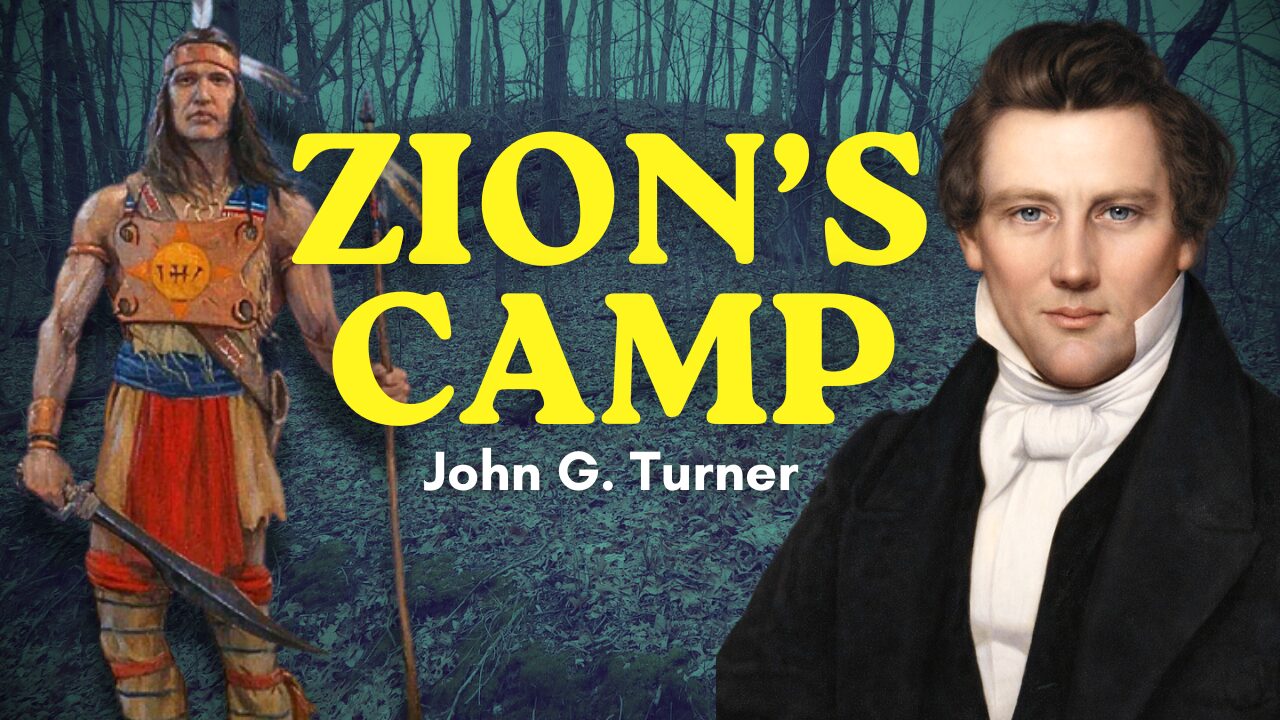
-The story of Zelph the White Lamanite
-Joseph Smith’s dog “Major” Z
-The thunderstorm that may have saved Zion’s Camp
-The tension between Governor Dunclan and Joseph Smith
Like, comment, and subscribe for more deep dives into Mormon history and theology.
Thumbnail Credits: Main image of Joseph Smith by Unknown painter, from Community of Christ Archives (public domain); Image of Zelph associated with Book of Mormon Evidence; Background image of Naples-Russell Mound 8 from HotWheel53
Originally published on mormonstories.org.
Transcript
Machine-generated and lightly edited. Click any timestamp to jump the audio to that moment. The audio is authoritative; please check it before quoting.
Introduction and Episode Overview
John Dehlin Hello, everyone, and welcome to another edition of Mormon Stories podcast. I'm your host, John Dehlin. It is September 12, 2025, and today we are bringing to you part 15 of what I'm calling the Joseph Smith Podcast, or Mormon Studies coverage of the history and life of Joseph Smith from a scholarly perspective. For those who are following Mormon Stories, you'll know that we are covering in depth, chapter by chapter, the book Joseph Smith the Rise and Fall of an American Prophet by Professor John G. Turner. Today we are covering chapter 14 of the book, which is covering the period in Mormon history known as Zion's Camp, which is basically where Joseph Smith pulls together a ragtag army to go from Ohio to down to Missouri to try and help and even rescue the Latter Day Saints who are experiencing significant persecution and mob violence in Missouri. So that's what we are covering today and we're so grateful to have back on the show Professor John Turner. Hey, John, welcome back.
John Turner Thrilled to be back with you. I was just thinking to myself, 15 episodes is a lot. I mean, it's not 2,000 that you've done in your 20 years of Mormon Stories. Congratulations again about that, But I'm starting to think we need to devise some sort of certificate program for listeners who make it all the way through my book this way that I should send out a certificate of completion or something like that to recognize those who can endure to the end.
John Dehlin Yeah, well, I wasn't sure how the audience was going to take this sort of in depth, chapter by chapter dive, especially because we've covered Joseph Smith so much on the podcast. But the truth is we're developing a loyal and very content. Contented. Is that a word audience? People are really valuing what we're doing. So, John, we can't thank you enough for your time on. Also, we want to thank our donors who make and made all this possible. We've received, just in the spirit of transparency, almost 13. So it's $23,000 in donations to this project. That means John Turner is going to be paid at least a decent amount for his efforts and we'll be able to recover some of our costs as well. And we'll be able to definitely finish the entire book, including the polygamy chapters. So we're super happy and grateful for all the donors that make this possible. I'll also just say this, this episode won't be released until the 19th. But this, this is all happening. This interview is happening. Two days after YouTuber and influencer Charlie Kirk was assassinated at Utah Valley University. We we send a, a heartfelt condolences to Charlie Kirk's family, to friends, to co workers, to people who listen to him, view him, follow him, support him. Mormon stories, of course, condemns all violence and continues to issue support for nonviolent, ethical, compassionate, empathetic, fact based conversations and dialogue. And in some ways, we just found out today that the shooter, and they, they've identified the alleged shooter. Apparently he is from the St. George area, which is an area that in and of itself has its own history of associations with violence. And of course we, you know, I also found out that he's, he at least allegedly spent a semester at Utah State University, which is one of my alma maters. The, the, the killer. We send out our condolences to his family and community and friends and we make no inference that his associations with Utah or the church have anything to do with his violence. It's just a dark, sad day for the state, for the country, for humanity, and our condolences to everyone. John, anything you want to add to that?
John Turner I'm just gonna say amen, brother John. I, I just totally would echo that. You know, being on the east coast, it's still remarkable how, how much sorrow, anguish that the murder, the assassination caused this week. You know, a lot of conversation about it on my campus. You know, a lot of conversation among young people, you know, whether whether they admired or didn't admire Charlie Kirk. Completely agree with what you said. People don't deserve to get shot for expressing their opinions. It's terrible, really. Just feel terribly for his family.
John Dehlin Yeah, absolutely. And for all the students who witnessed that event live. And it's just terrific in all the ways. So let's all do our best to model healthy, constructive dialogue and to eschew violence of any, any sort. And it's also, I was just noticing, I was reading, I was reading, you know, today's chapter and it definitely has, you know, violence as a major core theme. Much of the history of the Latter Day Saints in Ohio, Missouri and Illinois are, are drenched with violence. And I was even noticing as I was reading the Nauvoo chapters in Von Brody's book and listening to them in your book, how questions of national and state militias and you know, the interventions or the non interventions of federal or state militias into the affairs of cities is, it's a very timely time to be, to be even addressing the sorts of issues in, in the Life of Joseph Smith. So I guess past is prologue in some sense, huh? John Turner.
John Turner Yeah, and you know, I don't have, I don't have any particularly wisdom about current events. But one thing that I often think of when, when people make note of the polarized and often hateful and sometimes violent politics in which we live, that it's not unprecedented. And either that's just sobering as in human life, you know, community. It's always challenging, but in a way, I think it, it can also be encouraging. I mean, think what American, what sort of news Americans endured in the 1960s with, you know, just, just a string of assassinations and high profile murders that repeatedly shattered the country. And I think there's, there's a difference between, you know, enduring tragedy and being broken by it. And I think in a way, the American political experiment, it has endured and overcome a great deal. And that always gives me hope in the present and the future.
John Dehlin Yeah. All right. Well, so I've given the introduction to chapter 14. It's entitled General Smith. And I found it interesting how you begin the chapter. You begin the chapter by asking what happens when a prophet gets it wrong or when his plans fail. Why don't you go ahead and just tell us some of your opening thoughts as you were writing this chapter?
Why the Church Survived the Collapse of Zion
John Turner Sure. Well, one thing that I was wrestling with is why didn't everything fall apart when Zion collapsed, when the saints were expelled out of Jackson county, and then particularly when the redemption of Zion that Joseph repeatedly predicted never came to pass. Why didn't that discredit Joseph in the minds of his followers? Because sometimes when prophets get things wrong, it does lead to the collapse of a movement. I give a couple of examples. At the outset, there was a very famous Baptist minister in the United States, a contemporary of Joseph Smith's, who predicted that Christ would return in 1843 based on his calculation of prophecies in the Bible. When that didn't happen, there were some recalculations to 1844. It didn't happen. But all of those, you know, those predictions got really hundreds of thousands of Americans excited. A lot of people, at least partly bought into what William Miller was predicting. And when it didn't come to pass, he was in large part discredited and lost his influence. In this case, you know, Joseph Smith's influence didn't wane because of what happened in Missouri. And I think it's worth thinking about why it didn't wane.
John Dehlin Yeah. And I guess maybe at the end of this chapter we can, we can reflect on some of those reasons.
John Turner Sure.
John Dehlin Does that make sense? You also mentioned a Native American or Shawnee prophet who made a prophecy. Do I? I have A question about that, but do you want to. Do you want to mention that really quick?
Tenskwatawa and Native American Prophecy
John Turner Sure. So Tens Kwatawa, his brother is more famous, Tecumseh. He was a visionary. He gained some credit credibility because he apparently predicted darkness a few days before a solar eclipse back in 1806. He became known as the man who made the sun go dark at midday. And then he began teaching that God, the Master of life, wanted Indians to gather together into a single nation. And a number of them did. They gathered at a place that became known as Prophetstown, a native city in what was then the Indiana territory. White Americans became alarmed at the growth of what was sort of a native city state. And General William Henry Harrison, who later became president, led a military expedition against the city. Tenskwatawa promised his people safety from white bullets. But when Harrison's forces attacked, natives suffered heavy casualties and Prophetstown was destroyed. And you know that that was more or less the end of Tenskwatawa's influence. If listeners are interested in the story, which is fascinating and has a lot more to it, there's a great book by Adam Jortner, who's also written about the Latter Day Saints. I think his book is simply called Prophetstown, but I could be misremembering the title.
John Dehlin I had a quick question about that as I was reading this prophecy by Tenskwatawa. It mentions the. Basically a solar eclipse, the sun going dark at midday. And my Mormon brain remembered that there's a passage in the Book of Mormon where I believe around the time of Jesus being crucified, the sun turns dark at midday. And I'm not a big fan of parallelomania, of just saying, oh, there's a parallel, therefore it's, you know, borrowed or forgery or, you know, whatever. But also my brain couldn't help making that connection. I would guess that Joseph Smith might have heard about this sort of prophecy that failed. Is that reasonable? And if so, would there even be any value in trying to draw some sort of association for inspiration for that part of the Book of Mormon?
John Turner I think it's just more likely that Joseph Smith, true inspiration from the Bible. It's possible. I don't know enough about him. I've read the book, but it's been a while, so I've forgotten. It's possible that Tsuataua also in some way was influenced by the Bible. You know, a lot of, you know, quite a few 19th century native religious leaders were syncretic in the sources for their ideas. So I don't know.
Saints Expelled from Jackson County
John Dehlin Okay, so you know, we've already covered in past episodes what was going on. So did I hear you say that at this point in the narrative in 1834, basically the saints have been kicked out of Zion or Independence. So they're basically refugees at this point. Is that fair to say?
John Turner Correct. In the fall of 1833, they were expelled from Jackson county once they made it clear that they weren't going to honor an agreement that they had made under duress. And so they're violently expelled. There's some skirmishes. When some of the Saints try to defend their properties, they become refugees. They go north for the most part. They take refuge in Clay County, Missouri, spend a very miserable winter. It's a very. It's a. It's a pretty desperate situation. And I think that's. That's the reason why Joseph, after months of indecision, realizes that he needs to take action. And finally, you know, there's been discussion about the possibility of raising some sort of force to march to Missouri and assist the refugees in reclaiming their properties. He finally reaches the decision to undertake that mission in February of 1844. Spend some time recruiting men and money for the venture, and then what is most often referred to as the army of Israel at the time later becomes more commonly known as Zion's Camp sets off for Missouri in May of 1834.
John Dehlin And, you know, obviously the people who were the refugees, the Latter Day Saints who were in Missouri, went there because of Joseph Smith's prophecies that they would be building Zion in anticipation of Christ's return. So they were operating under Joseph's revelation. Remind us what revelations or prophecies Joseph received. Also not just about the creation of Zion, but also about the liberation of Zion, because he did prophesy, correct?
John Turner He did. So there was a revelation, I think, in February of 1834 that one identifies Joseph as the figure who will lead the Saints as Moses led the children of Israel. I think there was a revelation in December of 1833 that in a way, that revelation in part blamed the Saints themselves for not having tended the Lord's vineyard as they should have. It also instructed Joseph to gather warriors, young men up through people who are of middle age. And there weren't a lot of specifics at that time. And then the second revelation sort of on the subject a couple of months later that sets in motion the, you know, the recruiting of an army under Joseph's leadership to redeem Zion.
Joseph Smith's Prophecies About Christ's Return
John Dehlin And you mentioned at the top of 143, page 143, that Joseph prophesies that Christ will come soon at this, I guess we've talked about this in the past. Why is he talking about Christ coming soon during this crisis?
John Turner Well, I'm actually not pointing to a revelation specifically during the crisis, but really since the late 1820s and particularly in quite a few revelations from the early 1830s, Joseph predicts Christ's imminent return. What I'm doing in that paragraph is contrasting the views of Joseph Smith with William Miller, the minister I mentioned earlier in the episode. So Miller had these very specific predictions about Christ's return. You know, it's going to be in 1843 or 1844. Joseph, you know, his, you know, later on. There are some statements that are a little bit more specific, but they're longer duration. In the early 1830s, Joseph's revelations, they stress the imminence of the second coming, but they don't set a date. And in a way, I think Joseph often left himself a little bit more wiggle room in at least some respects. You know, also when he predicts that Zion will be redeemed or would, you know, stand forever, it's predicated on the Saints being faithful and righteous. So in a way, his revelations leave some wiggle room that things could turn out badly if the people are not, you know, are not as faithful as they should be.
John Dehlin Got it. So you mentioned mid page on 143 that kind of in the midst of this crisis, Joseph Smith renames the church. Do you want to talk about that? And I'm curious why, if you have any sense for why he chose to rename it, what he renamed it to. And then I have a question about that.
The Changing Name and Identity of the Church
John Turner Sure, great question. So the original name of the church was simply the Church of Christ, which is also the name of the church established by Jesus Christ in the Book of Mormon. My sense is that that name is a bit generic. In fact, if you just look around the American religious landscape today, you can find a number of groups that use the name Church of christ. So in May 1834, this is just before Joseph sets off for Missouri, a conference declares that the church will be known as the Church of the Latter Day Saints. And you know, over the past couple of years that that term, Saints has become sort of a familiar shorthand for church, church members. And you know, I think the name it, in a way it connects, you know, connects the Latter Day Saints with Christ's ancient followers and also points to their belief that they're living in the days sort of immediately before the Savior's return.
John Dehlin Okay, so the Emphasis is basically maybe to distinguish itself as a. As a church from other churches and to emphasize Christ's imminent return.
John Turner Yeah, I think those two things, sure. Absolutely.
John Dehlin And it's odd for a modern Latter Day Saint to read this only because for a long, long time, not only did people refer to us as Mormons, but we referred to ourselves as Mormons. And then, of course, when the new prophet, Russell Nelson, became prophetic, he declared that not only the term Mormon, sort of evil, a bad thing to say, a bad identity, he called it a victory for Satan, but he really has doubled down to emphasize the Jesus Christ part of our name. And he even told the press, if you want to just call us the Church of Jesus Christ, because that's really what we're about, is Jesus Christ, and he makes Jesus in the logo bigger and almost. These days, we're deemphasizing some of our early church history. So it's weird to have our founding prophet actually take the name of Jesus Christ out of the church's name, given the church's positions on that name today. Does that make sense?
John Turner Yeah, that makes sense. I think it's in good news, though, John. In 1838, Jesus Christ is back in the name. So it's in 1838 that the church is renamed again. Or at least there's clarification that it's the Church of Jesus Christ of Latter Day Saints. And eventually y' all work on the capitalization and hyphenation. I'm actually always amused in. In. I. I don't have a lot of Latter Day Saints in my classes here at George Mason, but I do every once in a while, and I'm always surprised that even many church members don't get the hyphenation and capitalization correct.
John Dehlin Yeah, you know what? I never paid attention to the spelling of the church. It wasn't until I started my podcast and wrote the name of the church out in a blog post or whatever that a historian reprimanded me for not doing the hyphen lowercase d on Latter Day I. Growing up 40 years in the church, I had never really paid attention.
John Turner I mean, that is almost as bad as not giving a general authority his middle initial. That's something else I had to learn.
John Dehlin Yeah, that's a bad. That's. That's verboten for sure.
John Turner That's why I use the G. John G. Turner.
John Dehlin You know, I guess I'm John P. Delin. I guess we gotta. Gotta amend that.
John Turner You gotta work on that.
John Dehlin Okay, I'll work on it. Okay. So before they go on, you know, before they go south, I guess it's south from Ohio to Missouri. Right.
John Turner It's more west than south, but it's west.
John Dehlin Okay.
John Turner It's west, west and a little bit south. Yeah.
John Dehlin Okay. So before they go southwest, something curious before their departure, your book says Joseph called together his recruits. And the book says we were all sealed up to eternal life. In other words, you say the. The. They were told that if the men remained righteous, their salvation was assured. And this, you know, and it said they would come forth in the day of the Lord Jesus. And a couple things came to mind. First of all, isn't everyone who's righteous saved? Like, why would they need a blessing if it was conditional on the righteousness, if they would be righteous, if they would be saved based on their righteousness not going to Zion's camp? So I wondered about that. But also it. This reminds me of what becomes the second anointing later, where, you know, wealthy Mormons of status are called into Mormon temples and their feet are washed and apostles involved and they're promised eternal life if they don't kill anyone. And that happens still to this day. What is going on here? Why is it going on? Yeah. Anything you can tell us?
John Turner Yeah. So great question. So this is a good number of years before sealing. The language of sealing becomes associated with ordinances such as plural marriage. In the early 1830s, one, I think you could say, prerogative of the high priesthood, which Joseph introduces in 1831, is that high priests can seal individuals up to eternal life, which I agree. On the face of it, the language doesn't seem to make a whole lot of sense in that salvation and glory, you know, they hinge on baptism and then, you know, continuing righteously. I think in a way, the language points to the power of a blessing and an assurance, you know, because every, you know, Christians in general at this time often get quite anxious about whether they might lose the salvation they think they have attained. It's actually a major point of theological debate for a lot of Protestants. And so sealing up to eternal life gives individuals just a greater confidence in their salvation and glory. And clearly it also speaks to anxieties that the men have before they set off on this march. They don't know what's going to happen. They don't know if they're going to suffer violence and get killed. And honestly, they haven't had that much time to think about it. Not that that would necessarily help. I'm actually in that paragraph. I'm quoting from a reminiscence by Reuben McBride. And, you know, he's kind of, in a way, just an interesting side story in that he was baptized into the church in March of 1844, and then two months later, he's marching to redeem Zion. So that's a bit of a whirlwind. And Joseph has recruited this. This army quickly. Army is, is, you know, it's more of an expedition. They don't really know what they're necessarily, what they're getting into. So I can. I can imagine a lot of anxiety that Joseph is trying to solve with those sorts of words and blessings.
John Dehlin Yeah, it's almost. It's. I mean, it. It seems like a big motivator for people back in the 1900s was their salvation. In other words, worried that they would burn in hell, worried that they wouldn't go to heaven. And so whether it's Joseph promising members of Zion camp, hey, you know, you may get shot, you may even die, but as an incentive or as a reassurance, I'll promise you your salvation if you go to basically. If you basically risk your lives for me. That seems like it could be a little bit of a carrot or a motivator. And then it reminds me of later when Joseph is propositioning potential wives, telling them that they and all their family will be sealed up unto eternal salvation if the woman will agree to marry Joseph. Both of these things suggest that promising someone eternal life in heaven with God was a powerful motivator. Whereas if somebody came to me in 2025 and said, hey, John, give me a hundred bucks and I'll promise you salvation, I'd say beat it. You know what I mean? Like, I wouldn't care. I wouldn't even believe that the person had that power, let alone, you know, what do you think? Is that. Is that a pretty powerful motivator back then?
John Turner Well, I think a lot of. A lot of Protestant Christians are very worried about the idea of losing their salvation. So Joseph is kind of emerging out of that context. You know, maybe I have a powerful conversion experience, but then I'm wracked with doubt or I commit some sin that makes me think, you know, I'm not. I'm not saved. I'm not going to have eternal life. I think also the other context here is that this is not unusual language for religious leaders to use in the context of war, particularly wars that have a religious inflection. So I think at Eka you can find this sort of language during the Crusades, which is a much more, you know, serious example. But you could find, you can find this sort of preaching from ministers before many conflicts. And I think it's, it's. It's a way to provide reassurance to people who are worried about their safety, worried that they might get killed, that if you do die in this, in this conflict, you're okay, your, your salvation is assured.
John Dehlin Yeah. Fascinating. Very fascinating. That's a lot of power to have to be able to tell someone. I can kind of assure you your salvation. That's given how important that would be to people. That again, that's just a lot of power to have. Would you agree?
John Turner Absolutely. And clearly many church members invest Joseph with that level of spiritual authority. And you're right. This theme of making a feeling assured about salvation or of making someone's calling and election. Sure. That emerges in a way, as you alluded to, is an even more important theme over the last five or six years of Joseph's life.
John Dehlin Yeah. Okay. So do you want to talk about the. The group that he's able to pull together and how equipped or unequipped they are both for the journey and for the potential battle?
Assembling and Marching with Zion's Camp
John Turner Sure. So it ends up being about 200 men. I forget the exact number that. That leaves with Joseph from Kirtland. They. They join up with a few other smaller groups as they make their way to the west across Indiana. There are also maybe a dozen women who also. Who accompany the men. There's some children along. They have some wagons. They, they have some arms they don't have. I don't know if they have a gun for everybody or not. I think it's useful to Clari or important to clarify at the outset, especially with all of the rhetoric that Joseph himself employed about gathering warriors and being the commander in chief of the army of Israel and leading the Saints the way that Moses had led the ancient Israelites. It sounds like the army of Israel is heading west to redeem Zion by force. That's actually not what Joseph is intending. He is not planning on leading his recruits into a pitched battle against anti Mormons in Jackson County. I'm not sure. 200. I don't think 200 men. They wouldn't have been enough for that task. What Joseph anticipates is that the governor of Missouri, Daniel Dunklan, he anticipates that Duncan is going to authorize the state militia or state militia troops to protect the refugees as they return to their homes. And then Joseph anticipates that his recruits would accompany the refugees back on their properties and then serve as a defensive force going forward. So Duncan had made. Had written a number of letters to church. Church leaders in Missouri. If you read them carefully, they're a bit equivocal. He does express his willingness to ensure fair proceedings as the Saints pursue legal redress. And he does state that the Saints should be permitted to return to their homes. But he's rather equivocal about the extent that he would go to ensure that. And it's also very. I think if you had been on the scene in western Missouri, you might have realized that actually being able to use the, you know, state militia troops for any purpose on behalf of the Saints would be. Would be really difficult. But just for clarity, Joseph is not planning to lead these men into battle. He's anticipating sort of positive help from Missouri's governor and envisions the refugees being able to go back to their properties with the army of Israel to protect them.
John Dehlin Okay, so not anticipating an actual battle. I was really, obviously, just in the moment of reading, really disappointed to see that in. As they start hearing the talk of, quote, warriors or an army marching from Ohio, that the residents of Jackson county burn dozens of Mormon houses. That's horrific. They're literally burning Mormon houses, dozens of them. That's terrible.
John Turner Of course. I mean, and they. They don't want the refugees to come back. They're determined they're not going to come back. And if you burn their houses, it reduces any incentive they have to return. That's a good reminder, John. You know, we're going to talk, you know, about elements of Joseph's leadership and, you know, the way that this story turns out. Another really important thing to keep in mind is that we're talking about refugees who have been driven from their homes, that we. Some people have been assaulted, and it's these people have. You know, they've endured persecution and they've been kicked out, and, you know, that's. That's the ultimate backdrop.
John Dehlin Yeah, yeah. That's horrific. That's horrific violence, and it's inexcusable. And I think it. It's just contributing to all the trauma. You know, I think it's pretty clear that Joseph, some would argue, kind of becomes unhinged by the. By the Nauvoo period. But this is horrific violence that I think would cause anyone to have all sorts of trauma, especially if they feel responsible for the people getting into this position in the first place.
John Turner Yeah. No. Now, as they head west, I think, you know, there's. We're going to talk about, I think, some episodes within the army that.
John Dehlin Yeah, let's Talk about it, let's talk about it.
John Turner That are kind of fun, you know. And you know, sometimes there are conflicts, but I think for starters, it's worth saying that when the army of Israel sets out, I think Missouri's still a long way away. It's a thousand miles away essentially. And so at first you don't really have to worry overly much about any imminent danger. And I think Joseph, he really enjoys being on the road. Their circumstances are rough, but he's a strong 28 year old man and I think he, you know, I've talked before about how Joseph loves, you know, he loves adventure. He has a taught, you know, he can tolerate risk and danger and I think he enjoys, I think he enjoys the march. I think, you know, the early on in particular, this is, this is actually fun. You know, despite soggy conditions and mud and getting blisters, I think Joseph and a good number of the other, other marchers, things are okay at first.
John Dehlin Yeah. Yeah. Okay, well, let's go ahead and get into some of those fun or interesting stories about what it's like to be on the road with Joseph Smith.
John Turner Yeah, well, one thing is, I mean everybody is, is sort of roughing it and, and you know, toughing it out. They, you know, their bedding is, is wet. If it rains, they don't have a lot of food. George A. Smith, Joseph's young cousin at the time, he remembers that they often didn't have clean water. They'd sort of have to strain out what he called wrigglers with their teeth, which sounds totally gross. Many of Joseph's, many of the, many members of the camp, they appreciate the fact that Joseph gets down into the muck with them. We've talked in a prior episode about Joseph Back in 1831, traveling back to Kirtland by stage coach, while others had to walk. Well, in this case he pretty much walks the whole way just like everybody else. He's eating the same sort of scraps of food, drinking the same bad water, getting, getting blisters. So I think this in terms of Joseph's leadership, you know, a lot of this is positive, but tough circumstances also do tend to breed dissension. Can I, can I tell the story of Joseph's dog, John?
John Dehlin Yeah, we got to talk about his dog. Absolutely.
John Turner Okay.
John Dehlin Major. Right, Major.
John Turner Major. He's not old, Major yet, because he's not old. But an older man who was part of Zion's camp gave Joseph a dog at the outset of the trip. Perhaps, you know, for his protection, but probably also his companionship. I think we don't actually know exactly what kind of dog it was. One of Joseph's granddaughters, I think, provided the information that it was an English mastiff. She wouldn't have seen the dog. So I think it's a little uncertain. Mastiffs are absolutely enormous. So I just, I don't know, I have a little bit of a hard time believing that it was, it was that massive. But apparently Major and Joseph really took to each other and Major sometimes guarded the prophet a bit too zealously and would be aggressive toward people who came near him. He also barked at night, which just drove everybody crazy. And apparently 10 days. Well, not apparently, but for sure. 10 days into the march when the, the camp was just over the Ohio Indiana border, one of the men just got completely fed up with the dog. He'd had enough of the barking and the growling. Sylvester Smith, who's not related to Joseph, threatened to kill the dog. And then Joseph told him basically that he smelled even worse than Major and just, you know, chastised him. Both, both Joseph Smith and Sylvester Smith had hot tempers and they just clashed repeatedly over the, you know, the weeks of the march.
John Dehlin Yeah, I mean, I'm sure there's a lot of dog lovers out there. They don't want to hear about Sylvester Smith's anger towards Joseph's dog. And it, I'm sure there's a lot of people that love dogs who now love Joseph more knowing that he was a dog lover.
John Turner No, I think that's, that's true, actually. There's a quote, it's not in the book, trying to remember the individual's name. There was a. There was a man in Iowa, not, I think not a Latter day Saint by the name of Harlan who visited Joseph a few times in Nauvoo. And later on, I think reminiscing about him, said the man that will reciprocate the fidelity of a dog cannot be altogether bad. So, yes, I think dog lovers would feel better about Joseph. I will add that my family adopted a dog about 10 days ago, John, so. Oh, wow.
John Dehlin So this is, this is personal fresh for you?
John Turner Yeah. Now, I think our dog was. I don't know, I think he's better than Major in terms of behavior. There's another episode in early June. The, let's see, I think the, the story then is that Levi Hancock, he, he whittled his own fife and as his group marched into camp one evening, Hancock was blowing shrilly on this fife and Major didn't like it and sort of moved as if he was going to attack Hancock and Hancock's group, which included Sylvester Smith, no harm was done. But Sylvester Smith threatened to kill the dog. And Major, sort of on cue, apparently barked his head off that night. And that bothered a lot of people. According to Brigham Young, there was consider, these are Young's words. There was considerable complaint and murmuring concerning the dog. Joseph, he did not back down. He said he would whip anybody who harmed Major. Well, Sylvester Smith, he also didn't want to back down. He said, if that dog bites me, I will kill him. And Joseph then repeated, repeated his threat. And you know, I think basically everybody sort of looked, looked kind of bad in these exchanges. Some people suggested that maybe Joseph's spirit was not quite appropriate to his role as, you know, sort of prophet and in this case, commander in chief of the army. You know, he, Joseph, I think, had not a, not a terribly good explanation that he was descending to the same spirit as Sylvester Smith to show them how, how bad it was to act that way. Eventually, you know, I suppose everybody just calmed down. Maybe the dog stopped barking for a while.
John Dehlin You know, far be it for me to, to quote Terrell Gibbons, but you know, we've already talked about him basically saying those who lose their faith in Joseph Smith over polygamy have unrealistic expectations. I do think that if you expect your prophet to never get angry or upset, you know, Terrell Givens is right in that case, you. How, how could any human be above getting angry or being ill tempered at one time or another? Right.
John Turner Of course. I mean, you know, we all like, we all act like idiots from time to time. And in, in the end, this is kind of small potatoes. I. Fortunately, I don't think Major actually bit anybody. So his, his bark was, was perhaps worse.
John Dehlin Yeah. Julia is, is quick to remind me that while Joseph Smith may have loved Major, it's also alleged that he was involved in the sacrificing of at least one dog in a treasure dig. So we don't, I guess she's saying don't get carried away about Joseph's love for dogs. I don't know.
John Turner Well, I mean, that is a fair point. I'm gonna, I'm just gonna say I'm feeling sympathetic toward Joseph. I don't, you know, we can't really corroborate that really unsavory detail about the treasure digging expedition. But you know, it's 1834 majors on the scene, so all is well.
John Dehlin Yeah. Okay, so the next kind of, the next interesting thing I have listed was them coming Across Zelf, which I found to be kind of an interesting story. And I definitely want to understand what it means that Zelf had really big bones. So why don't we. Why do you tell us the Zelf story and what your reflections are about it?
Burial Mounds and the Zelph Story
John Turner Yeah, so it is a fascinating story. So this is in early June. The camp has just crossed the Illinois river, and they encounter a large series of burial mounds. These are really old. Archaeologists date them to about two millennia ago. And Joseph's and some of the men, they climb to the top of a large mound and they start digging into it, and they discover the bones of a very large man and also a stone arrowhead. And, you know, these guys aren't experts, but apparently his. His thigh bones were enormous. They speculate that they're even longer than Joseph's. I think what's, What's. There's a couple of interesting things about it. This, this reflects that in general, Europeans and white Americans, they. They often did not hesitate to dig into native graves in ways that were often that were offensive to native peoples. Also, Joseph. We've talked in past episodes about the fact that Joseph doesn't preach from the Book of Mormon or take Book of Mormon texts for his sermons. He rarely reflects on specific passages in the Book of Mormon. But I think it's fair to say that at times, the history narrated by the Book of Mormon, it. It does animate his mind. So he writes, Emma, during the march that he and his men are wandering over the plains of the Nephites. And apparently as they went, Joseph sometimes recounted elements of Book of Mormon history. We don't know in. In greater detail than that. But after they excavate this mound and look at these bones, Joseph reports that he's had a vision that the remains are those of a mighty prophet. And Joseph later, I think this comes from a little bit later, identified the man as Zelf and said that he was a warrior who served under a prophet named Onondagas. Neither of those figures is mentioned in the Book of Mormon. Wilford Woodruff, in his journal, added the detail that Joseph said that Self was a white Lamanite. So he was a Lamanite who had repented, who had turned to the Lord, and then God, either in full or in part, took away his curse of dark skin.
John Dehlin Yeah, a couple things are interesting about that for me. One is I always thought that humans as a species got taller and taller over time. So if. If these were bones from 2000 years ago, it's. And if Joseph Smith was over 6ft tall, it Seems weird to me that there would be Native Americans from two millennia ago who were significantly larger than Joseph Smith. What do we make of that? Have you even looked into that or thought about it?
John Turner It's a great question. Makes you wonder what Maybe Joseph could have identified the bones as pertaining to the giants or the Nephilim mentioned in the sixth chapter of Genesis, but he doesn't. I don't know. I don't know. If they, they misjudged the bones, you would think they would be familiar enough. I, I've, I don't know. It's a great question, Sean.
John Dehlin Yeah. And I wonder whether whatever Native American bones they found from that time period, whether on average they're shorter or comparable or larger than, than the humans in the 19th century, but maybe some of our viewers or listeners can share something that they know about that. The other two things that were interesting to me to have Joseph Smith not, not just kind of referring to the Lamanite curse, you know, being dark skinned, by suggesting that Zelf had the curse removed and his skin turned white. I guess, number one, that helps me understand what Spencer Kimball, the eventual prophet in the 20th century, ends up prophesying. And there's probably other bases for this as well, but you know, Spence, Debbie Kimball used to go around telling Lamanites, you know, Native Americans and Pacific island islanders that if they were righteous, their dark skin would become white and delightsome. In other words, the curse could be reversed. And so this story kind of puts, that puts that sort of doctrine or that teaching squarely in the brain and in the mouth of Joseph Smith, which is interesting, but also it kind of shoots down the apologetic here these days that when the Book of Mormon talks about a curse, it doesn't mean a cursing of the actual skin. It's more a curse of the countenance. If Joseph Smith is literally saying he became a white Lamanite, meaning his dark skin turned white, that kind of just automatically shoots down that apologetic.
John Turner Well, I haven't looked at, I haven't looked at the relevant Book of Mormon passages for a while, but I do think the commonsensical reading is that the curse, at least in part, part of the curse is dark skin. It's. Yeah, it's a, it's a curious comment. There weren't a large number of Native converts to the church during Joseph's lifetime. I think Louis Dana is the most prominent example. He does not, you know, he does not. His skin color doesn't change after he joins the church. I think for Joseph, I think one reason that These reflections. Well, I don't know. Anything else you want to say about that, John?
John Dehlin No, no, that's it. I think that's important because for me, the racism in the Book of Mormon is, is one of the most problematic things about it, honestly.
John Turner Yeah, no, I, I, I agree. The, the idea that dark skin is loathsome is very much a disturbing idea. I think for Joseph making these connections to Book of Mormon history, it is a good reminder that even if the Book of Mormon wasn't front and center in Joseph's mind going forward, it did in some ways shape his imagination and that of church members. I think this is also powerful as they head west, you know, it's a way of connecting. It's a way of connecting them to ancient sacred history. It further serves to sacralize their mission.
John Dehlin Yeah, and I, and I imagine, number one, you know, we've talked about mirth in the past if they're traveling along and, and probably there's some drudgery and all that. The food isn't great. The dogs are a little unruly sometimes, apparently, I guess adding some mystery or some fascination to their travel and taking what might be a mundane burial mound and connecting it to the Book of Mormon and then spinning a story. And not just a story from the Book of Mormon, an original story, almost like Book of Mormon fan fiction. That probably adds to the joy and the entertainment and the wow and the wonder of the trip. And also it continues the impression that Joseph Smith, the impression amongst his followers that Joseph Smith has special powers and can channel, you know, information that isn't accessible to the normal human. Joseph has the power to channel that information, even potentially without a seer stone and a hat.
John Turner Yes. No seer stone near. No seer stone or hat at this
John Dehlin point that we know of. Okay, well, I thought it was interesting that they crafted a flag and I thought it was consistent with your view that they didn't want war. What was written on the flag? Do you want to talk about the flag?
Flags, Tensions, and Camp Discipline
John Turner Yeah. So Levi Hancock made. In addition to making a fife, Hancock was really handy. He also made a flag. Apparently he drew an eagle on one side and wrote peace in big letters on the other. They attached it to his staff. It became the standard of the modern army of Israel. I'm sure it was pretty, pretty makeshift, you know, and to a certain extent, they acted like an army, you know, at least a little bit. They did a little bit of training. Apparently they had a bit of a sham fight. They tried to make sure everybody was equipped and, you know, they. They started taking these things a little bit more seriously as they got closer to Missouri.
John Dehlin And Joseph. Joseph himself was quite armed.
John Turner Yeah, apparently he had. This is according to his cousin, George A. Smith, he had a horse pistol from the War of 1812, a rifle and a sword.
John Dehlin Yeah, and I'm sure, I'm sure it was. It could have come in handy given the violence on the frontier. So they want to meet with the governor of Missouri, Governor Dunklin, and something tells me they're going to be disappointed.
John Turner Well, they. Joseph sends Parley, Parley Pratt and Orson Hyde to meet with Duncan in Jefferson City. They. At that point, Joseph is still hoping that Duncan is going to support the Saints. Duncan, however, has already indicated that he opposes what he regards as a provocative step. He. Duncan has stated that the Mormons have no right to march to Jackson county in arms. You know, they're not a officially sanctioned established militia. Private citizens don't have the right to levy war, even in defense of their friends who have suffered losses. And presumably Duncan, when he meets with Pratt and Hyde, he says the same thing. Bishop Partridge came to meet the camp as it approached Clay county, and he tells Joseph that and the others that if they try to enter Jackson county, violence is, Is pretty much a foregone conclusion.
John Dehlin Yeah.
John Turner So,
John Dehlin you know, it says in your book that Duncan wasn't going to support them. So does it become kind of a standoff at this point? And if so, how does it proceed?
John Turner Yeah, so once they get a little bit closer, there's an attempt at mediation. So because everybody knows that this army is on the way. And so people on the ground in and around Jackson county have been. Have been talking about this for weeks. There's a circuit court judge named John Ryland. He invites Mormon leaders who are now in Clay county to meet with a committee from Jackson County. They meet in Liberty, which is the county seat, and the committee from Jackson County. Sorry for getting into all of the weeds here, but their, their recommended resolution is that one side buy out the other side in Jackson County. That the, the Mormons or their opponents buy out the other side for twice their land's value with payment due within 30 days. Well, the Mormons certainly are not in a position to buy out the non Mormon residents of Jackson County. They don't have that. That kind of money. I think in reality, the non Mormons, they know they don't really have to negotiate. They essentially occupy Jackson County. They've driven the Saints out. There's no indication that Governor Duncan is actually going to use state militia to ensure fair trials for the Mormon refugees. There's no indication. He's certainly not going to use the state militia to forcibly return the Saints to their homes. So it's a potential standoff. But I don't think, and you know, I think tensions rising, I think non Mormons in Jackson county, they're prepared to fight. And I think Joseph is probably quite uncertain how to proceed.
John Dehlin Yeah, yeah. The compromise wasn't really in good faith, I guess. I guess later Joseph Smith is able to raise more money, but certainly at this point point he's not able to buy out the land. And my guess is they wouldn't have let him anyway, right?
John Turner No, I don't think so. He proposes when church leaders can consult with him. His counteroffer is that he'll buy the non Mormons in Jackson county out if they can give him a year to raise the funds. But before there's any response to that proposal, the. The camp's been disbanded and so the non Mormons in Jackson county, they never really have to negotiate. They simply occupy the ground. And I don't think they have any intention of selling or ceding it.
John Dehlin Before we get into the conflict and its resolution, let's tell the story of Lyman White and why Joseph Smith would throw a French horn. That seems. I feel bad for the French horn. Forget about Major. I'm feeling bad for the French horn.
John Turner Yeah, my daughter used to play the French horn. And at least in the 20 teens they weren't cheap. So, yeah, I don't think you should throw them around. So again, this is, this is sort of a, you know, a silly spat. Joseph. This was on June 17th. They at that time were in Carroll County, Missouri, getting really close to their destination, just a couple days away from Clay county. And the camp had ended up splitting up. Joseph. Joseph's plan was for the camp to, after they ferried across a creek, that. His plan was for them to go a little bit further and spend the night on the prairie. Lyman White, who's Joseph's second in command in the camp, didn't like that idea. He thought the camp would be exposed to possible attack if they overnighted on the prairie. So he kept his men in the woods. And then when they eventually reunited, Joseph was livid at what he understood as disobedience. And he grabbed the. He grabbed the camp's horn and threw it. And either intentionally or by accident, the horn must have landed or passed really nearby. Sylvester Smith, who thought that the prophet had aimed the horn at him. So White apologized. Sylvester Smith at This point he's, he's kind of had it with Joseph's leadership. He's, he's not going to be quite as forgiving.
John Dehlin But it does say White apologized and promised his future obedience.
John Turner Yep. And that, that kind of settled it. They've got, you know, I, I do think they, on some, on some level when this concludes they realize, okay, we're almost to Clay County. We, we kind of can't be arguing among ourselves.
The Thunderstorm and the Retreat from Conflict
John Dehlin Well, let's talk about the, the building conflict that, that culminates in the, the magical thunderstorm. I, I am reminded as I'm reading ahead that during Joseph's martyrdom, during the moment he's killed, there's also some sort of inclement weather event that is reported to have happened. So whether it's the meteor showers that we've already talked about, the volcano, it just seems like there's a lot of interesting weather interventions during the life of Joseph Smith.
John Turner Yeah, true. I think June out in Missouri and western Illinois you probably get a lot of terrific thunderstorms. In this case they reach Clay county on June 19th and they make camp between the forks of the fishing river near a Baptist meeting house. And that night they're worried that non Mormons are going to cross the Missouri river and come and attack them. And I don't know if to what extent that was a possibility. In later recollections some members of the camp suggest that there are hundreds of non Mormon men on the banks of the river ready to attack them. I think that's probably overblown. I think had the Mormon army had it crossed into Jackson county there definitely was, was going to be violence. I'm not so sure that the anti Mormons would have taken the offensive as long. Well, I don't think they would have immediately taken the offensive without that step. I mean over time a Mormon army in Clay county would also have been a provocation. But in any event there's no attack and instead there is just a shocking storm. The description of it in contemporary journals is, is very vivid. Moses Martin, one of the one member of the army, he says the whole canopy of the wide horizon was in one complete blaze. Their deafening thunder collapse torrents of rain and in some parts of the area hail as large as half pound chunks. And the next day they see just destroyed crops and vegetation.
John Dehlin It's, I mean is the, is the implication that this thunderstorm help prevent, you know, violence against the, the Saints, the Latter Day Saints?
John Turner I mean that's, that's the implication. I think that's the way they understand it at the time.
John Dehlin I mean, I'm surprised we don't hear more about, about that miracle versus the, the seagulls or whatever, because that, that sounds like a, a plausible miracle.
John Turner Well, I think if anti Mormons were really preparing to attack, I suppose that would, you could understand it that way. And I do think that's the way members of the camp come to understand it. As I said, I'm skeptical that hundreds of anti Mormons were about to attack them. You know, there have been negotiations underway. I think it's unlikely, but that, that is the way that the, the marchers understand it.
John Dehlin Okay. All right, well, let's go ahead and, and move to kind of what you cover on 148, which is kind of how. Let, let's, let's, let's kind of narrate to the, the, the climax of the, of the Zion camp, you know, experience and what happens.
John Turner Sure. So I think on June 22, Joseph dictates a revelation. Now, keep in mind, they've been negotiating a bit. Joseph's just made this proposal. He doesn't have a response yet. But I think Joseph, he doesn't see a path for the immediate redemption of Zion. So he dictates a revelation. And in it, Jesus Christ assures the Saints that Zion will be redeemed, but not yet. And the reason for that is the transgressions of the Saints themselves. The revelation states that, you know, not enough men volunteered to fight. Church members hadn't sufficiently supported the army of Israel with their money. The marchers had lacked unity, which that does definitely seem to have been true at times.
John Dehlin That's Major's fault.
John Turner Yeah. The revelation does not single out Major as the chief transgressor.
John Dehlin I think it's official Mormon doctrine that animals don't have accountability for their sins.
John Turner Well, you know, I think that that is, for the most part, a reasonable theological position. Yeah. So the revelation declares that therefore, the Saints are going to have to wait for Zion's redemption. It also instructs them to continue to buy land in Jackson county, which I don't think they're really in a position to do in surrounding areas, that the army of Israel should continue to grow until it would be able to overpower its enemies. But in short, they are to return to Kirtland and receive an endowment of power in the temple once it's completed.
John Dehlin Okay, I'm guessing you can anticipate some of my concerns here. First of all, I thought it was ridiculous for Jesus to propose that they buy more land.
John Turner Yeah.
John Dehlin Well, isn't that kind of a ridiculous proposition?
John Turner Well, I mean, especially in Jackson County.
John Dehlin Yeah. What is Jesus thinking? Tell me, John Turner, what is Jesus thinking telling the Saints in Jackson county to buy more land?
John Turner I do not have a direct line to the Lord. I mean, I will say that, you know, a series of revelations in the early 1830s instruct the saints to buy land, to buy up as much of the county as they. As they could. And so in a way, I read that as. Or not abandoning Missouri. Buy up land in Jackson county if you can, but buy land in surrounding counties as well, which, as we'll see in subsequent chapters, leads to subsequent conflicts.
John Dehlin Yeah. And of course, you'll. You know, I've mentioned blame reversal many times. You know, if. If this is Jesus literally mad at the Zion's Camp Saints for not giving enough money to Joseph and not. And fighting too much and not being as faithful. I don't know. Like, I guess Jesus can say and do whatever he wants and can be mad at people for whatever he wants, but it seems like they're sacrificing quite a bit. So I've got a problem. If Jesus is really blaming these men and women and children for the failures of Zion's camp, I kind of. If Jesus is literally blaming them, I'm kind of mad at him. But then if Joseph is just giving bad revelations and leading people into really problematic and potentially deadly circumstances, and then when his leadership and prophecies don't come true, he's doing that blame reversal thing and blaming them for his escapades and his adventures and false prophethood. I guess I've got a problem either way, John Turner. Is that reasonable?
John Turner Yeah. Well, you know, if I had to pick John, I'd rather have a problem with Joseph than Jesus. Yeah. No, I, You're. I agree.
John Dehlin And
John Turner it does seem. It does seem like blaming the wrong. The wrong people. The reason. The. The reason the camp fails isn't because the Saints haven't been sufficiently faithful, certainly not those on the trip. Yeah, you've been some squabbles over the dog and overnight locations and French horns and all of that, but no, everyone who signed up has sacrificed a great deal. And sure, the army could have been bigger or could have received more donations. I mean, the real blame. And I actually think this is the way most church members think the real blame is on their enemies in Jackson county when, you know, over the. The next several years, and you can see this. This language in the Kirtland Temple dedication. When the Saints think about Zion, they curse Their enemies, you know, they don't look back on so much, on Joseph's decisions. And the real problem is they have implacable opposition. And in a way, if I wanted to say something charitable to Joseph, I would say that the revelation gives people a way to make sense of what's happened. Now, I don't think it's. I. Maybe you couldn't have a revelation that simply says, you know, our enemies are too strong now. But I think you could have. Maybe you could have had a revelation, said, our enemies are too strong now, but we're going to continue to grow in strength, and we have to wait until then. Yeah, I would. I would have found that more theologically palatable. But in a sense, I think Joseph feels the need to say something in light of the fact that they can't redeem Zion.
John Dehlin I mean, I'm always wondering why Jesus doesn't say, hey, saints, my apologies. Joseph got this one wrong. I said, don't gather an army, but he misheard me and said, gather. Like Jesus never comes back and says that Joseph made the mistake, and Jesus never comes back and says, I'm sorry, I made a mistake. So I guess you could either only blame the Missourians or the people on Zion's camp. But I guess on the one hand, there's lots of hands here. I'm feeling like Tevye and Fiddler on the Roof. On the one hand, violence is inexcusable. The mob violence in Missouri is horrific. It's un American. It's illegal. It's terrible. You know, the burning of houses and kicking people out is, again, just inexcusable and horrific. But also, if Joseph were just saying, hey, I'm your mayor, or I'm, you know, I'll be a group leader and let's try and build some civilizations, that's one thing. It's just when he takes on the mantle of being a prophet, seer, and revelator, that means in three different ways. He can see the future, he can prophesy, he can see the future. He can see things others don't see, he can reveal. And so, like, I guess they're following him again. We've covered this multiple times. Now we're beating a dead taper. We've talked multiple times about the fact that he tells everyone. Jesus tells all these people he's a prophet, he's a seer, He's. He's a revelator. He's got special powers. So they're following him because they believe, you know, he's not going to lead them into trouble. He's going to lead them into the truth. He's going to lead them into the way Jesus wants. And so I can't just be upset at the Missourians. For me, this comes back to Joseph ultimately, because he got everyone into this mess, right? He got everyone into this mess. And then when I find out that 15 people end up dying of cholera, 15 of Zion's camp, well, that becomes a massacre. And that, that's outrageous. And again, if Joseph hadn't sent everybody down to Missouri, none of those people would have died. You know what I mean?
Cholera Strikes Zion's Camp
John Turner Yeah. So good questions. I mean, I'm not here to, to really defend or criticize Joseph. I think I would just say that, yes, beginning in late 1830, his revelations have in a way set things in motion that he can't control. And I think you could say that at the start he's a bit naive about the implications of trying to build a new Jerusalem in Jackson County. You know, there are other people there. It could be complicated. It's clear that it's really very complicated. By the summer of 1833. And as we talked about in the last episode, Joseph is very uncertain about how to respond to this crisis. And he doesn't act decisively until there are reports from Missouri that reach Kirtland in the winter, that the people are desperate, they need for him to do something. And so he does something. You know, he's, he recruits and he leads this army there. I think as far as most church members were concerned, despite the failure to redeem Zion, despite the deaths from the cholera epidemic, Joseph's attempt and his willingness to march a thousand miles and demand and attempt science, redemption, it's better than inaction. I don't know if that, that makes any sense, but had he simply said, you know, oops, this, you know, building a new Jerusalem in independence wasn't a good idea. Let's just all come back to Kirtland. That would have been a very tricky decision to implement. So I think what Joseph has done is certainly much better for the cohesion of his church and there is a very real human cost to it now, you know, I don't think we can, we can really blame Joseph because there's a cholera out outbreak. But there is, there is also, there is some, there is some cost in leadership that, you know, he didn't really have any good options, you know, that there's, there's some cost that this doesn't, doesn't work out. And there are some people who are discontent because of his behavior or elements of his leadership during the march. But you know, I don't think a backtracking oops was really an option as of early 1834.
John Dehlin And that's what leads to things like Jim Jones or David Koresh, you know, profits. Sometimes profits have to double down and triple down on their prophecies to maintain the loyalty of their followers. And I think honestly, that's one of the most dangerous things. I'm not calling the Mormon Church a cult here, but that's one of the most dangerous things about cults is prophets have to claim to see the future, to have special powers. And then sometimes things can just get more and more extreme as, as they unintentionally or intentionally lead the people into trouble. The one thing I'd say about cholera is it's not like that's some airborne thing that, that's literally as I read it, that comes from like drinking contaminated water or eating contaminated food. They wouldn't have probably died of cholera if they'd stayed back in Kirtland. That's, that's fair, right?
John Turner Sure, that's fair. But I mean also, you could also say ever since early May they'd been drinking bad water. And it's a, it's a, it's a horrible confluence of events. I will say, as unsatisfactory as this outcome is, one thing that is characteristic of Joseph's leadership, and in a way also characteristic of Brigham Young's leadership, is that both Joseph and Brigham at times lead their people into violent situations. And sometimes, and I'm thinking, you know, you could, you could think about in particular Brigham Young's authorization of a offensive operation against the Timpanogos Utes in 1850, which includes orders to kill prisoners. It's terrible. So I'm not saying that Mormon leaders are free from the stain of violence, but I will say that when Joseph finds himself in sort of implacable conflict with anti Mormons and repeatedly finds his church on the brink of war, he does pull back before the worst possible outcomes. So he does give way and surrender repeatedly instead of leading his people into kind of open all out war with their opponents.
John Dehlin All right, well, a couple other quick things. I noticed again that Joseph kind of does the carrot and stick thing because as he's sort of, I don't know if turning tail is a, is a fair way to characterize it, but as he, as Jesus tells Joseph to turn around and go back to Kirtland and kind of says never mind, Joseph promises the elders who have already been told they've basically got their calling and election made sure he tells them that if they return to Kirtland, they will receive a great endowment of spiritual power and blessing in the temple. And of course, now I'm thinking, ooh, endowments. That. That reminds me of what ends up happening in Nauvoo and the. The temple endowment that, you know, currently Mormons receive when they're, you know, 18 or 19 or 20 or when they get married. So what's. What's going on? Is this the first emergence of the teaching of an endowment? I think I remember some discussion of, in Kirtland, in the Kirtland Temple, of there being an endowment from on high. Well, what's going on there? And is it sort of like a consolation prize in some way?
John Turner I think there have been. I think in Joseph's revelations, there's already been references to an endowment of power previously. So in a way, yeah, in a way, you could read this as a consolation prize, but perhaps as a refocusing on another objective. I don't really think there's a connection to the endowment as an ordinance introduced in Nauvoo. I mean, there's some connection in that there are preparatory washings and anointings in Kirtland. But I think what the phrase suggests. It's a biblical phrase, and it suggests sort of a Pentecostal outpouring of power that in this case, Joseph suggests will equip the elders for further service in the mission field and for other purposes.
John Dehlin And I wonder if they're like, oh, wow, cool. Well, dang, this wasn't great, but now I get a special endowment from on high. I wonder how motivating that was to them at this point in the journey.
John Turner I. I don't know. I mean, I think. I think it is a really. Of course it's a. It's a disappointing. Really disappointing outcome. It's a crusher. That disappointment is amplified by the cholera deaths. And then they've got to, you know, it's. They've got to walk all the way back home, back to Kirtland or wherever else they've. They've come from in some cases. And, you know, there's newspaper reports that, you know, they. They don't look so good on the way back. You know, their countenances are. Are low. And at the same time, yeah, I don't know if that was a consolation or not, but there are some people who lost their faith in Joseph's leadership as a result. But the vast majority of Joseph's army of Israel didn't You know, they marched with him. Not simply, I would say, not in a simple sense that they thought he could predict the future, but that he was, you know, he was prophet and church president. They wanted to be. They wanted to be part of the story. They wanted to redeem Zion. Ultimately, they blame their enemies. They don't, you know, rather than. Than Joseph. And so I think they hang in. They hang in there with him despite this really severe setback.
John Dehlin One last question. It's Joseph is about Zion's camp. Joseph is known as being a real student of the Bible. And in my best moments, I want to believe that Joseph Smith, at minimum, believed that he was communicating with God and Jesus and that he was sincere as a prophet and not just making it all up. But in the Bible, there aren't there instances where God intervenes and actually helps Israel emerge victorious in wars? Isn't there, like the walls of Jericho, you know, God intervenes and the walls come tumbling down. I don't know. I'm rusty on my Bible history as well, but I'm wondering if, if Joseph was a sincere believer that he was a prophet and that God existed and that God and Jesus had power. I wonder if he ever contemplated calling down the powers of heaven or the wrath of God to help them win. You know, that would be a reasonable thing to do if you literally believed in the Old Testament, right?
John Turner Yeah. Well, there's. In the book of Exodus, you know, Joseph's revelations say that he's going to lead as Moses led. And Moses was a, you know, he directed in unusual ways. He directed the military fortunes of the Israelites. So there's this scene after the Exodus when the Israelites are attacked by the Amalekites. And Moses, when he holds, when he holds his staff up, sort of Joseph had a special stone. Moses seems to have had a special staff. The Israelites prevail. But when Moses's arms get tired, he can't hold his staff up. They start to give ground and so they prop up Moses's arms. So maybe if Joseph was going to act like Moses, maybe Joseph needed a staff.
John Dehlin So that was it. If he had had a staff, the Lord would have intervened and helped the Zion's camp emerge victorious, Is that what you're saying?
John Turner And he could have tossed the staff down on the ground, it could have turned into a snake and it could have bit Sylvester Smith.
John Dehlin How about the Missourians? How about the mobs?
John Turner Maybe them too. Yeah, I don't know. I mean, I'm making light of this. I think, you know, I would Just circle back to the fact that one thing that this whole episode shows is that we see Joseph in a way for the first time since he's assumed leadership of the church, faced with a crisis and a problem that he just can't overcome. And the same basic dynamic persists until the end of Joseph's life. And he's never able to overcome the challenge that Mormon gathering anywhere in Missouri and Illinois. Mormon gathering in large numbers produces fierce political opposition from non Mormons. And there's no effective response to. It doesn't work to beg non Mormon politicians, judges and officials for help. It doesn't work to fight back. It doesn't work to regroup somewhere else nearby. And you know that that's a basic dynamic that's in place for the next decade. And this in a way is Joseph's first crack at it. And it ultimately is a nut he can't crack.
John Dehlin Well, I do, I do, I do. I am interested in this question of Joseph Smith's sincerity, believing that he was a prophet of God because if he believed in the Old Testament and he believed he was a prophet of God and he believed in the Old Testament so literally that he believed he had to practice polygamy just because Old Testament prophets practiced polygamy, he would have to believe that God could intervene with miracles to save his chosen people. And he certainly believed that the Mormons were God's chosen people at that point. So I'm just, I'm dying to know if this is some tell that he really didn't believe in the Old Testament or, or in the power of God or whatever, or if that would be making, you know, too much of a high expectation for his belief in, in the power of God and in his role as God's prophet.
John Turner That's a great question. So I think Joseph does, I mean, I think it makes sense that he believes in the power of God at least on some level. I think, you know, we talked about the meteor shower from the fall of 1833. He sees that as an expression of God's power. I think it's probably fair to presume he sees that thunderstorm and hailstorm. He sees those as expressions of God's power. I don't think, and I do think he at least models himself on these Old Testament figures and wants at least to have the same access to divine power that they had. Now clearly Joseph doesn't believe that he can call down fire and brimstone on the anti Mormons of Jackson County. You know, I do, I do. You know, in terms of in terms of Joseph's sincerity as a revelator. Sure. I think there's, you know, I think there's room for there to be both expedients and perhaps some mixture of sincerity. I think we've talked about this before, John. You know, there, there are definitely expedient revelations in my mind where Joseph needs to. Needs to make a practical decision or needs to change course and a revelation does the trick. I think there's also, you know, evidence in some of Joseph's revelations of, you know, theological reflection that I, I suppose I presume or understand as sincere. You know, I think, I think both of those things can be present. I do see the fishing river revelation as an expedient decision. You know, I don't have a path forward here and. But that's not to say that Joseph couldn't have sincerely thought, you know, his people had fallen short of the mark. You know, it's. That is hard to know.
John Dehlin Yeah. Okay. Well, I never want to put you in the position of being a mind reader, but these are the types of questions that I, I think about, so I appreciate you entertaining them. Viewers and listeners can let me know if there are unreasonable questions or if you have other thoughts or insight. We'd love your comments on YouTube or Spotify or wherever you consume the podcast. Let's talk a little bit about the fallout, positive and negative, because I think it's safe to say that some of the fallout from Zion's camp was. Was negative. That it. That it did cause some problems for Joseph. But the way it was always spun to me, and I think there's good evidence for this, is that some of the most important leaders of the LDS Church in the 19th century, it's almost as if their faith and commitment to the movement was strengthened by. By their participation in Zion camp. So let's talk about the negative and the positive implications of Zion camp for Joseph Smith and the LDS movement.
Outcomes and Legacy of Zion's Camp
John Turner So in terms of the negatives, a lot of it is just personal. I mean, I know that. I'm sure there were a number of people who were malcontents afterwards, but Sylvester Smith, he is. He's still angry at Joseph. He. He gets back to Kirtland a little while before Joseph does, and I think he just tells everybody he can find how wretchedly Joseph behaved during the march. He also accuses, and I don't know, I don't think there's corroboration for this. He accuses Joseph of having taken money that was consecrated for the march. He. At some sort of public meeting, or at least in public, he also accuses Joseph of prophesying lies in the name of the Lord. And, you know, I actually think this episode is also indicative of what the church was like in 1834. You know, this is still a pretty fledgling movement. And you would think that Joseph, who probably didn't enjoy having Sylvester Smith along on the march and doesn't appreciate these challenges to his leadership afterwards, you'd think he'd just kick Sylvester Smith out. But he doesn't do that. Instead, there's this series of meetings, and, you know, they basically, they hold hearings about Joseph's behavior. People like Brigham Young give testimony. Sylvester Smith makes a partial confession, then renegs, and eventually signs his name to a confession in print. There's all sorts of back and forth, and I think it's a sign that this is a small movement. Joseph prefers. I mean, he can act in an authoritarian way, but he sort of prefers to have these long sessions in which he tries to bring his critics around and gets them. Them to confess their faults and to acknowledge that he, Joseph, had been in the right.
John Dehlin Yeah, yeah. And again, was br. Was Brigham. Was Brigham Young. Were Brigham Young and Heber C. Kimball, like, literally part of the 200.
John Turner Yeah, they're part of the 200. I think, think if I'm not mistaken, all but one of the initial quorum of the twelve Apostles had been also part of Zion's camp. Joseph appreciated those men who had marched to Missouri with him. He rewarded them with blessings afterwards. I mean, literally, he bestowed blessings on them. Many of them received significant positions of church leadership. In a way, they had. They had proved their loyalty. They had earned his trust. They often felt heightened attachment to him because of. Of the march.
John Dehlin Yeah, yeah, and that's, that's important. You know, the. The antagonist to Joseph Smith and the LDS Church movement are always going to have to explain not just, you know, the. Not just point out the mistakes that Joseph made and. Or the people that left. They have to. And I think this is Richard Bushman's continual point. If you want to really understand the full man and the full movement, you also have to be able to explain the loyalty and the devotion that Joseph Smith engendered, often by people who experienced the prophecies not coming true. And sometimes they emerged from those experiences with yet stronger faith.
John Turner Absolutely. Could you indulge me by letting me read a few sentences from the book, please? So these stalwart saints did not follow Joseph because his leadership was perfect or because his choices and predictions always panned out. They followed him because they believed that the Book of Mormon and Joseph's revelations pointed them to Christ's one true church. At times, Joseph was short tempered, but he was also quick to forgive. Like them, he had left his family to help the Missouri Saints. He had waded into the mire right next to them and had endured the same storms. They would stick by him. They directed their anger not toward their prophet, but against the enemies who had assaulted their brothers and sisters in Zion. Yeah.
John Dehlin What are your reflections?
John Turner I mean, it's clear. It clearly is the case. There's no question that Zion's camp was formative for the bonds between Joseph and his followers. In the next chapter, we'll, we'll talk about the specific ways that he honored those bonds. And certainly there, there are people on the march with whom he finds himself into conflict with, you know, five years later. But in the short run. We've talked in prior episodes about the struggle to achieve unity between Joseph and church leaders in Missouri. This episode of Zion's camp, even though the march isn't successful in achieving its objective, I think actually does Sylvester Smith aside, he's more of a minor nuisance than any real threat. I think it solidifies Joseph's leadership and the attachment of these 200 men to him and I would say in many cases the attachment of the Missouri Saints to him. At least he tried to redeem Zion and he was willing to sacrifice for them.
John Dehlin Yeah. And yet he, he didn't, he wasn't let off scot free by any sense. You Write on page 149 that he was called a tyrant, a pope, a king, a usurper, an abuser of men. He was called a false prophet. He was accused of filching money, consecrated for the march of prophesying lies in the name of the Lord, which is a reasonable accusation, I think. And it culminates. For me, as someone who has a PhD in psychology with a specialty in anxiety disorders, you mentioned at the bottom of 149, Joseph writing, I have not been able to regulate my mind and what that means to me, someone who specialized in anxiety disorders, he was ruminating and probably feeling extensive anguish, stress, maybe even guilt and shame at the outcome. And so that, you know, it's pretty clear that it wasn't all roses in the aftermath of Zion's camp.
John Turner No, and I do think he was reeling. I actually don't think there was a serious threat to his leadership. We talked about that first trip to Missouri in 1831 in which a lot of people are disenchanted because there wasn't this wave of converts that they expected. But in this case, yeah, I think Joseph, he's reeling because there's a problem that he can't solve. And I think he doesn't know what to do. What he does is he pinpoints September 11, 1836, as the appointed time for the redemption of Zion. It harkens back to an earlier 1831 revelation that suggested that God would maintain a stronghold in Kirtland for five years. So those five years will be up in September, 1836. I think that gives Joseph some breathing room to try to. Try to figure out how to approach this ongoing problem.
John Dehlin It's always funny. I'm not a numerology kind of guy. I'm not a superstitious guy, but it is kind of interesting how often September 11 kind of reappears. I mean, yesterday was September 11, so today's the day after September 11. September 11 is obviously an infamous day in the history of the United States. It's also, I guess, the date of the Mountain Meadows massacre, if I'm remembering correctly. And so now it's. It's weird that the day after September 11th and after all that, we're. We're seeing the. The date September 11th appear again.
John Turner Yeah. And, yeah, I don't know. It must be a curse. It does seem like a cursed date in American history, for sure.
John Dehlin Yeah. Yeah. Is. Is it worth talking about the fate, kind of, you know, the fate of Sylvester Smith? Have we covered him sufficiently? I guess there was a disciplinary council or the equivalent of a disciplinary council. I wrote down Joseph silencing critics. Do you think we've covered that enough?
John Turner Well, there is. There is a fun epilogue. I have to see if I can remember the details. So what he does eventually is, you know, he confesses in print.
John Dehlin Sylvester.
John Turner Sylvester Smith. Yeah. And he, you know, I think he. He loses some position within the church, but he retains his standing as a high priest, I'm pretty sure in either in Joseph's journal or in another document. So, sorry, I'm getting to this in a roundabout way, but there was a brief stretch of time a few years later in which Sylvester Smith worked as a scribe for Joseph Smith, and he made a comment, might have been in Joseph's journal, might have been somewhere else, but he made a comment in relation to his confession and repentance, that he did it under duress. He made a little notation. So I think, you know, at the end of the day, he did not think that he was in the wrong rather than Joseph. But when Push came to shove, he was willing to grit his teeth and apologize. He then left the church. I can't remember if he was excommunicated or just left. I think in 1838, I think fallout over what later happens in Kirtland.
John Dehlin So the last thing I noted in the book is that there's this conversation that involves Governor Duncan and President Andrew Jackson. And the sentence here, I start it because relates to current events. It basically says the president cannot call out a military force to aid in the execution of state laws. And in 2025, we're in this situation where federal troops or law, federal law enforcement, the question of whether or not they can or should be sent into Los Angeles or Chicago or Louisiana or even Washington D.C. is back in the news. So it's interesting. I'll just say the, the final thing I thought was kind of interesting in this chapter was that history does tend to repeat itself, doesn't it? John Turner?
John Turner Yeah, So, I mean, after the expulsion from Jackson county, you know, church leaders are looking for help wherever they might get it. And so they appeal to Governor Dunklan, who basically responds with equivocation. You know, he, he says, well, depending on circumstances, in theory, state militia could be, you know, used for this or that purpose. They also appeal to national leaders and they, they get you quoted from it. They get this response from Secretary of State Lewis Cass, who says the president can't call out a military force to aid in the execution of state laws until the proper requisition is made upon him by the constituted authorities. So unless Governor Duncan was to say, look, we've got this sort of insurrection in Missouri, I need federal help. The federal government is not going to intervene. Well, looking ahead, who's going to help the Saints? You know, state officials are going forward either neutral or antagonistic. Joseph doesn't abandon until the very end the hope that national leaders, that Congress or the president might intervene on behalf of his people. But I think that communication with Cass in, I don't know if it was 1833 or 1834, it was a pretty good clue that the way that most American political leaders thought about the relationship between national and state power. The national government was not going to intervene on behalf of the Mormons.
John Dehlin Yeah. All right, well, John Turner, the next chapter is chapter 15 blessings. Any, any quick preview you want to give people of what we're going to be covering next chapter?
Preview of Chapter 15 and Closing Thoughts
John Turner So. Well, actually, it'll be a good segue from this week in that Joseph does reward those who have been loyal to him with, with blessings sometimes with positions of church leadership. We'll talk about patriarchal blessings. We'll talk about Joseph's relationship with his father. Looking just a little bit further ahead, we're going to talk about the mummies and papyri that serve as the basis for the Book of Abraham. So we have a lot of fun stuff coming up. John Dehlin.
John Dehlin All right, John Turner, well, we're super grateful for you joining us today. This is a great book. I hope everybody buys it. Go buy this book. Buy the paperback, the hardcover version, the audiobook, whatever you could buy. Buy it for friends and family. Support it. Thanks to everyone who supports this podcast. You can go to donorbox.org Joseph Smith if you want to contribute to the fund that pays John Turner for his participation. We love your feedback. We appreciate, again, John Turner, everything you do for your scholarship. And we look forward to seeing you again on Mormon Stories.
John Turner I'll be back. Thanks, John. Fun conversation.
John Dehlin Thanks, John. Thank you.
John Turner All right.
John Dehlin And thanks again for joining us today on Mormon Stories Podcast. We appreciate your support. Y' all be good to each other. Be kind to each other. Be safe. Violence is horrible. We eschew all violence. Please find healthy, constructive ways to communicate. And we'll see you all again soon on another episode of Mormon Stories Podcast. Take care.
Transcript © 2026 John P. Dehlin. All rights reserved. Brief quotations are welcome with attribution and a link to mormonstories.org; all other use requires written permission.