Mob Violence Against (and by?) Mormons in Missouri
Listen on Apple Podcasts Spotify YouTube Download MP3
About this episode
We are here today with part fourteen of our Joseph Smith: The Podcast series with Dr. John Turner. Today we are continuing on with chapter thirteen of his new book “Joseph Smith: The Rise and Fall of an American Prophet.” The chapter is titled “Zion is Fled” and covers the years 1883-1834 in Missouri. In this episode we explore one of the most turbulent periods in early Mormon history. We dive into the Missouri conflict of the 1830s, the Saints’ rising tensions with their neighbors, and the violent clashes that shaped both Mormon identity and leadership.
We also discuss:
-The growing resentment of Non-Mormons
-The destruction of a Mormon printing press by mob violence
-Slavery in Missouri and how that related to the Saints
-Doctor Philastus Hurlbut affidavits
-The Solomon Spaulding Manuscript
-The 1833 Meteor shower
-How persecution shaped and influenced the Saints’ identity
This conversation wrestles with big questions: Why did violence erupt? How did Joseph Smith and the Saints respond to failed prophecies? And what do these early struggles reveal about faith, leadership, and survival in a hostile America?
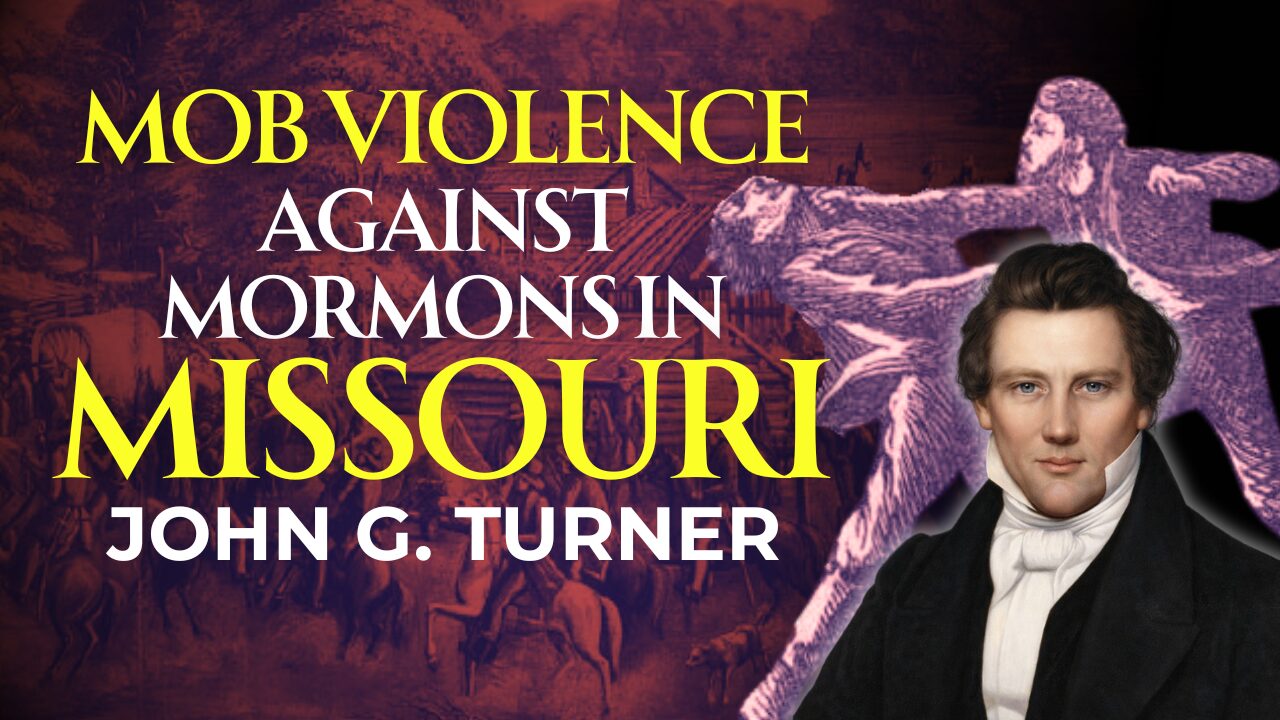
Thumbnail Credits: Thumbnail Credits: Main image of Joseph Smith by Unknown painter, from Community of Christ Archives (public domain); Background imge of the Hauns Mill Massacre by C. C. A. Christensen (public domain); Other image from the public domain
Originally published on mormonstories.org.
Transcript
Machine-generated and lightly edited. Click any timestamp to jump the audio to that moment. The audio is authoritative; please check it before quoting.
Introduction and Episode Overview
John Dehlin Hello everyone and welcome back to another episode of Mormon Stories podcast, Joseph Smith Podcast Edition. I'm your host, John Dehlin. It is Friday, August 29, 2025 and we are now in episode 14 of our Joseph Smith Podcast series where we are covering in depth this amazing book that you should all buy, Joseph the Rise and Fall of an American Prophet by John G. Turner. We are grateful to all of our donors to Mormon Stories podcast and to the Joseph Smith podcast specifically as well that make all this possible. Again, we've done 13 episodes so far. Last week we got up to kind of talking about the School of the Prophets in Kirtland and this week we're going to be talking about the Latter Day Saints in Missouri. What led to the extermination order? What to led. What led to the Mormons getting eventually kicked out of Missouri? What led to them having to flee Zion or Independence, Missouri? How did Joseph Smith initially respond to the adversity in Missouri? We're going to be talking about all that today. Was Joseph just an irresponsible false prophet hubris guy that caused all this reckless caused all this adversity through reckless, irresponsible, false prophecies? Or were the citizens of Missouri totally just barbaric frontier justice, vigilante, evil people? Or was there something in the middle, which is pretty much always where Dr. John Turner and probably most sound minds come about? Again, we're going to be talking about the Solomon Spalding manuscript. How much credibility is there to that theory about the origins of the Book of Mormon? We're going to be talking about as well the hurlbut affidavits. And we're going to be answering the question, as horrible as it got in Missouri, what in the world would lead Joseph Smith to say that it's almost as bad in Kirtland as it is in Missouri? That's kind of mind blowing. So really quickly, if you value this series and you want to see it continue, we're super happy to announce that we foresee enough funding to be able to take more time with this series and not have to be one episode per chapter. So this is the first time we're doing a second episode on a single chapter. We won't do that for every chapter, but definitely this chapter warrants it. But if you, if you value this series with John Turner about Joseph Smith and you want to see it continue all the way through the book and maybe even beyond, go to donorbox.org Joseph Smith and become a monthly donor. And we'll just keep doing this until Y' all don't want us to do it anymore. And without any further ado, we welcome back onto the podcast the one, the only, John Turner. Hey, John Turner.
John Turner Thanks, John Dillon, good to be back with you. Thanks to everyone for listening.
John Dehlin Now, there's no cute T shirts or hats. There's no swag today. What's up with that?
John Turner I mean, I am generally not a very charismatic professor, so this is just back to, back to normal.
John Dehlin All right, well, I've, I've got no BYU captain. I've got no cute T shirts. So it sounds like we've exhausted for now the cuteness of that shtick.
John Turner You know, I'll make some future attempts.
John Dehlin All right, well, John Turner, I gave my best shot in an intro. Let me let you now take over and give whatever intro you want.
John Turner So I think today we're talking about something that just is, is significant not just for a biography of Joseph Smith, because, after all, he's not really on the, he's not on the scene in Missouri during the months that we're talking about, but this is significant for understanding Joseph's leadership and his approach to a crisis. I think this is also a significant episode in American history. More broadly, what happens to the Saints in Missouri both in 1833, 1834, and then later on in the following years tells us a lot about the nature of American society during these years. So this is, I think, a really important subject.
John Dehlin All right. Well, I'm, I, you know, again, I tended to be feel when I've read biographies or histories of Joseph Smith in the past, I've tended to want to just get beyond the Missouri thing because in my mind, it was Nauvoo where things really got interesting. But your book has helped me realize that there's so much value in slowing down because Missouri and Kirtland are actually very, very important to understanding both Joseph Smith and the move, the broader movement. And so I'm, I'm just, I'm really enjoying your book. I hope everyone buys it and you can get the audiobook or the hard hardcover. But anyway, let's dig in. So, so one of the, one of the things I want to try and balance, as I said in the intro, is how much of the adversity in Missouri was. I'll put on one poll. Joseph being an irresponsible false prophet, Joseph having hubris, the Saints being offensive and intrusive in Missouri as foreigners, and being reckless and irresponsible and prideful. Like, let's say that's one pole. And then the Other poll is no, the Saints. This is America. The Saints were great. The Church was great. Joseph Smith was great. Those Missourians and Bogs were evil, barbaric frontier vigilantes who were jealous and spiteful and wicked and controlled by Satan. Let's just say those are two polls. What I want to do is help understand where the truth is in those polls. And so we start, we take. We pick up in chapter 13 in the summer of 1833, and you mention the population balance in Missouri. So let me just hand it off to you about that.
Mormons Settling in Missouri: Background and Context
John Turner Sure. So to put this in broader perspective, this is only two years after Mormons started moving to Jackson County. Joseph Smith had made an initial trip there in July and August of 1831. So it's been two years since then. And by early 1833, there are around 1200 Mormons in Jackson County. And exact figures are a little bit uncertain, but it's roughly a third of the county's population. So it's a significant influx in raw numbers. It's not a huge number of people, but that's a big chunk of the county. And non Mormons who are in Jackson county, they can very much see the writing on the wall and sometimes read the writing in the church's independence newspaper. And they foresee that Mormons are going to become a majority in the county. And simply put, nobody wants to be ruled and potentially tyrannized by another group. And this is the United States of the early to mid 19th century. Majorities really do rule. And especially in the less populated parts of the country, majorities, especially if they fear a minority, one possible response to that is to drive them out. And I think that's. It's a little bit hard for us to grasp, I think, in 2025. But the non Mormon white settlers in Jackson county, they instinctively, I think, realize that they can harass and if need be, violently drive out these unwanted interlopers.
John Dehlin Yeah. And it's interesting because I think there's a similar dynamic in Kirtland. What's the county in Kirtland again?
John Turner Geoga County.
John Dehlin Okay. And I'm sure the people in Geoga county in Ohio are feeling similar things. And what I know for sure is that when Joseph and the Saints end up in. In Illinois, same thing. Like, yeah, it's formulaic, it's mathematical. If you're on the frontier in the early 1800s and what you perceive to be a religious theocracy that has strange ways and sometimes almost globalistic ambitions comes in, this is going to happen every single time. Right. And yeah, and just for academic or intellectual purposes, Margi and I just finished reading a book by Malcolm Gladwell called the Revenge of the Tipping Point. And there is just something in human nature, mathematically magical, that happens around the 25% or 33% mark, where you're willing to tolerate stuff under that. But as soon as it exceeds some tipping point, around 25 to 33%, humans will do all sorts of really, really bad or extreme things. And so that I, when, when, when I'm talking about the polls here like I do, you're all going to hear me today. Put a little bit on Joseph, because if he didn't claim to be a prophet, you know, we talked about translation in the past and whether he really was a translator, whether he was really a seer, we redefined prophet last episode to be like a leader of the people. And in that sense I think he's quite good. If prophet means predicting the future, he's not even good at reading the tea leaves on the ground because he should know. He should know by Illinois, if not sooner, that his ambitions are almost always going to predictably lead to violence against his people. But he's undeterred. And so in that sense, I think in theory he bears some responsibility for what he's doing to these people because it is formulaic and mathematical, based on my read of American history. Is that fair?
John Turner So I think that's fair to a large extent. I mean, first of all, you mentioned Kirtland. Kirtland. The dynamics are a little bit different in part because it's a more well populated county. So I actually think the external opposition in northeastern Ohio isn't quite as sharp. That's in part because you also have church members moving to Missouri, so they
John Dehlin don't reach the 25 to 33% population. Mark. Is that what you're saying?
John Turner Not in the county.
John Dehlin I think that matters. Anyway, keep going.
John Turner Yeah. So Joseph, by the time this is getting way ahead, by the time the Saints are regrouping in Illinois, he's very aware of this pattern, that at a certain point you begin to get local anti Mormon committees, you get agitation, you get harassment, and then you might get driven out. So he's aware of this recurring pattern and he does undertake some innovations in response to it.
John Dehlin Like a legion.
John Turner Exactly. Well, his innovations are super provocative. No, you're right, he is. Yeah. No, I mean he, he draws lessons from what happens in Missouri. They're just really in, in many ways not what I would think of as the right lesson, which might be maybe Take. Keep a lower profile. Right. So he's not a low profile. It's not a low profile individual, especially by the time he gets to Illinois.
John Dehlin Yeah. And this is exacerbated if just numbers weren't enough. We talked last episode about, I think, the Book of Commandments and how some of his peers were concerned that the audacity of the revelations in the Book of Commandments regarding Zion or independence might not be in the church's best interest. Do you want to talk about that?
John Turner Sure. So. Well, fortunately, you know, it hadn't hit the press yet as of the summer of 1833. But for instance, one of Joseph's revelations instructs, instructed his people to buy the whole region of country. And the church's newspaper in July of 1833 openly announced that this, that the Saints would take possession of this land. So this was really straightforward and you can understand why, why other settlers were alarmed. I will say even before, even before that, I think the Mormon population had grown to the point where you were seeing some on the ground opposition. You know, you got homes with bricks thrown into them. You get things like that already in late 1832, early 1833, you know, you sort of frame, you know, you asked at the outset, you know, how do we want to frame this? You know, who's, who's to blame, you know, how much to the, to the Mormons, how much to the other settlers? I do want to be clear, this is sort of, you know, I'd say the same thing in response to the assault on Joseph Smith and Signe Rigdon. You know, nobody deserves to get dragged out of their home, or at least hardly anybody, right? Nobody. But, you know, in normal circumstances, nobody deserves to get dragged out of their home and beaten and nobody, you know, no family deserves to get run out of its home and terrorized and deprived of their property. So there's, there's a comment I like. It actually is in response to later developments in Missouri from a newspaper in 1838 that suggested that the Mormons were more sinned against than sinning. So not necessarily perfect, but in the end, the Saints really take it on the chin in Missouri. And hundreds, and ultimately thousands of innocent people suffer. They suffer terror and they suffer significant financial loss. And certainly Joseph set, in a way, set these things in motion. He set these people in motion. Some of the things that Joseph's revelation stated, some of the things that other church publications stated, some of them were provocative and you can understand why they alarmed others, but the response is, you know, simply totally unlawful. And. And terrible.
John Dehlin Yeah. And for me, I would have only 100% sympathy for. First of all, yes to everything you said about totally unacceptable violence and brutality and bigotry. 100%, yes. And, you know, because I'm always trying to make sense of when religions overreach or do harm. For me, it's always about undue influence. Because I've been known to say in the past, it should be illegal to say you speak for God only because it gives you so much power. Because people aren't just following some leader. They're following someone who claims to speak directly to God and Jesus and who not only can communicate God and Jesus's will, but communicates revelations about what's going to happen. So they're like, oh, Joseph's prophesying that we're going to take this place over. God will protect us. Well, that's a different calculus in terms of what you decide to do with your life when you believe you're literally doing what God and Jesus wants and that you've been told by, in effect, Jesus, that Jesus has your back when you move down to Missouri. And so that's the only reason why I'm not just unqualifiedly in support of the Mormons in this case or against the Missourians is because. Because people are operating under what I think is undue influence. As a side note, I just want to just note, I couldn't help but think of. And I know this is explosive, I'm not generally explosive enough. I couldn't help but think of the west bank and the Gaza Strip and Israel when I'm thinking about Missouri in 1833, because it's a similar dynamic. It's all these Jews who think they have a divine mandate to possess the land. And many of them, at least the very conservative ones, go in thinking, we're going to take this land and it's our inheritance and we're going to buy it up. And it's displacing a lot of people. And I'm not even, like, pro one side or the other. I'm just recognizing the way humans work. And that is conflict's gonna happen when a minority moves in, starts to become a majority, and then says, God says, we're gonna buy all this up and take it all over. It's just gonna be a powder keg whether it's Israel, West Bank, Gaza Strip, or whether it's frontier Missouri in 1833. You know what I mean? Do you think. Do you think about Israel at all when you read this? Or is that Just totally. Just my weirdness.
John Turner I hadn't. Yeah. You know, let me, let me throw out another thought. I'm sort of dodging, dodging that explosive subject. John de Lynn.
John Dehlin Well, to be clear, I don't have a side. I think both, you know, but it
John Turner also occurs to me in this discussion, the non Mormon Missourians, they have just displaced other people and showed up, maybe not individually, but right.
John Dehlin Fifteen years, like the native, the Native Americans, right.
John Turner Fifteen years earlier, this was, this was native land. And also some of the, for instance, the Delaware that the Mormon missionaries preached to in 1831, they've been repeatedly driven off of various lands over the prior 30 years. And so there is simply, there's a jostling, there's a jostling for power in western Missouri. And I think, in a sense, given that, I think a lot of people have an instinctive sense that their hold on a place is tenuous and they could be displaced or driven out. And the non Mormon Missourians, they, they have that sense when they see the Mormon settlers coming in. And the Mormons obviously get that sense as well. You're right that Joseph has given his people the assurance that this land is going to be their inheritance from the Lord. And partly because of that, these developments and ultimately their expulsion from Jackson county, that of course is very wrenching in all of the ordinary ways, but also in theological ways. And I think it makes it difficult for Joseph to respond to the crisis effectively. I think his response involves a considerable amount of equivocation and indecision because the stakes are so high and he knows that and he's really not sure how to respond, which is in a way that's a little bit unusual for Joseph, who often seems to brim with confidence and self assurance.
John Dehlin Yeah. But then at some point stakes literally become deadly and then it's a different thing. The only other final point I just want to make is it's a non. If you look at the, the Roman Catholic Church, right, which is a church that then has political, significant political power as well, or geopolitical or geoeconomic political power as well. If you look at the state of Israel today, if you look at the Mormon Church in Utah, it is a non trivial event when a religion not only becomes a powerful religion, but then takes control of a significant political region that is a multiple of power and influence. Once you're able to control economies and ballot boxes and senators and congressmen and, you know, territories, it's a, it's a level of power that is exponential and very significant. And you Know, those are the types of stakes we're talking about. Again, whether we're in Ohio or Illinois or eventually in the Utah territories, because it's, it's an in, it's a very significant thing to get that much power. There aren't many religions in 2025 that own a, a, a total, an, an entire US state, or you could argue that in effect have control over two to three to four entire US States. And there's, it's no mystery why the Mormon church is worth 300 billion plus dollars in 2025. Because over time the multiples of and, and had Mitt Romney as, as the Republican candidate for president. Right. Over time, religion plus political and economic power plus a geography has a mind blowing exponential for, for power.
Religious and Political Tensions in 1833 Missouri
John Turner Sure. And I, I mean, so the church today of course is exponentially larger, wealthier in a way more powerful than of course in 1833 when this is still very, a very fledgling operation. I would also say that churches that don't behave, or religious movements that don't behave like Protestants just tend to instill opposition and concern and often spark violence in the United States at this time. You know, there are, there are a number of instances of vigilantism against Catholics in the 1830s, 1840s. Now some of that is because sort of along the lines of what you were saying, Catholicism also comes with that specter of political power that American Protestants find objectionable. There's an instance In, I think 1833 in which vigilantes in Boston burned down a convent. None of them are punished for doing it. Later on. There are riots between Catholics and Protestants in Philadelphia. I think it's, it's, it's a bit difficult for us as Americans in 2025 to understand the anxiety and fear that non Protestant religious movements sometimes provoked, especially if, like the Mormons, they connected their religion to space and to a certain extent, earthly power and influence. You know, it's not as if you had sprinklings of Mormons turning up in different parts of western Missouri and building churches. Right. They were staking a claim to a particular place. And that certainly was, you know, that was intensely provocative, given maybe it would be in almost all circumstances, but given the way that Americans thought religious groups should act, this was very much out of the blue.
John Dehlin Yeah. And I think their fears in some ways were warranted. But, but at the same, you know, but at the same time, violence is never acceptable. So anyway. All right, so, so what did the Missourians start doing? To what are the horrific. What are some examples of the horrific things that the Missourians start doing to the Mormons. And what are the, what are their. Other than feeling threatened geopolitically, what are some of the other reasons why they're doing the violence?
Anti-Mormon Violence Erupts in Jackson County
John Turner Yeah, so things come to a head actually pretty quickly in July of 1833. And you know, historians and scholars sometimes spend a lot of time arguing about, well, what are the, you know, what's, what's really at the heart of this, Sometimes pointing to statements in the church newspaper that sounded abolitionist or welcoming to free, free blacks moving to Missouri. There are also anti Mormons in Missouri made, you know, religious complaints about Mormons. They were, you know, sort of strange religious practices like speaking in tongues. I really think we can pretty much cut through those and say that it really was primarily a matter of numbers and influence. There are lots of things that non Mormons didn't like about the Mormons, but they just really didn't like the number of Mormons. If there had been a quarter, quarter of those number of Mormons, I just don't think it would have been this level of problem. And so anti Mormons organize themselves. In July of 1833, they write a manifesto that demands that the Mormons leave. And if you look at least in, I think we don't, I think around 300 Missouri men signed that manifesto. We don't, don't know all of their names. It does seem to have been quite a few of the, the leading citizens of the county, you know, judges, officials, the same Indian agent who had found the Mormons objectionable a couple of years earlier. And essentially the anti Mormons have a few demands. Church members need to agree to leave within a reasonable period of time. Phelps needs to shut down his newspaper immediately. They also want the Mormons to close their shops and businesses. The response of Missouri church leaders is you, we need a little time to think about this. We got to consult with Joseph Smith. Anti Mormons say, you can have 15 minutes, you know, accept our demands or else. And so at first, Missouri church leaders refuse. They're not going to agree to this. And a mob comes and essentially destroys the printing office. They've been in the process of printing the, the Book of Commandments. The pages are scattered in, in the streets. And so this is, this becomes pretty serious. The mob also tars and feathers Bishop Edward Partridge and another church member at that point, Sidney Gilbert agrees to pack up his shop and you know, clear out as quickly as possible. A few days later, vigilantes return and they, they harass church members in Independence. I think they, they seize a few hostages, they threaten to, to whip them. And at that point, Missouri church leaders, they just don't have any, they don't have any option. They are, they're either going to get beaten, maybe killed if they don't agree to leave. So they agree. The basic agreement is they're going to gather that summer's harvest and they'll be gone before spring.
John Dehlin Yeah. Okay, so let me just jump back a bit when, when you talk about the petition that the Missourians ended up signing, they listed as one of their motivations religious fanaticism, that the Mormons speak in tongues, that they have pretended miracles that aren't real. And that surprised me because like, well, how do they know when speaking first of all, is speaking in tongues a real serious offense in 1830America? So again, you're saying that probably wasn't a real concern, but it was a concern enough for them to say it was their concern. And then miracles, like I'm sure a lot of Christian faiths claimed miracles. So I'm wondering, well, how do these Christians, and I'm sure most of them are Christians, how do they know that the, the Mormon miracles are pretended but that other churches miracles are real? Like it, like it felt weird that they were claiming religious fanaticism as a cause. And so I can see why you say that probably wasn't really a significant factor. But I did find it significant that they mentioned that and also that these are the types of things the church has tended to move away from over time as well. But I don't know that you need to really respond to that. But I, I just wanted to note it because that, that was interesting to me.
John Turner Yeah, no, it is interesting. So to some extent I think the anti Mormons are dredging up any complaint they can in that petition that you know, the Mormons are lazy, a lot of them, they're probably criminals from other states. And yeah, they're religiously weird. Without digressing too much, I mean, I think they're the Mormons religious practices definitely help mark them as foreign and other and maybe like non protestant as far as the, the non Mormons are concerned. Somewhat, I think it is noteworthy. You know, we talked about speaking in tongues either last episode or the, the prior one that was very significant in Missouri specifically in the summer of 1833. And I don't have this in the book, but the Missouri Saints are very full of spiritual fire that summer. So when John Whitmer wrote Joseph Smith a few days after he and other church leaders had agreed to leave the county. He didn't only tell him about that news. You would think nothing else would matter at that time. But he also specifically told Joseph about gifts breaking forth in a miraculous manner and that church members were singing hymns in tongues. And apparently David Whitmer was claiming that he can speak in all the tongues on earth. And William Phelps then adds in a little note at the end that the Saints might start worshiping in tongues. So I, I don't really think, yes, that. I don't think that had really much of anything to do with the anti Mormons choosing to drive the Saints out. But I'm sure it's something that, you know, word was getting around. You know, I will, I will say that sometimes people ask, well, what's at the heart of this slavery, Religious bigotry, numbers. I think the thing is that one has to keep in mind is that for Joseph Smith and his people, religion is not just about gathering together for worship. For the Mormons, their religion involves taking possession of the county. So I don't think you really have to choose between religious bigotry and just the situation in terms of numbers. I think they were part of the same thing.
John Dehlin It's an and. Yeah, well, I know you also referenced the slavery thing. I don't want to rush over it just because the Mormon church ends up having such a fraught relationship with, you know, black people, African Americans, slavery, et cetera. Just coincidentally, I've been also reading a book on Mark Twain, who happened to be living, as I understand it, in Missouri during the 1830s. Right. And if I've got that right, and I remember him writing that like, you could get hanged as a white citizen of Missouri for helping out a black, you know, person escape slavery. In other words, Twain grew up in a Missouri that was very serious about being pro slavery. And, you know, it was a life and death situation depending on the town and the people that you're interacting with. So on the one hand, I could see, you know, the perception that Mormons were prohibitionists or what's the word?
Slavery, Abolition, and Mormon Friction with Missourians
John Turner Abolitionists.
John Dehlin Abolitionists. Or, you know, anti slavery. If that, if that's a genuine perception, I could see it being at least an important contributing factor, if not the predominant one. I also think it's interesting how sometimes apologists want to point to various moments in Mormon history where it's like, look, we weren't as horrible, horribly racist or as horribly pro slavery as, as other people at the same time. So I do want to just make sure we don't rush too quickly over this slavery question and at least understand what we should and shouldn't about how pro or anti black people, pro or anti slavery, the Mormons were, or if they were just truly all over the place schizophrenic, which is what I actually suspect.
John Turner Yeah. So one thing I say elsewhere in the book is ironically, perhaps I don't think race and slavery are, I don't think they're top level concerns for Joseph Smith, like almost all Americans, he's very interested in the subject of race. He's interested in divine curses as they relate to slavery. Something that we'll probably talk about in a couple of episodes. And I think because of that you find material along those lines in Latter Day Saint scriptures and in some of Joseph's textual productions. But it's not, you know, not all church member, not all church leaders have the same ideas on these subjects. In the summer of 1833, just maybe go over the basics. The anti Mormons, they accuse the Saints of tampering with our slaves. Now that's not, that's not actually a fair accusation. The accusation stemmed from the fact that William Phelps, who is publishing the church's the Evening in the Morningstar newspaper, he had published a piece in which he included a portion of Missouri law that forbade any free negro or mulatto mixed race individual from entering or settling in the state. And Phelps actually warned church members not to transgress that law. But he mentioned that the church itself had no special rule as to people of color. Now we're a couple of years before some early black church members like Elijah Abel becoming people of note in this broader story. So there wasn't a lot there for Missouri, other Missourians to find objectionable. But elsewhere in the same issue of the paper, Phelps noted that much is doing towards abolishing slavery and colonizing the blacks in Africa. So that sounded in a way anti slavery, not egalitarian or necessarily pro black, but it sounded anti slavery. And Phelps quickly understood that his words had offended Jackson county slaveholders. And he quickly published a clarification that the Mormons wouldn't admit any free people of color into the state or the church. So he kind of quickly backtracks Joseph himself. Joseph Smith at the time doesn't, doesn't, you know, he doesn't have the opportunity to weigh in on this and doesn't weigh in. So this could show you that this is a very sensitive issue among pro slavery Missourians. It could also show you that anti Mormons in Missouri are looking for reasons to whip up opposition to, to the Mormons.
John Dehlin Yeah, literally whip up. Because you write later, the vigilantes write into independence with guns, clubs, whips.
John Turner Right.
John Dehlin Red flags. Right. No pun. No pun intended, I'm sure.
John Turner No, it wasn't a pun intended. I mean, it's, it's, it's. It's surprising actually, how, how quickly anti Mormons are able to organize themselves to drive the Saints out later on. In Hancock County, Illinois in particular. It's really kind of a slow build, a slow burn of opposition. But things advance very quickly In July of 1833, to the point that you have mobs in the street and they just, you know, they give. They give local church leaders no choice but to agree to leave. And so Joseph has had wind of, you know, some growing opposition to his people in Missouri. But when Oliver Cowdery shows up in Kirtland with news of what has transpired and news of this agreement, I think it is. It is a shock and a jolt to him.
John Dehlin Yeah, well, I'm shocked because I, if. If I, like, take away my critical Mormon lens and just put on my Amer United States civics lens, that, that probably was overly idealistic. Like, these demands are crazy. It's like, no new Mormons can move to our state. What? To our county.
John Turner Right, right.
John Dehlin Those that are present have to leave.
John Turner Yeah.
John Dehlin Get rid of your newspaper. What? Like, this is America. Stop your newspaper. Like, have you read the Bill of Rights? Have you read the Article 1 or whatever, the First Amendment? Like, get rid of your newspaper and then, you know, get out and never come back. Like, that's completely un American. And then to be followed up with destroying the printing press. Right. Tarring and feathering men, you know, invading this Gilbert store, making him pack up, and then riding through the towns with guns, clubs, whips, red flags, yelling and threatening, destroying property, trampling crops. That's real anti Mormonism. And that's horrific, embarrassing behavior that you would think is un American. I mean, in the, in the classic sense of un American. Right.
John Turner Yeah. But in, in the 1830s, this is really American. Yeah, you know, there's, there's, you know, I would say broad popular support, of course, in the south, but even outside of it, for the suppression of abolitionism. And there's broad popular support for burning down a Catholic convent in Boston, not generally thought of as a hotbed of intolerance. Maybe by the time you get into the 19th century. And certainly vigilantism is not popular and politicians will often denounce it, but it's pretty hard in local circumstances to do anything about it. And in Missouri, The Saints certainly hope that after they make this agreement, you know, they think they've got until the spring before they're going to have to leave. Well, that's, that's sort of a long off ramp. And they hope that state officials will intervene. And if you looked around the country, you might not have felt optimistic that you would get help.
John Dehlin Yeah, I was. I was happy to see that many Missouri politicians and journalists denounced the anti Mormon mobs. That, that at least made me feel like there was some sanity, you know, in this area.
John Turner Yeah, that. Well, see, that's another pattern that repeats itself. So Americans who are not living with the Mormons denounce vigilantism against them. And so that happens, you know, when the Saints ultimately are driven out of the whole state in 1838, there is broad outrage in the rest of the country, and newspapers across the country denounce the violence and the expulsion. Well, in Missouri, it's pretty popular, especially in western Missouri.
John Dehlin Yeah. And that takes me just to a quick side note. Like, again, I read Von Brody back in like 2001, 2000, and I, and I had always kind of skipped over the Missouri stuff and felt like I had a general sense. It absolutely surprises me that the Saints. I had my timeline wrong, because if you had asked me when did, when did the Saints leave Missouri, like Independence, I would have said, I don't know, 36, 37. Like, certainly they weren't basically homeless for, for five to seven years in Missouri. I would not have put the timeline in my Mormon brain at age 55. I would not have put the timeline for them being kicked out of Jackson county to 33, because that means, again, the Missouri Saints are effectively homeless for five to seven years before they go to Illinois. How does Missouri. How do the Missouri Saints even survive being homeless for five to seven years? That's kind of mind blowing.
Missouri Saints Expelled and Left Homeless
John Turner It's not, it's not so much that they're. Yeah, I mean, the timeline is interesting. It's not so much that they're homeless for five years. It's that they take refuge in one place and they get kicked out of there. We'll be getting to this in future episodes. But then they think they have a county carved out sort of just for them to the north, and then event. So they're rebuilding their homes there.
John Dehlin Okay. Yeah.
John Turner And then they get, they get kicked out of those homes. So there. It's, it's, it's a cycle of several expulsions. So it's tough. Some of these people get expelled, you know, two, three, Four times from different places.
John Dehlin Yeah, I think especially after Zion's Camp. We'll talk about this next time. People are critical of Mormons just aren't going to be able to develop effective, valid empathy for even the church today if they don't understand the trauma that the leaders and the members faced in the 1830s and 40s. Because this is, this is like, I don't want to say that it's anywhere near the pogroms or the, you know, genocide that the Jews experienced. Obviously, I'm not saying that, but I mean, it's, it's closer to that than, than a lot of the other types of adversities that anyone who might be critical might have ever faced. I mean, this, this displacement and, and bigotry and the level of violence clearly contributes and, and has, has influenced and continues to influence Mormon leadership and Mormon culture.
John Turner Definitely.
John Dehlin Is that fair?
John Turner No, I think that's, that's 100% fair. And it certainly shapes later episodes of Mormon history. Whether we're talking about Nauvoo, whether we're talking about Utah in 1857, whether we're talking about the late 1880s, post manifesto polygamy. I mean, the history of persecution and expulsion is significant. And I will say also sometimes it shapes the contemporary church in really positive ways when you see the church being, you know, at least relatively more pro refugee and pro immigrant than some voices in our country.
John Dehlin Yeah. So Joseph gets word back in Ohio about what's going on and he receives a revelation that reminds me of your friend and mine, Patrick Mason. Tell us about that revelation.
John Turner So I think you're thinking of renounce war and proclaim peace. I can't actually remember the specific date of that. That was a revelation that Joseph had dictated, I think sometime in the spring or early summer prior to the news of the expulsion. So, you know, he knew that tension was simmering. So his general advice was renounce war and proclaim peace. Don't fight back unless there are repeated provocations. Well, you know, by, by August, I think, August 9th or 10th of 1833, Joseph learns from Oliver Cowdery what's happened. And I do think the way he responds is interesting. And in a sense, Joseph, I think, is really confronted with the reality that the stakes for his people in Jackson county are really high and the stakes for the church are really high. His first thought is that the Saints might, might well have to stick with this agreement to leave and they should be prepared to sell some properties. They should retain the temple lot, so they should retain what matters Most for the future of Zion. But then a week later, Joseph's counsel goes in a different direction and this is significant for what transpires in the fall. His message then is the saints should not leave. He.
John Dehlin Can I just say yeah. In between, doesn't he cry? Isn't there account that Joseph when he. At the adversity the saints of Missouri
John Turner are experiencing when he first gets the news from Oliver Cowdery, there's a source that, you know, he just breaks down in tears. He's that shaken. He has not foreseen this, I think it's fair to say. And then to hear the peril that his people are in, it's. It, of course it's a. It's a real shock.
John Dehlin And I think that. I think it's easy to dehumanize Joseph Smith when you look at some of the things that we don't like that he did. I like that just shows he's emotionally connected at some level with the consequences of his behavior. He's not you. You could you pro. If he's really crying, unless it's performative, which let's just say in good faith it was sincere. You clearly can't say he was a total, fully narcissistic, fully antisocial personality disorder, no conscience kind of human or leader if he's reacting emotionally as someone with a heart and a conscience might.
John Turner Right. No, I think that's true. And when I'm saying that Joseph's responses in, you know, in August and really over the next half year when they are indecisive, somewhat equivocating, I'm not. I'm not saying that to be especially critical of Joseph. I mean, I think to a large extent and a fairly obvious extent, he's in way over his head. And this is a really hard situation to navigate. Joseph simply doesn't know how the saints should respond. And I don't think that's too surprising. But you know, after his initial advice that you're probably going to have to honor this agreement, he. He goes in a different direction a week later. Don't sell land. Reestablish another printing office in Independence. Keep the. Keep Sidney Gilbert's store. But his council then is. He says he's received word from God essentially that the Missouri Saints are going to be delivered. And then his counsel is to essentially stall you make a show as if to do until the Lord deliver. Now, in a way that's trying to buy time, but given the situation on the ground in Missouri, we will see that becomes very dangerous and Ultimately deadly advice.
John Dehlin Yeah, I wrote down wait for the command to attack.
John Turner Correct. Well, he also, he also says that we wait the command of God. If he shall say, go up to Zion and defend thy brethren by the sword we fly. So essentially, if or maybe when God tells us to come to your defense and fight on your behalf, we'll do it right away, but we don't have that, we don't have that command yet. So act as if you're going to leave, but don't, you're not going to have to. And you know, let's get back on track. Let's, let's reestablish printing office store and so forth.
John Dehlin And I don't mean to be ham fisted about this every time I notice it, but I think it's important because I think truth matters. And is it okay to say that this is a failed revelation?
John Turner Sure, sure. I think it's, I think it's okay to say that unlike, is there a
John Dehlin reasonable conclusion that this is a failed revelation, that God did not end up delivering the saints.
John Turner Well, and I think it is, it is wrenching for those who leave. Right. Who have to grapple with, with that. Now I'd have to go back and look at the text. Often there's a bit of equivocation or wiggle room in Joseph's revelations that link the outcome not only to God's will, but also to the faithfulness and righteousness of the people. And we'll see later in the year that Joseph assigns blame to church members and specifically to church leaders in Missouri for what has transpired. Now you could definitely come back and ask whether or not that's fair. But yes, I, I, you know, I think the, the simpler, simple answer is the people do not ultimately receive the outcome that they expect from Joseph's revelation.
Prophecy, Blame Reversal, and Joseph's Response
John Dehlin Yeah, and, and I know I've mentioned this before, but I'm, I'm now primed to identify that sort of dynamic where if the prophecy comes true, it's a prophet. If the prophecy doesn't come true, blame the people. That way the house wins either way. I, I have been. Now I've come to view that as what's called blame reversal and is a form of maybe not intentional, but it ends up being a form of effective abuse. If you've got this much power and control over people, they're doing whatever you say they're doing their best, sacrificing everything. And then you make a bad prophecy, you get them into a heap of trouble and then your prophecies don't get Fulfilled. Well, you blame it on them. I have a problem with that, but I made that point before.
John Turner Yeah. And we'll probably talk about it more next week. In connection with science camp, I think, maybe somewhat surprisingly, that that dynamic, to a certain extent, it seems to work theologically for a good number of church members, which. Which perhaps is. Yeah, it's a little surprising, but that seems to be the case.
John Dehlin No, it works with Jehovah's Witnesses. Every time a leader in the 19th century, the Jehovah's Witnesses movement, prophesies that Jesus is coming in a certain year and all the saints get ready and then Jesus doesn't come, then the leader blames the members for not being faithful enough and then resets the date and everybody doubles down and is more committed to the church. Like, that doesn't mean the church is true. That doesn't mean God is really leading the people. It just means psychologically, you can really bind people to a religion, and sometimes the more they give, the more they're bound to it. And your prophecies coming true or not really don't matter at some point. And I think that's what the evidence shows, is that people care a lot about other things than whether their prophets, prophecies actually come true.
John Turner Well, no, absolutely. And I also have in my head that most church members, they aren't primarily thinking of Joseph in that respect. Some of them definitely do because sometimes when there's disappointing outcomes that don't line up with Joseph's predictions or revelations or prophecies, for some people, that's a rupture. I don't believe in this. I'm out. It does seem that most people, most church members aren't assessing Joseph along those lines. Or maybe they just have a sense that, you know, this is, you know, I think this is, you know, outcomes are complex. Right. And they're also, over the course of these years, they're hearing a lot of different things in Joseph's revelations. It's more, I think for many of them, they accept Joseph's authority, they're going to follow his revolution, revelatory guidance. And when things don't go well, their primary response is to blame the church's enemies. And ultimately, in a. In a way, those enemies have a lot to do with those bad outcomes. So I think that can work for a lot of people.
John Dehlin Yeah, absolutely. And I think I'll just add when your religion is your identity, your meaning, your purpose, your spirituality, your morality, your community, your family, your. Your views of the afterlife, those are very strong binding forces. That can overcome a lot.
John Turner Absolutely.
John Dehlin And that's not necessarily a bad thing. I think the proofs in the pudding for each individual in terms of how. What the net value is for their life, you know. Okay, so this was a shocking statement in your book that I've referenced. I think now this will be the third time. There's this quote in the book where somebody's corresponding with Joseph and he's basically saying, yeah, things are bad in Missouri, but they're almost just as bad here in Kirtland. How in the world is that true? Talk us through that.
John Turner I am just here to try to shock you, John De Lynn. You've been doing this for 20 years. Congratulations, by the way. And so it's good that you can still be shocked, especially, especially by things in my book. But Joseph Smith, he's a pretty shocking guy. So buckle up, you know, we've got. We got more to come. Okay, so this is what, this is the way I would think about it. So this is August of 1833. Joseph has just learned what's happened in Missouri. At the same time, there are some storm clouds closer to home. And they're connected with a man named Dr. Philastis Hurlbut. It's quite a name, especially since he's not a doctor. He's not a doctor. Doctor was his given name. I don't have information on why his parents chose that, but I suppose if you're gonna dress up Hurlbut you know, maybe Dr. Hull, but sounds better, I don't know. So he was a former Methodist lay preacher and he joined the church. I forget when he joined the church. Sometime before March of 1833. And like a lot of converts do, he immediately is ordained an elder and goes on a preaching mission. And that didn't last very long. By June of 1833, he was excommunicated for unchristian conduct with the female sex. I guess he, he made some confession, was restored, then he was cut off again. And at that point, he becomes a bitter critic of the church that he had really only belonged to for a short time. And so he goes around western Pennsylvania and northeastern Ohio preaching against the. The church. And when he's in western Pennsylvania, he begins hearing rumors that the Book of Mormon resembles another text specifically. And I, you know, I know this takes us into the weeds pretty quickly, but specifically a story in manuscript written by a man named Solomon Spalding. Spalding was a storekeeper somewhere in western Pennsylvania. He himself was a former Congregational minister. And he was, I think you could say, an aspiring but never successful novelist. And so Hurlbut begins hearing from Spaulding's former neighbors. Spaulding's been dead for almost two decades by this point, but he's hearing from Spaulding's former neighbors that the Book of Mormon resembles something that Spaulding wrote. And so what Hurlbut wants to do is he wants to head to New England and talk with Spalding's widow and wants to interview other witnesses and he wants to see if there's something to this story. Now, meanwhile, he's already going around talking to anybody who will listen to basically saying that Joseph Smith is a fraud and he stole his story from elsewhere. So that's what's on Joseph's mind when he says, the cloud is gathering around us with great fury. Now, it's not true that Joseph and other church members in northeastern Ohio were no safer than those in Zion. But just to be fair to Joseph, this is only, well, 16, 17 months since he's been dragged out of his house and tarred and feathered. So I think he does have a not un. Not totally unreasonable sense that what's happening in Missouri could happen to the Saints in Ohio.
Hurlbut's Excommunication and the Spalding Theory
John Dehlin So obviously, Fawn Brody speaking about the Spalding manuscript. Well, first of all, talking about Hurlbut's excommunication for a second, what I was dying to know, because Fanny Alger is right around the corner with Joseph Smith, not to mention Nauvoo. That comes later. And John C. Bennett. Like, I wanted to know how bad or comparable was Hurlbut's behavior to Joseph Smith's eventual behavior either in Kirtland with Fanny or in Nauvoo with both John C. Bennett and Joseph Smith later, like, was this unfair singling out? Was it really egregious? How do we make sense of. Of him being busted for transgressions that Joseph later embraces?
John Turner So, honestly, I don't. I don't know the details of what Hurlbut did. I'm presuming. I don't know if he was going around hitting on women, having sex with them. I don't know. I don't know if that information exists. I think it must have been somewhat significant simply because they excommunicate him. He comes and makes what are described in the minutes as liberal confession of. Of his errors. So he owns up, I guess, to a lot. But then they learn even more about him and they. They cut him off again. This is. Just put it on my timetable. This is still three years before Fanny Alger. And so, you know, we've got that, we've got that ahead of us. But I don't, I don't know more, I don't know more about what Hurlbut allegedly did.
John Dehlin You can see why it's a tiny bit ironic though, right?
John Turner I can see why it's ironic now. Yeah. Well, let's say more about that when we get into Joseph's behavior later on.
John Dehlin Okay, let's talk about the Spalding theory. I don't know if you know about this guy, Lars Nielsen, who's the brother of David Nielsen, who is the Ensign Peak whistleblower. His brother Lars came out with a book recently just, just like with Michelle Stone and the anti, you know, kind of the polygamy deniers. There was a little bump in ex Mormon Mormon studies where this guy named Lars Nielsen was trying to revive the Spalding theory. And Lars is a smart guy. I don't mean to speak disparagingly of him, but you just pick up, Fon Brody knows that. No man knows my history, you know that Fon Brody just almost summarily dismisses the Spalding theory outright in her book in what, 1845. But, but I, I do want to just talk about it a couple things. First of all, you know, you know, I want to know where this idea of a second manuscript comes from. Is it true that Spalding also attended Moore's, the Moore Indian School at Dartmouth? Was there, was any of Spalding's work dripping with the mound builder myth? Was any of his work, did any of his work knowingly resemble any view of the Hebrew Book of Mormon narratives around light skin or dark skin or Israelites traveling to the Americas? Is there any fire, you know, behind the smoke that, that made this a pursuable theory? Because I just, it just seems too much to say there was nothing to it. Right?
John Turner Well, I don't think there's anything to it. Now, boy, there's a lot of. That was a great question, John de Lynn, because there, there's a lot of stuff in there, right?
John Dehlin So it's a bad question because it's a compound question.
John Turner No, I like compound questions. It's just because there's a lot of issues involved. So the first thing I'd say is let's. I think it's worth backing up and thinking about why the Spalding Rigdon theory became attractive and persuasive to many people. As far as I know, the Rigdon part of it first appears in Mormonism Unveiled by Eberd Howe, who gets a Lot of material from Hurlbut and publishes a book the next year. So let's think about why this could be appealing or more specifically to whom it would appeal. So it appeals if you think Joseph Smith didn't have golden plates. And Joseph Smith and his associates such as Martin Harris and Oliver Cowdery could not have produced the Book of Mormon without a source. So if you believe both of those things, you almost need an alternative explanation for the Book of Mormon. So just to be clear from prior episodes, I don't think Joseph Smith had gold plates. I don't think the Book of Mormon is an ancient record. But I do think that Joseph's just Joseph and his associates were capable of producing the Book of Mormon. So then why the Spalding Rigdon theory? So the Spalding half of it is Hurlbut heard that Spaulding had a manuscript that resembled the Book of Mormon. Now he goes off to New England and he meets Spalding's widow and she gives Hurlbut her, she gives him a manuscript. Now this story, this novel narrates the adventures of a group of Christian Romans who cross the Atlantic Ocean and encounter two distinct native peoples. One barbarous and darker skinned, one lighter skinned and civilized. So you've got two things there. You've got, you know, a hemispheric crossing across an ocean and you've got two groups of differently hued Indians you could say. Now the, the thing is that just still doesn't bear any close resemblance to the Book of Mormon. And by the way, we know the contents of this manuscript because it resurfaced in the 188 it's been published. Anybody can read it. It's not riveting, so I don't particularly recommend it, but if you have a lot of spare time.
John Dehlin It's an Oberlin. Oberlin College. Right.
John Turner Yes, I, well I, I, I'm not 100% sure it's there now. You're probably right. I haven't investigated for a while.
John Dehlin I thought it was weird. My friend, my, I don't know if it's a former friend or friend, but Phil Barlow, who I used to be very close friends with, it was at the college that he worked at prior to him going to Utah State.
John Turner Really? That's Hanover College, I believe, in Southern Indiana.
John Dehlin Anyway, it was confused because I do think it's at Oberlin. At least that's what Wikipedia is saying.
John Turner Yeah, it's sometimes known as the Oberlin Manuscript. I just can't, I can't remember if it's, if it's still there. Or, or not. But. So let's just say this is not the source text for the Book of Mormon. It contains some common tropes, if you will. This crossing an ocean, darker and light skinned people. Now those are not, you know, those are not super uncommon tropes. You know, there's this general idea that we've talked about, the mound builder myth of, you know, different, different groups throughout history, some who have withered away. You can even, you can even look at a lot of European texts that in general, you know, talk about dark skinned wicked people, lighter skinned righteous people. William Davis wrote a nice piece on that, you know, connecting John Bunyan's Pilgrim's Progress to the Book of Mormon. So there's just. This is not the source text for the Book of Mormon. So what Hurlbut concluded, based on what other witnesses were telling him, is that Spalding had written another novel and this was the source for the Book of Mormon down to specific names like Lehi and Nephi.
John Dehlin Someone just made this up, the second manuscript. You're thinking, just like some dude was sitting around thinking, I know, I'll create the idea that there was a second manuscript. Like, I want to know the origins of that.
John Turner So, I mean, I think so one of the things that herbalit's doing in 1833 is he's traveling start, you know, first western Pennsylvania. He's talking to Spalding's former neighbors. They're telling him, this guy wrote, basically wrote the Book of Mormon. Then he goes, he gets this manuscript from Matilda Spalding Davison, Spalding's widow. She'd remarried. It's not, it, it's not the Book of Mormon. Well, now he's talking to Spalding's brother and some other folks who say Spalding wrote another novel. Okay, and then how do you square that with how do you get from this alleged another novel to the Book of Mormon? Well, Hurlbut developed the idea that Signe Rigdon had met Spaulding, somehow obtained the manuscript maybe from a storekeeper in western Pennsylvania, and then helped Joseph Smith fashion it into the Book of Mormon. And that made sense to Hurlbut because, well, Rigdon's an educated man. He would have greater literary capabilities than Joseph Smith. He could have done this. The problem for the theory. Well, I think there are a couple of problems for the theory. The number one is we don't have this second manuscript. So we can't, you know, we can't assess something that we don't have. And then secondly, I just don't see any evidence for Sidney Rigdon meeting Joseph Smith prior to the fall of 1830. And the evidence that people tend to point to is, you know, from decades later, people essentially just saying that. Saying that he did. I'm being a little glib about that. I can't remember the exact statements off the top of my head, but we just don't have anything to go on. The, the evidence closest to the early 1830s to late 1830 itself. I think the, you know, Rigdon converts after more missionaries come to northeastern Ohio. Then he goes to Fayette to meet Joseph. That's their first encounter. So he's not a conduit for a Book of Mormon source text from Solomon Spaulding or anybody else.
John Dehlin And just to, just for, just to be thorough, Spalding did attend Morse College, right?
John Turner Correct. He was also educated at Dartmouth.
John Dehlin Yeah. And do you remember when the Spalding, the actual Spalding manuscript was actually penned? Around what year is the 1700s? Right.
John Turner I thought it was. I think it's later than that, but I'm not positive.
John Dehlin Okay.
John Turner Spalding dies in 1816.
John Dehlin Okay.
John Turner I. I can't remember. I can't remember the, the date of, of what's known as manuscript found.
John Dehlin Okay. And you, you're not aware of any credible account of a reference to a second manuscript? It's all like decades later, probably tainted or poisoned by what, what I'll just for the sake of this conversation call a conspiracy theory.
John Turner I think, I think that's fair. I think, you know, people told Hurlbut at the time that there was a second manuscript. So this is 17 years after Spalding's death. Nobody. You know, the second manual manuscript is not something we have access to. It's not in my opinion. You know, the idea that, you know, this is. Contained the names Lehigh and Nephi. Well, Nephi, at least as far as I know. It's. It's a name that appears in many Protestant Bibles in the Apocrypha. So you don't, you don't need, you don't need a more complicated source for that one. So. Yeah, I just, I just don't think there are reasons why. Dating back almost a hundred years. You know, most people who have examined this issue closely have set the Spalding Rigdon theory aside. Now, just because most people reject something doesn't mean that one can't discuss it or, you know, wonder. Wonder what the evidence is. But I haven't seen any evidence that persuades me to accept it.
Evaluating the Spalding-Rigdon Book of Mormon Theory
John Dehlin Got it. Okay. And yeah, clearly stranger conspiracy theories have been believed and have grown legs. And in all fairness, let's just say if critical or ex Mormons want to, you know, disbelieve the Nauvoo account that Brigham Young took on Joseph Smith's voice, you know, under the logic that all the accounts are super late and there are no contemporary accounts. If, if, you know, if to be fair, you have to go with the evidence. And it sounds like even though we all. That, even though people might want to try and come up with the theory about, a clean theory about how the Book of Mormon was created to answer the apologetic, you know, the, the Book of Mormon's so amazing, no one, you know, Joseph could have never come up with it. Even though people might be desperate to come up with the clean explanation, you got to go with the evidence.
John Turner Well, and I just think in terms of responding to an argument that the Book of Mormon is so complex and miraculous that Joseph Smith couldn't have authored it, I just think you don't need, you don't need the Spalding Rigdon theory to answer that pretty cleanly. I think there's, in my opinion, very persuasive archaeological, literary, DNA evidence that I guess the traditional faithful account of the Book of Mormon is not, not accurate. And so I think you only would feel a need for a source text or something like the Spalding Rigdon theory if he's. If you simply think there's no way Joseph Smith could have. Could have written this, and if you think there's no way that Joseph Smith could have written it, you may as well believe that he got it from an angel.
John Dehlin Yeah, just as a total side note, but there's this documentary series that just came out called An Inconvenient Faith. And in it there's this September 6th scholar named Maxine Hanks, where either in the, in the documentary or after, she makes this statement that as of 2025, there's not been a single scholar. And I'm. She may have not said any of this. This is just my memory, and I'm paraphrasing at best. I think it's Maxine that basically says in 2025, there still isn't a scholar alive that's explained how the Book of Mormon was reasonably created. In other words, it's still a miraculous text, regardless of whether it's historical or not. Wouldn't it be great? I know William Davis, we've had him on Mormon stories. I know he's possibly put forward some important pieces of that. I know Grant Palmer has done some work on that. I know that Dan Vogel has done important work on that. Lots of pieces. Wouldn't it be phenomenal if a really smart, thoughtful scholar just sort of put a theory forward of, you know, here's. Here's a really informed best guess at how the Book of Mormon was put together? Wouldn't that be amazing?
John Turner Well, it. I suppose it would be nice if we could retroactively put a webcam in Joseph and Emma's harmony house in the spring of 1829 and then another one in Fayette.
John Dehlin I mean, come on, you don't think. You don't think there's enough information to be able to come up with a plausible theory?
John Turner No, I don't. I don't think. I don't. I actually don't think we need more information. Not that there are things we don't know. Right. Because we don't have that webcam footage, but we know that Joseph was, you know, deeply influenced by the Bible and his engagement with it. I rather like William Davis's point about sort of sermon mechanics and oral tradition in America of this time. I also appreciate Dan Vogel's work that connects so many elements of the Book of Mormon to Joseph's own biography. So I think. And I think I heard this in your question, John Dillon. I think we have a lot of evidence and a lot of sense for how Joseph created the Book of Mormon. We certainly. I don't think. We certainly don't need a source text. And I don't think we. I also don't think we need to presume so little of Joseph Smith as to think that he was so wretchedly unintelligent is to be unable to produce this text.
John Dehlin Well, I'll say it again. Bob Reese compares the idea of Joseph Smith producing the Book of Mormon to a banjo player who can pluck out Yankee Doodle Dandy. Being able to miraculously produce Mozart's Beethoven's Symphony 9 or whatever. You know what I mean?
John Turner Like monkeys on a keyboard typing out Shakespeare.
John Dehlin Exactly.
John Turner Like I said, I'm not seeing it. I'm not seeing that.
John Dehlin Well, I think there's a book out there, and this is the basic book. It's like, look at the transcription. It's. It's total frontier jargony, horrible spelling, horrible grammar, no chapters and verses. It reads like. It reads like an. An uneducated, barely literate person who had a lot of knowledge of the Bible and was a really good storyteller. That's what it. That's what it looks like at face value. Right.
John Turner Well, that, you know, I will Credit it with. There is a lot of complexity within the Book of Mormon in terms of, you know, I guess different voices, different editors, stories within stories. You know, it. It's. It's. At the same time, it's rough and homespun, but also intricate. I just don't think the. The intricacy is not like a Mozart symphony.
John Dehlin Yeah, no, I know, and I was just saying. But if you start there, if you start at looking at what the scribe wrote down, all of a sudden it goes from an A to a B in terms of, like, sophistication. Right. Because a lot of the. I mean, a lot of the polish matters, the fixing of the grammar, fixing of the spelling, adding the chapters, adding the verses, correcting the errors. Like, all of that, really. It's like the difference between your first draft of a book and what ends up being published. Like, editing matters, right?
John Turner Editing. I am a strong believer in editing. I actually think that was one of Joseph's pretty good religious insights, is that you should revise things. Sometimes you understand things better with. With. With a little benefit of, you know, hindsight and wisdom.
John Dehlin And I'm just saying that's where it begins. But then you add to it Lehi's, you know, Joseph Smith Sr's dream and Joseph's own biographical narratives, and you add in his knowledge of the Bible and that he's been telling stories for 10 years about native Americans. And then you add in frontier Protestant sermons that are, you know, Grant Palmer stuff. And you add in second, you know, Isaiah, and you add in the New Testament and you add in the Masonic stuff. Like a lot of those pieces are all there. You add in just 19th century isms and all, you know, the background of all the anachronisms that. Not to mention what's left out. Like, you could put together a pretty solid book. And then you address the timeline that it wasn't three months or six months, nine months. It was. He had 10 years to create this narrative. Right. I think that book can be written reasonably. That goes a long way. Not towards saying, here's a video camera transcription, but just says, this is enough for us to be satisfied that Joseph did it without any other theories being needed. You know what I mean? That book.
John Turner Yeah.
John Dehlin That book can and should exist.
John Turner Well, you. Maybe you should get writing John de Lynn.
John Dehlin No, I'm not the guy to write it, but somebody should.
John Turner Okay, maybe you should.
John Dehlin Maybe that should be your next book.
John Turner I gotta. I don't know. I mean, Joseph Smith, he. He wears me out.
Hurlbut's Affidavits and Legal Threat to Joseph Smith
John Dehlin All right, so back to Hurlbut Hurlbut worries, clearly worries Joseph Smith. Even if, even if the Spalding manuscript is balderdash, he's core to Joseph Smith's worries. And he doesn't just, you know, become a proponent of the Spalding theory. He starts collecting affidavits. Do you want to talk about that?
John Turner Sure. So when he travels, he stops in Palmyra, he, and he goes, he goes, he goes elsewhere I think, I can't remember actually if it's he or how who ends up collecting the affidavits from people like Isaac Hale and some other members of Emma's family. But I think it's Hurl. But so yes, he, he essentially collects a lot of statements from individuals who have known Joseph Smith and don't think very much of him. He brings a, you know, a pile of these affidavits back to Kirtland. You know, a lot of these basically just describe a young Joseph Smith as sort of a ne' er do well, an ignorant idle man who's a bit of a deceptive storyteller. The other thing I think is worth saying about Hurlbut is he has financing so he gets financial backing from a man named Grandison Newell, who's a wealthy resident of nearby Mentor, Ohio, who I is one of, at least one of the significant men involved in the bank of Galga, that, that comes up later in this story, which is why I'm mentioning it. But it's, it, it is interesting to me that Hurlbut basically gets, he, he gets, he gets the backing to do this. And Joseph's pretty worried when Hurlbut gets back to Kirtland at the end of the year. He, he's talking to whoever, whoever will listen against Joseph and the church. And Joseph tells church members in Missouri the people are running after Hurlbut and so Joseph is worried that Hurlbut might do him serious damage.
John Dehlin Yeah, and I think the Hurlbut affidavits are fascinating for a couple reasons. I think some of them are devastating to Mormon church truth claims. Whether it's the treasure hunters that talk about Joseph Smith drawing circles and killing dogs or sheep or chickens or you know, the guardian ghosts. I mean they make it sound occult what Joseph Smith was involved in. Right. They make him sound like a charlatan and they were there and it's pretty recent. Like we talk about recency being a really important thing. They're pretty current. These people were first hand witnesses. And I think Josiah, I think, I think Isaac Hales. To me, Isaac Hale's affidavit is, Is devastating because it's like, I was there, silver mine, you know, Joseph stole my daughter. He's a fraud. His Book of Mormon thing was garbage. And I hate the guy, you know, and these are. This is his father in law. Like, so on the one hand, I feel, I feel his anger. I don't know about the same, but like, I feel as angry about how I was led to dismiss the hurlbut affidavits and Mormonism unveiled. I feel in the same region of anger about that as I felt about the truth about Malcolm X versus what I had been taught to think about Malcolm X. In other words, I feel deceived because that's good stuff. And the fact that Joseph was nervous about it and felt like it could be an existential threat. I mean, if he's talking to God and Jesus and they've got his back, why would he ever be worried about anything? But that aside, I think he had good reason to be worried because that's devastating stuff, in my opinion, even by historical standards. And yet it's such a masterful stroke that he and the Mormon Church were able to just get everybody to just sort of go, these are not the droids you're looking for, and just dismiss it all as anti Mormon garbage.
John Turner Yeah, so that, that's a, That's a good comment. And that's a good comment. John de Lynn. I think, I think we talked about this a bit a number of episodes ago. I think you have to take every. You have to take every piece of evidence sort of on its own and scrutinize it, whether it's coming from a defender or a detractor. I think you have to think about how close was this individual to Joseph? What's this individual likely to know? What if this really matters? I agree, I agree. You didn't exactly say this, but I'll put some words into your mouth and say, please, some of the affidavits are more significant than others. Right. I don't really. I agree. Like, okay, people in 1833 saying that when I knew Joseph in 1820, he was, you know, he's kind of a lazy bum or his dad was a drunk. Yeah. I mean, or maybe there's a. I think there's a couple of people who say Joseph himself tended to drink too much. I mean, you know, I don't know. I mean, you could just kind of say, well, that those are. Yeah. Or foibles of youth. Or this is just somebody saying some generically bad things about Joseph Smith a number of years later. I do agree. I. I like you. I'm more interested in statements from people like Isaac Hale, members of the Chase family, people who did have some close association with Joseph Smith. If nothing else, the statements from Emma's family, you know, they. They certainly show the depth of, I think, anger and resentment that they. They felt to Joseph for disrupting, you know, disrupting their family, for, in their mind, you know, sort of stealing Emma away from them. You know, there's a lot of estrangement there. I wish we knew more from Emma about how, you know, how she experienced that estrangement and separation from her family.
John Dehlin Yeah. Yeah. Well, Hurlbut has an expiration date because Joseph sues him, right?
John Turner Yep.
John Dehlin And there's a trial.
John Turner Yeah. And honestly, I was. I was refreshing my memory on this a bit last night. And I wish we knew more about some of. Some of the details. I think there's a. There's a good essay on the case by David Grua. But I think one thing we don't really know is, you know, is did Joseph really have a solid accusation against Hurlbut? So Joseph essentially files a complaint with a justice of the peace, and he alleges that Hurlbut threatened to do him harm. Church. Other church leaders asserted that Hurlbut essentially threatened Joseph's life. That, you know, if he couldn't destroy Mormonism with his words, he would destroy it with his hands, take matters into his own hands. And somewhat surprisingly, this. This claim holds up in court. So a justice issues a warrant for Hurlbut's arrest, and there's a hearing in nearby Painesville. Joseph himself testifies. Interestingly, he. He gives some testimony about the origin of the Book of Mormon. And, you know, the justice, the justice of the peace, he just must be wondering, why do I have to hear about all of this? I don't know if he found it interesting or beside the point, but he found merit in Joseph's complaint against Hurlbut. And there's a trial before a county court in April, and witnesses testify that after his excommunication, Hurlbut had threatened revenge against Joseph. Joseph says he's afraid that Hurlbut's gonna do him bodily injury. And basically the way it ends is the judge orders Hurlbut to pay a hundred dollars in court costs and to post a $200 bond to keep the peace. That basically put an end to Hurlbut's professional anti Mormonism. He sold his materials to the Local newspaper editor Eber D. Howe.
John Dehlin And that's the Ed Howe that ends up creating the book Mormonism Unveiled.
John Turner Correct.
John Dehlin And yeah, like I, on the one hand, Hurlbut was probably felt like and was a real threat. On the other hand, that's the genius of Joseph Smith is every time he's faced with an existential threat, somehow he emerges stronger. But how did this play out in Kirtland in terms of like playing into this idea of Joseph feeling as persecuted in Kirtland as the Saints were back in Missouri?
John Turner Yeah. So there's a lot of tension in Kirtland. Now we're getting into 1834. Apparently the, you know, local church members are preparing themselves against the possibility of violence. Joseph has men guard his house at night. Apparently before this first Hurlbut hearing, this first court hearing, apparently vigilantes came and fired a cannon somewhere in town in an attempt to intimidate church members. There aren't any mobs, there really isn't any vigilantism. So things don't really come to a head. I, I think it's, you know, I think we have to say it's, it's at least noteworthy that non Mormon judges give credence to Joseph's complaint against Hurlbut. So maybe there was, I mean, Hurlbut, he does seem to really like to use, use his words as fast and furious as possible. Maybe he said some, something threatening against Joseph. At the very least, the, the trial puts an end to Hurlbut's threat. You know, with Joseph Smith there's always another threat around the corner, but this one passes.
Anti-Mormon Tensions in Kirtland and the Leonid Meteor Shower
John Dehlin Okay, and so is there any mounting anti Mormon violence in Kirtland that in any way matches what was going on in Missouri?
John Turner No.
John Dehlin That you know of?
John Turner No.
John Dehlin Okay, so it's. He was. I don't know if it's exaggerating or hyperbole. I don't know what the right word is. But when Joseph says it's almost as bad here, it's, he's, he's exaggerating or
John Turner he's exaggerating or, or maybe his. Maybe what happens in Missouri stokes his anxieties about what could happen in Ohio now in the years ahead.
John Dehlin It's coming.
John Turner I will say most of that is pertains to dissension within the church. There is some organized opposition from the outside. It's just, it's not like the Missouri frontier. So there are different forms of opposition which are more legal and financial harassment, you could say, rather than anti Mormon mobs.
John Dehlin Okay. All Right. So then a meteor shower comes. You want to tell us how that was interpreted?
John Turner Okay, so, yeah, so one of the tricky things about narrating this part of Joseph's life is we have to go back and forth between Ohio and Missouri. So I will get to the meteor shower, but I got to go back to Missouri first. John. Okay, perfect. So, if you recall, In August of 1833, Joseph had instructed the Missouri Saints to stall for time, but don't leave, sort of rebuild. The problem is, by, I think, late October, early November, the Saints in Missouri are now publicly saying they're not going to leave. They're not going to. They're not going to honor this agreement. Now, it's not dishonorable not to honor it. It was made under duress. It's possible that the. That church members think that state officials are going to support them. But. And I. I think. I think they've gotten some sense from the governor of Missouri that that will be the case. And so what Missouri church leaders do is, is publicly indicate they're going to defend themselves and stay on their land, and they're seeking legal representation and redress for what they have endured. And almost immediately, once the Saints give that signal, there's renewed mob activity. Mobs are tearing down houses, whipping Mormon men. And the Saints do sometimes fight back. There's a, what you could call a skirmish along a river in the far western part of Jackson County. A mob fires upon a group of Mormons. The Saints shoot back, killing two of their assailants. One Mormon died from wounds during that skirmish. And the scene very quickly becomes chaotic. Mobs drive the Saints out of their homes. You have families essentially walking across the prairie. They make their way north and ultimately cross the Missouri river to Clay county, which is just to the north of Jackson County. And they sort of make makeshift tents there for a little while. These people are suffering. They don't have a lot of food. They're exposed to the elements. You mentioned the meteor shower. So in mid November, there's Joseph in Kirtland, is woken up. It's a few hours, I think, before dawn. He. He might have been worried it was the mob coming for him. Turns out someone tells him, just get up. You got to look up at the sky and see the signs in the heaven. And it's the. It's an annual meteor shower. It's super bright. A lot of Americans just wake up in the middle of the night. For Joseph, it's a sign that the coming of Christ is close at hand. The Saints in Missouri are Also seeing this. Bishop Partridge writes about it as well. Seeing thousands of shooting stars streaming down thick as rain. For him, it was a reminder of God's power. And I kind of like, do that. I do like that little vignette because it gives us a little snapshot of Joseph and Kirtland and then the Saints essentially seeing the same thing in very altered and traumatic circumstances.
John Dehlin Yeah, like, has there been a meteor shower in my. Our lifetime comparable to what they experienced? Or was it like a once in a century or. I don't type thing?
John Turner I don't think it's a once in a century now. We are way beyond my area of expertise. John de Lin. I do think, in general, any signs in the heavens, they're just so much easier to observe if you're living somewhere that doesn't have a ton of light, of unnatural light. So I don't know. I can't really answer that question. What is clear is that Joseph's advice hasn't served the Missouri Saints well. I'm not saying that really to blame Joseph. I don't think the Saints should have been run off of their land. But stalling and trying to stay that, that doesn't work. And Joseph, by the end of the year, he's gotten word of this. And Joseph dictates a revelation that seems to instruct him to gather warriors, young men, and they that are of middle age. I kind of like that. And there's not. There aren't a lot of specifics at this point. But at some time in the near future, Joseph might have to gather people to go to Missouri in February. I think this is still in the midst of this legal conflict with Hurlbut Parley. Pratt and another man show up in Kirtland from Missouri, and they say, you know, this is. This is a desperate situation. People want to know when and how Zion's going to be redeemed from its enemies. You know, sort of, if you read between the lines, we've been under duress for eight months. We've now been driven off of our land, and we need a plan. And it's at that point that Joseph announces that he's going to lead essentially an army to Missouri to redeem Zion.
John Dehlin Okay, you're gonna have to forgive me for a second because I'm going down a tiny bit of a rabbit hole.
John Turner Okay?
John Dehlin So. And viewers and listeners, please forgive me, because believe me, I'm aware of the problems with Chad gbt, but I'm. I'm. I'm back on the meteor shower still.
John Turner Okay?
John Dehlin And and so what I did is I asked, I asked chat GBT, what are the top 20 meteor showers in the history of the United States over the past 200 years? Right. Guess what? The number one thing that Chad GBT came up with. I didn't give it any other info other than that.
John Turner Okay, well, I'm guessing, since you're asking, the November 1833 Leonid meteor shower.
John Dehlin Yes.
John Turner Yeah.
John Dehlin It says the peak intensity was 100,000 to 240,000 total meteors, many per second.
John Turner Wow.
John Dehlin Observed across the eastern U.S. it was called the Leonids. And I'll just share. This is how one person depicted the meteor shower. Like that's, this is like as big as the volcano thing that caused half the world to go dark in the winter of the summer. Like this is a pretty significant natural event that happens in the history of Mormonism.
John Turner Yeah, right. Yeah, you can look at that and you can understand why Joseph Smith would see it as a sign of the coming of Christ. Especially, you know, in light of some biblical passages. You can understand how Edward Partridge saw it as a reminder of God's power. Definitely worth getting up for in the middle of the night.
John Dehlin Definitely better than getting tarred, feathered.
John Turner Yeah, no kidding.
John Dehlin Tried to force to drink poison and threatens with threat, threats of castration anyway. And there's nothing else that comes close, by the way, in terms of velocity volume of meteors according to this Chad GPT list. And again, don't hate me, viewers and listeners. I know Chad GBT is like slightly better than horrible in terms of some of its accuracy. So anyway, had to talk about that. Is it fair to say. I'm, I'm. This is ham fisted, John. Is it fair to say that's a failed prophecy? That the meteor shower indicated the coming of Christ being short at hand? Is that fair to say?
John Turner Well, by my definition of close, absolutely. Okay, I guess going to say, given what you just told me about the meteor shower, I'll forgive Joseph for getting a little carried away with millenarian enthusiasm.
John Dehlin No, this is something none of us have ever experienced in our lives, right? Oh, yeah, yeah. So, yeah. No, no, no, no judgment. It's all interesting. So did you learn anything from what I just told you? Because it sounds like you already knew that stuff.
John Turner Now I've seen, I've seen some of the, I've seen pictures of it before. Okay, you know that, that. But I had no idea that it was widely considered the most vivid meteor shower in US history.
John Dehlin I mean, at least according to Chad
John Turner GPT beat me on that one.
John Dehlin Which is worth about 12 cents, I'd say. So anyway.
John Turner I don't know. Could well be true.
John Dehlin So just to restate what I also just heard, the stalling in Missouri didn't work. There's more harassment and violence. Houses are torn down. Men are literally whipped. The church members fight back. Mobs at Big Blue river. Mobs fire on 30 Mormons. Mormons shoot back and kill two. And two. Not two. Two anti Mormons die. Only one Mormon ends up dying.
John Turner Correct.
John Dehlin So the Mormons kill more than the anti Mormons kill and the Mormons become refugees. Right?
John Turner Correct.
John Dehlin Okay. And that's also. I'm just restating what you just said. Right?
John Turner Yep. All. All true.
Joseph Seeks Direction for the Missouri Saints
John Dehlin Okay, so then Joseph needs more direction. You know, people are saying, come on, Joseph, what's next? Tell us what Jesus is telling us to do. And what's Joseph's response?
John Turner Well, the first, you know, when he. He writes a letter, when he hears about this, two leaders in Missouri, I find it remarkable. What? Maybe not remarkable in substance, but he basically confesses he still. I think this is early December. He still doesn't have an answer. The Lord will not show me exactly how Zion is going to be redeemed. He still says the Saints shouldn't sell their land, the lands they've been driven off of. There's also language blaming the Saints because of their transgressions. So to some extent, Joseph interprets what transpires in Jackson county as God's punishment of the Saints. I will say, on the face of it, that sounds uncharitable on Joseph's part. In a way, it occurs to me it's not. It's not unbiblical. You know, the. The broad. You know, the broad narrative of the Christian Old Testament is that peoples are punished by God with the loss of either their land or their political autonomy because of their sins. So in a sense, I just want to mention that I can understand the theological conclusion. I think this is not comforting. This is clearly not comforting to the Missouri Saints, though. And, you know, in the coming months, they continue to press Joseph for a plan. You know, if they're not. They're not supposed to sell their land. How is Zion going to be redeemed, essentially? What are you going to do about it, Joseph Smith?
John Dehlin Yeah, And Joseph, according to your book, Joseph says, the Lord will not show me.
John Turner Right.
John Dehlin And I'm just thinking like, okay, a faithful person is just saying, well, that's God. God's tricky. And sometimes God comes through and tells you, go sell the copyright in Canada. And he's very specific and can give very clear direction when the stakes are almost insignificant. But when the stakes are actually super high, when you think God might be most likely to actually give clear direction, all of a sudden God withdraws his communication. There's a. I guess you see a little bit of cynicism coming out. I guess it's easy to manufacture revelation when the stakes are almost non existent, but when the stakes are high, it's harder to produce revelation because if you're wrong, it's going to be very problematic. Right. I mean, or God's a jerk. One of the two.
John Turner Yeah, I mean, I guess I would just prefer, in this instance at least, I'd prefer to put it in secular terms and say if we're trying to understand Joseph Smith and his leadership, for about half a year he's been uncertain, indecisive, faced with a problem that he doesn't, doesn't know how to respond to. And I see that as evidence that, you know, Joseph just doesn't have a, doesn't have a playbook, which isn't surprising. He's a thousand miles away. The Saints in Missouri are facing a crisis that Joseph is not at all well equipped to respond to. And you know, he's not there. It's also noteworthy to me he doesn't go there, which is something he could have chosen to do in August when he first got the news. He does travel from Kirtland to Ontario to visit some new branches of the church either in October or November, but he doesn't go to Missouri. And I'm not, I'm not saying this, you know, just to be unfairly critical of Joseph, but his instinct in this case at least, is not to go there, take charge, negotiate. He doesn't have a solution. And I think that's partly because there isn't a solution. And ultimately the desperation of the Missouri Saints, coupled with the hope that Missouri officials will do justice ultimately prompts him to raise this army of Zion to try to help facilitate the Saints return to their lands. But I think on, on some level, until he's really almost pressed to take that step, he doesn't offer a clear path forward because there isn't a good path.
John Dehlin And now that you frame it that way, I know you wouldn't intend for me to make this conclusion, but you're almost, I'm interpreting almost sort of like Nero fiddling while Rome burns, arranging the, you know, mixing metaphors, arranging the chairs on the deck of the Titanic as it sinks, kind of vibes like I'm getting almost Irresponsible neglect vibes. But Histor understandably in an understandably complex situation. But I'm hearing, I'm kind of reading tea leaves that say a more responsible leader would have gotten his rear end down to Missouri earlier to try and head this problem off at the pass versus going to visit some random branches and waiting.
John Turner Yeah. And I don't know if it's unfair of me to say that. However, what I would say is, I think had Joseph decided to go to Missouri when he gets this news in August, I think he quickly would have realized that the Saints had no choice but to leave, which they may then have been able to do in a more orderly way that would have spared people some trauma. Now, given that Joseph has identified this as Zion and that this is an inheritance from the Lord, I can understand his hesitation to agree to that departure. But I do think if you look at when putsch comes to. To shove in later moments of Joseph's life, he does surrender or back down rather than expose his people to violence. That is, that is the customary decision that he reaches because he sees there's no alternative. And I think had he been in Missouri, he would have done exactly what Partridge, Phelps, Gilbert and others do see, that we have no choice but to agree. Yeah, sad, but I think unavoidable.
John Dehlin Yeah. And so Joseph, this is when the blame reversal comes, where he basically tells the Saints that God's punishing the Saints for their own sins, which I hate because, you know, as much as I want to have empathy for him and as much as I hate vigilante frontier violence and justice, Joseph kind of got them all into this mess. So I hate that he's blaming them now for the mess he kind of got them in. And we've already covered that ground. And. And yeah. So this is when Joseph, is it. Is it the Zion's camp basic revelation saying, gather up an army and march down there. And he also adds to it, buy up land and don't sell your property. Like, he's not giving up, right?
John Turner No, he's not. He's not giving up. Not yet. Right. Yeah. And so there's a revelation in December that essentially anticipates the formation of an army. Army in this case is always sort of slightly misleading term. This is never a super well organized military force. But then I think it's either in late February or early March that a church council actually agrees to do this and that Joseph is going to lead the Saints as the commander in chief of the armies of Israel. And then there's A process of sort of fanning out and trying to recruit men to join this effort.
John Dehlin And they're also going to try and petition the governor and the President of the United States for support.
John Turner Correct.
John Dehlin Okay. I have in here just sequentially that Hurlbut loses, has to pay 300 bucks, which I guess is a lot of money back then.
John Turner Yeah.
John Dehlin And this makes him quit. And he sells his materials to Edie Howe of the Painesville Telegraph. I think we've already covered that today. And then just randomly, you mentioned that Joseph Smith claims, while he's trying to retrieve the plates back in the, I don't know, late 1820s, that he's knocked back by an unseen power or a guardian. Tell me why you included that there and what importance or significance that. I think that's cool, but tell us why you mentioned that and why you thought that was interesting or worthwhile to mention, especially at this point in the narrative.
John Turner Yeah, well, I don't know. Maybe you're making me think I should have been a better editor.
John Dehlin No, no, no, no. It's important.
John Turner So. So when Joseph makes this complaint against Hurlbut. Hurlbut. There's a hearing before a justice of the peace in Painesville, and Joseph is among 16 individuals who testify at this hearing. And I don't know how much stock to put into this, but according to the later recollection of Hurlbut's attorney, Joseph talks a bit about how he retrieved the Book of Mormon plates and that when he first attempts to do so, something knocks him backward. I'd have to go back and look at that source in order to know more. I included it because I think it's interesting that Joseph may have talked about the events that led to the Book of Mormon at this hearing in 1833. For the most part, Joseph doesn't often reflect on those events or reminisce about them. So if he did indeed do so in Court in 1833, I certainly. Or 1834. Now, I. I wish we had a fuller transcript.
John Dehlin Yeah, Yeah. And, yeah, I'm trying to make sense of, like, him being knocked back by an unseen power, what that means earlier or later, why that's significant. Like, it definitely gives occult vibes. Right. The guardian spirit guarding the treasure. You know what I mean? Like, that's all kind of treasure digging, occult stuff that seems to be imported into the Mormon narrative. Right.
John Turner Yeah, I think it lines up with some of the other sources about Joseph's, you know, 1823-1826 experience with the Plates. And so I think I probably also thought it was worth including because I think there's some corroboration for that, that, you know, he. He said similar things in other statements.
John Dehlin Yeah. So this chapter kind of ends with Joseph concluding that he needs to go to Missouri. He needs to save the Missouri saints, as you say, to raise money to raise an army. And then Rigdon, Cowdery, and Coltran give Joseph a special blessing. Do you want to talk about their blessing and their prophecy?
John Turner So I think this is. This may be either shortly before or shortly after the conclusion of the Hurricane Hurlbut. I think it's after the conclusion of the Hurlbut trial. And so Joseph is. And others are traveling around trying to raise money and men for this army. And during those visits, Joseph. On one occasion, Joseph Sidney, Rigdon Oliver Cowdery, and Zebedee Coltrane, they withdrew into the woods to pray by themselves. And they. The others pray that God will give Joseph the strength, wisdom, and understanding needed to bring the saints back onto their lands. They lay their hands on Joseph and pray that God will help him return again in peace and triumph. And I write in conclusion that their prayers will only be answered in part.
John Dehlin And I wrote predictably, failed prophecy.
John Turner Well, he does return again.
John Dehlin I love it. And then I end. I end with the question, good time to leave Kirtland, question mark. You know what I mean? Like, what? I guess I'll end with this. Like, what does it say about Joseph Smith that he didn't just, like, turn tail and run? Like, there's that account in Nauvoo where when everything goes down and he's about to be arrested and the Nauvoo expositors been destroyed, and Governor Ford's like, I guess, out to arrest him and put him in jail, where he, like, starts to flee, and then he's talked back into coming back. Like, what does it say about his sincerity that he doesn't just, like, admit that he's wrong, tell everybody, I'm sorry, get out of Missouri, I was making all this up like, I'm a failed prophet or just, like, disappear and leave everybody holding the bag and just, like, never show his face again? Like, for those who just want to say he's purely a fraud, purely a charlatan, just. Was it for the sex or however they want to reduce Joseph Smith, what does it say about him that he didn't just quit and give up and run away?
Looking Ahead and Closing Reflections
John Turner Well, that's a big question. I guess a couple of things. I'm. I'm looking Forward, I don't know, 18, 20 episodes from now when we're talking about the very end. You. I'll just say as a way of foreshadowing. Joseph returns to Nauvoo after initially fleeing, not because Emma Smith or other maybe disreputable church members talk him into it. According to a very good source, Violet Kimball. Her letter from a few days later, Joseph prays and gets the. I think her phrase is the word and the will of the Lord that he should return. And, you know, I kind of take that at face value that, you know, Joseph wasn't sure what to do. He prayed, and he thought that God wanted him to go back. I'm not at all convinced that Joseph doesn't think that God wanted his people to move to Jackson county, build a temple, and welcome the return of. Of Jesus Christ. I mean, I. I don't see why that can't be true. Even if, as I think, Joseph did make up the story of the gold plates.
John Dehlin Yeah.
John Turner You know, I think. I think Joseph's religious leadership, it's complex. And I don't think. I don't. I don't think there has to be a simple answer for everything. Now, I also think, you know, Joseph has clearly not been eager to lead an army to Missouri. I mean, he's resisted this idea of going and trying to rescue the saints. Their desperation pushes him to finally take action. I think when he sets off, and we'll talk more about this next time, he's optimistic that Missouri's governor and other state officials are going to help his people. You know, he's not really leading an army of liberation, but he's at least planning to show up and accompany the saints as they return to their homes with men who can defend them once they're back on their property.
John Dehlin Yeah. And just to answer my own question, I think what it might suggest is he sincere in many of his beliefs and teachings, and those who want to reduce him to just a conscious fraud need to look deeper.
John Turner That's what we're here for, John.
John Dehlin No, and I'm just owning up to the fact that a lot of, you know, it's easy to get in that mindset of, of simplistically reducing someone like Joseph Smith. And I'm owning up to the fact that we need to look deeper and think harder about that.
John Turner Yeah, that's a. I think that's a not a bad concluding point for this week.
John Dehlin All right, so thank you. I think we finished. We were able to finish chapter 13. Now what. What? Heads up. What do we want to give people sense to look forward to for next chapter, chapter 14.
John Turner This is a pretty easy segue, right? Joseph's just, just been out raising an army, so now he's going to lead it to Missouri. Now this is, as you, as everybody familiar with Mormon history knows, this is a pretty well known chapter, Zion's Camp, this Army of Israel. It's nevertheless actually one of my favorites. I think it's revealing about Joseph Smith in a few significant ways. So I'm really looking forward to next week's discussion. I'll just also say I'm grateful for everyone who's listening, who's commenting, who takes the time to write me, who takes the time to read the book, and then sometimes people let me know what they think. I love that. And looking forward to more conversation with you, John De Lin.
John Dehlin Likewise. Yeah, yeah, Julia, we definitely know what the thumbnail is going to be for next week at Zion's Camp. So that's, that's pretty much next week. So this is exciting. Thank you. John Turner. I loved this chapter and I'm excited. I'm way ahead. I'm already way into Nauvoo in the audiobook. I'm reading this book twice along with no Man Knows My History and the Mark Twain. I'm reading too much stuff.
John Turner Keep it up.
John Dehlin And I'm reading this book called Dark Squares about one of the world chess champions joining a cult. Anyway, reading too much but not reading enough. John Turner. So thanks, John Turner. Thanks for joining us. Thanks for your generosity and I'm excited for next week.
John Turner All right, thanks. See you next time.
John Dehlin And thanks everyone for joining us today on Mormon Stories, Joseph Smith Edition. Please buy the book Joseph Smith or the audiobook Joseph Smith the Rise and Fall of an American Prophet by John Turner. Thank you for everyone who donates to Mormon stories that makes this possible. Thanks to everyone who donated to the Joseph Smith podcast project with John Turner. We really appreciate it. And if you value this content and you want to see it continue, Please go to donorbox.org Joseph Smith Become a donor to this series. And again, we'll do as many episodes on Joseph Smith as John Turner is willing and able to do. And then we'll just keep going with other stuff. So thanks for your support. Keep it up. Thanks to Julia and Brooklyn and everyone who makes this series possible. And yeah, please give us your feedback. Please subscribe and like this channel. Spotify, YouTube, TikTok, Instagram, Facebook. We need your support at all those places. Ad revenue is in decline for us. We never really we don't do product sponsorships. We've never really relied too much on ad revenue. So please know that we just really need your donations to be able to keep doing what we're doing. But we're grateful for those who support us. Email us for feedback mormonstoriesmail.com we love your comments on YouTube and Spotify. We read every one. We love your questions and feedback. Please keep them coming. Thanks for your support. Be good to each other, be kind to each other, and we'll see you all again soon on another episode of Mormon Stories Podcast and the Joseph Smith Podcast. Take care everybody.
Transcript © 2026 John P. Dehlin. All rights reserved. Brief quotations are welcome with attribution and a link to mormonstories.org; all other use requires written permission.