Did Joseph Smith Speak in Tongues
Listen on Apple Podcasts Spotify YouTube Download MP3
About this episode
We are back with Chapter Twelve of John Turner’s new book “Joseph Smith: The Rise and Fall of an American Prophet.” Today we are covering Chapter Twelve which is titled: “Olive Leaves” that covers the years 1832-1833 in Kirtland, Ohio.
We tackle topics like the excommunication of Jesse Gause, one of the first General Authorities and other conflicts between the Mormon leaders.
We also answer questions like…
-Was the idea of the different priesthoods original to Joseph Smith?
-Did Joseph Smith speak in tongues?
-Did Joseph Smith actually predict the Civil War?
-Is the School of the Prophets unique and where did the Solemn Assembly come from?
You won’t want to miss this important installment of the Joseph Smith Podcast!
Please Purchase the book here: https://yalebooks.yale.edu/book/9780300255164/joseph-smith/
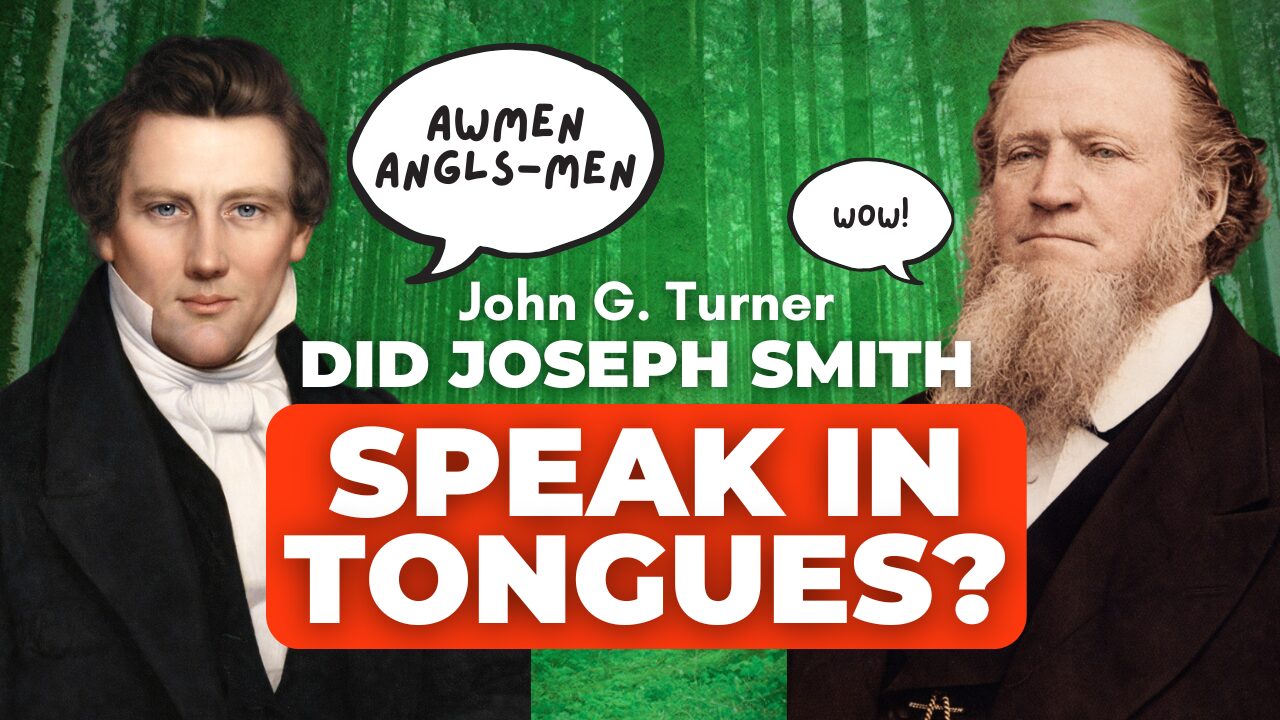
Thumbnail Credits: Main image of Joseph Smith by Unknown painter, from Community of Christ Archives (public domain); Image of Brigham Young by Charles William Walker (public domain) enhanced; Background image from stock photos
Originally published on mormonstories.org.
Transcript
Machine-generated and lightly edited. Click any timestamp to jump the audio to that moment. The audio is authoritative; please check it before quoting.
Introduction and Episode Overview
John Dehlin Did Joseph Smith, the prophet of the Mormon Church, speak in tongues? Hello everyone, and welcome to another edition of Mormon Stories podcast, Joseph Smith Edition. I am your host, John Dehlin. It is Wednesday, August 13, 2025, and today you are joining us for part 12 in our series on Joseph Smith, the founder of the Church of Jesus Christ of Latter Day Saints. And we are using as our text as our curriculum for the first 30 episodes or 31 episodes of this podcast. Joseph Smith, the Rise and Fall of an American Prophet by John G. Turner. This series is best consumed in sequence, so you don't want to start at 12, you want to start at 1. So if you have not watched the previous 11 episodes, pause this, go back and watch them. You can check them out on the Mormon Stories feed on Spotify on itunes. You can check them out in the Mormon stories feed on YouTube. There's also a Joseph Smith Podcast playlist under the Mormon stories channel on YouTube and there's even a dedicated Spotify podcast called the Joseph Smith Podcast, which we're releasing these episodes in so many different ways because we want you to learn all you can about Joseph Smith. Our goal in this series is to talk about Joseph Smith in the most academic, non polemic, non hagiographic. What's that word? John Turner, Hagiographic, non hagiographic way possible. We want to just call balls and strikes, be good historians and learn about what the documents say, the historical documents say about the life of Joseph Smith. Please buy this book, make it a New York Times bestseller. You, you can buy it at Benchmark Books, which is our favorite bookstore, one of our favorite bookstores here in Utah. You can even maybe get a signed copy if you buy it from Benchmark. Also, you can buy it on Amazon or from Yale University Press. And really quickly, before we jump in, I have to thank our donors. We set up a fundraising drive to fund this series. So far, 21 episodes have been funded, so we're going to make it at least through chapter 21 of this book, which I'm not sure takes us to polygamy. So John Turner says if you haven't heard his treatment of polygamy, you ain't heard or seen nothing yet. I'm paraphrasing. Did you say that John Turner or something like it?
John Turner I think it's an exact quote.
John Dehlin Okay, so if, if, thank you. If you are supporting this series, I think something like, oh, I don't know, maybe 150 of you are able to donate. 165 donations. So thank you. If you've donated. We know that tens of thousands of you are watching this. If you're already donating to Mormon stories or to this campaign, thank you. If you're not and you can't afford to give any money, don't worry about it. Enjoy this. We're doing this as a public service. If you're in the position of supporting this series, you want to see John Turner get paid, and you want to see us make it through chapter 31, and you want to support good programming, Please go to donorbox.org Joseph Smith. Donorbox.org Joseph Smith. Let's raise the money. We need to be able to fund this entire series with John Turner. He's being very gracious with his time. We're so grateful to have him back. And without any further ado, that's three minutes and 50 seconds. John Turner, welcome back to the Joseph Smith Podcast.
John Turner Thanks, John. Delenn I'm excited for the next chapter, and I am really grateful for everybody who's supporting this and for people who are watching and listening. I appreciate the interest, and it's a fun chance for me to talk all things Joseph Smith.
John Dehlin Well, you'll notice that based on your inspiration last week, I'm now sporting my BYU Cougars golf hat that my friend gifted me. And you're sporting University of Utah colors. But your shirt does not say Utes. What does your shirt say? John Turner?
John Turner This is a shirt I picked up in Nauvoo a couple of years ago. I've tried to visit all the places that, that Joseph Smith lived and went. And I had a really nice day in Nauvoo. Got to hang out with some great people there. Got to, got to see all the sights. And so this is a good memory of that for me.
John Dehlin But in the, in the chronology of where we are in chapter 12, I think your shirt is officially anachronistic. Is that fair to say?
John Turner That is true. But we have to, you know, have to be okay with a little bit of anachronism. I need to get a Kirtland shirt and, and some other other Joseph Smith gear.
John Dehlin Kirtland swag.
John Turner Yeah. I once got a former editor of mine a Joseph Smith bust. And this have a prominent, it does have a prominent nose. And I got this as a gift for her after my Brigham Young biography. And as I was sort of ramping up work on my Mormon Jesus book. And so I saw my editor in her office, I gave her this bust of Joseph Smith. I think she just thought I was crazy. I don't know what she did with it.
John Dehlin That's wonderful. And that's a great reminder that John Turner not only has published this book on Joseph Smith, but he has published the best recent biography on Brigham Young. And, yeah, he wrote a book on Mormon Jesus. You're. You're. You're pretty much in a. You're pretty much a. An unofficial Mormon at this point. I think.
John Turner Yeah, I want to. I want to be an honorary member of the tribe, but I don't think it works like that.
John Dehlin Well, it does in my book. So I hereby anoint Wash and anoint the. An honorary Mormon.
John Turner Okay.
John Dehlin Do you want to be Latter Day Saint or a Mormon? You can choose.
John Turner I go both ways.
John Dehlin Okay. All right. All right. So last, Last chapter, chapter 11, was the 1831, 1832 time frame. We talked about all sorts of stuff, including Joseph attempt at coming up with the pure Adamic language. This chapter, we're not going to recap. This chapter, chapter 12, is called Olive Leaves. It's the 1832-1833 time period, and there's a lot of conflict. I'm just going to say I think it's called Olive Leaves, at least in part because Joseph's dealing with a lot of strife. And so why don't you pick up where chapter 12 begins, John Turner?
Conflict Between Missouri and Ohio Church Leaders
John Turner Sure. Well, so essentially, the immediate strife and conflict stem from unresolved, I would say, bad feelings and conflict from Joseph's first trip to independence in Jackson county in the summer of 1831. He had not parted on good terms with Edward Partridge. And now, you know, going forward, Joseph is a thousand miles away in northeastern Ohio. And so it's not easy for when there is conflict or disagreement between Joseph and church leaders in Missouri, it's really hard to. For them to manage or resolve that conflict. It's, you know, they have the option of, you know, they send letters. Those take weeks to arrive, weeks to answer. And so when. When there are. Are bad feelings or unresolved disagreements, it usually takes Joseph showing up in Missouri or Missouri folks showing up in Ohio for those conflicts to get resolved.
John Dehlin And remind us at least from the Zion, Independence, Missouri, Jackson county kind of contingency, what's the core of the. What's the sort of basis of the constant bickering and complaining and, you know, concern.
John Turner So, you know, stretching back to the summer of 1831, Bishop Partridge, he wasn't thrilled to remain in Missouri when Joseph and Signe Rigdon were heading back to northeastern Ohio. I think also Partridge is. Is pretty overwhelmed. Joseph has identified independence in Jackson county as the gathering place, the site of the new Jerusalem. And so church members are. Some of them are beginning to gather there and to show up in significant numbers. And Partridge has the task of allocating property. In conjunction with Sidney Gilbert. He really has the task of also sometimes purchasing property. So it's a big task, and he's to do it without Joseph's oversight. And I think that's. It's a difficult. It's a difficult situation for him.
John Dehlin He's probably doing it without salary or benefits, I'm guessing without much of a salary. Probably doesn't have a 401k. Probably has no health insurance. Right.
John Turner No, it's tough. So he had divested himself, I think, of some of his Ohio businesses and property and, you know, maybe. And I think he was happy to. Happy enough to devote himself and his resources to the cause. It's a good reminder that, you know, Joseph is asking individuals not just to sacrifice financially, but often to undertake stressful tasks for the church. And so Partridge is definitely in that category.
John Dehlin It seems like Rigdon had it out for Partridge, and Rigdon was leveling some pretty serious accusations against Partridge. Can you talk about why Sidney is so. So concerned and kind of stoking almost some of the contention between Kirtland and Nauvoo or Kirtland and Independence, or do I have that wrong?
John Turner No. I mean, I don't know if Rigdon is stoking the conflict or simply sort of representing Joseph by letter to Partridge, but he accuses Partridge of having insulted Joseph. So having insulted the Lord's profit. That's a serious charge. He also accuses Partridge of withholding funds that he was supposed to spend on Joseph and Rigdon's travel expenses. You know, maybe he hadn't dispersed to them what they were expecting the previous summer, you know, and, you know, not everybody just takes this sort of criticism. Partridge and I think William Phelps is still in Missouri, I forget. You know, they. They bristle against this sort of accusation, and they accuse Rigdon of essentially departing from the. The spirit of Christ. At the same time, I. I think it's fair to say that despite the conflict, Partridge and Joseph, you know, they don't. They don't. They don't relish this conflict. So Partridge makes it known that he. He'd prefer to bury the matter.
John Dehlin You mentioned, you know, mention, you know, following up on Sidney Rigdon. You mentioned that even though Oliver Cowdery was officially, what, second elder, that Oliver had also been sent to Independence, if I'm not wrong, and Sidney sort of becomes Joseph's right hand man by virtue of the fact that Joseph probably wanted him to be his right hand man and that he remains in Joseph with Joseph in Kirtland. Is that kind of a demotion of Oliver Cowdery A little bit and a promotion of Sidney?
John Turner Yeah. So not a formal demotion but definitely a promotion of Signe. And just to back up, so Cowdery, Oliver Cowdery and Joseph, you know, they had worked together really closely in the spring of 1829. And at the same time there have been some points of conflict along the way. Oliver was sometimes envious of Joseph's ability to translate, perhaps wanted to exercise that gift as well. And then they have some conflict in 1830 during the early days of after the organization of the church, Cowdery sometimes has theological critiques of Joseph or the founding documents of the church. So there's some conflict. And then Cowdery becomes part of the group of ultimately five missionaries to the Lamanites that goes to Missouri in the fall of 1830 into the winter and spring of 1831. And while he's gone, Rigdon joins the church, comes to Fayette, meets Joseph. And Joseph quickly identifies this text talented and already somewhat renowned preacher as a good right hand man. So Rigdon becomes an effective spokesman for the church going forward. He also begins working as Joseph's scribe during the early 1830s. And so it's not so much that Kattery's demoted, it's just that he's sort of sent off. And while he's away, Rigdon is elevated. When Joseph is ordained as president of the high priesthood, he chooses Rigdon and Jesse Gause as his two counselors. And so Cowdery's simply sort of left out. Joseph eventually rectifies that. But I think there are some bruised feelings on Cowdery's part.
Jesse Gauss and Early Polygamy Questions
John Dehlin I was surprised to hear the name Jesse Gauss. I don't know if I just forgotten his name or if as a Mormon growing up I'd never ever heard the name. He, he, he's excommunicated almost as quickly as he joins. It almost seems like, but excommunication seems so severe and as, as having been excommunicated. I'm always a little bit fascinated about what gets someone excommunicated is Gauss. I we don't, you know, we've got a lot to cover today. Is Gauss story in any way interesting or worth telling, including his excommunication?
John Turner Well, I think if we knew more about him it would be really interesting. I, I cite an essay I Think from the Journal of Mormon History on Gauss, which has some really fascinating information. I wish we knew more. So he's someone who has really remarkable religious journey. He's 20 years older than Joseph Smith. I think. If I recall, he had at one point been a Quaker. Then he and his wife joined the Shakers. They joined a Shaker community near Kirtland. For those of you who might not be familiar, the Quakers required men and women to not only practice abstinence, but for married couples to sleep in separate quarters.
John Dehlin Is that Shakers or Quakers?
John Turner Those are the Shakers.
John Dehlin Right. That's what I thought.
John Turner Okay, so I don't think we exactly know why Jesse Gauss makes these different religious commitments, but Sometime, maybe late 1831, early 1832, he's baptized into the Church of Christ, as it's still simply known at this time.
John Dehlin I love the way you put the Shaker prohibition on spousal relations. You wrote, perhaps Jesse Gauss was not keen on that arrangement. To put it lightly.
John Turner Who knows? You know, in the long run, it wasn't a great growth strategy. But the Shakers actually, you know, they are attracting a fair number of converts in the early 1800s and form a number of communities in the north northeastern United States. And again, we don't exactly know why, but Gauss must have made a really good impression on Joseph Smith. Not long after he converts, Joseph elevates him to this very high office. What we know about him is that by the next summer, he, His. His faith in his new church is disrupted. So I think by August, September of 1832, he has drifted away from the church. I think that's the reason why he's excommunicated. It's not for. As far as I know, it's not for bad behavior. I think he severed contact with the church, and then a church council formally excommunicated him.
John Dehlin So maybe it was just excommunicated for leaving the church?
John Turner I think so. I mean, I assume he must have had some particular reason that caused him to sever contact. You know, I mean, I think it's easy to say, well, Joseph is clearly not, you know, selecting necessarily reliable men for top leadership positions. Yeah. I think the reality is, though, almost everybody to some extent, was a pretty new convert at this time. It seems in Jesse Gauss's case, Joseph kind of takes that to the extreme and taps one for significant leadership role, maybe weeks or months after that individual's baptism. And Joseph never totally gets away from that penchant for the rapid elevation and trust in new Individuals.
John Dehlin Yeah, it's sort of like, hi, what's your name? Hey, you want to be co president of the church? It was kind of like that.
John Turner Yeah, I mean, I think it's just, you know, it's a reminder also that it's still a really fledgling movement and it's, it's a little bit free, a little bit more freewheeling than church members today would be used to.
John Dehlin Yeah, I mean, by 1833, the longest anyone could have been a member is three years, right?
John Turner Exactly.
John Dehlin Okay, I've got this little aside before we get too far away from Jesse. Is it Gauss?
John Turner Yeah.
John Dehlin Julia sent me the, the article from the John Whitmer. Is it the John Whitmer? No, this is Brigham Young University studies, D. Michael Quinn. So the article is Jesse Gauss, Joseph Smith's little Known Counselor by our. By D. Michael Quinn in the fall of 1983. BYU studies. Have you read this little seven page article, John Turner?
John Turner I have. And then I think I forget when Quinn wrote that essay. Another scholar, Aaron Jennings, wrote a much longer account of Gauss's life. And I just looked up my Note the Spring 2008 Journal, Journal of Mormon History.
John Dehlin Well, this, I, I don't mean to go back to Jesse Gauss, but there's some stuff claimed by D. Michael Quinn in this article that is blowing my mind. And it, it may be a canard we have to keep slaying. Do you know what I'm about to bring up?
John Turner No, but I'm looking forward to it.
John Dehlin Okay, so it, when it gets to the part of the article about why Gauss left the church, here's what it says. In view of what is known about Jesse Gauss's troubled family relations in the summer of 1832. So this is the time period we're talking about. His disaffection for Mormonism, according to D. Michael Quinn, may have resulted from his learning about polygamous theory and practice that were emerging at the time quinn writes the 1830 Book of Mormon provided for the theoretical possibility that God could suspend the prohibition against polygamy. By the way, this is 11 years before Quinn was excommunicated. This was while he was working for byu and he has access to the archives, having just worked with Leonard Arrington. Right. This is right around the time the Camelot years would have ended. You know, 82, 83 time period. So Quinn goes on to write that in that a Mormon dissenter referred to. Oh, no, sorry. He says this theoretical possibility could also be construed from the circumstances. This is what we talked about last week of an unpublished revelation dictated by Joseph Smith in July 1831. It goes on to say, in fact, a Mormon dissenter referred to this 1831 revelation in a newspaper expose published in Ohio less than two months after Jesse Gauss arrived there. But two men who later became members of the quorum of the Twelve affirmed that it was not until 1832 that Joseph Smith secretly made specific what had heretofore been ambiguous potentials of polygamy in Mormonism. And this keeps blowing my mind. So I know it's a total aside from your book, but I gotta read it to you.
John Turner Sure.
John Dehlin He goes on to say Orson Pratt acknowledged the existence of an 1831 revelation meaning a polygamy revelation, but indicated that Joseph Smith privately removed ambiguity from the matter about the time Jesse Gauss was was converted to the church and became counselor. And then it goes on and says, in the forepart of the year 1832, Joseph told individuals then in the church that he had inquired of the Lord concerning the principle of plurality of wives. And he received for answer that the principle of taking more wives than one is a true principle. But the time had not yet come for it to be practiced. That was before the church was two years old. So we referred to the eventual section 101 of the original Doctrine and Covenants that denounces polygamy, but starts with. And I think you read this last episode starts with the phrase like owing to the recent accounts of polygamy. Well, this article is basically telling us what those accounts likely were. And it goes on to say that McClellan claimed that by the time of the birth of Joseph smith III on 6th of November 1832, which again is right in the time period we're discussing, McClellan claimed that the prophet had begun polygamous cohabitation. Now you may have already addressed all this last chapter and I missed it, but this is blowing my mind. So either I didn't pay attention, I didn't understand, or this is like something worth discussing, or none of the above, maybe.
John Turner Sure. So I have to take another look at the other article on Jesse Gass that I referenced, but it's longer so I can't. I can't refresh my memory super quickly. I'm still a polygamy denier as far as the early 1830s is concerned. So you know which. And Quinn also includes this. Apparently during his missionary journey in the summer of 1832, Jesse Gause visits his wife with whom he had joined the Shakers, and he tries to persuade her to, you know, join this new church. She turns that down. I think. I mean, I think I would attribute his disaffection more to, you know, that missionary journey, his conversation with his wife, than to early polygamy. I mean, so I will say it would make it kind of a fun. If you don't mind schadenfreude, it would sort of make it a fun Jesse Gauss story that, you know, he. He. He goes from a church that mandates complete abstinence and not even living with your one wife to a church that wants you to have a bunch. I mean, his. His head would have been spinning. At the same time, you know, I think. What I think is the case is that a lot of people in future decades, they want to retroactively date a polygamy revelation to the early 1830s, because it makes episodes like that of Fanny Alger easier to process, and it creates sort of a. A foundation for, you know, Joseph reluctantly finally engaging in polygamy in Nauvoo. I just think there's not evidence for it. I don't think there's. There's not good evidence beyond William Phelps for this 1831 revelation. Phelps produces it Right. During the reorganization of the church under Joseph Smith iii. I just think. I just think it's. It's not persuasive. So.
John Dehlin And yet Quinn's not known as a careless scholar.
John Turner No, and I'm not saying it's careless, but he throws this. I would say he. He puts this forward as a possibility and then sort of concludes whatever the cause, you know, we just don't know.
John Dehlin Oh, wait. Can I. Can I be clear of something?
John Turner Yeah.
John Dehlin I'm not. I guess I'm less interested in why Gauss left Right. Than I am about the credibility of Joseph starting to talk about polygamy
John Turner and
John Dehlin even a possible earlyish polygamy revelation in the. In the 31:32 time frame that people like McClellan are stating they remember him talking about, because that fits with the preamble to the section 101 of the DNC saying in response to the reports that there have been about the practice of polygamy amongst our people. Like, that all makes a lot of sense to me. So the evidence would seem to point more towards there being discussion than they're not being discussion. Purely by section 101 alone.
John Turner Sure. No. And.
John Dehlin And why wouldn't it be Joseph that was the head of it.
John Turner Yeah.
John Dehlin If he was including it in the Book of Mormon in 1830, and we know he ends up practicing it and he talked about marrying the Indian young women with the missionaries, some of whom were married, like, I don't know, John Turner. I. I'm starting to think there's smoke. There's. There might be some fire to the smoke.
John Turner So, yeah, this is. This is what I think. And so, number one, sure, discussion of it, because, you know, this is. This is a new fledgling religious movement. There are a lot of those in the United States over the early 1800s. And one thing that, at least in the public mind, that is characteristic of these movements is, you know, divergent practices of sexuality and marriage. So, you know, there's a small group up in Maine that's practicing something akin to spiritual wives. They're the shakers who are practicing abstinence. There's often, you know, just the. At least the rumor that new movements, perhaps including the Church of Christ, they must be sexually deviant in some way. So, of course, this is being, you know, this probably is being discussed in broad strokes, and there's clearly accusations, which is the reason for that, you know, 1835, I think, affirmation that, you know, we just believe in, you know, standard monogamous marriage. No, no funny business here. I do think the, you know, the passage in the Book of Mormon is. Is curious and, and I think it's conceivable that Joseph would have wondered, why did the patriarchs of the Old Testament, why did they have more than one wife? Why was God okay with it? On the other hand, all of these recollections of a purported early 1830s revelation,
John Dehlin and we're talking Orson Pratt and William McClellan.
John Turner Right. And William Phelps.
John Dehlin Three.
John Turner Right.
John Dehlin And they were all pretty close to Joseph. Right.
John Turner They're all, you know, close. Ish. To Joseph, at least some of them. You know, Phelps is very close to Joseph during a lot of these years. I do still think, though, the timing of, you know, Phelps's letter, Right. As the reorganization is getting off the ground. Look, that's a great. That's a great response to the leaders of the reorganized Church, that this isn't just an innovation of Joseph in 1841. This is there almost right at the start. I just think if, if Joseph had. Had received a revelation and. And had dictated it. Right. Which is. Is perhaps a distinction that might matter and talk to people about it. I don't think this would be only appearing in written evidence starting in 1861.
John Dehlin Okay. All right. Well, we don't want to beat a dead horse, but I was. I'm. I'm. I'm keeping my mind open.
John Turner John Turner, you know, nothing wrong with that. Who knows?
John Dehlin And it's possible the church has some document it hasn't yet released. Right.
John Turner It's always possible. I tend to think that in some of those references to a revelation that's in the archives but not released, that might be a reference to the 1861 William Phelps letter.
John Dehlin Okay. All right. I don't know anything about that, but.
John Turner Well, that's the letter that we talked about a couple of episodes where Phelps writes Brigham Young or produces a statement that not only did Joseph have a revelation in 1831, but here it is, you know, here's the actual revelation. I think what's curious about that document is Phelps makes it clear that Joseph didn't dictate it, didn't have it recorded at the time, because in his words, we didn't have pen and paper. And that's a little bit weird. Joseph is dictating revelations every other day in the summer of 1831. And I just can't imagine they wouldn't have been able to find paper to record something that important.
John Dehlin Yeah. All right, so enough. Enough turmoil erupts in independence that Joseph feels like he needs to go pay a visit. Why don't you. You want to tell us about that visit? Is that a good place to go next?
John Turner Sure. So, again, to catch people up on where we were last time, in late March of 1832, Joseph, along with Sidney Rigdon, is brutally attacked. He's tarred and feathered. He's got a chunk of hair pulled out of. Out of his head. And, you know, so he's still. He's still a bit. He's still battered and bruised. When he leaves Kirtland for Missouri, he's
Joseph Smith's 1832 Trip to Missouri
John Dehlin got acid pock marks on his face, Right?
John Turner Yeah. I mean, this is. This is.
John Dehlin Lost tooth. A lost tooth.
John Turner Yeah. But, you know, he's. He's already. You know, he's already had this plan to go. And he also loses an adopted son shortly after that attack. He then reaches Jackson county in late April of 1832. I think everybody's relieved to be together again. The, you know, church leaders in Missouri, they affirm, I guess you could say, Joseph's ordination as president of the high priesthood. He and Edward Partridge shake hands. Rigdon, who's also along on the trip, everybody's satisfied. And Joseph repeats his pattern from the previous summer. He's only in Jackson county for a couple of weeks. There are all sorts of plans to be made. Joseph and his associates essentially try to revamp or even just establish the church's. Essential business operations. During this trip, they create something that they call the United Firm, which is an umbrella structure for a bunch of different things. A store, a publishing operation, other enterprises back in Kirtland. And Joseph, essentially, by this point, he's identified a number of trusted associates to run these various operations. People like Partridge, Newell K. Whitney, Sidney Gilbert, Rigdon Cowdery, William Phelps, Martin Harris is also included. There's a bit of a hope that these different enterprises will bring in enough revenue to sort of, you could say, pay salaries almost, to put it in contemporary terms, to meet the basic needs of church leaders. And then profits would become the church's common property and also fund the acquisition of property in Jackson county and perhaps in Kirtland as well.
John Dehlin So. So the United Firm is created. Peace is established. Joseph, so you. Joseph, basically, he anoints these leaders. Is it sort of a precursor to the quorum of the 12? Because it's the. The numbers, the. The people you listed. It's. I don't know, it's around eight names or so. Eight or nine names. By revelation, the Lord ordered these leaders to be bound together. Like, what is that structure? It's sounding like an early quorum of the 12, but it's not right.
John Turner I mean, I think functionally, in the sense of leading the church, it is something akin to that, actually, in. In more. In a more contemporary sense. So when Joseph establishes the quorum of the 12 a couple of years later, at first they are tasked with governing the church and evangelizing also outside of its gathering places. You know, in this case, he's selecting these individuals, I would say, simply to run the business of the church. And this sort of. What I think Joseph really does is he starts to establish what become the key cornerstones of Mormon gathering places. So that always is going to include a printing press, the acquisition of land, merchandising operations later on that will also include the construction of temples. So I think he's sort of establishing, you know, a basic plan for gathering church members to a particular place and managing all of the business and finances that are inherent to that.
John Dehlin Got it. Okay. So he establishes peace in independence. He leaves feeling pretty. Pretty happy with the harmony that he's engendered. And then there's a little bit of catastrophe in Indiana on the way home.
Joseph's Letters to Emma and Family Struggles
John Turner Yeah, And I think this is. I find this particular episode illuminating and worth lingering on a little bit, because one of the things that we're unable to do with many of the episodes that we're discussing in the early 1830s is you know, it's hard to get really inside Joseph's mind. And we also don't have anyone keeping a careful daily journal that might clue us into the details of Joseph's decision making. And then in this episode that we're about to talk about, we at least have a handwritten letter from Joseph that's far more reflective and interior than we often get. So what happens is Joseph and Newell K. Whitney are traveling together. They're headed for Louisville, K, Kentucky, I think, to get on a steamboat that will take them on their way. And as they're approaching New Albany, Indiana, which is just across the river from Louisville, their horses get startled. The their stagecoach, it's clear that it's going to crash and they move to jump out. As Whitney is jumping out, his foot gets. Gets caught in the wheel and he breaks his foot and leg. Sydney Rigdon's also along. Joseph and Sidney, they're not injured in the accident. Rigdon keeps going, probably bringing news back to Kirtland. Joseph stays with Whitney. They lodge at a tavern while the bishop recuperates. Joseph writes what in many ways is kind of a lovely letter to Emma Smith. This is in June of 1832. It's actually one of my favorite Joseph Smith documents. And Joseph, while he's sort of stranded there, he feels very forlorn. He's lonely, he's sorrowful. He becomes even more lonesome. When Martin Harris arrives with a letter from Ann Whitney for Newell K. Whitney. Joseph tells Emma that he's hurt that she did not take the trouble to write him. And while he's there, you know, Joseph is just rankled as he ruminates on his relationship with the Missouri church leaders. You know, they've shaken hands, but are they really obedient? Do they even care about him? He's written them about Whitney's accident, but he hasn't heard back. They should have visited, or they should have at least sent some words of comfort. And Joseph and Whitney, they conclude that despite the handshakes and warm words, that these people aren't necessarily loyal and true to them.
John Dehlin Yeah. And to make it matters worse, he ends up getting food poisoning. And I was shocked. I didn't know that with food poisoning you could get a dislocated jaw. I knew you could vomit, but I didn't know you could get a dislocated jaw, spit up blood and lose much of your hair, but apparently that's what happened.
John Turner I don't know. What did he eat? Weren't they eating catfish out of the Ohio river or something? That.
John Dehlin Are they eating, like rats that are lying around in the bin or something?
John Turner I don't know, but it. It sounds absolutely miserable. I mean, I've had a couple bouts of bad food poisoning. Fortunately, I had antibiotics, biotics to get to get me over those episodes. But, yeah, Joseph, you know, and keep in mind this is. This is June. It's only been three months since he's been, you know, beaten up in Ohio.
John Dehlin He's having a bad year.
John Turner He's. He's certainly having a bad hair year, for sure. And, you know, this. This just adds to Joseph's misery. And he. He writes to Emma that he's been in the habit of walking out to the outskirts of this town and going into the woods and praying. And it's, I think, a bit akin to some extent to the way he later describes what becomes known as his first vision. And, you know, Joseph, I can. I can picture him in the woods by himself, reflecting on his sinfulness, reflecting on his sorrow. He, you know, he's still thinking about the death of this adopted son, and there's news of other deaths in Kirtland. And, you know, he writes that, number one, God is merciful. He's forgiven my sins. He writes, I will try to be contented with my lot, knowing that God is my friend. In him I shall find comfort. Some of this is, you know, he juxtaposes with the fact that he's not finding earthly comfort from his church associates, from his friends, even from Emma. So Joseph's adrift, and I would say this is somewhat uncharacteristic for him. He's someone who is sociable. He likes to surround himself with friends and associates. And I think being holed up in this place by himself, that seems to have been a little bit difficult for him psychologically and emotionally.
John Dehlin Yeah, you also mentioned. I mean, this sounds just like a horrible time. You mentioned that by this point he would have had four dead children and his adoption. So four of his own dead children and his adopted daughter.
John Turner Well, so I think Hiram has it.
John Dehlin He finds out Hyrum's. One of Hyrum's kids die.
John Turner Right, Right. One of Hiram's kids has just died. So I think. I think Emma has lost. I think he and Emma have lost three biological children and an adopted son by this point. So they've, you know, they've just endured a lot of sorrow of this point. And Joseph never really reflects on that. But I've often thought, you know, if you. If you lose one child, you're, you know, you're going to be wondering what's going to happen next time. If you've lost one child and then a set of twins, you must just be wondering, are we ever going to have children who will live? So, you know, I think this is just a side of Joseph we don't get to see very often. I'm grateful for the fact that, you know, he wrote this letter in his own hand and it survived. It gives us a glimpse into his interior that we. We don't get frequently enough.
John Dehlin Going back just a tiny bit, I was surprised that with all the stuff he's managing in Kirtland that he wouldn't leave Sidney to be with Bishop Whitney and just go on himself. That was a weird choice, especially given how lonely and sad he was and how Emma has been just deserted for so much of their marriage. Did you find that as an odd decision or. Not really.
John Turner I don't remember if there's any information about how that decision was made. It may have been Rigdon is bound to determine to go back home. I don't know. It may have been Whitney really wanted Joseph's company and Joseph was willing to stay. And, you know, Joseph, you know, sometimes he. He does sometimes stick close to his friends, and so that. That may have been part of it as well. I think we just don't know. You're right to remind listeners that this is a very tough stretch of time for Emma. So Joseph has left their home right after this mob attack and after the death of their son. And, you know, so Emma's worried about safety of the family going forward. When he leaves, Joseph recommends to her that she move back to Kirtland. She tries to move back into the Whitney home, actually doesn't get a warm welcome there. Ann Whitney Newell, K's wife, was pregnant and sick at the time. Apparently her aunt basically told Emma there wasn't room for her in the house. So she, she basically is a bit of a involuntary vagabond. During these months, she stays with a few different families, including Joseph's parents. So it, you know, it has occurred to me, you know, he's upset that she hasn't written. She probably feels like she completely has her hands full and is probably. It'd be. It's hard to, It's. It's hard to imagine that she doesn't feel a bit abandoned during these months.
John Dehlin Yeah. Because everything bad happening to him is at least in some ways happening to her. I. So I. A couple questions came to my mind that I'm. I'm guessing you're not going to be able to answer. There'd be more details in the book, but I'm wondering what he's doing for a month in Indiana. Right. Like, what's he doing every day he's there? Like three weeks or almost a month.
John Turner Yeah.
John Dehlin What does he do? How does he pass his time? Like, we, we know that later, you know, the 1840s are going to be marred with kind of, you know, the polygamy or sexual scandal. And we know that, you know, Fanny Alger is just around the corner. Like, and, and I know that this is probably just really stretching, but you mentioned that he takes a moment to, like, pray to get a forgiveness of his sins. Like, I'm wondering a little bit, like, is he getting into some moral trouble? And I know it would be speculation, but I'm just thinking he's been gone from Emma for how much total time now. And is, Is. Would he be able. Would Joseph Smith be able to remain celibate for months on end? He's alone, waiting for his friend to heal in Indiana. Like, it's hard for me to imagine that he's not tempted at least to be getting into trouble. And so then when he's talking about pleading for forgiveness of his sins, I think you could probably see where my mind is wondering about. But maybe that's unfair or maybe there's just. No. No. Good answer.
John Turner I mean, John de Lynn, you are just engaging in wild speculation. I don't know. Well, I will say I don't think that Joseph Smith would have been a good convert for the Shakers, but. No, I mean, I, I don't think there's. I, I think this is sort of almost banal, you know, so things aren't going well, so I feel abandoned by God and I'd better pray and ask for forgiveness in, in a pretty generic sense, you know, I mean, Joseph's writing this letter. You know, this is a letter to Emma. One thing that, you know, know, I tend to keep in mind when people at this time period, when they write a letter to a loved one, even, I think they would expect that it, it would be shared a little bit more broadly. So it's sort of. That's also a way for Joseph, I think, perhaps to let a number of people know that he wants, you know, he wants more consolation and friendship. Maybe it's also a way for him to share a bit of his piety with them. But no, to go back to your question, I, I don't know. I don't. I don't think we have any evidence of Any sexual misbehavior or dalliances or anything like that on this trip? Yeah, I'm saying he wouldn't have been a good shaker because by the time Joseph is writing that letter, I think Emma, or at least by the time he gets back to Kirtland, Emma's about halfway through her third pregnancy.
Psychoanalyzing Joseph Smith
John Dehlin Yeah, sometimes people like to psycho diagnose Joseph Smith. And one of the most common psycho diagnoses that people like to put on him, ex post facto or whatever the word would be, would be narcissist. And I'm. I'm trying to think about the times I would travel for two, three, four weeks at a time internationally when I worked for Microsoft, where I would leave Margi home with the little kids. And it was always excruciating for her to be left home alone without any support with the little kids. So when Joseph's writing Emma kind of expressing disappointment with her knowing that he's sometimes gone more than he is home and she's left alone to kind of fend for herself with littles or with several failed pregnancies. That's when that word like, I don't know, narcissist kind of comes into my mind is, is that. And, you know, if you add to that the fact that he. He's telling people he's God's one true spokesman, he speaks for Jesus. Like, was he an insensitive husband or was he a caring, devoted, feeling husband? Or do you even have a sense for that through his letters and correspondence?
John Turner Such a great question. So, you know, he's. I mean, Joseph can be warm in his letters. He writes another letter to Emma during a shorter trip later in 1832, I think, also in his own handwriting. And I mean, it's hard to know what to make of it, make of this sort of thing. I mean, he'll write expressions of affection and friendship in those letters. Those are maybe sort of letter writing customs. I think on balance, there's a fair amount of evidence to suggest that he and Emma do have a pretty warm relationship. And again, it's really hard to analyze. Emma is, you know, and we'll talk about this when we get into the Nauvoo period of the book. Even when the two of them are at odds privately, Emma very much sticks by Joseph publicly and will engage in public displays of unity, loyalty and affection. At the same time, I think journals from the Nauvoo time period, they do document a pretty warm relationship between the two of them when they're not bitterly at odds over Plural marriage. And then there's a tremendous amount of fierce conflict.
John Dehlin Yeah. Well, eventually. Eventually they're able to leave Indiana, go back to Kirtland, and then without much further. Well, without almost no time going by, it looks like the discontentment in independence reemerges almost immediately. Is that right?
John Turner Yeah. I mean, I think essentially the fundamental problem is it's very hard for Joseph to lead a church that is now centered in two different places that are far apart from each other. And Joseph just seems on some level. Not to fully trust the leaders that he has selected for the church in Missouri. And so when he's far away from them, he has doubts about their loyalty. I write in the book that Joseph's communications to them, and we're talking about Edward Partridge, William Phelps. I think Joseph's letters are those written under his direction. They betray a certain paranoia and prickliness. But then what you get is you get letters going back and forth and sort of a lack of trust building, apparently on. For their part, folks in Missouri think that Joseph should trust them more, that he shouldn't try to exercise monarchical power and authority over them. And it seems that when Joseph's.
John Dehlin Them fighting words. John Turner, Monarchical power.
John Turner That's monarchical power.
John Dehlin And he wrote that he was furious.
John Turner Yeah. And this is something that will recur really through, I'd say, 1837. As long as there are these two gathering places or as long as Joseph travels frequently when he's away, those bonds of loyalty and trust seem to fray. When Joseph is with people face to face, he's very effective at one way or another resolving conflict. And that's not simply by. It's not only by bossing people around. He'll often engage in long, heartfelt conversations and discussions. And I think Joseph is generally able to get things back on track with people when he's with them face to face. Or perhaps you could say they have a hard time resisting him in that circumstance. But, you know, thousand miles away, it's just. It's a very difficult model of church leadership, especially for such. Again, such a. A new fledgling church.
John Dehlin Yeah. And then if. If the problems in independence weren't enough, it looks like Sidney Rigdon kind of goes off the rails.
John Turner Yeah. So this is. This is a. This is sort of a sad episode. So, you know, again, Rigdon, along with Joseph, were assaulted by a mob in Hiram, Ohio, in March of 1832. And apparently when the mob dragged Sidney Rigdon out of his cabin, you know, his head was just like, you know, bounced along the ground repeatedly. And he's, he's not well and there's you know, ram ramifications going forward. And apparently in July, you know, Joseph, excuse me. Rigden just begins acting erratically. He apparently shows up at a church meeting. I think Joseph Jr. Is not there. It's, it's at on the property of Joseph Smith senior. Rigdon shows up, declares that he has a revelation from the Lord that the kingdom has been taken from the church and left with him. And according to Lucy Max Smith, Joseph's Joseph Jr's mother. Rigdon is upset because the church hasn't provided him with a new house after the mob attack. And so Joseph Jr. Rushes to the scene. He assures church members that the kingdom is, has not been handed over to Rigdon. Strips Rigden of his church offices and priesthood. Apparently from there it gets worse. Rigdon just descends into this period of mental instability. According to Lucy Mack Smith he's having encounters with the devil and convulsions. So it's a, it's a sad scene. You know Joseph blames this behavior on you know, sort of the tension between church leaders in Kirtland and Missouri. I think it's more likely that this is the after effects of the assaults. Although it's you know it's not easy to diagnose these things as a historian 200 years later. Eventually Rigdon stabilizes, repents and Joseph ordains him to the high priesthood again and he gets his house. Bishop Whitney finds the Rigdon's a new home.
John Dehlin So the squeaky wheel got the grease.
John Turner I guess so you'd think there would be an easier way to sort that out. I do think you know, going forward Joseph, I mean Rigdon remains a very important associate especially through the Missouri period of the church. I don't think Joseph ever trusts him as fully going forward as he did initially.
John Dehlin Fair. It seems like the next part of the story that's important is Joseph receiving some pretty big revelations around a higher priesthood. Should we talk about that?
The Melchizedek Priesthood and High Priesthood
John Turner Sure. So Joseph I'll just say to keep the basics of the story going along. Once he gets back to north eastern Ohio he and Emma and Julia they move into a room in the Whitney store. So they move back to Kirtland and not long after that Joseph dictates a long revelation. It's one of a couple multi day revelations where it takes him two days to dictate it all. And it's a revelation on priesthood. I think think it's now Doctrine and Covenant section 84. It's I think a document that shows the development of Joseph's thought on the concept over the last couple of years. It lays out the idea of both a priests, a Melchizedek priesthood, and an Aaronic priesthood, a higher and a lesser priesthood. And, you know, Joseph has been slowly fleshing out this concept. You know, the. It's clear he's been interested in priesthood for quite some time. There's a reference in the Book of Mormon to Alma possessing the. The high priesthood. And then Joseph has ordained men into the high priesthood in June of 1831. Now he's really introducing these terms, Melchizedek and Aaron, and sort of laying out a genealogy of these two priesthoods.
John Dehlin And would this be. Would this be around the time that Peter, James and John ordaining Joseph and Oliver story emerges?
John Turner I think not quite yet.
John Dehlin Okay.
John Turner I don't think we have evidence. I don't think we have that story in a document until 1834, maybe 1835.
John Dehlin Okay.
John Turner He has. I think there's a reference in Joseph's 1832 history to an angelic visitation connected with the restoration of priesthood.
John Dehlin Got it. So tell me if this is right. There's kind of this building narrative of priesthood where it's maybe no discussion of priesthood or authority and then some sort of vague priesthood authority. And then later we discussed sort of a discussion of a higher priesthood, but not a lot of details. This sort of becomes the next step in the fleshing out of more details around priesthood. And this is the type of progression that ends, that leaves. That leads to David Whitmer, one of the three, one of the Book of Mormon witnesses, saying Joseph's kind of building on this and making up stuff later that never was part of the original church. Is that. Are we, you know, is that still part of that unfolding, growing narrative?
John Turner Yeah, I think that's the case. I think, you know, one of. One of Joseph's sources of inspiration, again is the. The b. There's, you know, Joseph is clearly interested in passages in the New Testament Epistle to the Hebrews. I can't remember exactly when he works on those passages in his translation of the Scriptures. I think it's perhaps the. Might be 1832. So it's certainly not too long before he dictates this revelation. And that New Testament book has an extended discussion of Melchizedek and a reference to Jesus being a priest forever in the order of Melchizedek. Joseph makes some corrections or expansions to some of those verses and including a reference to other men being ordained unto this priesthood of Melchizedek who would be like unto the Son of God. So, you know, this, this, I think this subject has been on his mind. He, you know, he almost introduces the ordination of men into the high priesthood before he's really prepared to flesh it out theologically. And now he's sort of putting theological flesh onto this office that he's already introduced.
John Dehlin You may have just said this, so forgive me if you did. We talked about there being other potential inspirations for the three degrees of glory doctrine or concept, like Emanuel Swedenborg. Do we, do we know other people that discussed about a higher and lower priesthood and even about a Melchizedek priesthood prior to Joseph Smith? Do we have a sense for where he might have drew his inspiration? And again, forgive me if you just said this.
John Turner No, I didn't. So it's a good question. So actually I found some information or I refresh my memory with some of the notes on the Joseph Smith Papers project about this revelation. And one of their very helpful notes mentions that the existence of multiple priesthoods was not unique, that a sort of influence on Alexander Campbell, a Canadian minister named Alexander Crawford. And I don't know how much you want to get into the weeds here, John, he discussed three distinct priesthoods, a patriarchal priesthood after the order of Melchizedek, an Aaronical priesthood, and a priesthood held by Jesus Christ. And Campbell also distinguished between a priesthood given to the tribe of Levi and a high priesthood given to Aaron and his sons. So as the Joseph Smith Papers observes, as a former associate of Alexander Campbell, Rigdon was certainly familiar with these ideas. And so that you can imagine, we don't know a great deal about how Sidney and Joseph work together during these years. But Rigdon is a scribe for many of Joseph's revelations. They spend a lot of time together. Joseph's clearly thinking about these passages in both Genesis and in Hebrews. There's also, I will say, you know, you can find, you can always find some antecedents. Joseph's ideas are going in a really different direction from those of Campbell. So Campbell's interested in these distinct priesthoods or multiple priesthoods. He's interested in that as sort of biblical history. Joseph's interested in this as restoration. And so I don't think there's a great antecedent for another Christian movement at the time restoring multiple priesthoods, or even among Protestant Christians in the United States, restoring a high priesthood or anything like that.
John Dehlin Okay, well, I always like to ask, you know, we talked about Joseph being described by Terl Givens as, as utilizing bricolage or as being an inspired syncretist, if you want to. If you pick any doctrine Joseph Smith came up with, you can often find someone in the zeitgeist that shared something like the doctrine prior to Joseph.
John Turner Yeah, I mean, I just think most ideas are not just bolts out of the blue.
John Dehlin Everything is remixed.
John Turner Yeah. And, you know, Joseph, you know, again, I will say as a Protestant Christian, this whole concept of priesthood within Mormonism, very foreign and unfamiliar to me. Difficult, I think, also to comprehend. I remember once when I was just becoming acquainted with the church, maybe the contemporary church, I heard, you know, someone who, who I met was telling me about the Melchizedek priesthood. Like that is. That just sounds. What is that? And at the same time, you know, so Joseph is reading passages in the Epistle to the Hebrews that talk about the order of Melchizedek and the order of Aaron. And so it makes sense to me that, you know, he's just regularly plumbing passages in the Bible that most prod, you know, that Protestants mostly ignore, and he's finding inspiration in them and not just as, you know, obscure Bible trivia, but as sort of, you know, instructions for what the church should restore. I find it just fascinating.
John Dehlin Let me ask you one last question while we're on this topic. So in modern Mormonism, historically, being a high priest, you basically are called as a high priest when you're going to become a bishop or a member of a bishopric, I believe, or to be on a stake high council or a stake president. And. Or it can just mean you're old and, you know, back when they had elders quorum for the younger men, they needed a place to put the older men. Eventually they'd make you a high priest and stick you in the high priest quorum. Didn't. It hasn't turned out to mean a whole lot. In fact, lately they've collapsed. They've. They've gotten rid of the high priest group and now all men meet together in one group again. So in effect, it just means it's what you get. It's what you have to get ordained to. To become a bishop in modern Mormonism, as I understand it. But when Joseph describes it, he talks about it being keys to the mysteries, obtaining the knowledge of God. What do you think he was promising people? How was he describing what it meant to get the higher priesthood of the Melchizedek priesthood in terms of what the men who were blessed enough to receive it might experience? Because it's almost giving me Denver snuffer vibes, like you may even get a personal witness from Jesus Christ once you become a high priest. But I don't want to impose that back on 1832 to 1833. Kirtland.
John Turner So even though Joseph is introducing this higher and lower priesthood distinction in 1832, it's still a little bit fuzzy. He's talking about different offices. I think the primary thrust is that those who receive the priesthood and remain faithful, they can expect an endowment of power in the temple that the church is going to build in independence. So I think it's a promised access to spiritual power and the possibility of holding different offices. I don't think that Joseph has fully worked out the details of this in a hierarchical way for the church at the time of this revelation.
John Dehlin And it doesn't necessarily denote, like, big, special promises to those who are to receive it.
John Turner Well, I think there's the general promise of an endowment of power. And I think that, again, that's a little bit. That's a little bit fuzzy. It might have been, you know, I think. And sort of a Pentecostal sort of endowment of power. I think also a fullness of power for the purpose of evangelism and missions. I mean, I think one, one. One clue that Joseph hasn't really fleshed this out is that. And he's starting to do so with this revelation is that the men who are initially endowed with the high priesthood, some of them definitely connect it to the ability to heal or to, you know, cast out demons, that sort of exercise of spiritual power. But there are also people who write in their journals that they're, you know, they're confused by this. They don't know exactly what this means.
John Dehlin Okay. All right. Well, it seems like the next part of the story, Joseph comes up with the idea or some sort of revelation or prophecy that he just really needs to leave again. He really needs to leave Emma and his kids again. He really needs to leave Kirtland again. And this time, well, he needs to send Bishop Whitney to Boston and New York. And by the way, he needs to go as well. And, you know, I guess they're supposed to, you know, preach the gospel to the people of Boston and New York. And almost shockingly, a little bit, he seems to prophesy that if the people of Boston and New York aren't receptive to the gospel, there's almost this Nineveh like, prophecy that those cities shall be destroyed. And I just thought, what a shocking and harsh revelation. But also, after just having all those. That disastrous trip to Missouri and after him being depressed and miserable and Emma being Depressed and miserable. Why in the heck is he needing to travel again for a large amount of time to these cities far, far away? I'm stacking the deck. But I'm a little frustrated with Joseph in his treatment of Emma, especially when I hear about what the trip is actually like. But why don't you take over, John?
Revelation on Priesthood and Missionary Travels
John Turner Yeah. So I think it's interesting, this revelation on priesthood instructs Whitney to go to Albany, New York and Boston, right, and preach that they're going to get annihilated essentially unless their inhabitants accept the gospel. I think actually Whitney's, you know, part of, part of the reason for his venture is to acquire merchandise for the what is now the United Firm store. As to why Joseph goes on the trip, I think we don't know. I mean, I think one thing that's characteristic of Joseph, I would say during his young life, certainly in the late 1820s, early 1830s, he's on the move all the time. So I think he's just used to living this way. Actually, after, after this trip, he travels a bit less until the collapse of Kirtland. But it's curious because when Joseph accompanies Whitney on this trip, they go to Albany, then they go to New York City. Joseph doesn't seem to have a whole lot to do. Again, he's. He's a bit lonesome. He doesn't particularly like New York City. He doesn't seem to do much of that, you know, public preaching. You know, he meets with a couple of people, has some private conversations, seems to miss her family. It's. It's a strange time for Joseph to be gone. Emma's pregnancy is nearing its conclusion. So I don't think we know too much about Joseph's decision making. He gets back to Kirtland a day after Emma gives birth to Joseph iii.
John Dehlin Yeah, well, you know, it seems a little bit proud. I was kind of shocked and disappointed by this because number one, as I've said, I don't know why he's leaving Emma. Number two, I don't know why God wants to destroy Boston and New York just because a couple missionaries aren't successful there. Like he's going to literally slaughter all the people there. But three, Joseph ends up getting depressed and just kind of sitting in his room, it seems like for most of the time, and then jokes on Joseph or God because I think as of 2025, Boston and New York are still doing okay. So, like it. It's kind of a ridiculous and a little bit shocking story that I wasn't aware Of. But it didn't leave me with a really good taste of my mouth for Joseph in, you know, at least in that little part of the story.
John Turner Yeah. And I don't. Again, we don't know that much about Joseph's reasoning. He does seem a little bit. A little bit adrift and directionless during some of these months. If I wanted to in any way put a positive spin on Joseph's behavior, and I don't particularly want to, but it's been. It's been a bit of a traumatic year, you know, especially the. The spring between the mob attack, the death of a son, all of this conflict. Maybe on some level Joseph feels an urge to get away. When he's away, he doesn't particularly like it. We don't know. And I think one thing. I guess we have one thing to feel good about is one of their biological children lives instead of dying at birth or shortly thereafter. So at least we. At least we have something to celebrate.
John Dehlin That's nice. It is okay to call that a failed prophecy. Is that. I know I sometimes ask you about that. The destruction of Boston and New York.
John Turner Yeah. I mean, I don't remember the precise language in the revelation, but sure, there's this threat of destruction, and if I'm. As long as I'm remembering it quickly, a threat of destruction unless they. Unless they receive the gospel they do read well, people barely are given a chance to reject the gospel. It's not as if it's preached to most of them, but most of those who encounter it reject it or ignore it. And yes, God has not yet destroyed New York or Boston.
John Dehlin Yeah. Yeah. All right. Well, I won't keep pressing that point.
John Turner So,
John Dehlin yeah, I have a close family member who no longer is living. Who, you know, I think he was kind of famously not happy, maybe in his marriage, but he had several young kids at home and he kept volunteering to go serve in the Vietnam War, like, multiple times volunteering to leave his wife and kids to go fight in a war. And that's kind of what this reminded me of. It's just like, why, I guess some people are deeply unhappy with their reality or where they are, and so they seek an escape. And I think we all can be guilty of that in different ways. And sometimes you can be gone even when you're around. So I guess I don't want to have too much of. Sit too much on a high horse because we've all got demons we're fighting, right?
John Turner Yeah. And I think there is. Nowadays, I think there's more of a cultural expectation for. I'm not saying this to let Joseph off the hook necessarily, but there's more of a cultural expectation that fathers would stay home and be attentive to their families. I will say, at the same time, it unquestionably is difficult. And there are times where we have letters from Emma expressing discontent that she's left in the lurch in difficult situations. We don't have letters along those lines from 1832, but later on, sometimes Joseph's just on the run on the Lamb, even some of the time. And Emma's in difficult circumstances and isn't happy about it.
John Dehlin Yeah, absolutely. All right. Well, I teased today's episode with the question of, did Joseph Smith speak in tongues? Because I can say. I can honestly say in all my years of being a member of the. Of this church, I don't think I ever heard any account of Joseph Smith speaking in tongues. In fact, I think we were taught that that's something we don't do as Mormons. And when the church even mentions the speaking of tongues, like in the Articles of Faith, what it means is missionary. Mormon missionaries learn foreign languages faster than normal people or can understand, you know, that sort of thing. So before we answer the question of whether Joseph Smith spoke in tongues, maybe let's introduce Brigham Young and Heber C. Kimball onto the scene because they have an entrance.
Brigham Young Joins the Church and Speaking in Tongues
John Turner Yeah. So. And of course, this is one of my favorite little stories, because it's about Brigham Young. So in the fall of 1832, Brigham. Brigham Young, along with his brother Joseph and Heber Kimball, they have recently joined the church, and they come and visit Kirtland, as I mentioned. Like the large majority of converts, they join the church without having met Joseph Smith. Brigham Young has this recollection that as he's traveling, he lives outside of Rochester, New York, as he's traveling from there to Kirtland, you know, he'll tell people about. About the church, and they'll bring up things about Joseph Smith and how he's a ne' er do. Well, and, you know, Brigham, you know, he says, well, I didn't really have a lot to say in response because I'd never met the man. So he wants to go take the measure of the man. And they come to Kirtland, and when they get there, they're excited to meet Joseph. He's in the wood. He's in the forest chopping wood. And he puts down his axe, shakes their hands, and, you know, they offer to help. And Brigham's recollection is that they chopped and loaded a little while. And then he said, let's go to the house. And if you recall, you know, we talked about Ezra Booth basically saying, you know, Joseph didn't really. Didn't really act the way a prophet should act. You know, he's too frivolous, you know, maybe too involved with the mundane. Not holy enough. Brigham, you know, he just loved this. You know, Brigham's this pretty uneducated craftsman, and he shows up and here's a prophet who'll chop wood himself and then go to a prayer meeting that same night. You know, some people just loved that, really, especially at this time period, you know, down to earth personality of Joseph Smith that, you know, he had. He certainly had pretensions to prophetic authority, but at the same time, he was also unpretentious.
John Dehlin So I think we talked about this last time that it wasn't necessarily the Book of Mormon that converted Brigham Young. It was what. Brigham Young attending a Mormon service and hearing people speak in tongues, and that he felt the spirit himself. And that's kind of what inspired him to go meet Joseph, his feeling the spirit of a Mormon church service. Right.
John Turner Well, he saw a. Some Pennsylvania elders speak in tongues and prophesy, maybe prophesy in tongues, I'm not sure. So in his words, I had seen the power of God displayed. And if you think about the time period, you know, there are a lot of churches competing for attention. And as far as Brigham Young was concerned, he wanted to join the church where he found the power of God. So, you know, that for him, that was. That was decisive. And I. I don't know how closely Brigham Young read the Book of Mormon, but, you know, its last chapter has that promise that, or. Or maybe that warning that followers of Christ should not deny the gifts of God, including all kinds of tongues and the interpretation of tongues. And at that first night in Kirtland, Joseph, along with these newcomers, they attend a prayer meeting and Brigham speaks in tongues. And Joseph, according to Brigham's recollection, pronounces. Pronounces that this is the language of Adam, the heavenly language that God had spoken to Adam and Eve. This wasn't the first time that people in the church spoke in tongues. Obviously, Brigham had seen other people do it. People back in 1831 in Kirtland had spoken in tongues, but Joseph now is exercising the gift himself. And in fact, and this actually blows my mind, church members report that Joseph both spoke and sang in tongues, which I think is pretty wild.
John Dehlin Yeah, I think I want. I make vague references to this But I just want to. I just want to reference my friend Chris Thomas's book. A Pentecostal reads the Book of Mormon. Christopher Thomas is a dear friend. He's a. He's been on Mormon Stories podcast several times, talking with Sandra Tanner, but also being interviewed about his experience as a. As a scholar of Mormon studies, but also as a Pentecostal minister or preacher. Great guy. But, you know, he's got an entire book about how Pentecostal the Book of Mormon reads. And obviously, I just referenced earlier, and we've referenced this before. The church has clearly moved away from its Pentecostal, you know, origins. But even at this point in Kirtland, correct me if I'm wrong, Joseph is getting nervous with the speaking of tongues and with other spiritual manifestations because he's concerned about people trying to question his authority, challenge his authority, compete with him in terms of revelations. And he just doesn't want things to get out of hand. That's my impression. So when Brigham arrives and starts speaking in tongues, I'm expecting Joseph to say something like, well, Brigham, we're not doing that that much anymore. We're kind of tamping down on the tongue stuff. But not only does Joseph, you know, expressed that he's okay with Brigham speaking in tongues, he declares it the pure Adamic language, and then joins in. And I'm like, is Joseph code switching? What's going on? I thought Joseph was kind of leaning against and away from the speaking of tongues at this point.
John Turner So, you know, this would get us back to Kirtland between February and June of 1831. So when Joseph arrives on the scene, when he first moves to Kirtland, it is a spiritual hot house in which I'd say there's. There's a lot of spiritual ecstasy, also a certain amount of spiritual chaos. You know, people when they are filled with the spirit, there's physical manifestations of that. People are collapsing, people are almost bouncing off the ceiling, swinging back and forth on beams, things like that. Joseph, By June of 1831, he does put the brakes on the most extreme forms of that behavior. He wants more decorum. He doesn't want people acting quite so crazy and out of control. But he doesn't want to quench the spirit. I think Joseph does correct a fair amount of behavior. He also doesn't want people walking around taking other people's property and things like that. But that persistence of spiritual gifts as described in the New Testament, that is a core principle. So Joseph is exercising gifts of healing and exorcism and speaking in tongues is sort of just in that New Testament category of spiritual gifts. So Joseph doesn't forbid it. I think he's just a little uncertain. And he doesn't encourage it as much until the fall of 1832. And then there are quite a few reports, really, especially through the Kirtland period of the church of meetings at which people speak in tongues, sing in tongues, other people interpret those messages. Joseph certainly doesn't want people to be delivering messages or prophesying in ways that claim authority, especially authority that would impinge on his authority. But otherwise he seems to roll with a certain. Certain amount of this spiritual ecstasy.
John Dehlin Yeah, I think, John Turner, that this is fascinating because I just don't think. I think early Mormonism, especially early Kirtland Mormonism, was a very charismatic Christian religion. The Book of Mormon is very charismatic. The early Kirtland was very charismatic. I don't think Mormons know how charismatic early Mormonism was. I don't think they think that that's what Mormonism is all about. I think they even would go as far as to sort of mock or ridicule Pentecostal faiths as being weird. I remember hearing the word gibberish being bandied around growing up in the church. And yet, not only was early Mormonism very charismatic, not only should we take the article of faith literally that talks about speaking in tongues and the interpretation of tongues, but Brigham Young and Joseph Smith got into it. And I think that's really interesting. And it's also interesting that it went away. Like, why in the heck did it go away? Like, why aren't we still doing it? If it was good enough for Joseph, if it was good enough for Brigham, if it was good enough for Heber, if it was good enough for the Kirtland Saints, why isn't it good enough for Mormons today? Did God change his mind? I guess you don't have the answer to that, John Turner.
John Turner God is the same yesterday, today and tomorrow. To quote the New Testament and some of Joseph's own letters. Yeah, no, it's fascinating. I think. I can't remember where I got the idea from. It's not original to me, but some have suggested that when temple work begins to become more standard, I guess by the late 1800s, in a way that channels Latter Day Saint Mormon activity in a new direction and away from the spiritual ecstasy of the 19th century, speaking in tongues remained pretty common in Mormon communities through much of the 19th century. Brigham Young himself persisted in the practice at least until the early 1850s. I don't know that he did after that. I do think it's significant that Joseph participates in this himself and that he could, I guess you could say, feel and display some of that spiritual power. I imagine that was a significant part of his leadership, especially through the Kirtland period.
John Dehlin Yeah, I. I can pretty much guarantee you that if a modern Mormon started speaking in tongues in sacrament meeting, they would be escorted out. And that's. That's kind of curious because, like, it's definitely scriptural and it's definitely historical. So I. I want to, like, plant that idea of any faithful Mormons out there. Look into the gifts of the Spirit, look into the Book of Mormon and read Christopher Thomas. Buy and read Christopher Thomas's. A Pentecostal reads the Book of Mormon and consider bringing back tongues to Mormonism. Because, again, if it was good enough for Joseph and Brigham, it should be good enough for us. Okay.
Civil War Prophecy and the School of the Prophets
John Turner Fun stuff.
John Dehlin Public service announcement. All right, I want to. I know you've got a hard stop. I want to make sure we get to the School of the Prophets and the Solemn assembly, but there's this little inconvenient South Carolina incident that we need to bring up really quick.
John Turner Yeah. So this is actually one of the few times that national affairs, you know, become important for Joseph Smith's at least publicly expressed thoughts. So this happens again by. By the time you get into the early 1840s, but it's unusual. So there's, you know, there's a national Crisis late in 1832. To make a long story short, politicians in the south, and particularly in South Carolina, are unhappy with federally imposed tariffs. They, you know, on imported goods, tariffs are a thing again in 2025, always controversial. Southerners are concerned that tariffs are going to depress exports of their cotton to Europe because, you know, Europe is going to retaliate. They're also going to make goods in the United States. United States cost more. And this is. This is just a huge issue. South Carolinians refer to a tariff passed in 1828 as the tariff of Abominations. That's pretty bad. In late 1832, a South Carolina convention declares federal tariffs in the state null and void. And they also threatened to secede if the national government attempts to enforce the tariff. And so there's this specter of. Of disunion that really is raised in a serious way for the first time in 1832. And Joseph has this on his mind, and he dictates a prophecy on Christmas Day 1832, that the rebellion of South Carolina is going to lead to a Civil war between the north and the south that ultimately will engulf the world.
John Dehlin Yeah. And weirdly, John Turner, my, in my experience as a Mormon, this prophecy is used as an example of Joseph Smith having a prophecy come true because I've often heard it said that Joseph Smith predicted the Civil War.
John Turner Right.
John Dehlin Is that the way you read it?
John Turner Well, yes and no. Right. So this is one of those glass half full, glass half empty, glass half filled, later prophecies, I think, I think in a contemporary sense maybe this is impossible to exactly pinpoint, but it's, it reads as if Joseph is expecting, you know, an imminent war, a conflict based on the nullification crisis which is defused by a bit of a compromise between President Andrew Jackson and Congress. So yeah, I mean you could read this as, you know, the, a delayed fulfillment of prophecy. You could read it as an unfulfilled prophecy because while that war, dreadful as it is, the Civil War ultimately doesn't engulf the whole world and lead to divine wrath that will make an end of all nations. So I don't know, I guess I'll leave it, leave it up to listeners to make up their own minds about whether or not that that counts as a half fulfilled or not fulfilled prophecy.
John Dehlin Yeah. Like if, if the President of the United States is declaring a specific state treasonous, it's, and there's rumbling about secession. It probably wouldn't take a genius to say, or even a prophet to say, hey man, when this powder keg burst, it's probably going to start in South Carolina if the President United States is declaring that state tree literally with the word treasonous. Am I wrong?
John Turner No, I mean, I, I agree. I mean if, and you know, ultimately that turns out to be the case. Right.
John Dehlin Is it going to start like, starting like Nebraska, is it going to start in Ohio? Anyway, also, I read in your book that Joseph expected the South Carolina, you know, civil war to result in the second coming of Jesus. Am I wrong?
John Turner Correct. I mean, so part of the predicted effects of this war is that they'll also be divine wrath in the form of famine, plagues and earthquakes that are going to destroy all nations. And there I, I forget the exact wording, but there's a predicted, you know, coming day of the Lord which would be divine judgment followed by Christ's glorious reign. I think, you know, for Joseph, the message to the saints is, you know, stand, stand firm in Independence, in Jackson county, maybe also in Kirtland. Prepare yourself for the looming day of the Lord.
John Dehlin Yeah, yeah. I mean, even if you're okay with Joseph thinking that Joseph meant the 1860 Civil War. I think we can all agree that the 1860 Civil War, that what ends in 64, 65, did not lead to famine and plagues that ended all nations. So I'm counting that as a failed prophecy.
John Turner John Turner, you are welcome to do so. No, I mean, I think this is very much a. This is a reflection of what's on Joseph's mind in 1832. I don't think Joseph Smith had the ability to predict future events with, you know, divine power or accuracy. I mean, and I think like a lot of, you know, like a lot of just human beings, you know, some of his predictions about the future come to pass, some don't. I think it's actually a sign of, you know, it's a sign of how significant this Crisis is in 1832 that it intrudes into Joseph's revelations, because hardly anything else does during these years.
John Dehlin Right. All right. Well, let's end with a discussion. I guess the conflict continues to foment in Kirtland. There's some. There's some verbal scuffles with Phelps. You know, there's some threats that maybe Phelps or others, you know, need to repent or they'll be cut off. Talk about how Joseph tries to engender unity with both the school, the prophets, and also with the. With the Psalm assembly, because I think that's actually quite interesting and something I didn't know a lot about.
John Turner Sure. So, you know, there's still these lingering. Just unresolved conflict is almost too strong of a word, just lack of trust between church leaders in Missouri and those in Kirtland, namely Joseph. There are letters going back and forth. You know, it's. It's sort of like when text messages go back and forth today. You know, you wonder about somebody's true intentions or tone. It's much easier, you know, if you can. You can talk to people. Joseph is irritated. One detail I like is Joseph go so far as to tell William Phelps that his newspaper, which he started publishing in Independence, is boring and is going to fail if he doesn't make it more interesting. But, you know, Joseph, you know, Joseph has had this. You know, he has this vision of Zion, of a people being of one heart and mind. It's clearly, this is very difficult to fulfill. And Joseph meets with a group of his associates in Kirtland in December of 1832. This is on the second floor of the Whitney store in Joseph's translating room. And he tells them, look, if you want revelations and blessings from Heaven, you need to become of one heart and mind. And the men, you know, they stop, they pray about it and you know, they tell Joseph they are determined to keep God's commandments. And thereupon Joseph dictates another multi day revelation. I think this is, this is also pretty wild. You know, he starts dictating this revelation at nine o' clock at night. It's a flood of words. And often Joseph's long revelations, you know, they have a lot of different topics. The revelation, you know, the resurrection, the looming apocalypse. It gets so late at night they have to take a break. Joseph resumes dictating at nine o'clock the next morning. And now there are some specific instructions. Call your solemn assembly. You need to establish a house of God, a space for prayer, fasting, faith learning, glory and order. In a sense, this is looking ahead to the purposes that the temple will serve. But in the meantime, Joseph calls, this begins to call what they establish the School of the Prophets. Joseph is very satisfied with this revelation that he has produced. He sends a copy to Missouri. He calls it the olive leaf which we have plucked from the tree of paradise. A message. It's a message of peace. And when he sends it to Missouri, he, he sees this as a way to defuse the tension and conflict, as an opportunity for everybody to set grievances aside.
John Dehlin Yeah, and where does this. Okay, so there's two things here. There's the School of the Prophets, which I learned from your book isn't necessarily an original term. You even mentioned that Harvard had a School of the Prophets. I had no idea.
John Turner Well, simply, you know, early American educational institutions like Harvard were sometimes simply referred to as nicknames, the School of the Prophets because they trained ministers. Harvard started off as a ministerial training school.
John Dehlin Okay, yeah, I didn't know that. So that's interesting. And I think I actually have stood in the room where the School of the Prophets was held in Kirtland, and that's like where they learned Hebrew. Like, is that where Satius is going to teach Joseph Hebrew at some point? Is that kind of. It was where the guys would get together and is that where they were spitting their tobacco and, and learning, learning things, the lectures on faith and that sort of thing was that, that ends up being the School of the Prophets.
John Turner So great. That's a, that's a good question. So there's, there's sort of an initial first series of meetings, but then classes in Kirtland early in 1833, ironically, you know, this sounds like it's going to be a very Lofty spiritual school. The first thing they. They tackle is English grammar.
John Dehlin Grammar, yeah.
John Turner Because, Joseph, these are all rough stones. Right. All of these people, for the most part, need a little bit more schooling. I think by the time they're learning. By the time they're learning Hebrew a few years later, it's in a different place. It's. I think it's in a different building because the room you're referring to at the top of the Whitney store where, you know, Emma gets upset about how dirty. Dirty it is from the tobacco, that's a really small space. So I think there were too many Hebrew students for that space.
John Dehlin Okay. All right. So the School of the Prophets embarks first on grammar. I think the book talks about that in a. In a future chapter.
Solemn Assembly Rituals and Sacred Ordinances
John Turner Correct.
John Dehlin Okay. But the School of the Prophets is just a place for the leaders of the church to talk about theology and doctrine and to teach each other. Right?
John Turner Yeah. Well. And, you know, before they get into grammar, there is an organization of the school. And this solemn assembly in January of 1833, Joseph. And there's a couple of powerful meetings. Joseph invites both men and women to this solemn assembly.
John Dehlin Can I ask you quickly, where does the idea of a solemn assembly come from? Does it have biblical origins? Does it have, you know, Protestant Christian origins? Do we know where the term comes from and what do they mean by that?
John Turner I am. I'm pretty sure it is a biblical term, John, but I'm blanking on the specifics. I'm pretty sure that's where it comes from.
John Dehlin Okay.
John Turner And Joseph repeatedly returns to the idea over the next several years and that it's important in connection with what happens right after the Kirtland Temple's dedication in 1836. But there's this instruction to have a solemn assembly in that revelation that we just talked about and that the men should purify themselves. So those things happen in two sort of discrete meetings. In January of 1833. There's first a solemn assembly to which men and women are invited. It's sort of a time of spiritual fire. Joseph prays. He speaks in tongues. Other people are singing and praying in tongues late into the night. And then just the elders come back the next morning. And again there's prayer and speaking in tongues. But then the men purify themselves. They wash their hands, face, and feet. Joseph then takes a towel, following Jesus's example. He washes each man's feet. His. Joseph's. Joseph Smith Sr. Is one of the men present. He gives his son a blessing. One of the men then Washes Joseph's feet. So I think for Joseph, and this is another recurring theme in his prophetic leadership, he can often achieve unity through ritual. And you know, he, that was his stated purpose, that the people need to be of one heart and mind. And he really brings them together through spiritual fire. And then these rituals of purification, which I think are modeled both on Jesus washing his disciples feet and on the need for the priests of ancient Israel to wash and purify themselves before entering into the service of the Lord.
John Dehlin Yeah. And to be honest, sometimes I, you know, I'm a little bit critical of Joseph, but this part of, of the book and this part of this chapter was kind of touching to me. You know, the fact that they're, they're washing each other's feet, like that's pretty intimate, right?
John Turner Yeah.
John Dehlin And, and Joseph is so moved about the idea of, of either what, him washing his dad's feet or his dad washing his. Maybe he's going to wash his dad's feet, but his dad gives him a blessing first. Is that what you said?
John Turner That's right.
John Dehlin And it's a, and it's a really touching father son moment if I, if I remember reading it correctly.
John Turner Absolutely.
John Dehlin Very spiritual, emotional moment for all involved.
Reflections on the Book and Looking Ahead
John Turner Yeah, well, and I think, I think that's a good reminder for listeners. You know, we've talked about a lot of things over these last 12 episodes. The, you know, the gold plates, in my opinion, not existing. Maybe some anachronisms inherent in the Book of Mormon, some of the ups and downs of Joseph's leadership, the fact that he's sometimes, you know, contentious, you know, he butts heads with people. Maybe he wasn't grateful enough to Martin Harris for the financial support. But I think we also have to reckon with episodes like this if we want to understand why Joseph Smith in many respects was an effective religious leader and organizer of a movement. And one of his knacks was the institution of sacred ritual. And Joseph's leadership at those sorts of moments was often very effective, very moving to those who were present. And it did go a long way to making his people more of one heart and mind.
John Dehlin Yeah, yeah. Like if you, if people want to understand how Joseph did it, why he was so successful, this is the type of thing, right?
John Turner I definitely think so, yeah.
John Dehlin And it was deeply meaningful. Like these people were unified, they were connected, there was harmony. It almost feels like this chapter ends with Kirtland. After so much adversity, after so much conflict, it feels unified in almost like a Zion like way. By the end of the chapter?
John Turner No, I think glimpses of that Zion unity for sure. And, you know, sort of filling people with perceive spiritual power before they go out into the world. It is very effective. And the folks in Missouri are very excited by this revelation and by these developments. The problem for Joseph is there's always new conflict around the corner.
John Dehlin Right. Didn't Zion do their own solemn assembly?
John Turner The they did. I think they held a number of solemn assemblies in Little Settlements. And the results, according to John Whitmer, early church historian, was perfect harmony between us and our brethren in Kirtland. They sent Joseph a letter to that effect. He likes that letter more than all the other ones he's gotten from Missouri over the last year or so.
John Dehlin Yeah. Couple quick questions about the solid assembly. So one huge fad now that so many humans and post Mormons are getting involved in psychedelics, entheogens, I think, as they're called. People like to associate these charismatic experiences in Kirtland with either the prevalence of magic mushrooms or some type of psychedelic peyote or whatever, or even alcohol. I know that we're not talking about the Kirtland temple dedication yet, but, like, do you have any indication that in a solemn assembly experience like this, either alcohol or magic mushrooms or any type of psychedelic, there's credible reason to believe that those substances could have been involved to help engender spiritual euphoria?
John Turner It's a great question. So, I mean, looking ahead to the Kirtland temple, fasting and then wine, you know, does that. Does that enhance the spiritual ecstasy? Ecstasy, certainly quite possible. But I would say you don't need psychedelics or wine in order for people to speak in tongues or to have other charismatic experiences. And I'm not an expert on these things, but I have a couple of times in my life attended church meetings at which people have spoken in tongues and acted in sort of exuberant, ecstatic ways. And I'm pretty convinced those people weren't relying on such methods. So it's always possible that there are more things going on than we know of, but I don't think there's. I don't think there's evidence that that's the case in these settings. And I will also say there are a lot of meetings in the 1830s in particular, at which people are having these experiences. And I think we would. We probably would know if there was a customary usage of those sorts of aids to spiritual ecstasy.
John Dehlin Hey, Oliver, break out the shrooms. There's no. There's no indication of Sydney where the shrooms none of that.
John Turner No.
John Dehlin Okay. Okay.
John Turner I mean, might have explained some of Rigdon's erratic behavior, but.
John Dehlin All right. When. When I'm reading about washing of the feet, of course, what comes to my mind is the second anointing, the second endowment, you know, which is a. A secret Mormon temple ritual that even Mormons today, most of them, don't know about, but we know happens where Mormon apostles wash the feet of select elite Mormons in a temple, and sometimes a couple, One may be asked to wash the feet of another today in Mormon temples as part of a second endowment. Is it safe to say that what's going on in this solemn assembly in Kirtland is sort of a precursor to the second anointing, or is that totally unrelated?
John Turner I. I think. I'd say it's. It's not really related, except that it is. I think these are precursors to the rituals of washing and purification that take place in Kirtland in 1836. Those, I think, in a. In a way, are precursors to the Nauvoo endowment and then the second anointing in terms of, especially a wife anointing a husband as part of that. I don't. I don't think we have any precursors for that at this time.
John Dehlin Okay. I wrote down as a note from your book that in Joseph Smith Senior's blessing to his son, patriarchal blessing to Joseph Smith Jr. If I. If I remembered it right, Joseph Smith senior prophesied that Joseph Smith Jr. Would continue his ministry alive until Christ comes again. In other words, Joseph would be given the impression that he's going to live until Jesus comes again. Did I get that right?
John Turner So Joseph Sr. I don't think it's a formal patriarchal blessing written down as is instituted a couple of years later. But, yeah, Joseph Sr. Lays his hands on his son's head and pronounces that he's going to continue in his priest's office until Christ comes. Now, I think some faithful Mormons would probably say that Joseph is still in that priest's office, but there are. Yeah, look, there are a lot of predictions during these years of individuals living to see the return of Christ. And, you know, those. Those are not. Those are not fulfilled.
John Dehlin Yeah. What came to my mind immediately, you know, I don't know how much you've heard about the Chad Daba and Lori Valo, a story which is quite a grim story. What came to my mind is the thought that people can become quite reckless when they believe they're going to live forever. You know what I mean when they believe they're, they're going to live until Jesus comes. And I just wondered whether Joseph carried a level of confidence, maybe overconfidence, if he believed his father's. His father who was a patriarch by this point, right?
John Turner Not quite yet. Not quite yet.
John Dehlin He wasn't a patriarch yet. So if he believed his father's blessing, I wonder if that would have had him walk with a little more confidence than he should have had.
John Turner Well, I mean, Joseph doesn't lack for confidence. I mean, he does have some, you know, some of those rare moments of self doubt. However, right up until the end, you know, he talks and says that he has a confidence essentially that he can overcome anything. So whatever the source of that is, he has confidence in spades.
John Dehlin All right, well, John Turner, I think we've hit the notes of what I wanted to cover in chapter 12. Anything else you want to say about chapter 12? And you want to give us a preview for next episode? Well, which is chapter 13, Zion is fled.
John Turner Yeah. So as I suggested, even you have these peak moments of harmony and everything seems to be going well. There's for Joseph Smith, there's always trouble around the bend. It seems to alternate often between internal conflict within the church and then going forward increasingly. And we've already had some conflict with opponents outside the church. And oftentimes Joseph gets one of those tamped down and the other rears up. And so what happens is, is sort of, as I'm foreshadowing, Joseph seems to have established some harmony within the church. But there's going to be fierce, unprecedented opposition from people outside the church. And Joseph is going to face challenges that for him are unprecedented and that he's not very equipped to handle.
John Dehlin All right, well, John Turner, that, that is a great preview for next week. So viewers and listeners, next week we will be continuing this series on Joseph Smith, the Rise and Fall of an American Prophet with John Turner. I want to thank everyone who has donated to keep this series alive. We couldn't do it without you. If you want to support this series, all you gotta do is go to donorbox.org Joseph Smith. Become a monthly donor or a one time donor to this series and we'll raise the money to pay John all the way through the polygamy and the martyrdom chapters that we know you won't want to miss. So please continue supporting this project. Thanks to all of you who already have. We really love your comments and feedback. So please email us@mormonstoriesmail.com or comment on YouTube or Spotify we would love to read your comments. We may even share some of them online. But mostly if you disagree with us, if you have answers to our questions, if you have further insight, if you're Dan Vogel, any of those things, if any of those things apply, we would invite you to reach out. Even if you're an amateur historian or you just find this stuff interesting, please give us your opinions, your criticisms, your compliments. We want to hear it all as well. John Turner, I'm dying to know what swag you're going to be wearing next week. Last week it was BYU hat, this week Nauvoo T shirt. Are you going to run out of swag?
John Turner You know, I might. I have to see what I can do.
John Dehlin Okay, well, thanks so much for joining us today, John. This is super fun. I'm learning a lot. I'm really enjoying it.
John Turner Thank you. John Dillon. Thanks to everyone for listening.
John Dehlin All right, thanks again for joining us today on Mormon Stories. We appreciate the support. We hope you enjoyed this episode. Please share it. Please like it. Please subscribe to the channel. All that stuff helps us along with the comments and the donations. Again, thanks to our regular old donors that make all this possible. Thanks to Julia and Brooklyn and Margi and all those of the Open Stories foundation that make all this possible, including our board. We couldn't do it without you. Be good to each other. Be kind to each other. We'll see y' all again soon on another episode of Mormon Stories Podcast and the Joseph Smith Podcast.
Transcript © 2026 John P. Dehlin. All rights reserved. Brief quotations are welcome with attribution and a link to mormonstories.org; all other use requires written permission.