Three Degrees of Glory in Mormonism
Listen on Apple Podcasts Spotify YouTube Download MP3
About this episode
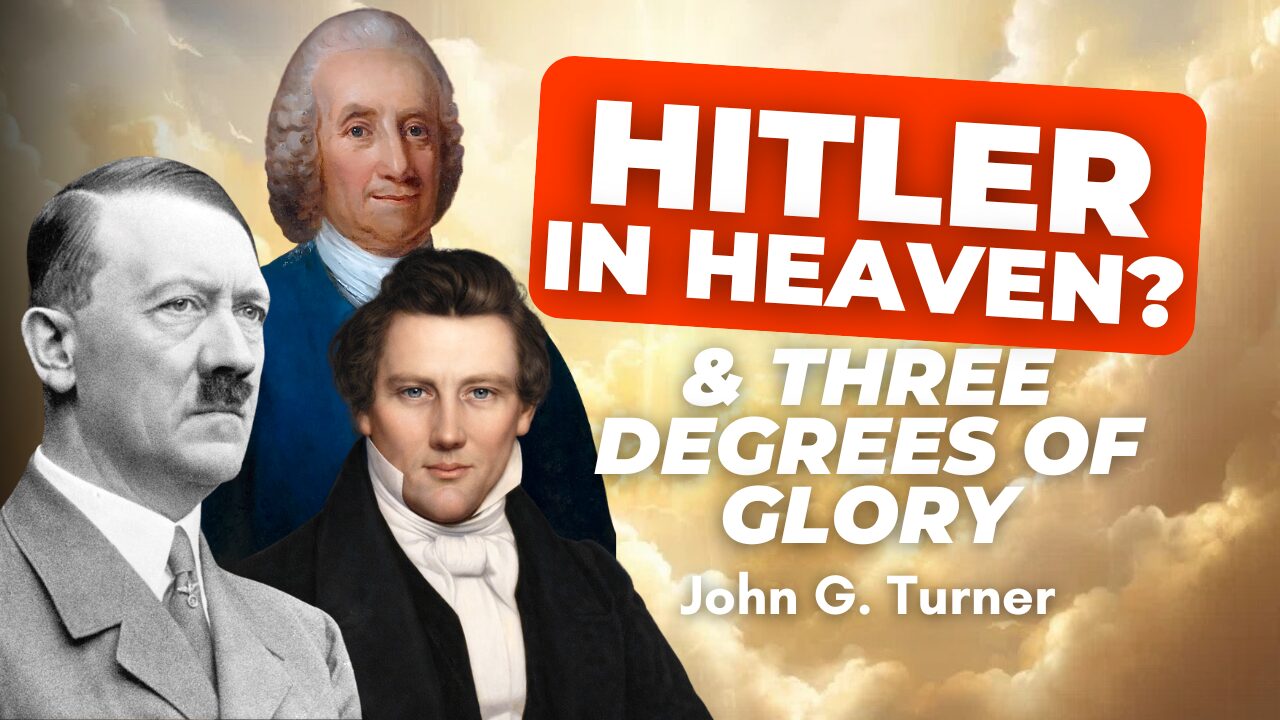
We are back again with historian Dr. John Turner to explore Chapter Eleven of his new book Joseph Smith: The Rise and Fall of an American Prophet. The chapter is titled “Pure Language” and covers the years 1831-1832 in Kirtland, Ohio. Turner discusses the stories of healing on the part of Joseph Smith, the controversy surrounding the publishing of the Book of Commandments as well as some of the members questioning Joseph Smith’s revelations. Dr. Turner also discusses Joseph Smith’s revelation on the three degrees of heaven and the possible connections to Emanual Swedenborg (as well as the fact that Hitler is in Mormon heaven!)
We also tackle some big questions:
-Is John Turner’s book just another hagiography idealizing his subject?
-Why did Alexander Campbell oppose Mormonism so vehemently?
-What are we to make of these stories of healing?
-Was the tar and feathering of Joseph Smith having to do with sexual impropriety?
You won’t want to miss this important episode in the Joseph Smith Podcast series!
Purchase the book here: https://yalebooks.yale.edu/book/9780300255164/joseph-smith/
To support this series please donate here: https://donorbox.org/josephsmith. One half of all donations will go to Dr. Turner for as long as he is participating in the series.
You can find the Joseph Smith Podcast dedicated feed on Spotify here: https://open.spotify.com/show/3vxj75pNK3IkaApMy3fiOM?si=d4012f8a37004a0a&nd=1&dlsi=72514aa3da434014
Originally published on mormonstories.org.
Transcript
Machine-generated and lightly edited. Click any timestamp to jump the audio to that moment. The audio is authoritative; please check it before quoting.
Introduction and Listener Feedback
John Dehlin Hello, everyone, and welcome to another edition of Mormon Stories podcast, Joseph Smith Edition. I'm your host, John Dehlin. It is August 11, 2025, and today is part 11 of our series covering this new book, Joseph the Rise and Fall of an American Prophet by George Mason Professor John Turner. This series is best consumed in sequence. So if you're just stumbling on this episode from the first time, go to the Mormon Stories Q or the Joseph Smith Podcast Q or the Joseph Smith podcast playlist on YouTube. Go back to the first episode, watch them in sequence, and you'll, you'll get the most out of them this way. Thanks to the generous support of you, our listeners, we are able to fund this series. We've already done 10 episodes. This is the 11th episode we're covering today, chapter 11 in this book called Pure Language, 1831-1832. We're now in the Kirtland, Ohio time frame with Joseph Smith and we've got a lot to cover today. I will just say really quickly again that we couldn't do this episode without the generous donations of you, our viewers and listeners. Our core Mormon Stories audience kind of helped bootstrap this issue, this series. But we did open up a link to for anyone who wants to donate to this series to keep it going. The link is donorbox.org Joseph Smith. I'm happy to announce, and this will be new, new news to my guest for today, John Turner, that we've now raised $10,636, which funds us up through, I think, if I'm got my count right, 22 episodes. So we've, we've almost got the full 31, 32 episodes funded. If we're able to receive another, I don't know, three, four, five grand more, we can definitely see this series all the way to its finale. So we want to thank everyone who's donated so far to make this possible. If you want to see us make it all the way through the polygamy chapters into Nauvoo and even Joseph Smarterdom and the epilogue, we would love to see your donations continue. So again, it's donorbox.org Joseph Smith. And that's it. So without any further ado, let's bring back the man of the series, Dr. John Turner. Thanks for joining us again.
John Turner Glad to be back with you, John Dehlin, and with all of your listeners.
John Dehlin All right, well, we've been trying to cover a little bit of feedback each episode to begin with before we jump into the chapters. So I've got a few things I thought I would share, and then we'll jump into chapter 11. How does that sound?
John Turner You got it.
John Dehlin Okay, so y' all will know that I've been reading no Man Knows My History as a companion to this wonderful book. And by the way, John Turner, I got a copy of the audiobook and I've jumped ahead. So I'm like, on chapter 18 now of your book, and I'm really loving it. So I'm cheating now.
John Turner That's great. And I love it when you hold up your annotated pages. I just wish my students at George Mason would do their assigned readings so carefully. Yeah, that's just awesome.
John Dehlin That's how I read. That's how we roll. And I've got a page of notes as well, but, yeah, so there was a little paragraph that I read in Flam Brody's no Man Knows My History that kind of touched on this question we discussed earlier about, you know, did Joseph Smith. Did the Book of Mormon kind of fade in importance to Joseph Smith and to the early church? And was Joseph even eager to kind of get the Book of Mormon behind him once the church was started in 1830? And let me just read this passage from Fawn Brody's no Man Knows My History. She wrote, all of the golden plate witnesses, save his two brothers, Samuel and Hyrum, had either died or left the church. I think it's saying within the early kind of 1830s, Oliver Cowdery had carried off one copy of the manuscript when he apostatized, leaving the other as the only tangible reminder of the book origin. The manuscript Joseph decided to bury in the cornerstone of the Nauvoo House along with a few other relics, and interrupted the ceremony of laying the stone in order to bring the manuscript from his home. Ebenezer Robinson was shocked to hear him say as he flipped through the pages to make sure it was complete, quote, I have had trouble enough with this thing. Close quote. You know, this paragraph just sort of gives the impression that Fawn Brody even also had the impression that by the end of Joseph's life, she's almost making it feel like he just was done with the Book of Mormon. Maybe it was an embarrassment. Maybe it was a ball and chain that theologically kept him grounded or trapped in ways that he felt like he wanted to become more doctrinally and theologically expansive. And so I just thought I'd get your reaction to kind of that passage and any other thoughts you have about whether Joseph felt more bound than inspired by or liberated by the Book of Mormon towards the end of his life.
John Turner Fun question. You know, I thought about naming my biography One Man Knows His History, just as sort of a response. It's a fun story. Ebenezer Robinson was an editor, I think, sometimes a scribe who's pretty close to Joseph for a stretch in the early 18, early 1840s. So, I mean, I think it's a possible story. I do think Joseph felt, I think he mostly neglected the Book of Mormon rather than feeling bound or burdened or embarrassed by it. I mean, he just doesn't seem to be a man who would be embarrassed by that sort of thing. If he was really embarrassed by the Book of Mormon, why would he embark on the Book of Abraham project in the mid-1830s? The church does publish some additional editions of the Book of Mormon during Joseph Smith's lifetime, including with some revisions. I think it's more that Joseph simply almost immediately moves on to the next project. So the Book of Mormon is published in March of 1830. By June of 1830, he's dictating his expansion of Genesis that becomes the Book of Moses. He and I would say that, you know, going forward, Joseph doesn't spend a ton of time returning to that text and reflecting on it and using it as a source for sermons or anything like that. So I think it's more that he neglects it and moves ahead.
John Dehlin Okay. My, my, my curiosity still wonders if whether it's the theology that Joseph clearly develops over time, because he, at some point he says the Book, the Book of Mormon, claims to have the fullness of the gospel, and yet it doesn't have three degrees of glory. It doesn't have baptism for the dead. It doesn't have the endowment. It doesn't have, you know, eternal marriage. Like, there's so much the Book of Mormon doesn't have. And I think it's fair to argue that it, that it represents kind of traditional Protestant theology, you know, when it comes out. And even as I think we've discussed before, God and Jesus appear to be the same. Appear to be the same being in the Book of Mormon. It still seems to me like that, along with the fact that people keep asking, how was it translated? Were the gold plates physically seen versus only spiritually seen? I can imagine a world where Joseph kind of just, that was an important entree. He became known as a seer and a translator. Yes, we'll talk today about his translation or reworking of the New Testament and also the Book of Abraham we talk about in a future chapter. But I could easily see him saying, yeah, that was my early work. But let's, let's focus on my newer stuff because that older stuff, sometimes it feels a little bit awkward or limiting. I think there's still a chance that he might have had some of those feelings. I think that's me weighing in.
John Turner Yeah. No, I mean, and it's, it's definitely possible. You know, I think I would say that when Joseph and the Church describes the Book of Mormon as I think the keystone of our religion, perhaps the key to that lies with Joseph's authority rather than with the specific theological content of the book. Perhaps that's the, you know, that's probably not what's necessarily implied in that statement at the time, but perhaps that for Joseph and maybe even for the church going forward, perhaps that's the big takeaway from the Book of Mormon.
John Dehlin Yeah, well, I, I would love to hear our viewers and listeners views, whether they disagree, whether they have evidence to suggest the contrary. Remind me if you have any information about the counts of how often Joseph is referencing the Book of Mormon in sermons and speeches and in, in like newspaper publications etc during his lifetime.
John Turner It's fairly seldom and some of the time the references are pretty vague. You know, simply a reference to the Nephites. I think there's one from an 1843 sermon. These are very episodic rather than regular. I mean you could compile a just massive table of Joseph's quotations from the Bible in his sermons and other writings and I think you'd end up with a handful from the Book of Mormon. A few, a few scholars have looked into it. I've looked at what they've done. It's not voluminous and you know, sometimes it can be a little tricky because a given biblical quotation sometimes appears in similar form in the Book of Mormon. But yeah, it's sort of a mountain of biblical references and a handful of Book of Mormon references.
John Dehlin Well, I'd be curious if they're like dialogue articles or Sunstone articles or Journal of Mormon History articles or even, you know, Sandra and Gerald Tanner articles about this topic. So if any of our viewers and listeners want to add to this unfolding of, of knowledge slash discussion, we'd love to hear you all weigh in on Joseph Smith's interactions with relationship with feelings about the Book of Mormon mid, mid. Later in his life. Let's go on to a couple more quick comments or quotes. We have Debbie Donovan writing this book I think is as well written as no Man Knows My History by Fawn Brody. Amazing. How do you like that type of praise?
John Turner John Turner that, you know, that makes me feel good. I don't think I'm as good of a writer as Fawn Brody, but if other people want to reach that conclusion, I, like I said, it's a, it's a nice compliment.
John Dehlin I'll tell you my view. You know, like, Fawn Brody uses many, many $10 words. Like, I'm finding I'm having to look up the meanings of words on every page. And I'm not exaggerating. I, I've compiled a list of, of $10 words that she uses and on the one hand, again, that shows a, you know, a certain intellect, sophistication, whatever. I would say your book is much more accessible. And I say that not as a backhanded compliment, but as a sincere compliment. And I know the self defacing John Turner will, will turn that into, you know, that it's, that I'm saying it's a simple, simplified reading, but the truth is, the more accessible a book is, the more it can often reach people and connect with people. So in that sense, I, I do think it's a valuable contribution in an important way because as far as I'm concerned, I want as many people reading and absorbing this book as possible. You know, this story.
John Turner I definitely share that goal.
John Dehlin Yeah. Hey, what's up with the BYU hat, by the way? I didn't mention that. Are you, are you a cougar today?
John Turner Yeah, I mean, I've, I've spent a fair amount of time at byu. I've got, I've got a lot of, a lot of friends and, and connections there, so I'm representing.
John Dehlin So can we get a Go Cougars out of you today, John Turner?
John Turner As long as they're not playing the Notre Dame Fighting Irish, sure. Otherwise, Go Cougars.
John Dehlin Oh, people don't know that. You, you actually went to Notre Dame with Patrick Mason, is that right? Y' all were contemporaries there. Yeah, I even visited Notre Dame while Patrick was there. I don't know if I would have seen you when I was there, but
John Turner I, I was probably around. Yeah, you know, it's a, it's a beautiful place. Beautiful campus. Great history, PhD program. I loved it.
John Dehlin So you do, you do cheer for the Fighting Irish? That's good to know.
John Turner I do. I do. You know, I'm a, I'm a Protestant Christian, cheering for a Catholic football team, writing about more Mormon stuff, wearing a BYU baseball cap.
John Dehlin I love it. I love it. All right, couple more quick quotes. One. One writer writes, John Turner's becoming one of my all time favorites. Thank you for these the second one's interesting. Diane Thin writes Thin. Super interesting. One of my Cherokee aunts was married in polygamy in Missouri. Glad this is being covered. So we did cover that last episode about whether or not Joseph Smith, we know he gave permission to his missionaries to marry, you know, Native American women. And then we, we discussed whether or not it was possible that that was the first polygamy revelation, that 1831 revelation. But here Diane is saying that one of her aunts was married in polygamy in Missouri. What do you think about that, John Turner?
John Turner I'd love to know the full story. So I think she should write at least one of us and, you know, give us the full scoop.
John Dehlin All right, so that's an invitation. Email John Turner or email mormonstoriesmail.com common I'll forward it on. All right, we've got B. Dan writing. I have absolutely watched this entire series. If you can't feel the hagiography. Hagiography, Hagiography. That's on you. So somebody is claiming your book is hagiography. Tell us, tell us what that $10 word means, John Turner.
John Turner Sure. Well, I mean, I'm not, I, I'm no Fon Brody, but I'll take a crack at it. No, hagiography refers to sort of an ideal, idealized portrait of a saint or someone who is blessed, I think. And while Joseph Smith was indeed a Latter day saint, I definitely don't think that my biography is a hagiography. And I can't imagine anybody who read it would, would reach that conclusion. But I think, you know, I think. Thanks for, thanks for watching the whole series. I will say that how one responds to a biography or another work of history very much can depend on one's own views. So someone who might have a really, really thoroughly critical assessment of Joseph Smith might certainly think that mine is way too forgiving or positive or something like that. I certainly don't think it's a hagiography.
John Dehlin Yeah, I think that's a ridiculous claim. But, you know, in faith politics, strange things, strange things happen. Here's the last one we'll include for today. Ole Christensen, I think from Denmark. Is that what DKK is that the currency of Denmark?
John Turner I think so.
John Dehlin I'd like to know much more about Mormonism in a historical and geographical context. For example, where did the whole thing with Egypt come from? How does it relate to the Civil War?
John Turner Those are great questions. I think we're getting to both of those subjects. In upcoming weeks, I'll just say, first of all, really nice to have someone from Denmark listening. And in terms of Egypt, you know, the. Once the French sort of rolled into Egypt at the turn of the 18th century, and both they and the British, you know, excavated or looted quite a few Egyptian graves. And once Europeans began doing more serious scholarly work on Egyptian hieroglyphics, there is just a massive surge of interest in all things Egypt. In both Europe and the United States, there was a pre existing, you know, or a previous and long standing belief that the intersection of ancient Jewish and ancient Egyptian knowledge was, you know, powerful and the key to unlocking both knowledge and spiritual power. So Joseph smith in the mid-1830s, and I think even in the Book of Mormon, you know, taps into that long standing belief.
John Dehlin Yeah, yeah. And you have an entire chapter on the Book of Abraham coming up. It's chapter 16. So we'll definitely be getting more into Abraham soon.
John Turner Looking forward to it.
Chapter 11 Overview and the Move to Hiram
John Dehlin Okay, well, let's go ahead and jump to chapter 11 in your book. It starts on page 108. It's called Pure Language. 1831. 1832. We left last episode with Joseph making a trip to Missouri. Remind me, was it his first trip to Missouri?
John Turner That was his first trip to Missouri. He wasn't there very long. He was there long enough to dedicate the site of the future temple and also clarify that this was indeed going to be the site of the new Jerusalem to which the Saints should gather by the time he races back to Kirtland. He also does clarify that Kirtland is going to be the Lord's stronghold as well for the next five years.
John Dehlin Okay, so beginning with chapter 11, you note that he is reunited with Emma. You know, Emma, for a lot of this early church years, spends a lot of time raising young children pregnant, losing children while Joseph is gone. So you start by mentioning that Joseph and Emma are reunited and the Smith family moves. Why don't you tell us about the move?
John Turner Sure. They had been living on the Morley farm just outside of Kirtland. Isaac Morley sold his land that fall, and so they needed a new place to live. They didn't have a house built for them in Kirtland itself yet. That happens a couple of years later. In the meantime, they're invited by John Johnson to live in his home in H, Ohio, which is 20 or 25 miles southeast of Kirtland. It's sort of a good reminder that Mormonism in northeastern Ohio, it isn't really just a Kirtland thing. It's. It's really a regional movement in the early 1830s. So Joseph, Emma and their adopted children, Julia and Joseph move into the Johnson home in, in Hiram.
John Dehlin Okay. And to be honest, this may or may not be surprising to you, but I, other than just, you know, reading, reading these biographies, I. The word Hiram, Ohio just wasn't even in my mental space. So remind us how far Hiram is from Kirtland.
John Turner It's about 20 or 25 miles. I was there a couple years ago. It's about a 40 minute drive. You can tour the Johnson house now. It's a beautiful home. It's pretty spacious. I think that was a. It was a good landing spot for the Smiths. Joseph spends a lot of his time in upstairs room working on his Bible translation, dictating revelations. Some of these months they're actually among the more bucolic, I think of Joseph and maybe also of Emma's life.
John Dehlin Yeah, it surprises me that Hiram comes in because I'm just thinking they don't have cars back then. Like, you know, we already talked about last time. Why, why Independence, Missouri, when Joseph has enough, you know, evil sufficient, the day thereof in Kirtland. And now we've got another city, Hiram. Plus there's New York. But I guess it's just a matter of who would maybe put them up, who live with. Like it was that simple.
John Turner I think it's. I think it's that simple. And the, you know, quite a few members of the Johnson family had joined the church earlier in the year. It's a prosperous family. Johnson's eventually end up, at least some of them relocate to, to Kirtland. But yeah, Joseph, Joseph and Emma, they need somewhere to live and it's an attractive move for them. If you look at the minutes of church meetings over the next half year, oftentimes there are meetings and conferences in a number of communities in northeastern Ohio. So Joseph, he does move around a bit, visiting church members and holding meetings.
John Dehlin Yeah. And Sydney, Sydney lives in the same house, is that right?
John Turner I think Sydney, I think Sidney Rigdon lives just across the street. I think there's a cabin. I don't know what sort of place it was, but he had some, some small home nearby.
John Dehlin Okay. Not in the same house, but nearby. Okay. And. And it looks like, you know, one of the things that I'm reminded of is just how much I'll say Pentecostal like activity is happening in these early years, whether it's speaking in tongues or healings. Let's talk about the Elsa miracle.
The Elsa Johnson Healing Miracle
John Turner Sure. So Elsa Johnson is John Johnson's wife. And apparently for a few years she'd been suffering from just some painful rheumatism. She couldn't raise her arm, maybe above her shoulder, and there's a lot of pain. And she was inhibited from doing the sorts of things that she would be doing in their home. And I think they raised cattle and she would have been churning butter or things like that. It was difficult for her to do that. In early 1831, one of the couple's sons, Lyman Johnson, is baptized into the Church of Christ. And then John and Elsa go to visit Joseph a couple of months later. This is not long after Joseph and Emma have moved to Kirtland earlier in the year. And Joseph apparently took Elsa Johnson's hand or arm, prayed, and I think the, the phrase he used was pronounced it whole. And apparently she felt the pain vanish and she could stretch out her arm. She declared that it was as good as the other. She could do her chores without pain. I, I'm not sure this was, you know, a long term, 100% cure, but it certainly moved the Johnsons and convinced a number of other, other individuals as well that the power of God was operative in this fledgling church and through its prophet.
John Dehlin And I, I couldn't help but wonder what you, not that you would represent all historians, but I, I couldn't help but wonder what you make of a reported miracle like this. On the one hand, a historian can't really know whether someone was or wasn't healed. On the other, you know, on the other hand, you know, you, you do, you, you are a Christian on some level. So talk about how historians make sense of a purported miracle. And if you even come down on a position as to whether or not you believe Joseph Smith was healing people.
John Turner Yeah, great question. So I think historians would tend not to take a stance on whether or not God, through Joseph, actually healed Elsa Johnson. And I think scholars would tend to point to a number of possible explanations, you know, a psychosomatic phenomenon or, you know, just the power, you know, essentially the, the power of belief or the power of the mind. I think you could, you could say as a Christian, I don't, I don't really. I also don't take a stance, I don't rule out the possibility of the supernatural or the miraculous. I guess I'd also say as a, as a narrative historian, I think it's unnecessary to sort of suck the miraculous out of every narrative. I think in this case, Elsa Johnson reported that her arm had been healed. Her experience, we can't really penetrate to the heart of it. We don't really know what went on in her body or her mind. I think it's fair to conclude that her, you know, what. What she experienced and what everyone experienced collectively was important for the momentum of the church in northeastern Ohio. You know, for individuals, these reports, these experiences, they confirmed that the power of God was present in this church and in this movement. I think that's a really significant part of the expansion of Mormonism, not just in northeastern Ohio at this time, but throughout this whole time period.
John Dehlin I've been trying to process a framework myself for this. If I'm remembering right, I've been reading Mark Twain's biography by Ron Chertow. Is that how you pronounce it? And I'm pretty sure his wife was understood to be kind of a sickly child slash teen. And I do remember and all. And also Christian. And also bouts of healings and. Or, you know, regression and. And so.
John Turner Yeah.
John Dehlin Well, first of all, I agree we don't. We shouldn't feel the need to suck the sacred out of people's reported spiritual experiences either. But. But if we want to consider different possibilities, let's just say one possibility is healing happened. Another possibility is that then, like now, maybe sometimes can develop. People can develop manifestations of what appear to be physical ailments that. That maybe are just severe depression or severe stress or anxiety that externalizes in some sort of perceived physical ailment that then could be more amenable to some sort of miraculous experience. You know, why not? And I think to your point, if somebody perceives it as a miracle, not only them, but the people around them, there's almost a question of does it matter whether it really was miraculous or not? It certainly was miraculous enough for her behavior to materially change and for the people around her to perceive something very special happened.
John Turner Yeah. And the restoration of an age of miracles, that is. I mean, that's very central to Joseph's claims in the Book of Mormon. It's a central claim of the early church that, you know, the age of miracles shouldn't have ceased. And in a restored church, it hasn't. It's been brought back.
John Dehlin Yeah. Yeah. Well, that's good. I'm. And this is not the last time we're going to have healings in this story, so I'm glad we're talking about it. We. Maybe we've already talked about it a little bit, so if we have, I ask our viewers and listeners to forgive us. All right. Well, we talked a little bit about some opposition Joseph experienced on his trip to Missouri, specifically with Booth. But the next thing that your book Kind of covers is some. Some of the emerging opposition in Kirtland. And. And the names that I have written down are Booth, Morley, Ryder, and Campbell. So let's talk about some of the emerging opposition in Kirtland that Joseph starts to experience.
Growing Protestant Opposition to Joseph Smith
John Turner Sure. Well, I think one good thing to keep in mind is that, you know, this is now the fall of 1831, and so it's been about a year, or really when Joseph gets back from Missouri, not yet a year from when Mormon missionaries reach Kirtland in northeastern Ohio and bring about a wave of conversions and baptism. So hundreds of people in this region have joined the church, many of them in, you know, sometimes, you know, chunks of congregations, chunks of Baptist, Methodist, Christian, or Disciples of Christ, Campbellite congregations. And so not all of those stick and people who converted to the church in the fall of, say, 1830. By the time Joseph shows up in Kirtland, there are, you know, there's a cluster of new and challenging teachings. The law of consecration, the ordination of men into the high priesthood, the identification of Jackson county as the site of the New Jerusalem to which Christians should gather. So people who signed up initially and, you know, who are baptized into the church, some of them simply find things that sort of interrupt their. Their fledgling faith in this movement. Alexander Campbell, who had been an inspiration for Sidney Rigdon back in the 1820s, he's very alarmed at the number of people from his movement who have apostatized by joining Mormonism. And so he's active and others are active at trying to bring a lot of these converts back into the Protestant churches from which they emerged. So there's a lot of sort of religious ferment and tumult in the area you mentioned.
John Dehlin Can I ask you about that? Can I ask you about Campbell for a second?
John Turner Yeah.
John Dehlin So to the best that you can kind of put your. Your brain in Alexander Campbell's mindset. So there's kind of a. Let's just say a capitalistic interpretation, which is just, he wants members, he wants butts and seats, he wants money, and Joseph's taken money out of his pocket, money out of his wallet, and butts and seats out of his church. Right. Let's just say that's one theoretical motivation we could ascribe to Alexander Campbell, but let's just say that's too base, that's too simplistic. So then there could be, if we wanted to go a little bit, expand beyond that. There is, well, Joseph's teaching false doctrine. Joseph's teaching a branch of Christianity that's either wrong or potentially evil. What? What? And you talked about taking, taking members away from Protestantism. Did you use those words? Because why wouldn't Mormonism just be viewed as another Protestant religion? Like why? Why? Especially because the Book of Mormon reads so Protestant, so 19th century Protestant. Why wouldn't have Campbell just gone, oh, you know, some people are Presbyterians, some people are Lutheran, some people are Methodists, some people follow me. Hey, as long as they're following Jesus, that's cool. The Book of Mormon and Joseph, it's just a different set of opinions about Protestantism. And like, hey, as long as they're in some Christian church, you know, it's good with us. What was it about Joseph Smith or the Book of Mormon or Mormonism that other than taking money and butts and seats out of Campbell's pocket church, that would have concerned Campbell?
John Turner Sure. Well, first of all, I do think, I guess the, the baser reason, if you will, is. Is also operative. So, I mean, Joseph's not totally wrong to point to the fact that there's a lot of competition among Protestants and that sometimes that can be a bit fierce. So when these sort of Campbellite restorationists come along in the 1820s, they're often pulling people away from other Baptist or maybe from Methodist congregations. And so that's already, you know, something that's competitive. And so when the Mormons move into the area and pull people away from existing congregations, that. That in and of itself is a cause for consternation in terms of. So I think it's not even the case that even if Campbell had seen Mormonism as another variety of Protestantism, that wouldn't have precluded sharp critique. But Mormonism is a different theological animal from the get go than, than these varieties of Protestantism simply claiming to have an additional work of scripture that improves upon the Bible. That's certainly an affront to Protestant sensibilities. So that in and of itself is. Is a huge issue from the get go. That's why people like Campbell, they don't waste any time in publishing some sharp critiques of the Book of Mormon. I think actually then Campbell is surprised by the growth of Mormonism in northeastern Ohio, which had been a growth region for Campbell's movement in the 1820s. So Campbell does more than. Than just publish some criticism. He comes to northeastern Ohio in the summer of 1831, spends several weeks preaching against Mormonism. So there is a pretty strong counter attack, if you will, by Campbell and others in 1831. And I think that does to some extent blunt the momentum of Joseph and the church in the region.
John Dehlin Did I hear you say Campbell comes to Kirtland?
John Turner I'm not 100% certain whether he comes to Kirtland itself. I know he comes to Ohio that summer and, you know, for. I'm probably preaching against the Mormons is not the only thing that he does. And I can't remember exactly which communities he visits, but the growth of the church, this is now more of a threat than it was simply when the Book of Mormon was published. There's something to contend against on the ground.
John Dehlin Okay, yeah, that'd be interesting to hear the account of Campbell showing up in Kirtland, sort of attacking the church in Kirtland, but I've never heard of anything like that. And then maybe. Maybe I need you just to restate or crystallize this for me. But if you had to guess Campbell's three biggest concerns or critiques about Mormonism other than the fact that it's not his church. You know what I mean? Do we even know maybe what his top three concerns might. Or top two or top one?
John Turner Yeah.
John Dehlin What is top concerns with Mormonism might even be?
John Turner So the top concern is. Is really just the Book of Mormon, that it's not true, that it's an imposition, it's the result of fraud and deception. And, you know, how would you know that?
John Dehlin How would he know that?
John Turner Well, you know, why would he believe that? Yeah, so one of his. One of the reasons is he. When he examines the Book of Mormon, and he does seem to have given it a reasonably careful read, he publishes a critique of it that he titles Delusions or Delusion. And, you know, for him, the fact that he finds a lot of engagement with 19th century theological debates in the Book of Mormon, for him, those are anachronisms that wouldn't appear in an ancient text. I mean, he's probably not impressed by Joseph Smith's account of its origins to begin with, but when he examines the text, he's convinced, you know, this is, you know, this is a late 1820s production, not an ancient record. And by theological debates, you know, things such as infant baptism, a response to Calvinism, you know, things like that, you know, and.
John Dehlin And I'm just having these thoughts now, but, you know, obviously that's the critique today by. By critics of. Of the Book of Mormon's historicity, that it's just grossly anachronistic in a thousand different ways, including having Christian theology 600 years before Christ was even born in the United. You know, in the. In the territory of the United States. Like there's no, with Native Americans, there's no universe where that makes even face valid sense at all. Now having said that, I don't know, I lived several decades believing it and never occurred to me that that was a problem, you know, but, but I guess now that I'm thinking about it, like you have people like Parley Pratt, Heber C. Kimball, Brigham Young, you know, all sorts of Martin Harris, all sorts of devoted Christians who really knew the Bible, who could have just as easily come up with that very quick. They could have like cracked open the Book of Mormon, started reading, you know, sermons that sounded really Protestant coming out of the mouths of, I don't know, King Benjamin or Mosiah or Helaman and said, wait a minute, wait, what's the date? 600 B.C. 500 B.C. 400 B.C. jesus hadn't been born yet. This is in America. This makes no sense. Dumb book. Throw it away. But like thousands of people converted reading the Book of Mormon and they never had those pretty, what some would say obvious conclusions are about the just face valid anachronisms of the Book of Mormon that you just articulated. Campbell has at 18:30. Why didn't pretty much all devotees to the Bible have that same conclusion that Alexander Campbell did? Yeah, in 1830. You know what I mean? Why wasn't the Book of Mormon dead in the water by Bible loving Christians at 1830? Help me, help me. John Turner.
The Book of Mormon and Biblical Criticism
John Turner That's a great. I don't know if I can help you, but I think I'd say, I'd say a couple of things. I do think first of all, we have to. And I think you sort of just expressed this in a way really smart people reached opposite conclusions. And I think it's important to acknowledge that, you know, when we, when we make critiques of the Book of Mormon along these lines, it's not because we're smarter than Parley p. Pratt in 1830 who grabs a hold of the Book of Mormon, stays up all night reading it and is utterly convinced. One of the most common, I guess I would say believing reactions to, to the Book of Mormon was that it complemented the Bible perfectly. These two books confirmed each other. And I don't think, you know, these, you're right, these were people who knew the Bible. They, it could have occurred to them that a phrase in First Nephi very much resembles one in the Gospel of John and that that shouldn't be the case. It's simply not the conclusion that, that a lot of people reached. You know, for them, the message of the Book of Mormon was congruent with their theological understanding of the Bible. And I think also they simply, again, in a way, they experienced the power of God when, when they read this new, this new book. Now, I don't think even everybody who converted to the church necessarily had a powerful experience with the Book of Mormon. Brigham Young, he gets a hold of the Book of Mormon in 1830. Maybe he reads some of it, he just sort of kind of sits on it for a couple of years, then he sees Mormon elders speak in tongues for him. That makes the power of God manifest and clear. And I don't think, I don't think everyone's converted through a powerful experience with the book itself.
John Dehlin Okay. I mean, that makes sense for people that don't really pay attention to the Book of Mormon. And I don't mean to really press this point. I'm just wanting to think it through. Like, yes, very intelligent people believe all sorts of things, including that UFOs impregnate people. Like, there's not a tight correlation between intelligence and religious or supernatural belief. On the other hand, like, you know, the, the classic example of anachronism that I like to use is like, if there were a photo of Abraham Lincoln holding an iPhone, there isn't a really respectable, intelligent person that would believe that it's an actual photo of Abraham Lincoln holding a cell phone. Both because cell phones didn't exist during the time of Abraham Lincoln, but also, I don't think photographs existed during the time of Abraham Lincoln. And so, like, there's this cutoff of like the, the believability of a really blatant, clear anachronism that's a deal killer. Even, even granting that super intelligent people believe all sorts of things like anachronisms can be so egregious that they're kind of deal killers to anyone within reason. And I think, I think some would argue that like Native American, you know, proto, proto Christians doing Protestant, you know, preaching Protestant sermons. Some might argue that's one of those deal killing anachronisms. But I mean, it's dumb because clearly it wasn't for, I mean, Joseph wrote it first of all, so. And he loved the Bible and believed in it. So I guess I'm convincing myself now that clearly the Book of Mormon met enough of a standard for enough people to be not a deal killer in terms of a blatant anachronism. I don't know.
John Turner Well, those anachronisms, they're not. I mean, yes, they, they stood out to Campbell. They do stand out to me as well. Sounds like they stand out to you. They're not quite like Lincoln holding an iPhone. Right. Because on. On at least some. Some level, the Book of Mormon presented itself as very much a Bible like text. You know, it looked like the Bible, the way the book was published resembled the Bible. The language resembled the Bible. For a lot of the people who read it, the theology resembled their understanding of the Bible, perhaps with answers to some vexatious questions. And that was sort of a plus, not a red flag.
John Dehlin Yeah. Okay, well, that's super helpful. Let's go ahead and go to Booth and Morley and even Ryder. What were their beefs and how did they express their beefs, and how did Joseph react, and what impact did those beefs have?
Ezra Booth's Apostasy and Public Letters
John Turner Yeah. So Booth and Morley had both accompanied Joseph on that first trip to Missouri. They then disregarded his instructions that they make their return slowly by preaching as they essentially walked a lot of the way home. If you recall, Joseph and Sidney Rigdon had. Joseph had received a revelation that the two of them should make haste and travel by stagecoach as soon as they could, whereas most of the others who had traveled to Missouri should. Should return slowly by preaching. Booth, I think, didn't like that. Double standards. Neither did Isaac Morley, necessarily. Back in Kirtland, Morley simply apologized for. For being disobedient, and Joseph forgave him, and all was well. Booth, really. He lost his faith in Joseph and the church through his experience of going and returning from Missouri. So he. He's super critical of Joseph. He leaves the church. The. You know, I think a church conference orders that. That he be silenced. But once you're out of the church, you can obviously say whatever you want. Booth writes a series of letters. Some of them, I think he addresses to Bishop Edward Partridge. I think he addresses some of the others to a local Protestant minister. They're published. He publishes some of. I think he publishes some of Joseph's revelations as well. So he is, you know, he's sort of a real PR problem for Joseph and the church. In the fall of 1831, heading into
John Dehlin 1832, he calls Joseph a deceiver, an infidel. He basically says his revelations don't come true. You know, that he's too jovial, he's too informal, that he doesn't take on the sacrifices that he asks other people to take on. And. And at some point, he's silenced. Your book says he wasn't excommunicated, was he? And because I have a fascination with excommunication, like, I almost wondered whether Booth was the first to be excommunicated in the Mormon movement. I don't expect you to really know that piece of trivia.
John Turner Yeah, I mean, I'm. I think I'm aware of the fact that the. There's not a record of his excommunication or of being cut off from the church. Either he leaves, or maybe he's cut off in a way that we don't have recorded. He's definitely not effectively silenced. Yeah, it's one thing to tell somebody to. To be quiet, but they don't have to.
John Dehlin Yeah. Okay. And do you get a sense that this caused problems for Joseph, that he was disturbed, and that it had a negative impact on the status or growth of the church at the time?
John Turner I don't know if we could absolutely document that. I think it is concerning to Joseph. The publication of some of the revelations is concerning, and I think it plays into. Connects with Joseph's decision to publish some of them himself. You know, if they're going to be put into circulation by your enemies, maybe it's better to publish them of your own accord. I think also both Booth and Simmons Ryder, who's another northeastern Ohio convert who leaves the church that fall, they are also criticizing Joseph's teachings about the consecration of prophecy property. And they are sounding a warning that Joseph is after people's property. I think that is also definitely a point of contention. I think that, you know, later in the chapter, I write about the mob that assaults Joseph and Sydney in March of 1832. I think. I think part of what's in the air is there's a cluster of issues, divisions within congregations and church members. Also concern about Joseph asking family members to consecrate property. There's a lot of tumult and discord in, you know, in northeastern Ohio because of these religious movements that are bumping up against each other. And the Mormons are, you know, they are a recent and, you know, rapidly successful movement, and now there's a growing amount of pushback.
John Dehlin Yeah, I was put off by how much Joseph was asking people in terms of money and property and things like that. And then I realized, like, that's actually psychologically how you get people to really be committed to a movement. Psychologically, the more you ask someone to commit, the more committed they feel to the movement. So, like, if. If I were Joseph and I wanted to have deeply committed followers, I would make big asks of them. And so, on the one hand, I can see why there's a criticism. On the other hand, I. I know of no other Way to get followers, you know, in an effective way other than to ask a lot. Because when you give a lot to something, you, you feel more devoted to the thing you give to.
John Turner Yeah. And you also have to think about the, the goals of the movement. So among early Methodist itinerants in the 1800s, I think one, one common ask, I hope I'm getting this right, was something like a penny a month. Because these itinerants, you know, maybe, Maybe they needed 15, $30 a year to, you know, carry out their work with some gifts in kind along the way. Well, think about what Joseph Smith is telling his followers that he intends to accomplish. He intends to build a city of New Jerusalem in western Missouri. He intends to acquire as much land as he possibly can in that county, if not all of it. And this is a very ambitious goal. And so when Joseph meets individuals who have some means, such as Edward Partridge or maybe John Johnson, he asks a lot of them. And you're right, it's, it's a way of perhaps also testing the commitment of individuals such as, such as Martin Harris earlier. You're right. Joseph asked for a lot. And I think that's, that's a way of securing a serious commitment from people.
John Dehlin Yeah, got it. Okay. You mentioned the conversion of William McClellan. And another healing takes place. This time, Joseph heals McClellan's ankle. Any, anything worth mentioning about McClellan as a, as an important figure to come?
William McLellin's Conversion and Early Discipleship
John Turner Yeah, so McClellan is, is, you know, he's, he's a figure that people might be familiar with if they read their way through the doctrine and coven. Not, you know, he's otherwise not a super high profile individual at first, but remains an important part of the story through 1838. So he's one of, he's an individual who does convert really quickly after getting a hold of the Book of Mormon. He was a recently widowed school teacher in eastern Illinois. A couple of missionaries came through, testified to the truth of the Book of Mormon. He bought a copy of the book. I don't know how much he paid for it, but he read it. And apparently he rushed to Jackson county to try to meet Joseph Smith there that summer. Got there too late. So then he rushed to northeastern Ohio. He gets baptized. Soon after he gets there, he meets Joseph for the first time at a church conference in late October of 1831. And Joseph does two things that secure McClellan's faith. First of all, he had just injured his ankle and he asked Joseph if God could heal it. Joseph asks McClellan, do you believe that God can Heal your answer. Heal your ankle. McClellan says yes, Joseph lays his hands on the ankle, praise, and apparently it was healed. I've had a little problem on my ankle for the last month, so I kind of need that. That treatment. I like this story.
John Dehlin You know, you just call your friend Patrick.
John Turner I don't know. I don't know if Patrick's available for that, but yeah, I gotta find somebody. And then secondly, and this is a little bit of a murky story because we don't have all of the information, but McClellan, even though he. He's already believed, he wants to test Joseph a bit. And apparently he asks Joseph a set of five questions. Joseph answers them by revelation. I think that revelation is in the Doctrine and Covenants. You can kind of maybe surmise what the questions were from. From looking at it. But McClellan is. Is totally impressed with Joseph, both with the healing and with the revelation.
John Dehlin Yeah, yeah. Well, that's again, just in this chapter, a second episode of healing, and it won't be the last. And McClellan comes back in his story in just a second. So you mentioned previously that Joseph, you know, there's this decision to go ahead and try and publish the Book of Commandments and talk about why Joseph felt like this would be a good thing, why some of his followers were concerned about it, and why that was annoying to Joseph.
Planning the Book of Commandments Publication
John Turner Yeah. So in a way, this is sort of classic plan of Joseph Smith's. First of all, he's just dictated a torrent of revelations in 1831, I think. I'm pretty sure 1831 has the. The greatest number of Joseph Smith revelations of any. Any year during Joseph's lifetime. Some of these revelations have been published. They've been, you know, somebody's gotten a hold of a copy of one been published in an Ohio newspaper. And also critics have been telling people that, you know, these, these revelations are both secret and dangerous. And so Joseph's sort of having a problem with message control. If he publishes them himself, you know, he can control their dissemination and in a way control the message. The classic Joseph Smith part is that his initial plan is to publish 10,000 copies of what is at first called the Book of Commandments. That's double the initial print run of the Book of Mormon, you know, which doesn't sell well at first. So I often say Joseph likes to double down. He sort of literally doubling down in terms of this plan. It's controversial among the Saints. They're probably not actually. They're not. They're not quite starting to call each other Saints. Yet. But it's controversial among church members for a couple of reasons. One of Joseph's own revelations has included Jesus Christ's instructions to keep these things from going abroad in the world. Some of the revelations are also potentially explosive, especially in Jackson County. They would clue non Mormons into the fact that church members are planning to move there in large numbers. And it, you know, so those are some of the main concerns, Joseph and others. They also know that if the revelations are published, they're going to be scrutinized. I mean some of these are in rough form in terms of language and spelling. That could be embarrassing. To avoid that though, there could be a process of revision. That's sort of maybe an odd thing to do for a revelation or might be controversial as well.
John Dehlin You've probably heard someone make some quote somewhere. You might know the source, that it's a particularly bold thing to sort of found a record keeping religion after the invention of the printing press. Have you heard some quote to that effect?
John Turner Sounds familiar. I don't know where it comes from though.
John Dehlin I mean any, any Joseph could have Learned from the 116 pages that anything you put in writing or the Book of Mormon, anything you put in writing leaves you open to scrutiny later, especially if you change your mind or, or want to reveal something different later. So it is a particularly bold thing for him to want to put all these revelations, you know, in the book. And again, 10,000 copies after the Book of Mormon only had five and after the Book of Mormon didn't really sell well.
John Turner Right.
John Dehlin It's, it is an odd doubling or tripling down given the potential risks. And particularly I think also did you mention, you, you mentioned that the members were concerned, his followers were concerned that the people it might inflame or incite the Missourians to hear that Mormon, the Mormons are coming?
John Turner Well, it does in the end, you know, it's very concerning. Yeah, yeah. I mean honestly, as soon as, even before printing them, publishing them, just dictating them and making copies of them, that's already risky because sometimes, as we talked about in the last episode, there'll be a revelation one week with a particular strategy. And, and often these are very granular such as how do you go back home from Missouri? And then the next week something will happen and by revelation the instructions are, are different. And his followers who regard these as messages from the Lord, they'll make copies of them, you know, sort of informally at least put them into circulation. So it was hard even before, it was hard before printing them to control their Dissemination, at least if they're printed, you know, there's a volume, the process will be a little bit less chaotic.
John Dehlin Yeah, I'm kind of informally putting together in my mind, kind of a manual, a Joseph Smith manual for leadership, you know, how to be a leader in the style of Joseph Smith. And I already mentioned ask people to make big sacrifices. You know, we could say claim to have special powers, but. But we could say be audacious. Like people respect an audacious leader who has big plans, big goals and does big things. And I. It's got to be part of Joseph's charm to be so bold and audacious.
John Turner Absolutely. Amen. And the, the enterprise that we've talked about in terms of gathering together, building New Jerusalem, that fundamentally separates Mormonism from the Protestant churches that surround it. You can become a Methodist and you attend a different church on Sunday, maybe you go to a class meeting as well, but in many ways your life could remain. Know quite similar. If you become a committed member of Joseph Smith's church, your. Your life is going to be upended and you're going to be sent in new directions. So that's absolutely the case.
John Dehlin Yeah. Yeah. You might, you might be asked to give your property to the church, to. To give up your job and go to Missouri for the church someday he might even ask you for your wife or daughter. Like, you don't know. So, like bold and audacious asks and just a bold, audacious man. So Joseph, you write, was upset and annoyed that some of his followers were underwhelmed by his revelations. So tell us about the Joseph Smith revelation challenge.
The Revelation Challenge and Hiram Attacks
John Turner Yeah, so by revelation again, there's so many revelations by revelation, I think this is early November of 1831. Jesus Christ in a revelation, essentially challenges people. You know, if. If you can't do better, you better just get behind this plan. I'm very loosely paraphrasing, but if, you know, essentially pick out the least worthy revelation and see if you can do better. Now, I think the circumstances of the rest of the story are actually a little bit uncertain. But according to the history of Joseph Smith that the church assembled about a decade later, William McClellan, this recent convert, gave it a shot, and apparently he was no good at writing a revelation and by failing, bolstered the faith of everybody else in the revelations. And the assembled elders then vote to both publish and correct the revelations.
John Dehlin I'm a little surprised there weren't at least some enterprising people that could take them up on that challenger offer. You know, whether it's Sidney Rigdon or Oliver Cowdery or, you know, someone who'd be willing to accept that challenge, who could write some creative things. But apparently it was McClellan himself, right?
John Turner Yeah. I mean, if we're, if we're going to believe the history of the church which is assembled after McClellan's left the church, it's a little bit hard to know. I agree with you. I mean, I, I mean, I'm not going to say that I write as well as Fawn Brody, but I think I could take up a challenge. I'll get myself into trouble by saying that, but I think I write better limericks than artificial intelligence tools, so I would at least want to be prideful enough to give it a shot. I actually think the revelation might just have been a rhetorical challenge. And it's entirely possible that nobody wanted to challenge Joseph by creating a revelation
John Dehlin that makes more sense. Though I will say another tip in Joseph Smith style leadership is to squelch any rivalries or competition. Right. So he had already done it several times before when someone could read from a seer stone or wanted to have their own revelation. Joseph made it clear who was to be receiving revelations. So maybe, maybe people figured out that that wasn't the way to go to challenge his authority. Basically.
John Turner No, I think that's true. So Khadi wanted to be able to translate. Hiram Page had revelations of his own. And you're right, Joseph squelches those challenges. And I will say, to be fair, he's being flippant about it earlier. I mean, the amount of revelation challenges Joseph Smith produces in 1831, you know, I wouldn't. When I, when I kind of staggered and crawled ashore the banks of the Missouri river after a capsized canoe. I wouldn't want to spend a few hours trying to dictate a revelation in the words of Jesus Christ. So I'm willing to say that, you know, he does have a bit of singular talent in that respect.
Doctrine and Covenants Section 76 and the Three Degrees of Glory
John Dehlin All right, well, from there, Joseph, it looks like Joseph returns to his attempt at revising the New Testament with Sidney Rigdon at his side. And this is where we get, I believe, what eventually becomes Doctrine and covenants section 76, which is a pretty distinctive top 10, you know, distinctive Mormon doctrine style revelation, which is about the three degrees of glory. Why don't you jump in and tell us what you found interesting or notable about that story?
John Turner A lot of, lot of interesting things about that. So this is February of 1832. You know, Joseph's been revising essentially the New Testament, working on his Bible translation. His translation of the Scriptures according to it might be included in the text of the revelation itself. I can't remember. But they're pondering. He and Sidney Rigden are pondering over a passage in the Gospel of John that talks about at the time of the resurrection that some of the dead, they that have done evil, will come forth unto the resurrection of damnation. So essentially in the New Testament passage, it very simply says one chunk of humanity is going to get resurrected unto life and the others are going to get damned when they are. When they rise from the dead.
John Dehlin For.
John Turner And then what. What is really fascinating is that then Joseph Insigne Rigdon together experience a vision and produce a revelation that becomes doctrine and covenants. 76. Now, this is unusual because it's the. It's really the only revelation that we have that is like this. And at the same time, we don't know that much about it. One individual who was. This is in the home of John Johnson. One individual who apparently was present recalled seeing Joseph Insigne together in the upstairs room. And there were other, apparently some other witnesses. And Joseph or Signe would periodically say, what do I see? And then relate a scene. And the other would say, I see the same. Apparently Joseph Insigne sort of acted as if they were in a trance. When it was over, somehow they produce a text. I think we don't. We don't necessarily know if Joseph dictated at all to Signe. That would have been Joseph's customary practice. It's possible they recorded bits of it along the way. So it is. It sort of stands out among the revelations that are in the Doctrine and Covenants for the. For the joint nature of it. And you're quite right, you know, this. This has more lasting theological significance than, you know, say, that torrent of revelations for the most part from the previous year.
John Dehlin Yeah, so. So for those who aren't familiar with DNC, I think it's 76, right.
John Turner Yeah.
John Dehlin It basically is making the claim that. That there's not just a heaven and a hell. Right. But that there's three degrees of glory. A celestial kingdom, the highest, like unto the sun, a terrestrial degree, a middle tier, like unto the moon in brightness or glory, and then the telestial kingdom, like unto the stars. It does mention the outer darkness or sons of perdition. People who, the very few people who had a testimony of the truthfulness of the gospel and then denied it knowingly, they're the ones that get cast out. But talk about the extent to which this was an Innovation that, number one, was important relative to Protestant or Catholic theology. And then also, you know, to what extent it might have been influenced by the universalism that Joseph was probably exposed to from a very young age.
John Turner So great questions and good summary of the, of the revelation as well. Brother John. Yeah, so the, the revelation starts with what I would say is just a contracted, much more narrow possibility of hell and damnation. So there are only going to be a small number of men, the worst of the worst, those who apostatize from the truth, the sons of perdition, who will be damned, everyone else is going to be saved to some degree of heavenly glory. And I see Joseph as having wrestled with universalism for quite some time. Universalism, the belief that all people ultimately will be saved. Joseph's father and one of his grandfathers had at least some attraction to universalism. And I think, you know, universalists, you know, they, they didn't, they reacted against the idea that vast swaths of humanity would be damned. Joseph in the Book of Mormon seems to reject sort of strict or all the way universalism, but he's also uncomfortable with endless eternal damnation for large numbers of people. He has an early revelation in the late 1820s that essentially suggests that, that biblical rhetoric about endless punishment just means God's punishment. And it's more meant to scare people than to be taken literally. I find that, that really striking. And I think Joseph, by 1832, he's still wrestling with this. And so the vision, the joint vision with Sidney Rigdon and the revelation that result from it, they do, you know, they rule out sort of ultra or strict universalism. There's still going to be some people who are damned and then these degrees of heavenly glory. That's a, that's a striking development in Joseph's thought. I would say that, you know, just as some people are uncomfortable with this sort of now traditional Protestant understanding of hell, there are others who wonder if, you know, a strict, you know, equal heaven for everyone who's saved also makes logical sense. You know, some, some people live better lives than others. Some Christians live better lives than others. So you can find other thinkers in the 18th century, early 1800s who are playing with, around with the idea that the Father's house has many mansions and that, you know, people could experience different degrees of glory.
Swedenborg's Influence and Joseph's Universalism
John Dehlin And, and you know, I mentioned last time I was going to ask you about Swedenborg like that, that was one of the first, like real big, I don't know, shelf items for me as a questioning Mormon when I learned that Joseph had A predecessor, not, not lds, but just in, let's just say Christian theology, I guess. Emmanuel Swedenborg.
John Turner Yeah.
John Dehlin Who talked about three levels of heaven. What, like you say in the, in the 18th century, is that right?
John Turner Yeah. So Swedenborg, he's just a fascinating and really influential 18th century thinker. He was Swedish, as the name sort of suggests.
John Dehlin Yeah.
John Turner He was a scientist who then began having these mystical experiences in the mid-1740s. I can't quite remember how old he was at the time. Maybe around 40. You could call it sort of a midlife mystical crisis of sorts. And for the next several decades he has concourse with angels, all sorts of visionary mystical experiences which he writes about at great length. So he kind of turns away from science and invention and as his main pursuit and just writes voluminously on theological topics, he has a book titled Heaven and Hell which becomes rather influential. And he does also have the idea of a three tiered heaven. Doesn't, doesn't quite line up with Joseph Smith's. I think his are the celestial, the natural, and I can't remember, can't remember the third. I think he's inspired by maybe a different New Testament passage than Joseph Smith. Joseph, I think, is, you know, directly drawing on a passage in Paul's first letter to the Corinthians in which Paul talks about celestial and terrestrial bodies and the glory respective glories of the sun, moon and stars. Swedenborg is a little bit different. I think what the, the con. What this conversation points to is that, you know, Joseph didn't need direct engagement with Swedenborg to I, I would say arrive at the idea of degrees of heavenly glory. It was not a common Protestant belief by any means, but that general idea was in circulation. Sidney Rigdon almost certainly encountered it. Alexander Campbell published some bits about Swedenborg in his church newspaper. So Rigdon was probably a little bit more familiar. I would say in this case, Joseph is probably taking, you know, direct inspiration from, from a biblical passage, but that some of these ideas are sort of in general circulation. And Joseph, you could say, probably latches on to some of them.
John Dehlin Yeah. This reminds me of some themes that I remember Terrell Givens introducing at some point as he's trying to make sense of Joseph Smith. He introduced into the Mormon discourse the term bricolage. And I think he even introduced the title or the descriptor of Joseph as an inspired syncretist. And I think these were different words he used to basically say, yes, Joseph probably got a lot of his ideas and I would add maybe almost all of his Ideas from the ideas of thinkers and writers and people and cultures around him. But yet, you know, of course, a Terrell Givens or a Richard Bushman would want to say that could still be prophetic, that can still be even inspired of God, even if he learns about the temperance movement and that alcohol is bad from the Kirtland Temperance Society, but still he can take that idea and create the word of wisdom and still be a prophet at the same time. And you know, I guess that. But that also leads others to say, wait a minute, how is it prophetic if he's just literally just like taking some ideas that he hears and then saying, putting them in Jesus's mouth? Where does the plagiarist end and the prophet begin? You know.
John Turner Yeah, you know, this is, this is actually a really widespread phenomenon in the history of religion. So, you know, scholars of the Torah, of the Book of Genesis, they find parallels, right, between the story of the flood there and ancient Babylonian flood myths and the myth of Atrahasis or the Epic of Gilgamesh. You know, if we. A really different example, the Quran incorporates all sorts of material from the Bible and some other extra, extra biblical narratives as well. I think for religious believers, religious believers, we tend to like the idea of revelation out of nothing, not revelation out of pre existing materials. But I think the, the reality is that most, most, most innovations, religious innovations aren't actually complete bolts out of the blue. They are a creative reworking of stuff that's already out there. And so I think that's definitely true in Joseph Smith's case or if listeners are interested in getting into the weeds on Swedenborg. You mentioned Terrell Givens, who's now at BYU. I'll mention another BYU scholar since I'm wearing the hat today, J.B. hawes, a historian there. He has a good essay on Joseph Smith and Swedenborg that, you know, allows for, you know, the sort of influence that, that I've been talking about while, you know, taking a careful look at, at some of the rough parallels.
John Dehlin Yeah, well, that's good. I, I'm glad we touched on this and I'm glad you brought that up about the Old and New Testament. I, I remember when the Internet, when YouTube first came online, there was a video that someone released. Basically the title of it was Everything is Remix. And it talks about how Star wars was influenced, that like Star wars was influenced by Joseph Campbell's, you know, Hero of a Thousand Faces and the Hero's Journey and how you really can't pick any piece of art ever and not Find the direct ties or inspirations for that piece of art. Led Zeppelin, the Beatles, you just go back to Chuck Berry and Elvis, you know what I mean? You just, you can just keep going back and back and back. So you know that. I'm glad you, I'm glad you're able to bring up that point. I'm just going to note I, I want to get on to a couple other things, but I'm going to note the Three Degrees of Glory thing on the one hand was really inspirational to me as a Mormon because I hated the idea that I was taught about, let's just say the Catholics or even born again Christians, that if you don't have that infant, you don't have to, if you don't have that baptism, you go to hell. So let's baptize our babies. None of that made sense to me. If God's all powerful and all loving, but also that if you didn't accept Jesus in your heart, you don't go to heaven. Like this more expansive view of God not being a total jerk and condemning basically the majority of his own children to eternal torment, like that's always been a valuable selling point to me of Joseph's theology over others. But I'll say on the flip side, it does introduce some problems. Like when I talk about a manual for Joseph Smith leadership. Like clearly Joseph believed what many leaders have discovered which is the most dangerous thing to a movement is it is a former believer or a former, you know, convert turned dissident. And so of course he puts in outer darkness, you know, for dis, you know, apostates. Right. But that, that put, that's put the church in a weird position where over time it's viewed in a former believer as more dangerous than like a murderer or a pedophile, a child abuser or a rapist. And you know, even in modern times, there were times where the Mormon Church viewed a same sex married Mormon as more of an apostate, as more of a bad person than literally a child molester. Because there were times in the church where a same sex married Mormon would, would have excommunication as a mandatory consequence. Whereas plenty of pedophiles in the church have, have, have not even been excommunicated. So it, it, it does assign a weird value. Like Hitler Hitler, but according to the Doctrine and Covenants, Hitler goes to the Telestial Kingdom. Hitler doesn't necessarily qualify for outer darkness. And so it, I, I will say it's, it's left the church with a bit of an odd Legacy in terms of who does or doesn't get to go to quote Heaven. Does that make sense at all?
John Turner No, that makes sense. I definitely, I'm, I'm just looking at the language in D, D&C 76 to refresh my memory. It's a long revelation. I mean, I agree with you that, you know, by, by making apostates the absolute worst of the worst that can have really dangerous ongoing consequences. You know, I think there are certainly, you know, I think there are certainly other passages in distinctively Latter Day Saint scripture that would probably also cast Hitler into outer darkness as well.
John Dehlin Are you sure about that? Because I've never heard of any, but I wouldn't disagree with you. But I, I think that, I think that there's evidence that Hitler and Eva Braun's temple work has been done over 10 times. Why. Why would their work even be allowed or done?
John Turner Well, you're.
John Dehlin If there weren't a place for them
John Turner in the celestial kingdom, you're definitely better. Better informed than, than me on that.
John Dehlin I know, I know my words are very incendiary. And I don't mean, I don't mean to even say that my words are true or right. I'm just saying these are some of the conversations that this section has has engendered over time. Let's just say it put it that way.
John Turner I do think there are portions of scripture for Latter Day Saints. I'll have to refresh my memory that certainly talk about the theological peril of shedding innocent blood.
John Dehlin Yeah.
John Turner And so I would think that some of those should have been operative in the case of, of Hitler. And I don't think anybody should have done temple work for, for Hitler. So I don't know. I'll have to investigate a little bit more.
John Dehlin Yeah. Before. Before the church really got its act together, there really wasn't a way to prevent ordinances in the ordinances for the dead to being performed multiple times.
John Turner Yeah.
John Dehlin And so. And I think the church has even acknowledged that for decades and decades the work for an individual would happen repeatedly. And yeah, that's the estimate that Hitler and Eva have been sealed at least 10 times. So that's a little bit of fringe, weird Mormon trivia that. Okay, let's go ahead and talk really quickly about this Adamic language. And you know, why was Joseph interested in an Adamic language? The pure language, as the chapter is entitled. And I want to talk about what this means about Joseph's sincerity of belief, because there's a lot of things Joseph could have been focused on. This is A pretty obscure esoteric one. And so talk about, talk about the pure language.
Joseph Smith's Search for the Pure Language
John Turner Sure. So Joseph in, I think March of 1832, so not long after DNC 76, he dictates what gets what one of his scribes labels a sample of pure land language, essentially the language that God would have spoken to Adam. So the pure original heavenly language. So again this, this intersects with, you know, long standing Jewish and Christian interests. A lot of, a lot of Jews and Christians believe that Hebrew would have been God's original language, that, that for a while had been a motivation for Christians sometimes to, to learn Hebrew so they could speak the language of God. I think there's also a belief that this original language would have a spiritual potency if one could recover it. You can find threads of that in Jewish mysticism. I think you can find an echo of that in Freemasonry's emphasis on the name of God, that if one, if one possesses the name of God in particular, but perhaps also other words in this pure language, one can in a sense wield spiritual power. Joseph's been interested in this for, for some time. He refers to it in I think the book of Book of Moses and his revision of Genesis. So he just gets some bits and pieces then down in March of 1832. Name of God Aman or Amen. Jesus Christ as son. Amen. Men as sons. Amen. I think there's a hint of something more than just the esoteric here. I think this points to a close, even familial relationship among God the Father, Jesus Christ and mortal men as perhaps being of the same sort of being.
John Dehlin When you, I, I think we did an LDS discussions episode where we read the transcript of Joseph revealing God's true name and Jesus's real name, you know, according to Adamic language. And I think we snickered honestly quite a bit, not with the intent of being disrespectful, just because like the reading the transcript of almost seems childish or infantile or absurd. What Joseph's coming up with as the pure Adamic language, the enterprise itself. I mean, I think we all agree that the Tower of Babel isn't real, that there wasn't an original single language, that's not how languages have evolved, that Adam and Eve probably weren't really people, you know, that humans have been around for hundreds of millions, hundreds of thousands, if not millions of years. But aside from all that, like you could read the transcript of Joseph coming up with some of the original Adamic languages kind of silly and childish, like even snicker worthy, maybe. But then on the other hand, I, I, I'm starting to believe John Turner, and your book is an important part of that. I'm starting to believe that Joseph Smith really was a believer in what he was teaching and what he was doing. And that may sound ridiculous for you, but for a long, long, long time, ever since I read Fon Brody, I think I just concluded that he was a fraud and a conscious fraud. And as I especially once we get into the, the Pentecostal events of Kirtland, but even as early as right now, reading about his desire to come up with a, with a natural divine language, why would he be doing that if he didn't actually believe that he was doing something sacred and important?
John Turner Well, I think at the very least it speaks to some real theological curiosity on Joseph's part. And I agree he has, he has plenty of things to keep, to keep him busy. I would say the same thing, actually, about DNC 76. That's, you know, that's also, that's also hard to explain without some genuine theological engagement and curiosity on Joseph's part. So, so I agree. That's why I argue that, you know, I've argued that in 1827 through 1829, you know, there, there's some deception and fraud with the Book of Mormon. I don't think that's all Joseph Smith was. And I, I do think these, these are, these are good examples of some of the complexity that characterized him.
John Dehlin Like, well, like when you envision him trying to come up with the Adamic language in your, in your observation, in your conclusion, do you think he was literally believing that there was an original language and genuinely trying to divine through revelation what, what the original language was like? Do you conclude sincerity on Joseph's part in this regard?
John Turner Well, my stated position in the book is that it's really hard to assess sincerity.
John Dehlin Yeah, I know, but I'm just saying is your.
John Turner Yeah, yeah, I would say so because, you know, he, he returns to the idea a few years later. I don't know if he actually, I don't know to what extent he believes that he is succeeding in doing so. We only have bits and pieces. The idea seems to resurface in conjunction with the Egyptian project. And I actually think in the end there's some real engagement there, but also some frustration and some recognition that he's unable to translate as he would want to. But so I guess to give you, I always like to try to remind myself to give simple answers. So the simple answer to that one would be yes.
John Dehlin Okay. All right. Well, we've got, like a minute before you have your hard stop. And I just wanted to get this last thing in because your chapter ends with the great assault on Joseph Smith and Sidney. And I'm going to make this short just because we're so short on time. And I want to respect your boundary. Joseph and Signier pulled out of their respective houses and basically beat. And I asked you last time we discussed this, whether there was any indication that the Johnsons or others who were behind the assault had any reason to believe that Joseph had been sexually inappropriate with someone. You weigh in on this in the book by saying you were not able to find any credible evidence that there had been any sexual impropriety on Joseph's part. What I didn't read in the book is what I had heard was that there was some indication that there was a discussion about castrating Joseph, which to some lended credibility to the possibility. Because why castrate if there weren't some sort of sexual or phallic, you know, motive or. Or behavior? And so I'm just wondering, where did that castration idea come from? And why wasn't that included in the book if there. If. If there was some credibility to that?
The Hiram Mob Attack and Its Aftermath
John Turner So I do. I do actually mention that as a possibility that the sexual impropriety. Well, the castration.
John Dehlin Oh, did I miss it?
John Turner It's on the bottom of 115.
John Dehlin Okay. Okay. Sorry about that.
John Turner You know, like, the plan clearly seems to be the tar and feather Joseph insignia. Some men talked about doing more, you know, kill him, maybe castrate him.
John Dehlin Oh, there it is. Okay. Sorry. I read it in haste this morning. Okay.
John Turner Yeah, no, no problem. So I can't remember if the castration idea comes from the same source as the Nancy Mirinda Johnson impropriety accusation. You know, so that one comes from a pretty late source in the mid-1880s, and I don't think it's particularly credible. It. You know, the. Basically, the accusation there is that Eli Johnson, who is Johnson's. John Johnson's brother and Mirinda Johnson's uncle, he target. According to that accusation, he targets Joseph because of Joseph's being too intimate with Marinda. I just think that's not a lot to go on. As I say in the book, it wouldn't explain why there's also an attack on Sidney. I. The castration possibility, it might come from that. It might also be in one additional source. Your question's a good one. I simply think there are more obvious reasons for this attack. The conflict within families, the Animosity against apostates, concerns over Joseph's demands or requests for the consecration of property. I mean, that's certainly potential lightning rod within the Johnson family as well. So I simply think there, there isn't any remotely contemporary evidence for the accusation of sexual impropriety. Doesn't mean it's impossible. Doesn't mean that, you know, Joseph's character was that of a spotless lamb all of the time during these years. But in this case, I don't think that's what prompts the attack.
John Dehlin Does it sound right? An 1864 account by Luke Johnson. Does that sound right?
John Turner That, that does sound right. Does that also mention the, does that mention the castration possibility?
John Dehlin I think emasculating. It says.
John Turner Yeah. I mean, Johnson doesn't. Yeah, you're, you're correct about that. I don't think Luke Johnson raises the idea of Joseph's sexual impropriety. You know, it, I, I, I understand the question, like, why would you want to castrate somebody for any other reason? I have also found some other 19th century examples of people being punished by castration simply as, as a horrible punishment. So I think that's, I think that's also possible. I just think again, evidence as to reasons for the attack just points for me that it points to other factors.
John Dehlin Okay. Yeah. And we'll, we'll end today by just saying, listen, viewers and listeners, if any of you want to provide your best case for why you think sexual impropriety might have been a motive for the assault of Joseph Smith and Sidney, we'd love to hear it. And we'll have Julia make sure and include that in our discussion. And we will give John Turner a chance to respond. But John, I think it's important that you reviewed the evidence as best you could, and I appreciate that you concluded in a fair way that you have not yet seen the evidence to, to kind of have you weigh in with that conclusion.
John Turner Yeah, I'm just, I'm not convinced by, by the accusation. And, you know, sometimes an idea gets put into circulation like that one, I think, in the 1880s, and it gets repeated and then it begins to kind of, kind of sound more convincing than the actual evidence for it. And, you know, let's face it, in the, in the weeks ahead, we're gonna, we're gonna have to deal with some other episodes and accusations. And I think on some of those, the, the evidence doesn't, doesn't exonerate Joseph in, in this case, I just don't think the, the evidence is there.
John Dehlin Well, I think that's why your perspective is so important. Like, like I say, you're willing to, to call balls and strikes. And I think that's what so many people love about your perspective, John Turner, is your willingness to be as objective as possible and to just go with the evidence. So, John Turner, we don't want to stand between you and dinner. So can I just thank you again for your willingness to do this series? Thank you for this book, the Rise and Fall of an American Prophet, Joseph Smith by John Turner. And we'll see you next time.
John Turner Great. Thanks, John. Thanks to everybody for listening. Keep the questions coming.
Closing Remarks and Next Episode Preview
John Dehlin All right, and thanks to everyone again today for joining us on Mormon Stories podcast. Just to let you know, we're going to be covering chapter 12 next time. Chapter 12 is called Olive Leaves. It's 1832-1833. I want to thank everyone again, if you donate to Mormon Stories or if you've donated specifically to this project, we've funded up through, I think chapter 20 or chapter 21 at this point, which is really good news. But there are 32 total chapters if we include the epilogue. So I just want to say if you really value this content and you want to see it continue, we've had exactly 160 donations. So tens of thousands of people have watched these episodes. If you can't afford to support us financially, don't sweat it. We're happy to provide this stuff. Don't feel bad if you can't afford to support us. But if you value this content and you can give us 10 bucks a month or 100 bucks a month or whatever, you can afford a one time donation of 100 bucks or a thousand bucks or whatever you can do. We did have a $1,000 donation at least, if not a couple. And so we're grateful for that. The way to support this ongoing project with John Turner is to go to donorbox.org Joseph Smith to become a one time donor, a monthly donor, whatever you can do. And hopefully we'll be able to secure John Turner for the full, full 31 or 32 episodes. Please purchase this book. You can buy it at Benchmark Book. I think they have some signed copies. We love to support Benchmark Book whenever we can. So please support, please buy this book there. You can also buy it on Amazon or with Yale University Press. Let's make this book New York Times bestseller. Let's, let's get the word out because we want as many people learning about Joseph Smith from this quality, scholarly, fair and trusted source as we can. So also Also, please give us your feedback. We want to hear from you by email. You can email us@mormonstoriesmail.com you can comment on YouTube or on Spotify, and we want to hear from you. So please do comment. Please do give us your feedback. Thanks again for the support. And please just tune in again next week for another episode of the Joseph Smith Podcast. We appreciate Julia and Brooklyn and everyone at the Open Stories foundation that makes all this possible, including our board. We couldn't do it without you. Thanks again for your support. You guys take care, be good to each other, be kind to each other, and we'll see you all again soon on another episode of Mormon Stories Podcast and the Joseph Smith Podcast. Take care, everybody.
Transcript © 2026 John P. Dehlin. All rights reserved. Brief quotations are welcome with attribution and a link to mormonstories.org; all other use requires written permission.