Joseph Smith Introduces the Second Anointing
Listen on Apple Podcasts Spotify YouTube Download MP3
About this episode
Welcome to Part 37 in our series with Dr. John Turner covering his new book “Joseph Smith: The Rise and Fall of an American Prophet.”
In this episode, we explore one of the most controversial and least understood rituals in early Mormonism: The Second Anointing.
While Emma Smith was away, tensions continued to rise –but when she returned, the conflict between her and Joseph Smith regarding polygamy reached a breaking point. Already furious over plural marriage, Emma confronted Joseph in a series of explosive moments –demanding accountability, destroying symbolic gifts, and treating his reputation, his movement, and even his future.
We follow the fallout from Emma’s return from St. Louis, including disputes involving figures like William Clayton and Eliza R. Snow, as well as the story of Flora Ann Woodworth –whose relationship with Joseph raises difficult questions about power, coercion, and consent.
As Emma pushes back, Joseph faces a real fear: that she could leave him and expose everything.
But then something changes.
At the center of this episode is the introduction of the Second Anointing –a secret, elite ordinance promising exaltation, godhood, and eternal salvation not just for the individual, but for their family line. We break down the ritual itself, the promise that “nothing but the shedding of innocent blood” can prevent godhood, the ability to seal others to eternal life, parallels to religious indulgences, and the spiritual framing of the ordinances for those who received it.
We also examine how this moment may have shifted Emma’s resistance –and why, despite everything, she ultimately remained with Joseph until the very end.
If you’d like to help keep this project going, please consider donating to support this series. Your support makes long-form, in-depth historical discussion like this possible!
https://donorbox.org/josephsmith. Purchase John Turner’s book here: https://yalebooks.yale.edu/book/97803…
Let us know your thoughts on a Brigham Young series (comprising ten episodes) covering John Turner’s book Brigham Young: Pioneer Prophet.
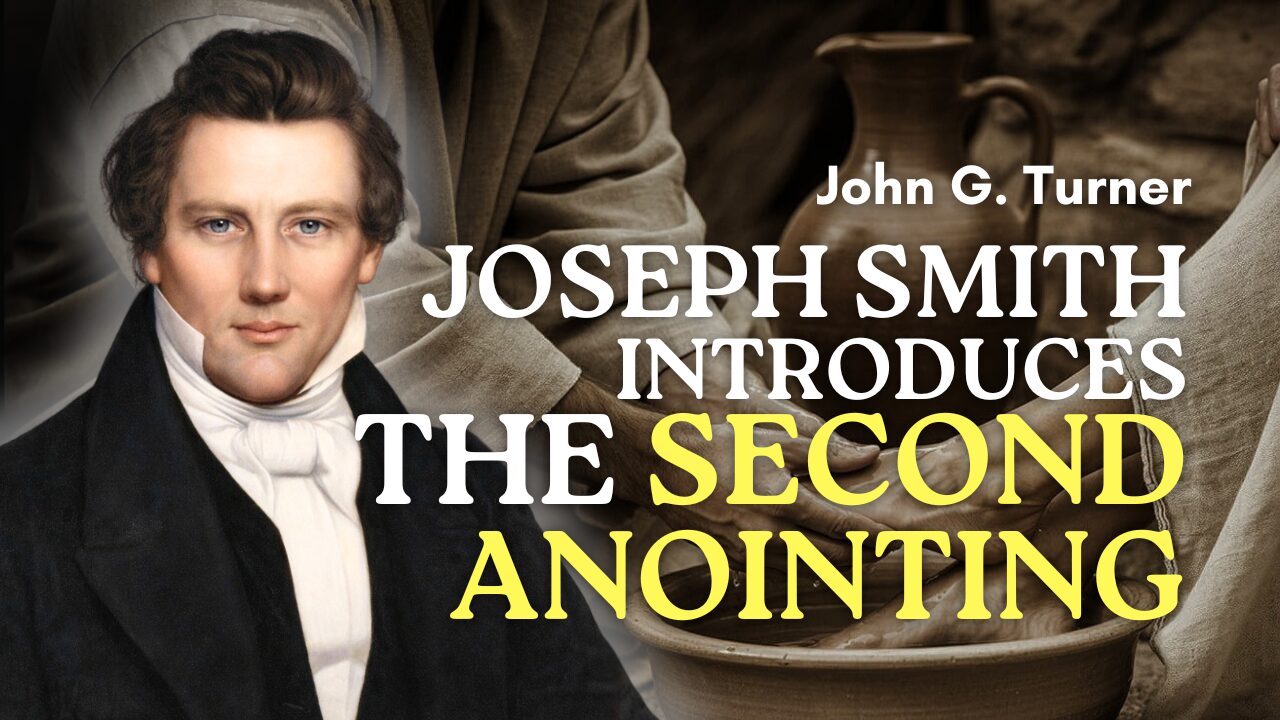
Thumbnail Credits: Main image of Joseph Smith by Unknown painter, from Community of Christ Archives (public domain); Background image from Tidings.org
Originally published on mormonstories.org.
Transcript
Machine-generated and lightly edited. Click any timestamp to jump the audio to that moment. The audio is authoritative; please check it before quoting.
Introduction and Episode Context
John Dehlin Hello, everyone and welcome to another edition of the Joseph Smith Podcast and or the Mormon Stories Podcast. I am your host, John Dehlin. It's March 27, 2026. We're here with Dr. John Turner of George Mason University. Hey, John Turner, how you doing?
John Turner Great. John Dehlin, how are you?
John Dehlin We're in the throes of the NCAA tournament. Half of the Sweet 16 players have finished their games. Half are yet to go. Neither Utah State University nor BYU nor George Mason are still postseason contenders. Did Georgia Basin lose in the nit?
John Turner We ignominiously lost an at home first round NIT game. But we'll be back stronger next year.
John Dehlin Did you attend the game?
John Turner I did not.
John Dehlin Okay.
John Turner I was. I did go to. I went to more of our games last year. I would have loved to have gone to the NIT1 this year, but I had something else going on.
John Dehlin No worries. Well, we're always proud of our Cougars, our Aggies and the Irish and our Patriots, right? This is a Cougar, Aggie, Patriot, Irish affirming podcast. Is that fair to say?
John Turner You know, that is definitely fair to say. And hey, the Aggies won a game in the tournament. They were competitive against a really good team in the second round, so they will.
John Dehlin Will AJ DeBonsa stay with the Cougars or declare for the draft?
John Turner Do you have a revelation on that?
John Dehlin I don't. I don't know. Don't know. And I know my Ute fans and my Weber State Wildcat fans and others, even my Utah Valley. I don't think Utah Valley made the postseason this year, which is unfortunate. Anyway, enough basketball.
John Dehlin Thanks for joining us today on the Joe Smith Podcast. Last episode, episode 36 of this series, we talked about Emma Smith's war with her husband, Joseph Smith over polygamy. She didn't like it. She found out about it through Hiram and the revelation. She had the revelation burned. She did her best to undo the six or so marriages, the 20% of the marriages that Joseph Smith marriages that she actually knew about. We left last episode as a cliffhanger on, you know, what was going to happen after Joseph Smith had to use, as you put it, and as I think William Clayton put it, harsh measures against Emma because she was wreaking havoc with at least four of the plural wives that she knew about.
Emma Smith Resists Plural Marriage
John Dehlin She was undoing every Joseph Smith plural marriage that she could. But that was the cliffhanger with the harsh measures. We left us kind of with the question of how's Joseph gonna get out of this pickle? And. Or we had a teaser about, you know, how and why and under what circumstances does Joseph introduce this mysterious secret ordinance that Bruce R. McConkey and Joseph Fielding Smith and others have hinted about or talked about the second anointing or having your calling and election made sure. So that's going to be what today's episode about. And it's the. It's the main title for this chapter again, the latter half of chapter 28 in your amazing book, Joseph Smith, the Rise and Fall of an American Prophet is called Anointed 1843. So anything you want to say by way of introduction before we dive in to Joseph Smith's introduction of the second anointing?
John Turner No, it's good framing because the last four months of Joseph's life have just been intense. You know, finally talking to Emma and Hyram about polygamy. There's a lot of. Actually, we've. We've saved it for the future, but there's a lot of political and legal jeopardy as well. There's an election, and Joseph usually has a finger in that. And. But yeah, just a lot of weeks of intense conflict with Emma. There's been arguments, there's been deeds of land. There's been talk of, or at least whispers of divorce. There's been fighting in a carriage, smashed
John Dehlin watches, arranged sham marriages, like.
John Turner And so these two, these two formidable individuals who are not used to backing down, you know, they don't back down with each other. They've been at odds. And Emma, you could say, has been prevailing on some points. And it reminds me of Joseph's quote
John Dehlin to Hiram when Hiram says we should introduce this revelation to Emma. What is. What is Joseph?
John Turner You don't know Emma as well as I do. And so, yeah, they've really been at loggerheads. And in a way, I think Joseph realizes this isn't sustainable. And I think he also wants to salvage two things at once. He wants to salvage his marriage with Emma and he wants to salvage plural marriage and his movement. Yeah, and his marriage. And so we'll see how much he can pull off.
Origins and Elements of the Second Anointing
John Dehlin All right. Well, should we dive into the introduction of the second anointing?
John Turner Absolutely. So on September 18th of 1843, according to. I think this is in the journal that Joseph's scribe kept, Joseph and Emma were anointed and ordained to the highest and holiest order of the priesthood. This is a ritual that Wilford Woodruff and others later termed the second anointing.
John Turner And I realize this, this is a huge subject in and of itself, what Joseph had been teaching for at least a few months is that in order for a man to obtain the fullness of the priesthood, he had to be anointed a king and a priest.
John Turner And so Joseph had been talking about this for some time and then he, you know, he introduced this, this new ritual, this new rite with himself and Emma as the first recipients. And in addition to the significance of the second anointing in all sorts of other ways. And as it pertains to the relationship between Joseph and Emma, it's a bit of a turning point and this is how I explain it. For years, and certainly in Nauvoo, Emma had been sidelined from what mattered most to Joseph.
John Turner And in addition to the betrayal of polygamy, I think simply being at the margins of his activity was hurtful to her. And now she is brought closer to the center of something of sacred significance and something of obvious importance to her husband and, and Joseph. Shortly after this, he tells William Clayton that Emma had become quite friendly and kind.
John Turner She had been anointed and he had also been anointed king. And to connect this to what we were talking about in terms of Joseph's place, plural marriages, Emma doesn't continue to press Joseph after this point. As far as I can tell, she doesn't press him to send Sarah and Maria Lawrence out of the household, which would have been trickier with Joseph being their legal guardian. But I'm sure one could have found an arrangement.
John Turner Also of note. Joseph is sealed a couple of days after the second anointing, he is sealed to a woman named Melissa Lott, who's the 19 year old daughter of Cornelius Lott, who was managing one of Joseph's properties on the outskirts of Nauvoo, a farm.
John Turner And she then lives in the Nauvoo mansion and cared for Joseph and Emma's children. We don't know whether or not Emma knew about the ceiling. Now, in my mind, if you're Emma, do you really want any other 19 year old women moving into the household to help care for the children?
John Turner I would say no. So we, you know, we don't really know all of the internal dynamics, but we do know that Emma was pleased to participate in this anointing alongside her husband. And I speculate that this differentiated her in a way from all of these other women in her husband's life, that she was a queen and priestess unto her husband. And it might sound a little, maybe it sounds a little crazy that that would mollify her or put their relationship on a better footing, but that does seem to have been the case.
John Dehlin And before I say a couple things or ask a couple things. Tell us what you know about what. What the. What the main elements of the second anointing were in terms of the ritual itself and the promises.
John Turner Yeah. So great question. And it's tricky because I have, you know, we have some good sources for what this ordinance was like in the years to come, including perhaps not too long after this first instance. We don't exactly know the form or structure in September of 1843.
John Turner So here, you know, let me give you an example. This is from Heber C. Kimball's daughter diary, an entry dated February 1, 1844. He writes this. Myself and wife Violet was anointed priest and priestess unto our God under the hands of Brigham Young and by the voice of the Holy order, the group of men who had been. And maybe men and women who had had received the endowment.
John Turner At that ceremony, Brigham Young poured oil upon Kimball's head, anointing him as a priest and king unto the most high God in and over the church. And Young promised his friend long life and that he would have the power to redeem his progenitors and. And bring them into thy kingdom.
John Turner And he also anointed Violet Kimball a queen and priestess unto her husband and pronounced blessings upon her head in common with her husband. So that is the. That is sort of the first stage in the ordinance. And it's modeled after the ancient Israelite practice of anointing a king with oil by pouring it over his head.
John Turner Again, according to Heber C. Kimball's journal, two months later, there was a second stage in the ordinance in which Violet Kimball privately symbolically prepared her husband for his eventual burial. This is modeled on the woman anointing John Jesus prior to his death, a story that appears in all of the New Testament gospels.
John Turner So Violet Kimball washed his feet, her husband's feet, then anointed with oil, his feet, head and stomach. And the idea was that this ritual ensured that they would rise together when Christ returned, presuming that they died before that transpired.
John Turner She wrote. I think the. I think she wrote something in the journal as well, that she had anointed her husband so that she might have a claim upon her companion in the resurrection
John Dehlin man. Okay, there's so much there. So. All right, really quickly, when I was growing up and the God Makers in Texas and the God Makers movie came out, I remember there being an allegation that Mormons would have sex in their temples.
John Dehlin And I think. I think the way I heard it was that Mormon couples would be sewn up together in A sheet and have sex. And that just seemed absolutely ridiculous. I've heard nothing like that since. But I do know that Warren Jeffs apparently had sex with like his 12, one of his 12 year old brides in the equivalent of his temple.
John Dehlin And the audio recording comes from Matt that ended up, I think, being a part of why he was imprisoned. When you start talking about a wife putting oil on her husband's head and his feet and then his stomach.
John Dehlin I hate to say it, but like all of that comes together to make me wonder, is there any reason to believe that sex might have been involved in this ritual for, for anyone ever? Or is that just. Are those just unwarranted associations?
John Turner Well, I'm not aware of. I'm certainly not aware of any 19th century sources that suggest that.
John Dehlin Okay, okay. All right. And I, I. Neither am I. So. Okay. The second thing that comes to mind is. So when Zion's camp happens and Joseph's prophecies about liberating the, you know, the independence, the saints in, in Jackson county or whatever, when that fails to come through, remind us what Joseph Smith promised. All the, all the sales, all the soldiers of the failed Zion's camp attempt.
John Turner He promises them a blessing and an endowment of power in the temple.
John Dehlin And this, this ordinance you just described us isn't as. Sometimes referred to as a second endowment?
John Turner I think I've heard that phrase. Yeah.
John Dehlin Or second anointing.
John Turner Second anointing with the, you know, the preparatory washing and anointing prior to the. Yeah, the endowment.
John Dehlin So putting aside Joseph's sincerity, he does have a pattern when he, when he's under trouble, when things are really falling apart, he seems to know that, that fellow members have sincere anxieties about their status in heaven, but also maybe the status of their loved ones in heaven. And he seems to know that by making promises of some special spiritual ritual that has accompanying power or significance around their eventual state in the afterlife and, or the state of their loved ones. And he knows that that's a tried and true method of maintaining loyalty and motivation of his followers, especially in the face of a possible undoing. Is that unfair or fair?
John Turner Well, I think that's fair. Now you could, I mean, your question to some extent, put a bit of a negative spin on that. One could also see this as part of Joseph's positive talent as a religious leader, that it's not good. You know, I would say if you're, if you're in charge of a church or a movement and it's starting to fall apart, that is a big problem.
John Turner And Joseph did have the ability to bring his people together through the introduction of ritual. And you mentioned one instance in the wake of Zion's Camp, but there are others. In the early 1830s, there's another time of a lot of fracture, particularly between the church in Missouri and the church in Kirtland. And Joseph introduces this ritual of foot washing.
John Turner People have these intense spiritual experience. It's. It seems to. It seems to sort of solve the problem and helps his people cohere. Kirtland. There are all sorts of. In it beyond Zion's Camp. There are all sorts of con. There's all sorts of conflict. In the second half of 1835, Joseph's having a fist fight with his brother William. He's having conflict with the 12, with Emma, with, I think, Sidney Rigdon, and all of the rituals that lead up to the Kirtland Temple. They put that conflict aside.
John Turner I think what's really surprising in this story, in this particular instance is that the introduction of the second anointing manages to put to rest this conflict between Joseph and Emma. Like it. This. This works even on a personal, familial basis, which is. Which is so surprising.
John Dehlin Yeah. Okay. So now that we've kind of established that groundwork, and of course, there's also the possibility that, and maybe a real possibility that Joseph believed that he needed to be anointed a king and then believed that he. That God wanted him to anoint other people's kings and queens. Like, it's all, again, very possible, and I would say likely, probable that Joseph believed he was doing God's will in all the second anointing business.
John Dehlin So I. I will state that if you pressed me, I'd probably. I'd probably say he believed a lot of this, if not all of it. But let me now. Let me now give a little bit of history because I think it's. It's really important for what I think my biggest takeaway about the second anointing was from your book.
Theological Significance and Secrecy of the Rite
John Dehlin So Obviously, Bruce R. McConkey, we've mentioned this previously. Bruce R. McConkie wrote, I believe in Mormon doctrine about having your call in an election made sure. And. Or about the second anointing and growing up as a. As a Mormon kid, you would. And young adult, you would hear about rumors of the second anointing ordinance being alive and well and still being performed. And in your mind, as a young Mormon person growing up, you would aspire probably to eventually have that reality. And of course, we've already talked about Denver Snuffer and how just 10, 15 years ago, he was leading a movement to encourage Mormons to have a second witness from Jesus, which would be like a second witness, but not necessarily a second anointing, but it could mean having your calling and election made sure.
John Dehlin And how that's, you know, that's been an offshoot of this doctrine. But let's just say five or 10 years ago, definitely at least 10 years ago, I learned about a man named Tom Phillips who had been a stake president twice, either both in the UK and I believe, in either Australia or New Zealand. And then he becomes like a secretary to the area presidency in Europe, becomes friends with Elder Holland, and then he receives his second anointing, I believe, from Elder Ballard in the uk, along with his wife and kids, and then loses his faith. And then comes on Mormon Stories and tells the whole story about receiving the second anointing.
John Dehlin And we should mention that he adds that you're promised that nothing could keep you from becoming a God once you've had the second anointing, save the shedding of innocent blood. So literally, you could, in theory, molest a child after you've had your second anointing. And as long as you don't kill, shed innocent blood, you could murder a guilty person.
John Dehlin But if you murdered an innocent person, then that would be the only thing that could keep you from becoming a God. Anyway, he tells that full story, but also talks about losing his faith and then talks about his entire family deserting him. And now his son is an area authority for the Mormon Church, by the way, or general authority for the Mormon Church. So his family remained active and he was left alone, man.
John Dehlin And so that's an episode I recommend everybody listen to. It's absolutely a classic top five, if not top one or two Mormon stories episode. The reason why I'm bringing that up is because after I released that episode, I had a friend named Christian come to me and say, john, you don't fully understand the second anointing. I'm like, great, tell me more. And he said one of the things that's pro. One of. One of the things that's promised. Because one of the biggest criticisms today of the second anointing ordinance is how elite it is because it's perceived that, you know, it's super secret.
John Dehlin The general membership don't know about it still. The church doesn't really allow anyone talking about it for good reason. But for those who know about recipients of tends to be super wealthy, super connected, you know, close family members who are related to general authorities, you know, who are kind of in the elite Mormon inner Mormon circles who tend to get it.
John Dehlin And so it's viewed as this super secret elite ordinance for wealthy and, or connected Mormons. And they see that as being, you know, a lot of, a lot of critics see the, the ordinance as being elitist and discriminatory against common everyday Mormons. And it seems to be that it's only children of general authorities or you know, general authorities and their wives or mission presidents or temple presidents, people that have only, you know, reached that, obtained that level of status with the Mormonism who get it. And so that's one of the big modern critiques of it. That, but the, but the, but the, the mind blowing additional information that my friend Christian shared with me because I believe he had like a grandfather who received it.
John Dehlin I believe he learned that when a Mormon couple receives the second anointing, they are promised that their posterity until the fourth generation will be ultimately saved and exalted as part and parcel to their receiving the second anointing. And what I'm thinking is that's a real tangible, you know, you think about these couples that are wealthy that have been serving the church for a long time, but maybe they don't become general authorities.
John Dehlin And you know, I would imagine the church would want to keep them around, keep them motivated, keep them connected. And like with Emma, like unto Emma in this story, like unto the Zion's camp soldiers with the failed prophecies.
John Dehlin What an amazing gift it would be to wealthy, powerful Mormons of interconnected status to be promised. Not only that, you know, the husband and wife will become God someday, but that any fear or anxiety they might have of their kids or grandkids or great grandkids going astray or falling away, thus unraveling the promise of Mormon eternal families.
John Dehlin This idea of empty chairs, sad Mormon heaven, where yeah, great, you're there, but your kids or grandkids aren't. What an amazing way to seal the
John Turner holes
John Dehlin and the, the, the cracks in the doctrine of eternal Mormon families than to promise these wealthy high status Mormon couples who are in their 60s or 50s or 70s. Don't worry about your kids and grandkids. The plan of salvation does not unravel by anointing you today as kings and queens and gods. Not only will you rule forever as a God, but all your children and grandchildren, great grandchildren unto the fourth generation will also automatically be sealed to you and be with you in happy celestial kingdom heaven if you remain faithful because of your second anointing today. That's what my friend Christian told me was part of the second anointing promises in modern times.
John Dehlin And I thought, oh, that's a little, that's a little too much Christian. But now that I see that the second anointing was literally a way for Joseph at least minimum to get Emma back in line when she was threatening divorce and seeing that it worked, and it worked to the point where Emma was willing to possibly complicit in letting Joseph add Melissa Lott and potentially Fannie Young and to keep the Partridge Sisters, it suggests that, that, well, it taints the second anointing ordinance for me even further because it shows the kind of dangling carrot, scandal coping device of promising celestial additional celestial glory or promises in it taints the ordinance as being at its core sort of a manipulative one to make future celestial promises to engender loyalty today. Now I had to. That's what do you. Am I taking it too far? Well, resonate with you, John Turner.
John Turner First of all, I don't know that much about how the ordinance has developed in know beyond the 19th century. And I think I'll say, I'll say one other thing about Joseph's theology and leadership that relates to what you said.
John Turner And I think some of this, this, some of this is particular to Joseph and some of it is a more general maybe problem for Christian churches. So in the early 1830s, the idea, one, one idea of ordaining men to the high priesthood was that they could seal up men and women to eternal life. Now when your eternal life is sealed up, it should be totally assured, right? Like you're, you're set then, you know, in the late 1830s, you know, Joseph is talking about the ability for men to make their calling an election, sure.
John Turner By receiving, by being righteous enough to receive a personal visitation from Jesus Christ. We know in the spring of 1843, Joseph is talking to people like the Johnsons and William Clayton, maybe to his own wife Emma, about the ability for individuals to make their calling on election. Sure, by being sealed in marriage.
John Turner And so then the fall of 1843 or summer and fall of 1843, he's talking about the ability for men to have their calling and election made sure by being anointed a king and priest unto God and being prepared to rule a kingdom.
John Turner So to some extent you see the goalposts moving here. And I think that's partly because human beings, how can we really be sure of our salvation, right? We maybe we need more assurance. And it's, you know, regardless, it's almost always conditional right. Upon ongoing good Behavior. So I think you see some moving of the goalposts. I think also for Joseph, there's always another degree.
John Turner There's always more fullness of the priesthood. You never really quite have at all. And I think that's is the way Joseph's mind worked. And I think, you know, that's. There's also maybe a bit of a Masonic inflection there. There's always another degree you could pursue and achieve.
John Turner And so, you know, we think of we're. Or sometimes I hear people refer to the second anointing as Joseph's sort of crowning ordinance in the sense of people are being crowned kings and queens. But also this is the last one that he introduces. Well, had Joseph lived another five years. Right. That I'm sure there would have been a third anointing.
John Dehlin And I'm not God's God becoming a God. God.
John Turner Right, right.
John Dehlin A God over Gods.
John Turner Right. And I'm not saying that to be glib and disrespectful. I just think that's the way Joseph's theological and ritual mind worked. There was always more.
John Dehlin Now, to quote Spinal Tap, Joseph always took it to 11.
John Turner Exactly. And there would be 12 around the corner. Right. So. But in. In the sense of manipulation. Yes, I think that's. That's true. And I also think at the same time, Joseph had the ability to introduce usually biblically grounded rituals in really original ways that were deeply meaningful to his people amid what were often difficult circumstances. So there are some 19th century second anointing accounts that. That kind of blow my mind. For instance, if you remember, if people are familiar with the New Testament stories of the woman anointing Jesus with oil.
John Turner She bathes Jesus's feet with her tears, dries them with her hair, kisses them, and then rubs them with oil. We have accounts of Mormon women in the 19th century doing precisely that. We have women anointing their husband's feet and then wiping them with their hair and then kissing them after the pattern as written in the testament of Jesus Christ.
John Turner And so there is a certain. In addition to what we have discussed, this could. This is an intensely, like biblical and tender moment for couples that also. This is a bit of a tangent. It also relates to the Mormon idea of a married Jesus. There's a lot going on here.
John Dehlin Absolutely. Which again, my roommate at BYU was asked on a exam at BYU by Margaret Pope, Bruce R. McConkie's sister, true or false? Jesus married several women.
John Turner The correct answer was true.
John Dehlin Yes. And Joseph Smith was a descendant of Jesus by blood. True or False, true, that kind of thing. Okay, and really quickly, because you mentioned that I always assumed that the apostle would anoint the heads of the husband and the wife. And I think I may have even stated that in a previous episode with you. But all the evidence I'm collecting today suggests that the apostle only anoints the husband with oil and pronounce him a king and a priest. Does the wife not get anointed with oil and be pronounced a queen and a priestess?
Ritual Details and Salvific promises
John Turner So, again, I don't know what. I don't know how this later developed, but in the Heber C. Kimball account that I quoted from a little while ago, Brigham Young does seem to have anointed both husband and wife.
John Dehlin Okay, so maybe in the modern iteration of this, the wife does get anointed. And then according to Tom Phillips and Hans Mattsson, by the way, is another person, former area authority from Sweden, who we've interviewed on Mormon stories, who admits having received Hans and Birgitte Matzin. They also have been interviewed and admit to receiving the second anointing before leaving the church. But after the apostle anoints the husband and. Or the husband and wife with oil, pronouncing them kings and. Or kings and queens, they're asked to go off to a separate room where the wife washes the feet of the husband, and then the wife re. Anoints, lays her hands on the husband's head and pronounces blessings upon him.
John Turner Right. And in the 19th century, there was often some space, like some time between those two stages. It wasn't one after the other.
John Dehlin Yeah. Okay. And the final thing that I kind of listed here, I asked the question of whether this is whether the word indulgence has any relevance here and. Or is it, you know, especially in the modern instantiations of the second anointing, does this amount to an indulgence and. Or the selling of salvation? Because just to kind of put a fine point on it, the.
John Dehlin You have stated in past episodes that a Protestant Christian in 2026 just thinks they're going to be in heaven with their family. Like, it's just, do not pass go, do not collect $200. When you're in heaven, you're with your family. That's just the assumption of a Protestant Christian. But in Mormonism, Joseph manufactures the scarcity of, you only get to be in heaven with your family if you're all, you know, doing all the Mormon things, including tithing and temple stuff and lifelong commitment. So in that sense, is it. But. And so great if a couple's able to live till they die and stay faithful. But it's almost inevitable that some children and some grandchildren aren't going to make it.
John Dehlin And that's where the whole Mormon dream just becomes a nightmare, because it's all about eternal families and, and inevitably you've got kids and grandkids that aren't going to make it, which torpedoes the whole thing. So this is the great hole plugger, the crack sealer of the Mormon eternal family's doctrine, this eternal, this second anointing thing. Because I can see it taking out a wealthy 60 something couple, especially in 2026, when they see so many of their kids and grandkids falling away. They're like, why did I give my whole life to this gosh forsaken church serving multiple missions? What's the point if my kids and grandkids aren't even going to be in heaven with me?
John Dehlin Well, this is the great promise that assuages those concerns and fears and binds them to the church and their money and their devotion to the church until the very end, this promise. So does the word indulgence and, or do the word selling salvation fit here? Possibly in a functional sense, even if it's, even if we can't know about intention past or present.
John Turner I'm trying to think of a nice rhyme to replace when the coin in the coffer clings the soul from purgatory springs. But I wasn't quick enough on my feet to come up with something that would reference. So that's, that's back to the era of Martin Luther when the Catholic Church was selling indulgences that would reduce the amount of time that individuals would spend in purgatory. And there's a lot of corruption involved because usually they were for, you know, they were for sort of church building projects, but perhaps the person selling them could, you know, skim a little off the donations. Anyway, that's a digression. That's a good question, John. I haven't really thought about it. You're definitely right to put your finger on the theological anxiety of what happens to one's loved ones, because that is central to this whole theological system.
John Dehlin That's how it begins for Joseph. What happens to Alvin.
John Turner Right, right. And you know, the specific language that I quoted from the Heber C. Kimball second anointing was that he would have the power to redeem his progenitors so his ancestors and bring them into his kingdom. But of course there's also the promise that you see in Doctrine and covenant section 132, about the continuation of the seeds.
John Turner And of course, if you're going to be a king, you want to have, you want to have. You don't want to have an empty kingdom. You want everyone stretching back, stretching forward. And that's the appeal. And the reality is you can't be sure, right? You can't be sure what's going to happen with your descendants.
John Turner And many, and not only Latter Day Saints, but certainly Mormon, Mormon families are living at the reality of that fracture in ways that are often, you know, that can be something that's just full of anguish and conflict and alienation and without the rituals and with slightly different expectations. I think you see that in a lot of religious households, Christian, Muslim, Jewish.
John Turner And so that's this huge practical issue. And, you know, one thing that I would say is, you know, as, as I said, you see Joseph again and again introducing something new to resolve that anxiety, you could say, perhaps even to take advantage of that anxiety, if you will.
John Turner And I think the reality is you can't really get rid of that anxiety. I mean, none of us, none of us, I think, really have a hundred percent certainty and confidence in what's going to happen after we die, after our loved ones die. We have hope.
John Turner You know, I think, you know, Christianity is certainly about hope in the resurrection and. But the reality is humans just can't achieve full confidence, I think, no matter what. And so I think you see Joseph and his followers grasping for what ultimately is impossible to achieve
John Dehlin unless you're really good at compartmentalizing. Because I, I do think, I do think this ordinance probably persists into 2026 because on some level, the brethren felt it was useful. You know.
John Turner Sure. And, you know, in an, in a, you know, and I would also say when I look at the 19th century sources, whether it's the Kimballs or this, another couple, you know, that, that I mentioned, or even Joseph and Emma, you know, I do, I do also see this as something sacred and tender that couples, for obvious reasons, treasured.
John Turner And I happen to really love the story of the woman anointing Jesus. If you're ever in Salt Lake City and you haven't been in the. I think it's called the Cathedral of the Madeleine. There's a beautiful mosaic of the woman anointing Jesus in it. And one of Joseph's, I would just say, unusual talents was snatching these stories out of the Bible and bringing them to life through ritual. And yes, you know, I tend to, I like studying religion, so I tend to get excited about this, this sort of thing. But you Can. You can see, like, there's a lot of. There's a lot of creativity, but then there's this biblical firmament that his followers really connect with.
John Dehlin And I really appreciate you including that in this coverage of the topic of the second anointing, because aside from, like, the power or the reassurances of insecurities or whatever, I'm sure Emma experienced this as a beautiful, sacred moment with the husband that she loved and wanted to be with forever. And I'm sure a lot of Mormon couples who have received this ordinance consider it the most beautiful, sacred, special, holy, tender experience of their lives. I mean, imagine, literally imagine your grandma or your mom or you, if you're a woman, washing the feet of your husband in a temple room and then laying your hands on his head and announcing special blessings or having one of the twelve apostles of the Mormon church literally washing your feet or anointing you with oil on your head.
John Dehlin Either one or both. Just unbelievable. Like, it's got to be an S tier, as they say in modern times. Spiritual, emotional experience that's deeply meaningful. And by the way, it's hard to make people feel those levels of elevated emotion. You try it. You try and create something that generates that level of happiness and comfort and security.
John Dehlin It was enough to make Emma go from being furious about polygamy and wanting to divorce Joseph to possibly letting him take an extra wife or two. That's how powerful the second anointing could be. So it must have been a very beautiful, sacred, special thing.
Reflecting on Emma, Joseph, and Looking Ahead
John Turner Yeah. And just to maybe circle back to Emma and Joseph, I don't. I'm not. I'm not in a position to tell anybody how they should feel about any of these things. You know, the whole. The whole story of their relationship in the context of polygamy, it's just. It's just crazy.
John Turner They do, you know, after. After this moment, they do have, I would say, better. It puts their relationship on a better footing for the remainder of Joseph's life. I think he doesn't have very much to do with his plural wives. Over the last six months of his life in particular, Emma still has, despite everything, and this is a true miracle. She does have a lot of affection for Joseph.
John Turner They have familial and friendly stretches of time, and I don't know how to balance. I don't really know how to think about that alongside the fact that on. On some level, maybe Joseph is continuing to deceive her. But, you know, the two. The two of them, you know, this. It does seem to get their Relationship back on a better footing somehow.
John Dehlin And Emma stays. Stays with them to the very end. Right.
John Turner She does.
John Dehlin And never really. Never really betrays him, you know, later in life. Never throws him under the bus later in life that we know of.
John Turner No. And that fierce. Nobody can live for ever, you know, nobody can live for very long in a fierce state of conflict, I think. Or maybe some people can. But for Emma and Joseph, they had, you know, four or five months of just fierce conflict about polygamy. And they both, through pressing him to. To abandon some of his wives and Joseph, perhaps through this introduction of the sacred ritual and moving into a new house, somehow they're both able to. To sort of fight to a draw and to stick. Stick with each other. I do think one of the things about Emma is, you know, she. She is one of the few people who can just contend against Joseph and at least fight him to a draw.
John Dehlin She's formidable. She's a formidable woman.
John Turner Yeah, she's formidable.
John Dehlin Just. Just for the sake of thoroughness, I'm going to read a quote that I called in my studies while reading your book. Because, John Turner, I'm trying to be a good student, you know, I found a quote recorded by Will Wilford Woodruff, and maybe you've already read this. It's a discourse recorded by Wilford Woodruff, I believe it's attributed to Joseph Smith, August 13, 1843. The source is, I believe, the words of Joseph Smith, edited by Andrew E. Hatt and LYNDON COOK, PAGE241. And the quote is, quote, when a seal is put upon the father and mother, it secures their posterity, and if they go to hell, they will have to come up again. Close quote. Does that sound right? Is that a quote you heard of?
John Turner Well, it sounds right enough. I'd have to take a look.
John Dehlin So that's homework for those of you who want to check out those extra elements to the second anointing about promises regarding posterity to the third or fourth generation. That's an opening for you to go do your own study to see if that makes sense for you. All right. John Turner. Well, I think there's a little bit about political intrigue, Missouri stuff, Joseph fleeing from the law, that we didn't cover in chapter 28. But we're going to just maybe start with that next time as we begin chapter 29. Is there anything else about chapter 28 you want to share before we sign off today?
John Turner Well, chapter 29 is one of my shorter chapters, so I think we can bring some of that political and legal trouble into it just for a preview of coming attractions. We also do get Joseph B. Beating up a local tax collector, so. And enjoying it.
John Dehlin He wasn't beyond physical violence, you're saying.
John Turner So. No. And he came out on top this time, so we can look forward to that.
John Dehlin Okay. Yeah. And the chapter's called Cool as a Cucumber. I'm dying to know what that's a reference to, so we'll have that be a cliffhanger.
John Turner All right. Thanks, John.
John Dehlin All right, well, thanks to everyone for joining us today on the Joseph Smith Podcast and or Mormon Stories Podcast. Again, this series exists thanks to the generosity of our donors. So if you've donated to this series or to Mormon Stories, thank you. We couldn't do without you. John Turner has teased us with the possibility of 10 Brigham Young episodes in addition to completing this book, Joseph Smith the Rise and Fall of an American Prophet, as a podcast series, if people are willing to support it. So we've had some people step up and offer some matching funds if enough people will donate. So if you want to support this series all the way through to 50 plus episodes, if that's, if 40 isn't enough or 43 isn't enough, just go to dotor box.org Joseph Smith and become a one time or a monthly donor to the series until we complete it.
John Dehlin Other ways you can help us is by liking and subscribing, commenting, sharing on all the platforms. That also is super great. We love your emails@mormonstoriesmail.com we love your comments on the episode on YouTube or Spotify. We love your feedback. We love your criticisms. We love your pushbacks. We've gotten some good pushbacks, right?
John Turner John Turner, we, we get all sorts of, of, of comments which I, I love, I've been trying to do. I've been trying to diligently respond to more of them on, on YouTube. I think that's where most of them are. And yeah, I, I appreciate people who care enough to comment whether those comments are positive, whether they're critiques. That's all, all the, all this is controversial stuff. So I totally get that. I appreciate people listening, commenting. It's gratifying to me that people care.
John Dehlin Amen. Yeah, so we'll see all online and thanks so much again. Remember that this series also is released as its own series. So if you don't want to have to consume this series with the Mormon Stories feed or if you can't find the Joseph Smith podcast playlist on YouTube, you can always just go to the Joseph Smith Podcast on Spotify or on Apple podcasts or wherever you consume your podcasts. And it should be there as its own series. And again, this series is best consumed in sequence. Huge thanks to Julia. She makes all this possible. She does great work behind the scenes. Thanks to Brooklyn as well.
John Dehlin Be good to each other. Be kind to each other. We'll see you all again soon on another episode of the Joseph Smith Podcast and of a Mormon Stories Podcast. Please buy this book for yourself, for friends and family. Joseph Smith, the Rise and Fall of an American Prophet. Take care everybody. See you soon.
Transcript © 2026 John P. Dehlin. All rights reserved. Brief quotations are welcome with attribution and a link to mormonstories.org; all other use requires written permission.