Sham Marriages in Joseph Smith’s Nauvoo
Listen on Apple Podcasts Spotify YouTube Download MP3
About this episode
Welcome back to Part 35 of our series with Dr. John Turner discussing his new book “Joseph Smith: The Rise and Fall of an American Prophet.”
In 1843, Joseph Smith began introducing some of his closest family members – including his wife Emma Smith and his brother Hyrum Smith –to the controversial and secretive practice of plural marriage.
This episode dives into one of the most complex and debated periods of early Latter-day Saint history. We explore the story of the Kinderhook Plates –a set of six brass plates that briefly captured Joseph Smith’s attention before being exposed as a fraud –and what that moment reveals about claims of translation and discernment.
We also examine the marriages to the Partridge sisters, the dynamics between Joseph and Emma, and the growing theological framework surrounding celestial marriage, “calling and election made sure,” and eternal hierarchy. As new doctrines emerged, secrecy, trust, and power became deeply intertwined.
This episode raises difficult questions such as: What happened to the Kinderhook Plates –and why didn’t the translation continue? How did plural marriage unfold behind the scenes? What did Joseph teach privately vs publicly? How did those closest to him respond about polygamy?
This is a careful, long-form discussion intended to slow down and examine the historical record in detail.
If you’d like to help keep this project going, please consider donating to support this series. Your support makes long-form, in-depth historical discussion like this possible! https://donorbox.org/josephsmith.
Purchase John Turner’s book here: https://yalebooks.yale.edu/book/9780300255164/joseph-smith/
Let us know your thoughts on a Brigham Young series (comprising ten episodes) covering John Turner’s book Brigham Young: Pioneer Prophet.
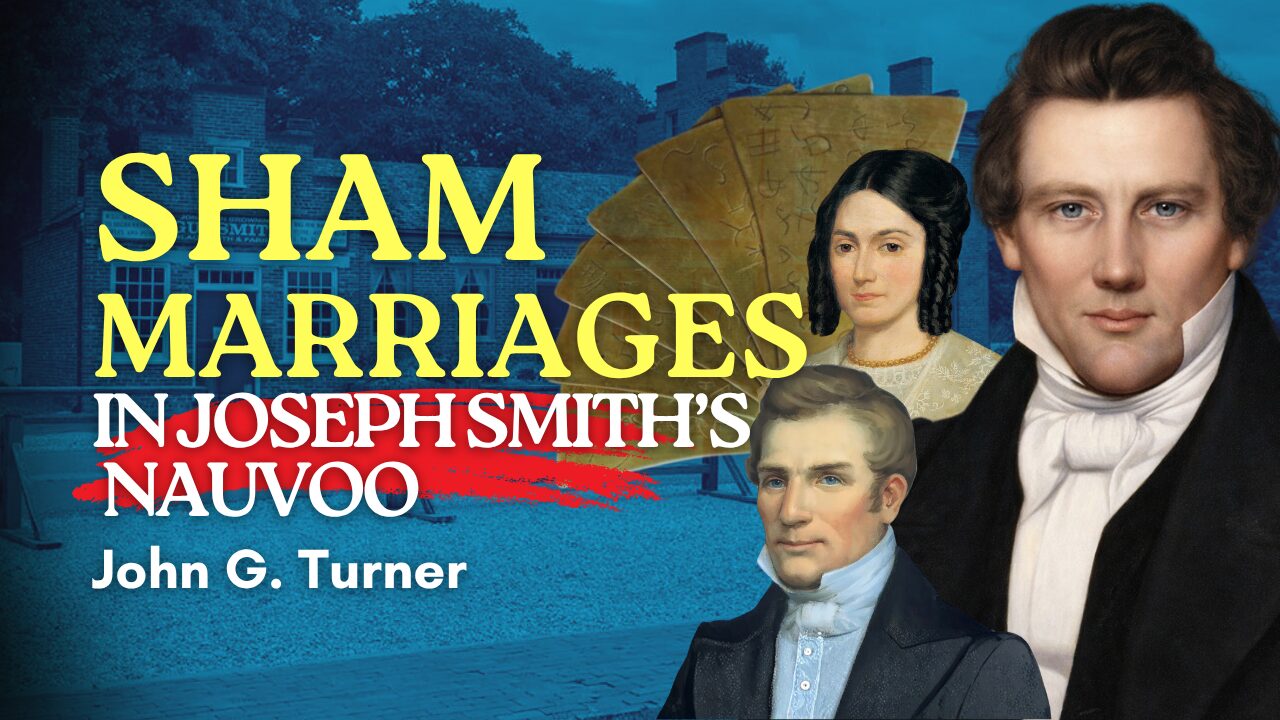
Thumbnail Credits: Main image of Joseph Smith by Unknown painter, from Community of Christ Archives (public domain); Main image of Emma Smith by Lee Greene Richards (public domain); Main image of Hyrum Smith from Erika Blanchard; Background image of Kinderhook plates from Adam Worthington; Background image of Browning Gunsmith shop courtesy of Caroltonauts Travel Tips
Originally published on mormonstories.org.
Transcript
Machine-generated and lightly edited. Click any timestamp to jump the audio to that moment. The audio is authoritative; please check it before quoting.
Introduction and Episode Overview
John Dehlin Hello, everyone, and welcome back to the Joseph Smith Podcast brought to you by Mormon Stories Podcast. I'm your host, John Dehlin. It's March 12, 2026, and today we are here for part 35 of our series with Dr. John Turner, historian from the George Mason University, Go Patriots, here today to talk about his book, Joseph Smith, the Rise and Fall of an American prophet. Again, we're 35 episodes into this series. You can find the series on Spotify, on Apple Podcasts, There's a playlist on The Mormon Stories YouTube channel. It's best consumed in sequence. But yeah, last week, episode 34, the title or the topic or the theme that I came up with, Julia, was Joseph Smith turns from marrying others men for marrying women who are already married to other men. He kind of pivots in 1843, Nauvoo, Illinois, to targeting teenagers as his plural wives. And so we spent last episode, which is which was focused on chapter 27 of John Turner's book entitled Deep Water 1843. We left off that episode having spoken about several teenage brides that Joseph Smith pursued and obtained and the methods that he used to do that. And we spent two and a half hours on that. And it was so good. And as far as I'm concerned, and we didn't leave room for the rest of the chapter. And so today we're going to be covering the second half of chapter 27 of John Turner's book called Deep Water 1843. We're going to start off talking about one of the great, I would say, scandals or smoking guns as it relates to Joseph Smith's claim to be a translator of ancient documents. The subject is going to be the Kinderhook plates. And we've covered it on LDS discussions before. It's been covered a lot in various ways. But we're going to be talking about the Kinderhook plate scandal that happens apparently in 1843 in Nauvoo. And then we're going to jump right back into polygamy. And we're going to be talking about William Clayton. Again, we left off last episode talking about the entrance of William Clayton and his super valuable diaries or journals. And then we're going to be talking about Joseph finally, after a couple dozen wives, introducing his wife Emma to the practice of polygamy and also his brother Hyrum to the practice of polygamy. And then we're going to be talking about a sham marriage that Joseph Smith another, I should say another sham marriage that Joseph Smith is involved in with the Partridge sisters. And yeah, we're and then we're going to kind of finish off this chapter and join. And I'm wearing, by the way, I'm wearing my BYU Cougars hat today because the BYU Cougars with AJ Debonza are fighting their way in the Big 12 tournament to try and get a decent seating for the NCAA Basketball tournament. March Madness is upon us. John Turner, any updates with the George Mason Patriots before we talk about less important matters?
John Turner You know, by the time this episode airs or is released, I don't have a lot of hope for the Patriots. But as of the time that we're recording it, the they are just getting ready for their conference tournament and they have to win it to get in it. We'll see how that goes.
John Dehlin All right, so go Cougars. Go Patriots. And of course, go Aggies. We talk. I wore my Aggies hat yesterday and today is my Cougars hat. And if, if, if, if, if George Mason do they play today?
John Turner They play today.
John Dehlin If George Mason wins today, tomorrow when we record again, I'm going to wear my George Mason hat. If they lose, I may not bother John Turner.
John Turner That is pressure.
John Dehlin All right, so John Turner, I gave my intro really quickly. Thanks to everyone who donates to make this possible. If you want to see this series continue, we are talking about 10 episodes with Brigham Young. If people financially support you can go to donorbox.org Joseph Smith and donate to extend this series into a 10 part Brigham Young series. Because John Turner not only authored a biography on Joseph Smith before this biography, he authored a biography on Brigham Young. So if you want to support that, go to donorbox.org Joseph Smith and donate for that series. So John Turner, what did I get right or wrong or what do you want to add to my introduction for today?
John Turner Your introduction was spot on. And we are starting this story about 60 miles south of Nauvoo in Kinderhook, Illinois, which is somewhere I have not been to. I should go investigate this bound from which a group of men unearthed six bell shaped brass plates in April of 1843 and brought to Nauvoo because they had heard that Joseph Smith might have the power to translate them. And when the plates reached Nauvoo, Joseph was initially excited. According to William Clayton, the the men reported and this had been this was published in some newspapers at the time they reported that they had found, you know, they'd been digging into this mound probably looking for, for treasure, looking for bones. According to Clayton, the plates were resting on the breast of a skeleton. So it looked like someone was buried holding something of value. And each of These plates had 30 or 40 characters engraved on them. And according to Clayton, when Joseph saw them, he translated a portion and asserted that the person buried in the mound was a descendant of Ham through the loins of Pharaoh of Egypt, and that this contained his story.
John Dehlin Can I, can I just say I, I've had it. I've said this about Joseph Smith's official contributions to the LDS canon, meaning the Book of Mormon, the Book of Moses, the Book of Abraham, and the Doctrine of Covenants. I've, I've said it before, especially my series with Matt Harris on his book Second Class Saints, that Joseph Smith was incapable of producing scripture that didn't include the curse of Cain or some sort of skin curse where dark skinned people were cursed with dark skin because of their wickedness. And as soon as I read your account of the Kinderic plates, that sort of proved my theory true yet again. Because if I understand it, Joseph Smith believed that Ham, the son of Noah, what, carried the curse of Cain with him and had black skin, or his wife Aegyptus had black skin because she was Egyptian, according to Joseph Smith, and thus carried the curse of Cain. Am I right about that?
John Turner Well, and then Moses in the Book of Genesis curses Canaan, the son of Ham. And it doesn't say in Genesis itself, but a lot of Christians believed, and Joseph also believed that that curse involved both servitude and dark skin.
John Dehlin So, So I think it's just a factual, it's factually true that Joseph Smith had a little playbook for all scripture he produced. And at the top it said include the curse of Cain in the scripture.
John Turner Right, yeah. Which I would say is actually, to me, it's a little bit of a mystery because, yeah, this is one of Joseph's. It's one of his consistent interests when it comes to his scriptural productions. And he does refer to the curse of ham in the mid-1830s when he's talking about slavery. Outside of his scriptural productions, though, he doesn't talk about these things constantly, but Brigham Young does. Brigham Young, Yeah, Brigham Young, yeah, he had a definite interest, but yeah, Joseph Smith, he left everyone this motif, this really unpleasant, terrible motif in his textual productions.
John Dehlin Okay, well, I don't mean to signtrack us, it's just I just sometimes try to connect dots. So. So these men show up in Nauvoo with these alleged plates claiming they were found buried with a corpse. And then Joseph Smith takes an early look at them and says that they're what?
John Turner So he says that they are in, you know, basically an ancient record produced by the skeleton who had been buried in the mound. I don't know if there was an actual skeleton when they dug into the mound or not. But he, at first, it's, it's sort of, sort of when he, as when he first encounters the mummies and the papyri back in 1835, he, you know, he says he immediately knows what they are.
John Dehlin Or Zelf the White Lamanite. Those are two examples, right?
John Turner Yeah. But in fight.
John Dehlin Wait, is it white Lamanite?
John Turner White.
John Dehlin Well, I think it's a white Lamanite, yeah. Zelf the White Lamanite, yeah.
John Turner So I think that's correct.
John Dehlin He likes to just see some artifacts and immediately declare what they are.
John Turner Right, okay. And the way, the way Clayton describes it, Joseph translated a portion and that this is the descendant of Ham through the loins of Pharaoh, King of Egypt. Parley Pratt. Roughly the same time, a couple of days later, he reports in a letter that the man was one of the Jaredites, this Book of Mormon people who migrate to the New World and escape the curse of Babel in relation to the Great Tower in the Book of Genesis. So I think when Joseph, if it's
The Kinderhook Plates Examined
John Dehlin okay, let me just show here is a photo of one of the Kinderhook plates. Is that right, John Turner?
John Turner That is correct.
John Dehlin And if you're going to describe it to our listeners that aren't watching, how would you describe it?
John Turner So it's a bell shaped brass plate with a hole punched in the top which would make it look as if they could be strung together. There were six of them. They're pretty small, maybe three inches. Three inches or so in length. And then with columns of characters. Apparently one of the characters on one of the plates at least resembled one of the glyphs from Joseph's Egyptian materials. That may have been what prompted him to make this connection to a descendant of Ham through the loins of Pharaoh. But as you said, that was one of, you know, that was sort of one of Joseph's standing interests. So it could simply have been that.
John Dehlin And was Joseph claiming this was reformed Egyptian or just regular old Egyptian?
John Turner That's a great question.
John Dehlin Do we even know if he declared a language?
John Turner So he apparently did ask for his. He did ask for his Egyptian materials or consulted his Egyptian materials. He may also have consulted his Hebrew lexicon. I think Joseph believed there was a similarity at least among these characters, the Egyptian materials and the Book of Mormon characters. And like a lot of people, he thought there was basic Connection between Hebrew and Egyptian.
John Dehlin Okay. So, I mean, somebody could have, for example, just found, I don't know, reproductions of the papyrus and copied some of those characters on to these plates and, or they could have looked at the Anton manuscript, which allegedly had reformed Egyptian characters taken from the Book of Mormon plates and included some of them in the kinder plates.
John Turner Is that right? That's possible. And I, I don't know if anyone has. I, I probably somebody has carefully examined them. I don't think the forgers in this case were quite that committed.
John Dehlin Oh, wait, there were forgers. We hadn't got there.
John Turner Yeah. Sorry for, sorry for the spoiler. But the people who dug them up, the. I think sort of the leader of the group and one of the others, they later both admitted in print that or in writing that they had created, created the, the plates and the characters.
John Dehlin So this is William Fugate, is that right?
John Turner William Fugate. I don't know how you pronounce his last name if it's Fugate or Fugate.
John Dehlin So what do you. So what do we know about the, the scheme and that and the hatching of the scheme? So let's go back now to, to before these kindergarten fake kinder plates were fashioned. What do we know about the scheme?
John Turner So, you know, so we know that the men had some encounters with Mormon missionaries. And, you know, I don't know exactly how extensive those were, but there was, there was also, I think there was a branch of the church, at least near Kinderhook. And so the men, the men who were involved in the scheme, they'd had some contact with local Mormons. And I think they simply hatched this as a way to try to embarrass Joseph Smith. It wasn't a particularly elaborate hoax. If they'd been a little bit more serious, sort of, as one of your previous questions suggested, they could have tried to make the characters more closely resemble glyphs from the Egyptian project. They could have tried to sell the plates to Joseph Smith. Instead, I think they showed them to some local Mormons and then someone took them up to Nauvoo. And I think they, I think they were hoping that Joseph would. Maybe they were hoping that Joseph would engage in a serious translation effort and then expose him. Maybe they were also just. Just having some fun. Now, it does take some effort to, you know, etch these characters into the plate. So, you know, I think they were, they were at least hoping to get some satisfaction in return by embarrassing the Mormon prophet.
John Dehlin So what? So for someone who's trying to Decide if Joseph Smith indeed had the power to translate ancient records, what might one conclude from Joseph and someone who's heard the story of him seeing bones and declaring itself the white Lamanite, seeing the papyri from William Chandler and declaring that they were scrolls written by the hand of what, Abraham and by the hand of Moses or whatever. Like what might. Knowing that that was Joseph's history and claiming that he had gotten gold plates from an angel that he translated, but no one could actually see the plates, what might the Kinderhook plates story do to help someone figure out whether or not Joseph was indeed able to translate ancient records?
John Turner Well, Joseph wasn't able to translate ancient records either by scholarly means or by supernatural gift. I mean, that's. That's my opinion from examining the story of the Book of Mormon. That's certainly my sense of the Egyptian project. I think in this case, what we see is Joseph quickly getting excited about a discovery, making a pronouncement that was
John Dehlin not true and not really founded in any evidence. Right.
John Turner Not founded in any. Any evidence. Perhaps, you know, he saw some congruence with the Egyptian materials. My own sense is, you know, Joseph did, at a certain point back in 1835, recognize that he wasn't making any progress deciphering Egyptian hieroglyphics, but, you know, he had a brief flash of excitement with these. But to your question, if people want to know whether Joseph could translate ancient materials, no, I don't think he possessed a gift that he claimed to have. Joseph had a lot of talents. I don't think this was one of them.
John Dehlin So he has the penchant for declaring a knowledge of the origins or the meaning of something fabricated from his imagination, not from any evidence, and claims to be able to have the power to translate stuff when he doesn't have that power, and probably a lack of a gift of discernment that he. That fools can. Can toy with Joseph Smith, unbeknownst to him by any spiritual power.
John Turner Yep. Yeah, he's. And I would say he's. He's impulsive. Right. I mean, when Michael Chandler shows up in Kirtland with his mummies and papyri, Joseph buys them on the spot and makes this pronouncement and sinks a lot of money into the project. One thing that I think just isn't clear is either in that case or in this case at first, does Joseph sincerely think that, you know, these are the writings of Abraham and Joseph of Egypt, or are these the writings of a descendant of Ham or a Jaredite? I think We, We. We don't know.
John Dehlin Right. He could be a, a sincere,
John Turner sincerely deceived.
John Dehlin Yes.
John Turner Yeah.
John Dehlin And then deceiving others based on his own deception.
John Turner Right. And in this case, Joseph has this initial flash of excitement. Unlike back in 1835, this project never gets off the ground. He doesn't, you know, he doesn't sit down and either dictate a translation or study the characters at length, but it,
John Dehlin but something about it gets reproduced in the Mormon controlled newspaper. Right?
John Turner Well, they publish a facsimile of the plates themselves and I think they publish it in the Nauvoo neighbor. May later have appeared in the Church produced history of the Church. I think the. You know what, what was published.
John Dehlin Do you know if that publication states what Joseph proclaimed the. The plates to be or anything about the origin or contents of the plates based on his power.
John Turner So that's a great question. I, I am a little fuzzy on, on the, on the memory on that. John. I'm not quite sure.
John Dehlin Julia, let's pause because I want to get that part right.
John Turner Yeah.
John Dehlin So two, two questions I'll ask. We'll mark an edit for this one is what, what was published? That Joseph. You know, what was published regarding Joseph's claim as to the contents or the origins of these plates? And what did, I guess William Clayton write about Joseph's statements regarding the contents or the origin of the plates? Does that make sense? And Julia, if you want to help us research this really quick.
John Turner Yeah, I'm just looking at what the.
John Dehlin What was published. What did Clayton write about Joseph's interpretations? Julia, she's looking.
John Turner I've got what Clayton wrote handy.
John Dehlin And just tell me while Julie's looking for what got printed.
John Turner Yeah. So what got printed printed, I think is not Joseph's interpretation, but the way the folks from Kinderhook presented them. What Clayton writes is.
John Dehlin And we're going to restate this, right?
John Turner Yeah, I can read what. What Clayton.
John Dehlin Okay, let me. Okay, so you've got what's. What Clayton wrote about it. What we don't know is where it was printed and what was said about it when it was printed.
John Turner I mean, it was printed in the Nauvoo Neighbor. It was printed and reprinted in the Prophet, which was a church newspaper in New York. Let's see. So what was printed is simply. What the group of men who found them stated and then a report from a local newspaper. So the Church didn't publish Joseph's translation. It published the plates themselves and it published an account of their discovery.
John Dehlin So do we know the Text that. Okay. Julia just found it. Okay,
John Turner John, that second link, that second link, I think is a newspaper. So that one would look better if you wanted to show that or read from it. I think I'm still looking over it.
John Dehlin Yeah. I'm just wondering if it, if the newspaper tries to recount what Joseph said about them.
John Turner I don't think so.
John Dehlin It's just. Oh, there are some plates.
John Turner Yeah. What the Quincy wig reported, which is kind of interesting, is by whom these plates were deposited. There must ever remain a mystery unless someone skilled in deciphering hieroglyphics may be found to unravel the mystery. Some pretend to say that Smith, the Mormon leader, has the ability to read them. If he has, he will confer a great favor on the public by removing the mystery which hangs over them. We learn there was a Mormon present when the plates were found, who, it is said, leaped for joy at the discovery and, and remarked that it would go to prove the authenticity of the Book of Mormon, which it undoubtedly will. So,
John Dehlin yeah, yeah. I'm just wondering to what extent we got Joseph on the hook as falsely interpreting what was on.
John Turner What was on. Yeah, I mean, so I, I, so
John Dehlin I can, I can re. Ask the question. You can just tell us what exactly does that work? Okay, we'll, we'll delete whatever we need to before and pick up right here. So, John Turner, the thing that I'm most wondering about with the Kinderick plates is what do we have on record for, you know, the church publishing or somebody actually writing either what Joseph says about the contents or the origins of the plates so that we can know for sure that, that he basically made a false interpretation or a false prophecy, if that's what he did.
William Clayton's Journal and the Kinderhook Claims
John Turner Sure. Well, let me start by reading you what William Clayton writes about it in his journal, which he would have, he would have written shortly after May 1, 1843. It's the entry that is dated for that day. He says, I have seen six brass plates which were found in Adams County. I think he might have had the county wrong by some persons who were digging in a mound. They found a skeleton about six feet from the surface of the earth, which was nine foot high. The plates were on the breast of the skeleton. And that tracks with what's published in Illinois newspapers about the plates in April of 1843. And then Clayton includes a diagram of one of the plates. Brigham Young also sort of traces the outline of one of them in his diary. And then they are covered with ancient characters of language containing from 30 to 40 in each side of the plates, President Joseph has translated a portion and says they contain the history of the person with whom they were found. And he was the descendant of Ham through the loins of Pharaoh, king of Egypt, and that he received his kingdom from the ruler of heaven and earth. So when Joseph first sees these plates, that's, that's his initial identification. And I think when Clayton says he translated a portion, he doesn't mean that Joseph sat down, deciphered or dictated a translation, but he looked at them and he said, maybe a brief examination of the characters and said, I know what these are. The person who is holding these plates was a descendant of Ham who had received his kingdom from God. And you said, basically says the same thing, you know, something similar. Another identification to, you know, shortly thereafter, because Parley Pratt writes that the man was one of the Jaredites. So Joseph, when he first sees these, he identifies the author. And I think there's some, you know, there's some brief excitement in Nauvoo that Joseph might embark on another translation project.
John Dehlin Okay. And then we tried to look up whether the newspapers sort of formalized, especially the LDS or Mormon controlled newspapers, formalized Joseph's interpretation of the Kinderhook plates, and we couldn't find that. Is that right?
John Turner So that's correct. So in the Nauvoo neighbor, which is a church publication, they published a facsimile of the plates and also some statements from the men who had discovered them. Also an account that was published in another Illinois newspaper. And then they say this. The contents of the plates, together with a facsimile of the same, will be published in the Times and Seasons as soon as the translation is complete. So that reflects that initial excitement that Joseph's going to produce a translation and will be able to publish it soon.
John Dehlin But there was never. So we know. So we know this was a fraud. This was sort of a gotcha scheme cooked up by William Fugate and his accomplices. The plates were delivered. Joseph did make the false interpretation, but he didn't publish the false interpretation in the newspaper. And I, apparently there was no gotcha moment to, to provide satisfaction to the, to the schemers. Is that right?
John Turner Correct. Because I think if Joseph had published a translation, they would have announced at the time, you know, this was a hoax. As it turns out, Fugate and, and at least one of the other men in subsequent decades, they attest to the fact that they created. Created the plates. I think Joseph, we don't actually know why he loses interest. It may be that he suspected that he was going to be deceived, that these plates were a hoax in general outside of the Book of Mormon and to some extent the Bible translation, Joseph later in his life didn't really stick with any translation project for very long. He also, he had a lot going on in May of 1843, as we'll be talking about later in this episode. So he may just have lost interest amid the press of other activities.
John Dehlin And I guess, you know, critics of the church or of Joseph Smith want to say that this proves that he couldn't translate stuff, that he didn't have the gift of discernment, that sort of thing. That he just, like you said, had this spontaneous urge to pronounce the origins of things that he knew nothing about, and that this is a major critique of Joseph's validity as a prophet and as a translator of ancient records. Apologists just want to say this is a, this is a nothing burger. He never really published any findings. He lost interest really quickly. Do you even take a stance on somewhere along that spectrum of what this means in terms of Joseph's validity or credibility?
John Turner So I write in the book that Joseph fell for the crude forgery. In other words, he initially fell for it, got excited, misidentified what the plates were, and at the same time he doesn't, doesn't stick with it. There's, I'll tell you a little bit more of my own thoughts in a minute. If readers are interested in all of the details and I think a pretty careful analysis. There's a good essay by Mark Ashurst McGee and Don Bradley on the Kinderhook plates and to what extent Joseph attempted to translate them. I think that's a pretty fair analysis. But then the real question is what do you make of it? Certainly, if, if you're sort of on the fence, I guess, about whether or not Joseph could identify ancient records, this would be evidence that he, he couldn't. If you're, you know, if you, if you're sort of on the fence about,
John Dehlin you know, it's an evidence that he kind of made stuff up.
John Turner Well, either made stuff up or got excited and was self deceived, one at one or the other.
John Dehlin Right, right, right.
John Turner You know, know, I, I think we don't, we don't know for sure. Yeah, if you, if, if you want to think about this as evidence that, well, Joseph had the ability, upon further reflection to, you know, maybe exercise a little bit of discretion, I suppose you could take it, you could take it that way. I think, you know, it's Sort of on some level, it's just a bit of a fun story. Yeah, right. And I think there the Quincy wig, when it runs an article on these plates, I don't know if it's late April, early May of 1843, and the church reprints writes, some pretend to say that Smith the Mormon leader, has the ability to read them. If he has, he will confer a great favor on the public by removing the mystery which hangs over them. We learn that there was a Mormon present when the plates were found who, it is said, leaped for joy at the discovery and remarked that it would go to prove the authenticity of the Book of Mormon, which it undoubtedly will. Now that's clearly tongue in cheek. I find it sort of amusing that the Nauvoo neighbor reprints it because that seems like there are a lot of people in Illinois who they do think that Joseph Smith is pretty ridiculous and that this might be a chance to have a little bit of fun at his expense. At the same time, this is the early 1840s, people in Nauvoo get very excited about the discovery of archaeological discoveries in Central America that might confirm the historicity, the authenticity of the Book of Mormon. So, you know, there's a lot that seems a little bit up for grabs in the early 1840s. And you know, I think sometimes Joseph and his associates get excited about some of those discoveries. I think, you know, for me, I don't come to the Kinderhook plates and think, well, you know, now this is going to tip the balance about Joseph Smith one way or the other. Because I think Joseph had a lot of talents identifying and translating ancient records. I don't put that on the list as one of them.
John Dehlin Yeah, on the one hand, I'm surprised that these, these dudes from Kinderhook would take the time to forge fake plates and with acid, scratch you know, glyphs into them and then present them to Joseph to try and catch him in a fraud or whatever. I'm surprised that people would take that, go to those efforts and those extremes and then in some sense I'm even more surprised that, you know, he didn't really run with that as a way to really show people that he again had all these extra special powers. But I think we know possibly why. Perhaps the best explanation for why Joseph didn't run with the Kinderic plates is what we talked about last episode. William Clayton is on record as saying that by the time William Clayton shows up and is Joseph scribe, all he could think and talk about was polygamy and sex and celestial marriage. And so Joseph had other things on his mind by this point, and maybe he felt like he had produced enough scripture. He, you know, sufficient was the evil of the day thereof, which was all these teenage brides and married women that he was acquiring and bedding. It wasn't time to deal with the kindergarten plates anymore.
John Turner Yeah, well, I mean, on some level, Joseph Smith was a excellent multitasker. But yeah, I mean, really, since the. Since the early 1830s, he'd never really, you know, stuck with a substantial scriptural project, you could say, you know, the early Bible translation that becomes the basis for the Book of Mormon. That does at least episodically interest him for a couple of years. But, you know, the Abraham Book of Abraham project, the Egyptian project in 1835, that's just fits and starts here and there. And then he comes back to it briefly in 1842. I think he just didn't have the, you know, whatever he thought of the plates, and we don't really ultimately know, he did not have the stomach or the attention at the time for an extended effort at producing a new narrative.
John Dehlin Yeah. All right, so moving on. On page 309 of your book, you introduce possibly again, the notion of your calling an election made sure. I'll just say, growing up as a Mormon in the 80s, this was a hot topic. There were certain hot topics. One was the signs of the times, the second coming, that sort of thing. But right up there, and Bruce Armaconkie in his Mormon doctrine book really promoted this, was this idea of you're calling an election being made sure and. Or these rumors of the sacred ordinance called the second anointing. So tell us about this calling an election made sure business.
Calling and Election Made Sure Doctrine
John Turner Yeah. So the phrase, and people may or may not know this, the phrase comes from the New Testament in Second Peter, in which the author of that text exhorts followers of Jesus Christ to make their calling and election sure. Joseph Smith, that was one of his favorite biblical passages, and it certainly had been on his mind for a While back in 1839, when Joseph is teaching Mormon refug, what are really then Mormon refugees in Commerce, Illinois and Montrose. He teaches that those saints who remain faithful would have their calling and election made sure. And they the fruit of that would be a personal visitation by Jesus Christ accompanied by visions and revelations. So essentially, having your calling and election made sure in Joseph's mind at the time meant staying faithful and humble. And then you'd sort of receive supernatural confirmation that your status was sure.
John Dehlin And we've referenced The Denver Snuffer movement in modern Mormon Times. But in 2013, an active Mormon high priest who was also in a state high council named Denver Snuffer, who's an author, was excommunicated for writing several books encouraging Latter Day Saints to procure their own visitation from Jesus Christ, claiming that that was a core teaching of Joseph Smith, that people should seek, that they should seek to have a visit from Jesus Christ and to have their calling and election made sure. Is that your reading, that Joseph Smith wanted members to pursue this event in their lives?
John Turner So I might not phrase it exactly like that, but essentially yes, that tracks with Joseph's thought. And I think that's probably why. I mean, that is why Denver Snuffer articulated those ideas. So going way back to the early 1830s, Joseph encouraged his followers, specifically members of the quorum of the 12, to anticipate seeing Jesus in the Kirtland Temple. And even before that, you know, there was a sense that a visionary experience in which one sees the Savior, you know, could be a particular blessing. Maybe not every church member should seek and expect to see Jesus, but, you know, stay faithful, be righteous, and at least prepare yourself for the possibility of seeing the Savior in the Lord's house.
The Second Anointing Ordinance
John Dehlin Okay. And do you, do you ever see the emergence through Joseph's martyrdom of a second anointing ordinance? And I ask that just because I think in many Mormons minds, especially ones who were raised in the 80s and 90s, the second anointing and the calling election made sure were often either discussed about together or confused with each other. But I think in many Mormons minds then and now, it's unclear whether those come together, whether they're separate, whether they're associated in any way. Do you have any personal knowledge around those two things and how they do or don't relate?
John Turner Yeah, well, I definitely don't have personal knowledge of the second anointing. I think if I'm not mistaken, and you know, somebody could fact check me on this, I think Bruce R. McConkie specifically linked calling an election being made sure with the second anointing, probably in his Mormon doctrine book, which was quite influential. So yes, I think that was a common idea that if you were invited
John Dehlin to get your second anointing, you would have your calling and election made sure as a part of that sacred ordinance.
John Turner Correct.
John Dehlin Okay.
John Turner I don't know that Joseph necessarily taught that having that second anointing was the only way for a man to make his calling an election. Sure. And the other thing that you have to keep in mind is Joseph's teachings are always dynamic and they're always developing, and then he's killed. And so that ceases to be the case as far as Joseph Smith is concerned. So in 1839. Well, and let me just back up and say that one reason this matters so much is there's this inherited Protestant in particular anxiety about the assurance of one's salvation. And, you know, Protestants had all sorts of debates among themselves about whether or not one could be assured of being saved and if so, how, and could one lose one's faith and imperil one's salvation? That's a big debate between Calvinists and other Protestants. And so Joseph, you know, his people are also deeply concerned about, you know, can I be assured of my salvation? And simply being said, you have to remain humble and faithful. Well, that in and of itself isn't much of an assurance because what if one stops being humble and faithful? You know, if one sees the Savior? Well, that would make one feel really assured that, that, yes, I'm, you know, I'm, I'm going to experience salvation and exaltation. Joseph, by 1843, specifically in May of 1843, he explicitly teaches that a man can have his calling and election made sure by taking the step that is necessary for that purpose, and that is entering into a particular order of the priesthood by being sealed in marriage for eternity. And possibly it's a little bit fuzzy entering into plural marriage or at least accepting that doctrine. So that's what Joseph is teaching in May of 1843. Later in the year, he'll, he will introduce the second anointing and the idea of a man and woman being crowned a king and a queen that, you know, he hasn't, he's not quite rolling that out yet. What he is doing is he's finally answering or, you know, perhaps fleshing out his answer to the question of what does someone need to do to be sure that they are going to attain celestial glory and it's entering into this order of the priesthood through marriage.
The Celestial Kingdom and Plural Marriage Theology
John Dehlin Okay, so we talked previously in a previous episode about Joseph Smith coming up with the three degrees of glory, the celestial kingdom, the terrestrial and the telestial Kingdom of Mormon Heaven. That was what, D&C 76. And we talked about that. Around what year was that released?
John Turner D&C 76 is a vision from February of 1832.
John Dehlin Okay, so we're now 11 years later, and it seems like Joseph is, is honing in on the celestial kingdom and not just saying there's a celestial kingdom, but there's actually levels within the celestial kingdom. And again, it seems like, as you just referenced, he's starting to suggest and tell me if I'm wrong and just take off with the story that if you want to make the highest degree of the celestial kingdom where you can become exalted and become a God someday, some say that he taught that you have to enter in, like you just said, to the practice of polygamy or the new and everlasting covenant to reach that highest level. Where did this idea of levels within levels come from? Do you think he was influenced by Masonry and. Yeah. Talk to us about how he develops the celestial kingdom, I guess, at this time period.
John Turner So the language, I mean, from the start, in a way, the language is a little Masonic in terms of degrees of heavenly glory and these three realms or kingdoms. Joseph now, like you said, he's teaching that in the celestial glory and these are his words, there was three heavens or degrees. So he's subdividing the celestial kingdom into. And I think the idea of, you know, degrees, I think that language is Masonic. And the idea that there's always more knowledge that one could strive to acquire, I think that's also, you know, in keeping with the sort of impulses of Freemasonry. Joseph also teaches knowledge is power, and the man who has the most knowledge has the greatest power. So there's this idea that one could always be striving after more. These teachings are. They're recorded in again in William Clayton's journal. They might also be in the journal that Willard Richards kept for Joseph Smith. Joseph makes a mid-1843 visit to Benjamin and Melissa Johnson in Macedonia, Illinois, not too far from.
John Dehlin Can I pause for just one second?
John Turner Absolutely.
John Dehlin So to me, what's really important here is I'm trying to really process Joseph Smith's history for the first time, maybe a little bit more in depth. I keep mentioning the fact that what many Mormons view as the crowning doctrinal gift of Mormonism, which is eternal families, celestial marriage, that that becomes tainted when you learn that Joseph Smith used that to coerce teenage girls and women who are already married and male followers to support his practice of polygamy and to become polygamists as a reward for their support of Joseph's polygamy. This teaching of eternal marriage, celestial families, exaltation becomes tainted when you realize Joseph is using it as a form of convincing or manipulation or coercion. So for me, that's what's coming to my mind as I'm reading about this development of this Idea of calling an election made sure it's like yet another carrot that. A celestial afterlife carrot that Joseph could dangle to help him convince his followers to let him marry and. Or sleep with who he wants to marry and. Or sleep with, in addition to whatever actual genuine celestial benefits he thinks he's conferring on people. And I just call that out because we're about to talk about more wives.
John Turner Right, Right. Oh, and I realized we can't quite untangle all of that, so. So, well, let me see if I can get to the teaching and then we can talk about the wives. Right. So he, he in the company of William Clayton, makes this visit to the Benjamin Johnson home in mid May of 1843. And Benjamin Johnson, like this family, is already sort of in pretty deep with polygamy. Benjamin Johnson, you know, he's, he's an insider. Joseph is married plurally to two of Benjamin Johnson's sisters. I'm. I'm failing to save talking about the wives. I apologize.
John Dehlin Oh, it's good. It's all intermingled.
John Turner Yeah, it's all, it's all inter. All intermingled. And, you know, so Benjamin Johnson, probably his wife, who knows? They're aware of this practice. The family is very aware. But Joseph takes this occasion to teach them sort of this, you know, maybe to at least teach them more about the theological foundations. And so while he's talking to the Johnsons, he turns to William Clayton, puts his hand on Clayton's knee, and explains to the Johnsons that Clayton's eternal glory was sure because he had taken the step which is necessary for that purse purpose. He had married for eternity. And such couples, Clayton and whatever wives that he is sealed to will continue to increase and have children in celestial glory. So, and Joseph is quite clear, in order to obtain the highest celestial glory, a man must enter into this order of the priesthood. And if he don't, he can't obtain it.
John Dehlin Yeah, and I'm just. My reflections, this is blowing my mind because, like, Clayton's been a member of the church for a few years. He's just only recently become Joseph's scribe. We described William Clayton, either his character or his behavior literally with the word despicable last episode. Because as soon as he learns the principle, he not only beds his, you know, Marys and beds his wife's sister who was living with them. And I think we suggested that he actually would sleep with both his wives, which was his original wife and his wife's sister together at the same time while he was calling for another Woman that he was attracted to on his mission to be brought to him, financed by Joseph Smith. Like, this is the type of character that we're talking about. Behavior that by any objective measure would be viewed as despicable. Joseph's declaring him as having his calling and election made. Sure on the next page of your book, like, I am floored by that. That's what it is. It's like, oh, you took extra wives like I told you you should. Now you get entrance into the highest degree of the celestial kingdom and will become as a God. That's all it takes, is to take extra wives. When Joseph says you can and you're exalted.
John Turner Really? Yeah, I mean, specifically. Well, we can get back to Clayton's character in a minute. He is pretty mind. Mind boggling. Joseph. What he specifically says is, you need to marry for eternity. Now, later in the year, Joseph seals Benjamin Johnson to his wife Melissa, his first wife. And so in theory, maybe that's all you need in order to have your calling and election made. Sure. But also note the way that Joseph describes this, which is the man who has the most knowledge, has the greatest power. You know, there's different. There are different degrees or heavens within the celestial glory. I mean, Joseph's, you know, he is. He has taught previously that there's always a hierarchy among spirits. You know, Joseph's heaven is not egalitarian. And so William Clayton really takes this teaching and with Joseph's blessing, runs with it. And if you read through the Clayton journal, what you see is a pretty frenetic pursuit of possible plural marriages, ultimately, some of which work out for Clayton in terms of, you know, he gets the. Gets the wives and some of them don't. I mean, that is the implication of what Joseph is teaching. I think it explains Joseph's own frenetic pursuit of polygamy during these years.
John Dehlin Well, and we have to just let people know that subsequent Mormon prophets and apostles all testify that polygamy is a requirement for exaltation in the highest degree of the celestial kingdom. They probably didn't just make that up. They probably got that from Joseph and then perpetuated it through the late 1800s and into the 1900s. Right.
John Turner So Brigham Young, on that point, he actually tends to be a little bit careful in what he teaches, which is you have to accept the teaching. I mean, I think he recognizes that practically not all church members are going to be able to marry polygamously. There aren't enough women to go around, you know, for one thing. So in theory, you know, one could attain the celestial kingdom without marrying plurally. But one, at the very least, could not resist the doctrine.
John Dehlin Yeah. Yep. Okay, so let's keep going. So now we know that William Clayton has had his colony and election made sure. Which is disturbing. You also mentioned that just. I call it BJ's bed. You just mentioned in passing that Benjamin Johnson let Joseph Smith sleep with a number of his wives in his bed. Is that right?
Joseph Smith's Marriages to the Johnson Sisters
John Turner Yes. So Joseph was married to two of Johnson's sisters, Almira Johnson, who I think was single at the time of her sealing to Joseph, and Dulcina Johnson Sherman, who I think was married at the time of her sealing. And Benjamin Johnson later asserted that Joseph occupied the same room and bed as his sister Almira and that he had shared the same bed with another of his plural wives the previous month. I can't remember if he. If he names that woman or not.
John Dehlin Yeah, so, yeah, I found that a little bit shocking. So that this. That this brother is supporting his sisters sleeping with a alleged prophet in a bed in his own house. Yeah, like, that's pretty. I don't know, some would call that despicable, too.
John Turner Yeah. I mean, and to be fair, we've talked about sources on a number of occasions. So that information is coming from a 1903 letter by Benjamin Johnson. And, you know, historians have raised, I think, some reasonable questions about elements of things that Johnson narrates in that letter. And, you know, I do. I do use it as a source of information in this case, and it's not, you know, I think in terms of narrative of a biography, it's not always. It didn't always seem editorially advisable to step back and warn readers about sources. But I'll do that on the. On the podcast at least, and say, you know, this is. This is from 60 years later. And, you know, I think Benjamin Johnson would have reason to, you know, you know, be. Be believed when he reports that information, but I don't have a contemporary way of corroborating it.
John Dehlin Sure.
John Turner And along those lines, according to Johnson, during this visit, Joseph wanted to marry a third Johnson sister.
John Dehlin As if two of Benjamin's sisters weren't enough, he needed another one who happened to be 15 years old. Tell us about that.
John Turner So her name was Esther. Yeah, and apparently the. Well, apparently the family considered that an age at which one could contemplate marriage, and intended for her to marry Melissa Johnson's brother, a man named David LeBaron. And so I think when Joseph. Joseph raised the idea with them, and they said well, we basically already have plans, marital plans for her. But according to Benjamin Johnson, Joseph was not immediately deterred. And he, you know, he pressed his case with Esther herself, but apparently both she and the Johnsons were set on her marrying David LeBaron. And so Joseph, in Johnson's words, reluctantly dropped the matter.
John Dehlin Yeah, as if two Johnson sisters weren't enough, he wanted a third. Being a 15 year old, I wonder if that eventually there's some lebarons in Texas, a Mormon fundamentalist offshoot that end up murdering someone. I don't know the LeBaron history very well. I, I wonder if those LeBarons are a descendant of these LeBarons. No. Yeah, yeah.
John Turner I'm not sure.
John Dehlin Okay, so that's disturbing that the 15 year old third sister. That's disturbing. I also just want to make note, going back to the top of page 310, you know, when I was growing up Mormon, the, some evangelicals, Ed Decker, whoever, came out with a movie called the God Makers and they made a big deal about the fact they even made like a Hanna Barbera like cartoon where they allege that in Mormon Celestial Kingdom, Mormon couples polygamously become gods and then spend eternity fathering, mothering, parenting celestial babies. And nowadays the church likes to kind of call that speculation and disassociate themselves from that idea that women are Mormon, women are destined to a fate of eternal celestial procreation. But you actually have a quote from Joseph Smith suggesting something like that. Would you mind reading that just so that we can put it on the record as coming from the prophet's mouth, so to speak?
John Turner Sure. So Joseph taught that couples who had married for eternity will continue to increase and have children in the celestial glory.
John Dehlin So that's. That's doctrine. That's Mormon doctrine. Because Joseph said it, right?
John Turner Well, yes, I think also you, I think most. Well, I think that's customarily been read into. Dnc132, but I don't know that it's quite so explicit there. I guess there it really just says, I mean it says it's very explicit that they shall be gods because they have no end because they continue.
John Dehlin This idea of eternal increase was what I was taught growing up.
John Turner Yeah. And maybe that's not exactly in 132 itself, but you're right, it is in that mid May 1843 teaching of Joseph Smith. And you know, Joseph, that isn't something that Joseph talks about at length or in detail, but you can then find, you know, mid to late 19th century Mormon leaders in particular who really, you know, put flesh onto those words.
John Dehlin Yeah. I mentioned to you before the recording that I came up with a joke that. That William Clayton marrying his. His wife's sister gives new meaning to the term sister wife.
John Turner Yeah, well, we got. We've got. We've got a little bit. Got a few instances of that in this chapter. John de Lynn.
John Dehlin Maybe that's where the term sister wife comes from, is literally marrying your wife's sister that makes it your sister wife. I don't know.
John Turner Yeah, I. I don't think that's where the term comes came from. But it could have, right?
John Dehlin Very well could have. Okay, so last, we left off with Joseph's polygamous exploits. Sometimes he would make hay while the sun shone. And when I say sunshine, I mean Emma being out of town. So the last polygamous exploits, I think we talked about last episode, Emma had traveled somewhere to St. Louis. Is that right?
John Turner Correct.
John Dehlin And, but. But this leads into this idea of the fact that somehow Joseph is a couple dozen wives in and neither his brother Hiram, who was functioning as what, church patriarch at the time.
John Turner Correct.
John Dehlin Neither his brother Hyrum, nor his wife, Emma knew that. That seems like half of Nauvoo was practicing polygamy with Joseph or knew about it, and somehow he kept it from his own wife, Emma, and from his own brother, Hyrum. So let's talk about Joseph introducing. Finally introducing the principle to Emma. Was there a tipping point that forced Joseph to actually broach the topic with his wife?
Joseph Introducing Plural Marriage to Emma
John Turner Yeah. So, I mean, unfortunately, as with so many things pertaining to Emma, we don't know. We don't know why Joseph finally broaches this probably in early May of 1843. We don't even know exactly win. Which is, you know, that, that, that's a shame because she's such a, you know, she's going to be a pivotal character. Well, she's always a pivotal character in Joseph's life, but particularly in our story in the next couple of episodes as she goes toe to toe with her husband on. On this issue, there's. There's a lot we don't know. I mean, I do think at a certain point, Joseph understood that continuing to deceive Emma was impractical. You're right. You know, the circle of polygamy in Nauvoo is continuing to expand. There are all sorts of rumors. I write about one in my book in which Joseph and Emma's adopted daughter, Julia. She later recalls that many people in Nauvoo believed incorrectly that Joseph was her father and that her mother was some unfortunate girl that was betrayed by Joseph or perhaps was one of Joseph's early plural wives. So I think there are whispers everywhere.
John Dehlin Wow. That was a rumor in Nauvoo at
John Turner the time, according to Julia Murdoch. She writes about that in letters to her father later on. So we don't know exactly when Joseph introduces this idea to Emma. We don't know exactly why, and we also don't know how much he reveals to her. I think we are. We can be pretty certain he doesn't reveal everything. He may not have told Emma about any of his prior ceilings. I think what's likely is he probably teaches her along the same lines that he taught Benjamin and Melissa Johnson that this is about eternal connection and spiritual benefits for both individuals and families. I think it's also evident from the sources that we do have is that Joseph does not tell her that these ceilings will involve sex. And because of the way Joseph introduces it, and because Emma does very much seem to have accepted her husband as a prophet, she accepts this doctrine on. On some level. And. Yeah, go ahead.
John Dehlin And the pitch is. It's beautiful. And I keep talking about the crowning feature of the Mormon. Mormon doctrine theology slash its missionary sales pitch, which is, hey, you have loved ones who have died or are going to die. You know, you have a chance to live with your spouse or your children or your parents or your grandchildren or your siblings forever. Who doesn't want to live forever with their beloved family members? Well, if you follow Mormonism and are faithful and do all you're told, you can live forever with your most beloved family members. I mean, that's. It sounds like that's kind of the pitch he would have made to Emma, whoever she had lost or feared losing. She could have her heart buoyed up by the belief that she could be with those loved ones forever. Right.
John Turner Well, he definitely pitches it that way to Hyrum. And Hyrum has. I know this is jumping.
John Dehlin Wife had died, right?
John Turner His first wife had died.
John Dehlin Yeah.
John Turner Like Joseph Kingsbury, he's very concerned to maintain that eternal connection.
John Dehlin And like Hyrum and Joseph's brother Alvin, like this even could be traced back to Alvin dying, right?
John Turner Absolutely. The idea of being reunited with one's family for eternity as obvious appeal. Now, I presume Joseph also, if he did teach Emma the way that he taught Benjamin and Melissa Johnson, it was also, it's necessary for people's exaltation to be sealed in marriage for eternity. And in a sense, this in terms of plural marriage, not only Emma can this assure our exaltation? But I also have the ability to ensure the exaltation of other families by being connected to them through marriage. Okay, yes. Emma should have stopped there and said, well, why don't. Why don't you find some other way of assuring their. Their exaltation and connection? But it seems that she tentatively accepts some version of this principle. And she asks Joseph if she could select a few women to be sealed to him. Her first selection seems to be Emily and Eliza Partridge, who had been living with the family for a couple of years since their father's death. And then subsequently, Sarah Foster children, in effect.
John Dehlin Right. Joseph and Emma's foster children, sort of foster children.
John Turner I wouldn't. I don't know if I exactly phrase it like that. In the next case, it's a little closer to that. Sarah and Maria Lawrence, Joseph becomes their legal guardian after their father's death. In the case of the Parcher sisters, you know, they're on the cusp of. Well, in all. In all of these cases, these are young women on the cusp of adulthood. Their fathers have died. They move into the Smith household. It's somewhere akin to. We are close friends with these families. The women need somewhere to live as they emerge into adulthood.
The Partridge and Lawrence Sisters as Plural Wives
John Dehlin All right, so again, giving meaning to the term sister wives, the Partridge sisters and the Lawrence sisters. Lawrence sisters were also sister wives, but they were sister wives to Joseph and sister wives to Emma, too. So this is weird. So on the one hand, you're saying that likely Joseph didn't tell Emma that sex was involved. And I'm just trying to put my. My. I'm trying to wrap my brain around Emma. Are all four of these sisters, these. These two sister pairs? Are they both living with Joseph and Emma at the time?
John Turner Correct.
John Dehlin That's a big house. All these people living there.
John Turner Yeah. So, you know, they had. So the. The Lawrence sisters are a little bit of a different case because of the legal guardianship in the case of the Parcher sisters, Emily. And when she talks about this, she's very clear that, you know, we were not servants. You know, we were sort of taken into the family. We helped care for the children, essentially, you know, know, helped in other ways around the house. But it was something more like a familial and friend relationship than, you know, hired help.
John Dehlin Okay. And so Emma says, okay, you can marry these four young women that live with us. But in her mind, you're saying that when she consented, she didn't realize there was going to be any sex involved, even though they're marrying Joseph, and they're all living in the same household. This is weird.
John Turner It is really weird. And like I said, this is definitely shrouded in, you know, elements of mystery. And we don't. We don't have. We don't have the full scoop, especially in terms of how Emma was interpreting and making sense of this. What we do have is several extensive accounts from. From Emily Partridge in particular. So, you know, she. She wrote about these events in autobiographies that she prepared, I think, in the 1880s. Then she testified about her marriage to Joseph at length in court in the early 1890s.
John Dehlin And. And part of the problem. Tell us what part of the problem was with Emma proposing that these two sister pairs be married to Joseph. What was the. What was the wrinkle in that proposal?
John Turner The wrinkle is that in the case of the Partridge sisters, they were already mess. Sealed to Joseph, and so. And had been two months earlier.
John Dehlin So for those who don't. Didn't listen the last episode, by the time Joseph gets around to telling his first wife that he had already, you know, that the polygamy was the Lord's practice, he had already married about two dozen women unbeknownst to Emma.
John Turner Correct.
John Dehlin Okay. And the Partridge sisters were two of those two.
John Turner And apparently at first, they didn't even know that the other had been sealed to Joseph. So, you know, sometimes the secrecy worked. So they discovered at some point that they were both Joseph's plural wife.
John Dehlin So do we want to go back in time? Because you do spend some time on the proposal to Emily with Heber C. Involved. Do you want to.
John Turner Sure.
John Dehlin Back up and tell us that story and then we'll take it forward to the sham remarriage?
John Turner So I guess secrecy wasn't perfect, but, you know, Joseph, Joseph, essentially, maybe a year earlier, maybe the spring, summer of 1842, he made an attempt to talk with Emily about something that was going to be of importance, and she tried to avoid him because she suspected that the subject was going to be plural marriage. Because I think everybody heard the rumors in. In Nauvoo. I mean. I mean, well, Emma heard the rumors.
John Dehlin I mean, that's so weird that Emily Partridge is living with Emma and Joseph. Somehow Emily is worried that Joseph's going to be propositioning her and as early as 1842. But Emma is unaware of it all, and they're all living in the same house. This is just. This couldn't get weirder. But keep going.
John Turner No, it could not get weirder. She later says, while I was struggling in deep water. I received a testimony of a truth, of the words that Joseph would have said to me. So she comes to the realization, if Joseph approaches me about plural marriage, I'm going to say yes, basically. And then in early March, 1843, another of Joseph's plural wives, an older woman, a married woman, goes to Emily.
John Dehlin Is that Durfee?
John Turner Emily Durfee tells Emily that Joseph wants her for a wife and asks her to meet Joseph at Heber C. Kimball's that evening. So then this all happens really quickly. Emily goes to the Kimball house, and Joseph and Heber show up. And there's some. There's some conversation. It. Maybe the, the moment doesn't seem opportune. So Emily says goodbye and starts to head home. Heber Kimball follows, follows her. And before she gets home, she hears him saying her name. Emily. Emily. And this is all she, by her own admission, this, I think, is a little spooky. And then Heber C. Kimball basically catches up to her. He brings her back to Joseph. And then Joseph, he just forthrightly teaches her that the Lord had commanded him to enter into plural marriage and had given her to him.
John Dehlin And again, like God is this broker of cattle.
John Turner Well, she, she ascents. She says yes. And without, you know, there's no, okay, let's plan this. For six weeks from now, Heber Kimball seals her to Joseph for time and eternity. She wrote herself later. A strange way of getting married, wasn't it? You know, I think she, she can also see, you know, just elements of, I don't know, madness and humor in, in all of this. She also then, can I just say
John Dehlin really quick, don't forget where you were going. This reminds me of Benjamin Johnson's home. Like, there are these locations we talked about, the Nauvoo red brick store. There are these locations in Nauvoo where the bad stuff happened. One is the red brick store in the upper room. One is in Benjamin Johnson's house. And apparently Heber C. Kimball's house is another place because, like, didn't you mention that, like, Heber tells his kids and even wife to vacate?
John Turner Yeah.
John Dehlin When Heber goes running out after Emily, he ends up, you know, bringing her back to his house to, to seal Joseph to Emily. And then who knows what happens after? Is the marriage consummated? Like, well, these creepy, weird locations where the bad stuff happens. And I have to also say this Durfy woman reminds me of Ghislaine Maxwell. And again, this, these types of locations remind me of the equivalent of Epstein island, where the bad locations where the bad stuff happens, sometimes brokered by a more elderly senior woman who helps perform the transactions. You know what I mean? I know you don't like necessarily making those contemporary connections, but I do think history is valuable because it tends to repeat itself. And, and we just seem to have these locales of predation with conspirators that are in on the predation. And I think this is just human behavior that repeats itself. But I'm not expecting you to endorse any of that. I just wanted to call it out.
John Turner Yeah, no, I hear you. I hear you, John. I mean, and you know, Emily herself, I mean she, she later becomes a plural wife of Brigham Young. She very much defends the principle. She is not critical of Joseph or Heber, but she, as I said, she recognizes this is strange. No question about it. So she does affirm that the marriage was consummated, that she and Joseph had intercourse. She also. House probably, I don't know that she says where, but you know, possibly, I mean, maybe that's probable. She does say that Joseph didn't spend the night with her.
John Dehlin Yeah, you wrote Sex followed Ceiling. You write that in the book. Well put, John Turner. Sex followed Ceiling.
John Turner Well, actually she was questioned in court about whether, you know, Joseph had ever done anything inappropriate with her prior to the ceiling. And she was adamant that no, that wasn't the case. So.
John Dehlin Yeah, let me ask you, when I've talked to Michelle Stone, who's like the leader of the Joseph never practiced polygamy movement, she has sincere contempt for Heber C. Kimball. And I think she would call him despicable, much like we called William Clayton despicable last episode. I mean, this feels like a despicable act where he, like Heber, as Emily's walking away, whispers to her, brings her back, seals her to Joseph, vacates his home, and then they have sex, possibly at his house. Like, do you read Heber C. As being at least as problematic as William Clayton?
John Turner So it's a great question.
John Dehlin So he does go on to give his 14 year old daughter to Joseph, Right?
John Turner Yeah, that I have. Yeah. I mean, I, I do think that is, that is dreadful. I mean, I think on some level this is, I mean, this is sort of like Joseph Bates Noble taking Louisa Beeman out at night and using elements of disguise and deception and saying, you know, I saw, I, you know, I basically know that they consummated the act. I think the reason that we have some of these pieces of evidence is, and I don't Want to make too big of a digression. But some of these come. Come from testimony in the early to mid-1890s because the LDS Church got involved in what's known as the Temple Lot case, in which the Reorganized Church was trying to rest property in Independence, Missouri, away from a much smaller Church of Christ known as the Church of Christ Temple Lot. And so there was a lot of argument in court about which church was the rightful successor of Joseph Smith's church. And the RLDS Church denied at the time that Joseph Smith had practiced polygamy. And the Church of Christ Temple Lot also was anti polygamy. But they wanted Joseph Smith's remaining or living plural wives to testify about polygamy and its consummation as a way of contesting the claims of the Reorganized Church. And I know that's all a bit. That's. That's. That's kind of a mouthful for. For people to swallow, but that's one reason why people. Women like Emily Partridge Young, were willing to say in court, you know, some pretty intimate things about their lives.
John Dehlin Yeah. So going back to Heber C. He. He is. I think he. I think readers and listeners will find him problematic, much like they do William Cleeton Clayton and eventually Joseph Smith. So suffice it to say that a couple months before Emma suggests that Joseph marry Emily, Joseph had already not only married Emily, but had sex with her. And I'm assuming Emily's sister soon followed.
John Turner Correct. So Heber Kimball sealed Joseph to Emily's older sister Eliza a week later. I don't. I can't recall whether there's any information about the consummation of that marriage, but presumably it also would have been consummated. So therefore, because Emma selected the Partridge Sisters to be Joseph's spiritual wives, that necessitated some additional deception because Joseph didn't want to just say, well, good news. I'm already sealed to them. So we've got that taken care of. So according to Emily, we thought it proper to say nothing about the former marriage. And so we were married in her presence again.
John Dehlin And, I mean, they're just making a fool of Emma Smith.
John Turner Yes. Well, so for. There are many reasons why Emma is irate at her husband in the summer of 1843. She does feel that Joseph and many of her friends, women that she cared about, made a fool of her and betrayed her. So. Absolutely.
John Dehlin Yeah. So, I mean, we. There's such a sacred. There's such a policing around how we talk about Joseph Smith, I think, both in and out of Mormonism, but Also in and out of the Mormon history community. And we, we might feel a little more comfortable calling Heber C. Kimball or William Clayton despicable, but we don't want to use that type of word on Joseph Smith because he's viewed as sacred. But let's just not ignore the fact that he's orchestrating all of this.
John Turner Correct.
John Dehlin Including the making of his own wife a total fool and staging a sham marriage as a, as a, as a point of intentional, explicit deception of his wife right now.
John Turner Yes. Well, we're gonna, we're gonna charge on with this because.
John Dehlin Yeah, let's keep going.
John Turner As you'll see, Emma's not very pleased with the, with the results. Emily says that Emma, Emma participated in the sealing ceremony. That she took Emily's hand, placed it on Joseph's, a symbol of her consent to the union. And what then happened is Emily Partridge, according to her own testimony, spent that night with Joseph. And I'll just read what I wrote in the book. Emma was alone in her room, alone with the knowledge that her husband was sleeping with the 19 year old woman who lived in her home and cared for her children. After the next day, you might say that she was bitter, Emily recalled. And so this all just explodes because, and I have to engage in, you know, some conclusions for which we don't necessarily have clear evidence. My conclusion is Joseph did not tell Emma in advance that these ceilings were more than spiritual. And when she finds out she is, she's just livid and she, Emma forbids Joseph from spending any more nights with Emily or with any other plural wives.
John Dehlin So this confused me. In your book before I talk about the, the, the sex after the ceiling with, with, with Emily. Was it Emily that was the night of the ceiling?
John Turner Correct.
John Dehlin Okay, before we talk about that, like, I just, my heart was broken at the depiction of Emma during the sham wedding that Joseph orchestrated after he'd already had sex with these. What teenage girls. Were they teenage girls at the time?
John Turner So Eliza is I think 21 or 22, she's in her early 20s. And Emily, I think is 19 at the time.
John Dehlin Okay, so after Joseph had secretly had sex with these teenage and or young 20 something young women, he stages the sham marriage. Emma doesn't know. And then you write Emma was present as a witness at the repeat ceilings. According to Emily's later testimony, Emma took her, Emma took Emily's hand, placed it on Joseph's, a symbol of her consent to their union. That's this tender sign of like, I love you so much that I'm Going to give you as Joseph's wife to my husband, placing her, Emily's hand on Joseph's while they're both completely fooling and deceiving Emma. That was just particularly heartbreaking to me. It shows Emma's vulnerability and sincerity, and it just really highlights for me the shocking nature of this deception.
John Turner Well, I think that's fair. I think that's fair, John. I think certainly, you know, some people who examine the history of Joseph's polygamy, they, they would raise some issues about using this courtroom testimony from the 1890s as a source for so much, you know, colorful or even salacious detail. And I don't know that. And I just want to address this a little bit head on because I think some listeners would be interested. So Emily identifies. Oh, I hope I'm going to get the right Adams. It's either James Adams or George Adams as the man who sealed her to Joseph in the, in the sort of second repeated sealing. He was a church leader in Springfield, Illinois, so he wasn't in Nauvoo all of the time. And she says that this repeat marriage sealing took place on May 11, 1843. And it's not clear that Adams was in Nauvoo on May 11th of 1843. It's not clear that he wasn't, you know, he was traveling back and forth some, but he might not have been in Nauvoo then. So it's possible she's wrong about the date. It's, it's, you know, I think there's some elements of uncertainty at the same time, I don't think that this testimony reflects well on Emily Dow Partridge. I, I don't think she's, I don't think she's ashamed of this. She may even see elements of, of humor in the story. So maybe she's a little bit self deceived. And I don't think all of her testimony is necessarily unimpeachable. However, I think in broad strokes, I do think the testimony is credible. You can connect some of these dots in Joseph's own journal in March of 1843. We know that Emma explodes in bitterness against Joseph in the summer of 1843. We know that from Clayton's journal, from Eliza Snow's journal and other sources. So.
The Sham Marriages and Emma's Awareness
John Dehlin Okay, and let me, let me, let me ask you for one quick clarification.
John Turner Yeah.
John Dehlin So on the one hand, you told us earlier today that when Joseph sells plural marriage to Emma, he doesn't mention sex. And you may have just already addressed this, but I just want to really understand it. And yet, when Emma allows Joseph to be sealed to the Partridge sisters, Joseph goes to bed with Emma that very night. Emma. Sorry. With Emily Partridge. How? If, if it wasn't about sex as far as Emma was concerned, why would then Joseph immediately take, take Emily to bed in Emma's house under Emma's roof?
John Turner Well, I mean, I think we don't, we don't know. I mean, in theory, the marriage had already been consummated. So it does seem, it does either seem reckless or provocative on Joseph's part, I think. I don't know. I don't have a great answer for the question. I mean, I think you want to
John Dehlin have sex, or I, you know, he could say we'll just cuddle or be brave and just say we're doing this. Sorry.
John Turner I mean, I think maybe Joseph is hoping that he can sort of step by step, measure by measure, introduce Emma to the full reality of plural marriage. I think he does recognize when he broaches the subject with her. If I tell Emma everything, there's no way she's going to accept this. And so I think he doesn't. I think, you know, there's ongoing deception. I think realistically, there's no way for Joseph to avoid a huge conflict with Emma, you know, as of May 1843, look at what he's done in the last two years. Um, and I think Joseph has no idea how to begin dealing with that mess. And he doesn't reveal everything.
John Dehlin Okay, so you write the book that Joseph goes to bed with 19 year old Emily and that Emma says afterwards she was bitter and Emma. Emily says that Emma was bitter after the day after. And, and you say that Emma forbids Joseph from spending any more nights with any of these four plural wives that she allows him to marry, Right?
John Turner Yeah.
John Dehlin Okay. Okay. I guess we'll put a pause in Emma because she. Her involvement with polygamy reappears. Should we move to Hyrum now?
John Turner Sure.
John Dehlin So how in the world did Hyrum not know about polygamy as late as the spring of 1843? If half of Navum secretly knew, how in the world did Hiram not know?
John Turner So that's a great question. So I, I sometimes refer to polygamy as a poorly kept secret because rumors are rampant. However, in the spring of 1842, a year earlier, Hiram is combating those rumors publicly. You know, so when there are rumors about Martha Brotherton and when everything explodes with John C. Bennett, you know, Joseph is strenuously denying that he's engaged in These practices. And Hiram backs his brother, and Hyrum appears to have been, you know, have been. He appears to have found the idea of polygamy very repugnant. And so I think Joseph for a while has a clear sense of, if I introduce this to Hiram, he's gonna, you know, he might reject it. And alongside Emma, alongside Sidney Rigdon, Hyrum Smith is someone who does have enough clout and influence so that his. Had he rejected polygamy and with it Joseph, that would have been a big problem for the Mormon prophet.
John Dehlin But. But Joseph somehow kept Hiram unaware. And I assume that Hiram might have come to Joseph at some point and Joseph denied it to him.
John Turner Possible. We don't know. I mean, what we. What we do seem to know is that I think in May of 18. I think it's May of 1843, maybe while Joseph is visiting the Johnsons, Hyrum, well aware of all of these rumors. He. He preaches against polygamy at a Sunday meeting. And, you know, he takes that Book of Mormon passage in which the Lord proclaims, there shall not any man among you have, save it be one wife. And Hyrum says, you know, even the biblical figures who had multiple wives, that was an offense against God. And at this point, I think Joseph gets wind of this because William Clayton in his journal references a plot that is being laid to entrap the brethren of the secret priesthood by Brother H and others. I'm not 100% sure the H is Hyrum Smith, but that. That might well be the case. And I do find that phrase illuminating. The secret priesthood, I think. I think the reference is to those who are practicing polygamy. And at that point, Hyrum, you know, he does have a. He probably does have a sense that something's going on. And so he confronts Brigham Young. And Young says, I'll tell you if you promise to never say another word against Joseph and his doing and his doctrine. And Brigham then basically tells them the full scoop, that Joseph has a good many wives sealed to him. And Hyrum's good to his word. He doesn't oppose Joseph. And in fact, the doctrine has practical appeal. His Hyrum's first wife had died in 1837. He then remarried. I mean, polygamy for men could resolve, you know, some questions, you know, who am I going to be with for eternity? Could I be with both of my beloved wives? And so I think Hiram also, he sees some practical appeal.
John Dehlin Yeah, One thing that disturbed me about this was Joseph allowing Hyrum like Joseph had done to deceive the whole world in denying that polygamy was happening while Joseph knew that he was practicing it. So again, he's making Hyrum a fool, which seems pretty bad to me, letting other people lie on his behalf, and in this case, apparently unknowingly. But regardless, Hiram doesn't go to Joseph. He goes to Brigham, which is weird. Why? I wonder why he doesn't go to his brother instead of Brigham. But I don't assume that you would know.
John Turner I. I don't know. And the. The memory comes from Brigham Young.
John Dehlin Yeah. Yeah. So according to Brigham Young, Hiram comes to Brigham says, is Joseph practicing polygamy? Brigham says, yes, but you can't tell anyone. And I. Do we know how Hiram felt afterwards?
John Turner Well, while he, according to Brigham, Hyrum wept and then went to talk with his brother about it.
John Dehlin Yeah.
John Turner And, you know, presumably they cleared the air.
John Dehlin And do we know anything about that confrontation?
John Turner No.
John Dehlin Okay.
John Turner So you know what. What we do know is that toward the end of May, 1828, Emma is sealed to Joseph for eternity.
John Dehlin Who was present for that? Do we know?
John Turner Yeah, we do know, because it's recorded in Joseph's journal, I think.
John Dehlin Wait, Joseph's own journal?
John Turner Yeah. Well, when I say Joseph's journal, Joseph had scribes keep his journal. And I think at the time, it's Willard Richards. But there's an entry in Joseph's Journal for May 28th of 1843 that refers to this ceiling. And I think George Adams is there. I can't. Reader listeners could look it up and see the entry for themselves. I don't think there's a lot of people present. I think we also.
John Dehlin Emma felt like it was a special moment. Was Emma happy about it, presumably.
John Turner I think one thing that is true about Emma, and we'll see this more a couple chapters down the road, she very much wants to be in Joseph's inner circle, at the center of his activity. And I think one thing that is difficult for her throughout a lot of their marriage is she's not. There are some times, you know, early in their marriage with respect to the Book of Mormon, where she is really close to Joseph and what matters most to him. I think it's deeply meaningful to her later in 1843, when she and Joseph are anointed king and queen, priest and priestess, that's meaningful to her. When she becomes more involved in Joseph's ritual activity, that. That is meaningful. I don't exactly know how this squares with her having a blow up with Joseph about Emily Partridge.
Sealing Chronology and Polygamy in Practice
John Dehlin Which ceiling happened first? The ceiling to the Partridge Sisters? The second ceiling to the Partridge Sisters, or Joseph's ceiling to Emma?
John Turner If Emily's timeline is correct, it would be the Partridge Sisters.
John Dehlin See that now that makes even less sense. Like, it makes sense that Joseph would hide two dozen ceilings before Emma because he didn't want her to know he was having sex with other women. But once he introduces the principal to Emma, it would. It makes no sense that he would get sealed to other women first in Emma's presence before he would actually get sealed to Emma first. Help me, John Turner.
John Turner I don't know. There might not be any help for us.
John Dehlin No, seriously, that's what they say.
John Turner I mean, I don't. I don't think anything about these activities makes. It doesn't make logical sense. So the ceiling to Emma, it takes place a day or two after Joseph sort of recapitulates what becomes known as the endowment ceremony with a group of his most trusted associates. And then a number of men have their first wives sealed to them about this time. And that might be the impetus for the sealing of Emma to Joseph. I think it's also possible that Joseph, when he initially describes his doctrine of marriage to Emma, he may un. He may explain the spiritual ceilings to Emily and Eliza and the Lawrence sisters. He may explain them in somewhat different terms than he explains his eternal ceiling to Emma. So I'm afraid there's a lot of this that is shrouded in mystery. I think there's a few things that we can be pretty sure of. Joseph does finally broach polygamy to both Emma and Hyram. Hyram fully accepts this and begins living it out. Emma tentatively accepts this, but then rejects the sort of earthly practice of polygamy. And going forward, even though there's this promise of things now being okay with Hiram and Emma going forward, there's going to be a major rupture between Joseph and Emma.
John Dehlin Yeah. Okay. Well, I want our viewers and listeners who are really into this stuff to explain to me how Emma knowingly allowed women to get sealed to Joseph before Joseph was sealed to Emma. I just. I need someone to help. Help that make sense. As far as Hyrum goes, we've got another reluctant polygamist who weeps. Who weeps that polygamy is being practiced and then 10 minutes later is excited to. To bring out his own plural wives. I don't know exactly what to make of that other than what we've already mentioned, which is that Hyrum's first wife, Jerusha, Barden had already died, what, six years earlier?
John Turner Correct.
John Dehlin And Hyrum was married to Mary Fielding, who becomes the mother of Joseph F. Smith, future Mormon prophet, and the grandmother of Joseph Fielding Smith, another subsequent Mormon prophet. But. But while Hyrum's married to Mary, feeling Fielding, he then takes on more plural wives in 1843, is that right?
John Turner Correct.
John Dehlin And Mary Fielding's okay with that?
John Turner Well, as far as we know, she. I mean, I think it's always hard to. It's hard to know these. Pretty much everyone that we're talking about, with the exception of Emma, becomes a fierce defender of polygamy in the coming decades. Do we necessarily know what women or even sometimes men really thought at the time? You know, did they have more. More agonizing about this than the record reveals? I mean, probably. I mean, I think that's probably the case. I do think in the case of Hyrum Smith's family, you know, I write this in conclusion. Polygamy was a complex ritual solution to thorny questions that emerged through widowhood and remarriage. And both for Hyrum and for some of the women in his family. I do think. I do think that was true.
John Dehlin You also write again at the bottom of page 313 that. That quote, if men wanted to progress in knowledge and power for eternity, they needed to be sealed in the new and everlasting covenant of marriage. DNC132 reference. And then you write that covenant included the acceptance and practice of polygamy. So there you're just saying to John Turner what Brian Hales wants to not be said, which is that plural marriage is inextricably interwoven with the new and everlasting covenant. And you're just saying they were intermingled and they're inseparable. Is that what you're saying?
John Turner I think for Joseph Smith in May of 1843. I definitely think that's the case.
John Dehlin Okay. Okay. All right, so how do we end? We've got one page left of this epic chapter called Deep Water. Hyrum. Yeah, this whole, again, this kind of weird marriage stuff, talk about Robert Thompson and Hyrum and the weird polygamy for time teaching, which was a weird wrinkle on all of this.
Polygyny for Time and Related Sealings
John Turner I mean, this is going to be really hard to untangle. But so, I mean, there are ways in which this works as a sort of ritual solution for. For individuals. So there's a woman named Mercy Thompson. Her husband had died several years earlier. Now she's thinking along the same lines as Joseph Kingsbury had been thinking when he was widowed, you know, could I be assured of an eternity with him? I mean, he's dead before he could be ritually sealed to me. And so Joseph proposes a solution that. It's the same logic, really, in a way that applied to Joseph Kingsbury. Hyrum Smith could stand proxy as Joseph sealed mercy to Robert Thompson for eternity. And then at some point, Joseph seals mercy to Hyrum for time, and so she becomes his plural wife on earth, but still. But now eternally sealed to her deceased first husband.
John Dehlin Yeah. And what in the world is the justification for polygamy for time? Like, did they have baby? Do you know if they had children together?
John Turner I don't. I don't recall. I. That. I mean, sometimes that is the case. And then those. Those children in theory would be, perhaps technically or theologically, they would be Robert Thompson's for eternity. But I think. I think the. The logic of polygamy for time is we. Well, you know, a widow needs someone needs a husband, and so she can become hyrums on earth, but her first husband's for eternity.
John Dehlin Yeah, that just. That makes no sense. And by the way, a lot of people know about the Mormon practice of baptism for the dead, where Mormons today go to Mormon temples and get baptized in the name of dead people who weren't able to get baptized as Mormons to allow them to enter heaven after Judgment day. What people don't know of is there's also the similar practice of Mormon sealings of dead people in Mormon temples, where Mormon couples go to Mormon temples and literally perform marriage rituals or marriage ceilings over an altar. Four dead couples who were not sealed together in Mormon temples so that those dead couples, if they choose to accept it, can. Can accept that ceiling and then what a judgment day? Become exalted and live in the highest degree of the celestial kingdom because some Mormon couple got sealed for them after. After they were dead.
John Turner Right. So of course that sounds. That sounds sort of crazy if you're not at all familiar with the theology. But just like if baptism is an essential, essential ritual for salvation and it has to be done, do it on behalf of those who died without the ability to do it for themselves. Same holds for the endowment. Same holds for being sealed in marriage.
John Dehlin Yeah. As we're leaving the discussion of Hyrum, I'd be dying to know if Mary Fielding left behind a journal. Because Joseph F. Smith and Joseph Fielding Smith, Hyrum's son and grandson, become two of the most important figures in 20th century Mormonism and really Push Mormonism heavily towards a fundamentalist kind of rigid mindset. And they inspire Bruce R. McConkie, who becomes Joseph Fielding Smith's son in law. And I just want to know what Mary Fielding was like, because I'm, you know, she's kind of the mother or the grandmother of a lot of this zaniness. And I'm just dying to know what she was thinking when Hiram comes to her and says, hey, it's time for me to take on a couple wives. What did Mary think about that? Do we. Do we have a. Her journal or a biography of her or writings that you're aware of?
John Turner So there are some. I'm. I'm not sure about the journal. There are some very extensive and illuminating letters that she writes in 1837 that she writes to Mercy. Those have a lot of information about what's transpiring in Kirtland. As things begin to unravel there. That's the first thing that comes to mind. So you can definitely learn some things about her from those letters. Um, I can't. I'm just gonna have to check whether or not she. She kept a journal or wrote an autobiography. I don't think she kept a journal that we have.
John Dehlin Okay. Yeah. I'm just dying to know what her personality was like and what her perspective was on all of this, because if she shared that, I think she would be a really important perspective to hear. All right, so Hyrum fully embraces polygamy, Emma embraces it, and then backtracks and resists. And I think that final chapter in Deep Water is compelled the final paragraph, because you say by the end of chapter 27, deep water. You begin that paragraph by saying Joseph was full of swagger. So take us to the end of this chapter, including Joseph's swagger. I'm imagining a gold chain. And
Joseph's Final Days and the Revelation on Marriage
John Turner let me just read a little bit. So, yeah, Joseph was full of swagger. The Sunday before his sealing to Emma, he preached in the under construction Nauvoo Temple. Joseph had to press his way through the crowd to reach the stand. If they did not keep clear, he joked, I might sometime run up and down and hit some of them. Joseph knew he did not fit the country's image of a proper, sober religious leader. Many think a prophet must be a great deal better than anybody else, he commented, but he was after spiritual power rather than propriety. He could love a man who swears a stream as long as my arm. If he cared for the poor, Joseph knew that he had his faults. I don't want you to think I am very righteous, for I am not very righteous. He compared himself to a rough stone rolling downhill. And then my conclusion. Perhaps he knew that he might hurt those with whom he collided. But that didn't stop Joseph from picking up speed.
John Dehlin That's a really important paragraph, John Turner. I was aware of the rough stone rolling quote, because obviously Richard Bushman names his biography after that quote, titles his biography after that quote. But Joseph saying the quiet part out loud. Just telling everybody, I'm not a great guy. We should believe him when he says that about himself. He says that about himself. And he's not meaning I sometimes say a bad word. I mean, he has to be thinking, I have. I have. I. I have sex with teenagers. I have sex with other. With women married to other men. I'm hiding all this from my wife and my brother. I'm a bad guy. He's got to be thinking that. And he's telling us. And that's really telling. And I never really absorbed that before. But also it's noteworthy that the church never told me that Joseph said that, and the church never told me or other members like me not only that Joseph said that, but when he said that, what he was likely thinking. Because that's a pretty important confession, I think.
John Turner Yeah. So I don't know that. I don't know that. I don't know that Joseph is really reckoning with being immoral in terms of. No, let me, let me, Let me explain. I don't think, I don't think he's acknowledging kind of immorality in terms of polygamy or that sort of behavior. I think what he's saying is, like a lot of you have the wrong idea about righteousness. It's not about using proper language and decorum. I'm not, I'm not like a holy man like that. And I, I probably have lots of faults. But keep in mind this is the same prophet who wrote Nancy Rigdon and said something that can be wrong in one circumstance can be right in another, and whatever God commands now is. Is correct. And I do think. I do think it's possible that toward the end of his life, Joseph did have some doubts about polygamy and his pursuit of it. I think at this point he is feeling like he's prevailing. He's got Emma, 10, tentatively, on board. He's got Hiram on board. Things seem to be pretty stable for him politically and legally. I think he's feeling. He's feeling confident.
John Dehlin Okay. And so for you, the, the happiness letter suggests that when Joseph was telling everyone he's kind of a bad guy. He may not have met his sexual exploits. He may have felt like those were justified by God and that when he said he was a bad guy, he meant other more benign things.
John Turner I think he's saying I'm not a prim and proper prophet.
John Dehlin Okay. He wasn't confessing that he was a sexual predator, basically.
John Turner I don't think so.
John Dehlin Okay. Okay.
John Turner Wow.
John Dehlin John Turner, Deep water indeed. What do we have to look forward to in the next chapter? Do you think we can make the next chapter a single episode? What's your prediction? You know the chapter better than me since I haven't read it yet. Oh, man.
John Turner It is. It's kind of. It's kind of a doozy. John de Lind. So we get Joseph's revelation on marriage and plural marriage, and we get renewed political and legal threats, and we get. We get anointing, and we. We get all sorts of fallout.
John Dehlin Anointing, meaning what?
John Turner Second anointing.
John Dehlin Oh, okay.
John Turner And we get all sorts of fallout between Joseph and Emma. So we. Let's just give it. We'll give it our. We'll do our level best.
John Dehlin I love it. Yeah. Like, on the one hand, I don't want to spoil our neat 50 episodes with the 10 Brigham Young ones. On the other hand, I don't like to rush this stuff. I think going slowly to really process is the only way to really wrap your brain around everything that happens. So that's why your book is so important. That's why I was willing to give it 40 plus episodes. The book is Joseph Smith the Rise and Fall of an American Prophet by Dr. John G. Turner. Buy it. Get the audiobook. Get the paper book. Get the hardcover. Buy it. For friends and family. Let's make it an international bestseller. Please support us if you can financially, you can support this project by going to donorbox.org Joseph Smith and donating to it. You can also support us, but we're like 100 subscribers away from reaching our 300,000 subscriber goal, YouTube. So please subscribe on YouTube, subscribe on Spotify, Give us positive ratings. We love your comments. You can email us@mormonstoriesmail.com There are all sorts of ways you can support us. We're also on Instagram and TikTok and Facebook. Support us in any way you can. And John Turner, thank you so much for the gift of this book and for the gift of your commentary and your wisdom and your objectivity and your good humor. Your mirth, your mirth. John Turner.
John Turner That is one way I try to resemble Joseph Smith. That might be the only way.
John Dehlin Let's hope there are limits to your Joseph Smith emulation.
John Turner All right. Well, I'm here with you till the end, so let's keep at it.
John Dehlin Thanks, John Turner. Thanks to Julia for helping today and to Brooklyn as well. Thanks for joining us today on Mormon Stories. Give us your feedback. Be good to each other. Be kind to each other. We'll and we'll check you out all again soon on another episode of the Joseph Smith Podcast and Mormon Stories Podcast. Take care, everybody.
Transcript © 2026 John P. Dehlin. All rights reserved. Brief quotations are welcome with attribution and a link to mormonstories.org; all other use requires written permission.